保险业

Search documents
货币市场日报:11月25日
Zhong Guo Jin Rong Xin Xi Wang· 2025-11-25 12:22
Group 1 - The People's Bank of China conducted a 302.1 billion yuan 7-day reverse repurchase operation at an interest rate of 1.40%, maintaining the previous rate, resulting in a net withdrawal of 1005.4 billion yuan from the open market due to the maturity of 900 billion yuan of 1-year Medium-term Lending Facility (MLF) and 407.5 billion yuan of 7-day reverse repos [1] - The Shanghai Interbank Offered Rate (Shibor) showed slight fluctuations, with the overnight Shibor remaining unchanged at 1.3160%, while the 7-day Shibor decreased by 1.40 basis points to 1.4330%, and the 14-day Shibor fell by 0.20 basis points to 1.5400% [1] - In the interbank pledged repo market, short-term funding prices slightly declined, with R007 transaction volume remaining high. The weighted average rates for DR001 and R001 decreased by 0.1 basis points and 0.5 basis points, respectively, while DR007 and R007 rates fell by 1.6 basis points and 3.3 basis points, respectively [3] Group 2 - The overall funding environment on November 25 was balanced and slightly loose, with major banks providing ample funding. Overnight repo rates opened around 1.48%, with 7-day rates decreasing from 1.55% to around 1.52%-1.53% [9] - As of 5:30 PM on November 25, there were 101 interbank certificates of deposit issued, with a total issuance amount of 111.37 billion yuan. The trading sentiment was mainly focused on 3-month to 1-year maturities, with slight fluctuations in yields [10] - The China Insurance Industry Association held its sixth council's third meeting, where Zhao Yulong was elected as the president of the association [13]


人身险费用分摊有了指南,“报行合一”向深水区迈进
Di Yi Cai Jing· 2025-11-25 11:45
Core Viewpoint - The "reporting and operation integration" policy is showing positive effects, but its benefits are not one-time and will have a long-tail effect in the insurance industry [1][4]. Group 1: Policy Implementation - The China Actuarial Society has released guidelines for expense allocation in life insurance products, categorizing expenses into variable and fixed costs, with specific exclusions for four types of expenses [2][3]. - The "reporting and operation integration" aims to curb internal competition among insurance companies that leads to underwriting losses through practices like "small accounts" and "rebates" [2][3]. Group 2: Expense Management - The guidelines enhance the scientific and rational management of expense allocation, which is crucial for implementing the "reporting and operation integration" policy effectively [3][4]. - Fixed costs that need to be allocated exclude expenses not directly related to insurance operations, such as investment-related costs and one-time expenses, which helps in more accurate product pricing [3][4]. Group 3: Market Impact - The implementation of the "reporting and operation integration" in the life insurance sector has led to a significant reduction in commission rates, averaging a 30% decrease [4]. - The long-term effects of the policy are expected to improve the operational quality of the life insurance industry and potentially restore sector valuations [4].
人形机器人如何“放心用”?头部险企接连推专属产品,尚需跨越三大核心障碍
Mei Ri Jing Ji Xin Wen· 2025-11-25 11:08
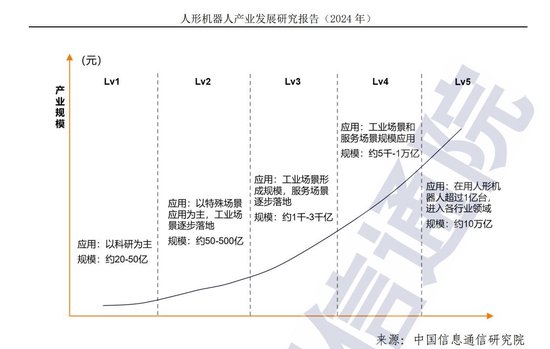
Core Viewpoint - The rapid advancement of artificial intelligence has led to a pressing need for humanoid robots, which are transitioning from laboratory demonstrations to commercial applications, indicating a new phase in industry development [1][3]. Industry Overview - The humanoid robot market in China is projected to reach a scale of 100 billion RMB by 2035, driven by applications in manufacturing, social services, and special operations [1][9]. - The insurance industry is responding to the emerging risks associated with humanoid robots by developing specialized insurance products to cover various dimensions such as property loss, third-party liability, cybersecurity, and data breaches [1][2]. Insurance Product Development - Major insurance companies like China Pacific Insurance and People’s Insurance Company of China have launched dedicated insurance products for humanoid robots, addressing risks from operational failures to third-party injuries [3][4]. - The "Smart Insurance" product by China Pacific Insurance offers integrated coverage for property loss, third-party liability, and flexible policy durations tailored to various commercial scenarios [3][4]. Risk Management Challenges - The application of humanoid robots faces significant challenges, including safety risks, property damage, and liability issues, which are critical for scaling their use [5][7]. - The complexity of humanoid robots, which integrate mechanical, electronic, and AI components, leads to multifaceted risks that traditional insurance products may not adequately cover [8][12]. Market Potential and Support - The humanoid robot market is expected to expand significantly, with projections indicating a market size of 1 trillion to 3 trillion RMB by 2040, and over 100 million humanoid robots in use by 2045 [9][11]. - Government initiatives are increasingly supporting the humanoid robot industry, including financial incentives for insurance premiums to encourage innovation and adoption [13][12]. Ethical and Regulatory Considerations - The industry faces ethical challenges and a lack of unified standards, complicating the insurance landscape and raising questions about liability in cases of malfunction or harm caused by humanoid robots [15][16]. - The need for new insurance products that address algorithmic responsibility and system failures is highlighted, along with the importance of establishing a risk database for accurate pricing [16][14].



储蓄国债“入池”个人养老金,能否改变“开户热、缴费冷、投资少”的情况?
第一财经· 2025-11-25 11:06
Core Viewpoint - The implementation of the personal pension system has reached its third anniversary, and the product pool is expanding with the inclusion of electronic savings bonds, which is expected to enhance the attractiveness of personal pension investments [3][4]. Group 1: Expansion of Personal Pension Products - The Ministry of Finance and the People's Bank of China announced that starting from June 2026, electronic savings bonds will be included in the personal pension product range, creating a diversified product structure that combines insurance, wealth management, funds, savings, and bonds [3][4]. - The personal pension system has evolved from pilot programs in 36 cities to a nationwide rollout, with a well-established framework and an increasingly rich product system [3][4]. Group 2: Characteristics and Appeal of Savings Bonds - Electronic savings bonds are characterized by their ultra-low risk and high safety, backed by national credit, with interest rates higher than those of regular deposits, making them attractive to conservative investors [4][5]. - The current interest rates for 3-year and 5-year savings bonds are stable at 1.63% and 1.7%, respectively, with certain issues being quickly sold out due to high demand [4]. Group 3: Impact on Personal Pension Contributions - The introduction of savings bonds is expected to encourage higher contribution levels in personal pension accounts, particularly among conservative investors who may be hesitant to invest in riskier products [5]. - The effectiveness of this initiative will depend on various factors, including investor risk preferences, the diversity of market products, and the level of investor education [5]. Group 4: Issuance and Allocation of Savings Bonds - The issuance of electronic savings bonds will have a dedicated quota for pension investors, with the allocation adjusted quarterly based on the proportion of uninvested amounts in pension accounts [6][7]. - This mechanism is anticipated to intensify competition among institutions, as they will need to optimize product offerings and enhance customer experiences to secure a larger share of the pension market [7].

2025中国保险业竞争力研究报告发布 行业高质量发展格局加速形成
Zhong Guo Jing Ji Wang· 2025-11-25 10:16
Core Insights - The report highlights the transition of China's insurance industry from scale expansion to value creation, driven by policy guidance, technological empowerment, and market demand [1] - The industry is experiencing a competitive landscape characterized by a "Matthew effect," where larger companies dominate profits while smaller firms face increasing challenges [3][4] Industry Overview - In the first half of 2025, China's insurance premium income reached 3.74 trillion yuan, a year-on-year increase of 5.04%, maintaining steady growth during the 14th Five-Year Plan period [2] - As of June 2025, the balance of insurance funds reached 36.23 trillion yuan, a 67% increase compared to the end of 2020 [2] - China's insurance premium income accounts for 10.2% of the global market share, solidifying its position as the second-largest insurance market globally [2] - The overall solvency of the industry has improved, with a comprehensive solvency adequacy ratio of 204.5% and a core solvency adequacy ratio of 147.8% as of June 2025, reflecting significant enhancement in risk resistance [2] Life Insurance Sector - The report evaluates 75 life insurance companies, with 58 participating in the ranking; China Life, Ping An Life, Taikang Life, Xinhua Insurance, and Taikang Life are the top five [3] - Ping An Life leads the industry with a net profit of 50.602 billion yuan [3] - The top ten life insurance companies accounted for 94.6% of the total profit of the participating companies, indicating a concentration of profitability [3] - There is a notable divergence among smaller companies, with 18 companies reporting losses, highlighting challenges in governance and business transformation [3] Property Insurance Sector - In the property insurance sector, PICC Property, Ping An Property, and Taikang Property are the top three, with the top five companies accounting for approximately 80% of total profits [4] - PICC Property reported a net profit of 24.376 billion yuan and a comprehensive cost ratio of 94.72%, demonstrating strong profitability [4] - However, the industry faces significant underwriting pressure, with 40 out of 82 participating companies having a comprehensive cost ratio exceeding 100%, indicating that nearly half are operating at a loss [4] Pension and Health Insurance Sectors - The pension insurance sector is benefiting from policy-driven growth, with Taikang Pension, Ping An Pension, and National Pension leading the market; Ping An Pension reported a net profit of 1.36 billion yuan [5] - The health insurance sector is dominated by China People's Health, Ping An Health, and Fosun United Health, with the top two companies accounting for over 80% of revenue and profits [6] - Product innovation and the integration of "insurance + service" are becoming core competitive elements in the health insurance market [6] Policy and Future Outlook - The report indicates that the new "National Ten Articles" policy framework is shaping the industry's development, promoting profound changes in the operating environment [6] - The insurance industry is at a critical juncture between the clearing of the "old model" and the establishment of a "new ecosystem," with value creation, risk management, product innovation, and service upgrades as key competitive factors [6]
深圳前10月外贸企业贷款增10%,个人消费贷款余额增5%
Nan Fang Du Shi Bao· 2025-11-25 09:56
Core Insights - Shenzhen's financial regulatory bureau reported significant progress in supporting foreign trade and consumer spending through targeted financial policies and initiatives [1][3][6] Group 1: Foreign Trade Support - In the first ten months of the year, Shenzhen's domestic banks issued new loans to foreign trade enterprises amounting to 763.66 billion yuan, a year-on-year increase of 9.83% [3][4] - The financing balance for cross-border e-commerce grew by 39.92%, while loans to small and micro foreign trade enterprises increased by 20.58% [3] - Insurance institutions provided export credit insurance coverage of 93.69 billion USD to 31,000 foreign trade enterprises, marking a 13.80% increase [3] - Innovative financial products like "Micro Trade Loan" have been launched, benefiting 1,700 small foreign trade enterprises with credit of 1.82 billion yuan, reducing financing costs by over 15% [3] - A "Foreign Trade Financial Supermarket" was established, integrating 63 banking and insurance institutions, offering 229 financial products for foreign trade enterprises [3] Group 2: Consumer Spending Promotion - As of the end of October, the balance of personal consumption loans in Shenzhen reached 835.29 billion yuan, reflecting a year-on-year growth of 4.95% [5] - Loans in the accommodation, catering, and cultural entertainment sectors totaled 207.99 billion yuan, with a growth of 2.04% [5] - Financial institutions have introduced various consumer incentives, including a program that provided 7.79 million yuan in discounts, stimulating nearly 300 million yuan in related consumption [5] - The "Deep Military Loan" initiative has disbursed nearly 60 million yuan to support veterans in entrepreneurship and enhance their consumption capacity [5] Group 3: Innovation and Policy Synergy - Financial technology and policy collaboration have improved efficiency in both foreign trade and consumer finance sectors [6] - The implementation of a personal consumption loan interest subsidy policy has benefited over 32,100 clients, with a total subsidy amount of 60.14 million yuan [6] - The Shenzhen financial regulatory bureau aims to continue leveraging financial resources to support foreign trade enterprises and upgrade consumer finance, contributing to the establishment of a globally influential consumer finance center [6]

利安推出首只全额投保且安全存放于新加坡的实物黄金基金,巩固新加坡作为领先黄金枢纽的地位
Sou Hu Cai Jing· 2025-11-25 08:59
利安新加坡实物黄金基金是新加坡首只完全由实物黄金支持、投保且安全存放于新加坡金库的黄金基 金。正值新加坡建国 60 周年之际推出的这一里程碑式产品,充分发挥了新加坡作为全球金融中心和领先 黄金中心的双重优势。 新加坡2025年11月25日/美通社/ -- 华侨银行集团(OCBC Group)成员利安资金管理公司(简称利 安),今天宣布推出利安新加坡实物黄金基金(LionGlobal Singapore Physical Gold Fund),这是新加 坡首只在新加坡投保并安全储存的实物黄金基金。该基金将由华侨银行、MariBank Singapore、大东方 和Singlife集团负责零售分销,并指定渣打银行新加坡为基金托管人,这是新加坡金融业领军企业首次 携手合作推出旗舰级黄金产品,此项合作写下新的里程碑,体现了业界共同致力于提升新加坡作为区域 领先黄金枢纽的承诺。 在地缘政治不确定性日益加剧的背景下,黄金仍被视为可靠的避险资产。尽管纽约和伦敦等传统交易中 心仍具影响力,但全球黄金市场正稳步向东转移[1]。新加坡邻近全球25%的黄金产量来源国[2],加上 其地缘政治中立以及战略地理位置的优势,使其具备成为领 ...
大摩闭门会:全球震荡,何去何从_纪要
2025-11-25 01:19
Summary of Key Points from Conference Call Industry Overview - The conference discusses the global investment landscape, particularly focusing on AI investments in the US and China, as well as the implications for various sectors including technology, banking, real estate, and insurance. Core Insights and Arguments 1. **AI Investment Strategies** - The US adopts a heavy asset gamble strategy aiming for AGI, while China takes a lightweight approach focusing on ecosystem development, leveraging infrastructure, talent, and data cost advantages to lower AI investment costs and mitigate bubble risks [1][7][20]. 2. **Technology Stock Valuations** - Current technology stock valuations are near 23 times earnings, indicating structural fragility reliant on a few large-cap stocks. Long-term optimism remains due to widespread industry applications, with many S&P 500 companies expecting AI to drive profit growth despite short-term volatility risks [1][8]. 3. **Federal Reserve Interest Rate Predictions** - The Federal Reserve is expected to lower interest rates in January, April, and June 2026, with the December rate cut expectation canceled. This adjustment has led to recent volatility in US stocks, but the long-term outlook remains optimistic, driven by broader market participation rather than solely AI-related companies [1][4][5][6]. 4. **Chinese Banking Sector Outlook** - Chinese banks are anticipated to gradually increase loan rates to cover long-term risks and manage non-performing assets, with regulatory support for reasonable pricing. This trend is expected to aid in the financial sector's recovery [1][17]. 5. **Real Estate Market Stabilization** - High-tier city real estate markets may not stabilize until 2027 due to the complex process of digesting excess inventory. The transmission mechanisms in the real estate market are intricate, and policy interventions often yield less than expected results [1][21][22]. 6. **Consumer and Investment Trends** - Consumer spending is expected to slow down in 2026, with investment improving slightly compared to 2025. Key drivers for consumption include the continuation of trade-in policies and expanded funding uses in fast-moving consumer goods and services [1][25]. 7. **Export Resilience Amidst Challenges** - Exports are projected to slightly slow but remain resilient, with the fading of the "rush to export" effect and a stable real exchange rate for the yuan. The diversification of export destinations and industrial upgrades in China are seen as foundational strengths [2][26]. 8. **Insurance Industry Growth Potential** - The insurance sector in China is viewed as having significant growth potential, with premium growth expected between 10% and 15%. The current low penetration of financial wealth compared to the US presents opportunities for expansion [1][19]. Other Important Insights 1. **Market Volatility and Investment Strategy** - Short-term market volatility driven by fear and algorithmic trading may not necessitate drastic investment strategy changes, particularly in the Chinese market, which is expected to maintain stability in 2026 [1][9][10]. 2. **Financial Sector Risk Management** - The financial sector, particularly banks, is seen as managing risks effectively, with non-performing loan rates stabilizing and a focus on sustainable growth [1][15][16]. 3. **AI Bubble Concerns** - While there are concerns about a bubble in US AI investments, China's AI infrastructure investment is significantly lower, reducing the risk of a similar bubble. Companies like Tencent and Alibaba are highlighted as having promising prospects in the AI space [1][20][27][28]. 4. **Real Estate Policy Effectiveness** - The effectiveness of real estate policies is questioned, with a need for comprehensive strategies rather than piecemeal approaches to address the ongoing challenges in the sector [1][22][24][23]. This summary encapsulates the key points discussed in the conference call, providing insights into the current state and future outlook of various industries and economic factors.
夯实“报行合一” 推动人身险产品科学合理定价
Jin Rong Shi Bao· 2025-11-25 01:00
Core Viewpoint - The introduction of the "Guidelines for Expense Allocation of Life Insurance Products" aims to enhance the scientific and rational nature of expense allocation in life insurance product pricing, aligning with the "reporting and operation integration" policy [1][2]. Group 1: Background of the Guidelines - The guidelines were developed in response to increasing demands for expense allocation in life insurance pricing, assessment, and management, particularly following the implementation of the "reporting and operation integration" policy in 2023 [2]. Group 2: Main Content of the Guidelines - The guidelines define and categorize expenses, distinguishing between variable expenses and fixed expenses to be allocated. Variable expenses are further divided into those paid to intermediaries or sales personnel and other variable expenses, while fixed expenses include business and management fees [3]. - The guidelines specify the scope of expense allocation based on the nature and cause of expenses [3]. - The guidelines outline methods for expense collection, identification, and allocation, emphasizing a principle of "identification first, allocation later" to ensure scientific and rational expense management [3]. Group 3: Impact on the Industry - The guidelines provide scientific guidance for expense allocation in the life insurance industry, enhancing the rationality of pricing and supporting the implementation of the "reporting and operation integration" policy. This will promote improved expense management, operational efficiency, and resource optimization, ultimately benefiting consumers with better insurance products and services [4]. Group 4: Future Work Arrangements - The China Actuarial Association plans to conduct industry training to raise awareness of the importance of refined expense management and improve insurance companies' expense management levels [5]. - The association will continue to monitor and research expense allocation and management practices within the industry to promote fair competition and high-quality development [5].
个人养老金产品扩容!专家解读!
中国基金报· 2025-11-24 14:21
Core Viewpoint - The inclusion of electronic savings bonds into personal pension products is expected to enhance investor enthusiasm and contribute to the high-quality development of the personal pension system [2][4]. Group 1: Policy Announcement - On November 21, the Ministry of Finance and the People's Bank of China announced that starting from June 2026, electronic savings bonds will be included in the personal pension product pool, requiring underwriters to provide related services for investors opening personal pension accounts [4]. - This move is seen as a signal of "safety" and "investment," reinforcing the security of pension funds and promoting long-term capital market participation [4][6]. Group 2: Market Impact - The addition of electronic savings bonds is expected to enrich the personal pension product pool, providing investors with safer and more stable investment options, thereby increasing public participation in the personal pension system [5][6]. - The current market offers 926 personal pension products, with 466 being savings products, indicating a diverse range of options available to investors [8]. Group 3: Challenges and Solutions - Despite the growth in account openings, there exists a "hot account, cold deposit" dilemma, reflecting various contradictions such as account liquidity versus closure, product homogeneity, and low perception of tax incentives [9]. - To address these issues, a collaborative effort between policy and market is necessary, including optimizing tax incentives and enhancing product innovation to better meet the needs of different risk profiles [9].