能源

Search documents
主题风向标 12 月第 1 期:聚焦国家重大战略,布局科技与能源
GUOTAI HAITONG SECURITIES· 2025-12-14 05:38
Group 1: Core Insights - The report highlights a recovery in trading activity for key themes, particularly in commercial aerospace, energy independence, AI applications, and domestic consumption, driven by improved market risk appetite and supportive macroeconomic policies [2][3][5]. Group 2: Commercial Aerospace - The upcoming launch of the Long March 12 reusable rocket and the completion of ground tests for the Tianlong 3 rocket are significant milestones, with China's StarNet completing a network of 127 low-orbit satellites, accelerating its deployment [3][20][25]. - The National Space Administration's action plan for commercial aerospace emphasizes the development of new technologies and products, predicting a tenfold increase in satellite launch demand by 2030 compared to 2024 [3][20][25]. - Investment recommendations include focusing on rocket manufacturing, satellite communication, and new technologies such as reusable rockets [21][25]. Group 3: Energy Independence - The central government emphasizes accelerating the construction of a new energy system and expanding green electricity applications, with a target of 25% non-fossil energy consumption by 2030 [5][22][35]. - The share of clean energy in total installed capacity has reached 60%, with 84% of new capacity in the first ten months of 2025 coming from clean sources [22][35][39]. - Investment directions include smart grids, new energy storage solutions, and nuclear fusion energy [22][35]. Group 4: AI Applications - The report notes significant growth in AI applications, with Alibaba's Qianwen app experiencing a 149.03% increase in monthly active users, leading globally [23][41]. - The government aims for over 70% penetration of new-generation intelligent terminals and systems by 2027, with a target of over 90% by 2030 [23][41]. - Investment opportunities are identified in internet applications across various sectors, including finance, gaming, and government services, as well as in data center power equipment [23][41]. Group 5: Domestic Consumption - The central government is focused on boosting domestic consumption through various initiatives, including enhancing the supply of quality goods and services [5][47]. - New consumption scenarios, such as sports events and winter tourism, are emerging, with the ice and snow sports market projected to exceed 187.5 billion yuan in the 2024-2025 season, reflecting a 25% year-on-year growth [47][48]. - Investment recommendations include sectors benefiting from consumption promotion measures, such as tourism, hotels, and sports equipment [47][48].
历史性的跨越丨海南加快实施一批重大基础设施工程,构建高质量现代
Hai Nan Ri Bao· 2025-12-14 04:12
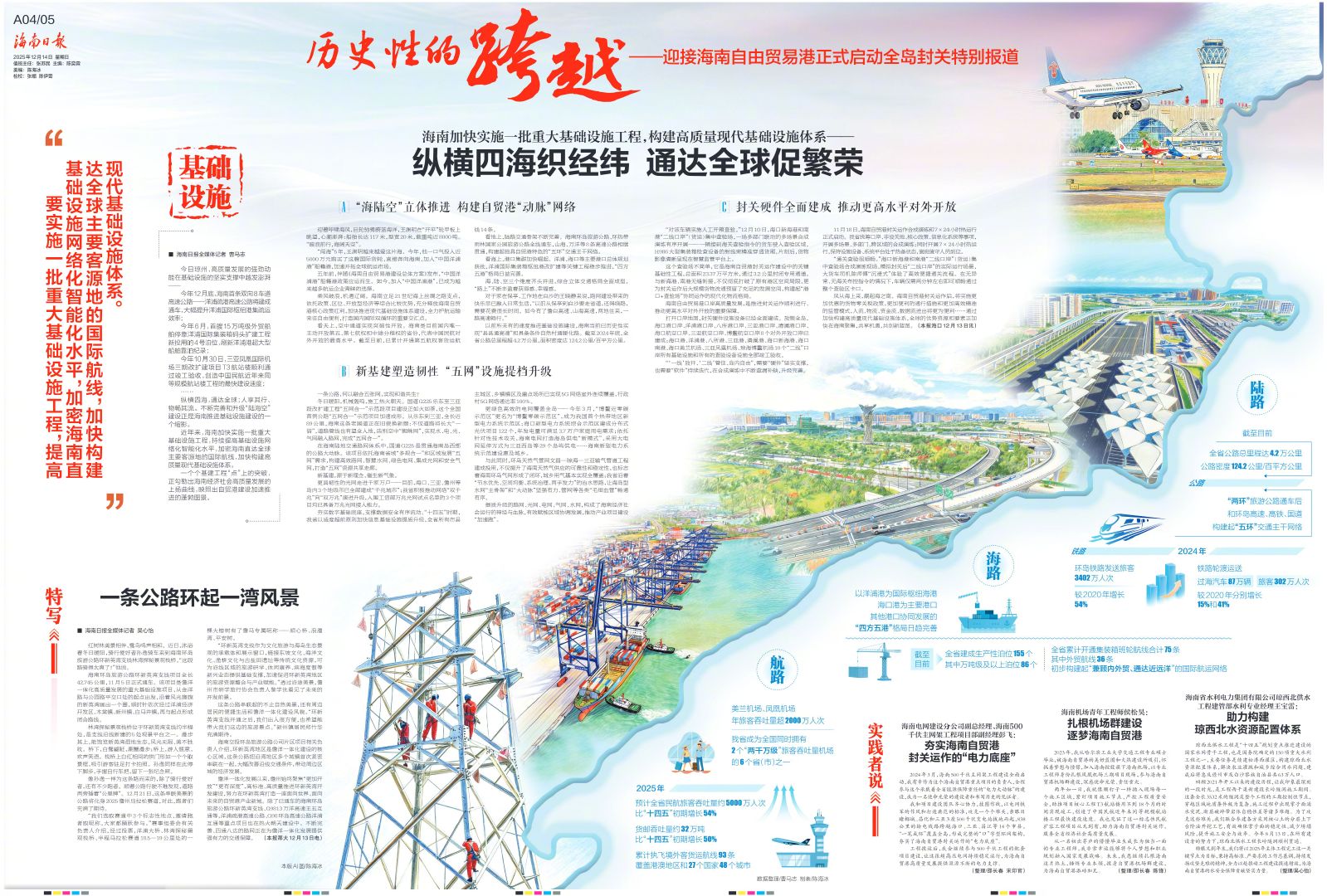
Core Viewpoint - Hainan is accelerating the implementation of major infrastructure projects to build a high-quality modern infrastructure system, enhancing connectivity and supporting economic development [6][19]. Infrastructure Development - The completion of the Yangpu Port Expressway by the end of December will significantly improve the efficiency of transportation to and from the Yangpu International Hub Port [6]. - The first 15,000-ton foreign trade vessel docked at the newly expanded container terminal at Yangpu, setting a record for the port [6]. - The third phase expansion of Sanya Phoenix International Airport has been completed, marking the fastest construction speed for a terminal of its scale in recent years [6][19]. Transportation Network - Hainan is enhancing its "land, sea, and air" transportation network, with the completion of various highways and the opening of new international flight routes [8][10]. - The island has achieved "county-level expressway access" and plans to exceed 42,000 kilometers of total road mileage by the end of 2024 [10]. - The G225 national road is undergoing a "five networks integration" project, which will enhance its capacity and efficiency [11]. Digital and Energy Infrastructure - Hainan has established "gigabit cities" in three major cities and is advancing towards "dual ten-gigabit" networks [12]. - The province has achieved 100% 5G network coverage in administrative villages, enhancing digital infrastructure [12]. - The construction of a new power grid system is underway, which will support the energy needs of the Hainan Free Trade Port [22]. Port and Customs Facilities - Hainan's customs facilities have been fully constructed, supporting the high-quality development of its ports and enhancing international trade [16]. - The new inspection area at Haikou New Port and South Port is designed to facilitate efficient customs operations post-closure [15][17]. Economic and Social Impact - The infrastructure projects are expected to drive economic growth and improve the quality of life for residents by enhancing connectivity and access to services [20][21]. - The integration of transportation and tourism infrastructure is anticipated to boost local economies and promote cultural tourism [20][21].

下一个革新爆点是什么,新一代投资人有何画像?这场年度预测给出答案
证券时报· 2025-12-14 03:23
Core Insights - The next innovation explosion is expected to stem from the integration of multiple technologies, particularly the fusion of artificial intelligence with various disciplines and fields [3] - The Shanghai Future Industry Fund has identified ten future industries, including AI and computing, biomedicine and health, energy and environment, robotics and automation, quantum technology, and blockchain [3] - A new generation of investors, termed "AI Native," is emerging, focusing on scientific and technological entrepreneurship, with a shift from relationship-based to AI-driven investment paradigms [9] Group 1: Innovation and Future Industries - The essence of the next "innovation explosion" is the "multi-technology integration," with AI being a key driver alongside interdisciplinary collaboration [3] - The ten identified future industries include: 1. Artificial Intelligence and Computing 2. Biomedicine and Health 3. Energy and Environment 4. Robotics and Automation 5. Quantum Technology 6. Interdisciplinary and Fusion Fields 7. Information and Communication Technology 8. New Materials and Advanced Manufacturing 9. Aerospace and Space Exploration 10. Blockchain and Distributed Technologies [3] Group 2: Future Talent and Organizational Paradigms - The future talent profile is characterized by individuals from the 90s and 00s, who are AI natives, possessing cross-disciplinary skills and a willingness to challenge traditional norms [7] - Future organizations may evolve into "silicon-based" entities where humans act as AI orchestrators, potentially leading to the rise of "one-person unicorn" companies [7] Group 3: Investment Paradigms - The investment landscape is transitioning from a "relationship-based" model to an "AI-driven ecological" model, with a focus on supporting scientific entrepreneurs [9] - The current entrepreneurial wave is led by scientists and specialized PhDs, marking a shift from previous eras dominated by grassroots entrepreneurs [9] - Investors are encouraged to adopt forward-looking strategies, investing in AI Native young entrepreneurs and fostering an AI investment ecosystem [9]

海南加快实施一批重大基础设施工程 构建高质量现代基础设施体系
Hai Nan Ri Bao· 2025-12-14 01:40
Core Viewpoint - Hainan is accelerating the implementation of major infrastructure projects to build a high-quality modern infrastructure system, enhancing connectivity and supporting economic development [6][16]. Infrastructure Development - A series of significant infrastructure projects are underway, including the completion of the Yangpu Port Expressway by the end of December, which will greatly improve transportation efficiency [5]. - The expansion of Sanya Phoenix International Airport's T3 terminal has been completed, marking a record construction speed for similar projects in China [5]. - Hainan is enhancing its "land, sea, and air" infrastructure, with a focus on increasing international flight routes to major global destinations [6][8]. Transportation Network - The island's road network is being significantly improved, with the completion of various highways and the achievement of "county-level expressway access" [9]. - By the end of 2024, the total length of highways in Hainan is expected to exceed 42,000 kilometers, with a density of 124.2 kilometers per 100 square kilometers [9]. - The G225 national road is undergoing a "five networks integration" project, enhancing its capacity and efficiency [10]. New Infrastructure Initiatives - Hainan is advancing its digital infrastructure, with all major cities achieving "gigabit city" status and a complete 5G network coverage in administrative villages [12]. - The province is also developing a new energy system, with projects like the Boao Zero Carbon Demonstration Zone and distributed photovoltaic projects [12][13]. Customs and Trade Facilitation - Hainan's customs facilities are fully constructed, supporting the operation of the free trade port and enhancing the efficiency of goods flow [15][16]. - The province has initiated a 7×24 hour operation for customs checks, ensuring smooth and efficient processing of goods [16].
海南新基建:撬动开放的新支点
Hai Nan Ri Bao· 2025-12-14 01:40
Core Viewpoint - The construction of infrastructure in Hainan is accelerating, aiming to support the establishment of the Hainan Free Trade Port and enhance its role as a new pivot for opening up the economy [1][2]. Group 1: Infrastructure Development - Hainan's infrastructure is crucial for the Free Trade Port's construction, with a focus on major projects to improve network connectivity and smart capabilities [2][6]. - The port infrastructure features significant characteristics such as functional integration, with Haikou Port being a major hub capable of handling 35 million passengers and 5.6 million vehicles annually [3]. - The capacity of Yangpu International Container Hub Port has increased from 1.02 million TEUs to 3.1 million TEUs, marking a 204% growth [3]. Group 2: Transportation Network - A comprehensive "Five Ring" transportation network has been established, enhancing connectivity within the island and with international destinations [3][4]. - The completion of four highways and the "Two Ring" tourism road has facilitated smoother transportation, with 93 international routes now operational [3][4]. Group 3: Utility Infrastructure - The construction of the electricity, gas, and water networks is progressing alongside transportation infrastructure, creating a resilient support system for openness [4][5]. - Hainan has achieved "Gigabit City" status in three major cities, and the new power system in Boao has been recognized as a national demonstration zone [4][5]. Group 4: Future Development Plans - The "15th Five-Year Plan" emphasizes the need for proactive infrastructure development to enhance connectivity and stability [6][7]. - The focus is on achieving coordinated development across the island, improving logistics networks, and advancing "new infrastructure" initiatives [8][9]. - The aim is to elevate the capabilities of Hainan as a hub for international trade and transportation, ensuring efficient movement of people and goods [9].
2025年12月上旬流通领域重要生产资料市场价格变动情况
Guo Jia Tong Ji Ju· 2025-12-14 01:30
Core Viewpoint - The monitoring of market prices for 50 important production materials across nine categories indicates a mixed trend, with 27 products experiencing price increases, 19 seeing declines, and 4 remaining stable in early December 2025 compared to late November 2025 [2][3]. Group 1: Price Changes in Major Categories - In the black metal category, rebar prices increased by 23.4 yuan per ton (0.7%), while wire rod prices rose by 47.3 yuan per ton (1.4%) [4]. - In the non-ferrous metal category, electrolytic copper saw a price increase of 4.7% (4059.8 yuan per ton), and aluminum ingots rose by 2.1% (449.2 yuan per ton) [4]. - Chemical products showed varied results, with sulfuric acid prices increasing by 7.9% (74.4 yuan per ton), while caustic soda prices decreased by 5.1% (-42.1 yuan per ton) [4]. Group 2: Energy and Coal Prices - In the petroleum and natural gas sector, liquefied natural gas prices fell by 2.9% (-121.5 yuan per ton), while liquefied petroleum gas prices increased by 1.6% (69.5 yuan per ton) [4]. - Coal prices generally declined, with anthracite coal dropping by 1.4% (-12.8 yuan per ton) and common mixed coal decreasing by 5.7% (-36.3 yuan per ton) [4]. Group 3: Agricultural Products and Fertilizers - In agricultural products, corn prices increased by 1.4% (29.9 yuan per ton), while soybean prices decreased by 0.3% (-11.6 yuan per ton) [5]. - Fertilizer prices showed an upward trend, with urea prices rising by 2.2% (36.5 yuan per ton) and compound fertilizer prices increasing by 2.2% (72.4 yuan per ton) [5]. Group 4: Monitoring Methodology - The price monitoring includes data from over 2,000 wholesalers, agents, and distributors across more than 300 trading markets in 31 provinces [7]. - The methodology for price collection involves on-site price sampling, telephone inquiries, and electronic communications [8].
基金研究周报:黄金白银再度走强(12.8-12.12)
Wind万得· 2025-12-13 22:23
Market Overview - The A-share market exhibited a structurally differentiated pattern last week, with the ChiNext Index rising by 2.74%, indicating resilience in the growth sector after adjustments [1] - The CSI 300 and SSE 50 indices fell by 0.08% and 0.25% respectively, while the CSI Dividend Index dropped by 2.36%, reflecting weaker performance in heavyweight value sectors [1] - The Wind Micro-cap Index saw a significant decline of 5.02%, highlighting short-term pullback pressure on small-cap stocks [1] Industry Performance - The A-share market showed clear differentiation among sectors, with most declining. The Information Technology sector led with a 2.42% increase, benefiting from the ongoing demand for AI computing power and accelerated domestic production [1][11] - Conversely, the Energy sector faced a notable decline of 3.06% due to significantly lower energy prices [1][11] Fund Issuance - A total of 23 funds were issued last week, including 10 equity funds, 3 mixed funds, 5 bond funds, 1 QDII fund, and 4 FOF funds, with a total issuance of 18.218 billion units [1][16] Fund Performance - The Wind All-Fund Index rose by 0.33% last week, with the ordinary equity fund index increasing by 0.61% and the equity-mixed fund index rising by 0.71%, indicating better performance in equity funds compared to bond funds [1][5] - The bond fund index saw a slight increase of 0.08%, while the overall sentiment in the fund market remained positive, focusing on technology and resource sectors [1][6] Global Market Trends - The global equity markets displayed a mixed pattern, with the Dow Jones rising by 1.05% and the Nikkei 225 and KOSPI increasing by 0.68% and 1.64% respectively, while the NASDAQ fell by 1.62% and the S&P 500 decreased by 0.63% [2] - Commodity markets experienced significant volatility, with energy prices plummeting, particularly natural gas which fell by 22.46% and coking coal which dropped by 12.75%, while gold and silver saw increases of 2.05% and 5.13% respectively [2]

下一个革新爆点是什么,新一代投资人有何画像?这场年度预测给出答案
Zheng Quan Shi Bao Wang· 2025-12-13 11:46
Group 1 - The core theme of the "What's Next 2026" conference is to explore the next wave of disruptive innovations and the characteristics of the new generation of investors, emphasizing the importance of collaboration between state-owned capital platforms and innovators [1][2]. - The Shanghai Future Industry Fund's annual forecast identifies "multi-technology integration" as the next innovation breakthrough, highlighting ten future industries including AI, biomedicine, energy, and quantum technology [2][3]. - A strategic scientist predicts three major innovation breakthroughs: the ultimate fusion of biology and mathematics, controllable nuclear fusion for clean energy, and automation in scientific discovery through AI [3][4]. Group 2 - The annual forecast defines the future talent profile as primarily composed of post-90s and post-00s individuals, characterized by a cross-disciplinary and innovative mindset [5][6]. - Future organizations may evolve into silicon-based entities where humans act as AI orchestrators, potentially leading to the emergence of "one-person unicorn" companies [5][6]. - The venture capital landscape is shifting from a "network-based" model to an "AI-driven ecosystem" model, with a focus on supporting scientists and technology entrepreneurs [6][7].
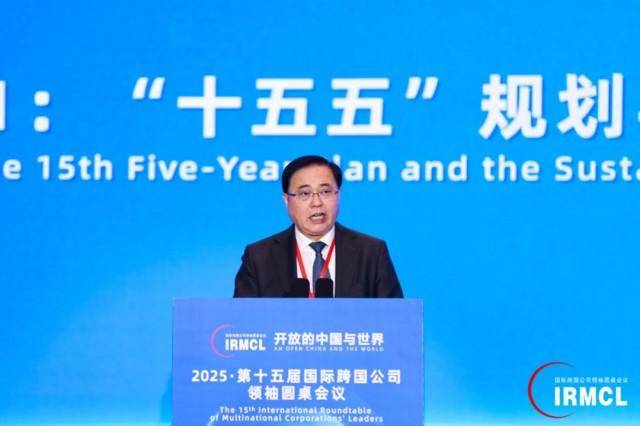
德国北威州国际商务署封兴良:深化中德产业互补守护供应链稳定韧性
Sou Hu Cai Jing· 2025-12-13 10:12
Core Viewpoint - North Rhine-Westphalia (NRW) views China as a crucial strategic partner, with significant cooperation in key industries leading to fruitful outcomes [3] Group 1: Trade and Economic Cooperation - In the first nine months of 2025, the bilateral trade volume between China and Germany reached €185.9 billion, with China reaffirming its status as Germany's largest trading partner [3] - NRW has become the preferred destination for Chinese companies investing in Europe, with nearly 1,300 Chinese enterprises established in the region across critical sectors such as energy, machinery manufacturing, automotive, medical devices, and digital technology [3] Group 2: Industry and Innovation - NRW is home to approximately 400 "hidden champion" companies, representing a quarter of Germany's total, which combine their technical expertise with the market expansion capabilities and production advantages of Chinese firms, creating a win-win scenario [3] - This collaboration not only opens market opportunities for NRW companies but also significantly aids China's industries in climbing the global value chain [3] Group 3: Supply Chain and Global Cooperation - The essence of supply chains lies in optimizing efficiency and cost, and artificial barriers harm mutual interests; open cooperation is the only solution to overcome challenges [4] - The pragmatic economic relationship between China and Germany is a vital factor in maintaining global supply chain stability, as geopolitical factors have not undermined the long-term foundation of their cooperation [4] Group 4: Conference Objectives - The 2025 International Roundtable of Multinational Company Leaders aims to promote multinational investment, strengthen corporate social responsibility, and drive sustainable development [4] - The conference focuses on exploring development opportunities during China's modernization process and aims to gather multinational corporate strength to build an open ecosystem [4]
深夜,美股全线收跌!
Huan Qiu Wang· 2025-12-13 09:34
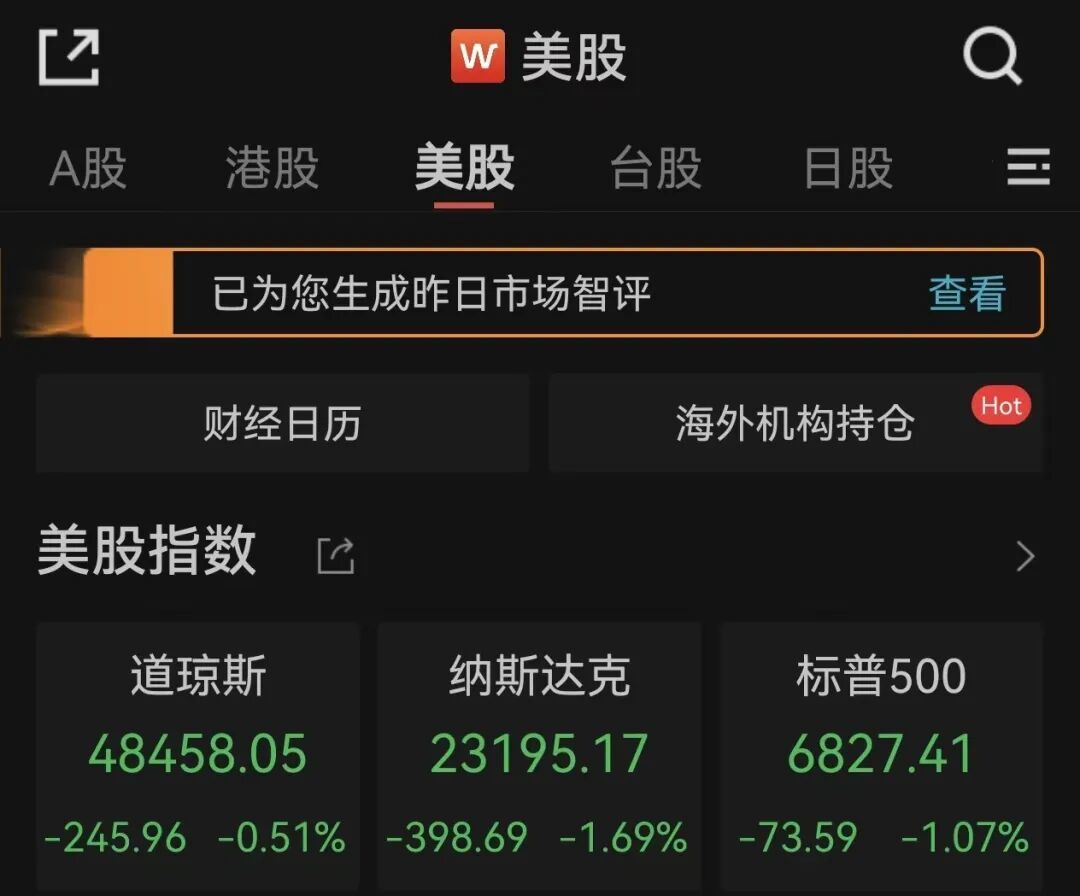
Market Performance - The three major U.S. stock indices closed lower, with the Dow Jones down 0.51% at 48,458.05 points, the S&P 500 down 1.07% at 6,827.41 points, and the Nasdaq down 1.69% at 23,195.17 points [3] - This week, the Dow Jones rose 1.05%, while the S&P 500 and Nasdaq fell by 0.63% and 1.62%, respectively [3] Sector Performance - Large technology stocks mostly declined, with the U.S. Technology Seven Giants Index down 1.12%. Notable declines included Nvidia down over 3% and Amazon down nearly 2% [3] - Bank stocks showed mixed results, with JPMorgan up 0.45% and Goldman Sachs down over 2% [4] - Energy stocks fell across the board, with ExxonMobil down 0.63% and Chevron down 0.49% [5] - Airline stocks had mixed performance, with Boeing up nearly 2% and Delta Airlines down over 1% [6] Chip Sector - The semiconductor sector was weak, with the Philadelphia Semiconductor Index down 5.1%. Broadcom fell over 11% and Micron Technology dropped over 6% [6] Chinese Stocks - Most Chinese stocks declined, with the Nasdaq Golden Dragon China Index down 0.3% and the U.S. China Technology Leaders Index down 0.18%. Notable declines included Canadian Solar down over 10% and Daqo New Energy down over 6% [6] Macro News - The Federal Reserve announced a reserve management plan to purchase $40 billion in short-term Treasury bonds monthly, exceeding market expectations. Major investment banks revised their 2026 debt issuance forecasts, with Barclays and JPMorgan estimating the Fed may absorb about $500 billion in short-term Treasuries next year [6] - Chicago Fed President Goolsbee explained his opposition to the recent rate cut, emphasizing the need for more information, particularly regarding inflation data [7]