人工智能

Search documents
美国开源AI最后的旗帜,也倒了
量子位· 2026-03-30 01:34
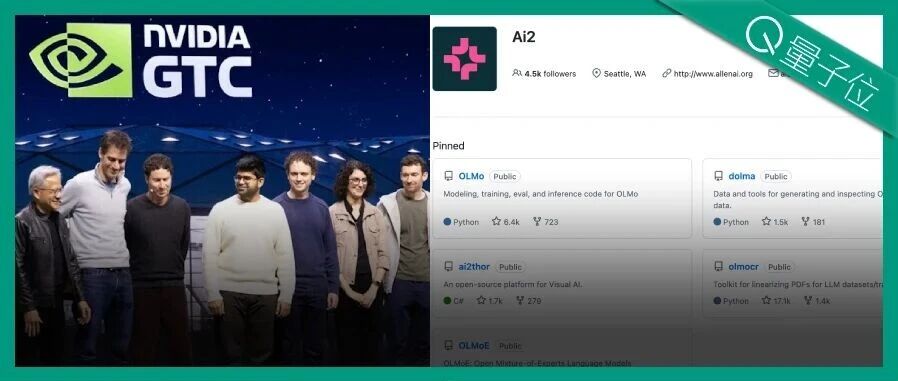
Core Viewpoint - The Allen Institute for Artificial Intelligence (AI2) is significantly reducing funding for open-source model development, including OLMo, and shifting focus towards AI applications, which has led to the departure of key personnel to Microsoft [1][27][39]. Group 1: Personnel Changes - Key members of AI2, including former CEO Ali Farhadi and COO Sophie Leibrecht, have left to join Mustafa Suleyman's superintelligence team at Microsoft [2][10]. - Farhadi's departure marks the end of over two and a half years of leadership at AI2, where he was instrumental in the development of various AI projects [11][13]. - Other notable departures include Hannah Hajishirzi and Ranjay Krishna, both of whom were involved in significant AI initiatives at AI2 [3][19]. Group 2: Funding and Strategic Shifts - AI2's board chairman, Bill Hilf, indicated that the organization struggles to compete with tech giants like OpenAI and Google, which invest billions in training advanced models [27][28]. - The current funding model, primarily supported by the Paul G. Allen Family Foundation, is shifting from annual funding to a project proposal-based model, which may limit AI2's ability to pursue long-term open-source projects [33][38]. - The estimated training cost for cutting-edge models like GPT-4 is between $100 million to $200 million, highlighting the financial challenges faced by non-profit organizations like AI2 [29][30]. Group 3: Impact on Open-Source AI - The reduction in AI2's commitment to open-source model development is seen as a significant setback for the open-source AI community, with many expressing concern over the future of open-source initiatives in the U.S. [39][41]. - AI2's OLMo series was recognized for its commitment to transparency and open-source principles, but the recent changes may undermine these efforts [42][46]. - The shift in focus towards AI applications rather than foundational model development could accelerate the gap between U.S. and Chinese open-source AI capabilities [58][65]. Group 4: Future Outlook - Despite the challenges, AI2's interim CEO, Peter Clark, has stated that the organization remains committed to its mission and ongoing collaborations, such as the OMAI project with NSF and Nvidia [52]. - The landscape of open-source AI is evolving, with U.S. companies increasingly adopting models from China, indicating a shift in the global open-source AI dynamics [64][66].


红杉、Monolith都投了一家AI健康硬件公司丨投融周报
投中网· 2026-03-30 01:32
Group 1: Robotics and Hard Technology - Faou Robotics successfully completed nearly $100 million in Series C financing, led by the Guoshou Capital under China Life Investment, with continued support from existing shareholders [27] - Ailit Robotics announced the completion of 600 million RMB in D+ round financing, with participation from multiple AIDC industry chain CVC funds and other significant investors [28] - Hangxing Transmission announced over 100 million RMB in Pre-B round financing, with investments from CRRC Guochuang and other entities [12] Group 2: Health and Biotechnology - Shanghai Zhuanma Biotechnology completed several million RMB in Pre-A round financing, with investors including Zeyue Venture Capital and Yifeng Zhuohua Fund [35] - Guangzhou Saiyun Biotechnology announced over 100 million RMB in Pre-C round financing, led by Taiping Medical Health Fund and other investors [37] - Mai Bo Zhi Xing completed nearly 100 million RMB in angel round financing, led by Longpan Investment [33] Group 3: Internet and AI Applications - AI4Materials company Kaiwu Ji announced the completion of several hundred million RMB in angel+ round financing, led by Monolith and supported by several prominent investors [46] - Dingxi Zhichuang completed angel+ round financing, with investments from Jingtai Technology and Shanghai Future Industry Fund [49] - GIM announced the completion of several million RMB in angel round financing, with participation from Wuyuan Capital and Monolith [48]


新书爆料:扎克伯格沉迷VR,错过了收购DeepMind,被谷歌抢下“AI最大交易”
硬AI· 2026-03-30 00:58
Core Insights - The article discusses the strategic acquisition of DeepMind by Google in 2014, highlighting the competitive dynamics between Google and Facebook during the negotiation process [2][3] - The acquisition is framed as a pivotal moment in the AI landscape, establishing Google's leadership in the field [3] Group 1: Strategic Conversations - In June 2013, Google CEO Larry Page met with DeepMind founder Demis Hassabis at a party, suggesting that Hassabis leverage Google's resources to achieve his goal of building artificial general intelligence (AGI) [6] - Hassabis expressed his frustration with fundraising and recognized the value of utilizing Google's computational resources to tackle intelligence problems [6] Group 2: Negotiation Dynamics - In the fall of 2013, Hassabis and his co-founder engaged in secret negotiations with Google, initially avoiding price discussions to focus on research budgets and AI safety governance [8] - Suleyman insisted on establishing an independent oversight committee for AI technology deployment, reflecting concerns about potential misuse by Google [9] Group 3: Competitive Bidding - To pressure Google, DeepMind approached Facebook, where a proposal was made to acquire shares at a lower price but with substantial signing bonuses for the founders [10] - Hassabis conducted a covert assessment of Mark Zuckerberg's understanding of AI, concluding that despite Facebook's higher offer, he preferred to work with someone who truly comprehended AI's potential [11] Group 4: Talent Acquisition Pressure - Following the failed bid, Zuckerberg sought to recruit deep learning pioneer Yann LeCun to build Facebook's AI research team, targeting DeepMind talent [13] - In December 2013, concerns about potential talent loss prompted Hassabis to expedite negotiations with Google, leading to a final agreement [14] Group 5: Final Agreement - In January 2014, Google completed the acquisition of DeepMind for $650 million, including unconventional terms such as the establishment of an independent ethics and safety review committee [16] - The deal faced significant internal resistance at Google due to its implications for asset control, but was ultimately approved based on confidence in Hassabis's vision for AI [16] - Over the following decade, Google invested billions into DeepMind, solidifying its status as a leading AI research institution, far exceeding initial financial projections [17]



谷歌前CEO:影响美国AI的是能源、芯片和人才
阿尔法工场研究院· 2026-03-30 00:33
Core Viewpoints - Eric Schmidt emphasizes that the current impact of AI is still in its early stages, estimating that only 10%-15% of its potential has been realized, with future effects expected to expand significantly [1] - He notes that while AI has achieved a "reasoning system" capability, recursive self-improvement is yet to be realized, which is a crucial and potentially alarming step for the future [1] - The evolution of programming due to AI tools is transforming the software industry, shifting programmers' roles from writing code to defining evaluation functions and overseeing AI systems, which greatly enhances productivity [1] Summary of AI Development in the U.S. - Schmidt identifies three key constraints on AI development in the U.S.: energy, chips, and talent, with energy shortages being the primary limiting factor [2] - He acknowledges the U.S.'s competitive advantages in capital, talent, and an innovative culture, particularly the significant funding capabilities of Silicon Valley [2] - A call to action for the government includes accelerating energy and grid development, attracting high-tech immigrants, and maintaining vigilance to ensure victory in the AI race [2] Analysis of China's AI and Manufacturing Landscape - In the low-end robotics hardware sector, Schmidt asserts that China is likely to emerge as a winner due to its expertise and manufacturing advantages, which are also applicable to the electric vehicle industry [3] - He contrasts China's AI development model, which focuses on open-source and edge computing, with the U.S. model that emphasizes general artificial intelligence and artificial superintelligence, while predicting that most world-class AI companies will still emerge from the U.S. [3] Thoughts on AI Safety and Risks - Schmidt suggests that the world may need to experience a moderate tragedy, such as an AI-induced biological or nuclear crisis, to awaken to the significant negative potential of AI and prompt a collective response to safety challenges [4] - He highlights the urgent need to address the impact of AI on youth mental health as a critical issue that cannot be overlooked [4] Outlook on Artificial Superintelligence and Value Alignment - Ensuring that the pursuit of artificial superintelligence aligns with human values is deemed essential by Schmidt, who advocates for collaboration among experts from various fields, including politics, history, psychology, and ethics, to shape AI in a way that reflects and serves values cherished in the U.S., such as freedom and free speech [5]

游戏大厂不需要人情味运营!裁员超千人致患癌员工失去保险,家属发声;DeepSeek深夜突发大规模崩溃,暂未恢复正常;字节通报:65人被辞退
雷峰网· 2026-03-30 00:29
Group 1 - Epic Games announced layoffs of over 1,000 employees due to declining user engagement and rising costs, affecting nearly a quarter of its workforce [4][5] - The layoffs included a programmer battling brain cancer, whose insurance was terminated upon dismissal, raising concerns about the human impact of corporate decisions [4][5] - The layoffs also affected the Chinese team, leading to dissatisfaction among users who valued the community engagement of the Chinese operations [5] Group 2 - DeepSeek experienced significant service disruptions, impacting students and professionals during critical deadlines, attributed to a surge in demand and potential DDoS attacks [6][7] - The platform's daily active users grew by 66.7% while computational power only increased by 8.3%, highlighting a mismatch in supply and demand [6] Group 3 - ByteDance reported the dismissal of 65 employees for disciplinary violations, including serious offenses leading to criminal charges [15] - The company is focusing on strengthening information security and compliance management to prevent future breaches [15] Group 4 - Apple is offering substantial bonuses to iPhone hardware designers, ranging from $200,000 to $400,000, to retain talent amid competition from AI startups [43][44] - This move reflects Apple's increasing concern over talent retention as it prepares to enhance its AI product strategy [44] Group 5 - Nikon is forecasting a loss of 85 billion yen for the 2025 fiscal year, marking its worst performance in over a century, due to a significant decline in its market share in advanced lithography equipment [46] - The company's strategic missteps, including rejecting key technological advancements and failing to adapt to market changes, have contributed to its decline [46] Group 6 - Manycore Tech Inc. has successfully passed the Hong Kong Stock Exchange listing hearing, marking a significant step towards its IPO [51]



早报 | 美军地面战数周速决方案曝光;内存条价格出现断崖式下跌;xAI的11名联合创始人全部离职;单依纯发长文回应《李白》版权问题
虎嗅APP· 2026-03-30 00:16
Military and Geopolitical Developments - The U.S. military is preparing for a limited ground operation against Iran, aiming for a quick victory reminiscent of the Gulf War, focusing on economic strangulation rather than full occupation [2] - The Pentagon's strategy involves targeting Iran's oil infrastructure, particularly the critical Khark Island, which is responsible for over 90% of Iran's oil exports [2] - Analysts suggest that a hasty ground operation could disrupt shipping in the Strait of Hormuz, leading to significant global energy market turmoil and escalating regional conflicts [3] Technology and Corporate Changes - All 11 co-founders of Elon Musk's AI startup xAI have left the company, following its merger with SpaceX, indicating potential instability in the company's direction [6] - Meta has set a target for its engineers to use AI tools for 75% of their coding tasks by mid-2026, reflecting a broader trend of integrating AI into corporate performance metrics [12][13][14] Market Trends - The price of memory modules has seen a drastic decline, attributed to market supply-demand dynamics and the liquidation of stockpiled inventory by major players, with sales reportedly down over 60% compared to last year [8] - Beijing has initiated the development of commercial insurance products for intelligent connected new energy vehicles, covering levels L2 to L4, indicating a growing focus on risk management in the automotive sector [9] Corporate Restructuring - Beike Group has announced a significant organizational restructuring aimed at enhancing consumer-centric services, with adjustments to its operational and management frameworks [10][11]

对标英伟达EgoScale数据路径,清华系孵化星忆科技拿到首轮融资|早起看早期
36氪· 2026-03-30 00:09
Core Viewpoint - The article discusses the rapid rise of human-centric and ego-centric data in the field of embodied intelligence, emphasizing the importance of high-quality, low-cost, and trainable data for robotic learning and operation [5][6][7]. Group 1: Industry Trends - The focus of the industry has shifted from merely collecting data to creating high-fidelity, low-cost, and scalable human-centric data assets [5][6]. - Ego-centric data, which captures human actions from a first-person perspective, is becoming increasingly vital for training robots to perform tasks accurately in the real world [6][7]. - Companies are now prioritizing the integration of various data modalities, such as visual, tactile, and positional data, to enhance the training of robotic systems [8][20]. Group 2: Company Insights - Xingyi Technology, a startup focused on ego-centric data collection, has recently completed a multi-million dollar funding round, indicating strong investor interest in this niche [6][7]. - The company aims to build a comprehensive data collection and training system that integrates high-precision wearable devices and data engines to convert human operational experience into learnable data for robots [11][12]. - The founding team of Xingyi Technology has extensive experience in robotics and data collection, which positions the company well to tackle the challenges of high-quality data acquisition [7][39]. Group 3: Technical Differentiation - Xingyi Technology differentiates itself by not only collecting visual data but also integrating tactile and posture data, which are crucial for precise robotic operations [8][20]. - The company emphasizes the importance of achieving high accuracy and freedom in data collection while maintaining low costs and ensuring the data is trainable [8][24]. - The data collection process is designed to be efficient and cost-effective, utilizing real-world scenarios to gather multimodal training data in real-time [25][26]. Group 4: Future Outlook - The article suggests that the future of embodied intelligence will depend on the ability to create high-quality, scalable real-world data, which is currently a significant gap in the industry [28][34]. - Xingyi Technology envisions a timeline where embodied intelligence can be effectively implemented in factories within three years and in households within five years, highlighting the potential for widespread adoption [38].

Cell子刊:西湖大学李子青团队等提出AI虚拟细胞代谢研究新范式
生物世界· 2026-03-30 00:00
Core Viewpoint - The article introduces the concept of "AI Virtual Metabolism" (AIVM), establishing a new paradigm for metabolic network reconstruction driven by AI and multi-omics data, aiming to advance the understanding of biology and metabolic engineering [2][7][21]. Group 1: AI Virtual Metabolism Framework - AIVM combines retro-synthetic reasoning from chemistry with biological constraints to enhance the feasibility of metabolic pathway predictions [3][8]. - The framework utilizes large language models trained on multi-omics data to generate hierarchical representations of cellular functions, guided by the central dogma of molecular biology [8][21]. - AIVM incorporates various biological constraints, such as enzyme specificity and thermodynamic feasibility, to ensure realistic pathway predictions [8][9]. Group 2: Metabolic Pathway Reconstruction - The reconstruction of cellular metabolic pathways is crucial for understanding energy production, biosynthesis of macromolecules, and cellular signaling [5][12]. - Traditional biochemical methods face challenges due to limited experimental data and the complexity of metabolic networks, making complete reconstruction difficult [5][6]. - AI advancements offer a promising paradigm shift, enabling predictions of metabolic pathways without complete mechanistic understanding [6][21]. Group 3: Applications and Future Directions - The AIVM framework is envisioned to facilitate the engineering of microbial chassis for sustainable production of high-value compounds and therapeutic interventions [9][11]. - A hypothetical scenario illustrates the reconstruction of the artemisinic acid pathway in yeast, demonstrating the potential of AIVM to generate testable design hypotheses [11][12]. - Future applications may include optimizing microbial platforms and enhancing the supply of precursors for downstream processes [9][11]. Group 4: Challenges and Considerations - Key challenges include the need for large-scale, high-quality datasets to enhance biological realism and the complexity of extending predictions to eukaryotic organisms [22]. - The integration of computational modeling with experimental workflows is essential to address these challenges and establish biological credibility [22][21]. - The vision of an AI-enabled Virtual Cell is becoming a reality, providing powerful tools to accelerate optimization in metabolic engineering [22][21].

伊朗战争的账单,“AI牛市”来买?
美股IPO· 2026-03-29 23:59
Core Viewpoint - The ongoing Middle East conflict is causing structural shocks to the global AI industry, pushing already high-tech asset valuations towards systemic risk, with significant impacts on energy prices and supply chain pressures affecting major tech companies [4][5] Group 1: Energy and Supply Chain Impact - The closure of the Strait of Hormuz has disrupted nearly one-third of global oil and one-fifth of natural gas exports, leading to a 40% increase in Brent crude oil prices and a doubling of helium spot prices [4][5] - The AI industry's supply chain is highly concentrated, with key materials like helium and sulfur primarily sourced from the Middle East, making it vulnerable to supply shortages and rising operational costs [5][6] - Major data centers are facing increased operational pressures due to rising energy costs, which threaten their profitability and expansion plans [5][6] Group 2: Financial Risks and Debt Accumulation - Major tech companies have invested nearly $700 billion in AI within a single year, leading to significant debt accumulation, with projected debt issuance reaching $121 billion by 2025, four times the historical average [7] - The interconnectedness of financial entities, including banks and private credit institutions, raises concerns about systemic risks similar to those seen in the 2008 financial crisis [7][8] - The rapid depreciation of advanced AI chips and declining token prices are creating internal deflationary pressures on the AI business model, threatening the stability of data centers as debt-backed assets [7][8] Group 3: Risk Transmission and Economic Imbalance - The financial strain on large-scale data center operators is affecting their ability to pay rent, which in turn impacts private credit institutions, creating a risk transmission chain throughout the financial system [10][11] - The over-concentration of investment in data centers has led to a lack of funding in other economic sectors, contributing to an overall weak economy [12] - The potential for rising unemployment and increasing interest rates indicates a looming stagflation risk, exacerbated by the current economic imbalances [13][14]

陆家嘴财经早餐2026年3月30日星期一
Wind万得· 2026-03-29 23:09
Group 1 - The article discusses the ongoing tensions in the Middle East, particularly the U.S. military presence and actions in Iran, with President Trump claiming control over the Strait of Hormuz and indicating that Iran is eager for a deal [2][4] - The U.S. military is preparing for a ground operation in Iran, with over 50,000 troops deployed, aiming for a quick resolution without occupying territory, reminiscent of the Gulf War strategy [3] - Protests against the Trump administration are expected to be among the largest in U.S. history, with over 9 million participants planned across 50 states [4] Group 2 - The article highlights the impact of the ongoing conflict on global markets, including a focus on oil prices and potential supply chain disruptions, particularly in the aluminum sector due to attacks on major aluminum plants in the Middle East [5][21] - The article notes that the conflict has led to significant increases in oil prices, with Vietnam experiencing a doubling of diesel prices since the onset of hostilities [18] - The article mentions the upcoming release of key economic indicators, including the U.S. non-farm payroll report and China's PMI data, which will be closely watched in the context of the Middle East situation [5]