供应链金融

Search documents
孙正义被告了
创业家· 2025-06-25 10:02
Core Viewpoint - The article discusses the legal dispute between SoftBank and Credit Suisse regarding the bankruptcy of Greensill Capital, highlighting the financial losses incurred by both parties and the implications for the investment landscape [4][18][25]. Group 1: Background of the Dispute - Greensill Capital, founded in 2011, specialized in supply chain finance, providing short-term loans to small and medium-sized enterprises [8]. - SoftBank invested approximately $1.5 billion in Greensill Capital between 2019 and 2020, becoming a major shareholder [9]. - The company faced difficulties during the COVID-19 pandemic, leading to its bankruptcy in 2021, which resulted in significant losses for both SoftBank and Credit Suisse [11][12]. Group 2: Legal Proceedings - Credit Suisse is suing SoftBank for $440 million, claiming it is owed due to Greensill Capital's lending to Katerra, a construction technology company that also went bankrupt [18][19]. - The lawsuit centers around the assertion that SoftBank's actions to protect its investments led to the loss of funds that should have been returned to Credit Suisse [21][22]. - The court proceedings have revealed conflicting narratives, with SoftBank denying responsibility and attributing the losses to Credit Suisse's mismanagement [22][23]. Group 3: Broader Implications - The article emphasizes the trend of high-profile unicorns facing bankruptcy, leading to significant financial repercussions for their investors, including SoftBank and Temasek [25][27]. - It highlights the common characteristics of these failed companies, such as high valuations and rapid financing, which ultimately resulted in unsustainable business models [28][30]. - The current investment climate is marked by increased caution among investors, reflecting a shift towards more prudent and sustainable investment strategies [30][32].



打破供应链挤压困局 实现经济高质量发展
Jing Ji Guan Cha Wang· 2025-06-24 13:18
Group 1 - The core viewpoint of the articles highlights the increasing financial pressure on supply chains in China, particularly affecting small and medium-sized enterprises (SMEs) due to delayed payments and financing difficulties [1][2][3] - The scale of accounts receivable for large industrial enterprises has grown significantly, with a cumulative increase of 168% from 2011 to 2021, while revenue only grew by 51.7% during the same period [2] - The average collection period for accounts receivable has extended from 49.5 days in 2021 to 70.9 days by March 2025, indicating worsening cash flow issues for SMEs [2][3] Group 2 - The newly issued notification by the People's Bank of China and other regulatory bodies aims to address the issues of delayed payments and financial strain on SMEs, mandating core enterprises to pay SMEs promptly and share financing costs fairly [3][4] - Technological innovation is reshaping supply chain management, with digital supply chains enhancing resource allocation and market responsiveness through real-time data sharing and collaboration [4][5] - The trend towards platformization and ecosystem development is shifting competition from individual enterprises to collaborative systems, promoting resilience in the supply chain [5][6] Group 3 - The automotive industry faces challenges with long payment terms from major manufacturers, which impacts the financial stability of many small suppliers [7] - The China Automotive Industry Association and the Ministry of Industry and Information Technology have proposed a 60-day payment term for chain-leading enterprises to alleviate financial pressure on SMEs [7][8] - A stable and efficient supply chain is essential for improving product quality and fostering technological innovation, which is crucial for enhancing international competitiveness in the automotive sector [7][9] Group 4 - Collaborative efforts among government, enterprises, and financial institutions are necessary to improve the financing environment for SMEs and enhance supply chain management [8] - Core enterprises are encouraged to adhere to payment agreements and reduce financial strain on their supply chain partners, while SMEs should enhance their management and digital capabilities [8][9] - The development of supply chain financial infrastructure is vital for achieving a more efficient and equitable supply chain system, which will support high-quality economic growth in the future [9]
深圳加速高水平对外开放 一批改革措施将在前海河套率先落地
Nan Fang Ri Bao Wang Luo Ban· 2025-06-20 09:45
Group 1: Core Insights - The central government has issued opinions to deepen reform and innovation in Shenzhen, focusing on high-level opening-up in key national strategic platforms like Qianhai and He Tao [1] - A series of reform measures will be implemented in Qianhai and He Tao to enhance their roles as innovation and financial hubs [1] Group 2: Qianhai Initiatives - Qianhai aims to establish a nurturing base for companies to list in Hong Kong, with 17 out of 48 reform measures being implemented there [2] - The focus will be on emerging finance, cross-border finance, supply chain finance, and technology finance, including the introduction of intellectual property securitization products [2] - Qianhai plans to optimize the integration of innovation chains, industry chains, capital chains, and talent chains to create a new production capacity and innovation source [2] - The area will provide rapid patent review services for Hong Kong innovators and establish an international technology transfer center [2] - Qianhai will also enhance the organization and operation of technology research, allowing foreign scientists to hold legal representative positions in new research institutions [2] Group 3: Digital and Creative Industry Expansion - Qianhai will promote the expansion of value-added telecommunications, attracting foreign companies to establish wholly-owned internet data centers and content distribution networks [3] - The region will support the digital creative industry by building platforms for game exports and assisting companies in establishing overseas R&D centers [3] Group 4: He Tao Developments - He Tao is tasked with promoting cross-border technological innovation and aims to establish a cross-border dual-currency early-stage mother fund [4] - The area will introduce well-known Hong Kong and Macau universities to key research projects and explore mutual cooperation models [4] - He Tao will deepen market-oriented reforms in data elements, focusing on data property rights, pricing, and circulation mechanisms [4] - The reconstruction of the Huanggang Port is progressing, with a new inspection model expected to significantly reduce customs clearance time from 30 minutes to about 5 minutes [4]
天星数科深挖供应链金融 以数字科技助力新质生产力
Sou Hu Cai Jing· 2025-06-20 03:53
Core Insights - The construction of a secure, stable, and self-controllable industrial supply chain is strategically significant for enhancing national competitiveness in the current economic landscape [1] - Traditional financial service models are limited in supporting high-risk, long-cycle technology innovation projects due to their reliance on individual enterprise financing capabilities [1] - Tianxing Digital Technology focuses on alleviating financing difficulties for small and micro enterprises through digital financial practices, injecting strong momentum into industrial development [1] Company Developments - Tianxing Digital Technology has launched a leading industrial-financial digital platform that tracks the entire production and sales process in real-time, providing timely support for small and micro enterprises' funding needs [1] - The company has provided over 100 billion yuan in credit support to more than 5,000 industrial entities, reducing financing costs for small enterprises by approximately 2 percentage points on average [2] - The company has received recognition for its contributions to the industry, being named one of the "Top 30 Financial Technology Companies in Zhongguancun 2020" and included in the "China Digital Supply Chain Financial Innovation and Practice Report (2021)" [2] Strategic Positioning - As a brand under Xiaomi, Tianxing Digital Technology will continue to leverage Xiaomi Group's "human-vehicle-home ecosystem" strategy, focusing on enhancing its capabilities in serving small and micro enterprises through digital technology [4] - The company aims to stimulate the endogenous development potential of small and micro enterprises, fostering a new generation of productive enterprises that break away from traditional growth paths [4]

事关深圳前海、河套!这场发布会,信息量很大→
Zheng Quan Shi Bao· 2025-06-19 13:27
Group 1: Shenzhen's Open Policy and Economic Growth - Shenzhen is accelerating its efforts to implement high-level opening-up policies, focusing on major strategic platforms like Qianhai Cooperation Zone and Shekou Free Trade Zone [1][2] - In 2024, Qianhai's GDP is projected to reach 300.88 billion, with a year-on-year growth of 8.6%, and foreign investment accounting for 60.4% of the city's total [2][3] - The Qianhai area aims to become a hub for deepening reform and innovation, with a focus on high-quality development in modern services [2][3] Group 2: Innovation and Talent Development - Qianhai will provide rapid patent review services and establish an international technology transfer center to support innovation [3] - The area plans to enhance foreign talent services and deepen collaboration with Hong Kong in attracting professionals [3][4] - Qianhai is set to develop a comprehensive innovation ecosystem, focusing on emerging finance, technology finance, and artificial intelligence [3][4] Group 3: Development of the He Tao Cooperation Zone - He Tao Cooperation Zone is positioned as a world-class research hub, with significant achievements in attracting high-end research projects and technology enterprises [5][6] - The zone aims to create a talent hub by collaborating with renowned universities and facilitating the establishment of R&D institutions [5][6] - Infrastructure improvements, such as the new Huanggang Port, are expected to enhance connectivity and reduce customs clearance times [6] Group 4: Trade and Investment Initiatives - The Qianhai Shekou Free Trade Zone has seen its total import and export volume grow from 71.2 billion in 2015 to 536.7 billion in 2024, with an annual growth rate of 25% [7] - The area will implement a market access system based on the World Bank's business environment assessment, facilitating cross-border capital flow [8] - Initiatives will be taken to promote trade in goods, services, and digital sectors, including support for creative industries to expand internationally [9]
前海将打造赴港上市培育基地 布局保税维修等新业态
2 1 Shi Ji Jing Ji Bao Dao· 2025-06-19 13:05
Core Viewpoint - The recent release of the "Opinions on Deepening Reform and Innovation in Shenzhen's Comprehensive Reform Pilot" emphasizes the need for Shenzhen to build a higher-level open economy, focusing on optimizing goods trade and enhancing service trade innovation [1] Group 1: Economic Growth and Trade - Qianhai is identified as a core area for promoting high-level opening up, with 17 out of 48 reform measures implemented there [1] - By 2024, Qianhai is projected to achieve a GDP of 300.88 billion yuan, an 8.6% year-on-year increase, with imports and exports reaching 706.65 billion yuan, a 42.4% increase [1] - Actual foreign investment in Qianhai is expected to be 26.65 billion yuan, accounting for 60.4% of Shenzhen's total [1] Group 2: Financial Sector Initiatives - Qianhai will focus on emerging finance, cross-border finance, supply chain finance, and technology finance, introducing intellectual property securitization products and establishing a nurturing base for companies going public in Hong Kong [1][2] - The "Technology Startup Pass" credit program has been launched, and the first private equity fund management license for insurance capital has been issued in Shenzhen [3] Group 3: Talent and Innovation - The reform in education and talent systems aims to integrate innovation chains, industry chains, capital chains, and talent chains to create a new source of productivity [2] - Qianhai will provide rapid patent review services for Hong Kong innovation entities and establish an international technology transfer center [2] Group 4: Trade and Service Development - Qianhai has pioneered a "one-time inspection, one-time certification, one-time passage" model for goods trade, enhancing trade facilitation and liberalization [3][4] - The area will promote cross-border e-commerce, bonded maintenance, and display trading, aiming to expand the scale and variety of foreign trade [4] Group 5: Digital Trade and Data Industry - Qianhai has launched a cross-border data verification platform and initiated the first national data broker innovation center [3] - Future plans include exploring diversified data circulation and transaction methods, and establishing an offshore data center [3][6] Group 6: Service Trade Expansion - The service trade sector in Qianhai is experiencing steady growth, with rapid increases in cross-border payment and gaming industries [5][6] - The area will implement a negative list for cross-border service trade and enhance the liberalization of service trade with Hong Kong and Macau [6]
孙正义被告了
投资界· 2025-06-17 08:10
Core Viewpoint - The article highlights the legal battle between SoftBank and Credit Suisse over a $440 million loss stemming from the bankruptcy of Greensill Capital, emphasizing the risks associated with high-stakes investments in unicorn companies [1][10]. Group 1: Background of the Dispute - Greensill Capital, founded in 2011, specialized in supply chain finance, attracting significant investments from SoftBank and Credit Suisse, with SoftBank investing approximately $1.5 billion [5][6]. - The company initially thrived, but the COVID-19 pandemic severely impacted its operations, leading to its bankruptcy in 2021 [6][7]. - The bankruptcy resulted in substantial losses for both SoftBank and Credit Suisse, with the latter facing additional scandals that contributed to its downfall [7][8]. Group 2: Legal Proceedings - Following the merger of Credit Suisse and UBS, Credit Suisse filed a lawsuit against SoftBank for $440 million, claiming that SoftBank's actions led to the loss of funds lent to the construction company Katerra [10][11]. - The lawsuit centers around the claim that SoftBank prioritized its own investment value over the repayment obligations to Credit Suisse, leading to the loss of the funds [11][12]. - The ongoing court proceedings have revealed conflicting narratives, with Greensill's founder stating he was forced to accept SoftBank's restructuring plan [12]. Group 3: Broader Implications for the Investment Landscape - The article reflects on the broader trend of investment firms facing significant losses from high-profile unicorn failures, with examples like Temasek's losses from FTX and eFishery [15][16]. - It underscores a shift in investor sentiment towards more cautious and pragmatic approaches, as many once-prominent unicorns struggle to secure further funding [16][17].

21专访丨中企云链董事长刘江:发展供应链金融需秉持契约精神
2 1 Shi Ji Jing Ji Bao Dao· 2025-06-09 04:16
Core Insights - The chairman of Zhongqi Yunlian, Liu Jiang, discussed the importance of digital financial solutions in addressing financing bottlenecks for enterprises, particularly through the use of electronic receivables certificates [2][4] - Liu emphasized the need for core enterprises to adhere to contractual obligations to protect the interests of small and medium-sized enterprises (SMEs) [2][5] Digitalization and Platformization Trends - The industry is experiencing two major trends: digitalization, which addresses information asymmetry, and platformization, which connects core enterprises, financial institutions, and SMEs [3][4] - Digital technologies enhance information transmission, allowing banks to better serve SMEs in the real economy [3] Regulatory Changes and Industry Evolution - Recent regulatory changes have led to greater recognition of supply chain finance, encouraging banks and core enterprises to participate in this business model [4] - The regulations emphasize "subject credit," "data credit," and "material credit," aiming to collaboratively resolve financing challenges for enterprises [4] Importance of Contractual Integrity - Liu highlighted the need for the industry to uphold the spirit of contracts, urging large enterprises to fulfill their agreements with SMEs to facilitate financing from banks [5][7] - The health of the supply chain finance industry relies on maintaining this contractual integrity, supported by regulatory oversight [7] Operational Challenges - There are operational pain points, such as banks requiring suppliers to open accounts at multiple banks, which complicates financing for SMEs [6] - Some banks do not provide financing to individual businesses, indicating a need for better communication with regulatory bodies to improve services for these entities [6] Recommendations for High-Quality Development - The industry should focus on maintaining the spirit of contracts and ensuring that large enterprises act as responsible "chain leaders" [7] - Continuous regulatory oversight is essential to ensure the effective application of supply chain finance tools and to mitigate potential abuses [7]
中企云链刘江:以“契约精神”与平台化思维破解中小企业融资难题
Xin Hua Wang· 2025-06-03 09:43
Core Insights - Supply chain financial technology is becoming a key force in activating the microeconomic veins of the real economy, supported by national policies for inclusive finance [1] - The digital platform, Zhongqi Yunlian, has helped over 610,000 chain enterprises overcome financing bottlenecks through innovative digital solutions [1][2] - The platform aims to alleviate issues such as payment delays, information asymmetry, and lack of financing channels for small and medium-sized enterprises (SMEs) [2] Group 1: Company Overview - Zhongqi Yunlian is the largest provider in China's industrial digital finance platform market, holding approximately 12.9% market share, with a market size projected to reach 3.5 trillion yuan by 2024 [2] - As of April 2025, the platform has registered 7,338 core enterprises, 613,000 chain enterprises, and 3,857 financial institutions [3] - The platform has facilitated over 400 billion yuan in financing annually by connecting core enterprises, suppliers, and banks [4] Group 2: Financial Solutions - The platform digitizes and standardizes accounts receivable and payable, allowing core enterprises to confirm payables online and suppliers to apply for financing using electronic vouchers [2][4] - In May, Zhongqi Yunlian submitted its prospectus to the Hong Kong Stock Exchange, indicating its growth and expansion plans [2] - The platform's inclusive financial model has provided 363,000 financing services under one million yuan, accounting for 80.8% of total financing services [4] Group 3: Industry Challenges and Solutions - The total accounts receivable for large industrial enterprises in China exceeds 26 trillion yuan, and if 50% of this can be activated, it would inject over 10 trillion yuan into the real economy [2] - The company emphasizes the importance of "contract spirit" to avoid the misuse of financial tools, which can distort their value [4][5] - Zhongqi Yunlian is exploring more scenario-based solutions and plans to expand into overseas markets with high demand for supply chain finance [6]
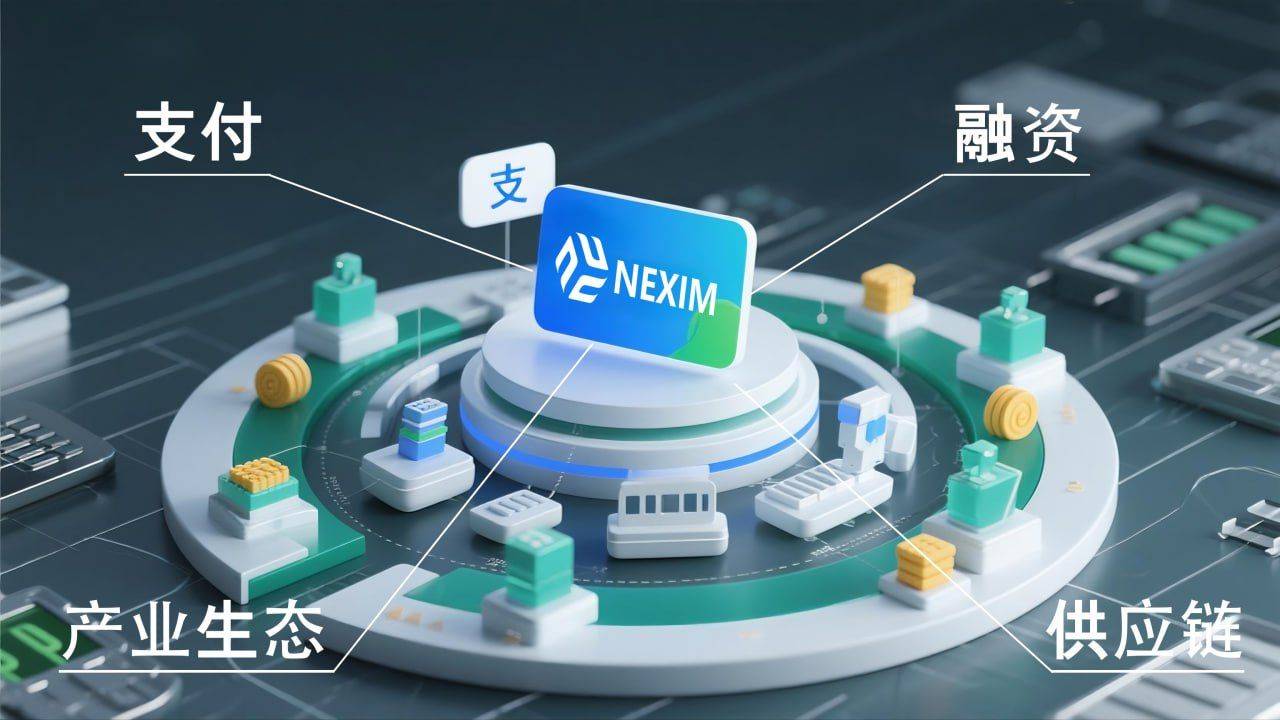
从支付到融资,NEXIM构建链上供应链金融闭环,加速产业价值重构
Sou Hu Cai Jing· 2025-06-03 06:53
Core Insights - The traditional supply chain finance is facing unprecedented structural challenges due to high financing barriers, long payment terms, and low settlement efficiency, which hinder the development of SMEs and cross-border trade [1][3] - NEXIM is leveraging Web3 technology to create an on-chain supply chain finance system that enhances efficiency and value for real enterprises in the digital economy [1][4] Group 1: Traditional Bottlenecks - SMEs struggle to obtain financing due to a lack of credit history and collateral, leading to cumbersome processes and long cycles that reduce operational flexibility [3] - Cross-border settlements face issues such as multi-party clearing, currency losses, and bank fees, which diminish the motivation for enterprises to expand into overseas markets [3] Group 2: NEXIM's On-Chain Financial Model - NEXIM proposes a blockchain-based financial model supported by Web3 technology and driven by the ecological token NIM, aimed at empowering the global supply chain system [4] - The model achieves five key breakthroughs: on-chain payments for real-time global settlements, asset confirmation through immutable data, conversion of order amounts into "consumption power," issuance of digital assets for financing, and incentivization through the NIM token [5] Group 3: Application Results and Ecosystem Expansion - NEXIM has served over 30,000 users and 2,000 certified enterprises, with a cumulative merchant consumption exceeding $3 million, significantly improving cash flow efficiency, credit visibility, and order processing speed [7] - The company is providing customized digital transformation services across various industries, including manufacturing, cross-border e-commerce, retail, and agricultural circulation, establishing a new paradigm of "data-driven credit and transaction-driven finance" [7] Group 4: Deep Integration of Web3 and Real Economy - NEXIM views Web3 as a new commercial system at the intersection of data, behavior, and value, emphasizing that payment is just the entry point while the financial closed loop is fundamental [8] - The platform aims to create a multi-party value network around merchants, nodes, and consumers, integrating transaction, data, and governance systems to transform the supply chain into a value creation chain [8]