制造业

Search documents
本轮高油价会引发金融风险吗?
HTSC· 2026-03-16 09:12
Group 1: Market Impact of High Oil Prices - Since the outbreak of the US-Iran conflict, Brent oil prices have risen above $100, with the forward oil price curve shifting upward, indicating an implied annual average oil price of $85, a 30% increase from two weeks prior[2] - The US retail gasoline price has surged by 22% to $3.63 per gallon, significantly altering market expectations regarding costs and growth[2] - Financial conditions have tightened, with GS US financial conditions index tightening by 50 basis points, corresponding to a 0.5 percentage point drag on growth[3] Group 2: Economic and Financial Risks - The blockade of the Strait of Hormuz is unprecedented and may disrupt the oil dollar circulation, leading to increased dollar shortages and tighter liquidity[4] - High oil prices are expected to exacerbate inflationary pressures, complicating monetary policy as growth slows and financing costs rise[2] - Credit spreads for US investment-grade and high-yield corporate bonds have widened by 10 and 20 basis points, respectively, indicating increased credit risk[12] Group 3: Vulnerable Economies and Assets - Economies highly dependent on energy imports, such as those in Europe, Japan, and South Korea, are facing significant impacts, with stock markets in Japan and South Korea dropping by 8.5% and 15.4%, respectively[5] - Emerging markets like Thailand, India, and Pakistan are particularly vulnerable to the ongoing energy crisis, alongside financially fragile economies such as Argentina and Turkey[5] - Non-essential consumer goods and assets with poor cash flow are likely to face increased pressure in the current environment[5]
【数据发布】2026年1—2月份规模以上工业增加值增长6.3%
中汽协会数据· 2026-03-16 08:35
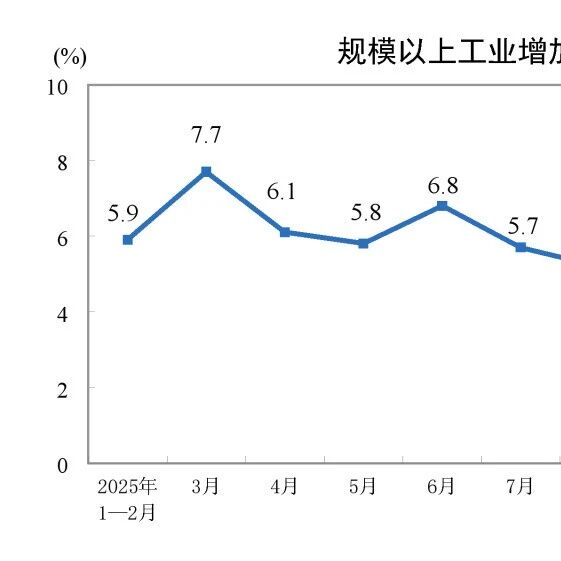
Core Viewpoint - The industrial value added of large-scale industries in January-February increased by 6.3% year-on-year, indicating a positive growth trend in the industrial sector [1][5]. Group 1: Industrial Growth - The industrial value added in January-February showed a month-on-month increase of 0.83% in February [1]. - By sector, mining increased by 6.1%, manufacturing by 6.6%, and electricity, heat, gas, and water production and supply by 4.7% [3][6]. - Among economic types, state-controlled enterprises grew by 4.2%, joint-stock enterprises by 6.9%, foreign and Hong Kong, Macao, and Taiwan-invested enterprises by 4.0%, and private enterprises by 7.4% [3][6]. Group 2: Industry Performance - Out of 41 major industries, 35 experienced year-on-year growth in value added [3]. - Notable growth sectors included coal mining and washing (7.2%), petroleum and natural gas extraction (5.8%), and high-tech manufacturing (13.1%) [3][6]. - The automotive manufacturing sector saw a growth of 3.4%, while the railway, shipbuilding, aerospace, and other transportation equipment manufacturing grew by 13.7% [3][6]. Group 3: Product Output - In January-February, 397 out of 626 major industrial products saw an increase in output year-on-year [4]. - Steel production was 22,119 million tons, down 1.1%, while cement production was 17,827 million tons, up 6.8% [4][7]. - The production of new energy vehicles was 1,604,000 units, down 13.7% [4][7]. Group 4: Sales and Exports - The sales rate of products from large-scale industrial enterprises was 95.4%, a decrease of 0.1 percentage points year-on-year [4][7]. - The export delivery value reached 2,405 billion yuan, reflecting a nominal growth of 6.3% year-on-year [4][7].

【数据发布】2026年1—2月份全国固定资产投资同比增长1.8%
中汽协会数据· 2026-03-16 08:35
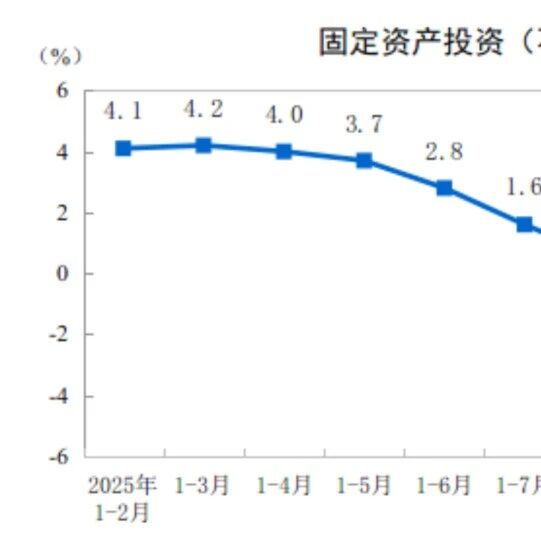
Core Viewpoint - In the first two months, China's fixed asset investment (excluding rural households) reached 52,721 billion yuan, showing a year-on-year growth of 1.8%. However, private fixed asset investment decreased by 2.6% [1][4]. Investment by Industry - Investment in the primary industry was 1,093 billion yuan, with a year-on-year increase of 17.4% - Investment in the secondary industry was 17,434 billion yuan, growing by 5.4% - Investment in the tertiary industry was 34,194 billion yuan, declining by 0.4% [3][4]. Industrial Investment Breakdown - Industrial investment increased by 5.4% year-on-year, with mining investment up by 13.0%, manufacturing investment up by 3.1%, and investment in electricity, heat, gas, and water production and supply up by 13.1% [3][4]. Infrastructure Investment - Infrastructure investment grew by 11.4% year-on-year, with notable increases in aviation transport investment (31.1%), gas production and supply investment (20.0%), and water transport investment (17.9%) [3][4]. Regional Investment Analysis - Investment in the eastern region increased by 1.8% year-on-year, while the central region saw a growth of 1.9%. In contrast, the western region experienced a decline of 0.5%, and the northeastern region saw a significant drop of 11.4% [3][4]. Investment by Registration Type - Domestic enterprises' fixed asset investment grew by 2.1% year-on-year, while investment from Hong Kong, Macau, and Taiwan enterprises decreased by 3.0%, and foreign-invested enterprises saw a decline of 9.1% [3][4].
宏观高频数据追踪:一线城市楼市表现亮眼,制造业生产恢复好于建筑施工行业
East Money Securities· 2026-03-16 03:53
1. Report Industry Investment Rating No information provided in the given content. 2. Core Viewpoints of the Report - The real - estate high - frequency data shows a marginal improvement, but its sustainability needs further observation. The performance of the real - estate market in first - tier cities is remarkable, and attention should be paid to the "small spring" of the real - estate market in March [2][8]. - The resumption of work and production rate of national construction sites is lower than that of the same lunar period last year. The production of the construction industry is weak, while the manufacturing industry provides some support for industrial production. Attention should be paid to the recovery of industrial production in North China after the influence of weather factors fades [2][9]. - The international crude oil market is in a volatile state. Geopolitical factors significantly affect oil prices. The release of strategic oil reserves by multiple countries may impact the oil price, and the future development of the Middle East situation also needs attention [2][10]. 3. Summaries According to the Directory 3.1 Financial Market - Interest rate and credit bond indices show differentiated performance, and the Nanhua Energy and Chemical Index rises [11][13]. - The gold - copper ratio shows a marginal increase, and the gold - silver ratio decreases. The gold price rises marginally, and the silver price first rises and then falls [14]. 3.2 Industrial Production 3.2.1 Power Generation - The coal consumption of power plants in eight southern provinces decreases, and the price of thermal coal shows a marginal decline [16][17]. 3.2.2 Coking - The operating rate of coking enterprises rises marginally, and the prices of coking coal and coke futures increase [18]. 3.2.3 Steel - The output of rebar increases, and the arrival volume of iron ore at six northern ports rises significantly. The prices of iron ore futures and spot increase, and the rebar futures price also goes up [20][21][23]. 3.2.4 Building Materials - The capacity utilization rate of cement clinker continues to rise, and the accumulation rate of copper and aluminum inventories slows down. The price of glass rises, while the national cement price index shows a marginal decline [25][26][28]. 3.2.5 Chemical Industry - Most of the operating rate data shows an upward trend, and the crude oil price continues to rise significantly. The methanol operating rate continues to decline, while the soda ash operating rate rises marginally [38]. 3.2.6 Automobile - The operating rates of automobile semi - steel tires and all - steel tires increase slightly [39][40]. 3.3 Resumption of Work and Production - The resumption of work and production progress of 10,692 national construction sites is lower than that of the same lunar period last year, and the resumption of non - real - estate projects is better than that of real - estate projects [41][42]. 3.4 Logistics and Transportation 3.4.1 Freight - The road logistics freight rate index remains stable, and the railway freight volume continues to rise [42][43]. 3.4.2 Passenger Transport - The subway passenger volume fluctuates within a narrow range, and the number of domestic and international flights drops significantly [45]. 3.5 Terminal Demand 3.5.1 Credit - The negative spread between bill rediscount and certificate of deposit narrows, and the rediscount rate of six - month national - owned enterprise bills rises marginally [46][48][51]. 3.5.2 Real Estate - The transaction area of new houses fluctuates upward, and the sales area of second - hand houses in Beijing, Shanghai, and Shenzhen rebounds significantly. The land transaction area of 100 cities rises marginally, while the land premium rate drops significantly [52][53][66]. 3.5.3 Construction - The apparent demand for rebar rebounds significantly, and the proportion of profitable steel mills turns from a decline to an increase [66][67]. 3.5.4 Consumption - The total number of movie screenings decreases seasonally, and the vegetable price continues to fall [67][75][76]. 3.5.5 Export - The SCFI freight rate rises, and the port container throughput continues to recover. The CCFI index of the Persian Gulf - Red Sea route rises significantly month - on - month, while the Baltic Dry Index fluctuates downward [79][84][86].
最新经济数据出炉!起步有力、开局良好
清华金融评论· 2026-03-16 02:16
Economic Overview - In the first two months, under the strong leadership of the Central Committee, the economy showed a strong start with stable employment and prices, and a growth in new productive forces [3] Industrial Production - The industrial added value for large-scale enterprises increased by 6.3% year-on-year, accelerating by 1.1 percentage points compared to December of the previous year [4] - The equipment manufacturing industry saw a 9.3% increase, while high-tech manufacturing grew by 13.1%, outperforming the overall industrial growth by 3.0 and 6.8 percentage points respectively [4] - The manufacturing purchasing managers' index was at 49.0, indicating a slight contraction, while the business activity expectation index rose to 53.2 [4] Service Sector Growth - The service production index increased by 5.2% year-on-year, with significant growth in information transmission, software, and IT services at 10.1% [6] - The business activity index for the service sector was at 49.7, with a business activity expectation index of 55.8, indicating positive sentiment [6] Retail Sales - The total retail sales of consumer goods reached 86,079 billion yuan, growing by 2.8% year-on-year, with urban retail sales at 74,449 billion yuan and rural retail sales at 11,630 billion yuan [8] - Online retail sales of goods and services reached 32,546 billion yuan, with online goods retailing at 20,812 billion yuan, accounting for 24.2% of total retail sales [8] Fixed Asset Investment - Fixed asset investment (excluding rural households) was 52,721 billion yuan, with a year-on-year growth of 1.8%, reversing from a decline of 3.8% in the previous year [10] - Infrastructure investment grew by 11.4%, while real estate development investment fell by 11.1% [10] Trade Performance - The total import and export value reached 77,321 billion yuan, with a year-on-year growth of 18.3%, including exports of 46,178 billion yuan and imports of 31,143 billion yuan [12] - Private enterprises' imports and exports increased by 22.8%, with mechanical and electrical product exports growing by 24.3% [12] Employment Situation - The urban survey unemployment rate averaged 5.3%, remaining stable compared to the previous year, with a slight increase of 0.1 percentage points in February [13] - The average weekly working hours for employees were 48.1 hours [13] Price Trends - The Consumer Price Index (CPI) rose by 0.8% year-on-year, with food and beverage prices increasing by 0.6% [14] - The Producer Price Index (PPI) for industrial producers decreased by 1.2% year-on-year, indicating a narrowing decline [14] Conclusion - Overall, major economic indicators showed a significant rebound in the first two months, indicating a good start for the national economy, although challenges remain due to external environment changes and geopolitical risks [17]

中国工厂轰鸣,把AI灌入一切硬件 | 海斌访谈
第一财经· 2026-03-15 12:39
Core Viewpoint - The AWE Expo highlights the integration of artificial intelligence (AI) into various hardware products, indicating that companies lacking AI offerings are falling behind in the competitive landscape [3]. Group 1: AI Integration in Hardware - AI is being embedded in a wide range of hardware, from headsets to humanoid robots, with companies like Itstone achieving a Guinness World Record for precision assembly tasks using AI-driven robots [5]. - Haier's humanoid robot, Harley, showcased its capabilities in a dance performance, while the company also introduced AI features in its television products, allowing for natural language interaction even when the screen is off [5]. - NAVEE has expanded its product line to include high-performance electric scooters and personal flying devices, leveraging extensive riding data to optimize AI algorithms [6]. Group 2: Advancements in AI Capabilities - The development of advanced AI capabilities is crucial for future household service robots, which need to perform complex tasks like folding clothes through precise object recognition and manipulation [8]. - The integration of AI into two-wheeled vehicles, such as the K95C Max electric motorcycle, demonstrates the trend of enhancing traditional products with intelligent systems [6]. Group 3: Chip Technology and AI - The foundation of smart hardware is the chip, with companies like Hisense enhancing computational power in their products to support AI applications [10]. - The rapid growth of domestic chip production is driven by the demand for edge computing capabilities, with significant advancements in AI model performance observed recently [10][15]. - The Chinese manufacturing ecosystem is positioned to produce affordable, high-performance products embedded with AI-capable chips, reinforcing its status as the world's factory [15][17]. Group 4: Manufacturing and Supply Chain Advantages - China's complete supply chain and manufacturing capabilities provide a competitive edge, allowing for rapid response and collaboration across industries [17]. - The integration of AI into manufacturing processes is expected to strengthen China's manufacturing advantages, particularly in addressing chip shortages [17][18]. - The future of hardware products will prioritize AI performance, with Chinese companies poised to leverage their strengths in both software and hardware integration [18].

【广发宏观王丹】从细节看重点:对“十五五”规划纲要的简要梳理
郭磊宏观茶座· 2026-03-15 08:27
Core Viewpoint - The article summarizes the key changes and focus areas in China's 15th Five-Year Plan compared to the 14th Five-Year Plan, highlighting the emphasis on technological advancement, high-level openness, urbanization, and population quality development. Content Structure Changes - The 15th Five-Year Plan emphasizes new technological developments, particularly artificial intelligence, and integrates digital development with the construction of a digital China as a separate chapter [1][17] - The chapter on "Expanding High-Level Openness" has been moved forward to address uncertainties in the global trade environment [1][17] - The "New Urbanization Strategy" is now included in the "Optimizing Regional Economic Layout" section, reflecting a shift from rapid growth to stable development [1][17] - The plan combines "Population Quality Development" with "Comprehensive Human Development," introducing a new chapter on building a fertility-friendly society [1][17] Main Goals Adjustments - The GDP growth target continues to emphasize maintaining a reasonable range, with a new long-term goal of doubling per capita GDP by 2035 compared to 2020 [2][18] - The focus on "High-Quality Development" is clearer, with new emphasis on increasing the resident consumption rate and enhancing domestic demand as the main driver of economic growth [2][18] - The target for the proportion of nursing beds in elderly care institutions is raised from 68% to 73%, while the previous insurance coverage rate indicator has been removed [2][18] - A new target to increase the enrollment rate of children under three years old by 6 percentage points replaces the previous focus on the number of childcare places per thousand people [2][18] - The target for non-fossil energy consumption is set to increase to 25%, reflecting a shift from energy consumption control to carbon emission control [2][18] Modern Industrial System - The modern industrial system section has been moved up in priority, now positioned as the second major strategic task [3][19] - It includes optimizing traditional industries, nurturing emerging industries, and developing a modern infrastructure system [3][19] - The emphasis is on advanced manufacturing as the backbone, with new requirements for aerospace, transportation, and network strength [3][19] - Traditional industries such as steel, petrochemicals, and electronics are highlighted for upgrades, with a focus on healthy and orderly development mechanisms [3][19] - New strategic emerging industries include robotics and emphasize the development of technologies like quantum science and bio-manufacturing [3][19] Infrastructure Development - The principle of "appropriate advance without over-advancing" is a new addition, balancing investment growth with fiscal sustainability [4][20] - The plan emphasizes improving the comprehensive benefits of transportation infrastructure and cross-regional coordination [4][20] - A more proactive approach to building new energy infrastructure is introduced, with specific actions to increase non-fossil energy consumption [4][20] - Water network construction focuses on enhancing disaster prevention and resource allocation capabilities [4][20] Technological Innovation - The plan calls for decisive breakthroughs in key areas such as integrated circuits and advanced materials, emphasizing the need for extraordinary measures [5][22] - Key areas for technological breakthroughs include artificial intelligence and quantum technology [5][22] - The role of enterprises in innovation is strengthened, with policies to enhance participation in major technological decisions and support for R&D [5][22] Digital Development - The plan aims to enhance digital development through efficient supply of computing power, algorithms, and data [6][23] - It includes the construction of high-quality data sets across various sectors and the integration of AI into multiple fields [6][23] Domestic Market Strengthening - The plan emphasizes boosting consumption and effective investment, with separate chapters dedicated to these areas [7][24] - Key measures to stimulate consumption include improving employment, increasing income, and enhancing the consumption environment [7][24] - Effective investment is aimed at supporting national strategies and optimizing supply structures [7][24] Economic System Reform - The importance of factor market and price mechanism reforms is highlighted, with a focus on deepening state-owned enterprise reforms [8][19] - The plan encourages private sector participation in competitive infrastructure areas and emphasizes market-oriented reforms [8][19] Foreign Trade and Investment - The plan prioritizes expanding service sector openness and optimizing the foreign investment environment [9][19] - It includes measures to enhance the competitiveness of service exports and adjust import tariffs [9][19] Agricultural and Rural Development - The plan focuses on increasing grain production capacity and stabilizing key agricultural outputs [10][19] - It emphasizes the development of livestock and aquaculture sectors, alongside improvements in rural infrastructure [10][19] Regional Development - The framework for regional development remains unchanged, focusing on coordinated growth and the enhancement of key urban areas [12][19] - It includes measures to improve urbanization and support for rural populations [12][19] Population Quality Development - The plan introduces measures to reduce the costs of childbirth and childcare, aiming to support family growth [13][19] - It emphasizes improving educational quality and healthcare services, particularly for vulnerable populations [13][19] Social Welfare and Employment - The plan prioritizes high-quality employment and emphasizes the importance of income distribution reforms [14][19] - It includes measures to enhance social security and housing policies to support families [14][19] Green Development - The plan places a strong emphasis on achieving carbon peak and implementing dual control of carbon emissions [15][19] - It sets specific energy-saving targets for key industries and promotes clean energy alternatives [15][19]

从细节看重点:对“十五五”规划纲要的简要梳理-20260315
GF SECURITIES· 2026-03-15 06:58
Economic Development Goals - The "15th Five-Year Plan" sets 20 main economic and social development goals, including GDP growth, labor productivity, and urbanization rates[6] - The GDP growth target continues to emphasize maintaining a reasonable range, with a new long-term goal of doubling per capita GDP by 2035 compared to 2020 levels[5] - The plan aims to increase the proportion of non-fossil energy in total energy consumption to 25%[5] Technological and Industrial Development - The focus on modern industrial systems has shifted, with an emphasis on advanced manufacturing as the backbone, and new requirements for aerospace, transportation, and network power[7] - The plan highlights the importance of innovation in key areas such as artificial intelligence, quantum technology, and biotechnology, with a commitment to achieving breakthroughs in core technologies[9] - The modernization of infrastructure is prioritized, with a focus on sustainable energy and digital infrastructure development[9] Social Welfare and Population Development - The plan introduces a target to increase the proportion of nursing beds in elderly care institutions from 68% to 73%[5] - It aims to raise the childcare enrollment rate for children under three by 6 percentage points, reflecting a shift from supply to demand in childcare policy[5] - Policies to support childbirth and reduce costs associated with raising children are emphasized, including tax deductions and expanded insurance coverage[20] Domestic Market and Investment - The plan emphasizes boosting consumption and effective investment, with specific measures to enhance employment and improve consumer confidence[11] - It aims to increase the proportion of government investment in social welfare projects, particularly in healthcare and elderly care[11] - The establishment of a unified national market is a key focus, with improvements in property rights protection and market access[11] Environmental and Green Development - The plan prioritizes achieving carbon peak and neutrality, implementing dual control over carbon emissions and intensity[20] - Specific targets include saving 1.5 million tons of standard coal through energy efficiency improvements in key industries[20] - The plan outlines measures for clean energy transition, including the promotion of biomass and green hydrogen projects[20]
宏观周度观察:开年投资哪家强?
Guolian Minsheng Securities· 2026-03-15 00:25
Group 1: Manufacturing Sector - The strong export growth at the beginning of the year is expected to inject positive momentum into manufacturing investment, with a notable increase in export growth of 21.8% year-on-year for January-February 2026[40] - The PMI purchasing index indicates that manufacturing investment growth may improve, although it remains below the threshold of stability[14] - The employment index shows that the manufacturing sector's employment recovery is better than that of the construction sector, suggesting a stronger start for manufacturing investment[14] Group 2: Infrastructure Investment - The scale and proportion of special bonds directed towards infrastructure at the beginning of the year are slightly higher than the same period last year, but overall fiscal resources are not heavily tilted towards infrastructure[19] - High-frequency data indicates that construction-related indicators, such as asphalt operating rates, are at historically low levels, suggesting limited potential for significant infrastructure investment growth[20] - The overall recovery in infrastructure investment is expected to be constrained due to adjustments in fiscal spending throughout the year[19] Group 3: Real Estate Sector - A significant 90% of real estate companies reported a year-on-year decrease in new project starts after the New Year, indicating a slow recovery in real estate investment[24] - The "Shanghai Seven" policy has had a limited effect on new home sales, reflecting the ongoing challenges in the real estate market[28] - Infrastructure investment, while not strong, is still performing better than real estate, with only 39% of infrastructure companies reporting a decrease in new project starts compared to 90% in real estate[28] Group 4: Economic Data and Trends - February's CPI saw a significant increase due to the concentrated release of demand from the long holiday, with a year-on-year growth of 1.3%[31] - The PPI continued to recover, with a year-on-year decline of only 0.9% in February, supported by rising international oil prices and the effects of "anti-involution" policies[37] - The overall economic activity index for January-February is at a historical high, indicating a notable increase in economic vitality at the start of the year[60]
李迅雷:从当前经济结构看如何盘活存量
李迅雷金融与投资· 2026-03-14 02:57
Core Viewpoint - The Chinese economy is transitioning from an incremental expansion phase to a stock-driven phase, reflecting a shift in focus towards improving the quality of economic growth as the GDP growth target is lowered to 4.5%-5% [3][4]. Economic Challenges and Structural Contradictions - The Chinese economy faces a complex situation characterized by cyclical, structural, and institutional challenges, including a downturn in the real estate sector, imbalances in investment and consumption, and rising macro leverage rates exceeding 300% [5][6]. - The aging population is exacerbating demand for real estate and overall consumption, leading to increased fiscal burdens [5][6]. Investment and Consumption Logic - There is a need to correct the performance evaluation bias that overly emphasizes investment over consumption, as local governments tend to rely heavily on investment for economic growth [7][8]. - Investment's contribution to GDP is over 40%, significantly higher than the global average of around 20%, indicating an unhealthy dependency on investment [7][8]. Strategies to Activate Stock Assets - Four key strategies are proposed to address current macroeconomic pain points: 1. Issue special central government bonds to replace high-interest local debts, reducing interest burdens on local governments [9]. 2. Utilize market-oriented methods to activate state-owned assets, allowing for more efficient management and operation [9]. 3. Broaden investment channels and unleash high-end consumption potential, addressing the contradiction of low consumption growth alongside high household savings of 170 trillion yuan [10]. 4. Reform the fiscal system and national income distribution, optimizing the structure of central-to-local transfer payments to better address social security gaps and support low-income populations [10].