基础设施建设

Search documents
基建ETF(159619)盘中涨超1%,政策加码与需求改善预期引关注
Sou Hu Cai Jing· 2026-01-09 05:59
Group 1 - The core viewpoint of the news is that the infrastructure ETF (159619) has seen a rise of over 1% due to policy support and expectations of improved demand [1] - In early January, policies were introduced to support infrastructure, with the National Development and Reform Commission recently approving or planning multiple major infrastructure projects, totaling over 400 billion yuan [1] - The expected growth rate of fixed asset investment in the first quarter is anticipated to turn positive, supported by the early release of a "dual" construction project list and a central budget investment plan of 295 billion yuan [1] Group 2 - The construction industry new orders index has risen for four consecutive months to 47.4% in December, indicating a marginal improvement in industry demand [1] - The infrastructure ETF (159619) tracks the CSI Infrastructure Index (930608), which selects listed companies involved in infrastructure construction, specialized engineering, engineering machinery, and housing construction [1] - The index's constituent stocks are primarily concentrated in the industrial sector, with a broad market capitalization distribution and high weight among the top constituent stocks, reflecting strong market representation and industry concentration characteristics [1]
美国欲驱逐中俄,独吞石油!中国在委内瑞拉有哪些重大项目?
Sou Hu Cai Jing· 2026-01-09 04:40
Group 1 - The core point of the article is that Trump has demanded Venezuela to sever all oil cooperation with China, Russia, Iran, and Cuba, aiming to transfer control of its oil resources to American capital [1] - China has significant investments in Venezuela, primarily through oil-for-loan agreements, which have facilitated large-scale oil development projects [1][3] - As of 2019, China's cumulative loans to Venezuela reached approximately $65 billion, with Venezuela repaying about $42 billion through oil, leaving a remaining debt of around $23 billion [1] Group 2 - China National Petroleum Corporation (CNPC) has invested over $30 billion in Venezuela, controlling major oil fields that account for 40% of Venezuela's total oil production [3] - Chinese companies have also constructed significant infrastructure in Venezuela, including power plants and refineries, with 60% of Venezuela's electricity supply coming from Chinese-built facilities [3][6] - The majority of infrastructure projects in Venezuela are contracted to Chinese companies, including telecommunications networks developed by ZTE and Huawei [6] Group 3 - Russia's involvement in Venezuela focuses on oil, natural gas, and gold extraction, while Iran has invested over $2 billion primarily in refining equipment and agricultural development [6] - Cuba provides labor to Venezuela, exchanging professionals for oil supplies, but China's investment and cooperation in Venezuela are unmatched by other countries [6][7] - The article suggests that regardless of future political changes in Venezuela, safeguarding Chinese investments and interests will be crucial to avoid scenarios similar to the Libyan conflict [7]



债主、中介质疑百亿债权真实性 这家500强民企重整陷僵局?
Di Yi Cai Jing· 2026-01-08 06:07
Core Viewpoint - The bankruptcy restructuring case of Caixin Group has encountered a significant dispute over newly claimed debts amounting to over 100 billion yuan, raising concerns among creditors about the legitimacy of these claims and their potential impact on the restructuring process [1][4][17]. Group 1: Debt Claims and Disputes - The newly claimed debts represent a substantial portion of the total debt, theoretically granting these creditors strong control over the restructuring plan [2]. - The total amount of claimed debts has escalated from an initial estimate of 260-265 billion yuan to 453.91 billion yuan, with ongoing disputes regarding the authenticity of approximately 178 billion yuan of these claims [5][6][17]. - Many creditors have raised doubts about the legitimacy of the claims, particularly those linked to related parties and external units, which could significantly consume the limited resources available for debt repayment [8][17]. Group 2: Management and Audit Concerns - The auditing and evaluation firms involved in the restructuring have expressed concerns regarding the authenticity of the claimed debts, noting that many claims lack sufficient supporting documentation [12][14]. - The audit report highlighted serious deficiencies in internal controls at Caixin Group, including inadequate processes for identifying and recording related party transactions [13][14]. - The management has been unable to provide adequate evidence to confirm the nature and legitimacy of the substantial inter-company transactions that have been claimed as debts [12][14]. Group 3: Implications for Restructuring Process - The ongoing disputes and the increasing number of dissenting creditors have led to a stalemate in the restructuring process, with the scheduled vote on the restructuring plan now uncertain [17]. - The potential dominance of related party claims in the voting process raises concerns that the restructuring plan may disproportionately benefit these parties at the expense of ordinary creditors [17][18]. - Legal experts suggest that if mutual debts are recognized, they should be offset against each other, but the current management has not included these in the substantive merger scope, which requires further verification [15].

委内瑞拉股市暴涨
Xin Lang Cai Jing· 2026-01-07 10:13
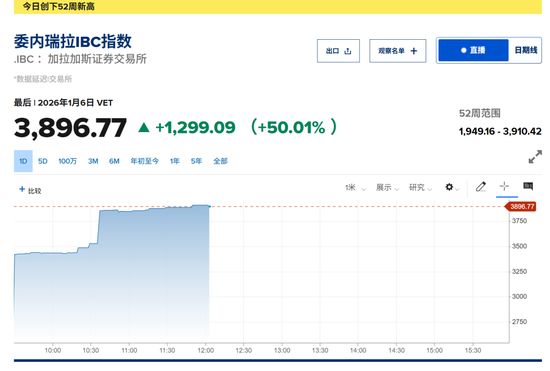
Core Viewpoint - Venezuela's stock market experienced a surge of over 50%, with the IBC index rising from approximately 2000 points at the beginning of 2026 to nearly 3900 points, reflecting a significant improvement in market sentiment [1] Market Performance - The IBC index has increased by over 100% year-to-date, indicating a strong recovery in investor confidence [1] - The rise in the index accelerated following recent events, which are perceived as potential turning points for the country's economy and politics [1] Investor Sentiment - Market observers note a return of optimism among investors, attributed to a reduction in political risks associated with Maduro [1] - There is growing interest in Venezuelan bonds and stocks, particularly in sectors related to oil production, infrastructure, and financial services [1] Economic Outlook - In a post-Maduro era, Venezuela's vast oil reserves may become accessible to international energy companies, potentially leading to new capital inflows and an increase in global oil supply [1] - This situation is viewed as a pathway for Venezuela to normalize its economy after years of international isolation and sanctions [1]
2025年中国继续稳居柬埔寨最大投资来源国
Xin Lang Cai Jing· 2026-01-05 23:52
Core Insights - In 2025, the Cambodia Development Council approved a total of 630 investment projects with a total investment amount of 10 billion USD, marking a significant increase in both project numbers and investment value compared to the previous year [1][1][1] Investment Overview - The approved investment projects are expected to create over 430,000 jobs in Cambodia, with project numbers and total investment increasing by 52% and 45% year-on-year, respectively [1][1][1] - China remains the largest source of foreign investment in Cambodia, accounting for over 54% of the total investment in 2025 [1][1][1] - Other major foreign investment sources include Singapore and Vietnam [1] Sector Focus - The investment projects are primarily concentrated in sectors such as manufacturing, agriculture and agro-processing, infrastructure, and tourism [1][1][1] - These projects are mainly located in the capital city of Phnom Penh, the coastal region of Sihanoukville, and the border province of Banteay Meanchey [1][1][1]
省政府新年“第一会”释放强烈信号——抓项目 拼项目
Xin Lang Cai Jing· 2026-01-05 20:49
Core Insights - The provincial government of Yunnan has designated 2026 as a project-focused year, emphasizing the importance of project work for economic growth and development [1] - The province has seen a significant shift in investment structure, with industrial investment maintaining over 50% for three consecutive years and private sector investment exceeding 65% [2] - The government is implementing strict guidelines to ensure project quality and sustainability, prohibiting ineffective projects and focusing on key areas such as infrastructure and social welfare [3][4] Group 1 - The provincial government is pushing for a strong focus on project work to drive economic growth, with a clear directive to prioritize project execution [1] - Yunnan's investment strategy has transitioned from relying on transportation and real estate to a dual-driven model of government and private investment [2] - The government has established a set of rigid principles to guide project planning and execution, aiming to avoid superficial projects and ensure effective risk management [2] Group 2 - In Kunming, major industrial and infrastructure projects are underway, aimed at enhancing economic development and public safety [3] - The city is focusing on aligning project work with community needs and policy opportunities to boost investment across various sectors [3] - Qujing City has developed a comprehensive project planning system, managing 2,272 projects with a total investment of 979.86 billion yuan, emphasizing the importance of project-centric development [3] Group 3 - Local governments are tightening project approval processes to ensure sustainability and effectiveness, with a focus on delivering tangible benefits [4] - Zhaotong City is planning to initiate 10 projects in the phosphor-based new materials sector in 2026, with a total investment of 8.267 billion yuan [4] - The provincial government is committed to accelerating the implementation of high-quality projects to build a modern industrial system unique to Yunnan [4]
中国交通建设:截至2025年12月31日累计回购2934.59万股A股
Zhi Tong Cai Jing· 2026-01-05 09:52
Summary of Key Points Core Viewpoint - China Communications Construction Company (01800) has announced a share buyback program, indicating a commitment to enhancing shareholder value through strategic capital management [1] Group 1: Buyback Details - As of December 31, 2025, the company has repurchased a total of 29.3459 million A-shares, which represents approximately 0.1803% of the company's total share capital [1] - The highest price at which shares were repurchased was 8.98 RMB per share, while the lowest price was 8.47 RMB per share [1] - The total amount spent on the buyback was 257 million RMB, excluding transaction fees [1] Group 2: Compliance and Strategy - The buyback is in accordance with relevant laws and regulations, as well as the company's established share repurchase plan [1]
(经济观察)政策靠前发力 中国拿出“真金白银”
Zhong Guo Xin Wen Wang· 2026-01-01 11:35
Group 1 - The core focus of China's economic policy for 2026 is to expand domestic demand, with a significant emphasis on optimizing the implementation of the "Two New" policies, which include large-scale equipment updates and the replacement of old consumer goods [1] - The National Development and Reform Commission (NDRC) has issued a notice to support the "Two New" policies, with a total of 62.5 billion yuan allocated for the first batch of ultra-long-term special bonds to support the replacement of consumer goods [1][2] - The 2026 "Two New" policy is characterized by more precise targeting and enhanced effectiveness compared to 2025, focusing on a broader range of products for subsidies, particularly in the home appliance sector [2] Group 2 - Investment stabilization is another key aspect of expanding domestic demand, with approximately 295 billion yuan allocated for major construction projects, including infrastructure and energy facilities, to be expedited [2] - The National Venture Capital Guidance Fund has been officially launched, with 100 billion yuan sourced from ultra-long-term special bonds, aiming to attract local and social capital for a projected investment scale exceeding 1 trillion yuan [2][3] - The new version of the "Encouragement Directory" for foreign investment includes 1,679 entries, an increase of 205 from the previous version, promoting foreign investment in advanced manufacturing, modern services, and high-tech sectors [3]
德国的豪赌:就在这一局
Sou Hu Cai Jing· 2026-01-01 00:49
Core Viewpoint - Germany plans to finance €1 trillion in debt by 2026 to boost infrastructure and defense, aiming to revive the struggling European economy, but the effectiveness of this plan remains uncertain amid structural weaknesses and geopolitical tensions [1][3]. Group 1: Economic Outlook - Supporters believe that increased investment in infrastructure and defense will stimulate domestic demand and drive economic recovery, with some economists suggesting this is crucial for Germany to escape its recession since late 2022 [1][3]. - The Eurozone's economic growth is projected to slow to 1.2% in 2026, with a slight recovery to 1.4% in 2027, indicating a sluggish economic environment [1]. - The IFO Institute has downgraded Germany's economic growth forecast for 2026 to 0.8%, citing the impact of U.S. tariffs on EU goods as a contributing factor to further economic slowdown [3]. Group 2: Structural Challenges - Germany faces significant challenges, including declining labor potential, insufficient business investment confidence, and weak productivity growth, which could threaten its economic competitiveness without structural reforms [3]. - France, as another key EU economy, is also struggling with high debt levels, projected to reach 130% of GDP by 2030, raising doubts about the effectiveness of Germany's stimulus plan in addressing broader EU economic issues [5]. Group 3: Geopolitical and Trade Concerns - The increasing trade barriers and U.S. tariffs are expected to create uncertainty in Europe's economic outlook, complicating the potential success of Germany's fiscal stimulus [7]. - The interplay between fiscal stimulus and geopolitical tensions may lead to a prolonged struggle without clear short-term victories, raising questions about the sustainability of the proposed economic revival [7].
2026年15大行业趋势预测 世界经济将如何变革?
Sou Hu Cai Jing· 2025-12-31 07:21
Group 1: Global Economic Trends - In 2026, global defense spending is expected to reach a historic high of $2.9 trillion, influenced by geopolitical tensions and U.S. policies, with NATO countries planning to increase defense spending to 5% of GDP by 2035 [3][4] - Global energy demand is projected to grow by only 1% in 2026, driven by economic slowdown and improved energy efficiency, while carbon emissions are expected to increase by just 0.7% [4] - The global financial sector will face a new landscape of policy divergence, with major economies expected to lower interest rates, leading to a nearly 5% growth in global bank loans [7][8] Group 2: Automotive Industry - The global automotive market is anticipated to show a complex picture in 2026, with overall new car sales expected to grow by 2.5%, driven by a 15% increase in electric vehicle sales to 24 million units, with China accounting for over half of this market [3] - U.S. automakers are adjusting their electric vehicle strategies due to reduced policy support, with companies like Audi and Aston Martin delaying electric vehicle launches [3] Group 3: Energy Sector - Non-hydro renewable energy generation is expected to surpass 30% of the global energy mix for the first time, exceeding coal [4] - China is projected to add over 300 GW of wind and solar capacity, sufficient to power millions of households [4] Group 4: Healthcare Industry - Global healthcare spending is expected to grow by 5% to nearly $12 trillion, but actual government investment may remain tight due to prioritization of defense and debt reduction [10] - The pharmaceutical market is expected to see a 5% increase in sales, driven by the popularity of oral weight-loss drugs and the introduction of generic drugs in India and China [10] Group 5: Infrastructure Investment - Global infrastructure investment is projected to grow by 6%, exceeding $30 trillion, with nearly half of the investment concentrated in Asia [10][11] - The U.S. is focusing on digital infrastructure, with major tech companies expected to invest $400 billion in data centers [11] Group 6: Consumer Goods and Retail - Global retail sales growth is expected to be limited to 2% in 2026, with markets like India and the Philippines projected to grow by 5% and 7% respectively [15] - Companies are reshaping supply chains in response to trade tensions, with Nike planning to reduce reliance on Chinese manufacturing [16] Group 7: Tourism and Travel - The global tourism industry is expected to see a strong recovery, with international travelers projected to exceed 2 billion and total spending reaching $1.8 trillion [19][20] - The cruise market is set to expand, with at least 16 new cruise ships expected to enter service despite environmental regulations [20] Group 8: Technology and AI - The use of generative AI in businesses is expected to rise significantly, with the proportion of companies utilizing this technology projected to jump from under 5% in 2023 to about 80% by 2026 [18][19] - The demand for AI-related talent is expected to surge, with India alone needing 1 million skilled professionals by 2026 [19]