
太空光伏

Search documents
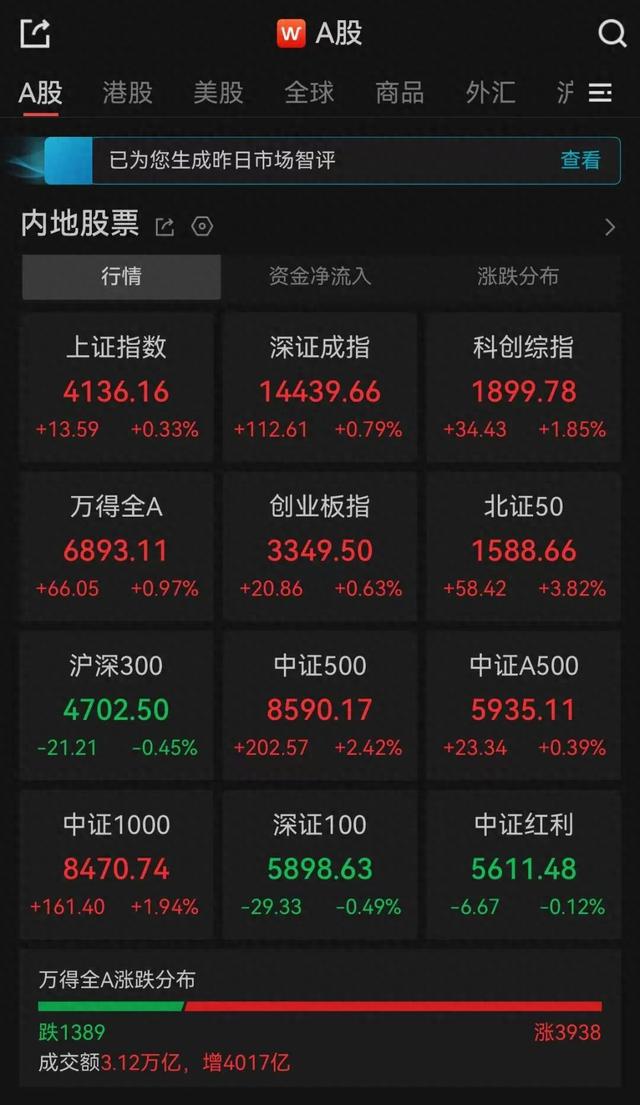
A股收评:商业航天再度爆发,三大指数集体收涨
Bei Jing Ri Bao Ke Hu Duan· 2026-01-23 07:24
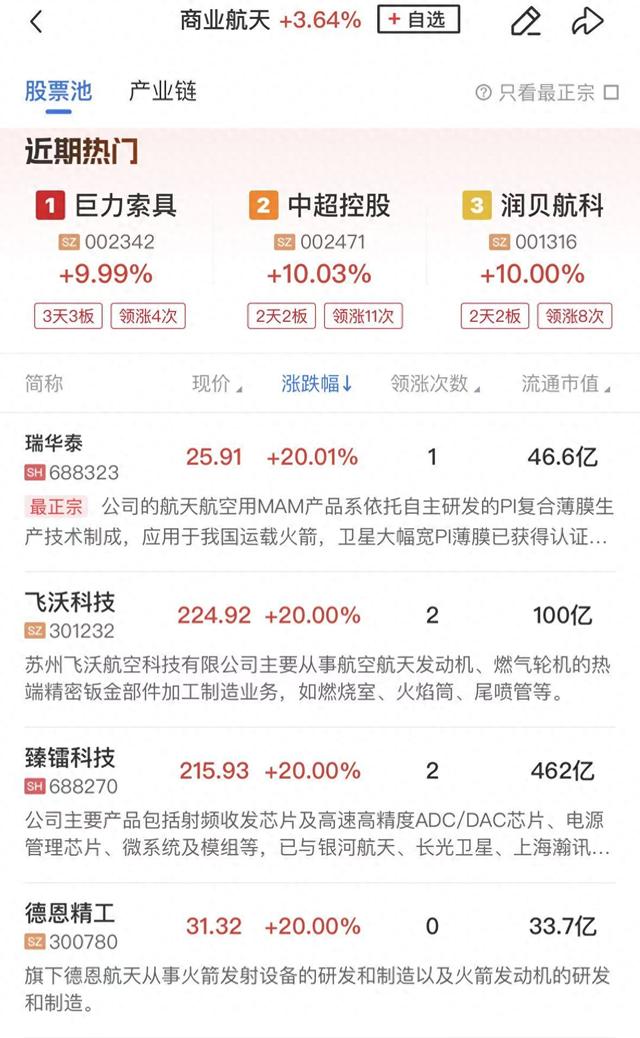
Market Performance - The A-share market opened high on the 23rd and experienced fluctuations throughout the day, closing collectively higher at the end of the trading session. The Shanghai Composite Index rose by 0.33%, the Shenzhen Component Index increased by 0.79%, and the ChiNext Index gained 0.63% [1][2]. Index and Stock Performance - The Shanghai Composite Index closed at 4136.16, up by 13.59 points or 0.33% [2]. - The Shenzhen Component Index finished at 14439.66, with an increase of 112.61 points or 0.79% [2]. - The ChiNext Index ended at 1899.78, rising by 34.43 points or 1.85% [2]. - The total trading volume in the market reached 3.12 trillion yuan, with over 3900 stocks experiencing gains [3]. Sector Highlights - The commercial aerospace sector saw a significant surge, with over 20 stocks hitting the daily limit up [3]. - The space photovoltaic concept also boosted the solar energy sector, contributing to a collective rise [3]. - AI applications and pharmaceutical commercial sectors showed active performance [3]. - The smart driving concept experienced a rally in the afternoon, while the non-ferrous metals sector continued to rise, with precious metals leading the gains [3]. - The price of spot gold surpassed $4967 per ounce, reaching a historical high, while spot silver broke above $96 per ounce [3]. Emerging Trends - The solid-state battery concept showed strength in the afternoon, with several companies like Oke Technology and Shanghai Washba hitting the daily limit up, while others like Naconor and Xianhui Technology rose over 10% [3]. - The computing hardware supply chain is undergoing adjustments, with the CPO sector leading the decline [3].

午报三大指数震荡分化涨跌不一,商业航天、太空光伏概念双双爆发,算力硬件股陷入调整
Xin Lang Cai Jing· 2026-01-23 04:18
Market Overview - The market experienced a high opening followed by a pullback, with the three major indices briefly turning negative. The half-day trading volume in the Shanghai and Shenzhen markets reached 1.89 trillion yuan, an increase of 19.4 billion yuan compared to the previous trading day. Over 3,500 stocks rose across the market [1] - The Shanghai Composite Index rose by 0.27%, the Shenzhen Component Index increased by 0.24%, while the ChiNext Index fell by 0.17% [1] Sector Performance - The photovoltaic sector saw significant gains, particularly in the space photovoltaic direction, with stocks like JunDa Co., GCL-Poly Energy, and Mingyang Smart Energy hitting the daily limit. The commercial aerospace sector was also active, with over ten stocks reaching the daily limit [1][4] - AI application concepts showed strength, with stocks like Zhejiang Wenlian and others experiencing notable increases. The pharmaceutical retail sector was active as well, with stocks such as Renmin Tongtai and Yifeng Pharmacy hitting the daily limit [1][6][8] Notable Stocks - JunDa Co. achieved a 2-day limit increase, while other stocks like Fenglong Co. and Jianghua Microelectronics also saw consecutive limit increases. A total of 67 stocks hit the daily limit, with a sealing rate of 84% [1] - In the photovoltaic sector, stocks like Optec and Maiwei Co. saw significant price increases, with Optec rising by 29.98% and Maiwei Co. by 20% [5] Industry Trends - The commercial aerospace industry is entering a new phase of large-scale deployment, which is expected to drive long-term demand for space photovoltaics. The International Energy Agency predicts that the space photovoltaic market will exceed $500 billion by 2040 and could reach $1.2 trillion by 2050 [4][5] - The AI application sector is anticipated to see substantial growth, with significant investments from CSP manufacturers. 2026 is expected to be a pivotal year for AI applications across various industries [8] Upcoming Events - The China Academy of Information and Communications Technology plans to hold a seminar on "Star Computing and Intelligent Connection" on January 26, 2026, to promote the "Computing Star Network" initiative [10]
商业航天产业趋势已来太空光伏或成下一个增长蓝海
Zhong Guo Zheng Quan Bao· 2026-01-21 21:08
Core Viewpoint - The rapid development of the commercial aerospace industry is driving the growth of space photovoltaic technology, which is expected to become a new growth area in the photovoltaic industry due to its unique advantages in energy generation efficiency in space [1][6]. Group 1: Space Photovoltaic Technology - Space photovoltaic technology utilizes satellites to collect solar energy in space and convert it into electricity, achieving 2-3 times the efficiency compared to ground-based systems due to continuous sunlight in geostationary orbit [2][3]. - The solar irradiance in space is approximately 1367 W/m², which is over 30% higher than the ground standard of 1000 W/m², significantly enhancing photovoltaic cell efficiency [2]. Group 2: Market Demand and Growth Drivers - The demand for space photovoltaic technology is driven by the increasing number of satellites launched in the commercial aerospace era, with individual satellite constellations planning thousands of satellites, leading to a substantial increase in demand for photovoltaic cells [3]. - The complexity and power requirements of future communication satellites will further increase the demand for space photovoltaic power supply, as these satellites will have more advanced functionalities [3]. Group 3: Current Industry Status - The space photovoltaic industry in China is currently in its introduction phase, with technology solutions not yet standardized and the core barriers mainly at the channel level [4]. - The extreme conditions of space require photovoltaic materials to meet higher performance standards, leading to a differentiation among companies in the photovoltaic supply chain [4]. Group 4: Investment Opportunities - The rapid growth of satellite numbers and the demand for in-orbit data and space-based computing capabilities highlight investment opportunities in the space photovoltaic sector, particularly in P-type ultra-thin HJT and perovskite photovoltaic products [5][6]. - Companies that can effectively integrate new technologies with application scenarios, as well as those leading in layered equipment and key material supply, are expected to benefit significantly from the growth of the space photovoltaic market [5].
商业航天风起-太空光伏迎-放量-降本-新机遇
2026-01-19 02:29
Summary of Key Points from the Conference Call Industry Overview - The conference call discusses the commercial aerospace industry, particularly focusing on the space photovoltaic sector and the advancements made by SpaceX in satellite deployment and technology [1][2]. Core Insights and Arguments - **SpaceX's Dominance**: SpaceX is expected to generate over $20 billion in revenue from its Starlink business by 2026, significantly supporting its future projects and financing needs. The company has launched over 3,000 satellites, with more than 9,000 currently in orbit [1][2]. - **Limited Near-Earth Orbit Resources**: The finite capacity of Earth's low Earth orbit, which can accommodate only 60,000 to 80,000 satellites, is driving China to accelerate its commercial aerospace development, with plans to apply for 200,000 satellites [1][2][3]. - **Cost Sensitivity in Low Earth Orbit**: The high cost of gallium arsenide (GaAs) solar cells, ranging from $50 to $150 per watt, poses challenges for commercial space applications, necessitating the search for more economical alternatives [1][4]. - **Transition to P-Type Heterojunction Cells**: P-type heterojunction cells are identified as a competitive transitional solution due to their strong radiation resistance and lower production costs, potentially under 100 RMB per watt [1][5]. - **Perovskite as a Future Solution**: Perovskite solar cells are viewed as a promising long-term alternative to GaAs, with manufacturing costs significantly reduced, and potential costs in space applications also below 100 RMB per watt [1][6]. Market Potential - **Market Size Estimation**: The solar photovoltaic market for space applications could reach over 500 MW, with a potential market value between 17.5 billion to 10 billion RMB, assuming a global launch of 10,000 satellites annually [1][7]. - **Growth in Space Computing Demand**: The increasing demand for space computing, as indicated by Elon Musk's vision for a gigawatt-level space infrastructure, suggests that the solar photovoltaic market could scale to hundreds of billions in the long term [1][7]. SpaceX's Strategic Moves - **Adjustments in Satellite Systems**: SpaceX plans to optimize its Starlink satellite system, creating opportunities for the introduction of solar photovoltaic alternatives, with P-type heterojunction cells likely being prioritized [1][8]. Current Market Performance - **Resilience of the Space Photovoltaic Market**: Despite recent downturns in the commercial aerospace sector, the space photovoltaic market remains stable, supported by SpaceX's ongoing investments and the collective push from domestic aerospace companies [1][9]. Domestic Industry Developments - **Technological Advancements**: Domestic photovoltaic companies have made progress, primarily in ground-based solar technology, with a scarcity of firms focused on space applications. Companies with expertise in nitrogen-oxide passivation contact technology hold a competitive advantage [1][10]. Recommended Companies and Materials - **Investment Opportunities**: Key companies to watch include Dongfang Risheng and Maiwei Co. for P-type heterojunction cells, and JunDa Co. and Jiejia Weichuang for perovskite technology. Additionally, large integrated firms like Tianhe Energy and Jinko Solar, with strong R&D capabilities, are highlighted as having significant potential [1][11].
高端装备半月谈-2026Q1重点板块推荐
2026-01-19 02:29
Summary of Key Points from Conference Call Records Industry Overview - **Semiconductor Testing Materials Industry**: The industry has gained significant attention, with a focus on semiconductor testing probes. The global market for CP (Chip Probe) testing is projected to reach approximately 6.7 billion RMB by 2024, with the top five suppliers being non-Chinese mainland companies, and Strong Yi's market share at only 3% [2][3]. The FT (Final Test) segment is more open, with a market size of around 3.6 billion RMB in 2024, primarily dominated by Asian manufacturers [2]. Core Insights and Arguments - **CP and FT Testing Segments**: The CP segment has high production barriers due to the need for advanced semiconductor manufacturing processes, while the FT segment benefits from a more flexible production process [2]. The ASP (Average Selling Price) of probes is expected to increase from 1 USD to 2 USD by 2025 due to advancements in packaging technology [3]. - **Robotics and Tesla Supply Chain**: The sentiment around Tesla's supply chain has rebounded, with domestic production capacity being twice the actual output. The focus is on core platform companies and observing marginal changes for investment opportunities [4]. - **Space Photovoltaics**: The demand for low Earth orbit satellites and space computing is increasing, with energy systems accounting for about 22% of satellite costs. Photovoltaic cells are primarily used for energy supply [5][6]. New technologies like P-type heterojunction and perovskite cells are gaining attention for their potential applications in space photovoltaics [8][9]. Additional Important Content - **Solid-State Lithium Battery Equipment**: The solid-state lithium battery sector has shown strong market performance, with significant developments such as the announcement of the first mass-producible solid-state battery and expansions by major players like CATL and BYD [11][12]. Companies like Xian Island and Xianhui Technology are highlighted for their potential in this field [13][14]. - **Commercial Aerospace Sector**: The commercial aerospace sector has experienced a recent adjustment, with some leading companies seeing stock price declines of about 30%. However, the long-term growth trend remains intact, with satellite manufacturing demand expected to increase by over 10 times compared to the past two years [17][18]. Key players in satellite manufacturing and rocket launching are recommended for investment [18][19]. - **Investment Opportunities**: Investors are advised to focus on leading companies with core advantages in satellite manufacturing and rocket launching, such as Xinke Mobile and China Satellite, which have strong market positions and technological capabilities [18][19].
1.16犀牛财经早报:国内首只千亿级黄金ETF诞生
Xi Niu Cai Jing· 2026-01-16 01:40
Group 1 - The first domestic gold ETF in China has surpassed 100 billion yuan in scale, driven by rising gold prices and continuous investor buying, indicating significant asset allocation value in the current low-interest-rate environment [1] - Domestic power grid investment is expected to exceed 1 trillion yuan per year during the 14th Five-Year Plan, with a projected 40% increase in fixed asset investment by the State Grid Company compared to the previous plan [1] Group 2 - The space photovoltaic concept has gained significant attention in 2026, with multiple companies like JinkoSolar and Trina Solar actively disclosing their development plans, indicating a potential trillion-yuan market [2] - The low-altitude economy is viewed as a long-term endeavor, requiring patience and collaboration across the industry to achieve its full potential [2] Group 3 - China's commercial aerospace industry is growing at over 20% annually, with projections of reaching 7 to 10 trillion yuan by 2030, as various regions compete to establish their presence in this sector [3] - Nickel prices have surged nearly 30% in a month due to supply contraction expectations, with significant implications for the nickel market and its downstream industries [3] Group 4 - The automatic driving industry in China is advancing, with the first L3-level conditional autonomous driving models receiving approval for road testing in designated areas [5] - In 2026, traditional car manufacturers are targeting stable growth rates of 10% to 30%, while new entrants aim for aggressive growth rates of 34% to 67% [5] Group 5 - The electric vehicle sector is witnessing a reshuffle, with companies like Jidu Auto entering restructuring processes, reflecting the competitive landscape of the industry [6] - Star River Power has successfully launched 89 satellites into orbit, marking a significant achievement in the private aerospace sector [6] Group 6 - WuXi Biologics' major shareholder has agreed to sell 150 million shares at a price of 38.52 HKD per share, which will reduce their stake from approximately 12.12% to 8.49% [10] - Kuaishou has issued a total of 6 billion USD in senior notes, with proceeds intended for general corporate purposes [11] Group 7 - Cloud Intelligence plans to place 780,000 new H-shares at a price of 252 HKD per share, indicating ongoing capital-raising efforts [12] - E-Tech's IPO is set to face scrutiny from regulators, highlighting the challenges faced by companies in the automotive electronics sector [13] Group 8 - Luoyang Molybdenum expects a net profit increase of 48% to 54% for 2025, driven by rising product prices and effective cost management [14] - Lio's stock has been suspended for trading due to significant price fluctuations, reflecting the need for regulatory oversight in volatile markets [14] Group 9 - U.S. stock indices rebounded, with significant gains in technology and financial sectors, driven by strong earnings reports from major companies [16] - Commodity prices, including metals and oil, experienced declines after reaching record highs, indicating market volatility [16]
商业航天专题-钙钛矿商业化进程加速-开启太空光伏星际算力新纪元
2026-01-15 01:06
Summary of Key Points from the Conference Call on Space Photovoltaics Industry Overview - The focus is on the commercialization of perovskite technology in the space photovoltaic sector, aiming to establish space solar power stations that transmit electricity back to Earth and provide energy for satellite operations [1][3]. Core Insights and Arguments - The cost of satellite power systems accounts for 22% of the total satellite platform cost, with solar arrays being a critical component that increases in size as satellite scale expands, indicating a trend of rising volume and price [1][3]. - The global development of space photovoltaics is accelerating, with China leading in the "Zhu Ri" project, having completed the world's first full-chain ground verification [1][4]. - Space solar power technology has evolved from silicon-based to gallium arsenide, and now to thin-film gallium arsenide and perovskite stacked structures, aimed at meeting the demands for lightweight and flexible designs, reducing launch costs, and improving safety and yield [1][5]. - Perovskite technology, while limited by short lifespan in terrestrial applications, shows improved longevity in space due to reduced degradation factors, with theoretical conversion efficiencies exceeding 40%, making it a viable successor to silicon-based technologies [1][6]. Future Development Pathways - Future developments include optimizing satellite solar arrays and establishing large-scale space solar power stations. If 100 GW of new AI energy networks are deployed annually, the investment per watt could decrease to around 500 million yuan, unlocking a market potential of 50 billion [1][7]. - The space photovoltaic market is expected to reach a trillion-level scale as technology matures and costs decrease, despite current slow progress due to technical and cost challenges [3][4][7]. Beneficiary Companies - Equipment manufacturing companies are poised to benefit the most, as innovations are needed to overcome traditional rigidity and silicon thickness challenges. Key players include: - Full-line equipment manufacturers like Meiwijie and Jiahui Chuang - Component equipment manufacturers such as Aotwei - Silicon wafer equipment manufacturers like Jingsheng Machine and Yujing [1][8]. Additional Important Insights - The differences between space and terrestrial photovoltaics include environmental adaptability, generation efficiency, and technical requirements, with space systems benefiting from uninterrupted sunlight and stable solar radiation [2]. - Countries like China, Japan, the USA, and European nations are actively investing in space solar power, but face challenges in technology and cost, leading to a cautious approach in development [4].
长城证券:太空光伏迎来“放量+降本”新机遇 行业迎来市场扩容与格局重塑机会
智通财经网· 2026-01-14 03:24
Group 1 - The core viewpoint of the report is that the domestic commercial aerospace industry is entering a phase of collective effort, with a focus on advancing product performance and cost efficiency through the perovskite tandem route, which could provide significant advantages for future competitive positioning [1] - The strategic value of low Earth orbit resources is increasingly highlighted due to SpaceX's dominant position, prompting a shift in China's aerospace ecosystem towards collaboration between state-owned and commercial enterprises, moving from isolated efforts to full-chain cooperation [1] - Major projects like the National Grid Constellation and Qianfan Constellation are expected to accelerate, with plans to deploy over 200,000 satellites within a specified timeline, including launching the first satellite within 7 years and completing 10% deployment within 9 years [1] Group 2 - The demand for cost reduction in power systems is driven by the commercial ecosystem, where power systems account for approximately 22% of the total satellite platform cost, and solar cell arrays represent 60%-80% of that cost [2] - The high cost of gallium arsenide photovoltaic cells, ranging from $50 to $150 per watt, and the final processing costs for flexible solar wings can exceed one million RMB per square meter, making them significantly more expensive than silicon-based cells [2] - The transition to p-type heterojunction technology is advantageous due to its lower defect impact under high-energy particle radiation, with advanced p-type ultra-thin HJT cells achieving thicknesses of 50-70μm, which reduces launch payloads and maintains competitive cost levels [3] Group 3 - Perovskite solar cells are seen as a promising ultimate solution for space applications, as their limitations in water vapor and oxygen are naturally resolved in space, making them suitable for spacecraft with shorter lifespans of 5-7 years [4] - The cost of materials and equipment for perovskite has significantly decreased due to advancements in ground-level production, and their energy-to-weight ratio of 20-50W/g is superior to gallium arsenide and crystalline silicon [4] - Although further validation of perovskite technology is needed, its customizable design and ongoing optimization of materials and processes could enhance its development as a core solar power solution for both low Earth orbit and deep space applications [4]

20cm速递|创业板50ETF国泰(159375)涨超1.7%,科技主题与行业轮动受关注
Mei Ri Jing Ji Xin Wen· 2026-01-14 02:55
Group 1 - The core viewpoint of the article highlights the strong performance of the technology sector, particularly in the 0-1 stage themes such as quantum computing, nuclear fusion, and commercial aerospace, with significant attention on the commercial aerospace sector and its related industries [1] - The article notes that the ChiNext 50 ETF (159375) rose over 1.7%, reflecting the overall positive sentiment in the technology and emerging industries, which include electric equipment, new energy, pharmaceuticals, and computers [1] - The report emphasizes the importance of theme investments, recommending a focus on the space photovoltaic industry and AI application sectors, particularly the industrialization process of SpaceX's space photovoltaic initiatives and the deepening development of AI applications [1] Group 2 - The article mentions that the ChiNext 50 Index (399673) tracks the performance of 50 securities with high trading volumes in the ChiNext market, which are characterized by high growth potential and liquidity [1] - It is indicated that the sectors expected to perform well in the first half of the year include technology (0-1 technology themes and overseas computing/optical communication) and anti-involution sectors such as lithium batteries, chemicals, and non-ferrous metals, while advanced manufacturing and cyclical sectors are to be monitored in the second half [1]

提前涨停!风电龙头布局太空光伏 明阳智能计划收购卫星续航电池生产商
Xin Lang Cai Jing· 2026-01-13 00:47
Group 1 - The core focus of the news is the acquisition plan by Mingyang Smart Energy (601615.SH) to gain control of Zhongshan Dehua Chip Technology Co., Ltd. through a combination of issuing shares and cash payments, amidst the rising interest in space photovoltaics [1][2] - Mingyang Smart Energy's wind power manufacturing segment includes the research, production, and sales of large wind turbine generators and their core components, ranking third in new installed capacity with 12.29 million kilowatts in 2024 according to the China Renewable Energy Society [1] - The transaction is currently in the planning stage, with the valuation of the target company yet to be finalized, and details regarding the transaction amount and the ratio of shares to cash payments are still undetermined [1] Group 2 - The space photovoltaic sector has gained significant attention due to the explosive growth expectations driven by commercial aerospace and space computing demands, making it a hot topic in the capital market [2] - Zhongshan Dehua primarily engages in semiconductor-related businesses and has historical ties with Mingyang Smart Energy, as its controlling shareholder is closely related to the actual controller of Mingyang [2] - Zhongshan Dehua has been recognized as one of the top three private enterprises in its niche, with its gallium arsenide space solar cells achieving a conversion efficiency of 32%, and its products have been successfully used in various space missions [3]
