消费品行业

Search documents
11月份制造业采购经理指数回升
新华网财经· 2025-11-30 05:19
Core Viewpoint - The overall economic climate in China remains stable, with slight improvements in manufacturing and construction sectors, while non-manufacturing activities show signs of decline [1][9]. Manufacturing Sector - The manufacturing Purchasing Managers' Index (PMI) rose to 49.2% in November, an increase of 0.2 percentage points from the previous month, indicating a slight improvement in economic conditions [1][3]. - The production index and new orders index were reported at 50.0% and 49.2%, respectively, with increases of 0.3 and 0.4 percentage points, suggesting recovery in both production and demand [6]. - Small enterprises showed significant recovery with a PMI of 49.1%, up 2.0 percentage points, marking a six-month high [2][6]. - High-tech manufacturing PMI remained above the critical point at 50.1%, continuing its growth trend for ten consecutive months [6]. Non-Manufacturing Sector - The non-manufacturing business activity index fell to 49.5%, down 0.6 percentage points from the previous month, indicating a slowdown in the sector [9][12]. - The service sector's business activity index decreased to 49.5%, a drop of 0.7 percentage points, influenced by the end of holiday effects [13]. - The construction business activity index improved to 49.6%, up 0.5 percentage points, reflecting a recovery in construction activities [8][13]. Market Expectations - The production and business activity expectation index rose to 53.1%, indicating increased confidence among manufacturing enterprises regarding market developments [7]. - The construction sector's business activity expectation index increased to 57.9%, suggesting a positive outlook for upcoming industry developments [13].


国家统计局:11月份制造业采购经理指数小幅回升 非制造业商务活动指数有所回落
Guo Jia Tong Ji Ju· 2025-11-30 01:58
Group 1: Manufacturing PMI Insights - In November, the manufacturing PMI rose to 49.2%, indicating a slight improvement in economic conditions, up by 0.2 percentage points from the previous month [2][3] - Both production index and new orders index improved, reaching 50.0% and 49.2% respectively, with production index crossing the critical point, suggesting better demand and supply dynamics [3] - Small enterprises showed significant recovery with a PMI of 49.1%, up by 2.0 percentage points, marking a six-month high, while large enterprises saw a decline to 49.3% [3] Group 2: Non-Manufacturing PMI Insights - The non-manufacturing business activity index fell to 49.5%, down by 0.6 percentage points, indicating a decrease in the non-manufacturing sector's economic activity [2][5] - The service sector's business activity index dropped to 49.5%, influenced by the end of holiday effects, with certain industries like real estate showing weaker market activity [5] - The construction sector's business activity index improved to 49.6%, up by 0.5 percentage points, reflecting a slight recovery in confidence among construction enterprises [5] Group 3: Composite PMI Insights - The composite PMI output index decreased to 49.7%, down by 0.3 percentage points, with manufacturing production index at 50.0% and non-manufacturing business activity index at 49.5% [6]
国家统计局:11月制造业PMI为49.2% 景气水平有所改善
Guo Jia Tong Ji Ju· 2025-11-30 01:48
Group 1: Manufacturing PMI Insights - The manufacturing Purchasing Managers' Index (PMI) rose to 49.2% in November, indicating a slight improvement in economic conditions, up 0.2 percentage points from the previous month [1][2][3] - Production and new orders indices improved, with production index at 50.0% and new orders index at 49.2%, both showing increases of 0.3 and 0.4 percentage points respectively [3] - Small enterprises showed significant recovery with a PMI of 49.1%, up 2.0 percentage points, marking a six-month high, while large enterprises' PMI fell to 49.3%, down 0.6 percentage points [3] Group 2: Non-Manufacturing Sector Analysis - The non-manufacturing business activity index decreased to 49.5%, down 0.6 percentage points, indicating a decline in the sector's economic conditions [1][2][5] - The service industry index fell to 49.5%, a decrease of 0.7 percentage points, influenced by the end of holiday effects, with certain sectors like railway transport and financial services maintaining indices above 55.0% [5] - The construction industry index improved to 49.6%, up 0.5 percentage points, reflecting a slight recovery in the sector's economic activity [6] Group 3: Overall Economic Outlook - The comprehensive PMI output index decreased to 49.7%, down 0.3 percentage points, with manufacturing production and non-manufacturing business activity indices at 50.0% and 49.5% respectively [1][6] - The production and business activity expectation index rose to 53.1%, indicating increased confidence among manufacturing enterprises regarding future market developments [4]
制胜中国新篇章:破局与重塑
麦肯锡· 2025-11-29 01:01
Group 1: Macro Economic Insights - Recent research by McKinsey Global Institute indicates a structural reshaping of global capital flows, with China transitioning from a major recipient of foreign direct investment (FDI) to a key global investor, particularly in Europe, Latin America, and the Middle East and North Africa, with capital deployment growth exceeding two-thirds [3] - Since 2022, China's average annual greenfield investment has decreased by 65% compared to pre-pandemic levels, while outward investment in future-oriented industries and resources has increased by 54% [3][8] Group 2: Automotive Industry - Over the past decade, China's automotive industry has shifted from "market for technology" to "technology going global," with Chinese brands capturing approximately 30% of the domestic market share from multinational joint ventures [9] - By 2030, it is predicted that 3-5 Chinese companies will be among the top ten global automakers, with Chinese brands expected to hold a 10%-20% market share in key overseas markets [9] - In 2025, two Chinese automakers are projected to enter the global top ten in sales, with 2023 expected to see China surpass Japan and Germany as the world's largest automobile exporter [9][15] Group 3: Life Sciences Industry - China's innovative drug development has seen significant growth, with about one-third of global innovative drug pipelines originating from China, including a substantial portion in cutting-edge therapies [18] - Chinese pharmaceutical companies are transitioning from developing globally competitive innovative products to establishing a global presence, with 23 drugs receiving breakthrough therapy designation from the FDA and 11 approved for market entry in the U.S. [24] - To become truly global enterprises, Chinese pharmaceutical companies must upgrade their strategies across three dimensions: talent globalization, decision-making agility, and source innovation [25] Group 4: Industrial Sector - China has evolved from being a "world factory" to an essential strategic market and innovation hub for global advanced industrial enterprises, with leading companies leveraging digitalization, AI, and IoT technologies [27] - The penetration rate of AI in lighthouse factories has increased from approximately 20% to over 80% in the past five years, with generative AI further enhancing technological applications [27] Group 5: Consumer Market - The middle class in China is expected to grow significantly, with high-income households projected to reach 259 million by 2030, accounting for 62% of urban families [34] - Despite challenges, consumer resilience is evident, with retail sales in China growing by 4.6% year-on-year in the first eight months of 2025, driven by strong sales in home appliances and electric vehicles [34][37] - E-commerce platforms are evolving from a fresh-food-centric model to a comprehensive category approach, activating new consumption scenarios and driving industry growth [37] Group 6: Strategic Considerations for Long-term Success - To become a "century-old enterprise," companies must balance operational flexibility with long-term strategic foresight, fostering deep trust and loyalty among stakeholders [41] - Companies need to address succession planning challenges, particularly in China, where reliance on charismatic founders complicates leadership transitions [41] - Businesses must make critical strategic choices to navigate the dual challenges of "breaking through" and "restructuring" in the Chinese market, emphasizing the importance of ecological integration and global perspectives for sustainable development [42]
中经评论:将制造优势转化为消费动能
Jing Ji Ri Bao· 2025-11-28 00:09
Core Viewpoint - The implementation plan aims to enhance the adaptability and balance of supply and demand in the consumer goods industry, leveraging consumption upgrades to drive industrial upgrades and transforming China's manufacturing advantages into strong consumption momentum [1][4]. Supply Side Analysis - China has established a comprehensive consumer goods industrial system with over 100 products, including home appliances, automobiles, and consumer electronics, leading global production [1]. - The country possesses rich experience in intelligent and green transformation, making its supply capabilities globally competitive [1]. Demand Side Analysis - The consumer goods sector is a basic necessity for people's livelihoods, covering essential needs such as clothing, food, housing, and transportation [1]. - China has the world's largest and most dynamic consumer market, with significant potential for domestic demand growth [1]. Structural Mismatch Issues - There exists a structural mismatch in the current supply and demand, characterized by an excess of low-end supply and a shortage of high-quality supply, particularly in high-end footwear, cosmetics, and bags, which are heavily reliant on imports [2]. - The transition from old to new growth drivers is lagging, with insufficient technological innovation and weak supply of new products [2]. Solutions for Mismatch - To address the supply-demand mismatch, it is essential to focus on the demand side by understanding consumer needs through data analysis and consumer behavior insights [2]. - On the production side, companies must abandon the traditional "produce first, find market later" model and align production with consumer trends, ensuring high-quality and cost-effective products [3]. Multi-faceted Approach - A multi-faceted approach is necessary to resolve the supply-demand mismatch, including optimizing distribution channels, managing inventory, and enhancing policy frameworks to facilitate information exchange between supply and demand [3]. - Consumer education and improved product transparency are also critical to addressing subjective factors contributing to demand mismatch [3]. Economic Growth Implications - Consumption is a vital engine for economic growth, and effective supply-demand adaptation is key to unlocking this potential [4]. - With the implementation of policies like trade-in programs and continuous improvement in corporate innovation capabilities, the synergy between quality supply and upgraded demand can unleash more consumption potential and stimulate endogenous growth [4].
Barloworld profits slide 21% amid export-control investigation
BizNews· 2025-11-17 09:39
Barloworld Limited, the industrial processing, distribution, and services company focused on Industrial Equipment and Services and Consumer Industries (Ingrain), has reported a substantial decline in financial performance for the year ended 30 September 2025. Although characterised as "interim results" in the request, the detailed figures reflect the company's full annual performance for the 2025 fiscal year.The Bad: Declining revenue and profitabilityThe most significant negative trends for the year were e ...

消费品行业正从“供给驱动”迈向“需求引领”,品牌竞争进入体验与认同的新阶段
QYResearch· 2025-11-13 02:07
Core Insights - The consumer goods industry is transitioning from a "supply-driven" model to a "demand-led" approach, reshaping market dynamics and prompting a comprehensive restructuring of brand strategies and product innovation logic [4][5] - The core competitiveness in the consumer goods market is shifting from "product-centric" to "experience and identity-centric," with consumers increasingly valuing emotional connections, environmental consciousness, and cultural expression [4] - Digital capabilities are becoming essential infrastructure for consumer brands, enabling precise insights into user behavior, preferences, and purchasing paths, which helps in trend identification, supply chain optimization, and accelerated product update cycles [4] Market Dynamics - The future distribution system for consumer goods will be more diverse and flexible, with blurred boundaries between online and offline channels, and the rise of brand-owned communities, private domain operations, and immersive retail experiences [5] - The importance of regional markets is significantly increasing, particularly in emerging consumer markets such as Southeast Asia, Latin America, and the Middle East, where local cultural adaptation and customized product strategies will be key for competition between foreign and local brands [5] Strategic Recommendations - Companies should adopt a long-term and structured perspective on industry fluctuations, focusing on "continuous understanding of people" rather than merely "chasing trends" [5] - The ability to achieve true differentiation through data insights, brand value reconstruction, and flexible supply chain adjustments will determine future growth potential for companies in the consumer goods sector [5]

视频丨834.9亿美元中的“进”与“博”
Yang Shi Xin Wen Ke Hu Duan· 2025-11-11 13:57
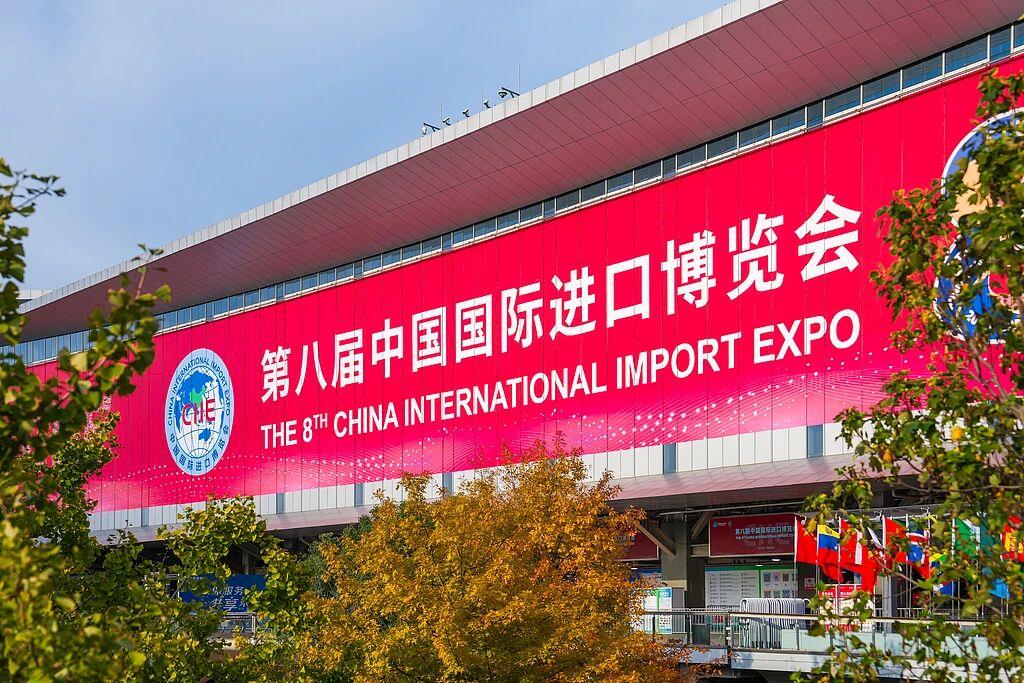
Core Insights - The eighth China International Import Expo (CIIE) concluded with a record intended transaction amount of $83.49 billion, marking a 4.4% increase from the previous year [1][3]. Group 1: Scale and Participation - The CIIE featured participation from 155 countries, regions, and international organizations, with 4,108 foreign enterprises exhibiting, covering an exhibition area of over 430,000 square meters, setting a new scale record [5][16]. - The event showcased a significant increase in participation from least developed countries, with an 80% rise in African enterprises, highlighting the inclusion of niche agricultural products [8][16]. Group 2: Innovation and Technology - The expo displayed advancements in robotics, with humanoid robots showcasing enhanced capabilities, indicating the continuous evolution of the event [10][11]. - A total of 461 new products, technologies, and services were presented, reflecting the event's commitment to innovation and quality [14][16]. Group 3: Economic Impact and Global Integration - The CIIE serves as a vital platform for international trade, demonstrating China's growing market attractiveness, with over 600 new exhibitors compared to the previous year, including 290 Fortune 500 companies [16][18]. - The event emphasizes China's role as a significant contributor to global economic stability, with a GDP growth rate of 5.2% in the first three quarters of the year [25][23].
信用债周策略20251110:地方发展支柱与投资机会
Minsheng Securities· 2025-11-10 06:53
Group 1: Macroeconomic Overview - The macroeconomic environment is characterized by a "slight decline" and "continuous improvement" interwoven, with manufacturing PMI and export growth showing slight decreases in October 2025 compared to the previous month [1][11] - The overall economic situation is improving compared to last year, with state-owned enterprises and listed companies showing signs of better performance, while support for small and medium-sized enterprises (SMEs) needs to be enhanced [1][16] - The production index and new orders index for October were 49.7% and 48.8%, respectively, indicating a slight decline, but large enterprises continue to show expansion with indices above 50 [3][12] Group 2: Industry Development and Policy Support - High-tech manufacturing, equipment manufacturing, and consumer goods industries are crucial for maintaining the overall prosperity of the manufacturing sector, with a focus on supporting SMEs towards "specialized, refined, and innovative" development [4][18] - New application scenarios are expected to emerge in fields such as digital economy, artificial intelligence, clean energy, and biotechnology, providing growth opportunities for related companies [4][18] - The government emphasizes the need for a complete industrial chain in technology innovation and application to enhance the "R&D-application-manufacturing" capabilities across industries [21][22] Group 3: Investment Strategy - Investment focus should be on economically strong provinces with good debt management, such as Guangdong, Jiangsu, and Zhejiang, with a recommended duration of 5 years [5][23] - Areas with significant debt resolution policies or funding support should be considered for shorter durations of 3-5 years, including Chongqing and Tianjin [5][25] - Attention should also be given to cities with strong industrial foundations and financial support, particularly those with important industrial chain positions [5][26]
10月制造业PMI为49.0%,高技术制造业仍处于扩张区间 | 高频看宏观
Sou Hu Cai Jing· 2025-11-07 03:58
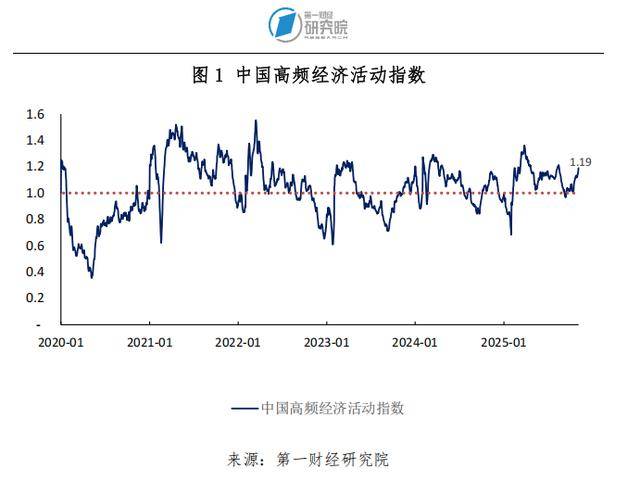
Group 1: Economic Activity Index - The China High-Frequency Economic Activity Index (YHEI) reached 1.19 on November 4, 2025, an increase of 0.07 from October 28 [1][3] - Key contributors to the YHEI increase include the Coastal Coal Freight Index and the Imported Dry Bulk Freight Index, which rose to 1.22 and 1.12, respectively [1][3] - The 30-City Commodity Housing Sales Index fell by 0.06 during the same week [1][3] Group 2: Manufacturing and PMI - The Manufacturing Purchasing Managers' Index (PMI) for October was 49.0%, down 0.8 percentage points from the previous month, indicating a contraction in manufacturing activity [23][24] - High-tech manufacturing, equipment manufacturing, and consumer goods sectors maintained expansion with PMIs of 50.5%, 50.2%, and 50.1%, respectively [23][24] - Large manufacturing enterprises saw a PMI drop to 49.9%, while medium and small enterprises' PMIs decreased to 48.7% and 47.1% [23][24] Group 3: Supply and Demand Indicators - The production index fell to 49.7% in October, influenced by the National Day holiday [24] - New orders and new export orders indices decreased to 48.8% and 45.9%, respectively [24] - The purchasing index dropped to 49.0%, indicating reduced procurement activity amid slowing production [24] Group 4: Non-Manufacturing Sector - The Non-Manufacturing Business Activity Index was 50.1%, slightly up by 0.1 percentage points from the previous month [24] - The construction sector's index fell to 49.1%, while the services sector's index rose to 50.2% [24] Group 5: Monetary Policy and Interest Rates - The central bank's net fund injection was 119.9 billion yuan for the week ending November 4, 2025 [5][6] - The overnight interbank rate decreased by 17 basis points to 1.36%, while the seven-day repo rate fell by 16 basis points to 1.47% [10][11] - One-year and ten-year government bond yields decreased by 3.85 and 1.95 basis points to 1.39% and 1.80%, respectively [10][16] Group 6: Commodity Prices - Steel billet prices decreased by 1.68% over the past week and 6.39% year-on-year [25] - Cement prices increased by 0.12% week-on-week but fell by 22.28% year-on-year [25] - Power coal prices rose by 1.18% month-on-month but decreased by 4.20% year-on-year [25] Group 7: Real Estate Market - New housing transaction areas in first and third-tier cities fell by 20.39% and 26.08%, respectively, while second-tier cities saw a 1.59% increase [35][36] - Second-hand housing transaction areas decreased by 5.24%, 1.75%, and 17.04% in first, second, and third-tier cities, respectively [39] Group 8: Global Economic Indicators - The US Dollar Index rose by 1.49 points to 100.21, while the RMB/USD exchange rate fell by 227 basis points to 7.1233 [45][46] - The Chicago Board Options Exchange VIX Index increased by 2.58 points to 19 [49]