
港口运输

Search documents
浙企新年加速起步 目标全球寻先机
Sou Hu Cai Jing· 2026-01-18 20:41
Group 1: Port Operations and Performance - Ningbo Zhoushan Port's Meishan Port area achieved a container throughput of 295,800 TEUs in the first week of the new year, marking a 16% year-on-year increase [1] - In 2025, Ningbo Zhoushan Port's annual container throughput surpassed 40 million TEUs for the first time, maintaining its position as the third largest port globally, while total cargo throughput exceeded 1.4 billion tons, making it the first port to reach this scale [3] Group 2: Market Expansion Initiatives - The "Thousand Teams, Ten Thousand Enterprises Expand Markets and Compete for Orders" initiative was launched in Zhejiang, aiming to organize over 2,000 teams to target international markets, particularly in the Middle East, Latin America, Africa, and ASEAN, with over 80% of teams focusing on these emerging markets [7] - The "Zhejiang Cross-Global Brand Going Abroad" event commenced, connecting nearly 100 cross-border e-commerce platforms with traditional manufacturing enterprises in Wenzhou, providing comprehensive solutions for compliance management, operational promotion, and supply chain integration [9] Group 3: Innovative Products and International Trade - Zhejiang's innovative companies are increasingly penetrating traditional markets with new products and technologies, as demonstrated by Lianou Technology's participation in the CES, where they secured orders worth 10 million yuan for their AR glasses and other products [11][13] - Zhejiang enterprises are diversifying their market strategies to enhance risk resilience, with companies like Kaili Electric planning monthly overseas exhibitions to expand their global agent network [15]

厦门港迎来2026年首单新能源汽车跨省铁海联运
Jin Rong Jie· 2026-01-18 08:02
Core Viewpoint - The successful transportation of 300 electric vehicles from Wuhan to Xiamen marks a significant milestone in the establishment of a regular and efficient logistics channel for electric vehicle exports from Hubei province through Xiamen port [1] Group 1 - 300 electric vehicles were transported via container from Wuhan to Xiamen on January 17 [1] - The vehicles were subsequently loaded onto the "Orient Abu Dhabi" vessel for export to Gdansk, Poland [1] - This operation represents the first cross-province iron-sea intermodal transport of electric vehicles from Hubei to Xiamen in 2026, indicating a new phase of regular and efficient operations for the Hubei to Xiamen logistics channel [1]
1月经济初窥-20260118
GF SECURITIES· 2026-01-18 02:26
Power Generation and Industrial Activity - As of January 8, the cumulative power generation from coal-fired power plants increased by 2.6% year-on-year, compared to a decrease of 8.5% in December[3] - The cumulative heating supply from coal-fired power plants rose by 5.1% year-on-year[3] - The operating rate of 247 blast furnaces nationwide increased by 1.4 percentage points year-on-year, reaching 79.0%[3] - The average daily crude steel output from key enterprises increased by 11.8% month-on-month but decreased by 4.1% year-on-year, averaging 1.997 million tons per day[4] Construction and Real Estate - The funding availability rate for construction sites decreased by 0.3 percentage points to 59.6% as of January 13[5] - The average daily transaction area of commercial housing in 30 major cities fell by 38.6% year-on-year from January 1 to January 16[8] - The year-on-year decline in second-hand housing agency subscriptions in 80 cities was 20.8%[10] Consumer Goods and Retail - Retail sales of passenger vehicles from January 1 to January 11 dropped by 32% year-on-year, with wholesale sales down by 40%[10] - The average wholesale price of pork increased by 2.7% to 18.1 yuan per kilogram as of January 16[16] - The production of household appliances showed a positive growth of 6% year-on-year, with air conditioner production up by 11%[11] Economic Indicators - The Business Price Index (BPI) rose by 3.8% to 933 points as of January 16, indicating a broad price increase across various sectors[13] - The photovoltaic manager index (SMI) decreased by 1.3 percentage points to 133.0 points, reflecting a decline in upstream manufacturing activity[7]
长图丨攀新高 赴新程 河北交通“十五五”这样干
Xin Lang Cai Jing· 2026-01-17 06:25
转自:河北新闻网 e 2025£ The 夜通运输 F = an I Jō目避投资産创新高 交通项目投资突破1160亿元。 公路方面 建成高速公路12条段、431.1公里。 全省高速公路达到9000公里,国家综 合立体交通网主骨架全部贯通,高速 公路县域出入口基本实现全覆盖。 (来源:河北新闻网) 石家庄机场三期改扩建前期 工作加快推进。 铁路方向 3个项目建成投运,12个项目 加快实施。 权细方面 石家庄国家综合货运枢纽 补链强链项目全部建成。 服务国家战略声深度变 ◆ 雄安低空交通创新技术应用大赛成功 举办。 京雄高速三期主体工程建成。 ◆ 京津冀衔接路网中的承平高速、安石 路与北京贯通。 ◆ 首次开通我省运营的进京公交线路, 通勤定制快巴支线达到38条。 ST PH 110 运输服务局效导审优化 春运、国庆中秋假期跨区域人员流动量 创历史同期新高。 旅游包车周末和节假日高速公路免费通 行135万辆次、人均免收3.8元。 港回方面 建成码头项目5个, 新增泊位6个、能力1138万吨。 机场方面 雄安城市航站楼主体建成, ** ■ 高 元 元 家 尺 t HIS ST FE 在全国率先印发《河北省沿海港口和 ...

厦门 “十四五”期间海铁联运量年均增长超26%
Zhong Guo Xin Wen Wang· 2026-01-15 09:25
Core Insights - Xiamen has established a basic framework for a Southeast coastal railway hub, with stable operations of the China-Europe Railway Express and an annual growth rate of over 26% in sea-rail intermodal transport [1][2] Group 1: Transportation Infrastructure - During the 14th Five-Year Plan, Xiamen has accelerated the improvement of its multi-dimensional transportation system, completing a network that connects the island and facilitates internal and external transport [1] - The city has 182 container shipping routes covering 53 countries and 145 ports, ranking 14th globally in container throughput [1] - Xiamen Gaoqi International Airport operates 162 domestic and international routes, reaching 116 cities, with a projected passenger throughput of 29.19 million by 2025, setting a record for single-runway airports in China [1] Group 2: Trade and Economic Development - Xiamen's import and export trade scale ranks among the top ten in China, with trade partners expanding to 239 countries and regions [1] - The city has seen rapid development in cross-border e-commerce, gathering over 6,000 quality enterprises and establishing overseas warehouses in major global markets [1] Group 3: Future Development Plans - Looking ahead to the 15th Five-Year Plan, Xiamen aims to enhance its comprehensive transportation system and develop brands such as "Silk Road Maritime," "Silk Road Aviation," and "Digital Silk Road" to promote the integration of international and domestic cycles [2] - The city is currently focused on constructing the Xiang'an Port Area's automated and AI-driven terminal, aiming for a container throughput of over 15 million TEUs [2]
湖州南浔港口集团增资至10.05亿,增幅约1814%
Xin Lang Cai Jing· 2026-01-14 08:16
Group 1 - The core point of the article is that Huzhou Nanxun Port Group Co., Ltd. has undergone a business change, adding the National Green Development Fund Co., Ltd. as a shareholder and significantly increasing its registered capital from 52.5 million RMB to 1.005 billion RMB, representing an increase of approximately 1814% [1] Group 2 - Huzhou Nanxun Port Group Co., Ltd. was established in July 2022 and is legally represented by Mo Wenjie [1] - The company's business scope includes ship port services, domestic cargo transportation agency, international cargo transportation agency, and domestic container cargo transportation agency [1] - The current shareholders of the company are Huzhou Nanxun District Transportation Investment Group Co., Ltd. and the newly added shareholder [1]
中国宏观周报(2026年1月第2周)-20260112
Ping An Securities· 2026-01-12 02:40
Domestic Demand - In December 2025, retail sales of passenger vehicles in China were 2.296 million units, down 13% year-on-year, compared to a 7% decline in November[2] - Retail sales of major home appliances decreased by 28.5% year-on-year as of January 2, 2026, but improved by 8.4 percentage points from the previous value[2] - The volume of postal express deliveries decreased by 0.9% year-on-year as of January 4, 2026, a decline of 2 percentage points from the previous value[2] - Daily box office revenue for movies was 53.55 million yuan, down 26.3% year-on-year as of January 9, 2026[2] Industrial Sector - The Nanhua Industrial Index rose by 2.4% this week, with the black materials index up 2.7% and the non-ferrous metals index up 5.3%[4] - Daily average pig iron production and cement clinker capacity utilization rates increased, while the apparent demand for major steel products declined[4] - New home sales in 30 major cities fell by 38.4% year-on-year as of January 9, 2026, a decrease of 7.4 percentage points from the previous week[4] External Demand - Port cargo throughput increased by 1.1% year-on-year as of January 4, 2026, but this was a decline of 0.9 percentage points from the previous value[4] - Container throughput at ports rose by 7.7% year-on-year, an increase of 0.5 percentage points from the previous value[4] - South Korea's export value increased by 13.4% year-on-year in December, up 5 percentage points from November[4] Price Trends - The price of rebar futures increased by 0.7%, while spot prices rose by 0.6% this week[4] - Coking coal futures prices increased by 7.2%, with Shanxi coking coal spot prices remaining stable[4] - The agricultural product wholesale price index decreased slightly by 0.4% this week[4]
第1,第1,第1……武汉厉害了
Chang Jiang Ri Bao· 2026-01-07 06:53
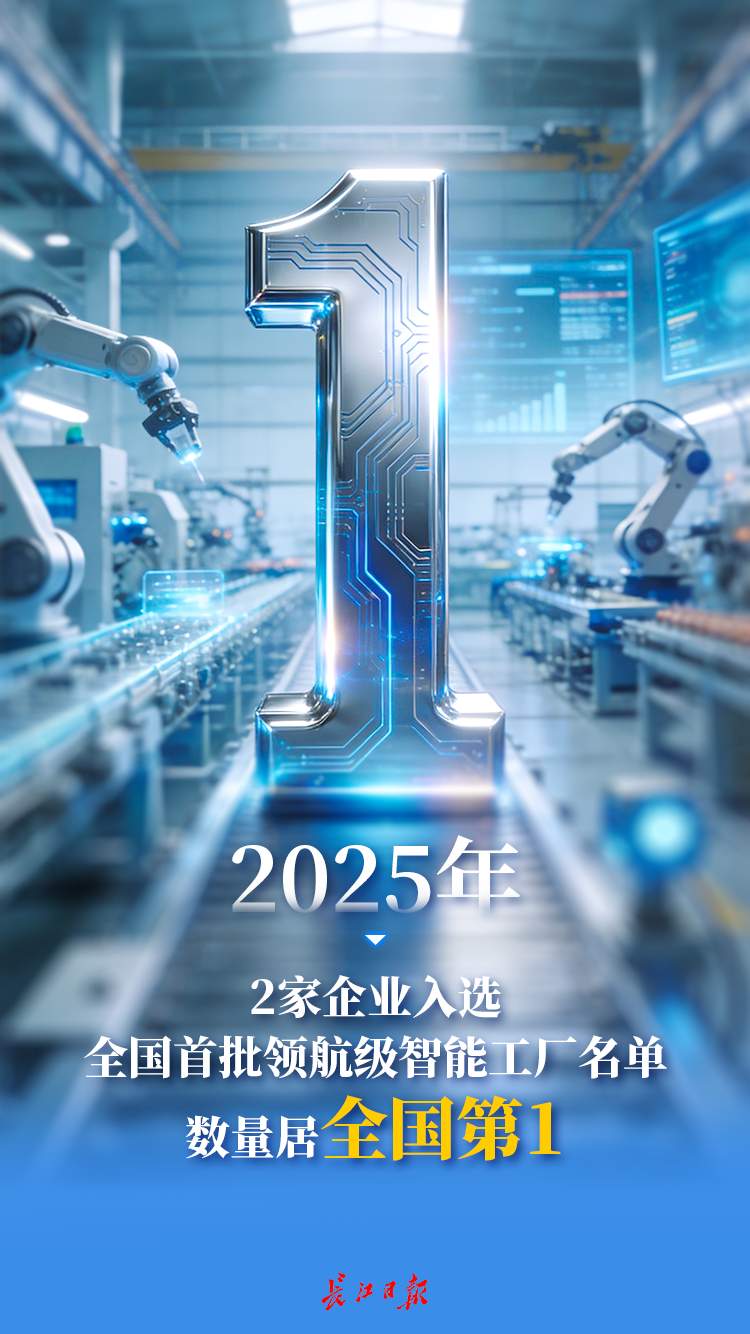
Group 1 - Wuhan ranks first in the number of enterprises selected for the national first batch of leading intelligent factories, with two companies on the list [4] - The total number of A-level and above logistics enterprises in Wuhan increased by 21, maintaining the top position in the country [6] - Wuhan Port's container throughput reached 195 million TEUs, ranking first in the Yangtze River middle and upper reaches [9] Group 2 - Tianhe Airport's passenger throughput exceeded 30 million, ranking first in Central China [11] - Wuhan added 11 academicians, ranking second in the country [16] - The number of newly registered business entities surpassed 600,000, ranking second among sub-provincial cities [16] Group 3 - The number of private enterprises in Wuhan exceeded 1.2 million, ranking fourth among sub-provincial cities [21] - Wuhan achieved a breakthrough in national laboratories during the "14th Five-Year Plan" period, leading the construction of national key laboratories, ranking third in quantity [19] - Wuhan's natural index for scientific research cities ranks eighth globally and fifth nationally, with the balance of loans for technology-based enterprises exceeding 420 billion yuan [22]
透过多维度数据看生机与活力 长江经济带发展十年交出亮眼“答卷”
Yang Shi Wang· 2026-01-05 16:10
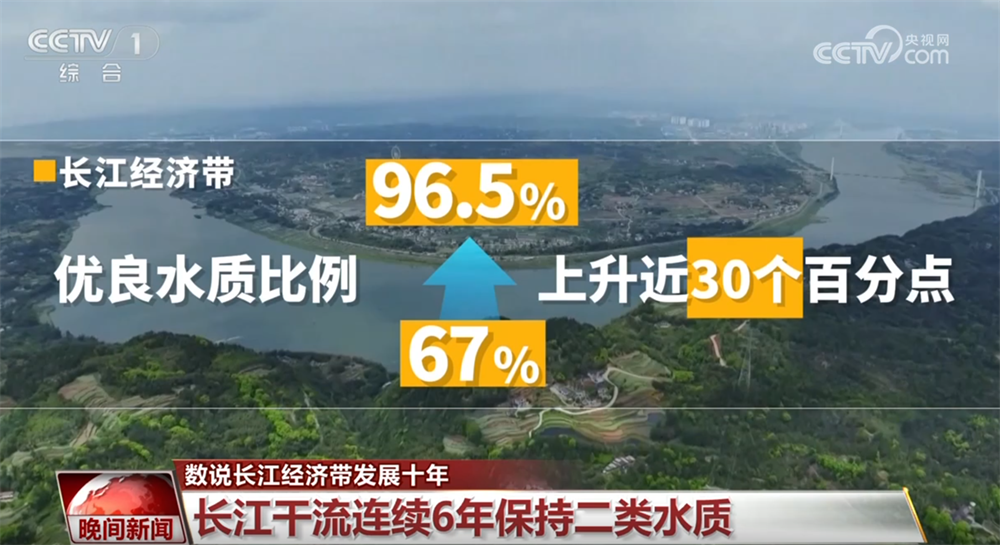
Core Viewpoint - The development of the Yangtze River Economic Belt over the past decade has focused on ecological protection while promoting high-quality development, resulting in significant improvements in environmental quality and economic growth [1]. Environmental Protection - The water quality of the Yangtze River mainstream has maintained Class II quality for six consecutive years, with the proportion of good water quality in the Yangtze Economic Belt increasing from 67% to 96.5%, a rise of nearly 30 percentage points [2]. - Over 1,361 illegal docks have been removed, and more than 90% of black and odorous water bodies in cities at or above the county level have been eliminated [4]. - The total phosphorus concentration in the Yangtze River basin has decreased by over 40% compared to 2015 [4]. Economic Development - The GDP of the Yangtze Economic Belt has more than doubled over the past decade, increasing its share of the national economy from 42.2% to 47.3% [11]. - The per capita disposable income of residents has risen from 23,000 yuan to 44,000 yuan, representing a growth of 91% [11]. Transportation and Infrastructure - The length of high-grade navigable waterways in the Yangtze River system has increased from 8,000 kilometers to 11,500 kilometers, and the cargo throughput of mainline ports has grown by 71% to reach 4.2 billion tons, maintaining the top position among inland rivers globally [8]. - The capacity for navigation has significantly improved, allowing 50,000-ton vessels to reach Nanjing and 10,000-ton vessels to reach Wuhan [11]. Innovation and Industry - The integration of technological and industrial innovation has been accelerated, with the establishment of international technology innovation centers in Shanghai and other regions, fostering the growth of emerging and future industries, including world-class clusters in automotive manufacturing and electronic information [6].
288.2万吨!创历史新高
中国能源报· 2026-01-05 12:53
Group 1 - The core viewpoint of the article highlights that the Manzhouli highway port achieved record highs in both inbound and outbound vehicles and cargo volume in 2025, with 249,000 vehicles, a year-on-year increase of 39.9%, and a cargo volume of 288,200 tons, reflecting an 18.9% year-on-year growth [1] Group 2 - In May 2023, the Manzhouli highway port implemented 24-hour customs clearance, which has led to an increase in cargo vehicles. The border inspection station has innovatively adopted a "big one-stop" customs cooperation model, dynamically adjusting police forces to enhance overall customs efficiency [3] - Key measures include information sharing, mutual recognition of inspections, and the establishment of "green channels" for bulk commodities and perishable products, focusing on the transportation of essential goods such as energy and agricultural products [3]
