
医美

Search documents
「格隆汇·高端访谈」对话新氧CEO金星:从市场“谷底”到千店“野望”,医美龙头的下一站
格隆汇APP· 2025-07-29 08:52
Core Viewpoint - The Chinese cosmetic medical industry is transitioning from "wild growth" to "quality stratification," with rapid technological advancements, clearer regulatory frameworks, and increasing consumer sensitivity to safety and pricing. The ability to achieve "standardized delivery + brand mindset + deep industry chain" will define the next decade's game rules [1]. Group 1: Business Structure and Expansion - New Oxygen has reached a significant milestone with 31 stores, becoming the largest chain in China's light medical beauty sector, with chain business revenue becoming the largest source of income for the group [1][2]. - The company is exploring whether the current high gross margin and low net profit phenomenon in the medical beauty industry can be fundamentally changed through strategic expansion and business model transformation [2]. Group 2: Market Positioning and Target Audience - The target demographic for New Oxygen is primarily the middle class, with an annual income around 100,000 yuan and a medical beauty budget of approximately 15,000 yuan, focusing on women aged 30 to 40 [22]. - The company aims to make medical beauty accessible to a broader audience, similar to the model of Sam's Club, by providing high-quality services at competitive prices [21][25]. Group 3: Operational Strategy and Differentiation - New Oxygen employs a strict recruitment process for doctors, categorizing them by skill level to ensure high-quality service delivery for standardized medical beauty procedures [24]. - The company emphasizes digital management over traditional human management to efficiently scale its operations, aiming for over 1,000 stores in the long term [26][28]. Group 4: Industry Challenges and Competitive Landscape - The medical beauty industry in China is highly fragmented, with over 20,000 institutions, where the majority are small, single-location clinics. New Oxygen's 31 stores represent a significant achievement in a market dominated by small players [26][27]. - The company faces challenges from traditional medical beauty institutions that have historically focused on high-end clientele, making it difficult to standardize services across the industry [27]. Group 5: Vertical Integration and Supply Chain Management - New Oxygen is pursuing vertical integration within the medical beauty industry, aiming to control both upstream and downstream operations to enhance cost efficiency and service quality [35][36]. - The company believes that true innovation often comes from cross-industry collaboration, which can lead to better product integration and customer experience [36]. Group 6: Future Aspirations and Personal Reflections - The CEO expresses a desire to build a widely recognized brand with a strong public reputation, indicating that the journey is ongoing and that there is still much to achieve [39]. - The company aims to balance idealism with practical business considerations, focusing on creating value for consumers while ensuring profitability [19].



华熙生物的“围城”:股价下滑、举报接连不断
2 1 Shi Ji Jing Ji Bao Dao· 2025-07-28 07:07
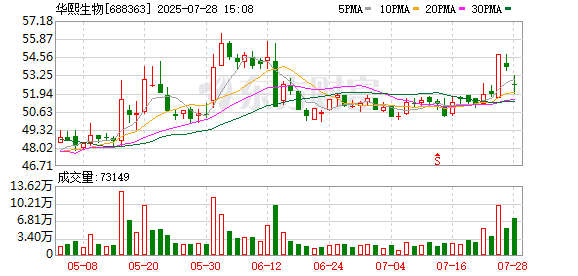
Core Viewpoint - The recent allegations of financial fraud against Huaxi Biological have led to a significant decline in its stock price and raised concerns about its internal governance and market position [2][3][4]. Company Overview - Huaxi Biological's stock price closed at 52.43 yuan per share, down 2.6%, with a total market capitalization of 25.254 billion yuan as of July 28 [2]. - The company's stock has been in a downward trend since reaching a peak of 314.99 yuan per share in July 2021, hovering around 50 yuan per share this year [2]. Allegations and Responses - A former employee, David Li, accused Huaxi Biological of serious financial fraud and bond issuance fraud in a social media post, which has stirred controversy in the medical aesthetics industry [2][3]. - Huaxi Biological issued a statement denying the allegations, claiming they are fabricated and maliciously distorted, and reported Li to the police for defamation [3]. Internal Governance Issues - This is not the first time Huaxi Biological has faced internal allegations; previous reports included claims of coercion and financial misconduct involving the company's chairman [6][7]. - The company has acknowledged past governance issues and is undergoing significant internal reforms, including restructuring and talent management changes [7][8]. Financial Performance - In 2024, Huaxi Biological reported a revenue of 5.371 billion yuan, a year-on-year decline of 11.61%, and a net profit of 174 million yuan, down 70.59% [9][10]. - The decline in revenue is largely attributed to a significant drop in the skin science innovation business, which saw a 31.62% decrease in revenue [10]. Market Environment - The medical aesthetics market is experiencing a shift from hyaluronic acid to collagen and regenerative products, posing additional challenges for Huaxi Biological [11]. - The company is facing intense competition and has established a "competitive intelligence department" to monitor and respond to market dynamics [8][9].

毕业季也是消费季,这八大“暑期经济”火了
3 6 Ke· 2025-07-28 04:12
Group 1: Summer Economic Trends - The end of the college entrance examination marks the beginning of a diverse and expansive summer consumption market, driven by students and their families [1] - The summer economy is characterized by various consumption patterns, including self-improvement, beauty investments, and skill acquisition [1] Group 2: Graduation Celebrations - The tradition of graduation banquets has evolved into a significant consumption phenomenon, supported by a growing number of high school graduates [2][4] - The banquet market shows a clear segmentation, with high-end customized options in first-tier cities and more affordable traditional options in lower-tier cities [2][4] - The rise of graduation banquets reflects the societal recognition of educational success and the desire for social status among families [2][5] Group 3: Travel Trends - The graduation travel market has seen a surge, with related searches increasing threefold and bookings up 137% year-on-year [6] - Young travelers are favoring longer and themed trips, with a preference for cultural cities and group travel [6][8] - The introduction of visa-free policies has further stimulated outbound travel, with a significant increase in hotel bookings for popular destinations [8] Group 4: Indoor Skiing - The popularity of indoor skiing has risen, particularly in southern regions, as it offers a unique experience regardless of the season [9][11] - Businesses are responding with tailored packages for students, creating a comprehensive service chain that enhances family participation [11] Group 5: Arts Education - The summer period has become a peak time for arts training, driven by a growing emphasis on quality education [12][15] - Families are increasingly viewing arts education as a necessary investment, leading to a diverse range of offerings in the market [12][15] Group 6: Medical Aesthetics - The medical aesthetics market is projected to grow significantly, with a notable increase in student consumers during the summer months [16][18] - Parental support plays a crucial role in driving this consumption trend, reflecting a shift in attitudes towards cosmetic procedures [18] Group 7: Driving Licenses - The demand for driving licenses peaks during the summer, with a significant portion of annual registrations occurring in July and August [19][21] - Driving schools are adapting by offering discounts and flexible training options to attract students [21] Group 8: Vision Correction Surgery - The summer is a popular time for vision correction surgeries, driven by the need for clear vision for certain academic programs [22][24] - The market is characterized by a strong demand for quality procedures, with various options available at different price points [24] Group 9: Live Events - The summer concert and festival market is experiencing substantial growth, with ticket sales and related consumption on the rise [25][30] - The events not only drive direct ticket sales but also boost local economies through increased travel and hospitality spending [27][30] Group 10: Overall Economic Impact - The rise of the summer economy is attributed to fixed holiday periods and the increasing influence of younger consumers [31] - As Generation Z becomes the main consumer force, the summer economy is expected to evolve towards more personalized and quality-driven experiences [31]

ST金比:母婴业务是萎缩、跨界医美拖累业绩 破局需重铸内生力量
Xin Lang Zheng Quan· 2025-07-28 03:11
Core Viewpoint - The company, Jinfa Labi, once a leading player in the maternal and infant consumer market, is facing significant challenges as industry growth slows and competition intensifies, leading to a decline in its core business and market confidence [1][2]. Group 1: Business Performance - Jinfa Labi's core maternal and infant product business is experiencing an irreversible contraction due to intensified competition and changing consumer preferences, resulting in a diminishing advantage of offline channels [1]. - The decline in newborn numbers is shrinking the overall market, forcing the company into a battle for existing market share, while attempts to innovate through product extension and internet marketing have not yielded significant results [1]. Group 2: Strategic Shift - In search of a second growth curve, the company has turned to the medical beauty sector, proposing a "maternal and infant + medical beauty" synergy, but faces numerous challenges [2]. - Acquisitions of medical beauty institutions have not significantly contributed to revenue due to accounting standards, and integration issues have led to losses in some subsidiaries, which in turn have negatively impacted the parent company's financial health [2]. Group 3: Financial and Governance Issues - The company's financial performance is nearing the boundary of delisting risk, revealing deeper governance concerns, such as the timing of consolidating acquired companies and the pressure to meet revenue targets [2]. - The need for transparency in governance is highlighted, as some investors view the company's responses to subsidiary performance issues as passive and potentially damaging to its operational integrity [2]. Group 4: Future Outlook - To navigate its challenges, Jinfa Labi must focus on refining its core business, reducing inefficient product lines, and concentrating on high-potential categories to rebuild competitive barriers [3]. - The company should aim to genuinely integrate resources between maternal and infant sectors and medical beauty to avoid operational silos, while also fostering market trust through transparent communication and verifiable improvements in its core business [3].

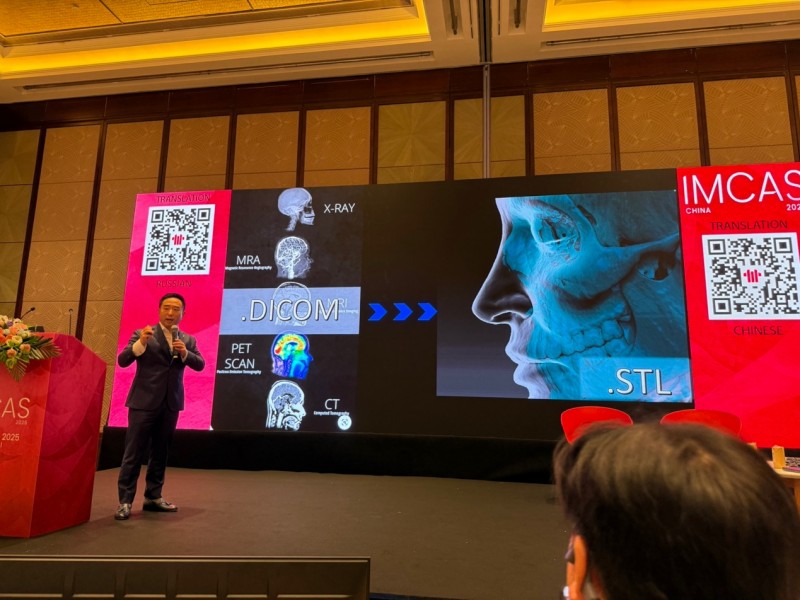
俊泰医疗美容薛志强博士连续两年受邀IMCAS医美大会 分享“3D打印整形技术进展”
Cai Fu Zai Xian· 2025-07-28 01:45
Core Insights - The medical aesthetics industry is experiencing significant growth, with technology and academic exchange being key drivers of progress [1] - The IMCAS (International Master Course on Aging Science) conference will be held in Shanghai from July 11 to 13, 2025, gathering top experts and scholars to discuss the latest technologies and trends in the industry [1] Group 1: Conference Highlights - Dr. Xue Zhiqiang from JunTai Medical shared insights on the innovative application of 3D digital technology in the repair of nasal deformities secondary to cleft lip and palate during a specialized seminar [2] - This marks Dr. Xue's second presentation on this topic at the IMCAS conference, following his initial presentation in Paris in 2024, which highlighted China's advanced clinical applications of 3D printing technology [2][3] - Dr. Xue's presentation focused on precise surgical solutions based on 3D design and printing technology, showcasing the latest clinical cases [2][3] Group 2: Technological Innovations - The global incidence of cleft lip and palate is 1.08‰, with China being a high-incidence region [2] - Dr. Xue introduced 3D design and 3D printing PEEK material technology to provide personalized treatment plans, achieving significant results in complex cases of cleft lip and palate deformities [3][4] - The digital design process integrates CT data to analyze all facial layers, ensuring minimal error from design to surgical implantation [4] Group 3: Clinical Applications and Benefits - The PEEK material used in 3D printing offers superior physical stability and density comparable to native bone, allowing for personalized three-dimensional designs [4] - Dr. Xue emphasized the importance of addressing the unique anatomical features of Asian populations in nasal shaping procedures, which often require careful consideration of the overall spatial relationship of the face [6] - The "micro-invasive" approach is central to Dr. Xue's philosophy, aiming to protect nasal function and achieve natural results with minimal recovery time [6] Group 4: Company Overview - JunTai Medical, founded by Dr. Xue, is a professional medical institution that integrates cosmetic surgery, dermatology, and aesthetic services, focusing on digital diagnosis and treatment [9] - The organization is recognized as a model for the "three regulations" in the medical aesthetics industry, emphasizing the importance of legitimate institutions, products, and practitioners [9]
财经早报:特斯拉第三代机器人即将进入中国C端市场 时隔27年价格法迎首次修订
Xin Lang Zheng Quan· 2025-07-28 00:26
Group 1 - The US and EU have reached a trade agreement, imposing a 15% tariff on EU goods entering the US, avoiding a potential trade war [2][10] - The EU will increase its investment in the US by $600 billion and purchase $750 billion worth of US energy products [2][10] - The agreement was announced following a meeting between US President Trump and EU Commission President von der Leyen [2][10] Group 2 - A high-level US business delegation is set to visit China, led by the Chairman of the US-China Business Council and the CEO of FedEx [3] - The delegation's full member list and itinerary have not been disclosed, but executives from Boeing and the US-China Business Council President are confirmed to join [3] Group 3 - The Guangdong province reported 2,940 new cases of Chikungunya fever, with a total of 4,824 cases this year, all mild [4] - Experts have provided insights into the differences between Chikungunya and other mosquito-borne diseases like dengue fever [4] Group 4 - Nine major foreign public funds have revealed their portfolio adjustments, indicating a shift in market expectations [5] - Investments in optical modules and PCB are highlighted, along with increased allocations to core assets like Kweichow Moutai [5] Group 5 - The GDP data for the first half of 2025 shows overall performance in line with expectations, with the central region showing strong results [6][7] - Hainan province reported a GDP of 370.185 billion yuan, with a year-on-year growth of 4.2% [6][7] Group 6 - Tesla's third-generation humanoid robot is expected to enter the Chinese consumer market, with mass production anticipated next year [8] - The second-generation Optimus robot has made significant advancements, including a weight reduction of 10 kg and a 30% increase in walking speed [8] Group 7 - The National Development and Reform Commission is seeking public opinion on the first revision of the Price Law in 27 years, aimed at addressing "involution" competition [9] - The bond market has seen significant adjustments, with over 400 bond funds reporting losses this year [9] Group 8 - The People's Bank of China has shifted its monetary policy to net liquidity injection, with significant reverse repos conducted to stabilize the market [12][13] - The central bank's actions are aimed at ensuring overall market stability amid increasing liquidity pressures [12][13] Group 9 - Shaolin Temple's abbot is under investigation for alleged criminal activities, including misappropriation of funds and violations of Buddhist precepts [14] - The temple management has announced that updates will be provided to the public as the investigation progresses [14] Group 10 - Huaxi Biological has faced allegations of financial fraud, leading to a significant drop in its market value by 120 billion yuan [15] - The company has denied the allegations and reported multiple previous complaints regarding its financial practices [15]



行业周报:小商品城启动数贸AI大模型内测,走向全域赋能-20250727
KAIYUAN SECURITIES· 2025-07-27 14:48
Investment Rating - The industry investment rating is "Positive" (maintained) [1] Core Viewpoints - The retail industry is experiencing a recovery, with significant growth in specific segments such as beauty and jewelry, driven by consumer sentiment and innovative business models [8][30] - The launch of the AI model by Yiwu Small Commodity City is expected to enhance operational efficiency and empower merchants, indicating a shift towards technology-driven business practices [25][26] Summary by Sections Retail Market Review - The retail industry index rose by 3.28% during the week of July 21-25, outperforming the Shanghai Composite Index by 1.61 percentage points [7][14] - The brand cosmetics sector saw the highest weekly increase of 5.94%, while the jewelry sector led the year-to-date performance with a 28.93% increase [17][20] Industry Dynamics - Yiwu Small Commodity City partnered with Alibaba to initiate the AI model testing, which is expected to transform traditional trade practices and enhance global trade linkages [25][26] - Over 30,000 merchants in Yiwu are utilizing AI tools, with deep users experiencing over 30% growth in orders, showcasing the impact of AI on operational efficiency and brand enhancement [26] Investment Recommendations - Focus on high-quality companies in sectors benefiting from emotional consumption themes, including: - Gold and jewelry brands with differentiated product offerings, such as Laopuhuang and Chaohongji [8][30] - Retail enterprises adapting to trends, like Yonghui Supermarket and Aiyingshi [8][30] - Domestic beauty brands with strong growth potential, including Maogeping and Pola [8][30] - Medical beauty product manufacturers with unique pipelines, such as Aimeike and Kedi-B [8][30] Company-Specific Insights - Laopuhuang reported a revenue increase of 167.5% and a net profit increase of 253.9% in FY2024, indicating strong brand expansion [32] - Chaohongji achieved a revenue growth of 25.4% in Q1 2025, driven by its focus on fashionable jewelry targeting younger consumers [40] - Maogeping's revenue grew by 34.6% in FY2024, reflecting its position as a leading domestic high-end beauty brand [32] - Pola's revenue increased by 21.0% in FY2024, supported by a robust product lineup [32]

化妆品医美行业周报:监管趋严利好国货龙头,消费淡季关注新品布局-20250727
Shenwan Hongyuan Securities· 2025-07-27 11:14
Investment Rating - The report maintains a "Positive" outlook on the cosmetics and medical beauty industry, highlighting the strong performance of domestic brands amid stricter regulations [1]. Core Insights - The cosmetics and medical beauty sector outperformed the market, with the Shenwan Beauty Care Index rising by 5.4% from July 18 to July 25, 2025, surpassing the Shenwan A Index by 1.2 percentage points [5][6]. - Stricter advertising regulations are expected to benefit leading domestic brands, as new rules will increase operational barriers and allow market share to concentrate among top players [11]. - The report emphasizes the importance of new product launches as brands prepare for the competitive landscape in the second half of 2025 [11]. Summary by Sections Industry Performance - The Shenwan Cosmetics Index increased by 3.4%, outperforming the Shenwan A Index by 1.2 percentage points, while the Shenwan Personal Care Index rose by 7.7%, exceeding the Shenwan A Index by 5.5 percentage points [5][6]. Key Company Highlights - Lin Qingxuan, a high-end domestic skincare brand, saw revenue grow from 690 million yuan in 2022 to 1.21 billion yuan in 2024, with net profit turning from a loss of 6 million yuan to a profit of 187 million yuan [17]. - The company has a diverse product matrix with 188 SKUs, a robust supply chain with an annual production capacity of 40 million units, and a comprehensive OMO channel strategy [19]. Market Trends - The report notes a shift in the cosmetics market from quantity to quality, with e-commerce sales expected to account for 47% of total cosmetics sales by 2024, up from 22% in 2016 [13]. - The domestic market is witnessing a rise in local brands, with significant market share gains, particularly in the skincare segment [37]. Investment Recommendations - The report recommends several companies based on their market positioning and growth potential, including Up Beauty, Proya, and Marubi, while suggesting to pay attention to Shanghai Jahwa, Betaini, and Huaxi Biological [5].





天雷滚滚,“不自杀声明”刷屏,前高管45万字揭财务造假内幕?3万股民瑟瑟发抖!华熙生物:已报案!此人曾骗取公司900万元
雪球· 2025-07-27 05:49
Core Viewpoint - The article discusses serious allegations against Huaxi Biological, a leading player in the medical aesthetics industry, regarding financial misconduct and governance issues, which have led to significant market concerns and a drastic decline in the company's stock price and market value [1][3][10]. Company Response - Huaxi Biological quickly responded to the allegations, stating that the claims are fabricated and maliciously distorted, and they have reported the matter to law enforcement [2][6][9]. Allegations and Background - The whistleblower, who claims to be a former key capital operator at Huaxi Biological, alleges financial fraud and governance failures, asserting possession of 450,000 words of insider material intended for regulatory submission [1][3][8]. - The whistleblower previously held a position as the marketing director at Huaxi and was involved in a case of embezzlement amounting to 9 million yuan, which led to a police report by the company [8]. Market Impact - Following the allegations, Huaxi Biological's stock price has seen a dramatic decline, from a peak of 314.99 yuan per share in July 2021 to approximately 53.83 yuan per share, representing a drop of over 80% and a market capitalization reduction from over 1,000 billion yuan to 259 billion yuan [11][13]. Financial Performance - The company's financial performance has deteriorated significantly, with a reported revenue of 5.371 billion yuan in 2024, down 11.61% year-on-year, and a net profit of 174 million yuan, down 70.59%, marking the largest annual decline since its listing [13][14]. - In comparison, competitors like Juzhi Biological and Jinbo Biological have shown strong growth, with Juzhi achieving a revenue increase of 57.07% and a net profit growth of 42.06% in 2024 [13][14]. Industry Context - The medical aesthetics industry is undergoing intense competition, with Huaxi Biological facing challenges from competitors like Juzhi Biological, which has seen its market value rise significantly [16][18]. - The article highlights a shift in consumer expectations towards product safety and efficacy, indicating that mere concept marketing is no longer sustainable, and companies must possess genuine technological advantages to succeed [21].

AIoT智能硬件验真,打造行业“明厨亮灶”
Guang Zhou Ri Bao· 2025-07-26 10:09
Group 1 - The core idea of the news is that Meituan's "Safe Beauty" initiative is significantly enhancing consumer trust in the medical beauty industry through AIoT smart verification hardware and services, leading to increased user satisfaction and repeat purchase intentions [1][2] - By June 2025, Meituan's "Safe Beauty" has provided over 7 million verification services and installed more than 4,000 self-developed AIoT smart verification devices for over 2,000 medical beauty institutions [1] - Over 88.6% of users who experienced the "Safe Beauty" verification process expressed a desire to continue choosing institutions with similar verification services on the platform [1] Group 2 - In the first half of 2025, more than 15 upstream brands joined the "Safe Beauty 100,000 Verification Club," with a total of over 100,000 verifications conducted [2] - The overall brand scale using "Safe Beauty" smart verification devices increased by 13.1% compared to 2024 [2] - There is a notable increase in user attention towards the qualifications and professional backgrounds of medical staff [2]
