
啤酒

Search documents
青岛啤酒股份获瑞众人寿保险增持20万股 每股作价约53.21港元
Xin Lang Cai Jing· 2025-12-11 00:08
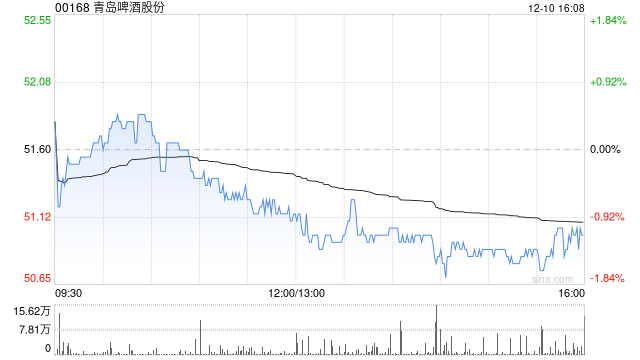
Group 1 - The core point of the article is that Swiss Re Life Insurance has increased its stake in Qingdao Beer (00168) by purchasing 200,000 shares at a price of HKD 53.2070 per share, totaling HKD 10.6414 million [1][3] - After the purchase, Swiss Re Life Insurance's total holdings in Qingdao Beer amount to approximately 32.764 million shares, representing a 5.00% ownership stake [1][3]

青岛啤酒股份(00168.HK)获瑞众人寿保险增持20万股
Ge Long Hui· 2025-12-10 23:41
Group 1 - The core point of the article is that Qingdao Beer Co., Ltd. (00168.HK) has seen an increase in shareholding by Swiss Life Insurance Company, which purchased 200,000 shares at an average price of HKD 53.207 per share, totaling approximately HKD 10.6414 million [1] - Following this transaction, Swiss Life Insurance Company's total shareholding in Qingdao Beer has risen to 32.764 million shares, increasing its ownership percentage from 4.97% to 5.00% [1]

啤酒20年前转型成地摊货,白酒会重蹈覆辙?五粮液降价给出答案
Sou Hu Cai Jing· 2025-12-10 15:58
Group 1 - The core point of the article is that Wuliangye announced a significant price reduction for its flagship product, the 52-degree eighth generation Wuliangye, from 1019 yuan to 900 yuan per bottle, indicating potential struggles in the high-end liquor market [2] - The price drop follows a trend initiated by Moutai, which recently saw its terminal price fall below 1499 yuan, suggesting a broader decline in high-end liquor prices [2] - The high-end liquor market is experiencing a "price collapse," with other brands like Luzhou Laojiao and Yanghe also seeing price reductions in response to Wuliangye's move [2] Group 2 - Wuliangye's Q3 2025 performance showed a significant decline, with revenue of 8.174 billion yuan and a net profit of 2.019 billion yuan, marking the worst quarterly performance since 2016 [4] - Revenue dropped by more than 50% compared to the same period last year, and net profit fell by nearly 70% [4] - The gross profit margin decreased from 74.93% in the first three quarters to 62.64% in Q3, indicating a rapid decline in profitability [4] Group 3 - The reliance on distributors has led to challenges in price control, with Wuliangye's attempts to limit supply resulting in lower market prices than the factory price [6] - The online prices have dropped to as low as 640 to 739 yuan, indicating a significant discount from the original pricing strategy [6] - The changing dynamics in consumer preferences, particularly among younger generations, are impacting the demand for high-end liquor [17][24] Group 4 - The traditional perception of high-end liquor as a status symbol is being challenged, with younger consumers showing less interest in alcohol consumption as a social necessity [9][13] - The market is shifting towards lower-alcohol, fruit-flavored beverages that appeal more to younger consumers, indicating a potential decline in the traditional high-end liquor market [17] - Wuliangye's strategy to reintroduce a lower-alcohol product aims to capture the younger market, but its success remains uncertain [18][26] Group 5 - The article suggests that the high-end liquor industry may need to adapt by lowering prices and focusing on the mass market rather than maintaining a luxury image [24] - The potential for consolidation in the industry is highlighted, with larger brands possibly acquiring struggling smaller brands to optimize production [21][22] - The narrative around high-end liquor as a luxury item is becoming increasingly difficult to sustain, and companies must shift their focus to genuine consumer demand rather than social status [24][26]


大消费迎“催化剂”!这些方向被看好
Zhong Guo Zheng Quan Bao· 2025-12-10 14:28
Core Viewpoint - Recent policies aimed at boosting consumption and domestic demand are expected to positively impact the consumer sector, with a focus on direct subsidies and consumption loan interest subsidies as short-term measures to stimulate spending [1] Group 1: Policy Initiatives - A series of policies have been released to enhance domestic demand and consumption, with expectations for increased fiscal spending and a focus on service consumption [2] - The Ministry of Industry and Information Technology and other departments have outlined a plan to create three trillion-level consumption sectors and ten hundred-billion-level consumption hotspots by 2027 [2] - The "old-for-new" policy is anticipated to continue, directing more resources towards service consumption and improving the overall consumption environment [3] Group 2: Investment Opportunities - The consumer industry is showing signs of bottoming out, with fundamental recovery acting as a catalyst for stock prices, particularly in sectors like chain restaurants, new tea drinks, and sports companies [1][4] - Service consumption is expected to enter a rapid growth phase, driven by personalized interactions and unique experiences, offering significant investment potential compared to traditional goods consumption [4] - Companies focusing on dividend distribution and share buybacks are improving the industry landscape, with a "dividend+" strategy recommended for stable short-term investments [4] Group 3: Strategic Focus Areas - Two main lines for investment in the consumer sector are suggested: one focusing on high replicability through efficient supply chains, and the other on high experience creation capabilities that offer unique consumer experiences [5] - Specific sectors to watch include chain restaurants, sports companies, entertainment operators with valuable IP, and platform companies with strong ecosystem capabilities [5]
从营销联动到生态共赢 嘉士伯中国与京东超市达成三年战略合作
2 1 Shi Ji Jing Ji Bao Dao· 2025-12-10 12:33
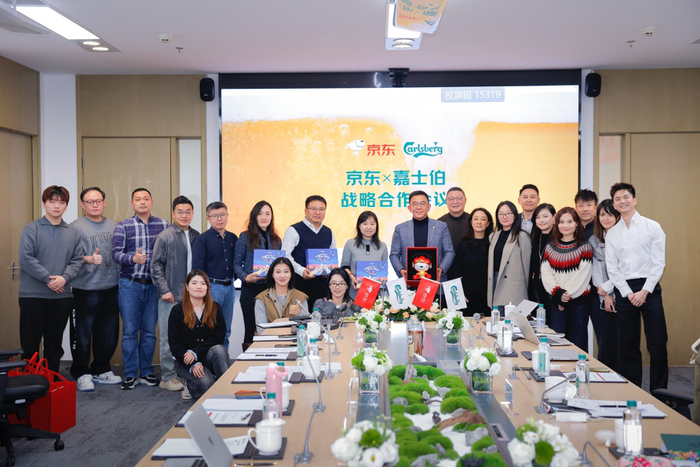
Core Insights - Carlsberg China and JD Supermarket have announced a strategic partnership aimed at enhancing collaboration in brand and supply chain synergy, product exclusivity and innovation, channel co-construction, and comprehensive marketing over the next three years [1][3] Group 1: Partnership Overview - The partnership leverages the complementary resource advantages of both companies, leading to continuous growth in sales [3] - Carlsberg Group is one of the top three global beer companies, established in 1847, with over 180 brands sold worldwide [1] Group 2: Collaboration Areas - **Supply Chain**: The companies will gradually implement a direct supply model to optimize resource alignment and enhance decision-making efficiency [3] - **Product Innovation**: JD Supermarket will customize exclusive products from Carlsberg, including the upcoming launch of 1664 South France Blood Orange Sea Salt White Beer [3] - **Marketing Strategies**: JD Supermarket will utilize its user operations and marketing resources to reach a broader consumer base through various promotional activities [4] Group 3: Channel Development - JD Supermarket will integrate its online platforms, offline stores, and delivery services to provide consumers with a convenient beer purchasing experience [4] - The collaboration aims to meet consumer demands for high-quality, personalized, and convenient drinking experiences, promoting high-quality development in the beer industry [4]


惠泉啤酒12月10日龙虎榜数据
Zheng Quan Shi Bao Wang· 2025-12-10 12:27
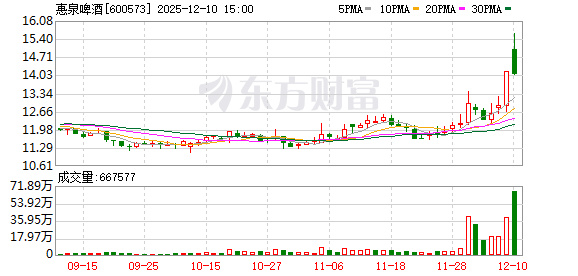
Group 1 - The stock of Huiquan Beer (600573) fell by 0.64% today, with a turnover rate of 26.70% and a trading volume of 996 million yuan, showing a fluctuation of 11.12% [2] - Institutional investors net sold 12.82 million yuan, while the total net selling by brokerage seats amounted to 7.61 million yuan [2] - The stock was listed on the Shanghai Stock Exchange due to its turnover rate reaching 26.70%, with institutional specialized seats net selling 12.82 million yuan [2] Group 2 - The top five brokerage seats involved in trading accounted for a total transaction volume of 133 million yuan, with a buying amount of 56.46 million yuan and a selling amount of 76.89 million yuan, resulting in a net selling of 20.43 million yuan [2] - The main capital outflow for the stock today was 107 million yuan, with large single orders showing a net outflow of 56.30 million yuan and large orders showing a net outflow of 51.09 million yuan [2] - Over the past five days, the main capital has seen a net outflow of 550,000 yuan [2] Group 3 - The company reported its third-quarter results on October 20, showing a total revenue of 576 million yuan for the first three quarters, a year-on-year decrease of 2.59%, while net profit reached 98.56 million yuan, reflecting a year-on-year increase of 23.70% [2]

青岛啤酒入选《国资国企社会责任蓝皮书》 高质量履责实践再树标杆
Zheng Quan Ri Bao Wang· 2025-12-10 09:44
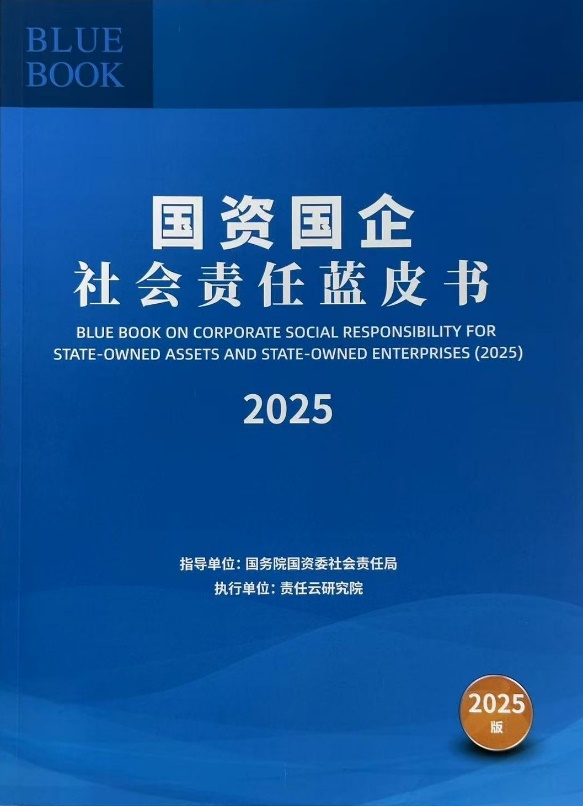
Core Viewpoint - Qingdao Beer has been recognized for its commitment to social responsibility and sustainable development, being the only local state-owned enterprise from Shandong province included in the "State-owned Enterprises Social Responsibility Blue Book (2025)" as an exemplary case for industrial upgrading [1][2]. Group 1: Social Responsibility and Recognition - Qingdao Beer is the only industry representative and the only local state-owned enterprise from Shandong to be included in the blue book, marking its third recognition as an exemplary case [1]. - The company has a long-standing commitment to environmental principles, focusing on quality craftsmanship, green development, innovation, and social care, driving sustainable development and creating shared value across its value chain [2][3]. Group 2: Technological Innovation - Qingdao Beer leverages its national-level innovation platform to enhance its capabilities in strain research, flavor control, low-carbon brewing, and product innovation, aiming to cultivate new productive forces [4]. - The company has been awarded the National Science and Technology Progress Award twice, being the only brewery to achieve this honor four times, reflecting its leadership in technological innovation [4]. Group 3: Digital Transformation - Qingdao Beer is committed to a clear digital transformation blueprint, optimizing organizational structure, business processes, and operational models, fully integrating technology to achieve comprehensive upgrades [5]. - The company has implemented five major projects focusing on product optimization, agile innovation, process optimization, data quality, and talent organization, establishing 25 national-level green factories [5]. Group 4: Industry Ecosystem and Business Expansion - The company is innovating its business models around beer, enhancing experiences through museums, festivals, bars, hotels, and other integrated tourism and retail formats [6]. - Qingdao Beer is expanding its fresh delivery business in over 30 cities, leading new consumption trends and enhancing the value of the entire industry chain [6]. - The brand value of Qingdao Beer is reported at 280.355 billion, ranking first in the Chinese beer industry and among the world's top 500 brands, indicating robust operational performance [6].
青岛啤酒入选《国资国企社会责任蓝皮书(2025)》 高质量履责实践再树标杆
Zheng Quan Ri Bao· 2025-12-10 09:43
青岛啤酒《百年青啤向"新"提"质"奋楫国企高质量发展新航程》入选《国资国企社会责任蓝皮书 (2025)》产业升级篇优秀案例,青岛啤酒是入选该蓝皮书的行业唯一、山东省地方国企唯一,这也是 青岛啤酒第三次入选该蓝皮书优秀案例。 作为拥有122年历史具有全球影响力的中国品牌,青岛啤酒秉承"为了更美好的世界"的环境理念,多年 来聚焦匠心品质、绿色发展、创新转型、关爱社会,以高质量履责实践驱动企业高质量可持续发展,为 价值链上下游持续创造可分享的价值。 科技创新引领培育新质生产力 依托青岛啤酒科研开发中心国家级创新平台,持续深耕并放大在菌种研究、风味调控、低碳酿造和产品 创新等优势,青岛啤酒加快培育新质生产力。持续强化企业创新主体作用,推动产学研用协同,2024年 再次荣获国家科学技术进步奖二等奖,成为酿酒行业中唯一且四次获得此殊荣的企业。以科技创新驱动 产品矩阵持续丰富与升级,目前已形成9大系列、100多个品类的产品矩阵,以卓越品质和创新口感满足 了消费者的多层次需求。 (文章来源:证券日报) 通过清晰的数字化转型蓝图,青岛啤酒坚定不移地推动组织结构优化、业务流程再造、运营模式革新, 并全面融入技术赋能的力量,实现全 ...
侯孝海谈新时代最大挑战:市场进入“分而化之”时代,大单品打天下的时代已终结
Xin Lang Cai Jing· 2025-12-10 09:22
Core Insights - The core theme of the conference is "Emergence·Infinity - Co-creating a New Form of Intelligent Business" [1][7] - The speaker, Hou Xiaohai, emphasizes the challenges and opportunities in the current business landscape, particularly in the beer industry [3][5] Group 1: Challenges - The first challenge identified is differentiation, which is seen as the biggest challenge in the new era, affecting demand, products, and consumer experiences [3][9] - The second challenge is the restructuring of the commercial foundation, where traditional distribution channels are being disrupted by instant retail, changing the entire industry chain [3][9] - The third challenge is internal competition (involution), which arises from supply-demand imbalances and has led to significant capacity reductions in the beer industry, with companies like China Resources Beer closing 40 factories and reducing over 5 million tons of capacity [4][10] Group 2: Opportunities - Opportunities arise from product iteration, driven by technology and quality improvements, which can lead to significant market advantages [5][10] - The development of digital intelligence (digitalization) is expected to play a crucial role in the recovery and growth of Chinese consumer goods companies over the next five years [5][10] - A focus on personalized strategies is necessary to meet the evolving consumer demands in the differentiation era [5][10] Group 3: New Management Concepts - The concept of co-integration and co-existence within the industry chain and value chain is emphasized, advocating for collaboration rather than competition among companies [6][11] - The "three precision management" approach—lean, streamlined, and detailed management—is recommended for companies to navigate tighter economic conditions [6][11] Group 4: Green Development - Green development should be viewed as a driving force and competitive advantage rather than a mere obligation, influencing industry structure and brand value [6][12]

侯孝海坦言科技焦虑:是机遇更是挑战,拥抱太快怕被迭代,不拥抱害怕被抛弃
Xin Lang Cai Jing· 2025-12-10 09:11
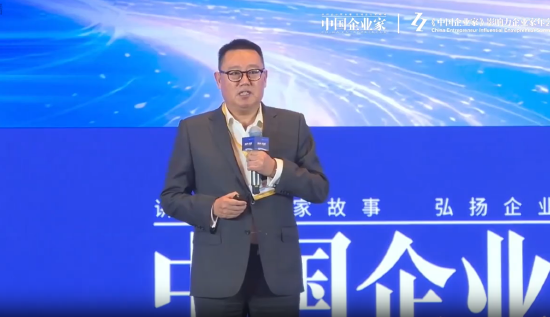
Core Insights - The event "2025 China Entrepreneur Influence Entrepreneur Annual Conference" focuses on the theme "Emergence·Infinity - Co-creating a New Form of Intelligent Business" [1][6] - Huo Xiaohai, former chairman of China Resources Beer, emphasized the concept of "New World" in his speech, reflecting on the significant changes in the beer industry and the need for transformation [3][8] Group 1: Changes in the Business Environment - The external environment for businesses has undergone significant changes, necessitating a clear understanding of these shifts to keep pace with industry developments [9] - The beer industry is experiencing a transformation where traditional products and services are being abandoned by consumers, indicating a need for companies to adapt [3][8] Group 2: Technological Advancements - Rapid technological advancements, particularly in artificial intelligence, are reshaping industries, presenting both opportunities and challenges for companies [4][9] - Huo noted that factories are increasingly automated, with a significant reduction in workforce; for instance, a factory with a capacity of 100,000 tons previously employed 500-600 people [4][9] Group 3: Changing Consumer Demographics - There has been a significant generational shift in consumer demographics over the past decade, with the current consumer base differing by over 50% from that of ten years ago [5][10] - The new generation of consumers, particularly those born after 2000, possess distinct values and consumption patterns, which companies must recognize to avoid being abandoned by their target market [5][10] - Huo emphasized the importance of appealing to younger consumers, stating that if a product is rejected by this demographic, its growth potential diminishes significantly [5][10]