
债券

Search documents
中央登记结算公司:中国转型债券白皮书(2025)
Sou Hu Cai Jing· 2025-12-02 08:21
Core Insights - The report presents a comprehensive overview of the development of China's transition bond market, highlighting its significance as a financial tool supporting green and low-carbon transitions, with substantial achievements in policy guidance, market practices, and environmental benefits, indicating a promising future potential [1][2]. Group 1: Development Opportunities - China's transition bonds are positioned to benefit from significant development opportunities driven by national policies aimed at achieving carbon peak and carbon neutrality, as outlined in the 20th National Congress report [11]. - The G20 Transition Finance Framework provides international standards and guidelines for transition activities, while domestic policies have established clear standards, product systems, and incentive mechanisms for transition finance [12][13]. Group 2: Market Growth - The transition bond market in China has steadily grown over four years, with a total of 244 bonds issued from 2021 to 2024, amounting to a total scale of 220.8 billion yuan, and the number of issuers increasing to 59 [2][19]. - The product categories have diversified, with both linked and non-linked bonds, and corporate bonds and medium-term notes becoming the primary issuance types [21]. - The geographical distribution of issuers shows a concentration in regions with strong transition demands, with Beijing and Shanghai accounting for nearly 40% of the total issuance [24]. Group 3: Environmental Benefits - Transition bonds have demonstrated significant environmental benefits, with funds primarily directed towards energy-saving and carbon-reduction projects, accounting for over 80% of total investments [2][34]. - Quantitative data indicates that from 2021 to 2024, linked transition bonds are expected to achieve annual carbon reductions of over 48.06 million tons of CO2 equivalent and save over 15.8 million tons of standard coal [37]. Group 4: High-Quality Development - To promote high-quality development of the transition bond market, several strategies are recommended, including the establishment of a "ladder-type" transition bond planning framework, encouraging product innovation, and enhancing information disclosure mechanisms [40][41]. - Strengthening international cooperation and aligning Chinese standards with international standards are also emphasized to support the continuous expansion of the transition bond market [43].


11月债市回顾及12月展望:关注重磅会议,把握1.85%配置价值
Yin He Zheng Quan· 2025-12-02 06:40
Report Industry Investment Rating No relevant content provided. Core Viewpoints of the Report - In November, the bond market fluctuated more significantly during the policy window period, with the overall yield oscillating upward and the curve slightly steepening. The 10Y Treasury yield rose by 5BP, and the 1Y Treasury yield increased by 2BP. As of November 28, the 10-year Treasury yield climbed 5BP to 1.84%, and the 1-year Treasury yield went up 2BP to close at 1.4%, with the term spread widening by 1BP to 44BP [1][8]. - In December, attention should be paid to the statements of key central meetings, the subsequent operation scale of the central bank's restarted Treasury bond trading, the actual implementation of the public offering fee new regulations, and the marginal constraints of the "ceiling and floor" state of the 10-year bond on the current market pricing of 1.85%. The bond market is expected to be mainly volatile, and the allocation value at around 1.85% has reappeared. It is recommended to seize the current key position with high cost - effectiveness [4][5][66]. Summary According to Related Catalogs I. Bond Market Review: Interest Rates Oscillated Upward, and the Yield Curve Slightly Steepened - In November, affected by factors such as capital - side fluctuations, the continued play of the stock - bond seesaw effect, and repeated policy expectations, the bond market's volatility intensified. The 10Y Treasury yield rose by 5BP, and the 1Y Treasury yield increased by 2BP. The term spread widened by 1BP to 44BP [1][8]. - Different maturities of the Treasury yield curve showed structural differentiation, with the ultra - short and medium - long - term yields rising more significantly. The implied tax rate of policy - bank bonds generally rebounded [9]. - Overseas, the market expected that the probability of the Fed maintaining the interest rate unchanged in December was 15.3%, while the probability of a 25 - basis - point interest rate cut rose to around 85%. As of November 28, compared with the end of October, the US bond yield dropped 9BP to 4.02%, and the Sino - US yield spread inversion narrowed by 14BP to around 218BP [10]. - Throughout November, the bond market showed different trends in each week. The first week saw an oscillating upward trend in yields; the second week presented a narrow - range consolidation pattern; the third week showed a differentiation between short - and long - term yields; and the fourth week witnessed a steep upward shift in yields [16][19][22]. II. This Month's Outlook and Strategy (1) This Month's Bond Market Outlook: Pay Attention to the Statements of Key Central Meetings in December and Whether Institutions Will Make a Pre - emptive Move at the Year - End - **Fundamentals**: Continue to focus on the impact of inflation improvement, the resilience of exports under high - base effects, the improvement of PMI sentiment, the possible warming of real - estate supply and demand data, and the possible improvement of the shortfall in social financing [2][23]. - **Supply Side**: It is expected that the net supply of government bonds in December will be around 650 billion yuan, basically falling back to a relatively low level within the year. The use of the remaining quota will drive the continued issuance of special bonds [2][42]. - **Funding Side**: Although the scale of government bond issuance will fall to a low level within the year, the large - scale maturity of certificates of deposit next month may put pressure on the liquidity of the banking system. However, the central bank's attitude of care is clear, and it is expected that the funding side will be generally balanced and loose [2][46]. - **Policy Side**: Focus on the two major economic meetings in December. It is expected that there will be updates on policies related to broad - money, active fiscal policies, consumption, real estate, and debt resolution. The market's expectation of an interest rate cut has increased [3][56]. - **Institutional Behavior**: In November, various institutions generally increased their holdings, with the allocation - oriented investors increasing their positions while the trading - oriented investors reducing their scale. In December, pay attention to the possible marginal redemptions of wealth management products after the formal implementation of the public offering sales fee new regulations, the trading games of public funds and other trading - oriented investors, the possible increase in holdings by wealth management products and rural commercial banks in the banking system, and the allocation layout of insurance - based allocation - oriented investors [3][59][60]. (2) Bond Market Strategy: The Bond Market Will Be Mainly Volatile, and Seize the Allocation Cost - Effectiveness at the Short - Term Ceiling of 1.85% - Consider multiple aspects such as fundamentals, supply, funding, policies, and institutional behavior. In December, the bond market is expected to be mainly volatile. The allocation value at around 1.85% has reappeared, and it is recommended to seize the opportunity [66][67][68]. III. Important Economic Calendar for December The report lists important economic indicators to be announced in December and their market expected values, including foreign exchange reserves, export and import data, CPI, PPI, and other data [70].
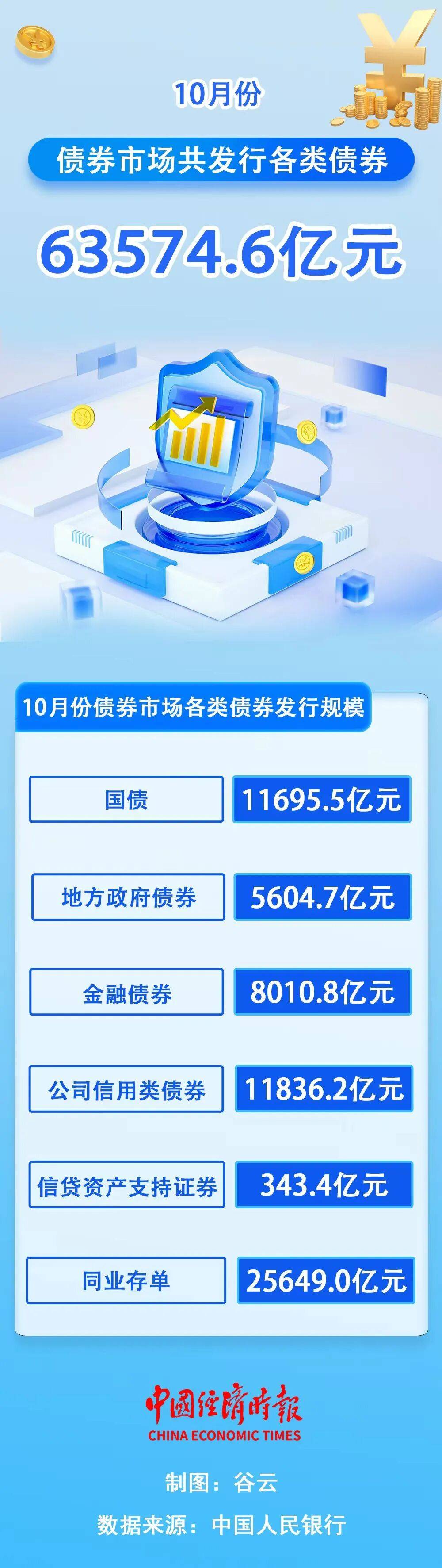
视说丨10月债券市场发债超6.3万亿元
Sou Hu Cai Jing· 2025-12-02 06:01
Core Viewpoint - In October, the bond market in China issued a total of 63,574.6 billion yuan across various types of bonds, indicating significant activity in the financial sector [4]. Group 1: Bond Issuance Breakdown - The issuance of government bonds amounted to 11,695.5 billion yuan [4]. - Local government bonds were issued at 5,604.7 billion yuan [4]. - Financial bonds reached a total issuance of 8,010.8 billion yuan [4]. - Corporate credit bonds saw an issuance of 11,836.2 billion yuan [4]. - Credit asset-backed securities totaled 343.4 billion yuan [4]. - Interbank certificates of deposit issued were valued at 25,649.0 billion yuan [4].
12月债市有哪些看点?——华创资管债券日报 2025-12-2
Sou Hu Cai Jing· 2025-12-02 05:38
Group 1 - The bond market is experiencing a slight decline in interest rates, influenced by weak PMI data and a net withdrawal of 231.1 billion from the central bank, maintaining a loose liquidity environment [1] - Key upcoming events in December, including the Politburo and economic work meetings, are expected to set the tone for economic policies in 2026, with a high probability of maintaining a growth target of around 5% [1] - The central bank's actions to counter year-end liquidity fluctuations will be crucial, as historical trends suggest large-scale liquidity injections in December or early January to address year-end funding needs [2] Group 2 - Regulatory policies regarding fund management are under scrutiny, with potential adjustments in fee structures that could impact the public fund industry and lead to preventive redemptions by clients [3] - Despite uncertainties in the bond market, assets with safe-haven characteristics are likely to benefit in a context of global economic downturn and ongoing geopolitical risks [3] - The bond market is currently facing upward pressure on interest rates, with short-term rates remaining stable and long-term rates showing slight increases, indicating a search for support at the upper end of the trading range [5]
债市早报:资金面稳中偏松,债市偏强震荡
Sou Hu Cai Jing· 2025-12-02 04:19
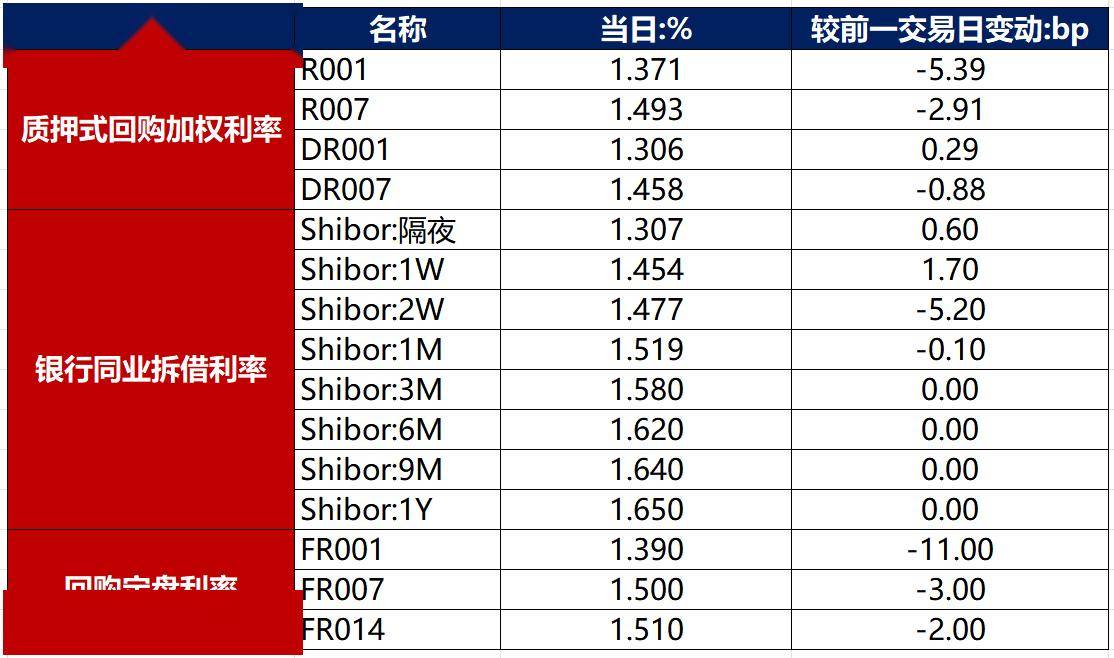
Group 1: Domestic News - The National Development and Reform Commission has expanded the scope of infrastructure REITs, including commercial office facilities and urban renewal facilities as independent asset categories [2] - The Ministry of Finance and the Ministry of Science and Technology issued guidelines to prevent illegal funding practices and ensure timely debt settlement [2] Group 2: International News - Russia will issue its first sovereign bonds denominated in RMB, starting on December 2, with a target coupon rate of 6.25%-6.5% for the 3.2-year portion and up to 7.5% for the 7.5-year portion [3] - The US ISM Manufacturing PMI for November fell to 48.2, indicating continued contraction in the manufacturing sector, with new orders and employment indices also declining [4] - The Bank of Japan's Governor hinted at a potential interest rate hike in December, leading to declines in both Japanese stocks and bonds [5] Group 3: Commodity Market - International crude oil prices increased, with WTI rising by 1.31% to $59.32 per barrel and Brent up by 1.26% to $63.17 per barrel [6] Group 4: Financial Market - On December 1, the central bank conducted a 7-day reverse repurchase operation of 107.6 billion yuan at a rate of 1.40%, resulting in a net withdrawal of 231.1 billion yuan [7] - The funding environment remained stable, with major repo rates showing slight fluctuations [8][9] Group 5: Bond Market Dynamics - The bond market showed strong fluctuations, with the 10-year government bond yield slightly decreasing to 1.8275% while the 10-year policy bank bond yield increased to 1.9000% [11] - In the secondary market, several corporate bonds experienced significant price deviations, with some bonds from Vanke dropping over 75% [14] Group 6: Credit Bond Events - Vanke's equity stake in Shenzhen Vanke Development was frozen for three years, and the company faced scrutiny over its financial practices [15] - Aoyuan Group announced it failed to pay interest on its bonds, accumulating a total of 6.44 billion yuan in unpaid principal and interest [15] Group 7: Convertible Bonds - The convertible bond market saw mixed performance, with the China Securities Convertible Bond Index and the Shanghai Stock Exchange Convertible Bond Index rising by 0.10% and 0.19% respectively [18] - The total trading volume in the convertible bond market was 55.329 billion yuan, a decrease of 9.851 billion yuan from the previous trading day [18] Group 8: Overseas Bond Market - US Treasury yields rose across all maturities, with the 2-year yield increasing by 7 basis points to 3.54% and the 10-year yield rising by 7 basis points to 4.09% [20] - Major European economies also saw an increase in 10-year government bond yields, with Germany's yield rising by 6 basis points to 2.75% [23]

固定收益市场周观察:债市难以复刻2020年末行情
Orient Securities· 2025-12-02 02:42
Report Industry Investment Rating No information about the report industry investment rating is provided in the content. Core Viewpoints - The bond market is unlikely to replicate the situation at the end of 2020. The current credit risk event is unlikely to significantly change market expectations or prompt institutions such as banks and insurance companies to accelerate their entry into the bond market, and it may not change the main trading line of interest rate bonds [6][9][16]. - In December, the pressure on the capital market is expected to be controllable, but the overall trading opportunities in the bond market are still limited. The supply pressure of government bonds is controllable, and fiscal spending tends to increase at the end of the year. The bond market may continue its weak and volatile pattern, and the trading space is narrow [6][16]. Summary by Directory 1. Bond Market Weekly Viewpoint - Some investors compare Vanke's debt extension to Yongmei's default, believing that the bond market will replicate the situation at the end of 2020. However, the impact of Yongmei's default was mainly due to the panic after the collapse of the "state - owned enterprise belief" and the negative feedback of fund products, which is less likely to happen now. The central bank responds quickly to credit risk events, and this event is unlikely to change market expectations significantly [6][9][16]. - In 2020, after Yongmei's default, the credit bond market was sold off, leading to a marginal tightening of the capital market and a significant adjustment of interest rate bonds. There was a negative feedback in the fund product market. The central bank increased liquidity injection, and the market gradually stabilized after the financial regulatory authorities' statement [10][11][15]. - In contrast, Vanke's debt - extension has a lower panic - causing effect, and the probability of credit risk spreading to the interest rate and capital markets is weak. The capital market pressure in December is expected to be controllable, but the bond market trading opportunities are limited [16]. 2. This Week's Focus Points in the Fixed - Income Market 2.1 Next Week's Overseas Data - This week, important data will be released, including China's November foreign exchange reserves, the US November PMI, November ADP employment figures, and the Eurozone's November PMI and October PPI monthly rate [17][19]. 2.2 This Week's Interest Rate Bond Issuance - This week, the interest rate bond issuance scale is expected to be 456.7 billion yuan, which is at a medium level compared to the same period. Among them, the issuance scale of treasury bonds is expected to be about 218 billion yuan, local bonds are planned to be issued at 108.7 billion yuan, and policy - financial bonds are expected to be issued at about 130 billion yuan [19][20][21]. 3. Interest Rate Bond Review and Outlook 3.1 Reverse Repurchase Net Withdrawal - This week, the reverse repurchase net withdrawal was 16.42 billion yuan. The MLF was injected with 1 trillion yuan and 900 billion yuan matured. The treasury deposit was increased by 12 billion yuan, and the central bank bills were offset. The total net injection of open - market operations was 5.58 billion yuan. The capital interest rate showed a structural differentiation, and the repurchase trading volume decreased [26][27]. - The certificate of deposit issuance increased slightly, the net financing was negative, the short - term issuance interest rate increased, and the long - term secondary yield was relatively stable [33]. 3.2 Interest Rates of All Maturities Rose - Last week, due to the unstable liability side of fixed - income products and market concerns about the new fund regulations, the interest rate market adjusted. In the second half of the week, long - term bonds led the marginal repair of spot bonds. The yields of 10 - year treasury bonds and CDB bonds increased by 1.7bp and 2.5bp respectively. The yields of treasury bonds of all maturities increased, with the 7 - year treasury bond yield rising the most, by about 3.8bp [42][45]. 4. High - Frequency Data - On the production side, most operating rates declined. The blast furnace operating rate, semi - steel tire operating rate, and PTA operating rate decreased, while the asphalt operating rate increased. The average daily crude steel output in mid - November had a negative year - on - year growth rate of - 12.5% [6][54]. - On the demand side, the year - on - year growth rates of passenger car wholesale and retail improved. The year - on - year decline in commercial housing transaction area slightly narrowed. The SCFI and CCFI comprehensive indices changed by 0.7% and - 0.1% respectively [6][54][57]. - In terms of prices, crude oil, copper, and aluminum prices increased. The coking coal price decreased by 4.4%. The building materials comprehensive price index, cement index, and glass index increased. The rebar output decreased, and the inventory continued to decline to 3.85 million tons. The prices of vegetables, fruits, and pork changed by 1.9%, 1.8%, and - 0.4% respectively [6][57].
2025年第204期:晨会纪要-20251202
Guohai Securities· 2025-12-02 00:48
Group 1 - The core viewpoint of the report indicates that Meituan's food delivery losses have peaked, and there is a focus on value recovery amid dynamic competition [3][4] - In Q3 2025, Meituan reported revenue of 95.5 billion yuan, a year-on-year increase of 2% and a quarter-on-quarter increase of 4%, but incurred an operating loss of 19.8 billion yuan, a year-on-year decline of 244% [3][4] - The core local business revenue decreased by 3% to 67.4 billion yuan, with significant losses attributed to intensified market competition and increased promotional expenses [4][5] Group 2 - The report highlights that Meituan's food delivery business saw record high daily active users and monthly transaction users, indicating a robust growth in core user base [5] - Meituan's flash purchase business revenue grew by 33% year-on-year in Q3 2025, with significant increases in user transaction frequency and average order value [5][6] - The hotel and travel business revenue increased by 13% year-on-year, with over 200 service categories covered, and the platform has accumulated over 25 billion real consumption reviews [6] Group 3 - The report projects that Meituan's revenue for 2025-2027 will be 365.4 billion, 412.0 billion, and 467.9 billion yuan respectively, with Non-GAAP net profit estimates of -18.4 billion, +14.5 billion, and +37.8 billion yuan [7] - The report maintains a "buy" rating for Meituan, with a target market value of 737 billion yuan for 2026, corresponding to a target price of 121 yuan per share [7] Group 4 - The report on Li Auto indicates that Q3 2025 revenue was 27.36 billion yuan, a year-on-year decline of 36.2%, with a net loss of 6.24 billion yuan [18][19] - Li Auto's gross margin for Q3 2025 was 16.3%, down 5.2 percentage points year-on-year, with vehicle gross margin at 15.5% [19][20] - The company expects Q4 2025 deliveries to be between 100,000 and 110,000 units, a year-on-year decrease of 30.7% to 37% [20][21]


10月债券市场发债超6.3万亿元
Ren Min Ri Bao Hai Wai Ban· 2025-12-01 22:11
债券市场对外开放方面,截至10月末,境外机构在中国债券市场的托管余额3.8万亿元,占中国债券市 场托管余额的比重为1.9%。其中,境外机构在银行间债券市场的债券托管余额3.7万亿元;分券种看, 境外机构持有国债2.0万亿元、占比54.7%,同业存单0.8万亿元、占比20.9%,政策性银行债券0.8万亿 元、占比20.1%。 货币市场运行方面,10月份,银行间同业拆借市场成交6.8万亿元,同比减少19.0%,环比减少26.7%; 债券回购成交131.5万亿元,同比减少5.2%,环比减少17.8%。交易所标准券回购成交46.5万亿元,同比 增加9.8%,环比减少18.2%。10月份,同业拆借加权平均利率1.39%,环比下降6个基点;质押式回购加 权平均利率1.40%,环比下降6个基点。 (责编:岳弘彬、牛镛) 关注公众号:人民网财经 债券市场运行方面,10月份,银行间债券市场现券成交26.6万亿元,日均成交1.5万亿元,同比增加 10.2%,环比增加3.9%。单笔成交量在500万—5000万元的交易占总成交金额的48.06%,单笔成交量在 9000万元以上的交易占总成交金额的45.68%,单笔平均成交量4177. ...
欧债收益率集体上涨,英国10年期国债收益率涨4.1个基点
Mei Ri Jing Ji Xin Wen· 2025-12-01 21:48
Core Viewpoint - European bond yields collectively increased on December 1, with notable rises in various countries' 10-year government bonds [1] Group 1: Yield Changes - The UK 10-year government bond yield rose by 4.1 basis points to 4.479% [1] - The French 10-year government bond yield increased by 7.5 basis points to 3.482% [1] - The German 10-year government bond yield went up by 6.1 basis points to 2.748% [1] - The Italian 10-year government bond yield climbed by 6.9 basis points to 3.467% [1] - The Spanish 10-year government bond yield rose by 6.4 basis points to 3.225% [1]
不到半月 日本再遭股债“双杀”
Zhong Guo Xin Wen Wang· 2025-12-01 17:17
Core Viewpoint - Japan's financial markets faced significant declines on December 1, with the Nikkei 225 index dropping by 1.89% and bond prices plummeting, indicating growing concerns over the government's fiscal policies and potential interest rate hikes [1][2]. Group 1: Stock Market Performance - The Nikkei 225 index opened high but fell sharply, with intraday losses exceeding 1,000 points, ultimately closing down by 1.89% [1]. - The market's decline is attributed to investor worries regarding the fiscal situation under Prime Minister Fumio Kishida's administration [1]. Group 2: Bond Market Dynamics - Japanese government bond prices experienced a significant drop, with the two-year bond yield rising by 2.5 basis points to 1.015%, the highest level since 2008 [1]. - The yield on the 10-year newly issued government bonds reached 1.840%, marking the highest level since June 2008 [1]. - The Ministry of Finance plans to increase the issuance of short-term bonds to support the economic stimulus plan, which may exert pressure on short-term sovereign bonds [1]. Group 3: Monetary Policy Outlook - There are indications that the Bank of Japan may consider interest rate hikes, as Governor Kazuo Ueda mentioned weighing the pros and cons of such a decision [1]. - Despite the cautious tone from the Bank of Japan, there is speculation that a rate hike could occur in December, while maintaining a generally accommodative monetary policy environment [1][2]. - The current fiscal expansion policies under Kishida's government raise concerns about potential inflation acceleration and a significant increase in mid-term government bond issuance, which could disrupt supply-demand balance [2].