
钢铁

Search documents
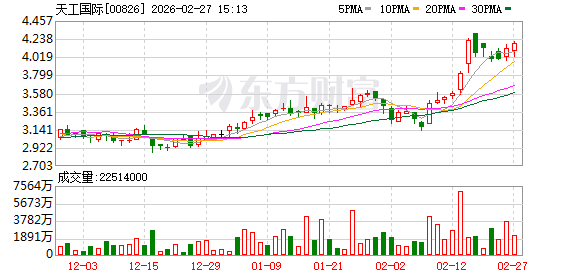
天工国际上调高速钢价格
Mei Ri Jing Ji Xin Wen· 2026-02-27 07:13
Core Viewpoint - Tian Gong International announced a price adjustment for high-speed steel due to rising costs of tungsten iron, molybdenum iron, and scrap steel, effective from March 1, 2026 [2] Price Adjustment Details - For steel grades containing 1% molybdenum (Mo), the price will increase by 1,000 yuan per ton [2] - For steel grades containing 1% tungsten (W), the price will increase by 5,000 yuan per ton [2] - For steel grades containing 1% vanadium (V), the price will increase by 300 yuan per ton [2]

分级落地+反内卷强化,钢铁板块利好不断,钢铁ETF(515210)涨超2%
Mei Ri Jing Ji Xin Wen· 2026-02-27 07:07
Core Viewpoint - The steel industry is expected to see an increased probability of supply-side adjustments in the short to medium term, influenced by upcoming losses in listed steel companies and tightening export policies [1] Group 1: Supply-Side Adjustments - By Q4 2025, the losses of listed steel companies are approaching those seen in Q3/Q4 2024, indicating a potential need for supply-side policies to mitigate these losses [1] - Since early 2026, export policies for steel have tightened, which is critical as direct and indirect exports are a pillar for the steel industry's profitability in 2025 [1] Group 2: Policy and Regulation - The Central Economic Work Conference in December 2025 reiterated the need to address "involution" competition and to advance energy-saving and carbon reduction transformations in key industries [1] - By the end of December 2025, the National Development and Reform Commission emphasized the continuation of crude steel production controls [1] Group 3: Long-Term Outlook - In the medium to long term, the supply of steel may be reasonably constrained, leading to a potential recovery of profitability in the steel sector back to historical average levels [1] Group 4: Steel ETF - The Steel ETF (515210) tracks the CSI Steel Industry Index (930606), which selects listed companies involved in various steel products to reflect the overall performance of the steel industry [1]
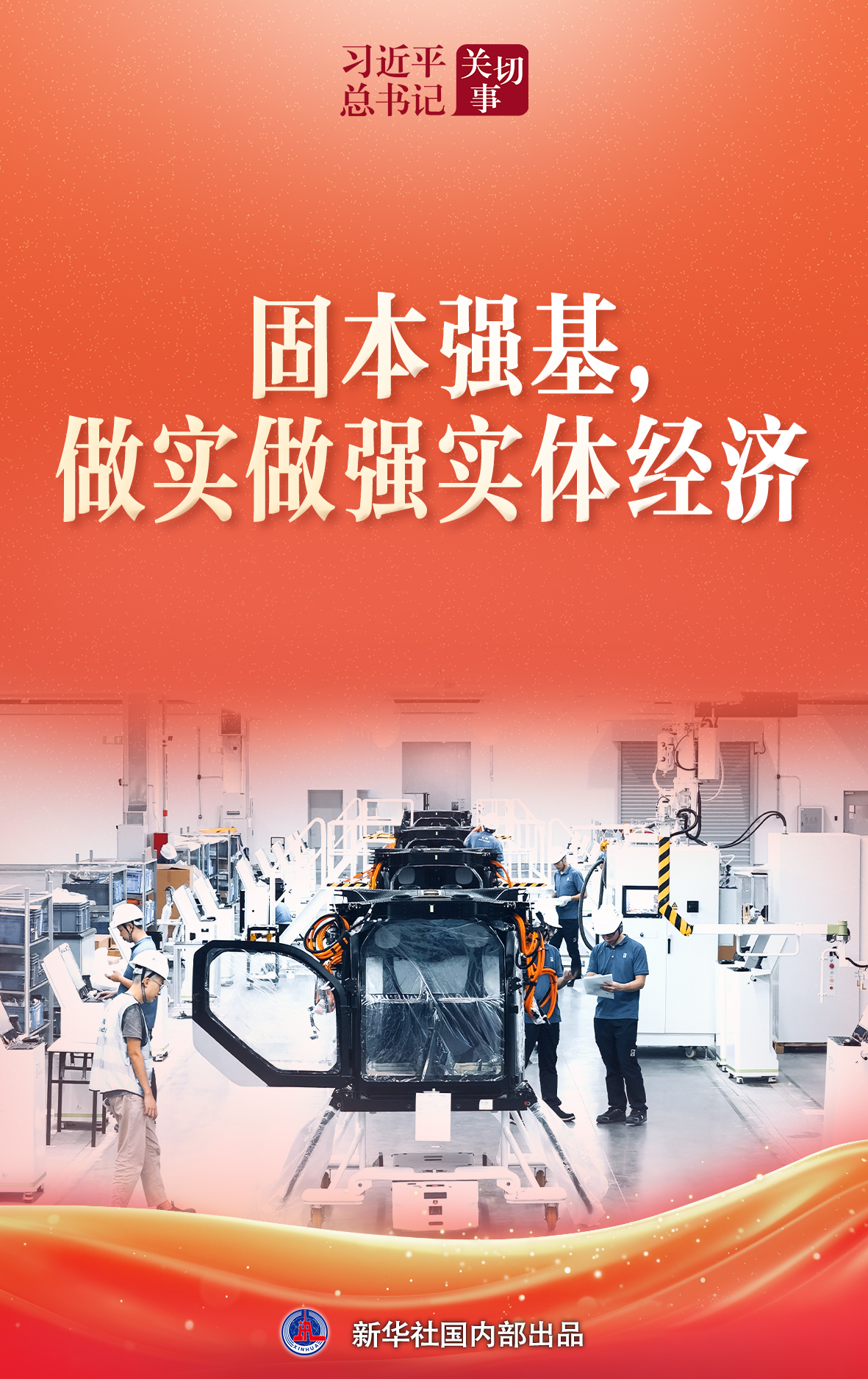
习近平总书记关切事·两会看落实丨固本强基,做实做强实体经济
Xin Hua Wang· 2026-02-27 07:05
Group 1 - The core message emphasizes the importance of the real economy as the foundation of a major country, with a focus on developing the real economy through technological and industrial innovation [3] - In 2025, the industrial added value contributed 35% to economic growth, with the manufacturing sector maintaining its position as the world's largest for 16 consecutive years, and the service sector's contribution to GDP rising to nearly 60% [8] - The development of the real economy is illustrated by the achievements of Luoyang Bearing Group, which reported revenues exceeding 6 billion yuan and expanded its product applications in various sectors, including new energy vehicles [8][7] Group 2 - The launch of the world's largest radial bearing for a 120-meter radio telescope by Luoyang Bearing Group marks a significant technological breakthrough in the domestic market [4] - The company is actively pursuing partnerships with leading domestic new energy vehicle manufacturers, particularly with its third-generation products that have high integration and assembly precision [7] - The emphasis on smart, green, and integrated development is highlighted as a key direction for the real economy, with various projects in hydrogen metallurgy and artificial intelligence applications contributing to reduced carbon emissions and enhanced productivity [20][19] Group 3 - The integration of technology and industry is crucial for enhancing the real economy, as demonstrated by the establishment of a technology transfer center in Guangdong aimed at accelerating the conversion of research outcomes into market products [13][14] - The production of a new type of flying car by Guangdong Huitian Aerospace Technology Company showcases the innovative potential within the low-altitude economy sector [9][12] - The ongoing digital transformation in manufacturing, as seen in the steel industry, has led to significant improvements in production stability and product quality, with sales of high-end automotive products increasing substantially [18]

绿色税制推动生态保护与经济发展双向奔赴
Ren Min Wang· 2026-02-27 06:52
Group 1 - The green transformation of economic and social development is a key aspect of achieving high-quality development, with significant growth in green product manufacturing industries such as new energy vehicles, photovoltaic equipment, and lithium-ion batteries, all showing annual sales growth rates exceeding 30% during the 14th Five-Year Plan period [1] - The clean energy generation sales revenue, including wind, solar, hydro, and nuclear power, is projected to account for 42.6% of total power generation sales revenue by 2025, with wind and solar power sales revenue expected to grow at an annual rate of 25.4% during the same period [1] - The cumulative implementation of environmental protection tax incentives since its introduction in 2018 has reached 111.06 billion yuan, with significant reductions in taxes promoting pollution control and clean production [1] Group 2 - The green tax system has become a crucial support for promoting ecological protection and economic development, as demonstrated by the coal industry leader in Shanxi, which achieved 100% resource utilization of solid waste and zero wastewater discharge, resulting in a 50.29% decrease in environmental protection tax payments [2] - The wastewater treatment industry in Xinjiang has successfully achieved a stable water reuse rate of 90% and has benefited from over 280,000 yuan in tax reductions, showcasing a positive cycle of environmental investment supported by policy [3] - In Hunan Province, the cumulative implementation of environmental protection tax incentives has reached 2.882 billion yuan, facilitating the transition to ultra-low emissions and supporting the development of high-strength steel for engineering and automotive applications [4]
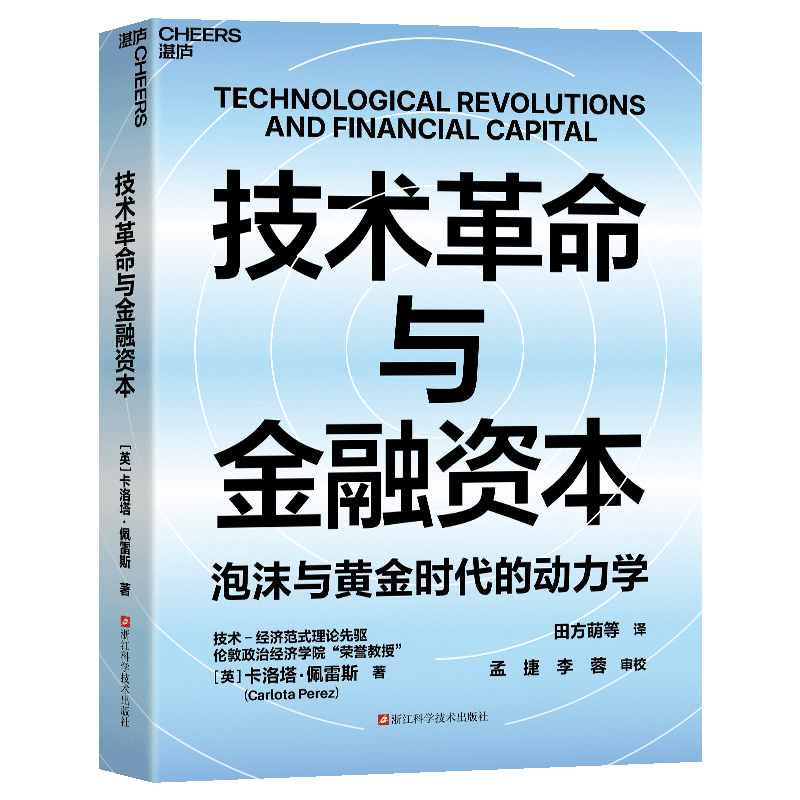
钢铁、芯片与技术未来︱21书评
2 1 Shi Ji Jing Ji Bao Dao· 2026-02-27 05:47
Core Insights - The article discusses the historical context and implications of Carlota Perez's "Technological Revolutions and Financial Capital," emphasizing the cyclical nature of capitalism driven by technological revolutions [1][2] Group 1: Technological Revolutions - The author identifies five technological revolutions that have occurred since the early 21st century: the Industrial Revolution, the Steam and Railway Era, the Steel, Electricity, and Heavy Industry Era, the Oil, Automobile, and Mass Production Era, and the Information and Communication Era [1] - The current technological environment is influenced by the AI revolution, open-source innovation, distributed finance, and global geopolitical competition, which may alter the historical conditions of the "technological-economic paradigm" [2] Group 2: Economic Implications - The article highlights that significant events in the global economy since the book's original publication include the ongoing breakthroughs in the information revolution, the irreversible threat of climate change, and China's rise as the world's second-largest economy [4] - China has leveraged both mature technologies from the fourth technological revolution and emerging technologies from the fifth to achieve substantial economic growth, paralleling the historical achievements of the U.S. and Germany during the third technological revolution [5] Group 3: Institutional Changes - The article emphasizes the necessity of major institutional reforms to facilitate innovation and investment, address social inequality, and achieve a green transition before climate change becomes irreversible [8] - Historical examples illustrate how previous technological revolutions required significant institutional changes to adapt to new economic realities, suggesting that similar reforms are needed today [6][8] Group 4: Challenges Ahead - The article notes that despite the potential for a new golden age of the information revolution, significant changes that could have occurred after the 2000 tech bubble and the 2008 financial crisis did not materialize, leading to continued speculative behavior in finance rather than long-term investments in the real economy [9] - The book aims to provide insights into the relationship between technological, economic, and political changes, rather than making predictions, encouraging readers to learn from historical patterns [9]
A股两大主线逆势走强
Zhong Guo Zheng Quan Bao· 2026-02-27 05:37
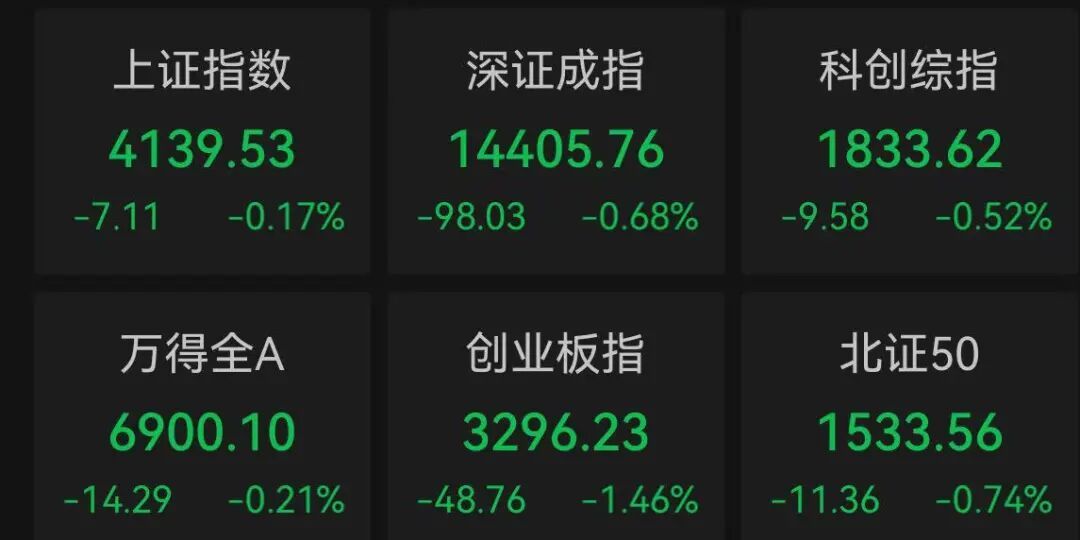
Group 1: Market Performance - The cyclical stocks continue to strengthen, with the AI application sector rebounding [2] - The non-ferrous metal sector is leading the gains, particularly the small metal segment, with stocks like Dongfang Zirconium experiencing significant increases [2][3] - Coal and steel sectors also saw upward movement, with companies like Hangang Co. showing strong performance [4] Group 2: Price Movements - The small metal sector index rose by 5.81%, with notable stocks such as Dongfang Zirconium up by 10.03% and Shouban Tungsten up by 10.01% [3][4] - Prices for black tungsten concentrate increased by 65.2% year-to-date, while ammonium paratungstate (APT) prices rose by 68.7% [4] Group 3: Industry Outlook - The steel industry is expected to show characteristics of supply contraction, export growth, and gradual improvement in profitability by 2025 [5] - Coal companies are characterized by high asset quality and cash flow, with several state-owned enterprises planning to increase stakes in listed companies, indicating confidence in the sector [5] Group 4: AI Application Developments - The AI application sector saw a rebound, with companies like Jinxianda and Qiyun Technology experiencing significant stock price increases [6][8] - Huawei's CodeArts code intelligence tool was launched, enhancing software development efficiency and quality, indicating a shift towards more advanced AI programming tools [9]
永兴材料股价涨5.41%,鹏华基金旗下1只基金重仓,持有67.66万股浮盈赚取215.83万元
Xin Lang Cai Jing· 2026-02-27 05:25
Group 1 - Yongxing Materials' stock price increased by 5.41% to 62.19 CNY per share, with a trading volume of 861 million CNY and a turnover rate of 3.69%, resulting in a total market capitalization of 33.527 billion CNY [1] - The stock has risen for six consecutive days, with a cumulative increase of 23.69% during this period [1] - Yongxing Special Materials Technology Co., Ltd. specializes in the research, production, and sales of special metal materials, including stainless steel and special alloy materials, with main revenue sources being bars (47.71%), wires (24.66%), lithium carbonate (20.10%), and others (7.53%) [1] Group 2 - Penghua Fund has a significant holding in Yongxing Materials, with the Penghua Guozheng Steel Industry Index (LOF) A fund reducing its holdings by 88,900 shares to 676,600 shares, representing 4.72% of the fund's net value, making it the fourth-largest holding [2] - The fund has realized a floating profit of approximately 2.1583 million CNY today and 7.6452 million CNY during the six-day rising period [2] - The Penghua Guozheng Steel Industry Index (LOF) A fund was established on August 13, 2015, with a current size of 340 million CNY, and has achieved a year-to-date return of 10.8% and a one-year return of 33.67% [2]

观望情绪明显,矿价震荡运行
Hua Tai Qi Huo· 2026-02-27 05:04
黑色建材日报 | 2026-02-27 观望情绪明显,矿价震荡运行 钢材:成材消费较弱,钢价高开回落 市场分析 昨日盘面高开回落,螺纹钢期货主力合约收于3063元/吨,下跌0.42%;热卷主力合约收于3218元/吨,下跌0.56%。 现货方面,昨日国内钢材市场涨跌互现,由于多数商家陆续开工营业,下游工地尚未复工,需求整体表现较差。 供需逻辑: 目前,钢材维持供需双弱局面,基本面表现偏弱,库存持续增加,钢价仍承压,但政策预期在增强,钢市运行逻 辑在现实与预期之间切换。板材得益于需求开始恢复,但韧性有待跟踪,且供应压力未退,基本面表现弱稳,价 格仍将承压。总体来说,钢材呈供需双弱格局,库存季节性累库,但整体水平低于往年同期,随着旺季逐渐展开 以及政策利好预期影响,预计钢价低位存在支撑,后期留意终端消费情况以及库存去化速度。 策略 单边:震荡 跨期:无 跨品种:无 期现:无 期权:无 风险 地缘政治、产业政策、库存变化、需求复苏、成本支撑等 铁矿:观望情绪明显,矿价震荡运行 市场分析 期现货方面:昨日铁矿石价格小幅震荡。现货方面,2月26日唐山港口进口铁矿主流品种价格较前一工作日小幅波 动。贸易商报价积极性一般,报 ...
今天,A股两大主线逆势走强
Zhong Guo Zheng Quan Bao· 2026-02-27 05:01
Group 1: Market Performance - The cyclical stocks continue to strengthen, with the AI application sector rebounding [2] - The non-ferrous metal sector is leading the gains, particularly the small metals segment, with stocks like Dongfang Zirconium experiencing significant increases [2][3] - Coal and steel sectors also saw upward movement, with notable gains in stocks like Hangang Co [4] Group 2: Price Movements - The small metals sector index rose by 5.81%, with individual stocks such as Dongfang Zirconium and Shouban Tungsten achieving gains of 10.03% and 10.01% respectively [3][4] - Prices for black tungsten concentrate and ammonium paratungstate (APT) have increased significantly, with black tungsten concentrate at 760,000 CNY per ton, up 65.2% year-to-date, and APT at 1,130,000 CNY per ton, up 68.7% [4] Group 3: Industry Outlook - The steel industry is expected to show characteristics of supply contraction, export growth, price stabilization, and gradual improvement in profitability by 2025 [5] - Coal companies are characterized by high asset quality and cash flow, with several state-owned enterprises planning to increase stakes in listed companies, indicating confidence in the sector's growth [5] Group 4: AI Application Developments - Huawei's CodeArts code intelligence tool was officially released, integrating various technologies to enhance software development efficiency and quality [8] - The evolution of AI programming tools is shifting from a supportive role to an agent model, driven by advancements in underlying technologies [8]
钢材3月报:3月钢价压力仍存-20260227
Yin He Qi Huo· 2026-02-27 04:52
1. Report Industry Investment Rating - No information provided in the document. 2. Core Viewpoint of the Report - The steel price will still face pressure in March [1]. 3. Summary According to Relevant Catalogs 2. Fundamental Situation - **Price and Basis**: The document presents season - charts of Shanghai 20mm rebar spot price, Shanghai 4.75mm hot - rolled coil spot price, rebar 05 contract basis, and hot - rolled coil 05 contract basis [6][9]. - **Production**: It shows the monthly pig iron and crude steel production from the National Bureau of Statistics, the daily average hot metal output of 247 steel mills, and the capacity utilization rate of 89 independent electric arc furnaces [22][27]. - **Import and Export**: There are charts of steel and billet import quantities, as well as steel and billet export quantities [32][56]. - **Demand and Inventory**: It includes the weekly apparent demand and lunar total inventory of five major steel products, rebar, and hot - rolled coil, as well as the billet inventory in Tangshan area and the global (excluding China) blast furnace pig iron production [37][40][52][53]. - **Profit**: The document shows the export profit of Indian and Japanese hot - rolled coils [60]. 3. March Market Outlook - **Profit**: It presents the cash profit of East China electric arc furnaces (flat - rate electricity) and the cash profit of North China rebar long - process production [62]. - **Production**: There are charts of rebar and hot - rolled coil weekly production [65]. - **Macroeconomic Indicators**: It includes social financing scale, new RMB loans, fixed - asset investment cumulative year - on - year, 100 large - and medium - sized city land transaction area, commercial housing sales area month - on - year, housing new construction area month - on - year, housing completion area month - on - year, real estate development funds source month - on - year, 30 - city commercial housing transaction ma7, national urban second - hand housing listing price index, national building materials transaction, East China building materials transaction, local government special bond issuance, China's infrastructure loan demand index, infrastructure fixed - asset investment completion cumulative year - on - year sub - items, infrastructure construction investment month - on - year, cement infrastructure direct supply volume, cement delivery volume for housing construction and civil use [69][71][76][82][90][94]. - **PMI and Industrial Indicators**: It shows the performance of various PMI sub - items, manufacturing PMI, industrial enterprise profit total cumulative year - on - year and manufacturing sub - items, industrial added value month - on - year and sub - items, industrial enterprise finished product inventory and year - on - year, industrial enterprise finished product turnover days, China's automobile monthly output, civil steel ship production year - on - year, China's excavator monthly output, China's metal container monthly output, China's refrigerator production year - on - year, and China's air - conditioner production year - on - year [104][107][109][114][116][119].