
咖啡

Search documents
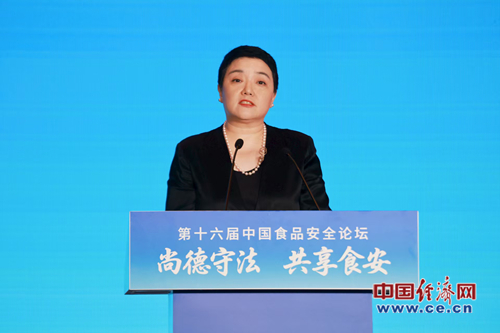
百胜中国刘丽:“食物驿站”建立餐饮行业余量食物管理新范式
Zhong Guo Jing Ji Wang· 2025-09-11 10:58
Group 1 - The core theme of the 16th China Food Safety Forum is "Honesty and Lawfulness, Sharing Food Safety," highlighting the importance of food safety and waste reduction in the food industry [2] - KFC, a brand under Yum China, has integrated food waste reduction into its brand development strategy, establishing a new model for managing surplus food in the restaurant industry through its "Food Station" initiative [2][3] - The Chinese government has implemented a series of policies to combat food waste and ensure food security, including the 2021 Anti-Food Waste Law and the 2024 Action Plan for Food Conservation and Anti-Food Waste [2] Group 2 - Since its launch in 2020, KFC's "Food Station" initiative has expanded to over 1,050 stores across more than 180 cities by June 2025, demonstrating significant growth in its operations [4] - The initiative focuses on collecting, packaging, and freezing surplus food that is still within its shelf life, providing it for free to those in need, thereby contributing to environmental sustainability [3][4] - KFC aims to continue enhancing the influence of the "Food Station" model and attract more participants to the environmental protection cause, aligning with its sustainable development philosophy [5]

第四届全球数字贸易博览会“数贸创投日”9月杭州启幕,硬核资源共赴数字贸易新十年
3 6 Ke· 2025-09-11 10:56
Core Insights - The global digital trade is at a critical juncture, with the deep integration of the digital economy and the real economy being a core driver of global economic recovery [1] - The Global Digital Trade Expo, as China's only national-level exhibition focused on digital trade, aims to implement national strategies for promoting digital trade innovation [1] - The "Digital Trade Investment Day" series of activities has successfully attracted hundreds of participants and facilitated preliminary cooperation intentions between capital and projects [1] Event Information - The fourth Global Digital Trade Expo "Digital Trade Investment Day" will take place on September 25, 2025, at the Hangzhou International Exhibition Center [2] - The event is organized by the Global Digital Trade Expo Organizing Committee and supported by various governmental and financial institutions [2] Eight Core Highlights - Highlight 1: Providing specialized services through the Industrial and Commercial Bank of China's technology financial center, showcasing support for tech enterprises [3] - Highlight 2: Sharing practical experiences in "Artificial Intelligence+" applications to aid digital transformation across industries [4] - Highlight 3: Establishing industry benchmarks with the release of the 2025 Zhejiang Digital Trade Top 100 list and the Zhejiang Open Index [6] - Highlight 4: Signing agreements between banks and tech enterprises to facilitate financial resource introduction [7] - Highlight 5: Establishing a professional committee for technology innovation and entrepreneurship investment in digital trade [8] - Highlight 6: Hosting high-level roundtable discussions to address core issues in digital trade investment [9] - Highlight 7: Implementing a "roadshow + mutual selection" model to address financing challenges for small and medium-sized tech enterprises [12][13] - Highlight 8: Ensuring continuous collaboration through pre-event networking and post-event showcases [14] Innovation Hubs - The "Digital Trade Investment Day" series has been successfully launched in Beijing, Shenzhen, and Xi'an, focusing on various digital trade sectors [15] - The Beijing event emphasized policy guidance and capital involvement, leading to preliminary cooperation intentions [16] - The Shenzhen event linked international capital with domestic tech projects, enhancing cross-border trade efficiency [17] - The Xi'an event aimed to connect resources between Zhejiang and Shaanxi, promoting hard tech projects in the central and western regions [18]

支付宝AI付登陆瑞幸支付宝小程序和App,说话可点单又能支付
Yang Guang Wang· 2025-09-11 08:56
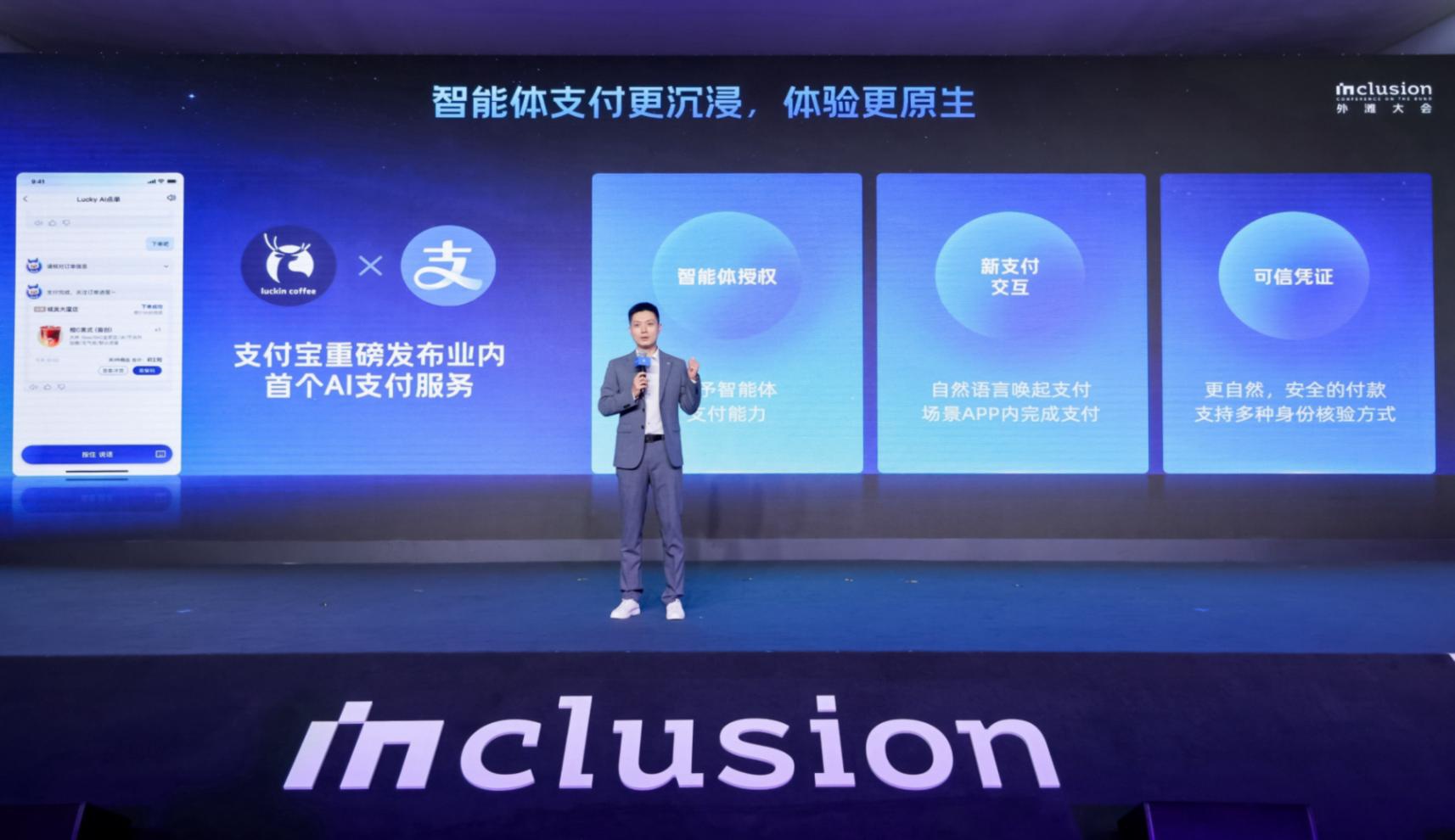
Core Viewpoint - Alipay launched the first domestic "AI Payment" service at the 2025 Inclusion·Bund Conference, providing payment services for AI agents and integrating ordering and payment processes seamlessly for the first time in the industry [1][9]. Group 1: Service Launch and Features - The "AI Payment" service was first implemented in the "Lucky AI" ordering assistant at Luckin Coffee, allowing users to place orders and make payments through voice commands without leaving the AI chat interface [1][3]. - Users can now simply say "order" after receiving recommendations from "Lucky AI," completing the payment process after identity verification, making the experience as natural as conversing with a store clerk [3][6]. Group 2: Industry Impact and Future Prospects - Luckin Coffee's Product Director, Pu Yu, stated that the integration of "Lucky AI" with Alipay's AI Payment enhances the coffee consumption experience and lays the groundwork for expanding more service scenarios in the future [7]. - Ant Group's Chief Technology Officer, Zhu Lin, emphasized that the innovation aims to address safety and convenience in payments, predicting that new interactive payment methods could exceed 50% in the next five years, with a tenfold increase in diverse smart device payments [8]. - The launch of "AI Payment" is seen as a key step in activating the AI industry ecosystem, with the potential for the AI payment market to reach a trillion-level scale [8][9]. Group 3: Additional Innovations - Alipay has introduced several pioneering services, including the first "Payment MCP Server" for AI agents, "AI Tipping" for developers, "AI Subscription Payment" for service-based pricing, and the global first "Look-and-Pay" service for smart glasses [9]. - The introduction of "AI Payment" further completes the commercial loop from AI services to payments, promoting the prosperity of the AI ecosystem [9].

星巴克中国出售或10月底敲定
2 1 Shi Ji Jing Ji Bao Dao· 2025-09-11 07:10
Core Viewpoint - Starbucks is in the final stages of selling its stake in the Chinese business, with potential buyers including Boyu Capital, Carlyle Group, EQT, and Sequoia China, aiming to finalize the deal by the end of October [2][10]. Group 1: Stake Sale Details - The key issue in the stake sale is the percentage of ownership that Starbucks will retain, with reports suggesting that Starbucks may keep around 30% of the equity while distributing the remaining shares among several buyers [4]. - Starbucks CEO, Brian Niccol, emphasized the company's commitment to maintaining a significant stake in the Chinese market, stating that any transaction must align with Starbucks' interests [2][4]. Group 2: Operational Flexibility - Starbucks China has gained more operational flexibility, as evidenced by its recent partnership with Xiaohongshu (Little Red Book) to enhance community engagement in over 1,800 stores [7]. - The company has also adjusted prices for key products, leading to significant sales growth, with Q2 revenue in China increasing by 8% to $790 million (approximately 5.625 billion RMB) [7]. Group 3: Competitive Landscape - The competitive environment in China's coffee market is intensifying, with Luckin Coffee reporting a 47.1% year-on-year revenue increase to 12.36 billion RMB in Q2, significantly outpacing Starbucks [9]. - As of the end of Q2, Luckin Coffee had 26,206 stores, highlighting a growing gap in store count compared to Starbucks, which opened 70 new stores in the same period, bringing its total to 7,828 [9]. Group 4: Strategic Importance of Local Partnerships - Finding a partner that understands the Chinese market is crucial for Starbucks' expansion strategy, as local insights can enhance operational efficiency and decision-making [10].


星巴克中国出售或10月底敲定:股权比例是关键
2 1 Shi Ji Jing Ji Bao Dao· 2025-09-11 06:15
Core Viewpoint - Starbucks is in the final stages of selling its stake in the Chinese market, with potential buyers including Boyu Capital, Carlyle Group, EQT, and Sequoia China, aiming to finalize the deal by the end of October [1] Group 1: Stake Sale Details - The sale involves discussions about the proportion of equity Starbucks will retain, with reports suggesting that Starbucks may keep around 30% of the stake while distributing the remaining shares among several buyers [2] - CEO Brian Niccol emphasized the importance of retaining a significant portion of equity to maintain operational control in China [3] Group 2: Operational Flexibility - Starbucks has demonstrated increased operational flexibility in China, including a partnership with Xiaohongshu to enhance community engagement in over 1,800 stores [7] - The company has also adjusted pricing strategies, reducing prices on key products, resulting in significant sales growth, particularly for iced tea and frappuccinos [8][10] Group 3: Competitive Landscape - The competitive environment in the Chinese coffee market is intensifying, with Luckin Coffee reporting a 47.1% year-on-year revenue increase, significantly outpacing Starbucks [11] - Other domestic brands, such as Kudi Coffee, are rapidly expanding, with Kudi surpassing 15,000 stores and achieving profitability [12] - Starbucks reported a 2% year-on-year same-store sales growth, with a decline in average transaction value, highlighting the challenges faced in maintaining market share [12] Group 4: Strategic Importance of Local Partnerships - Finding a partner that understands the Chinese market is crucial for Starbucks' expansion strategy, as indicated by CEO Brian Niccol [13] - The outcome of the stake sale will determine the future operational dynamics of Starbucks in China [14]
星巴克中国出售或10月底敲定:股权比例是关键丨消费一线
2 1 Shi Ji Jing Ji Bao Dao· 2025-09-11 05:59
Core Viewpoint - Starbucks is in the final stages of selling its stake in the Chinese market, with potential buyers including Boyu Capital, Carlyle Group, EQT, and Sequoia China, aiming to finalize the deal by the end of October [3][12] Group 1: Stake Sale Details - The sale involves negotiations on the percentage of equity Starbucks will retain, with reports suggesting that Starbucks may keep around 30% of the stake while distributing the remaining shares among multiple buyers [4][5] - Starbucks CEO Brian Niccol emphasized the importance of retaining a significant portion of equity to maintain operational control in China, stating that any deal must align with Starbucks' interests [3][5] Group 2: Operational Flexibility - Starbucks China has gained more operational flexibility, as evidenced by a recent partnership with Xiaohongshu (Little Red Book) to enhance community engagement in over 1,800 stores [6] - The company has also adjusted pricing strategies, reducing prices on key products, which led to significant sales growth in the second quarter [7][8] Group 3: Competitive Landscape - The competitive environment in China's coffee market is intensifying, with Luckin Coffee reporting a 47.1% revenue increase in the second quarter, significantly outpacing Starbucks [9][10] - Other domestic brands, such as Kudi Coffee, are rapidly expanding, with Kudi surpassing 15,000 stores and achieving profitability [10] Group 4: Strategic Importance of Local Partnerships - Finding a partner that understands the Chinese market is crucial for Starbucks' expansion strategy, as highlighted by CEO Brian Niccol [11]
你喝的烈酒,可能是“霍格沃茨”同款
Jin Rong Shi Bao· 2025-09-11 03:02
Core Insights - The journey of whiskey from Glasgow to Shanghai illustrates the complexities of international trade and market entry for foreign alcoholic beverages [1][2] - The case of two boxes of whiskey symbolizes the bridge built between Glasgow and Shanghai, facilitating trade and cultural exchange [3] Group 1: International Trade and Market Entry - The process of introducing foreign wines and spirits into the Chinese market requires extensive market cultivation, particularly challenging for small overseas enterprises [2] - The collaboration between Shanghai's cooperation office and the Hongqiao Import Commodity Exhibition and Trading Center (Hongqiao Pinhui) enabled the import of whiskey, showcasing a strategic approach to market entry [2][3] Group 2: Trade Events and Growth - The participation of Glasgow in the China International Import Expo (CIIE) led to significant interest and expansion, with the exhibition space growing from a wall to 150 square meters [3] - The success of the CIIE has attracted more overseas wine brands, such as Italian Wine Brands, to explore the Chinese market through Hongqiao Pinhui [4] Group 3: Coffee Trade and Market Dynamics - Hongqiao International Coffee Port has become a hub for coffee trade, with over 200 coffee-related enterprises contributing to an annual trade volume of 3 billion yuan [6] - The platform has shifted from passive order-taking to actively influencing flavor preferences, marking a significant change in the coffee market dynamics in China [6] Group 4: Future Prospects - The ongoing efforts to introduce foreign brands into the Chinese market are expected to continue, with a focus on minimizing trial and error costs [5] - The platform aims to achieve a transaction volume exceeding 30 billion yuan by 2024, reflecting the growing demand for international products in China [6]

新兴咖啡品牌创始人:外卖补贴下滑明显
2 1 Shi Ji Jing Ji Bao Dao· 2025-09-11 02:42
Core Insights - The takeaway from the articles indicates that the food delivery industry is entering a new phase, with regulatory bodies stepping in to address subsidy disputes among major platforms [1][6]. Industry Overview - The State Administration for Market Regulation has held discussions with major food delivery platforms, emphasizing the need to adhere to laws and regulations, eliminate unfair competition, and reduce excessive subsidies [1]. - The regulatory body will monitor competition closely, urging platforms to enhance service quality, maintain food safety standards, and support merchants while ensuring rider rights [1]. Financial Impact - In Q2, the three major food delivery platforms—Meituan, Alibaba, and JD—experienced significant declines in net profits due to the impact of delivery subsidies, with Meituan's net profit plummeting nearly 90%, JD's dropping by nearly 50%, and Alibaba's decreasing by 18% [1]. - The marketing expenditures of these three platforms during the food delivery battle reached at least 30 billion yuan [2]. Market Dynamics - Despite the decline in absolute subsidy values, the volume of orders has remained relatively stable, indicating that companies still feel the need to offer some level of subsidies to maintain sales [3]. - Emerging coffee brands are also experiencing rapid growth, with companies like Mixue Ice City and Luckin Coffee reporting significant revenue increases of 39.3% and 47.1%, respectively, in the first half of the year [2]. Strategic Developments - Alibaba has launched the "Gao De Street Ranking," which is the first global ranking based on user behavior, along with a substantial distribution of coupons to reduce user costs [4]. - Meituan has announced the relaunch of its quality delivery service through its platform, indicating a shift in strategy amidst the changing competitive landscape [5].


云南首次联展四大产业 参展企业超500家
Zhong Guo Xin Wen Wang· 2025-09-10 20:15
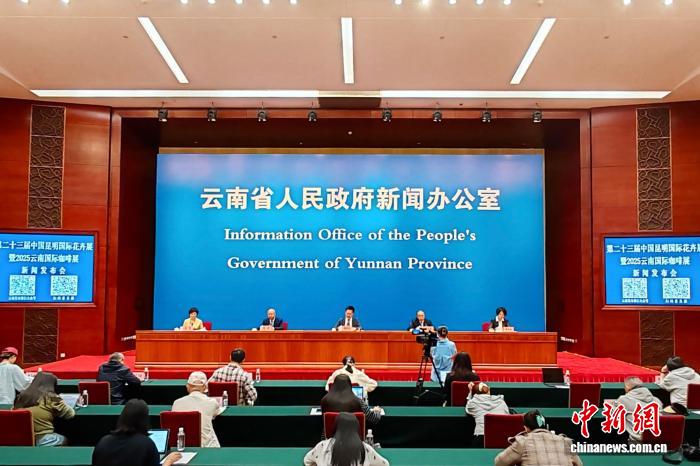
Core Insights - The 23rd China Kunming International Flower Expo and the 2025 Yunnan International Coffee Expo will be held from September 19 to 21, showcasing over 500 participating companies [1][4]. Industry Overview - Yunnan is recognized as one of the 34 biodiversity hotspots globally, known as the "Plant Kingdom" and "World Garden," with significant achievements in highland specialty agriculture such as tea, fresh-cut flowers, and coffee [3]. - In 2024, Yunnan's fresh-cut flower production is expected to reach 20.6 billion stems, forming a trillion-level industry scale and exporting to over 50 countries and regions [3]. - The coffee cultivation area in Yunnan is 1.267 million acres, with a production of 150,000 tons, accounting for over 98% of the national output, exported to 29 countries and regions [3]. Event Details - The exhibition area for the event will cover 60,000 square meters, featuring the latest flower varieties and cutting-edge planting technologies [3]. - France will be the guest country, showcasing three century-old breeding companies: Delbard, Morel, and Meilland [3]. - The 2025 Yunnan International Coffee Expo aims to create a trade exchange platform for the domestic and international coffee industry, featuring core coffee-producing areas from Yunnan and Brazil [3]. - The 2025 Asia International Tropical Plant Expo will gather over 80 companies from countries like Thailand, Indonesia, and Ecuador, displaying more than a hundred varieties of tropical plants [3]. - The event will also include 24 themed activities, such as the International Seminar on Plant Variety Protection (Flowers) and the Yunnan International Blueberry Industry Development Conference [4].
消费品牌如何提升“年轻力”
Zheng Quan Ri Bao· 2025-09-10 16:20
Core Viewpoint - The upcoming "National Day" holiday indicates a trend of younger consumer groups in the tourism sector, which is also reflected in other consumption industries, presenting both challenges and opportunities for brands to adapt to this demographic shift [1][2]. Group 1: Brand Strategies - Brands need to enhance innovation by continuously improving products based on the preferences of young consumers, as seen with Luzhou Laojiao's focus on low-alcohol products and Moutai's collaboration with Luckin Coffee to launch a popular sauce-flavored latte [1]. - Engaging young consumers in product design and promotion can strengthen brand loyalty, exemplified by Taiping Bird's "Guochao Transformation" campaign on Douyin, where netizens voted on designs for production [1]. - Brands should cultivate a youthful, fashionable, and vibrant image, as demonstrated by Li Ning's sub-brand "China Li Ning" debuting at New York Fashion Week, and Tea Yan Yue Se's creative marketing using elements from "Shan Hai Jing" to appeal to younger audiences [1]. Group 2: Marketing and Interaction - Brands must keep pace with industry trends and consumer demand by innovating marketing strategies and enhancing interaction with young consumers, which is essential for expanding domestic demand and promoting economic growth in China [2].