
养老服务

Search documents
蒙牛集团与光大养老与达成战略合作 “营养+康养”共绘银发产业新蓝图
Zhong Jin Zai Xian· 2025-10-09 03:01
Core Viewpoint - Mengniu Group and Everbright Pension signed a strategic cooperation agreement to enhance health management and nutrition products for the elderly, aiming to integrate elderly nutrition and care services [1][3]. Group 1: Strategic Cooperation - The partnership focuses on health management, customized nutrition products, medical-care integration, and research collaboration for the elderly [1]. - Both companies aim to create a world-class comprehensive care service system and exclusive nutrition solutions for the elderly, contributing to the "Healthy China" initiative [3]. Group 2: Industry Context - China is entering a deeply aging society, making the development of the silver economy essential for enhancing the well-being of the elderly and promoting intergenerational harmony [3]. - The integration of nutrition and care services is a key component of the national health strategy [3]. Group 3: Company Initiatives - Mengniu is actively responding to national strategies by advancing its "one body, two wings" strategy, focusing on functional and precise nutrition markets [4]. - The company has developed products targeting the elderly, such as "Yourui" bone-strengthening milk powder and "Antang Shield" probiotic powder, to meet specific nutritional needs [4]. Group 4: Everbright Pension Overview - Everbright Pension operates over 230 various elderly care institutions across 39 cities in 18 provinces, serving nearly 500,000 elderly individuals annually [6]. - The company plans to launch the "Heguang Yiyang" unified brand by August 2025, marking a new phase in addressing the aging population [6]. Group 5: Future Directions - Mengniu will continue to collaborate with Everbright Pension and other partners to explore new opportunities in the care industry and integrate nutrition with care services for the elderly [6].



杭州99元假期“短托养老”,让子女省心、老人舒心
Xin Hua Wang· 2025-10-09 00:54
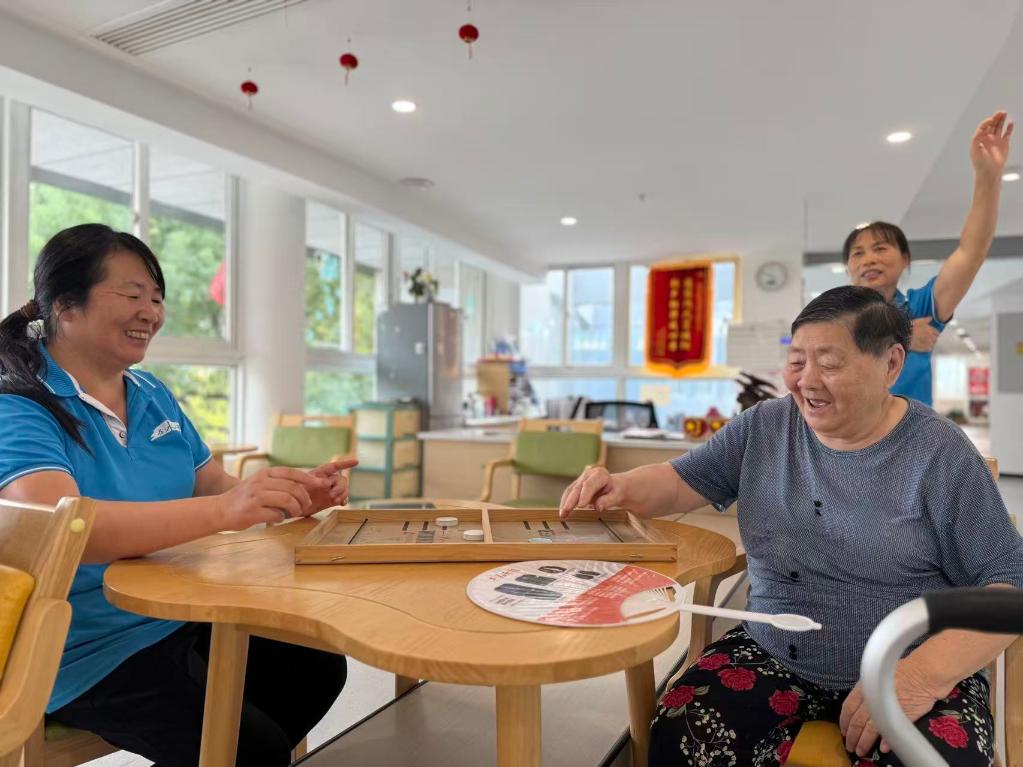
Core Insights - The introduction of "short-term elderly care" services during the National Day and Mid-Autumn Festival addresses the needs of families who want to travel while ensuring their elderly relatives receive professional care [1][4] - This service model offers flexibility and short-term accommodation, catering to various needs such as post-operative recovery and temporary care during family outings [1][3] Summary by Sections Service Overview - The "short-term elderly care" service allows elderly individuals to stay in care centers for a daily fee of 99 yuan, which includes meals and daily care [1] - The service is designed to alleviate the burden on families, providing a safe and engaging environment for the elderly [2][4] User Experience - Residents at the care centers participate in activities such as games and rehabilitation exercises, enhancing their well-being during their stay [2] - Feedback from users indicates satisfaction with the care provided, with some opting for long-term stays after experiencing the service [3] Demand and Future Plans - There has been a consistent influx of inquiries about the "short-term elderly care" service since its launch, indicating strong community interest [3] - The service is seen as a response to societal concerns regarding elderly care, aiming to reduce the pressure on family caregivers [4]
居家养老如何从“有”到“优”
Jing Ji Ri Bao· 2025-10-09 00:09
Core Insights - Home-based elderly care remains the mainstream choice for seniors, and optimizing this service is crucial for public welfare [1][2] - The elderly population aged 60 and above in China has exceeded 310 million, projected to surpass 400 million by around 2035, indicating a growing demand for home-based care services [1] - The current elderly care service system is steadily advancing, with a focus on enhancing home and community-based services supported by institutional care and medical integration [1] Group 1: Current State of Home-based Elderly Care - Home-based elderly care services primarily focus on daily living assistance, with insufficient integration of medical care, despite a significant portion of seniors suffering from chronic diseases [2] - There are challenges in collaboration among medical, community, and elderly care institutions, leading to a lack of synergy in service delivery [2] - Issues such as an unbalanced talent structure, inadequate user payment capacity, and an imperfect evaluation system hinder the development of home-based elderly care services [2] Group 2: Policy and Infrastructure Support - High-quality development of home-based elderly care services requires supportive policies, including the use of local government bonds for infrastructure development and tax incentives for care institutions [2] - The establishment of a robust professional nursing workforce is essential, necessitating improvements in salary, career pathways, and a systematic skills certification framework to attract talent to the elderly care sector [2] Group 3: Innovative Service Models - Encouraging social participation in home-based elderly care through diverse service models, such as "community + property + elderly care" and "elderly dining services," is vital to meet the varied needs of seniors [3] - Leveraging technology to create community-based elderly care information platforms and developing "smart" elderly care scenarios can enhance service efficiency and quality [3] - Long-term care insurance, initiated in 2016, has benefited over 2.25 million disabled individuals, reducing their financial burden and improving their quality of life, highlighting the importance of sustainable funding and fairness in the system [3]
杭州99元假期“短托养老” 让子女省心、老人舒心
Xin Hua She· 2025-10-08 23:55
Core Viewpoint - The introduction of "short-term elderly care" services during the National Day and Mid-Autumn Festival holidays addresses the needs of families who want to travel while ensuring their elderly relatives receive professional care [1][6]. Group 1: Service Overview - The "short-term elderly care" service allows elderly individuals to stay in care centers for a daily fee of 99 yuan, providing meals and daily assistance [1][3]. - This service is designed to be flexible, catering to short-term needs such as post-surgery recovery or family travel, effectively filling gaps in family caregiving [3][6]. Group 2: User Experience - Elderly residents at the care centers engage in activities like games and singing, with staff providing support and ensuring a safe environment [3][5]. - Feedback from users indicates satisfaction with the care provided, highlighting the safety and comfort compared to staying alone at home [3][5]. Group 3: Demand and Future Plans - There has been a consistent influx of inquiries about the "short-term elderly care" service, indicating a strong demand from families [5][6]. - Local authorities plan to expand and enhance elderly care services to better address the needs of the community, focusing on alleviating the pressures faced by long-term caregivers [6].
瞄准需求,看3所大学这样调整专业
Bei Jing Ri Bao Ke Hu Duan· 2025-10-08 23:51
Core Viewpoint - The article discusses the optimization of higher education disciplines and professional settings in response to industry demands, emphasizing the importance of talent cultivation for technological innovation and national strategic needs [1]. Group 1: Industry Demand and Educational Response - The new materials industry in China had a total output value exceeding 8 trillion yuan last year, maintaining double-digit growth for 14 consecutive years, leading to a rising demand for specialized talent [2]. - The establishment of new majors, such as electronic information materials, is aimed at addressing the needs of strategic emerging industries like semiconductors and new materials [2]. - The industry is facing challenges with reliance on imported key materials, necessitating the development of original technologies to solve critical issues [3]. Group 2: Interdisciplinary Collaboration - The demand for graduates with cross-disciplinary integration capabilities is increasing, as industries require knowledge spanning from research and development to industrial application [4]. - Collaborative laboratories between universities and companies are being established to tackle cutting-edge topics, allowing students to engage deeply with industry projects during their studies [4]. Group 3: Aging Population and Talent Needs - By the end of 2024, the elderly population in China is projected to reach 310 million, accounting for 22% of the total population, creating significant opportunities in the silver economy [6]. - The aging industry is characterized as a sunrise industry, with a substantial talent gap due to the high turnover and low educational background of existing workers [6]. - New academic programs focusing on aging-related fields are being introduced to meet the growing demand for high-end talent in the aging industry [7]. Group 4: Technological Integration in Traditional Fields - The integration of artificial intelligence and big data into traditional engineering disciplines is transforming the educational landscape, particularly in fields like smart transportation [9]. - New programs in smart transportation are being developed to incorporate advanced technologies, ensuring that graduates are equipped with both traditional knowledge and modern technical skills [9][12]. - The focus on practical experience and research in educational programs is enhancing graduates' employability in various sectors, including internet companies and government transportation management [12].
陈倩:破解四重困境,激发“银发动能”
Sou Hu Cai Jing· 2025-10-08 23:31
Core Viewpoint - The Chinese government is actively promoting the "silver economy" by leveraging the expertise of retired teachers to enhance rural education, while recognizing the potential of the aging population as a new economic driver [1][2]. Group 1: Policy and Implementation - The Ministry of Education and the Ministry of Finance have announced a plan to recruit 7,000 teaching staff for the 2025 Silver Age Teaching Program, aimed at utilizing the professional experience of retired teachers to strengthen the rural teaching workforce [1]. - Despite the issuance of numerous supportive policies for the silver economy, challenges such as fragmented policies and lack of inter-departmental collaboration persist, leading to inefficiencies in service delivery [4]. Group 2: Market Dynamics and Consumer Behavior - The perception of the elderly as "dependent" rather than valuable consumers limits investment and innovation in related industries; however, a growing segment of the population aged 55-64 is emerging as a significant force in quality consumption [2]. - Expenditures on health check-ups, cultural activities, and travel among the elderly are increasing, reflecting a shift in consumer behavior and the need to break down stereotypes surrounding the silver demographic [2]. Group 3: Technological Innovation - While technological innovations such as smartwatches and remote health platforms are entering the silver market, many products fail to integrate into the daily lives of the elderly due to complexity, high costs, and lack of emotional connection [3]. - The current technological challenges stem from a disconnect between product development teams and the elderly, absence of standardized aging-friendly product criteria, and unclear business models [3]. Group 4: Service Integration and Consumer Experience - Many companies offering elderly-friendly products and services lack user insights, leading to mismatches between supply and demand, which negatively impacts the consumer experience [5]. - To address these challenges, a service logic centered on consumer needs is essential, emphasizing community-based platforms that integrate healthcare, entertainment, and financial services [5]. Group 5: Systemic Reformation - The silver economy represents not just a new industry but a comprehensive restructuring of population dynamics, development models, and cultural perceptions, necessitating a shift away from short-term policy approaches [5].
瞄准需求,看3所大学这样调整专业(经济新方位)
Ren Min Ri Bao· 2025-10-08 22:11
Core Insights - The article emphasizes the importance of aligning higher education with industry needs, particularly in the context of technological innovation and talent cultivation [1][2][3] Group 1: Industry Demand and Educational Response - The new materials industry in China had a total output value exceeding 8 trillion yuan last year, maintaining double-digit growth for 14 consecutive years, leading to a rising demand for specialized talent [2] - Hunan University has adjusted its academic programs, including the establishment of an electronic information materials major, to meet the needs of strategic emerging industries such as new materials and information technology [2][3] - The industry is facing challenges with reliance on imported key materials, highlighting the urgent need for original technology and talent capable of addressing these "bottleneck" issues [3] Group 2: Interdisciplinary Collaboration - The demand for graduates with cross-disciplinary integration skills is increasing, as industries require knowledge spanning from research and development to industrial application [4] - Hunan University has established a joint laboratory with a materials company to work on cutting-edge topics, allowing students to engage deeply with industry projects during their studies [4] Group 3: Aging Population and New Opportunities - By the end of 2024, the elderly population in China is expected to reach 310 million, accounting for 22% of the total population, creating significant opportunities in the silver economy [5][6] - The aging industry is characterized as a "sunrise industry," with a substantial talent gap due to the high turnover and low educational levels of current workers [6] Group 4: New Academic Programs - Fudan University plans to introduce new academic programs in urgent fields such as silver economy and quantum science and technology by 2025, responding to the growing demand for specialized talent [7] - The university's aging research institute has initiated a doctoral program focused on the silver economy, aiming to align educational offerings with societal needs [7][8] Group 5: Smart Transportation and Technological Integration - The establishment of a smart transportation major at Beihang University reflects the integration of big data and artificial intelligence into traditional transportation studies, updating the curriculum to include modern technological advancements [9][10] - The focus on interdisciplinary research is evident as teams work on projects like "L3+ autonomous driving safety protection technology," which involves simulating real-world scenarios to enhance safety in autonomous vehicles [10][11] Group 6: Employment Trends - The job market is increasingly favoring candidates who possess knowledge in transportation system planning and management, as well as expertise in big data and artificial intelligence [11][12] - Practical experience in research and application of theories is becoming a significant asset for graduates seeking employment in the evolving transportation sector [12]
因违反疫情防控规定,肇庆四会多家单位被依法查处
Nan Fang Du Shi Bao· 2025-10-04 00:53
Core Points - The article discusses the enforcement actions taken by the health authorities in Sihui City to prevent mosquito-borne diseases such as Chikungunya and Dengue Fever through inspections of various institutions [1] Group 1: Enforcement Actions - Sihui City health authorities conducted special inspections in medical institutions, schools, hotels, and event venues to ensure compliance with mosquito-borne disease prevention regulations [1] - Multiple institutions were found violating prevention regulations and were subjected to legal penalties, including warnings and orders for immediate rectification [1] Group 2: Case Summaries - Case 1: A general clinic in Sihui failed to implement the infectious disease pre-screening system, leading to a warning and a requirement for immediate correction [2] - Case 2-1: A health station improperly disposed of medical waste, resulting in a warning and an order to correct the violation [3] - Case 2-2: Another clinic was penalized for not properly segregating medical waste, receiving a warning and an order for immediate compliance [4] - Case 3: A resort was found with stagnant water and garbage, failing to clear these hazards, leading to a warning and a requirement for corrective actions [5] - Case 4-1: A hotel management company was penalized for not clearing stagnant water, which led to mosquito breeding, receiving a warning and an order for immediate cleanup [7] - Case 4-2: A large hotel was found with stagnant water and mosquito larvae, resulting in a warning and an order for immediate action [8] - Case 4-3: Another hotel was penalized for failing to clear water accumulation, leading to mosquito breeding, with a warning issued [9] - Case 4-4: A business hotel was found with stagnant water and debris, resulting in a warning and an order for immediate cleanup [10] - Case 4-5: A hotel management company was penalized for not clearing water, leading to mosquito breeding, with a warning issued [11] - Case 4-6: A hotel was found with stagnant water, resulting in a warning and an order for immediate action [12][13] - Case 5: An elderly care facility was penalized for not clearing stagnant water, leading to mosquito breeding, with a warning and an order for immediate compliance [14]
银发消费品质升级——假期市场热点见闻③
Jing Ji Ri Bao· 2025-10-03 22:04
Group 1: Market Trends - The proportion of silver-haired consumption is increasing, aligning with the growth of the silver economy in GDP, leading to a new consumption pattern that balances both young and old demographics [1] - During the National Day and Mid-Autumn Festival holidays, the silver-haired group is becoming a major force in off-peak travel, taking advantage of their flexible schedules [1][2] - The tourism market is experiencing a unique "peak, off-peak, off-peak" pattern, with some routes showing "double peaks" before and after the holidays, driven by older travelers [1] Group 2: Travel Preferences - China Youth Travel Service launched nearly a thousand travel products, with a 30% year-on-year increase in inquiries and bookings, particularly among older travelers aged 55 to 65 [2] - Older travelers prefer longer, more comfortable trips with deeper experiences, moving away from low-cost group tours to more personalized travel options [2] - The demand for quality travel experiences is rising, with older travelers showing interest in cultural experiences over simple sightseeing [2] Group 3: Elderly Care Services - The elderly tourism service revenue grew by 26.2% year-on-year in the first half of the year, with over 80% of travelers being elderly [3] - Home care services are also in high demand during the holidays, reflecting a shift in elderly care needs from basic assistance to a focus on quality of life [4] - The trend is moving towards "preventive health management" for younger healthy seniors, indicating a significant change in elderly care service demands [4] Group 4: Aging Products and Services - The demand for age-friendly products and services is increasing, with innovative solutions showcased at the 2025 China International Welfare Expo [5][6] - The number of businesses producing silver-haired products has increased by 14.1% year-on-year, with significant growth in sales of age-friendly fitness and rehabilitation equipment [6] - Government subsidies for age-friendly renovations are stimulating consumer interest, leading to a rise in home modifications for elderly safety and convenience [6]
银发消费品质升级
Jing Ji Ri Bao· 2025-10-03 22:04
Group 1: Market Trends - The proportion of silver-haired consumption is increasing, aligning with the growing contribution of the silver economy to GDP, leading to a new consumption pattern that balances both young and old demographics [1] - During the National Day and Mid-Autumn Festival holidays, the tourism market is being re-evaluated, with the elderly becoming a significant force for off-peak travel and deep experiences [1][2] - The elderly tourism market is undergoing a quality upgrade, with a shift from low-cost group tours to more personalized and culturally enriching travel experiences [2][3] Group 2: Industry Insights - The China National Tourism Administration reported a 26% year-on-year increase in the number of tourist trains operated, with over 80% of passengers being elderly [3] - The elderly tourism service revenue grew by 26.2% year-on-year in the first half of the year, with projections indicating that by the end of the 14th Five-Year Plan, the number of active elderly travelers will exceed 100 million, and tourism revenue from this demographic could surpass 1 trillion yuan [3] - Companies are increasingly focusing on slow travel and tailored experiences for the elderly, emphasizing health and comfort in their offerings [2][4] Group 3: Home Care Services - The demand for home care services is evolving from basic care to a focus on quality of life, with services now catering to a broader age range of the elderly [4] - "On-demand" home care services are becoming popular, providing a wide range of assistance from daily chores to medical care, reflecting a shift towards more personalized care solutions [4] - The integration of community resources and property management with elderly care services is seen as a key driver for the silver economy [4] Group 4: Aging Products and Services - The demand for age-friendly products and services is driving the market for assistive devices, with innovative products showcased at recent expos [5][6] - The number of businesses engaged in producing silver-haired products has increased by 14.1% year-on-year, with significant growth in sales of age-friendly fitness equipment and rehabilitation aids [6] - The trend in home modifications for the elderly is shifting towards smart, proactive solutions that enhance safety and independence [6]