
生物医药

Search documents
内江累计向五家民营企业下放中初级职称评审权限 民营企业“量体选才” 让一线“长”出更多技术骨干
Si Chuan Ri Bao· 2026-02-02 05:21
Core Viewpoint - The shift of professional title evaluation from government-led to enterprise-led is seen as a crucial measure to stimulate innovation and creativity among technical talents in private enterprises in Neijiang [4][6]. Group 1: Talent Evaluation Mechanism - Neijiang has initiated a process to allow private enterprises to conduct their own professional title evaluations, with five companies now granted this authority [4][6]. - The new evaluation mechanism aims to address the disconnect between talent evaluation and utilization, which has previously hindered the growth of technical personnel in private enterprises [4][5]. - The local government is providing guidance throughout the evaluation process, ensuring a system where standards are set by enterprises but monitored by the government [7]. Group 2: Talent Shortage and Industry Focus - There is a notable shortage of mid-to-high-end talent in Neijiang, with nearly 40% of the technical personnel in private enterprises, totaling around 40,000 individuals [5]. - The majority of the 700 professionals with senior titles in the city are not from private enterprises, indicating a need for improved talent retention and development strategies [5]. - The enterprises that have received evaluation rights are primarily in key industries such as "vanadium-titanium," "equipment," and "biomedicine," aligning with Neijiang's industrial development focus [6]. Group 3: Enterprise Participation and Future Plans - The successful implementation of self-evaluation by early adopters like Chuanwei Group has encouraged other enterprises to express interest in participating in the reform [7][8]. - Neijiang plans to expand the pilot program to other key industries and high-tech enterprises, aiming to give more market and enterprise voice in talent evaluation [9].

“十五五”开新局当尖兵|企业找政策变政策找企业!上海惠企政策 “免申即享”“直达快享” 跑出加速度
Sou Hu Cai Jing· 2026-02-02 05:07
Core Insights - Shanghai government is enhancing service efficiency for businesses through initiatives like "automatic enjoyment of subsidies" and "direct and fast enjoyment" of policies, significantly improving the business environment and administrative efficiency [1][3][4] Group 1: Policy Implementation - The "惠企政策服务专班" (Business Policy Service Task Force) has been established to streamline the implementation of business support policies, involving over 20 municipal departments and 16 districts [3] - By 2025, 709 policy projects in Shanghai will achieve "automatic enjoyment," serving over 6.28 million enterprises, thereby broadening policy coverage and reducing administrative costs [3][4] Group 2: Policy Quality and Precision - The task force aims to improve the quality and effectiveness of government documents, ensuring new policies clearly outline innovative measures and comparisons with existing policies [4] - A mechanism for precise labeling of business support policies has been established in Pudong New Area, facilitating easier access for enterprises [4] Group 3: Simplification of Processes - The core idea is to minimize the burden on enterprises, allowing them to confirm their eligibility with a single click without the need for active applications [5] - The "离境退税商店补贴项目" (Departure Tax Refund Store Subsidy Project) has transitioned to an "automatic enjoyment" model, increasing policy coverage to 100% and significantly reducing the time for subsidy disbursement from nearly 4 months to within 5 working days [5][6] Group 4: Technological Integration - Jing'an District is innovating with a "blockchain + automatic enjoyment" model, automating the subsidy process and reducing the approval time from weeks to half a day [7] - The "一网通办" (One Network for All Services) platform has been enhanced to provide a unified service for policy application and disbursement, improving the overall experience for businesses [7]
从规划蓝图到民生图景:多维度看北京“十五五”未来新篇
Zhong Guo Jing Ji Wang· 2026-02-02 03:16
Group 1: Urban Development and Planning - The core strategy emphasizes the need to strengthen the "one core, two wings" approach to accelerate the construction of a modern capital metropolitan area, with the urban sub-center being a key focus [1] - The urban sub-center has transitioned from a planning phase to a new stage of functional enhancement and comprehensive development, aiming to create vibrant urban areas and new consumption growth points [2] - The planning outlines the construction of distinctive new landmarks such as Shougang Park and Jingxi Zhigu, which contribute to the high-quality development of the capital [1][2] Group 2: Industrial Development and Innovation - Beijing aims to build a competitive modern industrial system, focusing on digital and green economies, positioning itself as a key driver of new productivity development in the country [3] - The Zhongguancun Life Science Park exemplifies new productivity, housing nearly 1,000 biotech companies and creating a complete innovation ecosystem [3] - Jingxi Zhigu has been designated as a key area for artificial intelligence development, contributing to Beijing's goal of becoming a global AI innovation hub [4] Group 3: Consumer Market and Economic Growth - Beijing is working to stimulate domestic demand and deepen the construction of an international consumption center, with plans to create 2-3 new consumption landmarks worth over 100 billion [5] - Shougang Park serves as a practical example of this initiative, integrating international events with trendy consumption to create a unique consumer experience [6] - The Liangma River International Style Waterfront has seen significant commercial revenue growth post-renovation, contributing to a vibrant international consumption corridor [7] Group 4: Governance and Quality of Life - The planning emphasizes a people-centered development approach, focusing on improving governance and quality of life for residents, particularly in the Huaitian area [8] - The Huaitian area has completed 246 key projects with a total investment of approximately 43.7 billion, addressing critical issues in transportation, education, and healthcare [8] - The overall strategy aims to ensure that the benefits of modernization are equitably shared among the population, enhancing the quality of life through effective governance [8]
第十届“祖冲之杯”武汉开赛
Su Zhou Ri Bao· 2026-02-02 02:55
Group 1 - The "Zhu Chongzhi Cup" Innovation and Entrepreneurship Competition has commenced in Wuhan, showcasing over 20 technology projects from fields such as artificial intelligence, biomedicine, and green low-carbon initiatives [1] - Projects presented include "Brain-Computer Interface Smart Healthcare" and "Water Quality IoT Sensors and Smart Instrumentation," highlighting cutting-edge technology and its potential to transform reality and shape the future [1] - The competition serves as a dynamic evaluation platform for industry representatives and investment institutions, allowing for in-depth discussions on the technical core, business models, and market viability of each project [1] Group 2 - The project team focused on "Multi-source Fusion Positioning Technology in Unmanned Systems" has achieved significant breakthroughs in high-precision positioning technology, with their POS system being the only commercialized domestic product [2] - The team utilizes a combination of "Beidou + LiDAR + Vision" for centimeter-level positioning and continuous navigation without signals, making it competitive with imported products in fields like intelligent driving and national defense [2] - The competition is seen as a bridge for teams to engage directly with local governments, industrial parks, and capital, accelerating project development [2] Group 3 - An "Innovation Exploration" event was organized to connect with various institutions and companies in Wuhan, facilitating the flow and efficient matching of talent, technology, and capital [3] - The competition has witnessed the perseverance and breakthroughs of numerous entrepreneurs, reinforcing the commitment to mutual growth between Kunshan and talent [3] - As the competition reaches its tenth anniversary, it aims to continue attracting high-quality projects and talent from Wuhan to settle and thrive in Kunshan [3]
燃石医学20260130
2026-02-02 02:22
Summary of the Conference Call for Burning Stone Medical Company Overview - **Company**: Burning Stone Medical - **Industry**: Multi-cancer early detection (MCED) technology Key Points and Arguments 1. **Technology Selection Impact**: The choice of multi-cancer early detection technology significantly affects detection performance. Burning Stone Medical has selected methylation technology due to its superior performance in cancer tracing, with targeted methylation sequencing showing higher sensitivity [2][9][10]. 2. **Clinical Validation**: Burning Stone Medical ensures the effectiveness of its multi-cancer early detection kits through extensive clinical validation. A study involving over 1,000 subjects showed that DNA mutations and methylation have considerable overlap, with methylation performing best overall [10][12]. 3. **Current Research and Development**: The company is currently conducting evaluations on 22 different cancer types to further validate its technology's performance [2][10]. 4. **Competitive Landscape**: Several companies, including Gorio, Exact Sciences, and Golden Health, have received innovative or breakthrough medical certifications, primarily using methylation-based cancer detection (MCD) technology [11]. 5. **Performance Metrics**: A 2023 independent blind validation study by Burning Stone Medical reported specificity of 98.9% and sensitivity of 69.1%, with overall tracing results at 83.2% [13]. 6. **Epidemiological Models**: Annual screening could lead to earlier cancer staging, improving survival rates. The Prevent study is the first prospective, interventional study in China aimed at assessing cancer performance in real-world settings [5][14]. 7. **Challenges in Multi-cancer Detection**: Future challenges include ensuring model performance in complex real-world populations and balancing performance evaluation with model complexity [5][16]. 8. **Core Technical Barriers**: The main barriers in multi-cancer early detection include detection technology, clinical development, and regulatory processes. Accurate detection of cfDNA signals in early cancer patients is crucial [18]. 9. **Market Potential**: The early cancer screening market is vast, with a significant portion of the population over 40 years old needing regular screenings. However, current participation rates in China are low [21][22]. 10. **Regulatory Environment**: The regulatory landscape is evolving, with recent guidelines from the Chinese National Medical Products Administration indicating a pathway for multi-cancer early detection registration [22]. Additional Important Content 1. **Comparison of Detection Methods**: Different early cancer screening methods have their advantages and disadvantages. Methylation-based methods generally show higher specificity and better tissue tracing capabilities compared to other methods like fragmentomics and RNA analysis [4][12]. 2. **Future Directions**: The future of multi-cancer early detection technology may involve simpler, more efficient methods supported by robust technology and validation, integrating various techniques into a cohesive ecosystem to meet clinical needs [16]. 3. **Economic Considerations**: The cost of multi-cancer early detection tests needs to be kept below 1,500 yuan to ensure widespread adoption, with significant market potential once insurance coverage expands [20][19]. This summary encapsulates the critical insights from the conference call, highlighting the strategic direction, competitive landscape, and future challenges for Burning Stone Medical in the multi-cancer early detection industry.

【产业洞察】重磅!2025年无锡市“465”产业体系全景分析(附产业体系、产业政策、产业布局图谱、产业发展现状、产业发展规划)
Qian Zhan Wang· 2026-02-02 02:14
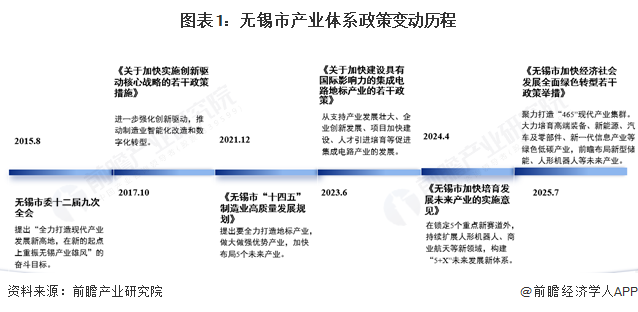
Core Insights - Wuxi City is implementing the "465" modern industrial system to enhance its industrial capabilities and competitiveness, focusing on advanced manufacturing and future industries [1][4][10] Group 1: Industrial Strategy and Development - In 2015, Wuxi's government emphasized the "strong industry" strategy, aiming to create a modern industrial highland through policies supporting high-tech industries [1] - By 2025, Wuxi aims for four landmark industrial clusters and six advantageous industrial clusters to achieve a combined revenue of 2.6 trillion yuan, with future industries maintaining an annual growth rate of over 15% [4][27] - The industrial value added of Wuxi's enterprises surpassed 640.17 billion yuan in 2024, reflecting a growth of 6.6% compared to the previous year [10][12] Group 2: Investment and Economic Performance - Wuxi's fixed asset investment reached 458.736 billion yuan in 2024, with industrial investment accounting for 41.6%, indicating a significant increase [13] - The first industry added value was 14.045 billion yuan, growing by 3.5%, while the second industry reached 771.602 billion yuan, up by 6.2%, and the third industry achieved 840.682 billion yuan, increasing by 5.4% [16] Group 3: Industrial Clusters and Innovation - Wuxi has established five national advanced manufacturing clusters, including special steel materials and large aircraft, and has been recognized as a national pilot city for digital transformation of SMEs [17][20] - The city is focusing on developing key industrial clusters in IoT, integrated circuits, biomedicine, and software services, while also nurturing future industries like AI and quantum technology [27] Group 4: Funding and Support Mechanisms - Wuxi's "465" industrial system is supported by various funds, including a 5 billion yuan integrated circuit fund and a 4 billion yuan biomedicine fund, targeting sectors like semiconductors and innovative drugs [21][23] - The city has developed a comprehensive support system for R&D in high-end equipment, biomedicine, and IoT, emphasizing deep integration of industry and education [25] Group 5: Future Development Plans - Wuxi plans to enhance its industrial ecosystem by implementing projects focused on industrial park development, excellence in industrial chains, and collaborative innovation [30] - By 2025, Wuxi aims to create a number of nationally recognized advanced manufacturing clusters and increase the number of listed companies in the A-share market [27]
市政府办公厅牵头20多家市级部门、16个区的人员组建工作专班 推动营商环境更优化 去年709个政策项目实现“免申即享”
Jie Fang Ri Bao· 2026-02-02 01:35
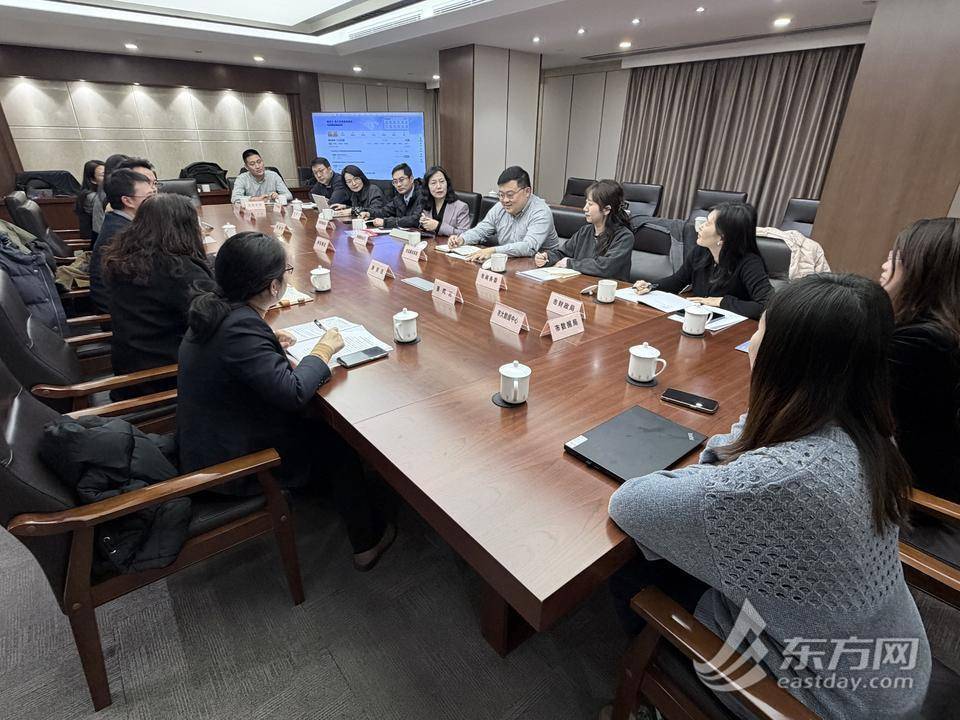
Core Insights - Shanghai is enhancing its business environment through a series of policies aimed at providing direct benefits to enterprises, with a focus on efficiency and collaboration among various government departments [1][2][3] Group 1: Policy Implementation and Collaboration - A new working group was established in October 2024, involving over 20 municipal departments and 16 districts, to streamline the process of policy formulation, dissemination, and evaluation, breaking down departmental barriers [1] - In 2025, a total of 709 policy projects were implemented under the "no application required" initiative, serving over 6.28 million enterprises, which improved the coverage and efficiency of business support policies [1] - The working group has held over 200 meetings in the past year to address challenges in policy quantification, data sharing, and creating accurate enterprise profiles, fostering a collaborative environment among departments [2][3] Group 2: Policy Clarity and Accessibility - The government aims to improve the clarity of policy documents, ensuring they are understandable for enterprises, and is focusing on quantifiable criteria to reduce ambiguity in policy applications [3] - The shift from "enterprises seeking policies" to "policies reaching enterprises" has been facilitated by the collaboration of various departments, ensuring that policy information is effectively communicated to businesses [4][5] - The "Suishan Dui" platform has been launched to provide a one-stop service for enterprises to access various support policies, including funding, tax reductions, and qualifications, enhancing the overall user experience [5] Group 3: Future Directions - The working group plans to continue improving the unified policy release and inquiry platform, aiming for policies to be easily accessible and predictable for enterprises [6]
港股早评:三大指数低开逾1%,金银继续跳水黄金股重挫,宁德时代开涨近2%
Ge Long Hui· 2026-02-02 01:34
Group 1 - The commodity market, led by gold and silver, continues to decline, with significant drops in major indices in Hong Kong, including a 1.06% drop in the Hang Seng Index and a 1.35% drop in the Hang Seng China Enterprises Index [1] - Major technology stocks are underperforming, with Alibaba and NetEase both falling over 2.4% [1] - Gold and silver prices are plummeting, leading to substantial declines in gold mining stocks, with Lingbao Gold down nearly 14% and China Gold International down over 12%, while several other stocks like Shandong Gold and Zijin Mining also dropped more than 9% [1] Group 2 - The three major telecom operators announced an increase in the value-added tax rate on telecom services from 6% to 9%, resulting in a decline of over 7% in China Unicom's stock [1] - In contrast, the biopharmaceutical sector and lithium battery concept stocks mostly saw gains, with CATL rising nearly 2% [1]


推动投资止跌回稳——与 三地发展改革委有关负责人对话
Ren Min Ri Bao· 2026-02-02 00:56
Core Viewpoint - Investment is a crucial engine for economic and social development, and the central economic work conference emphasizes the need to stabilize and stimulate private investment [1] Group 1: Investment Focus and Challenges - Harbin focuses on industries such as aerospace, high-end equipment, green food, and cultural tourism, with significant investment in ice and snow tourism projects totaling 2.35 billion yuan [2] - Wuhan is advancing in sectors like optoelectronic information, new energy vehicles, and artificial intelligence, with plans to initiate over 500 industrial projects worth more than 1 billion yuan each by 2025 [4] - Zhongwei is developing its digital information industry, with a total investment exceeding 144 billion yuan for seven large-scale intelligent computing center projects by 2025 [2][3] Group 2: Strategies for Investment Direction - Zhongwei emphasizes leveraging local resources, such as renewable energy, to support its digital information industry, while facing challenges in market and funding [3] - Harbin integrates various project types into a unified management list to enhance construction efficiency and quality, aiming for over 600 billion yuan in industrial project investments [4] - Wuhan aims to deepen its "chain-long + chain-master + chain-creation" integration mechanism to enhance advanced manufacturing and modern service industries [4] Group 3: Addressing Investment Pressures - Harbin faces challenges in investment structure and financial capacity, with private investment confidence affected by declining corporate profits [6] - Wuhan's investment growth is hindered by structural optimization needs and financial pressures, particularly in social welfare projects [6] - Zhongwei's investment challenges include insufficient industrial upgrade momentum and the need for long-term funding for large clean energy projects [6] Group 4: Measures to Stimulate Investment - Harbin is focusing on market demand and consumption upgrades to drive investment, with plans to establish a 10 billion yuan industrial investment fund to support enterprises [7] - Wuhan has implemented a "land immediately under construction" policy to streamline project approvals, significantly reducing the time from signing to production [8] - Zhongwei is enhancing its business environment and providing targeted support to enterprises, aiming for a 27% increase in fixed asset investment by 2025 [8] Group 5: Ensuring Effective and Sustainable Investment - Harbin is collaborating with Shenzhen to create a "fly-in" industrial park model, attracting 716 registered enterprises and advancing 135 cooperative projects [13] - Wuhan plans to improve urban renewal and public welfare, with initiatives to build over 10,000 new housing units and enhance infrastructure [14] - Zhongwei's "Sage Desert" renewable energy project aims to create a composite ecological system, integrating economic, ecological, and social benefits [14]
武汉光谷2025年新认定505家瞪羚企业 平均研发投入强度25.8%筑牢创新根基
Chang Jiang Shang Bao· 2026-02-02 00:45
Core Insights - The report highlights the rapid growth of "Gazelle" enterprises in the Optics Valley, with 505 new recognitions, particularly in cutting-edge sectors like integrated circuits, artificial intelligence, and biomanufacturing [1][2] - Gazelle enterprises are seen as indicators of regional economic vitality and innovation capability, with an average R&D investment intensity of 25.8% by 2025, three times the provincial average [1][2] R&D Investment and Innovation - High R&D investment has led to significant technological breakthroughs, including the world's first gene therapy drug for eye diseases and the domestic development of a 100-qubit atomic quantum computer [2] - In 2025, Gazelle enterprises are expected to authorize over 2,700 invention patents, accounting for 24% of the total patents granted to small and medium enterprises in Hubei [2][3] Revenue Growth and Market Performance - Gazelle enterprises experienced a revenue growth of 34.4% year-on-year in 2025, with a profit margin of 13.9%, indicating strong profitability and market competitiveness [4] - A total of 79 Gazelle enterprises completed 102 equity financing rounds, raising over 6 billion yuan, a year-on-year increase of over 40%, with early-stage financing dominating [4] Internationalization and Ecosystem Integration - Over 40 Gazelle enterprises have established R&D institutions overseas, with nearly 300 companies expanding globally through factories and cross-border mergers, indicating a shift from product export to a more integrated global strategy [4] - Integration into the ecosystems of leading companies like Huawei and Roche has been identified as a key path for the rapid growth of Gazelle enterprises [5]