自动驾驶

Search documents
旧金山大停电,谷歌无人车Waymo乱作一团,特斯拉赢麻了
Hua Er Jie Jian Wen· 2025-12-22 13:49
Core Insights - A large-scale power outage in San Francisco served as a "stress test" for Waymo's autonomous driving technology, revealing vulnerabilities in its reliance on infrastructure and high-definition maps [1][8] - Waymo's autonomous taxis struggled to navigate intersections without traffic signals, leading to significant traffic congestion and prompting the company to suspend operations temporarily [3][11] - The incident has reignited the debate between Waymo's "heavy map and rules" approach and Tesla's "pure vision" strategy, highlighting the challenges of fully autonomous vehicles in unpredictable environments [14][16] Group 1: Incident Overview - The power outage, caused by a fire at a Pacific Gas and Electric substation, affected approximately 130,000 users during a peak shopping season [8] - Videos circulated on social media showing multiple Waymo vehicles immobilized at intersections, causing traffic jams and forcing human drivers to navigate around them [1][10] - Waymo confirmed that its system treats unlit intersections as four-way stops, but the scale of the outage led to prolonged stops, exacerbating congestion [3][11] Group 2: Market Reactions - Following the incident, Elon Musk stated on social media that Tesla's Robotaxi service was unaffected by the power outage, leading to a slight increase in stock prices for both Alphabet and Tesla in after-hours trading [5] Group 3: Technology Comparison - Waymo's reliance on lidar, radar, cameras, and high-definition maps has proven effective in structured environments but falters in unstructured scenarios like power outages [14][19] - In contrast, Tesla's approach, which relies on cameras and neural networks, allows its vehicles to continue operating in similar conditions due to their real-time perception capabilities [16][19] Group 4: Implications for Autonomous Vehicle Adoption - The incident raises concerns about the readiness of urban environments for widespread adoption of highly automated vehicles, as highlighted by experts [20] - The event has sparked discussions about liability and responsibility when autonomous vehicles cause traffic disruptions due to infrastructure failures [20]

资不抵债、研发外包,L4玩家主线科技亟需上市输血
凤凰网财经· 2025-12-22 13:42
Core Viewpoint - The article discusses the challenges and opportunities faced by Mainline Technology, a Level 4 autonomous driving truck company, as it prepares for its IPO in Hong Kong. Despite being a market leader in closed-road scenarios with a 31.8% market share, the company faces significant financial pressures, including high debt levels and cash flow issues [2][6][26]. Financial Performance - Mainline Technology's revenue is projected to grow from 112 million RMB in 2022 to 254 million RMB in 2024, reflecting a compound annual growth rate (CAGR) of 50% [9]. - The company's gross margin is expected to increase from 3.7% in 2022 to 22.7% in 2024, and further to 30.3% in the first half of 2025 [12]. - Despite revenue growth, the company has reported net losses of 278 million RMB in 2022, 213 million RMB in 2023, and 187 million RMB in 2024, totaling nearly 800 million RMB in cumulative losses [12][14]. Cash Flow and Debt Situation - Mainline Technology's cash and cash equivalents have significantly decreased from 120 million RMB at the end of 2022 to 30.7 million RMB by mid-2025, a reduction of approximately 75% [14]. - The company has been in a net debt position for several years, with total net debt rising from 598 million RMB at the end of 2022 to 1.078 billion RMB in the first half of 2025 [16]. R&D and Operational Strategy - The company's R&D expenses have fluctuated, with 1.47 billion RMB in 2022, dropping to 1.19 billion RMB in 2023 and 1.15 billion RMB in 2024 [18]. - Mainline Technology has outsourced 35.5% of its R&D costs in 2024, which increased to 44% in the first half of 2025, aiming to reduce fixed costs but potentially risking core technology retention [21][23]. Customer Concentration and Payment Terms - The company has a high customer concentration, with revenue from the top five customers accounting for 79.4% in 2022, decreasing to 73.7% in the first half of 2025 [23][25]. - The average collection period for receivables has increased from 126 days in 2022 to 200 days in the first half of 2025, indicating pressure from high customer concentration [25]. Market Position and Future Outlook - Mainline Technology is positioned as a leader in the autonomous truck market, but it must demonstrate a sustainable business model to attract investor confidence as it approaches its IPO [26][27].

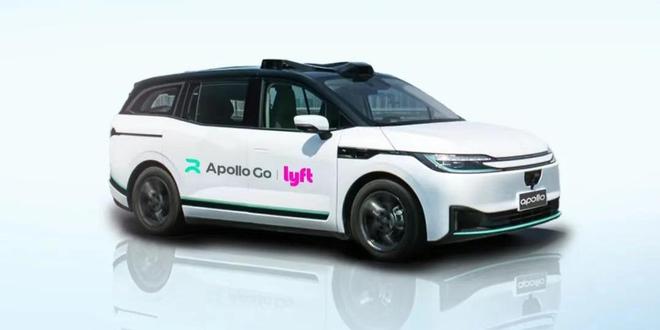
Uber、Lyft 英国试水 Robotaxi:投资文远,项目为何给了百度
Jing Ji Guan Cha Bao· 2025-12-22 12:45
Group 1 - Uber and Lyft are collaborating with Baidu to test autonomous taxi services in the UK by the first half of 2026, using Baidu's Apollo Go RT6 model [2] - Uber has shifted its strategy from in-house development of autonomous driving to partnerships with external technology companies, including a strategic investment in WeRide [2] - The Robotaxi project in the UK is not being executed by WeRide, despite previous interactions with UK officials regarding autonomous driving technology [3] Group 2 - WeRide has reported cumulative losses of approximately 7.87 billion RMB from 2021 to the first three quarters of 2025, indicating that it remains in the investment phase [4] - Autonomous driving companies face high operational costs due to the need for vehicle procurement, sensor systems, and compliance with regulations, which makes profitability challenging [5] - Regulatory restrictions on operational areas and times, along with fluctuating urban travel demand, contribute to the rigid cost structure and unstable revenue for Robotaxi services [5]



氪星晚报 |日本将对电动车加征新税:车越重,税越高;减重版司美格鲁肽心血管适应症获批上市;Uber将与百度合作,在英国开展无人驾驶出租车试点项目
3 6 Ke· 2025-12-22 12:07
Group 1: Pharmaceutical and Health Sector - The weight-loss version of semaglutide injection (brand name: Nuoheying) has received approval from the National Medical Products Administration (NMPA) in China for cardiovascular indications, aimed at reducing the risk of major cardiovascular adverse events in adults with diagnosed cardiovascular disease and BMI ≥ 27 kg/m², making it the first GLP-1 weight-loss drug approved for cardiovascular indications in the country [1] - Zhiyuan Robotics expects to achieve sales revenue exceeding 1 billion yuan this year, with a projected shipment of 5,000 robots, and anticipates maintaining several-fold growth in both shipment volume and sales revenue in the coming years [1] Group 2: Technology and Automotive Sector - Uber has announced a collaboration with Baidu to launch a pilot project for autonomous taxis in the UK, following similar tests initiated by Waymo in London [1] - Changan Automobile has received the first official license plate for L3-level autonomous driving, marking a significant milestone in the development of autonomous vehicle technology in China [5] Group 3: Investment and Financing - ZhiYuan Pharmaceutical has completed nearly 300 million yuan in Pre-IPO financing, led by Innovation Works, with participation from other institutions [6] Group 4: Consumer Electronics and AI - Chasing Technology has launched the world's first AI health glasses, which monitor health indicators such as heart rate, blood oxygen, and body temperature, and generate personalized health plans using a self-developed health model [7] - Alibaba has introduced the Qwen-Image-Layered image generation model, which allows images to be "decomposed" into multiple layers for independent manipulation without affecting other content [8] Group 5: Robotics and Rental Services - The first open robot rental platform, "Qingtian Rental," has been launched in Shanghai, covering over 50 core cities and more than 600 service providers, with rental prices ranging from 200 yuan to over 10,000 yuan [9]
全球产业趋势跟踪周报:我国首批L3级自动驾驶车型获许可,Gemini3Flash推出-20251222
CMS· 2025-12-22 11:34
Core Insights - The report highlights the approval of China's first batch of L3 autonomous driving vehicles, marking a significant step towards commercial application in limited scenarios [3][15] - Multiple companies have successfully commercialized L4 level autonomous taxis overseas, indicating a growing trend in the global autonomous driving market [3][17] - Google has launched Gemini 3 Flash, which innovatively breaks the "speed-quality-cost" trade-off, positioning itself as a leading model in the AI landscape [3][36] Industry Trends - China's first L3 autonomous driving vehicles, including Changan's SC7000AAARBEV and Arcfox's BJ7001A61NBEV, have received approval for limited road testing in Beijing and Chongqing, with specific operational speed limits of 50 km/h and 80 km/h respectively [15][18] - The domestic autonomous driving sector is expanding internationally, with companies like Momenta partnering with Grab in Singapore and launching Robotaxi services in Abu Dhabi and Dubai [17][19] - The report notes that the global autonomous driving market is on the verge of rapid expansion, with L3/4/5 penetration rates expected to rise significantly by 2030, driven by increasing demand and technological advancements [27][31] Investment Recommendations - The report suggests focusing on five key sectors with marginal improvements: AI hardware, commercial aerospace, AI applications, non-ferrous metals, and innovative pharmaceuticals, as they present potential investment opportunities [4][56] - In the AI hardware sector, the report anticipates continued performance from leading companies like NVIDIA, which has exceeded earnings expectations, and highlights the acceleration of global AI infrastructure development [56][58] - The commercial aerospace sector is expected to benefit from government policies encouraging expansion and investment, indicating a favorable environment for growth [56][59] Global Market Performance - The report notes mixed performance in global stock markets, with financial, consumer staples, and materials sectors showing strength, while other sectors performed moderately [60]





每周十大股权投资:银河通用吞下3亿美元热钱,复杂世界交互进入倒计时;这家公司狂吸谷歌英伟达,程序员高薪饭碗还能端稳几年?
3 6 Ke· 2025-12-22 10:46
Group 1: Investment Highlights - Galaxy General Robotics completed a B+ round financing of $300 million, aimed at integrating "embodied multimodal large models" with general robotic platforms [1] - Momenta received strategic investment from Grab, significantly increasing its post-investment valuation, to enhance its global expansion and data-driven autonomous driving algorithms [2] - Zhongyan Alkali Industry secured a strategic investment of 3.92 billion RMB to expand efficient and green extraction of natural soda resources [3] - Gongyuan Sanqian completed a B round financing of several hundred million RMB to develop AI-based industrial quality inspection systems [4] - Zhanlue Data finished a C+ round financing, with a post-investment valuation of approximately 3.6 billion RMB, focusing on health insurance risk control and claims automation [5][6] - Zhongke Hongtai obtained A round financing of several tens of millions RMB to advance surgical robots for vascular intervention [7] - Wuhu Lindong Technology completed an angel round financing to explore unmanned social spaces with a self-service bar model [8] - Lovable, a Swedish AI company, completed a B round financing with investments from Google and NVIDIA to develop AI engineers for software development [9] - Cyera, a US data security company, received a strategic investment of $400 million from Blackstone to promote its data-centric proactive security platform [10] - Neural Concept, a Swiss software company, completed a C round financing of $100 million to enhance AI-driven engineering design software [11][12] Group 2: Company Focus and Innovations - Galaxy General Robotics focuses on developing a robot platform capable of understanding the physical world and possessing general intelligence [1] - Momenta specializes in autonomous driving technology, leveraging vast real-world driving data to evolve its algorithms [2] - Zhongyan Alkali Industry is engaged in the extraction and processing of natural soda, emphasizing environmentally friendly methods [3] - Gongyuan Sanqian integrates AI with X-ray inspection technology to provide real-time detection solutions for high-end manufacturing [4] - Zhanlue Data is dedicated to health insurance technology, offering solutions for risk control and automated claims processing [5][6] - Zhongke Hongtai develops medical robots aimed at improving precision in surgical procedures [7] - Wuhu Lindong Technology operates a self-service bar model, creating a new social space for young consumers [8] - Lovable aims to revolutionize software development by creating AI that can autonomously generate and deploy applications [9] - Cyera focuses on data security, providing a platform that automatically discovers and assesses data risks [10] - Neural Concept enhances industrial design processes through AI, significantly reducing development cycles for complex manufacturing [11][12]
押注“童年创伤”创始人:这家伦敦早期基金换来10倍回报
3 6 Ke· 2025-12-22 10:35
Core Insights - Hummingbird Ventures, a London-based venture capital firm, focuses on supporting "outlier" founders, which has led to the recognition of its partners Barend Van den Brande and Firat Ileri in Forbes' Midas List Europe [2][3] - The firm successfully led a $15 million Series A funding round for BillionToOne, a medical diagnostics startup, which later went public with a market valuation reaching $4.4 billion [2][3] - Hummingbird's investment strategy emphasizes identifying founders with unique backgrounds and resilience, particularly those who have faced significant challenges in their lives [4][5] Investment Strategy - Hummingbird seeks "outlier" founders who possess a strong desire to succeed despite their unconventional backgrounds [4][5] - The firm has invested in various sectors, including biotechnology, cryptocurrency, artificial intelligence, and gaming, based on the shared traits of resilience among founders [3][4] - Hummingbird's approach diverges from traditional venture capital by focusing on fewer investments, often concentrating a significant portion of their funds into a single startup [9][12] Performance Metrics - Hummingbird's second fund, raised in 2012, has achieved a distribution to paid-in (DPI) ratio of 10x and an internal rate of return (IRR) of 46%, outperforming many peers [11][12] - The firm’s early funds rank among the top 10% of venture capital funds established since 2012, showcasing exceptional performance compared to industry averages [12] - Hummingbird's investment philosophy aligns with the pursuit of "cognitive arbitrage," similar to that of notable investors like Peter Thiel, but with a more aggressive and early-stage investment style [12][13] Team and Operations - Hummingbird's team consists of 14 members who actively search for promising founders globally, with a flexible approach to exploring opportunities in various regions [9][13] - The firm has established a talent team to assist founders in recruiting key management personnel, marking a rare alignment with traditional venture capital practices [11] - Hummingbird's headquarters in London is strategically located near other prominent venture capital firms, enhancing its networking and investment opportunities [13]

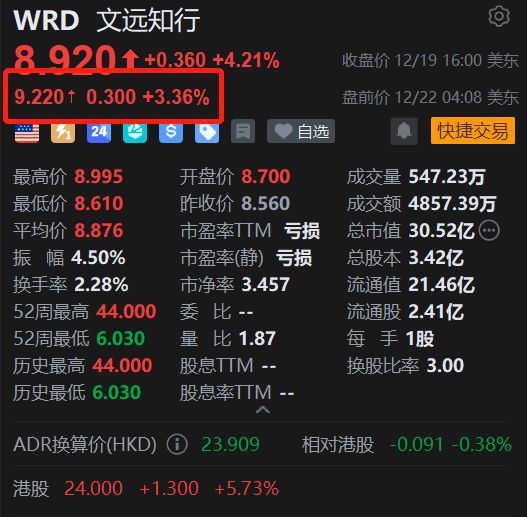
文远知行盘前涨超3% H股今日收涨近6% 加速推进L4产品商业化落地
Ge Long Hui· 2025-12-22 10:33
Core Viewpoint - The stock of WeRide (文远知行) rose nearly 6% in Hong Kong, leading to a more than 3% pre-market increase in its US shares, following the announcement of the first batch of L3 level conditional autonomous driving vehicle permits in China [1] Group 1: Company Developments - WeRide is a global leader in L4 level autonomous driving products and solutions, accelerating the commercialization of its L4 products [1] - On November 20, WeRide's Robotaxi received a fully unmanned license from the Swiss Federal Roads Office, marking a significant milestone for the company [1] - WeRide is notable for holding autonomous driving licenses in eight countries, including Switzerland, China, UAE, Saudi Arabia, Singapore, France, Belgium, and the United States [1] Group 2: Industry Context - The recent approval of L3 level autonomous driving vehicle permits in China includes models from Changan and Arcfox, indicating a growing regulatory framework for autonomous vehicles in the country [1]

旧金山全城瘫痪!Waymo断电变「废铁」,马斯克纯视觉赢麻了
Sou Hu Cai Jing· 2025-12-22 09:44
Group 1 - A power outage in San Francisco caused Waymo's autonomous taxis to become inoperable, blocking traffic and creating chaos in the city [1][2][10] - The outage affected approximately 130,000 users and led to the failure of traffic signals, disrupting public transportation [8] - Waymo's vehicles, which rely on a multi-sensor fusion system, struggled to operate without functioning traffic signals, highlighting vulnerabilities in AI autonomous driving during unexpected situations [12][14][22] Group 2 - In contrast, Tesla's Robotaxi service remained unaffected during the outage, as stated by Elon Musk, showcasing a significant difference in technology approaches between Waymo and Tesla [7][35] - Waymo's reliance on high-precision maps and external infrastructure makes it more cautious in uncertain environments, while Tesla's system, based on cameras and AI, can adapt to such conditions [34][36] - The incident emphasizes the need for the entire autonomous driving industry, including both Waymo and Tesla, to address challenges posed by sudden disruptions in urban environments [36]

美股异动丨文远知行盘前涨超3% H股今日收涨近6% 加速推进L4产品商业化落地
Ge Long Hui· 2025-12-22 09:39
Core Viewpoint - The recent approval of L3 level conditional autonomous driving vehicle licenses in China has positively impacted the stock performance of Wenyan Zhixing, leading to a nearly 6% increase in Hong Kong shares and over 3% rise in pre-market US shares [1] Group 1: Company Developments - Wenyan Zhixing is a global leader in L4 level autonomous driving products and solutions [1] - The company is accelerating the commercialization of its L4 products, with its Robotaxi recently receiving a fully unmanned license from the Swiss Federal Roads Office [1] - Wenyan Zhixing holds autonomous driving licenses in eight countries, including Switzerland, China, UAE, Saudi Arabia, Singapore, France, Belgium, and the United States [1] Group 2: Industry Context - The approval of L3 level autonomous driving vehicles marks a significant step in the development of the autonomous driving industry in China [1] - The introduction of these vehicles is expected to enhance the competitive landscape for companies involved in autonomous driving technology [1]