宠物

Search documents
整个社会都在喊没钱了,为什么这些公司反而年赚百亿?
创业家· 2026-02-03 10:39
Core Insights - The article emphasizes that despite the prevailing narrative of economic hardship, certain industries are thriving and generating substantial profits, particularly in Japan and China [3][4]. - It identifies eight key sectors that are capitalizing on changing consumer behaviors and preferences, presenting significant business opportunities [5]. Group 1: Key Industries - **Second-Hand Economy**: The second-hand luxury market in Japan, exemplified by companies like Daikokuya, has seen explosive revenue growth. In China, platforms like Hongbulin and Panghu are experiencing similar success, indicating a shift in consumer spending from new luxury goods to second-hand items [6][7][8]. - **Pet Economy**: With declining birth rates, young consumers are increasingly spending on pet products. Companies like Inaba in Japan and Guobao in China are witnessing strong stock performance due to rising demand for pet food and healthcare products [12][13][15]. - **Adult Care**: The adult diaper market in Japan has surpassed $10 billion, highlighting the economic potential of the aging population. This sector is viewed as a significant opportunity rather than a burden [17][18][19]. Group 2: Health and Wellness - **Health Food and Beverages**: The rise in health consciousness and demographic changes have led to increased demand for sugar-free beverages and functional foods. Brands like Suntory and various Chinese counterparts are experiencing significant growth in this area [21][22]. - **Beauty and Aesthetics**: The demand for beauty products, including collagen supplements and at-home beauty devices, remains strong. Companies like Jinbo Biological and U like are achieving substantial sales, indicating that consumers prioritize beauty even in economic downturns [23][24][26]. Group 3: Outdoor and Leisure - **Outdoor Recreation**: Companies in the outdoor equipment sector, such as Snow Peak in Japan and various Chinese brands, are benefiting from a growing interest in outdoor activities and camping, with significant sales increases reported [29][31]. - **Convenience Economy**: The trend towards convenience is driving growth in frozen food and smart home appliances. Brands like Anjijia and various AI-driven home devices are gaining traction as consumers seek to save time [39][40][42]. Group 4: Market Dynamics - The article posits that the current low-desire economic environment presents unique opportunities for businesses that can identify and invest in counter-cyclical trends. Companies that adapt to changing consumer needs and preferences are likely to emerge as winners in this landscape [44].


法国宠物零售业并购加剧市场集中度,捷克宠物食品集团重塑品牌迎接新品上市
Sou Hu Cai Jing· 2026-02-03 02:13
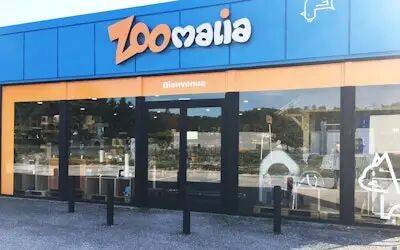
根据声明,Zoomalia同样专注于宠物产品零售分销,"通过专属网站及39家Zoomalia品牌自营宠物店网 络开展业务"。 该交易涉及公司"全球总营业额合计超过1.5亿欧元"(约合1.76亿美元),但收购金额未予披露。 法国商业集团Holding Nicole(旗下拥有宠物食品零售商JMT Le Royaume des Animaux)已获法国竞争 监管机构Autorité de la concurrence批准,收购本土宠物电商平台Zoomalia。 该监管机构在声明中表示,Holding Nicole拥有"专注于法国宠物产品零售分销的连锁体系,旗下运营着 123家JMT Le Royaume des Animaux品牌特许宠物店……以及为集团门店供货的采购中心"。 JMT Le Royaume des Animaux在法国北部、西部和南部地区拥有强大的零售网络。Zoomalia成立于2010 年,在法国西部实体门店布局尤为突出。近年来,该公司还投资开发了一系列自有宠物产品品牌,在线 上及其法国门店均有销售。 Zoomalia在声明中称:"通过打造12个独家品牌,Zoomalia实现了差异化发展并提供优质 ...
经济越来越差,这八大行业越赚爆!
创业家· 2026-02-02 10:30
Core Insights - The article discusses how certain industries are thriving despite a general perception of economic downturn, highlighting eight key sectors that present significant business opportunities in a low-desire society [3][4]. Group 1: Economic Trends - The concept of a "low-desire society" does not equate to a lack of opportunities, as consumer behavior shifts towards different spending patterns [4]. - The article emphasizes that while people may not be purchasing luxury items or real estate, their money is flowing into alternative markets such as second-hand goods and pet care [6][11]. Group 2: Key Industries - **Second-Hand Economy**: The second-hand luxury market in Japan, represented by companies like Daikokuya, has seen a significant revenue increase, mirroring trends in China with platforms like Hongbulin and Panghu [6][7][8]. - **Pet Economy**: Despite declining birth rates, spending on pets is rising, with brands like Inaba in Japan and Guobao in China experiencing strong sales growth [11][12][13]. - **Adult Care**: The adult diaper market in Japan has surpassed $10 billion, indicating a growing potential for similar products in China [16][17][18]. - **Health Food and Beverages**: The rise in health consciousness has led to increased demand for sugar-free beverages and functional drinks, with brands like Dongpeng and Miao Ke Lan Duo gaining traction [21][22]. - **Beauty and Aesthetics**: The demand for beauty products, including collagen supplements and home beauty devices, remains strong, with companies like Jinbo Bio and U like achieving significant sales [23][25]. - **Outdoor Recreation**: Brands in the outdoor equipment sector, such as Kailas and Camel, are seeing rapid sales growth as consumers seek leisure activities [25][26]. - **Emotional Economy**: Products that provide emotional comfort, such as low-alcohol beverages and novelty items, are gaining popularity, reflecting a dual consumer behavior of frugality and indulgence [28][29][30]. - **Convenience Economy**: The demand for convenience foods and smart home appliances is increasing, as consumers prioritize time-saving solutions over cost [33][35][36]. Group 3: Market Opportunities - The article suggests that the current economic climate presents opportunities for those willing to invest in counter-cyclical sectors, emphasizing the importance of recognizing and acting on these trends [39].

可选消费W05周度趋势解析:受美联储鹰派影响全球资产价格大跌,可选消费板块回撤较多
海通国际· 2026-02-02 00:25
Investment Rating - The report assigns an "Outperform" rating to multiple companies in the discretionary consumption sector, including Nike, Li Ning, Midea Group, JD Group, Haier Smart Home, Gree Electric, Anta Sports, and many others [1]. Core Insights - The discretionary consumption sector has experienced a significant pullback due to the hawkish stance of the Federal Reserve, leading to a decline in global asset prices [4][13]. - The report highlights that the domestic sportswear sector has shown resilience, with a weekly increase of 0.6%, while other sectors such as luxury goods and cosmetics have faced declines [5][15]. - The report notes that various sub-sectors within discretionary consumption have performed differently, with gold and jewelry being the top performers in the recent weeks [4][13]. Summary by Relevant Sections Weekly Performance Review - The report details the weekly performance of various sectors, indicating that domestic sportswear outperformed others with a 0.6% increase, while luxury goods saw a decline of 5.8% [4][13]. - Monthly performance shows gold and jewelry leading with a 14.8% increase, while luxury goods and overseas sportswear faced significant declines [4][13]. Sector Analysis - The domestic sportswear sector's growth is attributed to increased demand for warm clothing due to colder weather and strategic partnerships, such as Anta Sports' acquisition of a stake in PUMA [6][15]. - The credit card sector experienced mixed results, with Mastercard performing well while Visa and American Express faced declines due to varying financial performance [15]. - The retail sector saw a decline of 1.4%, with some companies like China Resources Vanguard performing well due to favorable policies [15]. Valuation Analysis - The report indicates that the expected PE ratios for various sectors in 2025 are below their historical averages, suggesting potential investment opportunities [11][18]. - For instance, the expected PE for the domestic sportswear sector is 13.4 times, which is 70% of its past five-year average [11][18].
未来10年,最挣钱的凭什么一定是这群人?
创业家· 2026-02-01 10:42
Core Insights - Amazon's report on global e-commerce trends serves as a guide for merchants to identify product opportunities and market dynamics [1][2] Group 1: AI-Driven Consumer Trends - Trend 1: AI Quality Space emphasizes the transformation of homes into emotionally interactive environments, with over 65% of consumers in Europe and the US willing to spend more on smart home products [3][4] - Trend 2: The Sleep Economy is emerging as 37% of American adults report declining sleep quality, leading to increased consumer spending on sleep-related products and services [8][10][12] - Trend 3: Happiness in the Workplace highlights the growing demand for ergonomic office furniture and environments that enhance employee well-being [13][14] Group 2: Technology and Lifestyle Integration - Trend 4: Technology's Subtle Influence reflects a consumer preference for seamless tech integration that enhances quality of life without being intrusive [15] - Trend 5: The Pet Economy is projected to grow by 45% over the next six years, with 55% of pet owners in developed markets willing to invest more in pet health and wellness [16][17][19] - Trend 6: Outdoor Cooking is gaining popularity, driven by a desire for social experiences and quality time in nature, leading to demand for specialized outdoor cooking equipment [20][22] Group 3: Emerging Consumer Demographics - Trend 7: The Mobile Treasure Chest concept illustrates how vehicles are evolving into multifunctional spaces, enhancing comfort and utility for consumers [23][27] - Trend 8: Generation Z is becoming a significant consumer force, characterized by values-driven purchasing, a focus on sustainability, and a preference for personalized experiences [28][29][30] - Trend 9: The Fitness Vanguard emphasizes the importance of health, with a shift towards personalized and technology-enhanced fitness solutions [31][34] Group 4: Gaming and Entertainment - Trend 10: The Gaming Enthusiast market is rapidly expanding, particularly in emerging markets, with a focus on high-performance equipment and immersive experiences [35][36][37] - The report identifies three key drivers of these trends: accelerated technology, emotional shifts, and evolving lifestyles, reflecting the complex needs of modern consumers [39][40]


多家种企业绩回升,看好种植景气回升
国泰海通· 2026-02-01 09:07
股票研究 /[Table_Date] 2026.02.01 多家种企业绩回升,看好种植景气回升 | [姓名table_Authors] | 电话 | 邮箱 | 登记编号 | | --- | --- | --- | --- | | 王艳君(分析师) | 021-38674633 | wangyanjun2@gtht.com | S0880520100002 | | 林逸丹(分析师) | 021-38038436 | linyidan@gtht.com | S0880524090001 | | 巩健(分析师) | 021-23185702 | gongjian@gtht.com | S0880525040051 | 本报告导读: 养殖:业绩预告公告完毕,四季度生猪养殖普遍亏损。种植:种子公司业绩回升, 看好种植板块景气上行。宠物: 乖宝品牌抖音销售排名靠前,看好年后展会催化。 投资要点: [种植: Table_Summary] 多家种子公司业绩回升,看好种植板块景气上行。 多家种子公司发布业绩预告,登海种业归母净利润拟增长 62%-80%, 隆平高科拟增长 14%-67%,大北农的种子业务也实现净利润增长, 荃银 ...


天津举办宠物年货节 铲屎官解锁“它经济”消费新场景
Xin Lang Cai Jing· 2026-02-01 08:57
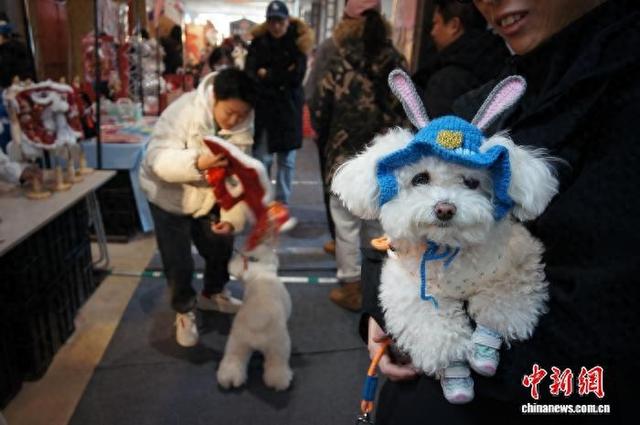
Group 1 - The event held in Tianjin on February 1 attracted many citizens and their pets, featuring activities such as pet New Year dinner tastings and photo opportunities [2] - The festival showcased a variety of pet cultural and creative brands from the Beijing-Tianjin-Hebei region, offering a full range of pet products including snacks, New Year clothing, toys, and accessories [2] - The event aimed to create a festive atmosphere for pets, allowing them to experience the New Year celebrations [2] Group 2 - Pets were seen wearing New Year-themed clothing and accessories, which drew the attention of the public [4] - The event included displays of pet New Year dinners, highlighting the festive offerings available for pets [6] - Interactive activities featured pets dressed in New Year outfits, enhancing the engagement of attendees [8]
2026年线上消费市场机遇洞察报告
Sou Hu Cai Jing· 2026-01-31 05:20
Group 1 - The core viewpoint of the report indicates that the online consumption market is transitioning from "incremental expansion" to a new normal characterized by "stock renewal" and "structural upgrading," with a solid market foundation but significant changes in growth momentum and consumer preferences [1] - The report highlights that rational decision-making, emotional resonance, health prioritization, and efficiency pursuit are the main driving forces in the current market [1] - E-commerce platforms show that growth highlights have shifted from traditional broad categories to emerging tracks driven by specific scenarios, segmented needs, and high-value experiences [1] Group 2 - The "self-care" economy is deepening in personal consumption, with the beauty and skincare market evolving beyond basic functionality to a dual satisfaction of "emotion + efficacy" [2] - The concept of "emotional skincare" is emerging, where brands convey emotional value through storytelling and sensory experiences, while professional skincare products gain high trust due to transparency and efficacy [2] - In the snack market, health has permeated daily consumption, with functional snacks and low-GI foods seeing explosive sales, and snacks also serving as low-threshold emotional regulation tools [2] Group 3 - The family unit remains the core consumption scene, evolving towards smarter, healthier, and more emotionally connected demands [3] - The home appliance industry is transitioning towards green and smart solutions, with strong consumer demand for health management features in products like air conditioners and refrigerators [3] - There is a notable rise in "pet-friendly appliances," reflecting the refined and humanized needs arising from pets being considered family members [3] Group 4 - Outdoor activities are no longer limited to professional adventures but are quickly integrating into urban daily life, with "light outdoor" becoming a mainstream lifestyle [4] - This shift is driving consumption characterized by "lightweight equipment" and "diverse scenarios," with traditional outdoor gear emphasizing convenience and aesthetics for urban commuting and leisure [4] - Consumers are seeking comfortable and convenient gear to easily experience nature and release emotions, leading to a closer integration of outdoor industries with everyday life [4] Group 5 - The report concludes that current opportunities in the online consumption market are deeply rooted in changing consumer perceptions, shifting from ownership to experience, and from price-performance focus to value-based considerations [5] - The essence of consumption is increasingly returning to the concrete construction of a better life, whether for personal health and happiness, creating a comfortable and intelligent home environment, or expanding diverse life experiences [5] - Market participants must deeply understand these subtle yet powerful shifts in demand to innovate products, communicate value, and explore scenarios effectively [5]

财经观察丨“爱你老己”背后的消费密码
Xin Lang Cai Jing· 2026-01-31 04:02
新华网北京1月31日电岁末年初,一句"爱你老己,明天见"席卷社交网络,成为年轻人自我关怀的新表 达。热梗走红的背后,正是悦己消费理念的具象化。 一杯限定奶茶、一个盲盒、一场演唱会、一次沉浸式"悦己游",悦己消费折射出消费从"物质满 足"到"情感体验"的深刻转变。这一新兴消费方式深度融入日常生活,成为驱动消费升级的重要力量。 悦己消费的多元打开方式 2026年1月 20日,在北京五棵松万达广场暖宠家店铺里,消费者正与宠物猫互动。新华网 韩攀摄 记者调查发现,年轻人的悦己消费早已跳出传统购物范畴,转向以情绪价值为核心的多元体验。在北京 五棵松万达广场的暖宠家店铺,几位年轻顾客正与毛茸茸的小生命亲昵互动,轻快的笑声不断。 这股为情绪价值买单的热潮,早已不是小众潮流。艾媒咨询报告显示,2024年中国情绪经济市场规模达 2.3万亿元,预计2029年将突破4.5万亿元。 相较于传统消费,悦己消费场景更广、形式更活,覆盖潮玩、宠物、情绪健康、文化娱乐、解压产品及 香氛等多个领域。潮玩赛道从"小众收藏"走向"大众消费","谷子经济"快速增长,宠物消费也超越基础 饲养,通过跨界业态满足情感陪伴需求。 值得买科技集团消费产业研究 ...

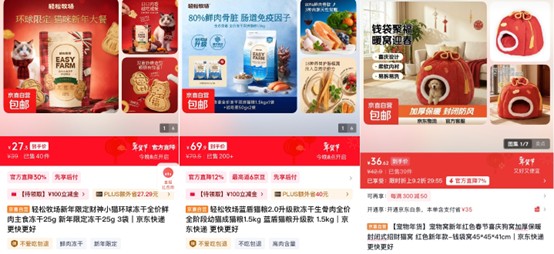
宠物过年引爆它经济 京东京喜自营宠物品类成交额增长6倍
Zhong Jin Zai Xian· 2026-01-31 03:02
Group 1 - The pet industry is experiencing significant growth as consumers increasingly purchase specialized products for their pets during the festive season, reflecting a shift in consumer habits towards the "pet economy" [1][9] - During the New Year shopping festival, the overall transaction volume for pet life and health products on JD's discount shopping brand, Jingxi, increased sixfold compared to previous periods, with popular items including pet food, beds, and aquariums [1][2] - The 2026 China Pet Industry White Paper indicates that the urban pet consumption market in China is projected to reach 312.6 billion yuan by 2025, with a year-on-year growth of 4.1% [1] Group 2 - Consumers are now prioritizing quality and emotional value in pet products, leading to an upgrade in the quality-to-price ratio of pet goods, as seen in the popularity of limited edition pet food and themed accessories [2][4] - The demand for aquatic products has also surged, with sales of ornamental fish and aquarium decorations significantly increasing, aligning with traditional New Year themes [6] Group 3 - Despite the booming market, the pet industry faces challenges such as severe homogenization and intense price competition, which complicate production and distribution for many businesses [7] - Companies are struggling with production capacity and market reach, particularly in lower-tier markets, which hampers their ability to meet consumer demand effectively [7][8] Group 4 - Jingxi's self-operated model is helping to alleviate some of the challenges faced by pet product manufacturers by allowing them to focus on production while the platform manages logistics, customer service, and marketing [8] - This collaboration has led to successful product launches that align with consumer trends, such as the introduction of festive-themed pet products, enhancing the overall market presence of participating manufacturers [8][9]