时尚

Search documents
Lanvin Group (复朗集团)宣布任命新任首席财务官
Xin Lang Cai Jing· 2025-10-24 10:24
Group 1 - Lanvin Group has appointed Mr. Han Jiyang as the Chief Financial Officer, effective November 1, 2025, responsible for financial planning, analysis, accounting, financial management, capital management, investment projects, and investor relations [1] - Mr. Han brings nearly 20 years of experience in corporate finance, investment banking, and global business management, previously serving as Co-Chief Investment Officer at Yuyuan Inc. and General Manager of M&A for 3M in Greater China [1] - The Chairman of Lanvin Group, Mr. Huang Zhen, expressed confidence that Mr. Han's extensive experience in financial strategy and global mergers and acquisitions will enhance the group's financial management capabilities and support its global growth objectives [1] Group 2 - Lanvin Group is a global luxury fashion group headquartered in Shanghai and Milan, listed on the New York Stock Exchange under the ticker "LANV" since December 15, 2022 [2] - The group includes prestigious brands such as the historic French fashion house Lanvin, Austrian luxury apparel brand Wolford, Italian luxury footwear brand Sergio Rossi, American luxury women's wear brand St. John, and Italian high-end menswear manufacturer Caruso [2] - Lanvin Group aims to drive global expansion and sustainable development of its brands through strategic investments, industry operations, and a deep understanding of the rapidly growing luxury fashion market [2]

片仔癀参投中金医疗基金;Chobani获融资;八马茶业预计月底上市
Sou Hu Cai Jing· 2025-10-22 11:06
Financing Dynamics - Pianzaihuang Pharmaceutical Co., Ltd. announced an investment of RMB 2 billion in the CICC Medical Fund, representing 20% of the fund's target size, focusing on the healthcare sector including traditional Chinese medicine and biomedicine [3] - Chobani raised $650 million (approximately RMB 4.6 billion) in its latest funding round, aiming to expand its product lines and processing capabilities, with a valuation now at $20 billion [5] Listing Dynamics - Bama Tea announced a global offering of 9 million shares, aiming to raise approximately HKD 428 million (around RMB 39 million) for expanding production capacity [7] Acquisition Dynamics - Kering Group announced a strategic cooperation with L'Oréal, involving a €4 billion acquisition of Kering's high-end fragrance brand Creed and exclusive rights for future beauty products from Gucci, Bottega Veneta, and Balenciaga [9] - Meili Tianyuan announced the acquisition of 100% of Shiyuanli for RMB 1.25 billion, aiming to enhance its brand portfolio in the high-end beauty service sector [11] - Birkenstock signed an agreement to acquire its long-term distributor in Australia, ensuring continuity in contracts and operations, with an annual sales revenue of approximately €55 million [15] Personnel Dynamics - Paul Smith Foundation appointed Taylor Thompson as the first American resident designer, aiming to provide guidance and workspace for emerging designers [19] - Kim Jones was appointed as the creative director for Bosideng's new Areal high-end urban line, marking his return to the fashion industry [22] - Zalando appointed Thomas Schwulera, a former executive from L'Oréal, as the vice president of the beauty category, focusing on strategic growth [25]



大兴全域发展新质生产力
Bei Jing Ri Bao Ke Hu Duan· 2025-10-20 21:07
Core Insights - Daxing District is focusing on developing six major industries, including air transport economy, biomedicine, future energy, digital economy, commercial aerospace, and agricultural technology [1][2] - The district has established a comprehensive industrial development blueprint, referred to as "6+5+3," which includes six industrial functional zones, five industry clusters, and three new development areas [2] - Daxing has successfully launched over 1,000 high-quality projects this year, leading the city in the number of enterprises migrating from outside and significant projects worth over 100 million [2] Industrial Development - The six industrial functional zones include Daxing Airport Economic Zone, Daxing Biomedicine Industrial Base, Beijing Digital Economy Demonstration Zone, International Hydrogen Energy Demonstration Zone, Beijing-Japan Innovation Cooperation Demonstration Zone, and Beijing Commercial Aerospace Industrial Base [2] - The five industry clusters consist of Huiju Business Technology Cluster, National New Media Industrial Base, Niantan International Financial Business District, Southern Beijing Logistics Base, and Southern Beijing Agricultural and Forestry Technology Park [2] - The three new development areas are Garden City Yongding Bay, Daxing International Tourism Resort, and Industrial Collaborative Development Demonstration Zone [2] Economic Impact - Daxing Airport has facilitated nearly 200 million passengers and over 1.5 million flights in six years, with the economic zone attracting 8,401 market entities, including 375 foreign enterprises [2][3] - The International Exhibition Consumption Hub, covering 7.8 square kilometers, is expected to attract over 100 billion yuan in total investment, linking Daxing Airport with the Daxing International Cultural Tourism Resort [3] Agricultural and Technological Integration - Daxing is known for its agricultural output, with the establishment of the Caiyu Digital Fashion Town aimed at integrating digital technology with the fashion industry [3] - The district is also developing the Panggezhuang Watermelon Town, focusing on modern agricultural technology and the pet economy, with 85 partnerships already established [3] Urban Development - The Garden City Yongding Bay will feature a diverse transportation network, with plans for rapid access to Daxing Airport and the central city [5] - The area will have a green space per capita of 22 square meters, with multiple parks enhancing urban greenery [5] - Educational and medical resources are being enhanced, with new schools and hospitals planned to support the growing population [5]

开云集团拟将美妆业务出售;LVMH三季报反弹
2 1 Shi Ji Jing Ji Bao Dao· 2025-10-20 10:46
Group 1: Strategic Adjustments in the Fashion and Luxury Industry - Kering Group is reportedly planning to sell its beauty division to L'Oréal for approximately €4 billion, indicating a strategic shift towards optimizing debt structure and focusing on core assets [1][2][3] - EssilorLuxottica experienced an 11.7% increase in third-quarter revenue, reaching €6.87 billion, driven by the launch of smart glasses in collaboration with Meta, highlighting the integration of technology and fashion as a growth engine [1][7] Group 2: Regulatory Challenges and Brand Governance - Gucci, Loewe, and Chloé were fined over €157 million by the EU for price manipulation, reflecting increasing regulatory scrutiny on luxury brand pricing practices [1][11][12] Group 3: Financial Performance and Market Recovery - LVMH reported a surprising rebound in third-quarter performance, with revenues at €18.2 billion, a 1% organic growth, primarily driven by a 2% increase in the Asia-Pacific market, particularly China [1][18][19] - Brunello Cucinelli's revenue grew by 10.8% to €1.0192 billion in the first nine months of 2025, with a strong performance in the Chinese market, which is expected to contribute more significantly to future growth [1][14] Group 4: Leadership Changes and Brand Evolution - Véronique Nichanian, the creative director of Hermès menswear for 37 years, has left the company, marking a significant transition in the brand's creative direction [1][20][21] - Giorgio Armani Group appointed Giuseppe Marsocci as CEO and Silvana Armani as Vice President, aiming to blend family legacy with professional expertise in the leadership structure [1][23]

记者手记丨从“中国制造”到“中国创造”
Xin Hua Wang· 2025-10-16 04:58
Core Insights - The article emphasizes the growing international influence of Chinese brands, highlighting their transition from "Made in China" to "Created in China" and the shift from speed to quality in production [1][2] Group 1: Chinese Brand Development - The number of Chinese brands in the "Global 500" has increased from 13 in 2008 to 69, showcasing significant growth and recognition on the international stage [1] - Brands like BYD have gained visibility and popularity in markets like the UK, becoming one of the fastest-growing electric vehicles [1] - The emergence of companies like DeepSeek and the popularity of products like Pop Mart's trendy toys illustrate the diverse appeal of Chinese brands, targeting emotional needs and fashion trends [1] Group 2: Cultural and Economic Impact - The charm of Chinese cities and their cultural heritage is highlighted as a factor in understanding the success of Chinese brands [2] - The "Belt and Road" initiative is noted for enhancing China's international image by contributing to infrastructure and improving living standards in various regions [2] - The growing recognition of Chinese brands in the UK has created a sense of pressure for local brands to compete internationally, reflecting the dynamics of economic globalization [2]
1.57亿欧元罚单:当奢侈品的“定价权”撞上欧盟反垄断红线
Jing Ji Guan Cha Bao· 2025-10-15 09:12
Core Viewpoint - The European Commission imposed a total fine of €157 million (approximately $182 million) on three luxury brands—Gucci, Chloé, and Loewe—for violating EU competition law by interfering with retailers' pricing autonomy through minimum sales price settings and discount restrictions [1][2]. Group 1: Pricing Practices of Luxury Brands - The investigation revealed that the three brands restricted retailers from adjusting online and offline prices, mandated adherence to "recommended retail prices," and controlled discount periods, effectively turning independent retailers into price enforcers [2]. - The European Commission stated that these practices weakened market competition, leading consumers to pay higher prices for the same products with fewer purchasing options [2]. - The fines were distributed as follows: Kering SA (Gucci's parent company) was fined €119.7 million, Richemont (Chloé's parent company) was fined €19.7 million, and LVMH (Loewe's parent company) was fined €18 million [2]. Group 2: Implications of Price Control - Price stability is crucial for luxury brands as it reflects brand value and consumer perception; price fluctuations can dilute a brand's exclusivity and prestige [4]. - Luxury brands maintain strict distribution management to protect brand image and channel profits, but such practices may constitute "resale price maintenance" under EU law [4]. - This is not the first instance of EU scrutiny on luxury brands; previous investigations involved Puma, Nike, Guerlain, and Chanel for similar pricing control issues [4]. Group 3: Regulatory Pressure and Market Dynamics - The case reflects the EU's intensified market regulation in the digital retail era, following a raid on several fashion companies in April 2023 for suspected price manipulation [5]. - Despite a global cost-of-living crisis, the luxury goods sector has shown strong growth, with the global personal luxury goods market projected to exceed €400 billion in 2024, a nearly 40% increase from pre-pandemic levels [6]. - The luxury sector's reliance on price discipline to maintain brand prestige is now challenged by regulatory scrutiny, prompting a reevaluation of traditional pricing strategies [6]. Group 4: Future of Luxury Brand Pricing - The total fines are not expected to significantly impact the financial health of these luxury giants, with Kering's 2024 revenue projected at €17.2 billion and LVMH at €84.7 billion [7]. - The EU's antitrust enforcement is becoming more nuanced, focusing on the micro-dynamics between brands and retailers, indicating a heightened sensitivity to "hidden monopolies" and "structural unfairness" [7]. - The luxury industry must navigate the tension between maintaining price control for brand survival and complying with market transparency demands, highlighting a paradox in contemporary luxury business logic [8].
全国糖酒会在宁举办在即,“展城融合”持续释放城市魅力——
Nan Jing Ri Bao· 2025-10-15 02:32
Core Insights - The 113th National Sugar and Wine Fair in Nanjing is transforming the city into a vibrant festival, extending the traditional exhibition into a city-wide carnival that enhances consumer interaction and economic activity [1][2][5] Group 1: Event and Economic Impact - The event has evolved from a short-term exhibition to a continuous city-wide showcase, creating a "super exhibition hall" without physical boundaries, which leads to sustained economic benefits [2] - The integration of various activities, such as sports and cultural events, has significantly boosted local commerce, with notable increases in foot traffic and revenue across multiple districts [5][6] - The 2025 Nanjing International Auto Show and the 2025 Nanjing RV Exhibition attracted approximately 208,000 visitors, generating total orders worth 1.517 billion yuan, with over 80% of the showcased vehicles being new energy models [3] Group 2: Consumer Engagement and Experience - The diverse activities, including pop-up events and art festivals, cater to various consumer preferences, enhancing the shopping experience and driving sales across different age groups [4][6] - The "Mido Music Festival" attracted over 60,000 attendees, generating revenue exceeding 35 million yuan, while the "Garden Expo Fireworks Season" saw a 16% increase in visitor numbers [7] Group 3: Cultural and Community Integration - The "Autumn Sugar Season" has successfully merged industrial events with cultural celebrations, transforming the city into a festive environment that engages both residents and tourists [6][9] - The event serves as a platform for promoting Nanjing's business environment and investment opportunities, with numerous industry matchmaking events scheduled during the season [11]
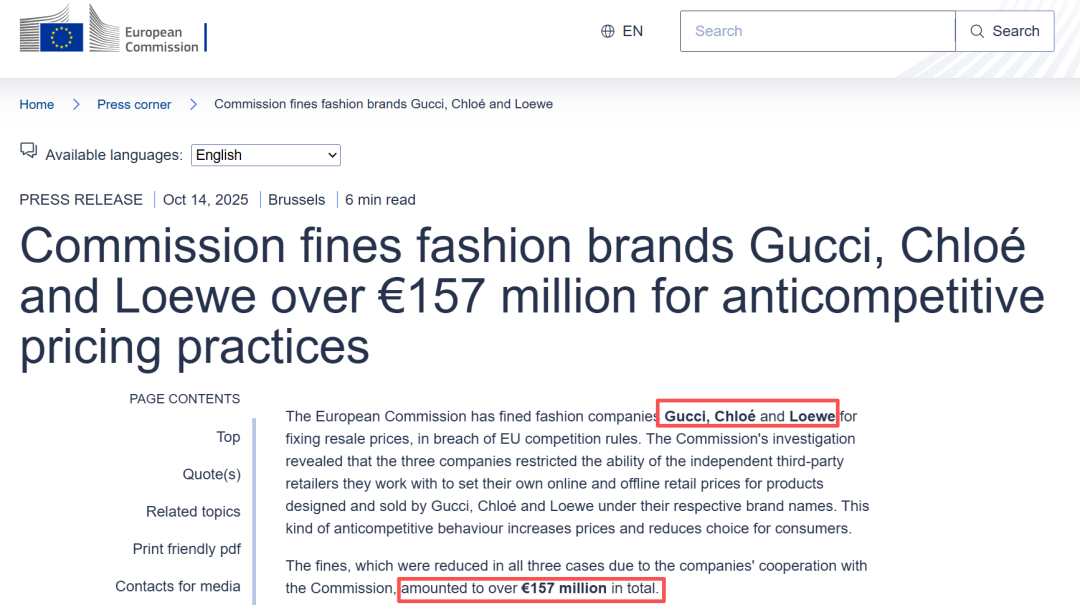
古驰、蔻依、罗意威,被罚超1.57亿欧元
Zhong Guo Ji Jin Bao· 2025-10-14 22:43
Core Points - The European Commission has imposed a total fine exceeding €157 million on Gucci, Chloé, and Loewe for anti-competitive pricing practices [1][3] - The companies engaged in resale price maintenance (RPM), restricting the ability of their independent retailers to set their own retail prices [2][5] Company Summaries - Gucci, based in Italy, was fined €119.67 million after a 50% reduction for cooperation [6] - Chloé, headquartered in France, received a fine of €19.69 million after a 15% reduction for cooperation [6] - Loewe, located in Spain, was fined €18.01 million after a 50% reduction for cooperation [6] Regulatory Context - The infringement behavior by these companies was found to cover the entire European Economic Area (EEA) [2][5] - The European Commission's investigation began with surprise inspections in April 2023, leading to formal proceedings in July 2024 [5] - The decision emphasizes the importance of fair competition and consumer protection across all sectors in Europe [6]
LVMH sales return to growth as China demand improves
Yahoo Finance· 2025-10-14 17:27
Core Insights - LVMH's sales increased by 1% in Q3, marking the first quarter of growth this year, driven by improved demand in China [1][5] - The luxury goods sector is experiencing a prolonged slump, but LVMH's performance offers some relief [1][7] Sales Performance - LVMH reported quarterly sales of 18.28 billion euros ($21.17 billion), surpassing expectations of flat sales [5] - The fashion and leather goods division, which includes brands like Louis Vuitton and Dior, saw a 2% decline compared to the previous year, but this was an improvement from a 9% drop in Q2 [4][6] Regional Trends - Notable improvement in sales trends was observed in Asia, particularly in mainland China, which turned positive in Q3 [2] - The CFO indicated that the luxury market in Asia, excluding Japan, showed "noticeable" improvement [2] Market Challenges - LVMH faces challenges in Q4, including unfavorable currency rates and ongoing economic uncertainty [2] - The luxury sector has been impacted by price hikes and economic factors such as tariffs and the real estate crisis in China [7][8] Investor Sentiment - LVMH's U.S. shares rose by 7.5% following the positive trading update, indicating a shift in investor sentiment towards the luxury sector [4]
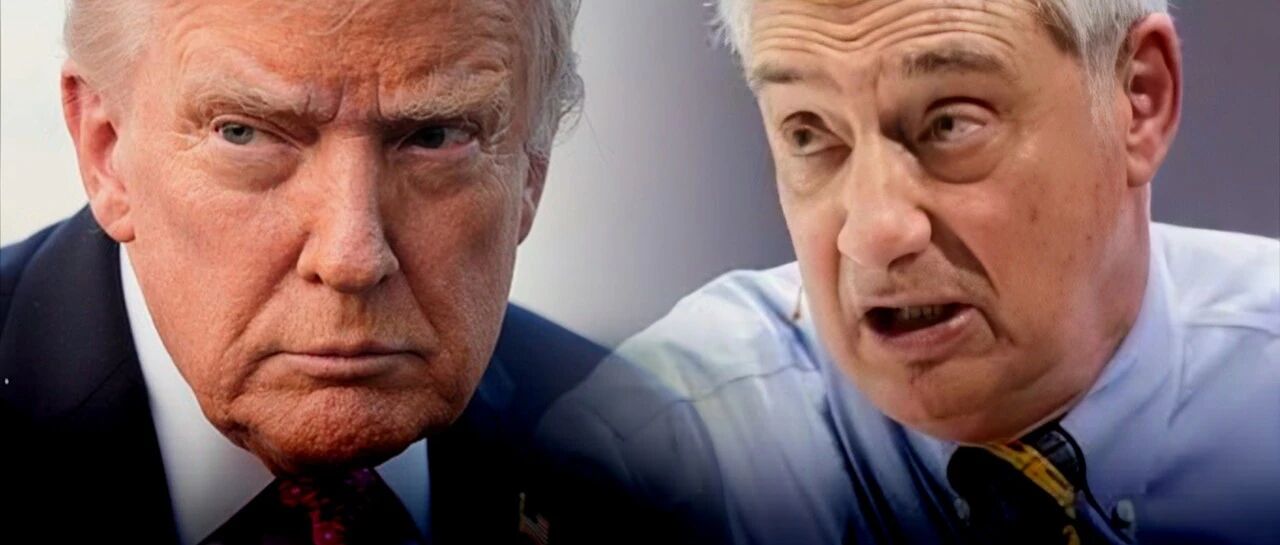
今年诺奖得主,警告特朗普
盐财经· 2025-10-14 09:12
Core Insights - The 2025 Nobel Prize in Economic Sciences was awarded to Philippe Aghion, Joel Mokyr, and Peter Howitt for their contributions to understanding innovation-driven economic growth [4][28] - Aghion emphasized the negative impact of tariffs on economic growth, stating that trade barriers hinder market fluidity and innovation [10][12] - The trio's research highlights the importance of maintaining mechanisms that support creative destruction to avoid economic stagnation [28] Group 1: Contributions of Nobel Laureates - Philippe Aghion aims to use his prize money to further research on the impact of AI and innovation on economic growth [2] - Joel Mokyr's work focuses on the historical roots of economic growth, analyzing the interplay between technological progress and industrial revolutions [19][20] - Peter Howitt, along with Aghion, developed a theoretical model that incorporates the concept of creative destruction into endogenous growth theory [16][26] Group 2: Economic Policies and Innovation - Aghion warned against government policies that suppress innovation, advocating for a unified European market to enhance technological advancement [12][13] - Mokyr criticized the Trump administration's research policies, labeling them as detrimental to the U.S.'s leadership in science and education [26][27] - The laureates collectively argue that innovation is essential for addressing global challenges such as climate change and aging populations, requiring supportive government policies [27]