汽车及零部件

Search documents
前三季度,河南经济主要表现为“五个稳”
Sou Hu Cai Jing· 2025-10-28 14:07
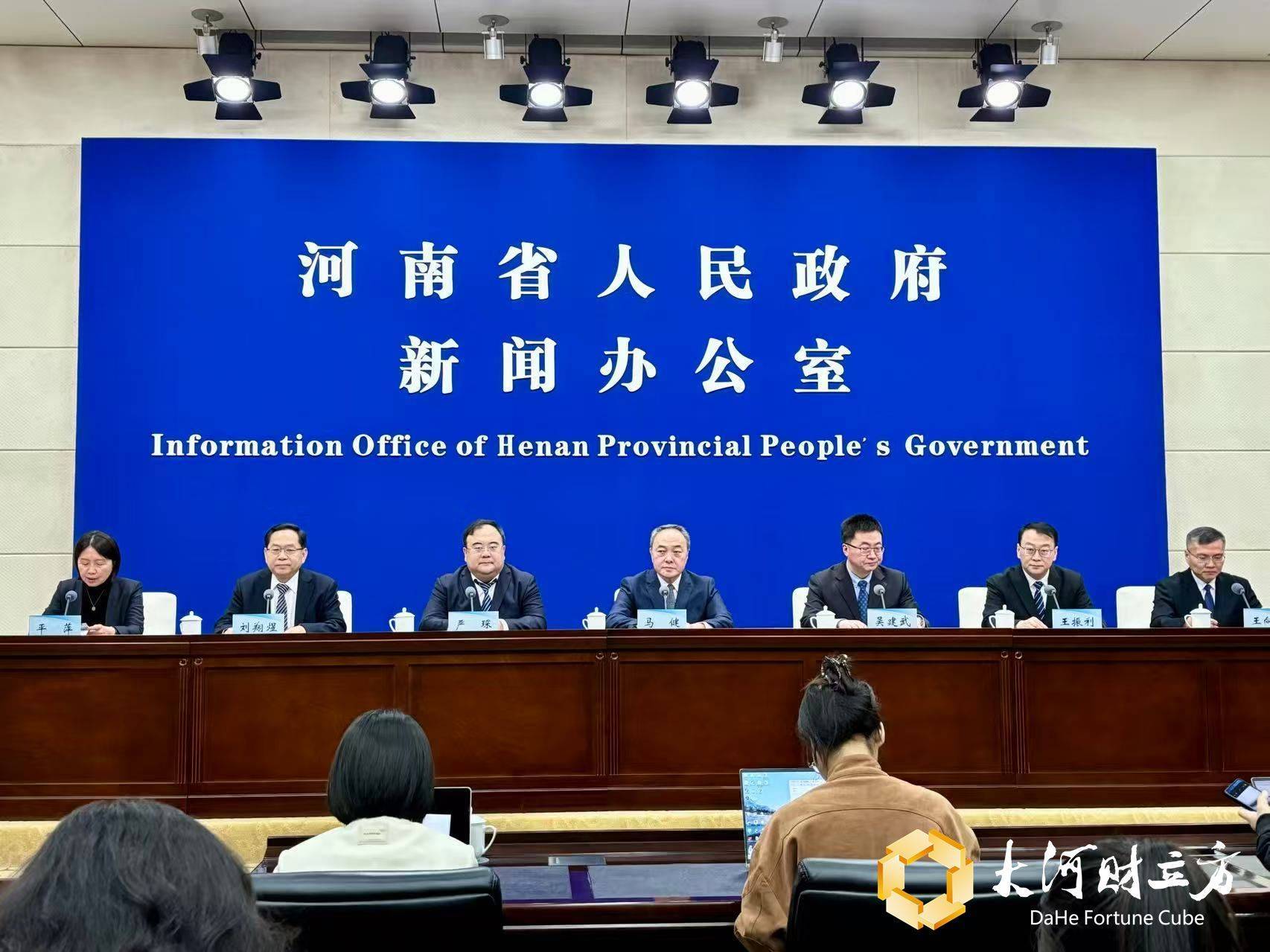
Core Viewpoint - The economic performance of Henan Province in the first three quarters of 2023 shows significant growth, with GDP increasing by 5.6%, surpassing the national average, and various sectors demonstrating robust development, indicating a strong foundation for achieving annual targets [3][4][5][6][7]. Economic Growth - Henan's GDP growth of 5.6% is 0.4 percentage points higher than the national average, ranking 6th nationally and 3rd among major economic provinces [3]. - The province's industrial added value, fixed asset investment, and retail sales of consumer goods grew by 8.4%, 4.5%, and 6.2%, respectively, all exceeding national averages [3]. Production and Supply Stability - Agricultural output reached 750.01 billion jin, ranking first in the nation, with expectations of maintaining over 1.3 trillion jin for the year [4]. - In the industrial sector, 80.5% of the 41 major industry categories reported positive growth, with significant contributions from the automotive, equipment, food, electronic information, and new materials sectors [4]. Demand Potential Release - Investment in projects over 100 million yuan increased by 8.4%, contributing 5.4 percentage points to overall investment growth, while private investment rose by 7.5% [5]. - Retail sales of consumer goods grew by 9.9%, with 21 out of 23 categories showing increases, and total import and export value reached 643.18 billion yuan, marking an 18.7% increase [5]. Reform and Opening Up - The province is advancing reforms to integrate into the national market, with significant increases in new business registrations and industrial revenue [6]. - The establishment of the Zhengzhou International Land Port and the growth of air cargo throughput highlight the province's commitment to enhancing its open economy [6]. Transformation and Quality Improvement - High-tech manufacturing added value grew by 13.9%, and strategic emerging industries saw an 11.6% increase, indicating a shift towards higher quality production [7]. - The coverage of intelligent applications in industrial enterprises reached 93.1%, reflecting advancements in smart manufacturing [7]. Social Welfare and Employment - Urban employment increased by 998,000, achieving 90.7% of the annual target, while per capita disposable income rose by 5.3% [7]. - Public services have expanded with new educational facilities and healthcare services, contributing to improved living standards [7].

国际观察|从德国最大贸易伙伴更替看美关税冲击
Xin Hua She· 2025-10-23 22:41
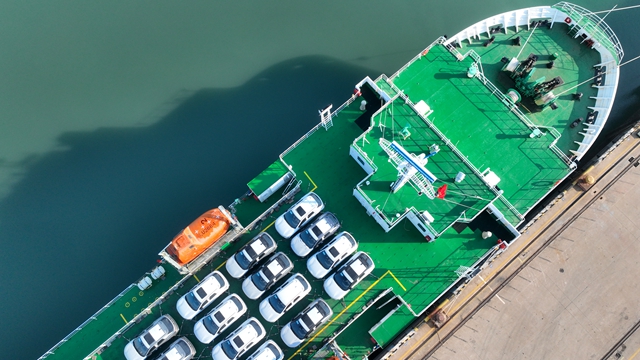
Group 1 - The latest data from the Federal Statistical Office of Germany indicates that China has surpassed the United States as Germany's largest trading partner in the first eight months of 2025, largely due to U.S. tariffs and trade barriers [1] - Germany's exports to the U.S. from January to August amounted to €101 billion, a year-on-year decline of 6.5%, with August exports alone dropping to €10.9 billion, a 20.1% decrease compared to the previous year, marking the lowest level since November 2021 [1] - In contrast, trade between Germany and China showed resilience, with total bilateral trade reaching €166.3 billion in the same period [1] Group 2 - A survey by the German Chamber of Commerce reveals that over half of the surveyed companies plan to reduce trade with the U.S., and about a quarter are considering suspending or canceling investments in the U.S. due to the uncertainty caused by U.S. tariff policies [2] - The automotive and parts sector, a major source of trade surplus for Germany, has been significantly impacted since the U.S. imposed tariffs on imported cars and related goods in April, leading to a net job loss of approximately 51,500 in the German automotive industry over the past year [2] - Major companies like Mercedes-Benz, Volkswagen, Bosch, and Continental have announced spending cuts in response to the increased costs of German goods in the U.S. market due to high tariffs [2] Group 3 - The number of corporate bankruptcies in Germany reached a 12-year high in July, with expectations that over 22,000 companies will file for bankruptcy this year, averaging more than 60 per day [3] - The President of the German Central Bank noted that U.S. tariffs and policy uncertainty are suppressing economic growth in Germany, particularly affecting key industrial sectors [3] - The Munich Institute for Economic Research forecasts that Germany's economy will grow by only 0.2% in 2025 due to the ongoing impact of U.S. tariff policies and other factors [3]

【环球财经】从德国最大贸易伙伴更替看美关税冲击
Xin Hua She· 2025-10-23 14:09
Group 1 - The latest data from the German Federal Statistical Office indicates that the United States is no longer Germany's largest trading partner as of the first eight months of 2025, with China taking its place. This shift is closely related to the U.S. imposing tariffs and increasing trade barriers, reflecting the impact of protectionist measures on U.S.-EU economic ties [1] - From January to August this year, Germany's exports to the U.S. amounted to €101 billion, a year-on-year decrease of 6.5%. In August alone, exports were €10.9 billion, a month-on-month decline of 2.5% and a year-on-year drop of 20.1%, marking the lowest level since November 2021 [1] - In contrast, trade between Germany and China showed resilience, with total bilateral trade reaching €166.3 billion in the first eight months of this year [1] Group 2 - A survey by the German Chamber of Commerce reveals that over half of the surveyed companies plan to reduce trade with the U.S. due to the uncertainty caused by U.S. tariff policies, with about a quarter of companies indicating plans to suspend or cancel investments in the U.S. [2] - The automotive and parts industry, a major source of Germany's trade surplus with the U.S., has been significantly impacted since the U.S. imposed tariffs on imported cars and related goods in April this year, leading to continuous pressure on German exports [2] - According to a report by consulting firm Ernst & Young, approximately 51,500 jobs in the German automotive sector have been lost over the past year, representing nearly 7% of total jobs in the industry, making it the most severely affected sector [2] Group 3 - The number of corporate bankruptcies in Germany reached its highest level in 12 years in July, with expectations that over 22,000 companies will file for bankruptcy this year, averaging more than 60 companies per day [3] - The President of the German Central Bank, Joachim Nagel, stated that U.S. tariffs and policy uncertainty are suppressing Germany's economic growth, particularly impacting the industrial sector during a critical adjustment period [3] - The Munich Institute for Economic Research predicts that due to the ongoing effects of U.S. tariff policies, Germany's economy is expected to grow by only 0.2% in 2025 [3]
国际观察丨从德国最大贸易伙伴更替看美关税冲击
Xin Hua Wang· 2025-10-23 12:51
新华社柏林10月23日电 题:从德国最大贸易伙伴更替看美关税冲击 新华社记者李函林 与此同时,德国工商大会调查显示,美国关税政策正加剧企业的不确定性,超过一半受访企业计划减少 对美贸易,约四分之一企业表示将暂停或取消在美投资。德国管理学家赫尔曼·西蒙指出,美国关税政 策使德国企业对美出口面临巨大挑战,如果失去在美市场份额,企业必须开拓其他市场。 美国一直是德国重要出口市场,其中汽车及零部件行业是德国对美贸易的主要顺差来源。然而,自今年 4月美国对进口汽车及相关商品加征关税措施生效以来,德国对美出口持续承压。 咨询公司安永报告显示,在截至今年6月底的过去一年内,德国汽车行业净减岗位约5.15万个,占全部 岗位近7%,成为受冲击最严重的工业部门。德媒报道称,美国高额关税抬高了德国商品在美售价,迫 使梅赛德斯-奔驰、大众等整车制造商,以及博世、大陆集团、采埃孚等零部件供应商陆续宣布开支削 减计划。 与此同时,企业裁员潮和破产数量持续增加,加剧市场担忧。DHL宣布将在年底前裁员约8000人,西 门子宣布到2027年9月约6000人的裁员计划;到2030年,德国最大钢铁制造商蒂森克虏伯钢铁计划裁员 约1.1万人,博世计 ...
出海潮背后的金融挑战:中企在泰跨境借贷、外汇风险管理遇痛点
Di Yi Cai Jing Zi Xun· 2025-10-23 10:43
Core Insights - China's financial direct investment in Southeast Asia has seen rapid growth, diversification, and increasing importance, with ASEAN countries becoming China's largest export destination [1] - The "New Three" sectors (new energy vehicles, lithium batteries, and photovoltaics) are leading the outbound investment trend, primarily directed towards Southeast Asia, Europe, and North Africa [1][2] - The financial cooperation framework between China and ASEAN has evolved, with initiatives like the Chiang Mai Initiative and the Belt and Road Initiative enhancing regional financial stability and infrastructure financing [2] Investment Trends - Outbound investment from Chinese manufacturing is recovering, with significant focus on greenfield investments in Southeast Asia, particularly in Malaysia, Indonesia, and Thailand [1] - Non-"New Three" investments, especially in electronic components and consumer electronics assembly, are heavily concentrated in Vietnam, which has become a major hub for Chinese manufacturing jobs [1] Financial Services and Challenges - Chinese enterprises face varying financial needs and challenges at different development stages when expanding abroad, particularly in Thailand [2][3] - Large enterprises rely on local Thai banks for convenience and local currency credit, while small and medium-sized enterprises (SMEs) depend more on internal funding and partnerships [3] Cost and Risk Management - The report highlights that while nominal loan rates in China are lower than in Thailand, cross-border borrowing is complicated by capital flow restrictions and additional transaction costs [3] - Foreign exchange risk management is a critical financial need for Chinese enterprises in Thailand, with significant disparities in management capabilities between large enterprises and SMEs [4] Recommendations for Financial Institutions - Financial institutions are encouraged to develop simplified and low-cost hedging tools, digital foreign exchange platforms, and capacity-building services to support SMEs [4][5] - Suggestions for Chinese financial regulators include establishing Shanghai as a service center for outbound enterprises and enhancing cross-border capital flow management [5]
细节来了!详解中国在WTO起诉印度电动汽车及电池补贴措施
Di Yi Cai Jing· 2025-10-21 09:08
Core Viewpoint - China has filed a complaint with the WTO against India's electric vehicle and battery subsidy measures, claiming they violate multiple obligations, including national treatment, and constitute prohibited import substitution subsidies under WTO rules [1][6]. Group 1: China's Complaint Details - China has outlined specific Indian policies that allegedly violate WTO agreements, including the Production-Linked Incentive (PLI) ACC program aimed at promoting domestic advanced chemical battery production [3]. - The PLI ACC program is designed to encourage the establishment of gigawatt-scale battery production facilities in India, focusing on maximizing domestic value addition [3]. - The automotive and auto parts industry also has a PLI program aimed at boosting domestic production of advanced automotive technology products [4]. Group 2: Electric Vehicle Initiatives - The Electric Vehicle Passenger Car Manufacturing Promotion Program aims to attract global electric vehicle manufacturers and establish India as a manufacturing hub for electric vehicles [4]. - This program allows approved applicants to import fully assembled electric vehicles at a reduced tariff rate of 15% for up to five years, provided they meet certain conditions [5]. - The program requires that by the third year, domestic value addition (DVA) must reach at least 25%, and by the fifth year, it must reach at least 50% [5]. Group 3: Next Steps and Expectations - China has reserved the right to request the establishment of an expert group during the consultation process if the dispute is not resolved [6]. - The expectation is for India to respond and agree on a convenient date for consultations, which typically precedes formal dispute proceedings [7]. - The Chinese Ministry of Commerce has urged India to adhere to its WTO commitments and correct its alleged erroneous practices immediately [8].
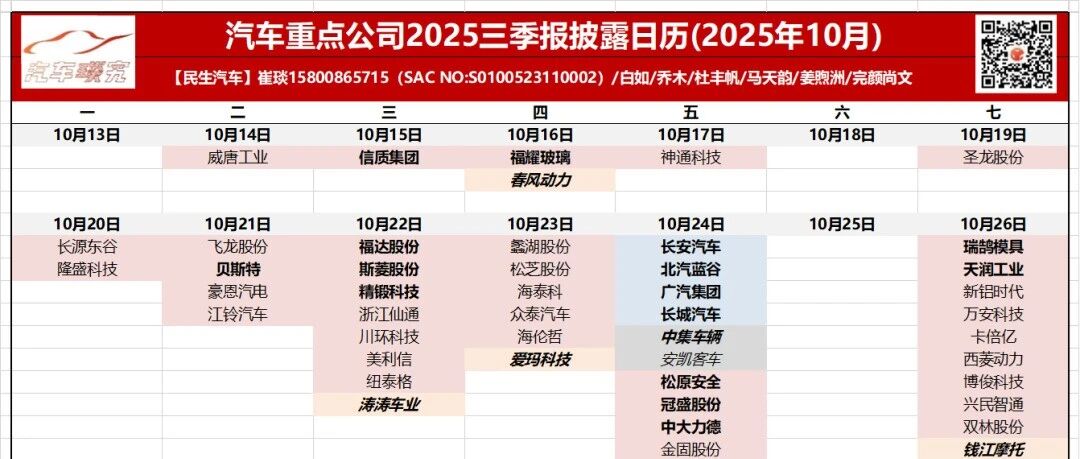
2025三季报来袭:汽车及零部件行业披露日历【民生汽车 崔琰团队】
汽车琰究· 2025-10-17 13:58
Core Viewpoint - The article provides a detailed calendar for the disclosure of third-quarter reports for key automotive companies in October 2025, highlighting the importance of these disclosures for investors and industry stakeholders [1]. Summary by Sections Disclosure Calendar - The calendar lists various automotive companies scheduled to release their third-quarter reports from October 13 to October 30, 2025, including notable firms such as Weitang Dingye, Xinzhi Group, and Chang'an Automobile [1]. - The final disclosure dates are subject to the actual release by the companies, indicating the dynamic nature of financial reporting in the automotive sector [2]. Industry Focus - The article emphasizes the ongoing transformation in the automotive industry, particularly focusing on the four key trends: intelligence, electrification, globalization, and high-end development [6]. - It highlights the potential investment opportunities arising from these trends, suggesting a significant shift in the automotive landscape that could reshape industry dynamics over the next decade [16].





政企恳谈共绘发展新篇 一批重大项目现场签约——2025投资淮安金秋经贸恳谈会开幕
Sou Hu Cai Jing· 2025-10-16 08:55
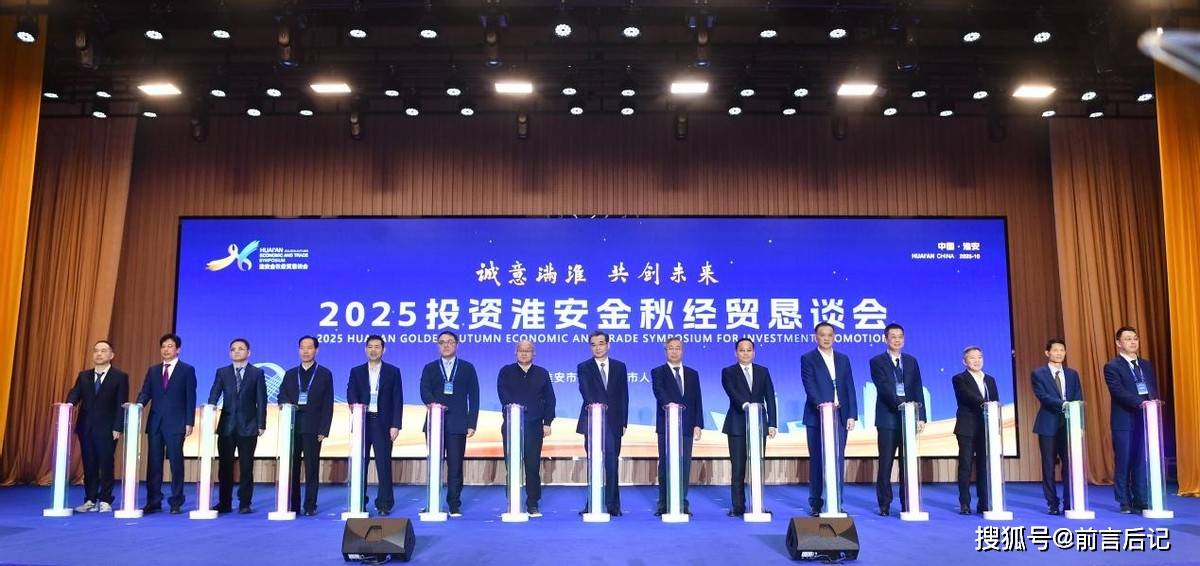
Core Insights - The 2025 Investment Huai'an Golden Autumn Economic and Trade Conference was held on October 16, showcasing Huai'an's commitment to open cooperation and development [2][5] - Huai'an's GDP has shown a steady growth rate of 7.1% on average over the past four years, with a growth rate of 6.8% in the first half of this year, ranking first in the province [5][6] - The city has received national recognition for 37 reform experiences and has been awarded titles such as "World Food Capital" and "National Healthy City Model City," indicating an upgrade in public welfare [5][6] Economic Development - Huai'an is experiencing a robust economic performance with 16 out of 20 major economic indicators ranking in the top three in the province from January to August [5][6] - The city is focusing on industrial development, with 52 industrial projects worth over 3 billion yuan under construction, and a significant increase in specialized enterprises [6][8] Strategic Advantages - Huai'an benefits from strategic opportunities such as the integration of the Yangtze River Delta and the Grand Canal Cultural Belt, supported by a comprehensive transportation network including high-speed rail and an international airport [6][7] - The local government has established mechanisms to enhance trust and cooperation with enterprises, leading to increased satisfaction among private businesses [6][7] Collaborative Initiatives - The conference emphasized the importance of sincere communication and service, aiming to align Huai'an's strategic plans with the development needs of enterprises [7] - Major projects in key industries such as new energy vehicles and advanced manufacturing were signed during the conference, indicating a commitment to high-quality development [8]




瑞银:若MSCI中国指数跌至74点 料引发资金逢低买入
Zhi Tong Cai Jing· 2025-10-13 07:17
Core Viewpoint - UBS's latest report on the Chinese stock market suggests that if the MSCI China Index declines to the 74-point level, the market may receive significant support, prompting investors to re-enter at lower prices. Currently, the MSCI China Index is around 85 points [1]. Group 1: Market Analysis - The MSCI China Index has rebounded approximately 36% since its low point following the escalation of the tariff war in April [1]. - The current market trend is highly similar to the situation in April, where the index attracted substantial capital inflow near the 74-point mark [1]. - UBS believes that the current valuations are attractive, and with rising policy expectations, market funds are likely to repeat the trend of buying on dips [1]. Group 2: Sector Performance - Sectors that performed poorly during the April sell-off but showed a significant rebound may face greater selling pressure this time, including data centers, internet, technology hardware, automotive and components, and biotechnology [1].
11天德国考察,我们有了消费和汽车电子新发现
芯世相· 2025-10-11 04:04
Core Insights - The article discusses the successful completion of a business study tour organized by Chip Superhero, focusing on the latest trends in the European electronics sector, particularly through participation in two major international exhibitions: IFA and IAA [1][2][4]. Group 1: IFA Berlin Consumer Electronics Show - The IFA is one of the oldest and largest consumer electronics and home appliances exhibitions globally, attracting over 1,900 exhibitors from 49 countries and 220,000 visitors this year [2]. - A significant highlight of this year's IFA was the increased integration of AI technologies into consumer electronics, moving beyond conceptual and entertainment applications to practical implementations [2]. - Chinese companies showcased a strong presence at the exhibition, with enhanced product capabilities and substantial brand advertising, indicating a robust global ambition [2]. - Due to tariff policies and intensified competition, more brands opted to launch new technologies and products at IFA rather than CES this year [2]. Group 2: IAA Munich International Motor Show - The IAA, one of the world's top five auto shows, focused on mobility, sustainability, and technological innovation, featuring 748 exhibitors from 37 countries [4]. - Major German automakers like Volkswagen, BMW, and Mercedes-Benz maintained a strong presence, while over 100 Chinese companies participated, covering various sectors including complete vehicles, power batteries, autonomous driving, and smart cockpits [4]. - Japanese and Korean suppliers were notably active, with companies like Samsung, SK On, and Denso showcasing their latest technologies to accelerate their expansion in the European market [4]. - The exhibition saw a shift from a focus on components to a more significant presence of complete vehicles, with many Chinese brands displaying multiple models, creating a lively atmosphere reminiscent of the Shanghai Auto Show [4]. Group 3: Local Networking Activities - The tour included in-depth discussions with local industry professionals, including chip traders, automotive supply chain personnel, and scholars, facilitating valuable exchanges on market dynamics and challenges faced by Chinese brands abroad [11][12]. - Topics of discussion included the performance of Chinese automotive brands in overseas markets, compliance and policy challenges, and the necessity for effective marketing strategies to enhance brand recognition [12]. - The interactions aimed to foster future collaborations and address the complexities of entering and succeeding in international markets [11][12]. Group 4: Cultural and Historical Exploration - The tour also included visits to significant cultural and historical sites in Germany, such as the BMW Museum and the Munich Palace, enriching the participants' understanding of German automotive heritage and design [13].