玩具

Search documents
未知机构:恒生指数上涨15恒生中国企业指-20260210
未知机构· 2026-02-10 02:20
Summary of Conference Call Records Industry Overview - The Hang Seng Index increased by 1.5%, the Hang Seng China Enterprises Index rose by 1.2%, and the Hang Seng Tech Index went up by 1.0%, with a total trading volume of HKD 13.6 billion [1][1][1] - Southbound funds recorded a net inflow of USD 164 million [1][1][1] - Leading sectors included materials, which rose by 2.8%, financials up by 2.3%, and healthcare up by 1.9% [1][1][1] - Underperforming sectors were consumer staples and utilities, both up by 0.2%, while telecommunications fell by 1.3% [1][1][1] Market Sentiment - The Hong Kong market showed strong trading performance, with materials and healthcare sectors leading the gains [1][1][1] - Despite low nominal amounts, southbound investors made net purchases, while the CSI 300 Index increased by 1.4%, indicating strong performance [1][1][1] - Trading volumes in Hong Kong and mainland markets were below the 20-day average, suggesting cautious investor sentiment ahead of the upcoming Chinese New Year holiday [1][1][1] - The market's strength was attributed to a technical rebound in the US stock market following three days of sell-off [1][1][1] Sector Performance - In the Asian market, the AI sector performed notably well, while the liquor and banking sectors lagged but still showed gains, with the Goldman Sachs China Liquor Index down by 0.3% and the Goldman Sachs China Banking Index up by 0.3% [2][2][2] - Notable performing sectors included the Goldman Sachs China AI Index, which rose by 5.5%, the AI-generated content index up by 4.9%, and the solar energy index up by 4.5% [2][2][2] - Trading flows indicated a shift towards defensive sectors and "safe haven" assets as investors prepared for the holiday [2][2][2] - The materials sector saw gains due to technical support from base metals following the market rebound [2][2][2] Individual Stock Highlights - Innovent Biologics rose by 5.6% after announcing a strategic partnership with Eli Lilly, marking their largest collaboration to date worth USD 8.5 billion [2][2][2] - Pop Mart International increased by 5.1%, with its founder reporting that Labubu's sales exceeded 10 million units last year, with the stock price reaching HKD 256, breaking a one-month resistance level [2][2][2] - Kuaishou fell by 4.3% due to a fine of CNY 119.1 million imposed by Beijing's internet regulator for failing to curb illegal content dissemination [3][3][3] - Short interest in Kuaishou rose to 7.1% of the float [3][3][3] Underperforming Stocks - Energy and telecommunications stocks lagged, with China Telecom down by 2.4% due to unmet targets last year, and China Mobile down by 1.6% following a downgrade from brokers [4][4][4] - The consumer staples sector also showed poor performance [4][4][4]
未知机构:交易台高盛香港午间市场简报市场数据概览恒生-20260210
未知机构· 2026-02-10 02:15
Summary of Key Points from Conference Call Records Industry Overview - The reports primarily focus on the Hong Kong market and specific sectors such as materials, healthcare, AI, and telecommunications [1][2][4]. Market Performance - The Hang Seng Index increased by 1.5%, the Hang Seng China Enterprises Index rose by 1.2%, and the Hang Seng Technology Index went up by 1.0%, with a total trading volume of HKD 13.6 billion [1]. - Southbound funds recorded a net inflow of USD 164 million, indicating positive investor sentiment despite lower nominal amounts [1]. - The materials sector led the market with a 2.8% increase, followed by the financial sector at 2.3% and healthcare at 1.9% [1]. Sector Analysis Materials Sector - The materials sector saw a rise due to technical support from base metals following a market rebound [2]. - Notable stock movements included: - Innovent Biologics increased by 5.6% after announcing a strategic partnership with Eli Lilly, valued at USD 8.5 billion, marking their largest collaboration to date [2]. - Pop Mart International rose by 5.1%, with its founder reporting over 10 million units sold of the Labubu product last year [2]. AI Sector - The AI sector performed exceptionally well, with the Goldman Sachs China AI Index up by 5.5% and the AI-generated content index up by 4.9% [2]. Telecommunications Sector - Telecommunications stocks lagged, with China Telecom down by 2.4% due to unmet targets and China Mobile down by 1.6% following a downgrade from brokers [4]. Trading Trends - Overall market sentiment showed a shift towards defensive sectors and "safe haven" assets as investors prepared for the upcoming Chinese New Year holiday [2]. - There was a mixed trading approach in consumer stocks, with purchases in apparel and sales in toy and education technology stocks [2]. Individual Stock Performance - Kuaishou's stock fell by 4.3% due to regulatory penalties amounting to CNY 119.1 million for failing to control illegal content dissemination [3]. - Short interest in Kuaishou increased to 7.1% of its float, indicating growing bearish sentiment [3]. Conclusion - The Hong Kong market displayed resilience with significant sector performances, particularly in materials and AI, while telecommunications and certain consumer sectors faced challenges. The upcoming holiday period is influencing trading strategies, with a cautious approach observed among investors [1][2][4].
滚动更新丨沪指涨0.11%,短剧游戏板块涨幅居前
Di Yi Cai Jing· 2026-02-10 01:41
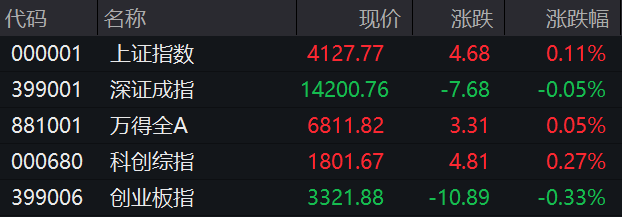
Market Overview - The Shanghai Composite Index increased by 0.11%, while the Shenzhen Component Index decreased by 0.05%, and the ChiNext Index fell by 0.33% [1][3] - The opening of the A-shares saw mixed performance among the three major indices, with the Shanghai Composite Index up by 4.68 points to 4127.77 [4] New Stock Listings - Three new stocks were listed today, with N Electric Science rising by 750.05% at opening, N Aide increasing by 225.95%, and N Linping up by 66.61% [2] Sector Performance - The short drama game sector showed significant gains, while the photovoltaic and retail sectors experienced weakness [3] - The Hong Kong market saw the Hang Seng Index rise by 0.65%, with notable increases in stocks such as Alibaba and SMIC, both up over 1% [5]

港股开盘:恒指涨0.65%、科指涨0.82%,科网股、有色金属及汽车股走高,新消费概念股走势分化,乐欣户外IPO首日高开逾96%
Jin Rong Jie· 2026-02-10 01:34
Market Overview - The Hong Kong stock market opened higher on February 10, with the Hang Seng Index rising by 0.65% to 27,202.96 points, the Hang Seng Tech Index up by 0.82% to 5,461.96 points, and the National Enterprises Index increasing by 0.64% to 9,226.56 points [1] - Major technology stocks saw gains, with Alibaba up 1.14%, Tencent Holdings up 0.54%, JD Group up 1.2%, Xiaomi up 0.85%, NetEase up 2.35%, and Kuaishou up 1.01% [1] - The new consumption concept stocks showed mixed results, with Pop Mart rising over 2% and Weilon falling over 2% [1] Corporate News - Pop Mart (09992.HK) expects global sales of all IP products to exceed 400 million units by 2025, with THE MONSTERS product line projected to sell over 100 million units [2] - Youjia Innovation (02431.HK) has secured a contract with a leading domestic automotive brand to provide several key products, including the iPilot 4 Plus driving controller and driver monitoring systems [2] - Ruifeng New Energy (00527.HK) signed an investment framework agreement to build the largest inference computing cluster park in North China, with a total investment of approximately RMB 240 billion [2] Earnings Forecasts - Hong Kong Telecom (06823.HK) reported a 5% increase in total revenue to HKD 36.553 billion for 2025, with EBITDA growing by 4% to HKD 14.234 billion and net profit attributable to shareholders increasing by 4% to HKD 5.286 billion [4] - China Nuclear International (02302.HK) anticipates revenue for 2025 to exceed HKD 2.46 billion, with gross profit expected to reach at least HKD 260 million, driven by increased uranium trading volumes [4][6] - Mingyuan Cloud (00909.HK) expects a net profit of approximately HKD 26.9 million to HKD 32.8 million for 2025, representing a growth of about 114% to 117% [4] - China Oriental Education (00667.HK) forecasts a 46% to 51% increase in net profit for 2025 [5] Market Dynamics - Several companies are actively repurchasing shares to boost market confidence, including Xiaomi Group-W (01810.HK), which repurchased 1.5 million shares for HKD 52.7268 million, and Geely Automobile (00175.HK), which repurchased 1.408 million shares for HKD 23.4587 million [8] - China Smart Energy (01004.HK) announced a share consolidation effective February 10, pending approval from the Stock Exchange [8] Institutional Insights - Galaxy Securities noted a significant "Spring Festival effect" in the Hong Kong market, with optimistic market sentiment and early capital positioning [10] - Dongwu Securities indicated that while short-term challenges remain, the market should be monitored for overseas risks and domestic AI catalysts [10] - Bank of China International believes that after the recent negative factors have subsided, market sentiment is at a low point, with potential rebounds in the AI multi-modal industry chain [10]
快讯:恒指高开0.65% 科指涨0.82% 科网股普涨 有色金属板块高开 乐欣户外首日高开逾96%
Xin Lang Cai Jing· 2026-02-10 01:25
Group 1 - The US stock market showed positive performance on Monday, with strong gains in technology stocks leading to a rebound in the major indices, all of which closed higher [1][4] - The US dollar significantly declined, while the yield on the 10-year Treasury remained at 4.2%, with gold prices continuing to rebound and oil prices also performing well [1][4] Group 2 - The Hong Kong stock market opened higher across all three major indices, with the Hang Seng Index rising by 0.65% to 27,202.96 points, the Hang Seng Tech Index increasing by 0.82%, and the National Enterprises Index up by 0.64% [2][5] - Technology stocks in Hong Kong saw widespread gains, with NetEase rising over 2%, and Kuaishou, JD.com, and Alibaba each increasing by over 1% [1][4] - The non-ferrous metals sector opened higher, with Zijin Mining gaining over 2% [1][4] - New consumption concept stocks showed mixed results, with Pop Mart rising over 2% while Wei Long fell over 2% [1][4] - Automotive stocks were active, with BYD increasing by over 1% [1][4] - Two new stocks were listed today, with Lexin Outdoor opening up over 96% and Aixin Yuan Zhi opening flat [1][4]
毛绒玩具“玩”升级——AI玩具产业发展调查
Zheng Quan Ri Bao· 2026-02-09 16:14
Core Insights - The AI toy industry is experiencing significant growth, driven by emotional interaction and advanced technology, particularly in Yiwu, China, which has become a global hub for smart toys [1][2][7][10]. Group 1: Industry Trends - The demand for AI toys has surged, with a 125% increase in search queries on e-commerce platforms like JD.com during the New Year shopping season [2]. - AI toys are evolving from traditional playthings to emotional companions, catering to both children and adults, thus expanding their market reach [2][4]. - The global market for AI toys is projected to exceed 100 billion yuan by 2030, with a compound annual growth rate of over 50% [10]. Group 2: Technological Advancements - AI toys have undergone multiple iterations, improving their interaction capabilities significantly, allowing them to understand and respond to user emotions [3][5][6]. - The latest AI toys incorporate multi-modal sensing and offline content, enhancing emotional interaction with users [5][6]. - The integration of AI technology into traditional toy manufacturing is transforming the industry, shifting from a product-driven to a demand-driven approach [6]. Group 3: Market Dynamics - The export value of Yiwu toys reached 21.81 billion yuan in the first ten months of last year, with smart toys being a key growth driver [9]. - Companies are increasingly focusing on developing AI toys for international markets, adapting products to meet diverse cultural and consumer needs [7][8]. - The AI toy sector is attracting significant investment, with a notable increase in funding events and amounts in recent years, indicating strong market interest [10][11]. Group 4: Consumer Insights - The primary consumers of AI toys are children, but there is a growing interest among young adults seeking emotional companionship [15][17]. - There is an emerging market for AI toys tailored to the elderly, addressing their emotional and entertainment needs [15][17]. - Consumers are looking for AI toys that offer rich interactive experiences, combining various sensory inputs beyond just voice interaction [15][16].
港股收盘|恒指涨1.76% 泡泡玛特涨逾5%
Di Yi Cai Jing· 2026-02-09 10:49
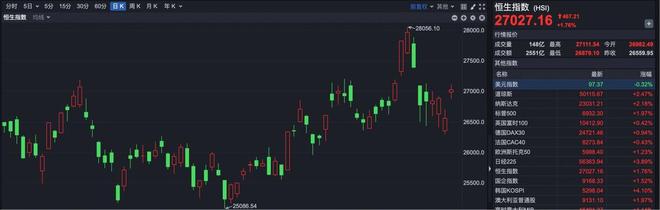
恒指报收27027.16点,涨1.76%,恒生科技指数报收5417.6点,涨1.34%,泡泡玛特、紫金矿业涨逾5%, 中芯国际、中国平安涨逾4%,中国人寿、华虹半导体、百度集团涨逾3%。(AI生成) 恒指报收27027.16点,涨1.76%,恒生科技指数报收5417.6点,涨1.34%,泡泡玛特、紫金矿业涨逾5%, 中芯国际、中国平安涨逾4%,中国人寿、华虹半导体、百度集团涨逾3%。(AI生成) ...

轻工纺服行业周报:春节消费催化需求释放,AI玩具渗透率有望提升
Huaan Securities· 2026-02-09 10:35
Investment Rating - The industry investment rating is "Hold" [1] Core Insights - The report highlights that the demand for AI toys is expected to increase due to the upcoming Spring Festival, with AI toys becoming a new choice on the "New Year goods list" [4][23] - AI toys are transitioning from traditional electronic and educational toys to "smart companion terminals," with significant growth potential in the Chinese market, which is currently in the early stages of penetration [19][20] - The report predicts that the AI toy market in China could exceed 70 billion yuan by 2030, supported by advancements in AI technology and favorable local policies [19][21] Summary by Sections Weekly Special Report - The report discusses the release of demand catalyzed by the Spring Festival, emphasizing the potential for increased penetration of AI toys in the market [3][4] - AI toys are gaining popularity as they offer interactive features that appeal to children, making them suitable for gifting during the festive season [23][25] Weekly Market Review - From February 2 to February 6, 2026, the Shanghai Composite Index fell by 1.27%, while the ShenZhen Component Index and the ChiNext Index dropped by 2.11% and 3.28%, respectively [31] - The light industry manufacturing index rose by 0.96%, ranking 9th among 31 industry indices, while the textile and apparel index increased by 1.32%, ranking 7th [31] Key Data Tracking Home Furnishing - In the week of January 25 to February 1, 2026, the transaction area of commercial housing in 30 major cities was 1.5129 million square meters, a month-on-month increase of 24.93% [8] - The report notes a decline in residential construction and sales for the year 2025, with new construction area down by 19.8% year-on-year [8] Packaging and Paper - As of February 6, 2026, the prices for various paper products showed slight fluctuations, with white cardboard priced at 4,269 yuan per ton, remaining stable [51] - The report indicates that the industry may see improvements due to reduced competition and production cuts by leading companies [13] Textile and Apparel - The cotton price index in China was reported at 16,025 yuan per ton, reflecting a week-on-week decrease of 0.98% [10] - Retail sales for clothing and textiles in December 2025 were 166.1 billion yuan, showing a year-on-year increase of 0.6% [12]

广东21地市GDP出炉:佛山和汕头名义增速负增长
Sou Hu Cai Jing· 2026-02-09 10:30
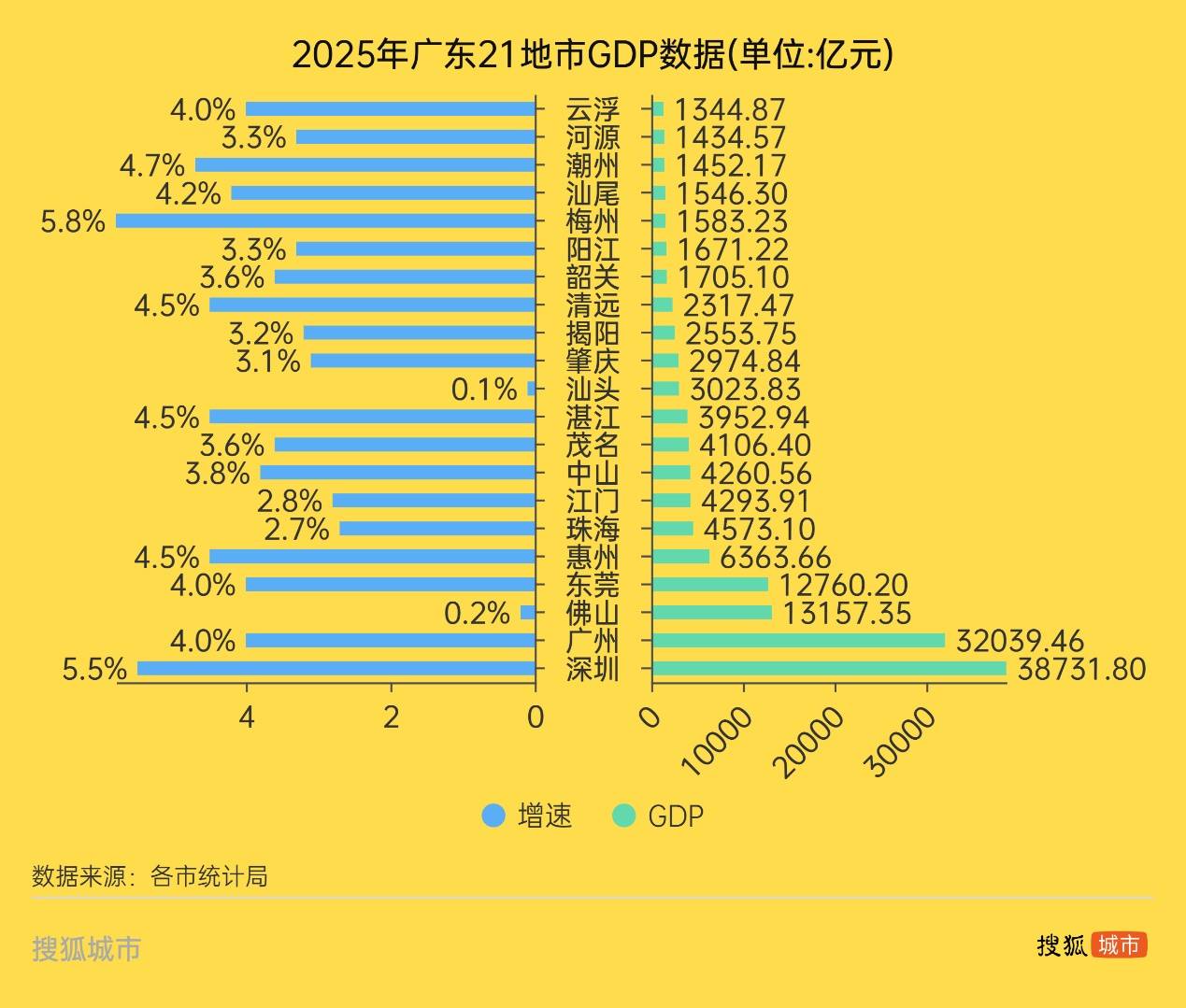
Economic Overview - Guangdong's GDP for 2025 is projected at 14,584.68 billion yuan, with a growth rate of 3.9%, lower than the national average of 5% [1][13] - Among the 21 cities in Guangdong, only Shenzhen (5.5%) and Meizhou (5.8%) outperformed the national growth rate, while 11 cities fell below the provincial average [1][3] City Performance - Meizhou leads the province with a growth rate of 5.8%, driven by strong performance in high-tech manufacturing, with industrial output increasing by 8.6% [5][10] - Shantou and Foshan reported minimal growth rates of 0.1% and 0.2%, respectively, with Shantou experiencing negative nominal growth [5][8] - The economic performance of cities like Zhuhai, Jiangmen, and Zhongshan is hindered by declining fixed asset investments, with decreases of 25.6% and 22.6% respectively [3][4] Industrial Insights - The industrial performance of cities correlates with economic growth, with cities like Zhanjiang showing a 10.7% increase in industrial output, supported by green petrochemicals and modern agriculture [4] - In contrast, Shantou's second industry saw a decline of 7.3%, indicating structural issues in its economy [5][8] Economic Challenges - Guangdong has faced challenges with its GDP growth consistently falling below expectations for four consecutive years, attributed to a declining real estate market and pressures from industrial restructuring [11][13] - The province's economic growth target for 2026 is set between 4.5% and 5%, with a focus on enhancing the Guangdong-Hong Kong-Macao Greater Bay Area [13]
港股复盘|港股反弹 泡泡玛特创三个月新高 南向资金小规模撤离
Mei Ri Jing Ji Xin Wen· 2026-02-09 09:29
Market Overview - The Hong Kong stock market experienced a rebound on February 9, with the Hang Seng Index closing at 27,027.16 points, up 467.21 points, a rise of 1.76% [2] - The Hang Seng Tech Index closed at 5,417.60 points, increasing by 71.40 points, a gain of 1.34% [4] Company Highlights - Pop Mart (HK09992) saw its stock rise over 8% during the day, closing up more than 5%, reaching a three-month high [6] - Citic Securities released a report on Pop Mart, stating that the company has established a "one strong, multiple strong" IP pattern, with Labubu's influence solidified and new IPs like Starry People and Crybaby driving high growth. The plush product category's production capacity is expected to exceed five times that of 2025 by 2026, with significant expansion opportunities in South America and the Middle East [7] - Zijin Mining (HK02899) also rose over 5% [8] - Zijin Mining announced its three-year (2026-2028) production planning, projecting gold production of 105 tons, copper production of 1.2 million tons, silver production of 520 tons, and lithium carbonate equivalent production of 120,000 tons by 2026. The company aims to rank among the top three globally in copper and gold production by 2028 [10] Sector Performance - Electric equipment stocks were strong throughout the day, with Dongfang Electric (HK01072) rising over 14% [11] - In the tech sector, Baidu rose over 3%, Tencent over 2%, and Alibaba and NetEase both increased by over 1%, while Kuaishou fell over 2% [12] Investment Trends - Southbound funds recorded a net sell of HKD 1.887 billion after a significant buying spree the previous week [12] - Dongwu Securities noted that the Hang Seng Tech Index had a poor performance last week, dropping 6.5%, the worst since November 2025, influenced by concerns over overseas AI capital expenditure and tech stock corrections [15] - The total scale of ETFs directed towards Hong Kong stocks from the mainland has increased to HKD 423.2 billion, with TMT, technology, manufacturing, and pharmaceuticals being the main sectors for fund inflows [15] - The amount of stock buybacks in Hong Kong increased by HKD 3.2 billion to HKD 4.3 billion, and IPO scale rebounded to HKD 27 billion, indicating a marginal improvement in corporate confidence [15]