
货运

Search documents
透视多维度数据感知中国活力 “数”说经济高质量发展澎湃动能
Yang Shi Wang· 2025-11-29 03:54
Economic Overview - The transportation sector in China has shown a stable and progressive development trend in the first ten months of the year, according to the Ministry of Transport [1][7] - Fixed asset investment in transportation reached 2.95 trillion yuan, maintaining a high level [3] Freight and Passenger Movement - The total freight volume reached 48.29 billion tons, marking a year-on-year increase of 3.5% [5] - Cross-regional passenger flow reached 56.88 billion person-times, with a year-on-year growth of 3.6% [5] Port Activity - Port cargo throughput increased to 15.13 billion tons, reflecting a year-on-year growth of 4.3% [5] - Container throughput at ports reached 29 million TEUs, with a year-on-year increase of 6.4% [5] Logistics Sector Performance - The total social logistics value for the first ten months was 29.37 trillion yuan, up 5.1% year-on-year [8] - Industrial product logistics value grew by 5.3%, driven by strong demand in equipment manufacturing and high-end manufacturing sectors [10] - Logistics revenue for the industry increased by 4.5% year-on-year, indicating ongoing structural adjustments [10] E-commerce and New Business Models - Online retail of physical goods has outpaced digital product retail growth, highlighting stable demand in e-commerce logistics [12] - New business models such as instant retail and live e-commerce are experiencing robust growth, contributing to logistics demand [10] Smart Manufacturing Initiatives - The first batch of leading smart factories was announced, indicating a shift towards intelligent manufacturing [14] - These factories are expected to drive innovation and transform production methods across various industries [14] IoT and Digital Economy Growth - China's IoT connections are projected to exceed 3.5 billion this year, with significant investments in related infrastructure [17][20] - The traditional digital economy's annual output value is expected to surpass 80 trillion yuan, with over 1.2 million enterprises meeting advanced digital economy conditions [20] Internationalization of Private Enterprises - The internationalization of private enterprises is expanding, with overseas revenue projected to reach 5.215 trillion yuan in 2024, a nearly 12% increase [24] - The export value of internationalized private enterprises is expected to exceed 3.283 trillion yuan, growing over 10% [24] Foreign Exchange Market Activity - In October, China's foreign exchange market recorded a total turnover of 21.97 trillion yuan, with cumulative turnover for the year reaching 252.07 trillion yuan [26][27]

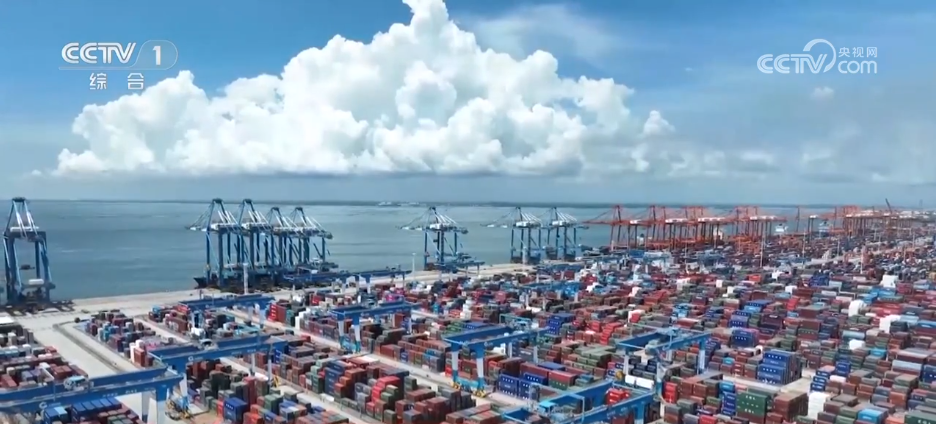
今年前10个月我国交通运输经济运行稳中有进
Yang Shi Wang· 2025-11-28 11:49
Core Insights - The overall transportation economy in China has shown a stable and progressive development trend in the first ten months of the year [1] Investment and Economic Performance - Fixed asset investment in transportation remains high, reaching 2.95 trillion yuan [1] - The total freight volume completed in the first ten months was 48.29 billion tons, reflecting a year-on-year growth of 3.5% [1] - Cross-regional personnel flow has also been robust, with a total of 56.88 billion person-times, marking a year-on-year increase of 3.6% [1] Port Operations - Port throughput has experienced significant growth, with a total cargo throughput of 15.13 billion tons, up 4.3% year-on-year [1] - The container throughput at ports reached 29 million TEUs, representing a year-on-year increase of 6.4% [1]
前10个月我国交通出行人数达568.8亿人次
Xin Hua She· 2025-11-28 11:30
货运量保持增长。1至10月,我国完成营业性货运量482.9亿吨,同比增长3.5%。其中,完成公路货运量 356.2亿吨,同比增长3.6%;完成水路货运量82.9亿吨,同比增长3.5%。 交通固定资产投资规模维持高位。1至10月,我国完成交通固定资产投资2.95万亿元。其中,公路、水 运分别完成投资2.01万亿元和1761亿元。 新华社北京11月28日电(记者叶昊鸣)记者28日从交通运输部获悉,1至10月,我国跨区域人员流动量 达568.8亿人次,同比增长3.6%。 港口集装箱吞吐量增长较快。1至10月,我国完成港口货物吞吐量151.3亿吨,同比增长4.3%。其中, 内、外贸吞吐量同比分别增长4.6%和3.7%。完成集装箱吞吐量2.9亿标箱,同比增长6.4%。 (文章来源:新华社) ...
货拉拉CTO张浩:AI的胜负手,不在基础模型,而在「应用场」
Sou Hu Cai Jing· 2025-11-28 10:30
Core Insights - The WISE 2025 Business King Conference aims to anchor the future of Chinese business amidst uncertainty, focusing on the intersection of technology and business narratives [1] - The conference features immersive experiences and discussions on AI's impact across various industries, emphasizing the importance of practical applications and real-world insights [1][4] Company Overview - Huolala, founded in Hong Kong and operating in over 400 cities globally, has 20 million active users and 2 million active drivers, focusing on matching cargo owners with drivers [7] - The company has been exploring AI applications since the emergence of ChatGPT, prioritizing areas where AI can enhance operational efficiency and user experience [7][8] AI Implementation - Huolala identified high-priority areas for AI deployment, including business safety, research and development, product, and operations, based on a 2023 Goldman Sachs report [8] - The company shifted focus from developing foundational AI models to creating its own AI application platforms, resulting in the development of three key platforms: Dolphin, Wukong, and Evaluation Labeling [10][14] Platform Features - The Wukong platform allows non-professionals to build basic enterprise intelligent applications quickly, featuring visual process orchestration and zero-code construction [13] - The Dolphin platform is designed for algorithm developers, streamlining the entire process from data training to model lifecycle management [14] AI Applications and Innovations - AI has been utilized for real-time safety monitoring in freight transport, reducing risk order volume by 30% and achieving a 100% order reminder rate [16] - AI Coding has been integrated into 90% of individual and team workflows, covering 60% of the development process, although it currently only improves efficiency by about 10% [18][19] Cost Savings and Efficiency - The company has implemented AI to optimize SMS communications, resulting in a 12% cost reduction while enhancing risk compliance [22] - AI-driven user feedback analysis has improved the identification of user concerns, leading to more responsive service adjustments [20][21] Future Directions - The company aims to enhance its AI capabilities through multi-modal models and improve user experience with end-to-end digital assistants for various operational tasks [26]

前10月我国完成跨区域人员流动量568.8亿人次
Ren Min Ri Bao· 2025-11-28 07:32
Core Insights - The overall economic operation of China's transportation sector remains stable, with all major indicators showing growth in the first ten months of the year [1] Freight Volume - From January to October, the total operating freight volume reached 482.9 billion tons, representing a year-on-year increase of 3.5% [1] - Road freight volume accounted for 356.2 billion tons, with a growth of 3.6% year-on-year [1] - Waterway freight volume was 82.9 billion tons, also showing a year-on-year increase of 3.5% [1] Port Cargo Throughput - Port cargo throughput grew significantly, totaling 151.3 billion tons from January to October, which is a 4.3% increase year-on-year [1] - Domestic and foreign trade throughput increased by 4.6% and 3.7% respectively [1] - Container throughput reached 29 million TEUs, marking a year-on-year growth of 6.4% [1] Passenger Flow - The cross-regional passenger flow reached 568.8 billion person-times from January to October, with a year-on-year increase of 3.6% [1] - Road passenger flow accounted for 520.6 billion person-times, growing by 3.4% year-on-year [1] - In October alone, the cross-regional passenger flow was 62.8 billion person-times, reflecting a significant year-on-year increase of 7.7% [1] Fixed Asset Investment - Transportation fixed asset investment remained high, totaling 2.95 trillion yuan from January to October [1] - Investment in road and water transport reached 2.01 trillion yuan and 176.1 billion yuan respectively [1]
国泰海通:消费景气线索增多 科技制造延续增长
Zhi Tong Cai Jing· 2025-11-27 22:44
Core Insights - The report from Guotai Junan indicates an increase in consumer sentiment and continued growth in the technology manufacturing sector, with notable trends in various industries [1] Consumer Sector - Domestic demand indicators are improving, with tourism and long-distance travel showing continuous recovery, suggesting a shift towards service-oriented and mass consumer goods consumption despite a contraction in real estate and durable goods [1] - Real estate transactions in 30 major cities saw a year-on-year decline of 25.8%, with first, second, and third-tier cities experiencing declines of 49.8%, 12.6%, and 22.3% respectively; the sales volume in major cities continues to struggle [1] - Durable goods consumption remains under pressure, with average daily retail sales of passenger cars declining year-on-year; in October, domestic sales and exports of air conditioners fell by 21.3% and 19.0% respectively [1][2] Technology & Manufacturing - The technology hardware sector is experiencing marginal growth slowdown, influenced by AI infrastructure investments; however, the overall sentiment remains strong, with October's PCB exports increasing by 23.4% year-on-year, despite a decline in growth rate [3] - Construction demand is still weak, with slight recovery in steel prices due to reduced operating rates of blast furnaces; prices for glass and cement continue to be under pressure [3] - The new energy lithium battery sector remains robust, with a year-on-year increase in power battery sales of 49.9% from January to October, while prices for lithium hexafluorophosphate and lithium carbonate continue to rise [3] Logistics & Transportation - Long-distance travel demand has improved significantly, with the Baidu migration index showing a month-on-month increase of 3.8% and a year-on-year increase of 18.0%; airline passenger load factors are high, indicating a recovery in business and tourism travel [4] - Freight logistics have seen a month-on-month decline, with highway truck traffic and railway freight volumes decreasing by 2.2% and 0.3% respectively; postal and express delivery volumes also fell significantly post "Double Eleven" [4] - Maritime transport prices for dry bulk and oil have risen sharply, driven by increased demand from iron ore and crude oil production [5]

国泰海通|策略:消费景气线索增多,科技制造延续增长——中观景气11月第5期
国泰海通证券研究· 2025-11-27 14:14
Core Viewpoint - The article highlights a differentiated growth pattern in the macroeconomic landscape, with strong performance in emerging technologies, ongoing price increases in TMT hardware and lithium battery materials, and improvements in tourism and travel, while demand for durable goods in real estate remains under pressure [1]. Group 1: Downstream Consumption - Real estate transactions in 30 major cities saw a year-on-year decline of 25.8%, with first, second, and third-tier cities experiencing declines of 49.8%, 12.6%, and 22.3% respectively [2]. - Durable goods consumption continues to show signs of overextension, with daily retail sales of passenger cars still declining year-on-year [2]. - Tourism consumption prices in Hainan increased by 4.2% month-on-month, indicating a sustained improvement in tourism [2]. Group 2: Technology & Manufacturing - The TMT hardware sector continues to show strong performance driven by AI infrastructure investment, although growth momentum is slightly slowing [3]. - The construction demand remains weak, with a slight rebound in steel prices due to a decrease in high furnace operating rates [3]. - The lithium battery industry remains robust, with a year-on-year increase in power battery sales of 49.9% from January to October, and prices of hexafluorophosphate lithium and lithium carbonate continue to rise [3]. Group 3: Upstream Resources - Coal prices remain high due to supply constraints and strong heating and electricity demand [3]. - Industrial metal prices have declined amid fluctuations in overseas interest rate expectations [3]. Group 4: Passenger and Freight Logistics - Long-distance travel demand has improved significantly, with the Baidu migration index increasing by 3.8% month-on-month and 18.0% year-on-year [4]. - Freight logistics have seen a decline, with nationwide highway truck traffic and railway freight volume decreasing by 2.2% and 0.3% respectively [4]. - Shipping prices for dry bulk and oil have risen significantly, driven by increased demand from iron ore and crude oil production [4].

美国年末进口预计大幅放缓 是疲软“新常态”还是暂时调整?
Di Yi Cai Jing· 2025-11-23 10:29
Core Viewpoint - The U.S. is expected to see a significant slowdown in import volumes during the traditional holiday shopping season, with predictions of declines in container imports for November and December compared to the previous year [1][2]. Import Volume Trends - The National Retail Federation (NRF) forecasts a decline of 14.4% and 17.9% in container imports for November and December, respectively [1]. - Vizion's real-time monitoring indicates a projected year-on-year drop of approximately 16.6% in December imports [1]. - C.H. Robinson predicts container import declines of 19.7% and 20.1% for the last two months of the year [1]. Demand and Economic Outlook - There are concerns about the weak demand in the U.S. market, with specific categories like furniture and toys showing significant declines in imports [1][2]. - The CEO of Vizion expressed deep concerns about the future of U.S. goods trade, suggesting that low demand has become the "new normal" in the freight market [1]. - The DAT's truck freight volume index indicates a simultaneous decline in rates for various truck types, reflecting the overall state of the goods economy [2]. Inventory and Supply Chain Adjustments - Many North American retailers have adjusted their ordering and inventory strategies, completing orders earlier to avoid congestion during peak seasons [3]. - The Port of Los Angeles reported a 6.3% year-on-year decrease in container volume for October, with expectations of further declines in November and December [3]. Capacity and Pricing Outlook - Container utilization rates have dropped from 100% to 91%, with a forecast of 2.19 million TEUs arriving in December 2025, down from 2.62 million TEUs the previous year [4]. - There are warnings of a potential long-term oversupply in shipping capacity, which could lead to significant adjustments in the freight market [5]. - Despite the current challenges, C.H. Robinson noted that shipping rates remain relatively high due to careful capacity management by shipping companies [5]. Future Projections - The Port of Long Beach's CEO anticipates a slight increase in imports before the Lunar New Year in February, but acknowledges the uncertainty in economic data [6]. - Overall, there is an expectation for container volumes to approach last year's record of 9.6 million TEUs, with moderate growth projected for 2026 depending on economic performance and tariff policies [6].
Why Is Knight-Swift (KNX) Down 5.3% Since Last Earnings Report?
ZACKS· 2025-11-21 17:31
Core Insights - Knight-Swift Transportation Holdings Inc. reported a miss on earnings for Q3 2025, with adjusted earnings of 32 cents per share, falling short of the Zacks Consensus Estimate of 38 cents and declining 5.8% year over year [3] - Total revenues for the quarter were $1.92 billion, exceeding the Zacks Consensus Estimate of $1.89 billion and showing a year-over-year improvement of 2.7% [3] Financial Performance - Total operating expenses increased by 4.5% year over year to $1.87 billion [4] - Truckload segment revenues were $1.08 billion, down 2.1% year over year, with adjusted segmental operating income falling 15% to $41.22 million [5] - The Less-Than-Truckload (LTL) segment saw revenues of $340.48 million, up 21.5% year over year, with adjusted segmental operating income increasing 10.1% to $32.05 million [6] - Logistics segment revenues amounted to $140.4 million, down 2.2% year over year, while adjusted operating income rose 1.9% to $8 million [7] - Intermodal revenues totaled $94.08 million, down 8.4% year over year, with a significant decrease in load count [8] Liquidity and Debt - Knight-Swift ended Q3 with cash and cash equivalents of $192.67 million, down from $216.32 million in the previous quarter, while long-term debt decreased to $1.05 billion from $1.39 billion [9] Guidance and Future Outlook - For Q4 2025, adjusted earnings per share are expected to be in the range of 34-40 cents, with the Zacks Consensus Estimate at 39 cents [10] - Truckload segment revenues are anticipated to remain stable, with operating margins expected to improve by 250-350 basis points sequentially [10] - LTL segment revenues are projected to grow between 10% and 15% year over year in Q4 2025 [11] - Net cash capital expenditures for 2025 are now expected to be between $475 million and $525 million, down from the previous guidance of $525 million to $575 million [13] Market Sentiment - There has been a downward trend in estimates, with the consensus estimate shifting down by 10.98% [14] - Knight-Swift currently holds a Zacks Rank of 5 (Strong Sell), indicating expectations of below-average returns in the coming months [16]


国泰海通:科技制造供需紧张 消费出行景气改善
智通财经网· 2025-11-19 13:09
Core Viewpoint - The report from Guotai Junan Securities highlights a tightening supply-demand situation in the technology manufacturing sector, alongside a marginal improvement in consumer and travel sentiment [1][2]. Consumer Sector - Essential consumer goods retail showed a notable recovery in October, with beverage, grain and oil, and tobacco and alcohol retail sales increasing by 7.1%, 9.1%, and 4.1% year-on-year respectively, likely driven by the "Double Festival" and "Double Eleven" shopping events [3] - Real estate and durable goods continue to face pressure, with transaction volume of new homes in 30 major cities down by 24.8% year-on-year, and significant declines in first, second, and third-tier cities [3] - Service consumption is improving, with the tourism price index in Hainan rising by 2.1% month-on-month and movie box office revenue increasing by 90.2% year-on-year due to new film releases [3] Technology & Manufacturing Sector - The electronic industry remains highly prosperous, with explosive growth in storage demand driven by AI, leading to continued price increases in memory chips [4] - The lithium battery industry is experiencing improved sentiment, with the price of lithium hexafluorophosphate continuing to rise significantly [4] - Construction demand remains weak, with seasonal factors impacting demand for building materials, leading to a subdued price environment for steel and construction materials [4] Resource Sector - Coal prices continue to rise due to supply constraints, with strong heating and electricity demand [5] - International metal prices have seen a slight increase, influenced by rising expectations of overseas interest rate cuts [5] Logistics Sector - Air passenger transport has improved, with long-distance travel demand increasing by 3.7% month-on-month and 14.5% year-on-year, indicating a recovery in business travel [5] - Freight logistics also show improvement, with national highway truck traffic and railway freight volume increasing by 2.6% and 0.2% respectively [5] - However, shipping prices continue to decline, and port throughput has decreased, reflecting fluctuations in export demand [5]