
高科技

Search documents
为何工业企业都在跨界
Jing Ji Guan Cha Wang· 2025-09-05 13:28
Core Viewpoint - The industrial sector is experiencing increasing cross-industry integration and collaboration, driven by electrification, supply chain fusion, and digitalization [2][3][4]. Group 1: Electrification and Industry Integration - The automotive industry is expanding into the low-altitude economy, such as eVTOL (electric vertical takeoff and landing aircraft), due to breakthroughs in battery power and automotive electronics [2]. - The boundaries between industries are being blurred, allowing for deep integration of high technology with the automotive sector [2]. Group 2: Supply Chain Fusion - eVTOL and automobiles share a common foundation as complex system integrations, with 70% of eVTOL's core components derived from the automotive supply chain [3]. - The development of flying cars involves leveraging automotive industry resources while adhering to high safety standards from the aviation sector [3]. Group 3: Digitalization and Agile Development - High-tech companies entering the automotive sector have introduced agility, enabling rapid product design, development, and iteration [4]. - Digital tools are essential for supporting the iterative process of product development, allowing for quick feedback and improvements [4]. Group 4: Software and Knowledge Digitalization - The digitalization and softwareization of industrial knowledge significantly lower the barriers for cross-industry collaboration [5]. - Dassault Systèmes is focused on "software defining industries," aiming to integrate best practices across various economic fields to create new growth opportunities [5]. Group 5: Future Development and Sustainability - The manufacturing industry is at a critical juncture of digital and intelligent integration, with a pressing need for generative innovation to drive future growth [5]. - Dassault Systèmes emphasizes the importance of AI-driven virtual twin technology to support clients in achieving digital transformation across the entire product lifecycle [5].



2025年全球百强创新集群排名 中国上榜集群数量连续三年世界第一
Yang Shi Xin Wen· 2025-09-05 09:07
Group 1 - The World Intellectual Property Organization (WIPO) has ranked 24 innovation clusters from China in its 2025 Global Top 100 Innovation Clusters list, marking the third consecutive year that China leads globally in this category [1] - In 2024, China's total R&D expenditure is expected to exceed 3.6 trillion yuan, representing a year-on-year growth of 8.3%, maintaining the second position globally, with an R&D intensity of 2.68%, surpassing the average level of EU countries [1] - By June 2025, the total number of valid invention patents in China is projected to reach 5.01 million, with 524,000 enterprises holding valid invention patents, highlighting the significant role of enterprises in innovation [1] Group 2 - The innovation clusters in China are playing a leading role in promoting the integration of innovation and industry, serving as a strong engine for high-quality regional economic and social development [2] - In the Guangdong-Hong Kong-Macao Greater Bay Area, the total number of invention patents authorized in 2024 is expected to reach 113,000, accounting for 12.1% of the national total, with PCT international patent applications reaching 19,000, representing 27.5% of the national total [2] - In the first half of this year, the PCT international patent applications from the three regions exceeded 10,000, showing a year-on-year growth of 30.7%, indicating a strong growth momentum in the innovation ecosystem [2]
美联储仍有望在9月开启降息,宽松环境或能延续
Xin Lang Ji Jin· 2025-09-03 08:33
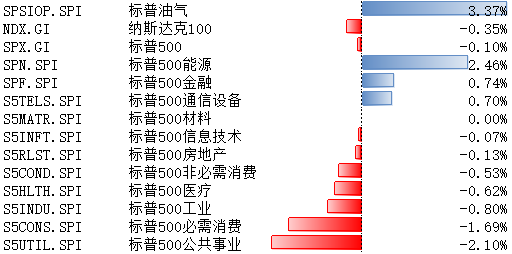
Macroeconomic Summary - The US July PCE increased by 2.6% year-on-year, consistent with expectations and previous values, while the month-on-month increase was 0.2%, lower than the previous 0.3% [1] - The core PCE for July rose by 2.9% year-on-year, matching expectations and slightly higher than the previous 2.8%, with a month-on-month increase of 0.3% [1] - Durable goods orders in July fell by 2.8% month-on-month, better than the expected decline of 3.8% and previous decline of 9.4%, while core durable goods orders excluding transportation rose by 1.1%, exceeding expectations of 0.2% [1] - New home sales in July decreased by 0.6% month-on-month, falling short of the expected 0.5% increase and previous 4.1% increase, totaling 652,000 units, which was better than the expected 630,000 units but lower than the previous 656,000 units [1] Index Performance - The S&P Oil & Gas Index rose by 3.37% over the week, while the Nasdaq 100 Index fell by 0.35% and the S&P 500 Index decreased by 0.10% [2][3] - Among the 11 sectors of the S&P 500, 3 sectors saw gains, with Energy leading at 2.46% and Utilities lagging at -2.10% [2][3] Investment Direction - The Q2 GDP revision in the US showed stronger-than-expected growth driven by business investment, leading to expectations of interest rate cuts by the Federal Reserve, which could catalyze a recovery trade [4] - Market expectations for rate cuts have slightly increased, with a probability of 86.6% for cuts starting in September [4] - The BoShi S&P 500 ETF (513500) is highlighted as a tool for domestic investors to capture growth in the US stock market, tracking the S&P 500 Index which covers over 500 representative companies [4]
以“科技牛”引领新周期 |《财经》社评
Sou Hu Cai Jing· 2025-09-02 00:19
Group 1 - The recent surge in the Chinese stock market has reached a ten-year high, prompting discussions on whether the current bull market will be a fast or slow one, with hopes for a stable and sustainable market to support economic recovery [3] - The technology sector has shown remarkable performance in this bull market, leading to the term "technology bull" being used to describe the current market dynamics, indicating a shift in investment preferences and a sign of successful economic transformation [3][4] - There is a call for investors to actively support the technology sector, emphasizing the need for a technology bull market to fuel the growth of leading Chinese tech companies and to foster long-term investment strategies [4] Group 2 - The growth of the Chinese technology industry is expected to revitalize related manufacturing capacities, suggesting that seemingly excess capacity can be effectively utilized in new business models, thus providing a solution to internal competition issues [5] - The interaction between high-tech companies and traditional manufacturing industries is crucial for mutual growth, with high-tech firms leveraging their financial strength to acquire traditional industries, while traditional firms can invest in tech startups to enhance their capabilities [5] - A sustained technology bull market is anticipated to create a wealth effect that will stimulate consumption and provide new momentum for the Chinese economy, benefiting various sectors including pension funds and state-owned capital [6]

沉默只会让恶霸大胆:中国大使力挺印度,莫迪敢对美国强硬吗?
Sou Hu Cai Jing· 2025-09-01 09:50
Core Viewpoint - The article discusses China's support for India in the face of U.S. tariffs, highlighting the complexities of India's geopolitical and economic situation, and questioning whether the Modi government will take a strong stance against the U.S. [1][2] Group 1: Diplomatic Relations - Chinese Ambassador to India, Xu Feihong, criticized the U.S. for using tariffs as a weapon, labeling it as bullying behavior [2] - Xu emphasized China's commitment to stand with India, a rare diplomatic stance that drew attention from Indian media [2] Group 2: Economic Cooperation - Recent data shows that bilateral trade between China and India has exceeded $75 billion since the beginning of 2025, marking a 10% year-on-year increase [5] - China has offered to assist India with critical supply issues, including fertilizers, rare earths, and tunnel boring machines, which are vital for India's agriculture and infrastructure [4] Group 3: India's Challenges - India faces significant pressure from the U.S. regarding its agricultural market, which employs nearly 40% of its population, making any compromise politically risky [8] - The U.S. has imposed a 25% punitive tariff on India, targeting trade barriers and additional tariffs due to India's oil imports from Russia, further complicating India's economic landscape [8] Group 4: Strategic Considerations - India's economic dependence on the U.S. is greater than the reverse, limiting its ability to retaliate effectively against U.S. actions [10] - India lacks strategic resources that could serve as leverage against the U.S., unlike China, which holds critical rare earth elements [10] - The deep security cooperation between the U.S. and India complicates India's position, as it plays a significant role in the U.S. Indo-Pacific strategy [10] Group 5: Global Economic Dynamics - The U.S. is increasingly concerned about the trend of de-dollarization among BRICS nations, with India maintaining cooperation with China and Russia on energy and settlement issues [11] - The U.S. actions against India serve as a warning to other countries regarding the consequences of challenging the dollar's dominance [11] Group 6: Historical Context - The article suggests that history shows that silence and concession in the face of bullying do not lead to respect, as evidenced by India's recent experiences [13]
从实验室到资本市场:陕股交与西交大联手搭建科创 "直通车"
Zheng Quan Shi Bao Wang· 2025-08-30 01:42
Core Viewpoint - The collaboration between Shaanxi Equity Exchange and Xi'an Jiaotong University National Technology Transfer Center aims to bridge the gap between technology and capital, facilitating the transformation of scientific achievements into marketable products, exemplified by the successful seed round financing of Xian Cold Electric Technology Co., Ltd. [1][2] Group 1: Challenges in Technology Transfer - The transformation of scientific achievements from laboratories to production faces significant financial barriers, with early-stage tech companies experiencing widespread difficulties in securing funding [2] - Despite national policies and special funds aimed at supporting tech startups, many entrepreneurs find these initiatives insufficient and unclear [2] - The tightening of IPOs and limited exit channels exacerbate the "difficult and expensive financing" situation for early-stage tech enterprises [2] Group 2: Innovative Solutions - The establishment of the Western Innovation Port Zone provides a tailored service area for tech transformation companies, creating a "fast track" from laboratories to capital markets [3] - The zone focuses on a comprehensive financial service system, addressing issues such as brand awareness, equity liquidity, and corporate governance [3] Group 3: Specialized Services Offered - The "University Angel Investment" service targets early-stage project financing, addressing the challenges of limited funding channels for founders and providing pathways for angel investors [4] - The "Service + Equity Rights" model allows early-stage companies to obtain services at low costs while ensuring equity rights are secured and transferable [4] - The "Innovation Port Angel Station" connects investment institutions with promising early-stage projects through events like roadshows and salons [4] - A dedicated team of experts provides comprehensive support throughout the business lifecycle, from incubation to growth [4] Group 4: Case Study of Cold Electric Technology - Cold Electric Technology, a high-tech company focused on medical applications, faced challenges due to limited market recognition and financial constraints [5] - The company participated in the "Angel Investment" event, showcasing its core technology and market potential, leading to a tailored service plan from Shaanxi Equity Exchange [5][6] - The company was listed in the Western Innovation Port Zone and later transitioned to the "Specialized, Refined, Unique, and Innovative" board, receiving comprehensive financial services [6] Group 5: Achievements and Future Plans - Cold Electric successfully secured millions in seed round investment, which will be used for product development and market expansion [7] - The company has developed a product matrix and is focusing on the pet market while planning to enter the human medical field after obtaining necessary certifications [7] - The collaboration between Shaanxi Equity Exchange and Xi'an Jiaotong University exemplifies how innovative financial solutions can empower hard-tech enterprises to thrive [7]
从实验室到资本市场:陕股交与西交大联手搭建科创“直通车”
Zheng Quan Shi Bao Wang· 2025-08-29 06:19
Core Insights - The collaboration between Shaanxi Equity Exchange and Xi'an Jiaotong University aims to address the funding challenges faced by early-stage technology companies, exemplified by the successful seed round financing of Xian Cold Electric Technology Co., Ltd. [1][2] Group 1: Funding Challenges - The transformation of scientific achievements into marketable products faces significant funding difficulties, with early-stage tech companies experiencing "financing difficulties and high costs" amid tightening IPOs and limited exit channels [2][5] - Despite national policies promoting technology funding, many startups find it challenging to access these resources effectively [2][5] Group 2: Innovation and Support Systems - The establishment of the Western Innovation Port Zone provides a tailored service area for technology transfer companies, facilitating a "fast track" from laboratory to capital market [3][4] - The zone's core services include brand promotion, equity management, financing intelligence, and regulatory support, addressing various operational challenges faced by startups [3][4] Group 3: Specialized Services - Four specialized services have been introduced to support early-stage projects: - "University Angel Investment" to assist in equity financing for university projects [4] - "Service + Equity Rights" to allow early-stage companies to obtain services at low costs while securing equity rights [4] - "Angel Station" to connect investment institutions with promising university projects [4] - A dedicated team providing comprehensive support from incubation to growth [4] Group 4: Case Study of Cold Electric Technology - Cold Electric Technology, a high-tech company focused on medical applications, faced challenges due to limited market recognition and funding constraints [5][6] - The company successfully engaged with the Shaanxi Equity Exchange for financing, leading to a tailored service plan that included governance standardization and business model optimization [6][7] - The company secured millions in seed funding, which will be used for product development and market expansion, and is now positioned for further growth in the pet and human medical markets [7][8]
固高科技(301510.SZ):上半年净利润3090.23万元 同比增长16.63%
Ge Long Hui A P P· 2025-08-28 17:12
Core Viewpoint - Gogo Technology (301510.SZ) reported a revenue of 245 million yuan for the first half of 2025, reflecting a year-on-year growth of 16.23% [1] - The net profit attributable to shareholders reached 30.90 million yuan, marking a year-on-year increase of 16.63% [1] - The net profit excluding non-recurring gains and losses was 27.94 million yuan, showing a significant year-on-year growth of 53.09% [1] - Basic earnings per share stood at 0.08 yuan [1]
华曙高科: 2025年限制性股票激励计划实施考核管理办法
Zheng Quan Zhi Xing· 2025-08-27 16:41
Core Viewpoint - The company plans to implement a restricted stock incentive plan for 2025 to enhance corporate governance, attract talent, and align the interests of shareholders, the company, and core team members [1][2]. Group 1: Purpose and Principles of the Incentive Plan - The purpose of the incentive plan is to strengthen the execution of the stock incentive plan, quantify specific goals, and promote scientific and standardized performance management [1][2]. - The assessment principles include fairness, justice, and transparency, linking assessment indicators with the company's long-term strategy and individual performance [2]. Group 2: Assessment Scope and Institutions - The assessment applies to all designated incentive recipients, including core technical personnel and other key individuals, excluding external directors and significant shareholders [2][3]. - The compensation committee of the board is responsible for organizing and implementing the incentive plan, while the human resources department will conduct specific assessments [2][3]. Group 3: Performance Assessment Indicators - The performance assessment for the company will be conducted over three fiscal years (2025-2027), with specific targets set for net profit margin and revenue growth rate [3][4]. - The assessment targets for each year are as follows: - 2025: Net profit margin trigger value at 10%, revenue growth target at 70% - 2026: Net profit margin trigger value at 10%, revenue growth target at 120% - 2027: Net profit margin trigger value at 10%, revenue growth target at 180% [4][5]. Group 4: Individual Performance Assessment - Individual performance assessments will be based on existing company regulations, with results determining the actual number of shares allocated to each recipient [5][6]. - The performance completion rate will categorize individuals into five levels, with corresponding share allocation percentages ranging from 0% to 100% based on performance [5][6]. Group 5: Assessment Period and Procedures - The assessment period for the incentive plan is set for three fiscal years, with annual evaluations for both company-level and individual-level performance [6][7]. - The human resources department will manage the assessment process, and results will be communicated to the assessed individuals within five working days [6][7].

侃股:寒武纪是成长股预期落地的典型
Bei Jing Shang Bao· 2025-08-27 13:51
Group 1 - The core viewpoint is that Cambrian has successfully transitioned from a high-tech concept to a high-tech blue-chip stock, marking a significant milestone for many high-tech listed companies [2] - Cambrian's stock price reached a historical high of 1464.98 yuan per share, briefly overtaking Kweichow Moutai as the "king of A-shares," driven by its turnaround from losses to profitability [1] - The company's performance indicates a shift from a research and development phase to a growth phase, with expectations for continued earnings growth following its profitability in 2025 [1][2] Group 2 - Cambrian's profit primarily comes from its main business revenue, with net profit closely aligning with non-recurring profit, indicating healthy mid-term performance [1] - The company's price-to-book ratio remains high at approximately 84 times, posing a challenge for future net profit growth and per-share net asset value enhancement [2] - There are concerns regarding Cambrian's future dividend expectations, as maintaining supernormal growth and meeting market dividend expectations remains uncertain [2]
