支付

Search documents
富友支付闯上市:增收不增利,股权暗藏家族网,治理乱象频遭敲打
Sou Hu Cai Jing· 2025-05-17 05:37
Core Viewpoint - Shanghai Fuyou Payment Service Co., Ltd. is striving to enter the capital market through an IPO, facing challenges in a competitive digital payment industry while dealing with its complex governance and financial stability issues [1][3][20]. Group 1: Business Structure and Financial Performance - Fuyou Payment has evolved from a regional player to a comprehensive platform, holding five payment business licenses, including internet payment and cross-border payment [4][6]. - The company's revenue grew from 1.142 billion RMB in 2022 to 1.634 billion RMB in 2024, with a compound annual growth rate of 19.6% [6]. - In 2024, Fuyou Payment processed over 54.5 billion payment transactions, ranking eighth among comprehensive digital payment service providers in China with a market share of 0.8% [6]. - The company heavily relies on its core digital payment services, which accounted for 92.5% of total revenue in 2024, indicating vulnerability to market fluctuations [12]. - Despite revenue growth, operating profit showed volatility, with a decline of 7.1% in 2024, and net profit decreased by 9.3% [8][10]. Group 2: Governance and Regulatory Challenges - Fuyou Payment's complex ownership structure, with 68 shareholders and intertwined interests, raises concerns about governance and decision-making independence [13][16]. - The company has faced multiple regulatory penalties, including a fine of 4.55 million RMB in November 2023 for failing to comply with customer identity verification obligations [20]. - The concentration of power among a few executive directors and the presence of related party transactions complicate the governance landscape, potentially impacting the company's compliance and operational integrity [16][17].


桥水,大动作
Zhong Guo Ji Jin Bao· 2025-05-15 11:26
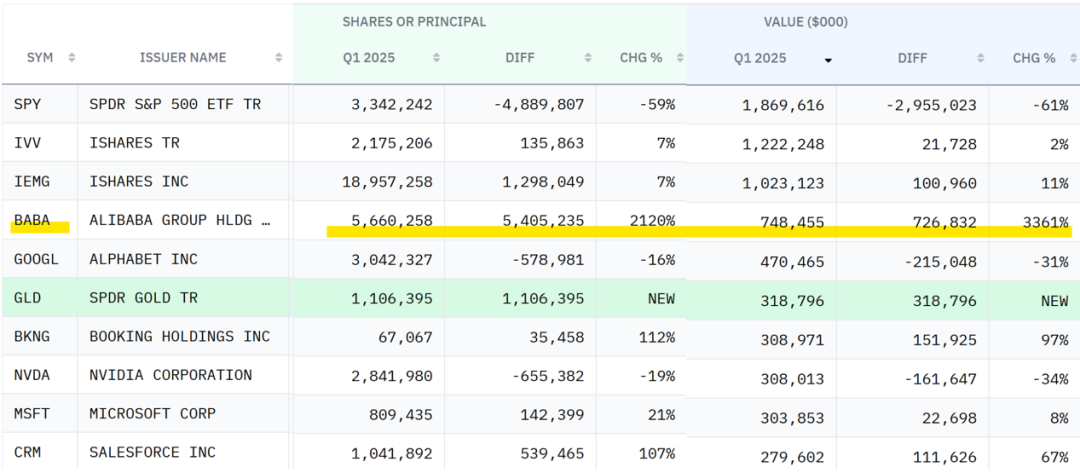
Core Viewpoint - Bridgewater Associates significantly increased its position in Alibaba by over 21 times in Q1 2025, while reducing its stake in Nvidia by 66,000 shares to 2.84 million shares [1][5]. Group 1: Portfolio Adjustments - As of March 31, 2025, Bridgewater's total portfolio size was $21.55 billion, with the top three holdings being SPDR S&P 500 ETF, iShares S&P 500 ETF, and iShares Core Emerging Markets ETF [2][4]. - Bridgewater reduced its holding in SPDR S&P 500 ETF by 59%, leading to a 61% decrease in its market value within the portfolio [4]. - The fund made a substantial investment in gold ETFs, holding 1.106 million shares of SPDR Gold ETF, making it the sixth-largest holding in the portfolio [5]. Group 2: Individual Stock Movements - Bridgewater's position in Alibaba surged from 255,000 shares at the end of the previous year to 5.66 million shares, marking a 2,120% increase, coinciding with Alibaba's stock price rising over 50% in Q1 2025 [5]. - Other notable increases included Baidu with an addition of 1.879 million shares, Pinduoduo with nearly 500,000 shares, and 2.78 million shares of JD.com [6]. - The fund also increased its stake in Netflix by 30,500 shares, PayPal by 52% (from 2.36 million to 3.6 million shares), and Microsoft by 21% (from 667,000 to 809,400 shares) [6]. - Conversely, Bridgewater reduced its holdings in Lam Research by 570,000 shares to 196,000 shares, and Nvidia by 66,000 shares to 2.84 million shares, while completely exiting its position in Ulta Beauty [6][7]. Group 3: Strategic Insights - Bridgewater's co-CIO Karen Karniol-Tambour emphasized the need for investors to reduce exposure to U.S. assets and increase allocation to other economies, as the U.S. economy may not continue to outperform globally as it has in the past 15 years [9]. - She suggested that portfolios should not only include assets that perform well during economic growth but also consider inflation-linked bonds, nominal bonds, and commodities like gold to achieve better balance [9]. - The current environment calls for maintaining liquidity and flexibility in asset allocation to capture opportunities when market conditions change dramatically [10].


富友支付十年“上市梦”:三冲港交所,因业务合规问题多次被处罚
Hua Xia Shi Bao· 2025-05-15 09:40
Core Viewpoint - Shanghai Fuyou Payment Service Co., Ltd. is making efforts for its IPO, having submitted its prospectus to the Hong Kong Stock Exchange for the third time, but has faced challenges including declining profitability and compliance issues [1][4]. Financial Performance - In 2024, Fuyou Payment achieved a revenue of 1.634 billion yuan, an increase of 8.54% year-on-year, but its net profit decreased by 9.31% to 84.325 million yuan [4]. - The company's gross margin for 2024 was 25.9%, which, while up 0.7 percentage points from 2023, was down 2.5 percentage points from 2022 [4]. - The decline in gross margin is attributed to increased commission rates for channel partners and competitive pressures in the cross-border payment service sector [5]. Business Strategy - Fuyou Payment plans to allocate 35% of the IPO proceeds to enhance its product offerings through innovative solutions, 30% for technology platform investments, 15% for expanding its payment network, 10% for overseas business expansion, and 10% for working capital [2]. Compliance Issues - Since 2021, Fuyou Payment has faced four administrative penalties totaling approximately 6.9 million yuan due to non-compliance with relevant laws and regulations [6]. - The company has been involved in 47 lawsuits related to its previous services for P2P platforms, with 39 cases resolved by the last feasible date [6][7]. Market Position - In 2024, the total transaction payment volume (TPV) of China's comprehensive digital payment service market was 268.6 trillion yuan, with Fuyou Payment holding approximately 0.8% market share, ranking eighth overall and fourth among independent providers [7]. - The top three digital payment service providers dominate the market, holding a combined market share of 75.6%, creating significant competitive pressure for smaller players [8]. Future Outlook - The ability of Fuyou Payment to successfully complete its IPO remains uncertain, with ongoing monitoring of its progress [9].

不容忽视的大趋势:稳定币--正在爆发的“数字美元霸权”
Hua Er Jie Jian Wen· 2025-05-15 03:45
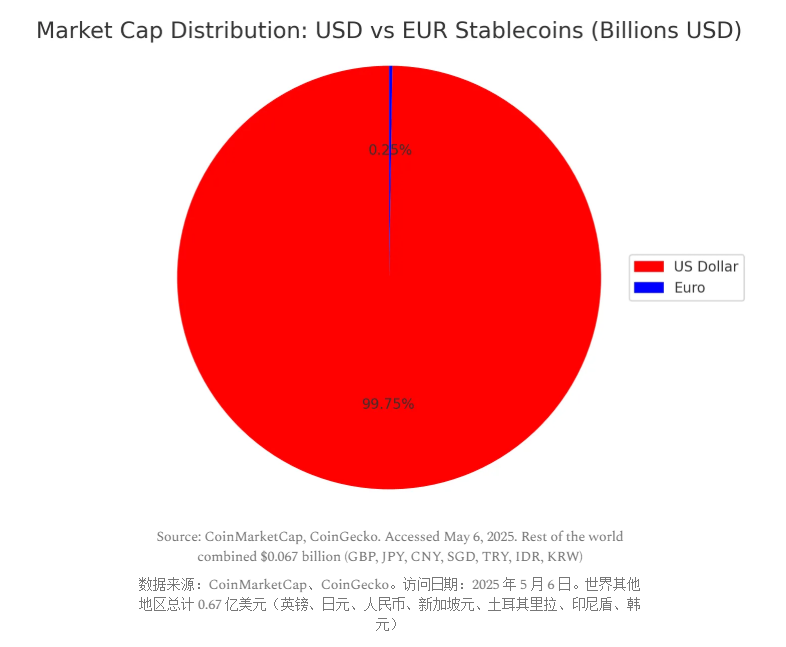
Core Viewpoint - Stablecoins are emerging as an unexpected ally in reinforcing the dominance of the US dollar amidst global de-dollarization discussions, with significant implications for international finance and economic sovereignty in Europe [1][13]. Group 1: Stablecoin Market Dynamics - The total value of stablecoins in circulation has surpassed $200 billion, with monthly transaction volumes reaching several hundred billion dollars, providing a digital alternative to traditional currencies [2]. - Deutsche Bank's research indicates that stablecoins have evolved from niche tools to mainstream financial infrastructure, with the market size projected to grow from $20 billion in 2020 to $246 billion by May 2025 [6]. - The transaction volume of stablecoins has increased by 598% since 2020, with 2024 projections estimating $27.6 trillion in transactions, surpassing traditional payment giants like Visa and Mastercard [8]. Group 2: European Concerns - The widespread adoption of dollar-pegged stablecoins in Europe poses a threat to the European Central Bank's ability to manage the eurozone economy, potentially undermining monetary policy effectiveness [2]. - Concerns arise regarding financial stability risks, as European businesses and households earning in euros but transacting in dollar stablecoins may face currency mismatches if the euro depreciates [2]. - The limited market share of euro-pegged stablecoins, which account for only 0.24% of the total stablecoin market, results in higher transaction costs and reduced liquidity [3]. Group 3: Regulatory Environment and Adoption - The regulatory landscape for stablecoins differs significantly between the EU and the US, with the EU's MiCA regulations imposing strict controls, while the US lacks comprehensive legislation, fostering innovation and expansion [5]. - Major companies like Visa, Shopify, Gucci, and PayPal are increasingly adopting stablecoins for transactions, indicating a shift towards mainstream acceptance [10][11]. - A Visa survey revealed that users prefer stablecoins over traditional banking due to higher yields (45%), greater efficiency (41%), and lower intervention risks (39%) [11]. Group 4: Strategic Asset and Dollar Dominance - Stablecoins are becoming strategic assets, with 83% pegged to the US dollar, and Tether being one of the largest holders of US Treasury securities [12][14]. - The demand for reserve assets is evident, with Tether's reserves projected to grow significantly, reinforcing the dollar's position in the global economy [14]. - The potential passage of the GENIUS Act could lead to a tenfold increase in stablecoin supply by 2028, further entrenching the dollar's dominance in the foreign exchange market [15].
速递|AI消费即将闭环,Perplexity联手PayPal、Venmo打通:“搜索即购买”最后一公里
Z Potentials· 2025-05-15 03:30
此外,该公司还与初创企业 Firmly 合作,帮助其他商家的产品出现在搜索结果中并支持用户直接购 买。 PayPal 和 Venmo 的结账服务将于今年夏季起面向美国用户,在 Perplexity 的 Pro 订阅服务中推出。 该服务提供自动化工具,可帮助用户寻找商品、预订旅行及现场活动门票。 近几周来,包括 PayPal 、万事达卡和 Visa 在内的支付巨头一直在宣传其针对 AI 工具发起支付的防 欺诈及其他功能。 参考资料 图片来源: Perplexity https://www.theinformation.com/briefings/perplexity-adds-paypal-checkouts?rc=o6xpry Perplexity 正在其订阅制 AI 聊天机器人中添加 PayPal 和 Venmo 结账按钮,为 Perplexity 用户提供通 过 AI 工具发现商品和服务后的新支付方式。 编译: ChatGPT Perplexity 已与 Shopify 达成协议,在 Perplexity 的聊天界面中为使用 Shopify 电商软件的商家集成 结账功能。 我们正在招募新一期的实习生 -- ...


桥水Q1调仓大动作:阿里巴巴(BABA.US)持仓暴增21倍,英伟达(NVDA.US)被减仓
Zhi Tong Cai Jing· 2025-05-15 00:29
Group 1 - Bridgewater Associates made significant adjustments to its investment portfolio in Q1 2025, focusing on technology, consumer, and financial sectors [1] - The fund increased its holdings in streaming giant Netflix by 30,500 shares, while reducing its stake in semiconductor equipment leader Lam Research by 570,000 shares to 1.96 million shares [1] - Bridgewater's adjustments reflect a "new and old" transition in tech stocks, maintaining stable positions in cloud computing while reducing traditional hardware suppliers [1] Group 2 - In the consumer sector, Bridgewater's holdings in e-commerce giant Alibaba surged from 255,000 shares to 5.66 million shares, an increase of over 21 times, while completely exiting its position in cosmetics retailer Ulta Beauty [2] - The fund exited its positions in four healthcare companies, including 3M, Amgen, Herbalife, and Teva Pharmaceuticals, contrasting with its continued investment in technology stocks [2] - Bridgewater's strategy indicates a focus on the recovery of consumption in the post-pandemic era and opportunities in technology innovation [2] Group 3 - The fund's holdings in Microsoft increased from 667,000 shares to 809,400 shares, while reducing its stake in eBay by 450,000 shares to 1.33 million shares, indicating structural adjustments within tech stocks [2] - In the financial sector, Bridgewater adopted a strategy of "increasing top-tier holdings while reducing tail-end positions," increasing its stake in Goldman Sachs while remaining cautious about regional financial institutions [2] - Overall, the portfolio adjustments reveal three key investment logics: betting on structural opportunities in tech due to accelerated digital transformation, optimism about recovery in sectors like aviation and payments, and optimizing risk-return profiles through increased industry concentration [2]



Wind风控日报 | 人工智能健康发展立法渐行渐近
Wind万得· 2025-05-14 22:43
Group 1 - The legislative work for the healthy development of artificial intelligence is progressing, with a multi-level legal framework being established in China [3] - The Ministry of Commerce emphasizes the importance of comprehensive control over the export of strategic minerals to ensure national security and development interests [30] - The Ministry of Foreign Affairs states that China's countermeasures against the U.S. tariffs on fentanyl remain effective [4] Group 2 - Zhongceng Pengyuan has placed the credit ratings of Shengxun Co. and its convertible bonds under observation, maintaining a rating of A+ [6] - Zhangzhou Economic Development Group is undergoing a retrial application due to a construction contract dispute, with a bank deposit of 24.736 million yuan frozen [7] - Zhengwei Group and Wang Wenyin are subject to enforcement actions involving over 1.09 billion yuan due to financial loan disputes [8] Group 3 - Xiamen Road and Bridge Construction Group's deputy secretary is under investigation for serious job-related violations [9] - Zhongceng Pengyuan is monitoring Guangdong Shen-Shan Investment Holding Group due to potential loss of control over a significant subsidiary [10] - Xiamen Asset Management has increased the claim amount in a contract dispute with Suzhou Jintang Group to 10.27 million yuan, accounting for 5.52% of the company's net assets [11] Group 4 - China Rare Earth is actively cooperating with China Rare Earth Group to resolve industry competition issues [14] - Qibin Group has terminated the issuance of shares to acquire a stake in its subsidiary due to changes in market conditions [15] - Zhongyida has experienced a significant deviation from its fundamentals, indicating a potential for market overheating and high speculation risks [16] Group 5 - The European Bank for Reconstruction and Development has lowered its economic growth forecast for Europe to 3% for 2025 [21] - Burberry plans to cut 1,700 jobs as part of a cost-saving initiative [22] - Ford is recalling over 273,000 vehicles in the U.S. due to brake failure issues [23] Group 6 - China Clearing has initiated a review of abnormal accounts for the first quarter of 2025 to prevent illegal use of securities accounts [27] - Several cross-border ETFs have issued premium risk alerts, indicating potential risks in secondary market trading [27] - The consumer finance trust sector is facing challenges due to regulatory pressures and high complaint volumes [28] Group 7 - The silicon industry reports a slight decline in industrial silicon prices, with stable supply and demand dynamics [31] - The U.S. has made an initial anti-subsidy ruling on erythritol imports from China, imposing varying tax rates on specific companies [33] - Real estate executives have seen a dramatic salary reduction, with a 19.56% decrease in total compensation compared to the previous year [34]

发挥品牌优势 彰显社会责任(中国品牌日)
Ren Min Ri Bao· 2025-05-14 21:55
Group 1: China People's Insurance Group - In 2024, China People's Insurance Group provided risk coverage of 31.75 trillion yuan, paid out 448.5 billion yuan in claims, and handled over 180 million claims, leading the industry in all three metrics [1] - The company launched the first comprehensive insurance for pilot projects nationwide and issued the first batch of major technology innovation insurance products, with an investment scale of 32.7 billion yuan [1] - China People's Insurance Group signed the United Nations Principles for Sustainable Insurance and insured 11.59 million new energy vehicles, with green risk coverage of 184 trillion yuan and an investment scale of 100.4 billion yuan for green development [1] Group 2: Digital Financial Innovation - In 2024, China People's Insurance Group's insurance solutions for the computing power industry were included in the Ministry of Industry and Information Technology's pilot program for cybersecurity insurance services [2] - The company has developed over 150 general AI capabilities, with daily usage exceeding 1 million times, and its proprietary AI model products have been applied in over 10 scenarios [2] Group 3: Overseas Payment Services - In Q1 2025, UnionPay's mobile payment transactions in Australia and New Zealand increased by over four times year-on-year, with Auckland's public transport transactions growing tenfold since the launch of UnionPay's contactless payment service [5] - UnionPay has established a comprehensive payment service network in Australia and New Zealand, with nearly all POS merchants and ATMs accepting UnionPay payments [6] Group 4: JD Group's Supply Chain Advantage - JD Group launched a 200 billion yuan export-to-domestic sales support plan to help foreign trade enterprises expand into the domestic market, with thousands of companies already in substantive procurement discussions [7] - The company has implemented a trade-in program since 2015, covering over 200 categories and reaching over 90% of rural areas in China [7][8] Group 5: Yangtze River Pharmaceutical Group - Yangtze River Pharmaceutical Group is focused on building a world-class pharmaceutical brand and has been recognized for its intelligent manufacturing capabilities [9] - The company has established 80 traditional Chinese medicine planting bases and is committed to enhancing its health management services [10] Group 6: Luzhou Laojiao Group - Luzhou Laojiao Group integrates traditional culture with modern technology to enhance its competitive edge and promote high-quality development in the liquor industry [11] - The company has established a national-level solid-state brewing technology innovation center and is developing a digital platform for the entire industry chain [11] Group 7: China Feihe Limited - China Feihe emphasizes independent innovation to enhance its core competitiveness and has established a full industry chain in the dairy sector [13] - The company has developed domestic production lines for key dairy ingredients and launched a leading infant formula based on extensive breast milk research [14] Group 8: WeBank - WeBank has served over 420 million individual customers and more than 580,000 small and micro enterprises through its digital financial products [16] - The bank maintains a high level of technology investment, with over 50% of its staff being technology personnel, and has developed over 220 AI applications [16]



Visa (V) FY Conference Transcript
2025-05-14 17:20
Summary of Visa (V) FY Conference Call - May 14, 2025 Company Overview - **Company**: Visa Inc. (V) - **Industry**: Payments and IT Services Key Points and Arguments Evolution of Visa - Visa has evolved significantly since its inception, transitioning from a bank-owned entity to a public company in 2008, and now operates with nearly 5 billion Visa credentials, up from 2 billion in 2013 [6][10] - The number of merchants on Visa's network has increased from 23 million to over 150 million, and transaction volume has grown from approximately 60-70 billion to close to 300 billion [6][7] Visa as a Service - Visa is focusing on "Visa as a Service," which involves unbundling its services and making them available via APIs, allowing clients to build on Visa's infrastructure [8][10] - This strategy aims to enhance growth and improve service delivery to clients, enabling access to 200 countries and territories [10] AI-Driven Commerce - Visa has introduced "Visa Intelligent Commerce," leveraging generative AI to enhance user shopping experiences by allowing AI agents to make purchases on behalf of users [16][20] - This innovation aims to streamline the shopping process and improve transaction efficiency, with a focus on trusted payments [20][21] Tokenization - Visa has significantly scaled its tokenization platform, increasing from 1 billion tokens in 2020 to nearly 14 billion today, which enhances security and reduces fraud [29][30] - Transactions using Visa tokens result in a 5% increase in sales for merchants and a 37% reduction in fraud for issuers [30][31] Stablecoins and Crypto - Visa views stablecoins and crypto as opportunities, having facilitated $100 billion in crypto purchases using Visa credentials [34][35] - Partnerships have been established to enable stablecoin users to spend their assets seamlessly using Visa credentials, and Visa is modernizing its settlement network using stablecoins [36][37] Money Movement - Visa Direct has become the largest money movement platform globally, with 11 billion endpoints and 10 billion transactions last year [44][47] - The platform is positioned to serve various sectors, including remittances and the gig economy, providing a robust solution for instant payments [46][48] Consumer Payments Growth - Visa's tap-to-pay transactions have reached 76% globally, with significant growth in the U.S. [50][51] - The total addressable market (TAM) for Visa is estimated at $23 trillion annually, with ongoing innovations expected to sustain growth above consumer spending rates [56][58] Value-Added Services (VAS) - Visa's VAS segment has grown to approximately $9 billion in revenue, with a consistent growth rate of over 20% [65] - The penetration of VAS remains low, indicating substantial growth potential in the coming years [66] Future Outlook - Visa aims to achieve a balanced revenue model with 50% from Banking as a Service (BaaS) and Consumer Payments, reflecting its evolution into a more diverse business [67][68] - The company is committed to continuous innovation and expanding its service offerings to enhance client value [68] Additional Important Insights - Consumer confidence remains a concern, but Visa reports stable spending growth, with 6% year-over-year growth in the U.S. and 9% growth internationally [60][62] - Visa's strategic focus on technology and partnerships positions it well to capitalize on emerging trends in payments and financial services [39][68]

5月支付机构百万级罚单频出,严监管升级!
Bei Jing Shang Bao· 2025-05-14 10:19
Core Viewpoint - The recent penalties imposed on payment institutions in China highlight the ongoing strict regulatory environment in the payment industry, emphasizing compliance and accountability for both institutions and their management [2][3][7]. Summary by Category Regulatory Actions - On May 9, the Shenzhen branch of the People's Bank of China announced penalties totaling 3.72 million yuan against Shenzhen Kuaiyitong Payment Co., Ltd. and SF Hengtong Payment Co., Ltd. for various violations [2]. - Kuaiyitong was fined approximately 3.52 million yuan for multiple infractions, including failure to comply with merchant management and customer identity verification regulations [2]. - SF Hengtong Payment was fined 210,000 yuan, marking its first penalty from the central bank [2]. Compliance Issues - The penalties reflect significant compliance failures, particularly in anti-money laundering practices, such as not fulfilling customer identity verification obligations and failing to report large or suspicious transactions [3][7]. - The regulatory focus on anti-money laundering and merchant management indicates a tightening of oversight in the payment sector [7]. Industry Trends - Following the penalties in Shenzhen, the Jiangsu branch of the People's Bank of China also issued fines to four payment companies for violations related to prepaid card management and merchant management [3][4]. - The trend of substantial fines, including a notable case where Shanghai Dianyin Information Technology Co., Ltd. was fined 5.71 million yuan, suggests that regulatory scrutiny is intensifying [6][7]. Recommendations for Compliance - Industry experts recommend that payment institutions enhance their compliance frameworks, including establishing comprehensive merchant management systems and improving identity verification processes [7]. - The use of big data and AI technology is suggested to bolster the identification of suspicious transactions and to ensure consumer rights protection [7].