商业航天

Search documents
股指剪刀差持续拉大私募加紧演练“攻守平衡术”
Zhong Guo Zheng Quan Bao· 2026-01-28 20:59
Core Viewpoint - The A-share market has shown significant divergence in performance among major indices, with the CSI 500 index rising over 15% and the CSI 1000 and National CSI 2000 indices increasing by more than 10%, while the Shanghai 50 index only saw a slight increase of 0.97% and the CSI 300 index rose by 1.90% [1] Group 1: Market Dynamics - The recent divergence in the market is primarily driven by changes in the flow and risk preferences of incremental capital, with a notable shift towards small and mid-cap growth stocks that offer higher elasticity and potential [2][3] - The net redemption scale of broad-based ETFs represented by the CSI 300 has reached approximately 100 billion, putting pressure on the Shanghai 50 and CSI 300 component stocks [2] - The current market liquidity is very ample, leading to a preference for concept investments in sectors like commercial aerospace and AI hardware, which are attracting significant capital inflows [3] Group 2: Valuation Concerns - There is a growing concern about structural overvaluation in the market, with some private equity professionals noting that the valuation system may have reached historically high levels [4] - The total market capitalization of CSI 300 component stocks is comparable to that of over 5,000 other companies, but there is a significant profit disparity, indicating a clear overvaluation in some stocks [4] Group 3: Investment Strategies - Private equity firms are adopting a balanced "offensive and defensive" strategy, focusing on both growth and value investments to navigate the current market conditions [5][6] - Key investment focuses include sectors with global pricing attributes such as resources and cutting-edge technology, while also considering undervalued, high-dividend assets as a safety net [6][7] - The strategy emphasizes maintaining a diversified portfolio that includes growth stocks, resource stocks, and defensive high-dividend stocks to mitigate potential market volatility [7]
“十五五”经济前瞻:立足比较优势 激活增长动能——对话北京大学国家发展研究院名誉院长、北京大学新结构经济学研究院院长林毅夫
Shang Hai Zheng Quan Bao· 2026-01-28 18:44
Core Viewpoint - The "14th Five-Year Plan" period is crucial for China to achieve its goal of basic socialist modernization by 2035, with a target of maintaining an average economic growth rate of around 5% during this period, despite global economic challenges [1][2][3]. Economic Goals and Challenges - The primary economic goal for the "14th Five-Year Plan" is to sustain an average growth rate of around 5% to lay a solid foundation for achieving a per capita GDP level comparable to that of moderately developed countries by 2035 [2][3]. - The global economic environment remains challenging, with developed countries experiencing prolonged low growth rates since the 2008 financial crisis, impacting China's external demand, particularly for its private sector exports [2][3]. Opportunities Amidst Challenges - Despite existing challenges, there are significant opportunities in emerging industries such as solar panels, drones, and lithium batteries, which can leverage China's large market and complete industrial supply chains [3][4]. - Traditional industries can also benefit from digitalization, intelligence, and green technologies to enhance efficiency and reduce costs, allowing them to expand their market share [3][4]. Role of New Quality Productivity - New quality productivity is essential for upgrading industries, and companies should identify their comparative advantages to thrive in both emerging and traditional sectors [4][5]. - The development of new quality productivity relies on effective market mechanisms and proactive government support to guide investments in industries with comparative advantages [6][7]. Measures to Boost Market Confidence - To address insufficient domestic demand, three key measures are proposed: investing in infrastructure for emerging industries, enhancing workforce skills through training, and implementing targeted demand-creation strategies [6][7][8][9]. - These measures aim to alleviate excess capacity and improve market expectations regarding future income and employment, thereby boosting consumer confidence [10]. Long-term Economic Outlook - The expectation is that China can maintain a growth rate of around 5% even in a challenging international economic environment, continuing to contribute significantly to global economic growth [11][12][13][14].
构建具有特色和优势的现代化产业体系在高标准建设海南自由贸易港中扛起责任担当
Xin Lang Cai Jing· 2026-01-28 16:48
Group 1 - The provincial representatives discussed the government work report and the draft of the "14th Five-Year Plan" during the provincial congress, focusing on development strategies and policy implementation [1] - Emphasis was placed on enhancing new productive forces, optimizing traditional industries, rural revitalization, and ecological protection [1] - The need for proactive planning and responsibility in building the Hainan Free Trade Port was highlighted, with a focus on attracting high-level talent and developing the commercial aerospace industry [1] Group 2 - The importance of positioning Dongfang as a key city in southwestern Hainan and a growth point for high-quality development was stressed, along with the need for innovative implementation of free trade zone strategies [2] - A call for balancing development and ecological protection was made, with a focus on optimizing land use and ensuring sustainable governance [2] - The need for a modern industrial system unique to Changjiang was emphasized, particularly in nuclear power and traditional industry upgrades [2] Group 3 - Qiongzhong was urged to become a model for high-quality development in ethnic regions, focusing on ecological functions and urban-rural integration [3] - The development of health and wellness industries was identified as a priority, aiming for a shift from being reactive to contributing uniquely to high-quality development [3] - The establishment of a governance system combining self-governance, rule of law, and moral governance was highlighted as essential for enhancing grassroots governance [3]
商业航天全景产业链图谱:结构解构、价值分布与生态趋势
材料汇· 2026-01-28 16:00
Core Viewpoint - The article provides a comprehensive analysis of the commercial aerospace industry, focusing on the value chain, key segments, and investment opportunities within the sector [3][4]. Group 1: Industry Structure and Value Distribution - The commercial aerospace industry is characterized as technology and capital-intensive, aiming to utilize and monetize space resources through market mechanisms [3]. - The value chain can be dissected into four core segments, with ground equipment manufacturing and satellite operation services accounting for approximately 92% of the total satellite industry scale [8]. - Upstream satellite manufacturing and launch services, while representing only about 9% of the value, are crucial due to their high technical barriers and are currently hotspots for capital investment [8]. Group 2: Upstream Manufacturing - Satellite manufacturing is identified as the foundational segment of the industry, with a focus on high technology and value creation [13]. - The value distribution in satellite manufacturing shows that payloads account for about 50% of costs, with antenna subsystems representing 53% of the value in mass-produced communication satellites [16][17]. - The satellite platform also constitutes about 50% of costs, with the attitude control system being a key component [18]. - Major players in satellite manufacturing include state-owned enterprises like China Aerospace Science and Technology Corporation and private companies like Galaxy Space [19]. Group 3: Rocket Manufacturing - Rocket manufacturing is described as the only channel for large-scale deployment and a significant cost bottleneck [20]. - The propulsion system constitutes 70% of the total cost of liquid rockets, making it a critical area for cost management [21]. - Technologies such as "one rocket multiple satellites" and reusable rocket technology are pivotal for reducing launch costs [23]. - The competitive landscape includes both state-owned enterprises and emerging private companies focused on innovation in reusability [24]. Group 4: Ground Equipment and Operations - Ground equipment manufacturing is the largest revenue contributor in the satellite industry, accounting for approximately 51.6% of total revenue [31]. - Consumer devices, particularly satellite navigation equipment, dominate the ground equipment market, with a projected value of $111.9 billion [32]. - The operational segment, which includes satellite operation management and data services, is crucial for value realization, contributing about 40.3% of the industry's value [36][38]. Group 5: Investment Trends and Future Outlook - The investment focus is currently on upstream segments, particularly satellite manufacturing and reusable rocket launches driven by low Earth orbit constellation demands [41]. - As constellations are established, the industry value is expected to shift towards ground terminals and diversified downstream applications, particularly in consumer satellite internet [41].



军工ETF(512660)收跌,市场聚焦行业长期需求,把握回调布局机会
Mei Ri Jing Ji Xin Wen· 2026-01-28 15:52
Core Viewpoint - The military industry ETF (512660) experienced a decline of over 1.4% on January 28, with the market focusing on long-term demand in the industry and identifying opportunities for positioning during the pullback [1] Group 1: Industry Demand and Growth - Guohai Securities indicates that 2026, as the start of the "14th Five-Year Plan," may see a new round of demand gradually being issued in the industry [1] - In the large aircraft sector, the three major domestic airlines have commenced regular commercial operations of the C919, showing steady and positive development [1] - Southeast Asian countries have shown significant interest in the C919 and other civil aircraft, with positive progress in the European EASA certification, potentially accelerating international expansion and providing substantial growth opportunities for the related industrial chain [1] Group 2: Commercial Aerospace and Military Development - In the commercial aerospace sector, China Aerospace Science and Technology Corporation emphasizes a full commitment to breakthroughs in reusable rocket technology, accelerating the construction of a strong aerospace nation, and actively developing commercial aerospace and low-altitude economy [1] - Both China Ordnance Industry Group and China Aerospace Science and Industry Corporation stress the importance of accelerating the generation of advanced combat capabilities and actively engaging in international operations (military trade) and deepening reforms [1] - The military industry is expected to remain in an upward demand cycle over the next five years amid significant global changes [1] Group 3: ETF and Index Overview - The military industry ETF (512660) tracks the CSI Military Industry Index (399967), which selects the top ten military groups that are publicly listed and primarily engaged in military-related businesses, along with other representative companies in the military field [1] - The index covers key industries such as aviation, aerospace, shipbuilding, weaponry, military electronics, and satellites, reflecting the overall performance of military-themed listed companies, characterized by high industry concentration and small to mid-cap style [1]
资管一线 | 震荡不改长期逻辑,商业航天板块火箭、材料等方向或存机遇
Xin Hua Cai Jing· 2026-01-28 15:26
Core Viewpoint - The commercial aerospace sector has become a focal point in the capital market due to breakthroughs in reusable rocket technology, accelerated low-orbit satellite networking, and favorable national policies. Despite recent market fluctuations, the long-term growth logic of the industry remains intact, with multiple catalysts expected in 2026 [1][2]. Market Dynamics - The A-share commercial aerospace sector has shown significant volatility, with a cumulative increase of over 55% from December 2025 to January 12, 2026, followed by a decline of over 4% by January 20, indicating a struggle between valuation and performance [2][3]. - The recent strong performance is attributed to a key breakthrough in large reusable liquid rocket technology and supportive policies, including the National Space Administration's action plan for high-quality development in commercial aerospace [2][3]. Investment Opportunities - Despite short-term fluctuations, industry experts remain optimistic about the long-term growth of the commercial aerospace sector, expecting it to benefit from policy, technology, and capital catalysts in 2026. Key investment opportunities are identified in specific sub-sectors [4][5]. - Four main areas of focus include: 1. Rocket technology, where cost reductions are expected to drive demand [5] 2. Core materials, particularly titanium, which is essential for aerospace applications [5] 3. 3D printing technology, which is anticipated to see increased usage as aerospace models evolve [5] 4. Companies in the SpaceX supply chain, which may experience earlier performance releases compared to domestic counterparts [5] Future Trends - The commercial aerospace industry is still in its early stages, with significant potential for growth. Key areas of interest include core components with technological barriers and potential asset consolidation opportunities [6]. - The deployment of low-orbit satellite constellations is expected to create market demand in communication, navigation, and IoT applications, although the commercialization of new models like space computing is still in exploratory phases [6].
神秘资金尾盘才出手!今天,AI产业链传来多个重要消息
Mei Ri Jing Ji Xin Wen· 2026-01-28 14:59
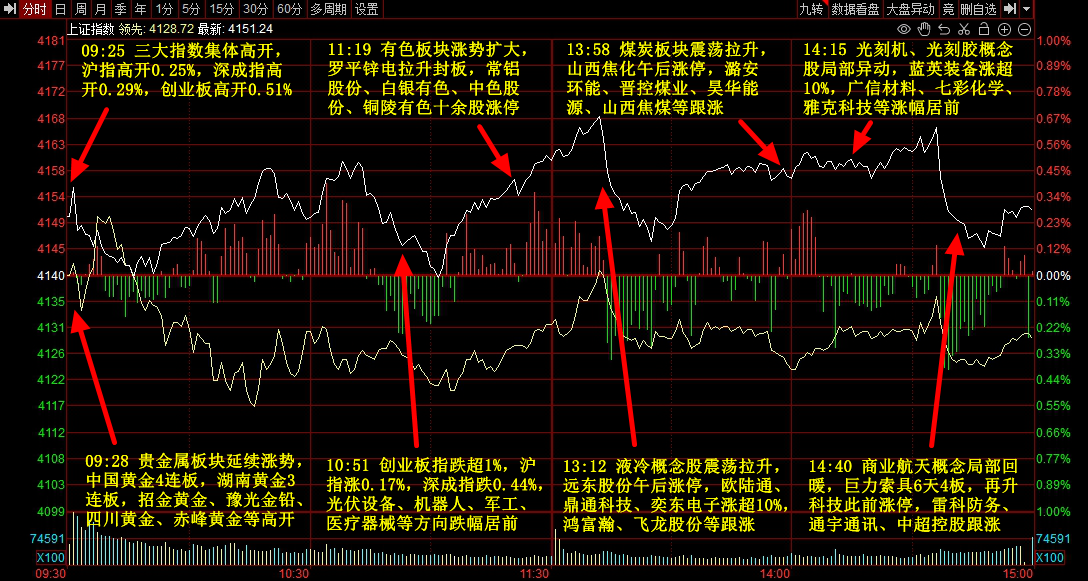
Group 1: AI Applications and Developments - The new open-source model Kimi K2.5 from Moon's Dark Side can schedule 100 agents simultaneously, improving efficiency by 4.5 times [2] - DeepSeek's latest document recognition model, DeepSeek-OCR 2, enhances recognition performance by 3.73% through improved visual encoder design [2] - Baidu's Wenxin APP has launched the first "multi-agent" group chat feature, allowing multiple AI roles to be activated in a single chat [2] Group 2: AI Hardware Investments - NVIDIA is investing $2 billion in AI cloud service provider CoreWeave to help build over 5 GW of AI data centers by 2030 [3] - Micron Technology plans to invest $24 billion in Singapore over the next decade to build a new NAND flash memory factory [4] - SK Hynix will exclusively supply HBM3E chips to Microsoft's Maia 200, which is claimed to outperform Amazon's Trainium and Google's TPU [4] Group 3: Market Trends and Performance - A-shares saw collective gains, with the Shanghai Composite Index rising by 0.18% and the Shenzhen Component and ChiNext Index increasing by 0.09% and 0.71%, respectively [6] - Mysterious funds showed late-stage activity in ETFs, particularly when the Shanghai Composite Index rose significantly [7][8] - AI applications are experiencing a rebound, with notable gains in core stocks like BlueFocus [9] Group 4: Sector Insights - The semiconductor sector is experiencing a price increase, driven by rising costs in wafer foundry and packaging, with expectations for chip design prices to also rise [12] - The AI-driven semiconductor industry is likely to see price hikes across the supply chain, potentially impacting consumer electronics costs [12] - The commercial aerospace sector is showing signs of recovery, with a focus on transitioning from policy-driven to market-driven growth [10]


第三代星舰六周后首飞,商业航天产业驶入\"快车道\"
Xuan Gu Bao· 2026-01-28 14:51
Group 1 - SpaceX's CEO Elon Musk announced that the first flight test of the Starship V3 will take place in six weeks at the Starbase launch site in Boca Chica, Texas, with the primary goal of sending the next-generation Starlink V3 satellites into orbit and validating multiple key technological capabilities of the Starship V3 [1] - According to Guangfa Securities, China's commercial aerospace sector is experiencing a dual inflection point of "technological breakthroughs" and "scale explosion," with the market size expected to exceed 2.5 trillion yuan this year [1] - Guotai Junan Securities indicated that commercial aerospace is likely to drive the collaborative development of multiple industries, including low-orbit internet constellations, remote sensing, satellite navigation, and satellite communications, with various policies being introduced to catalyze the rapid growth of China's commercial aerospace industry [1] Group 2 - Steel Research High-Tech Company has strong technical reserves and market expansion capabilities in the high-temperature alloy sector, particularly in industries such as aerospace, power, automotive, and metallurgy, which supports stable performance [2] - Putian Technology is deeply involved in the "Three-Body Computing Constellation," a nationally pioneering space-based AI computing project, and is collaborating with partners like Zhijiang Laboratory and Alibaba to advance the "Star Cable Project" [2]
晚报 | 1月29日主题前瞻
Xuan Gu Bao· 2026-01-28 14:43
Group 1: Embodied Intelligence - Shenzhen is promoting the integration of AI embodied intelligence in the home industry, supported by a three-year action plan (2026-2028) [1][5] - The plan encourages smart home companies to adapt to domestic operating systems and chips, aiming for comprehensive AI integration in various home appliances [1][5] - The market for embodied intelligence is expected to grow significantly, with projections estimating a market size of 632.8 billion yuan by 2027 [1] Group 2: Cloud Services - Google Cloud announced a price increase for global data transmission services starting May 2026, with North American rates expected to double [2] - This price adjustment reflects a shift in the cloud services industry, where major players are passing on systemic cost pressures to end users due to rising AI computing demands and infrastructure costs [2] - The trend indicates a potential end to the long-standing price reduction in the cloud services sector, with expectations that other providers may follow suit [2] Group 3: Commercial Space - SpaceX CEO Elon Musk announced the first flight test of the Starship V3, scheduled to take place in six weeks, focusing on launching the new generation Starlink V3 satellites [3] - The Chinese commercial space sector is anticipated to experience significant growth, with market size projections exceeding 2.5 trillion yuan this year [3] - The development of commercial space is expected to drive collaboration across various industries, including low Earth orbit internet constellations and satellite communications [3] Group 4: Reusable Rockets - China Aerospace Technology Corporation emphasized the importance of reusable rocket technology in its 2026 work plan, aiming to enhance capabilities for commercial launches [4][7] - Reusable rockets are designed to reduce launch costs significantly, with projections suggesting costs could drop from 300,000 yuan per kilogram to 20,000 yuan per kilogram [4] - The commercial market for reusable technology is expected to expand, potentially unlocking a market worth hundreds of billions and fostering growth in satellite manufacturing and space applications [4]
刚刚!史上最大IPO,突传大消息!
券商中国· 2026-01-28 14:34
Group 1 - Elon Musk plans to schedule SpaceX's IPO for mid-June, coinciding with a rare planetary alignment and his birthday, aiming to raise $50 billion with a valuation of approximately $1.5 trillion, potentially making it the largest IPO in history [1][2][5] - The IPO is expected to generate significant demand from both institutional and retail investors, surpassing the previous record set by Saudi Aramco's $29 billion IPO in 2019 [2][3] - SpaceX has appointed major banks including Bank of America, Goldman Sachs, JPMorgan, and Morgan Stanley as lead underwriters for this significant transaction [3] Group 2 - The motivation behind Musk's push for the IPO is to secure funding for the development of the Starship rocket system aimed at reaching Mars, as well as to enhance SpaceX's competitive position in the AI sector [4] - SpaceX is also working on technology to deploy data centers in space, leveraging its Starlink satellite network, which consists of 9,400 satellites [4] - The IPO date in June reflects Musk's personal influence on corporate decisions, with some analysts suggesting that the timing is also linked to the upcoming planetary alignment [6] Group 3 - The Chinese commercial space sector is also making significant strides, with the China Aerospace Science and Technology Corporation emphasizing the importance of reusable rocket technology and planning to enhance its capabilities in commercial launches [7] - In 2025, China's commercial space industry is projected to maintain rapid growth, completing 50 launches, which accounts for 54% of the country's total space launches, with a significant number of commercial satellites being deployed [8] - The advancement of reusable rocket technology is expected to drastically reduce launch costs and stimulate demand for satellite deployment in various sectors, indicating a potential boom in China's commercial space industry [8]