投资银行

Search documents
大摩:美债收益率超4%的时代过去了
Hua Er Jie Jian Wen· 2025-10-13 03:38
Core Viewpoint - The era of 10-year U.S. Treasury yields above 4% is nearing its end due to multiple macroeconomic uncertainties and challenges to previously optimistic market sentiments [1][3]. Group 1: Economic and Political Challenges - The recent escalation of domestic and foreign policy tensions in the U.S. has significantly impacted investor confidence, particularly with the ongoing government shutdown leading to potential layoffs of federal employees [1][5]. - Trade policy uncertainties are rising again, prompting investors to shift towards safe-haven assets, which is putting downward pressure on Treasury yields [2]. Group 2: Investor Sentiment and Economic Outlook - Investor optimism in the U.S. economic outlook was previously supported by five key pillars, including concerns over prolonged recession, eased financial conditions, anticipated Fed rate cuts, belief that trade policy uncertainties peaked in April, and expectations for future fiscal stimulus [4]. - However, these pillars are showing significant cracks due to the dual shocks of government shutdown and trade tensions, which have shifted the perception of economic policy uncertainty [5]. Group 3: Interest Rate Projections - Morgan Stanley believes that these external shocks are occurring near the bottom of the economic cycle, reducing the likelihood of economic rebound rather than promoting recovery [6]. - The negative impacts of tariffs are expected to manifest more in the labor market rather than in rising inflation, leading to a bearish outlook on inflation, especially at the front end of the yield curve [6]. Group 4: Investment Strategy Recommendations - Based on the macroeconomic outlook, Morgan Stanley advises investors to adjust their fixed-income strategies, noting that only 8-year, 9-year, and 10-year Treasury yields remain above 4% on the yield curve [9]. - As the risk of economic slowdown increases, these 4% yields are likely unsustainable, prompting a recommendation to increase duration in U.S. Treasuries, particularly focusing on 5-year securities [12].


黄金交易呈现更大主题;高盛顶级交易员保持“审慎_看涨”
Goldman Sachs· 2025-10-13 01:00
Investment Rating - The report maintains a "responsibly bullish" outlook on the market, particularly regarding gold [31]. Core Insights - The current equity bull market and the rise of leading technology companies have raised concerns about a potential bubble, driven by exuberance around transformative technologies [4][5]. - Key differences from historical bubbles include fundamental growth driving technology sector appreciation, strong balance sheets of leading companies, and a lack of intense competition in the AI space [7][10]. - The report highlights that while technology sector valuations are becoming stretched, they have not yet reached levels consistent with historical bubbles [9]. - The upcoming Q3 earnings season is expected to show a consensus growth expectation of +6% year-over-year, with the "Magnificent Seven" tech companies anticipated to grow by +14% year-over-year [19][20]. Summary by Sections 1. Market Themes - The report discusses the ongoing debate about whether the market is in a bubble, citing historical patterns of exuberance and rapid asset price increases [4][5]. - It notes that current investor behavior and market pricing show similarities to past bubbles, but also highlights key differences that suggest a more stable environment [7][10]. 2. Positioning - The report indicates that hedge fund positions are not extreme, with a 66th percentile measure in the PB book, while systematic trading groups are near record lengths in futures [11][14]. - It emphasizes the significant inflow of $134 billion into equity ETFs and mutual funds over the past month, indicating strong household activity [15]. 3. Earnings Expectations - The report sets a clear benchmark for Q3 earnings, with expectations for growth across the S&P 500 and particularly for major tech companies [16][19]. 4. Gold Market Insights - The price target for gold has been raised to $4,900 by December 2026, driven by demand factors [20][22]. - The report discusses the broader themes affecting gold trading, including currency debasement and central bank reallocations, indicating a decoupling from traditional real rate drivers [30][29].

瑞银财富管理吕子杰,最新发声
Zhong Guo Ji Jin Bao· 2025-10-12 12:33
Core Viewpoint - UBS Wealth Management emphasizes the importance of being a "super connector" between Chinese and global entrepreneurs, leveraging its extensive experience and network to facilitate wealth management and investment opportunities [1][4]. Group 1: Wealth Management Strategy - UBS has over 160 years of history, focusing on wealth management, which accounts for over 50% of its total revenue [3]. - The firm adopts a "banking integration" strategy, where it first establishes long-term relationships with entrepreneurs, then extends services to investment banking and asset management as their needs grow [3][4]. - UBS has been active in the Chinese market for over 35 years, with a strong presence in Hong Kong and the broader Asia-Pacific region for over 60 years [3]. Group 2: Family Wealth Management - Many overseas families view family offices as a "school" for nurturing the next generation, with younger family members increasingly interested in entrepreneurship rather than traditional family businesses [6]. - Family offices are also seen as platforms for social impact, with younger generations preferring to invest in socially valuable projects rather than merely donating [6]. - The core demand from high-net-worth clients in China is shifting towards stability and diversification, with a growing interest in alternative investments such as private equity and hedge funds [6]. Group 3: Opportunities in the Greater Bay Area - UBS manages one-third of its assets in the Greater Bay Area, highlighting its significance to the firm [8]. - The number of trips between Hong Kong and cities in the Greater Bay Area has increased by 25% compared to last year, with related meetings rising by over 20% [8]. - The firm plans to relocate its Hong Kong office to a more efficient location by the end of 2026, enhancing its service capabilities for clients in the Greater Bay Area [9].

瑞银财富管理吕子杰,最新发声
中国基金报· 2025-10-12 12:19
Core Insights - UBS Wealth Management emphasizes the importance of being a "super connector" between Chinese and global entrepreneurs, leveraging its extensive experience and network to facilitate wealth management and investment opportunities [2][7]. Group 1: Wealth Management Strategy - UBS has over 160 years of history, focusing on wealth management, which constitutes over 50% of its total revenue [6]. - The firm adopts a "banking integration" strategy, where it first establishes long-term relationships with entrepreneurs, then extends services to investment banking and asset management as their needs evolve [6][7]. - UBS has been active in the Chinese market for over 35 years, with a strong presence in Hong Kong and the broader Asia-Pacific region [6]. Group 2: Family Wealth Management - Many overseas families view family offices as a "school" for nurturing the next generation, with younger family members increasingly interested in entrepreneurship rather than traditional family businesses [9]. - Family offices are also seen as platforms for social impact, with younger generations preferring to invest in projects that create social value rather than merely donating [9]. - Current high-net-worth clients in China are maturing and becoming more rational, focusing on "stability" and diversifying investments into alternatives like private equity and hedge funds [9]. Group 3: Opportunities in the Greater Bay Area - UBS manages one-third of its assets in the Greater Bay Area, highlighting its significance to the firm [11]. - The number of trips between Hong Kong and cities in the Greater Bay Area has increased by 25% compared to last year, with related meetings up by over 20% [12]. - UBS plans to relocate its Hong Kong office to a more strategic location by the end of 2026, enhancing its ability to serve clients in the Greater Bay Area [12].

全线暴跌!美联储,重磅来袭!
券商中国· 2025-10-12 08:30
Core Viewpoint - The article highlights the significant market volatility and the heightened focus on the Federal Reserve's monetary policy direction, particularly in light of the upcoming release of the Beige Book and the ongoing government shutdown in the U.S. [2][3] Federal Reserve's Monetary Policy - The Federal Reserve is set to release the latest U.S. economic conditions report (Beige Book) on October 16, which is crucial for understanding the employment market and inflation trends [3][4] - Market expectations for a rate cut by the Federal Reserve are increasing, with a 98.3% probability of a 25 basis point cut in October and a 91.7% probability of a cumulative 50 basis point cut by December [3][4] - Federal Reserve officials are scheduled to speak next week, potentially addressing the stock market, tariff policies, and the employment situation [3][4] Government Shutdown Impact - The ongoing government shutdown is causing market disruptions, with predictions that it may not last beyond October 15, coinciding with military paydays [7][9] - Goldman Sachs anticipates that the shutdown will likely end through a statement or concession from President Trump, with negotiations continuing on other issues [7][9] - The impact of the shutdown is escalating, with federal layoffs already beginning, affecting various departments and potentially involving a large number of employees [9][10]

高盛:当前牛市“质量”相当高 美股仍是最佳投资选择!
Zhong Jin Zai Xian· 2025-10-12 01:31
Group 1 - The core viewpoint is that despite warnings about a potential bubble in the U.S. stock market, Goldman Sachs' Ashok Varadhan believes the current bull market is of high quality and that U.S. equities remain the best investment choice [1][2] - Varadhan attributes his optimism to several factors, including potential interest rate cuts by the Federal Reserve, fiscal benefits from the "Big and Beautiful" legislation, the market's ability to absorb tariff impacts, and the rise of artificial intelligence [2][3] - Goldman Sachs' Chief Global Equity Strategist Peter Oppenheimer also expresses optimism, stating that the U.S. stock market has not yet entered bubble territory, despite some similarities to past speculative bubbles [3] Group 2 - Oppenheimer notes that while there are some characteristics of past bubbles, such as rising valuations and a few stocks leading the market, the current situation differs as the total market value of tech companies related to new technologies does not significantly exceed their actual cash flows [3] - Varadhan highlights the strong momentum of artificial intelligence since the beginning of 2023 and suggests using the current market calm to increase "convexity," which can yield disproportionate returns during significant market movements [3][4] - Varadhan recommends buying put options on stock indices and call options on the dollar, describing these strategies as relatively inexpensive ways to protect against macroeconomic volatility [4]
美股牛市前景乐观 高盛高管称泡沫风险可控
Xin Lang Cai Jing· 2025-10-11 13:27
Group 1 - The core viewpoint is that despite concerns about a potential bubble in the U.S. stock market, experts from Goldman Sachs maintain a positive outlook, asserting that the current bull market is of high quality and remains attractive to investors [1][2] - Ashok Varadhan, co-head of global banking and markets at Goldman Sachs, highlights the stability of the market following a dip in April, indicating a robust rebound [1] - Varadhan emphasizes the positive factors supporting the U.S. stock market, including potential future interest rate cuts by the Federal Reserve, fiscal benefits from the "Big and Beautiful" legislation, and the market's ability to absorb tariff impacts [1] Group 2 - Peter Oppenheimer, chief global equity strategist at Goldman Sachs, expresses optimism, stating that the U.S. stock market has not yet entered a bubble phase, despite some similarities in investor behavior and pricing with historical bubbles [2] - Oppenheimer notes that the total market capitalization of tech-related companies has not exceeded their potential cash flows, distinguishing the current situation from past bubbles [2] - Varadhan encourages investors to optimize their portfolios during the current market calm to achieve higher returns during significant market fluctuations, suggesting investments in put options on stock indices and call options on the dollar [2]
重逾“6000头大象”的黄金藏于民间,黄金暴涨正令印度家庭“躺赢”?
Feng Huang Wang· 2025-10-11 07:06
在本轮贵金属大牛市行情背后,赢家显然不仅仅只有金融市场上的黄金多头们,还有那些手上真的握 有"真金白银"的普通人。而作为全球第二大黄金消费国,不少印度家庭无疑就搭上了这辆顺风车…… 摩根士丹利本周发布的一份最新报告就显示,印度家庭财富眼下正经历飞跃式增长——该国民众3.46万 吨的黄金持有量(重量相当于6000多头大象),在近期创纪录的金价涨势中大幅增值。 摩根士丹利经济学家Upasana Chachra和Bani Gambhir在报告中写道,这些积累了数代人代代相传的巨 额黄金,目前的价值已接近3.8万亿美元。鉴于金价的上涨趋势,这正对印度家庭的资产负债表产生"积 极的财富效应"。 长期以来,黄金已深深融入了印度人的文化、宗教与日常生活中。 印度家庭囤积黄金不仅作为长期储蓄或应急保障,更在宗教仪式中象征着繁荣。这些贵金属常作为婚礼 和节庆礼物,既巩固亲情纽带,又实现财富代际传承。 值得一提的是,摩根士丹利对于印度家庭黄金持有量的最新估算值,要远超世界黄金协会两年多前 (2023年7月)报告的数字——2.5万吨。但即便是2.5万吨这个数字,也已经超过了全球黄金储备前十大央 行的储备总和。 印度民间黄金财富预估 ...
“次贷危机”的味道?华尔街投行旗下信贷基金暴雷,大摩等同业开始撤资
美股IPO· 2025-10-11 05:48
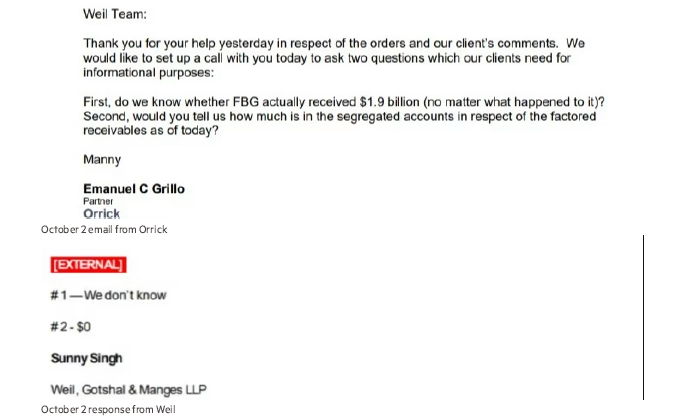
Core Viewpoint - The collapse of First Brands Group has exposed significant systemic risks within the $2 trillion private credit market, reminiscent of the 2008 subprime mortgage crisis, as highlighted by Jim Chanos [1][3][17]. Group 1: Incident Overview - Point Bonita Capital, a fund under Jefferies, is facing urgent redemptions from top Wall Street investors due to its exposure to First Brands, which recently filed for bankruptcy [2][6]. - First Brands' bankruptcy revealed nearly $12 billion in complex debt and off-balance-sheet financing, triggering a liquidity crisis among major financial institutions [3][6]. - The fallout from First Brands' collapse has led to a "run on the bank" scenario, with major investors like BlackRock and Morgan Stanley initiating withdrawal requests [7][11]. Group 2: Financial Implications - Point Bonita Capital holds $715 million in receivables related to First Brands, representing nearly a quarter of its $3 billion portfolio, creating a significant risk exposure [6][7]. - The fund's structure, which involved First Brands acting as a servicer for receivables from high-credit clients like Walmart, has proven to be deeply flawed, as funds were never directly received from these clients [13][14]. Group 3: Regulatory and Market Reactions - The U.S. Department of Justice has initiated a preliminary investigation into the circumstances surrounding First Brands' collapse, adding uncertainty to the situation [11]. - Other financial institutions, including UBS and Cantor Fitzgerald, are also facing repercussions due to their exposure to First Brands, with UBS reporting a 30% risk exposure in one of its funds [8][9]. Group 4: Broader Market Concerns - Jim Chanos has warned that the private credit market's operational model mirrors that of the subprime mortgage crisis, with hidden risks masked by complex financial structures [17][18]. - The First Brands incident has raised alarms about the transparency and stability of the private credit market, prompting concerns about undisclosed risks that may still exist within this sector [21].



“次贷危机”的味道?华尔街投行旗下信贷基金暴雷,大摩等同业开始撤资
Hua Er Jie Jian Wen· 2025-10-11 05:37
Core Insights - The bankruptcy of First Brands Group has triggered a significant crisis affecting major financial institutions on Wall Street, particularly impacting Jefferies' Point Bonita Capital fund, which faces urgent redemptions from top institutional investors [1][3] - The event has exposed the vulnerabilities within the $2 trillion private credit market, drawing parallels to the 2008 financial crisis, as highlighted by investor Jim Chanos [1][9] Group 1: Impact on Financial Institutions - Jefferies' Point Bonita Capital fund holds $715 million in receivables related to First Brands, representing nearly 25% of its $3 billion portfolio, creating a substantial risk exposure [3] - Major investors, including BlackRock and Morgan Stanley, have initiated redemption requests, indicating a loss of confidence in Jefferies [3][4] - UBS and Cantor Fitzgerald are also affected, with UBS's fund reportedly having a 30% exposure to First Brands [4] Group 2: Regulatory and Legal Implications - The U.S. Department of Justice has begun a preliminary investigation into the circumstances surrounding First Brands' bankruptcy [4] - Legal documents reveal potential fraudulent activities, including the possibility of "double pledging" receivables, raising concerns about the integrity of the financial practices involved [6][8] Group 3: Structural Vulnerabilities in Private Credit - The collapse of First Brands has revealed a fragile structure within the private credit market, where risks are often obscured by complex financial arrangements [1][9] - Chanos warns that the high returns promised by private credit funds may be masking hidden risks, similar to the subprime mortgage crisis [9][10] - The lack of transparency in private companies like First Brands complicates the assessment of financial health, as their financial documents are not publicly available [10][11] Group 4: Broader Market Concerns - The First Brands incident has raised alarms about the potential for similar undisclosed risks within the private credit market, likening it to a "Pandora's box" that could lead to further financial instability [13] - The current economic environment and tightening credit conditions may exacerbate these vulnerabilities, posing challenges for both investors and regulators [13]