
可再生能源

Search documents
系统性破解碳市场发展关键难题
2 1 Shi Ji Jing Ji Bao Dao· 2025-09-02 21:51
Core Viewpoint - The recent release of the "Opinions on Promoting Green and Low-Carbon Transition and Strengthening National Carbon Market Construction" marks a significant step towards establishing a comprehensive carbon emission trading system in China, integrating mandatory and voluntary measures, government and market forces, as well as domestic and international elements [1][2]. Summary by Sections Carbon Market Development - The carbon market has become a crucial policy tool for climate governance in China, with pilot programs initiated in 2011 across seven provinces and cities, covering over 20 industries [2]. - The national carbon emission trading market was officially launched on July 16, 2021, and has since become the largest market globally in terms of greenhouse gas emissions coverage, with a cumulative trading volume of 694 million tons and a total transaction value of 47.716 billion yuan as of August 28 [2]. - The voluntary carbon market started later, officially launching on January 22, 2024, with a cumulative trading volume of 250,160 tons and a transaction value of 21 million yuan by August 28, 2025 [2]. Challenges and Policy Directions - The current carbon market faces challenges such as low market activity, insufficient data quality, and underutilization of market mechanisms. The "Opinions" provide specific policy directions to address these issues [3]. - The document emphasizes the need to diversify market participants by introducing financial institutions, non-compliance entities, and individuals to enhance market activity [3]. Data Quality and Management - Data quality is identified as a critical issue, with the "Opinions" proposing measures to enhance data management, including increasing penalties for violations and improving corporate carbon management capabilities [4]. - The establishment of a robust regulatory framework and the development of a digital management information system are also highlighted as essential steps to ensure data integrity and compliance [4]. Market Mechanisms and Opportunities - The "Opinions" propose optimizing quota management and introducing total control, paid allocation, and quota reserve systems to improve carbon pricing mechanisms [5]. - New market opportunities are anticipated in sectors such as renewable energy, industrial energy efficiency, carbon management, and carbon finance, as the document outlines strategies for economic development in response to climate change [5][6].
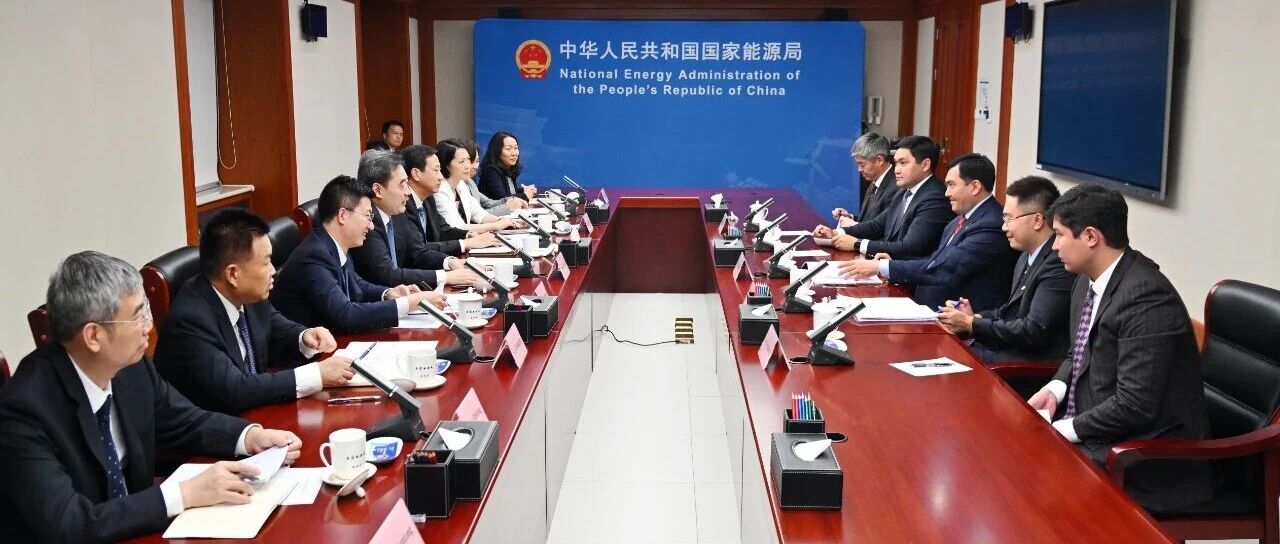
王宏志会见哈萨克斯坦能源部部长,就油气、可再生能源、电力等领域合作深入交换意见
Xin Lang Cai Jing· 2025-09-02 13:22
Core Viewpoint - The meeting between China's National Energy Administration and Kazakhstan's Ministry of Energy emphasizes the strengthening of energy cooperation between the two countries, focusing on oil, gas, renewable energy, and electricity sectors [1] Group 1: Energy Cooperation - Both parties discussed in-depth cooperation in oil, gas, renewable energy, and electricity sectors [1] - The leaders of China and Kazakhstan reached important consensus on consolidating energy cooperation during the Shanghai Cooperation Organization summit [1] - The National Energy Administration expressed willingness to actively implement the consensus and enhance communication to support practical cooperation between enterprises [1] Group 2: Positive Outlook - Kazakhstan's Minister of Energy highly praised the development of energy cooperation with China [1] - There is an invitation for Chinese energy companies to actively participate in Kazakhstan's energy projects [1] - The aim is to deepen cooperation in oil, gas, renewable energy, and electricity sectors [1]
国家能源局主要负责人会见哈萨克斯坦能源部部长
国家能源局· 2025-09-02 13:01
Group 1 - The core viewpoint of the article emphasizes the strengthening of energy cooperation between China and Kazakhstan, particularly in oil and gas, renewable energy, and electricity sectors [2] - Wang Hongzhi, the head of the National Energy Administration, highlighted the importance of the consensus reached by the leaders of both countries during the Shanghai Cooperation Organization summit, aiming for new developments and breakthroughs in energy cooperation [2] - Yerlan Akhmetzhanov, the Minister of Energy of Kazakhstan, expressed high appreciation for the energy cooperation with China and welcomed Chinese energy companies to participate in Kazakh energy projects [2]

中亚国家加快开发可再生能源
Huan Qiu Wang· 2025-09-02 08:12
Group 1: Core Insights - The development of renewable energy in Central Asia is gaining momentum, with significant projects like the 100 MW wind power project in Kazakhstan alleviating local electricity shortages since its launch in 2021 [1] - Central Asian countries possess abundant renewable energy resources, including wind, solar, and hydropower, and are actively implementing supportive policies to accelerate the renewable energy sector [2][3] - The World Bank reports that the potential for solar and wind energy in Central Asia is immense, with Uzbekistan receiving solar energy equivalent to approximately 510 million tons of oil annually, and Tajikistan ranking eighth globally in hydropower potential [2] Group 2: Current Developments - Despite the potential, the utilization rate of renewable energy in Central Asia remains low, with solar and wind energy capacity accounting for less than 5% of the total developable capacity [3] - Countries like Uzbekistan and Kazakhstan are setting ambitious targets for renewable energy, with Kazakhstan aiming for a 15% share of renewable energy in total generation by 2030 and 50% by 2050 [4][5] - Investment needs for renewable energy in the region are estimated at $400 billion, with current investment levels only meeting about 25% of this demand [6] Group 3: International Cooperation - China's involvement in Central Asia's renewable energy sector is increasing, with projects such as a 1 GW solar project in Uzbekistan and a 300 MW wind farm in Kyrgyzstan showcasing bilateral cooperation [7][8] - China is also providing technical training and educational resources to support local talent development in renewable energy, enhancing the capacity of Central Asian countries to transition to sustainable energy systems [8]
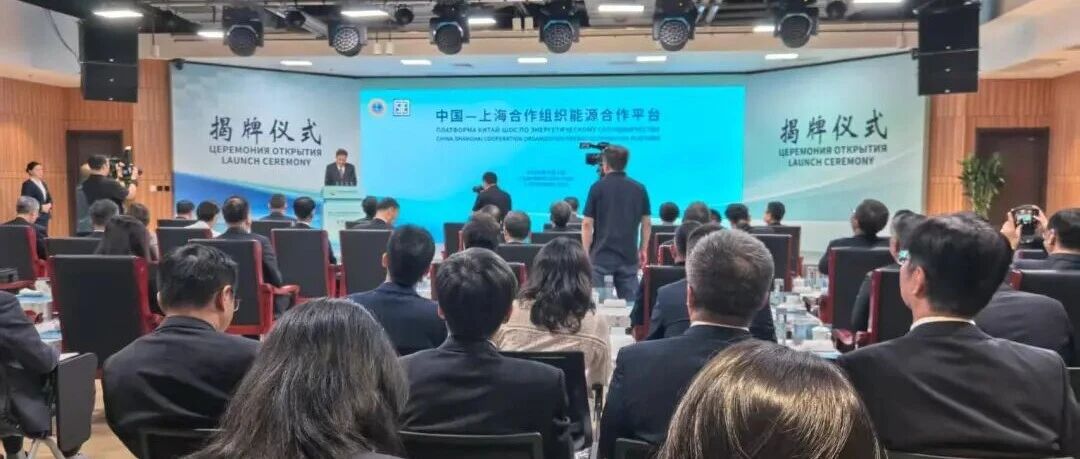
中国—上海合作组织能源合作平台揭牌仪式在北京举办
Yang Shi Xin Wen Ke Hu Duan· 2025-09-02 07:02
Core Insights - The China-Shanghai Cooperation Organization (SCO) Energy Cooperation Platform was inaugurated on September 2, highlighting the importance of energy cooperation in regional collaboration [1] - Since China assumed the rotating presidency of the SCO in July last year, Chinese enterprises have signed, commenced, and put into operation over 160 projects in the electricity and renewable energy sectors, and more than 60 projects in oil and gas, totaling approximately 380 billion RMB [1] - The National Energy Administration aims to enhance practical exchanges and cooperation in the energy sector with SCO countries, expand new spaces for clean energy cooperation, and improve regional energy governance capabilities [1] Industry Developments - The establishment of the SCO Energy Cooperation Platform is expected to serve as a strong driver for regional economic and social development [1] - The focus on clean energy cooperation indicates a strategic shift towards sustainable energy solutions within the region [1] - The total investment in energy projects signifies a robust commitment from China to enhance energy infrastructure and collaboration with neighboring countries [1]
特斯拉“宏图计划4”:AI、人形机器人与自动驾驶的未来蓝图
Jin Shi Shu Ju· 2025-09-02 06:58
Core Viewpoint - Tesla's "Master Plan Part IV" aims to drive the transition to a sustainable and abundant society through electric vehicles, energy products, and humanoid robots, emphasizing the importance of innovation and autonomous technology [2][6][17] Group 1: Infinite Growth - The company asserts that growth in one area does not necessitate a decline in another, and that technological advancements can address resource shortages [8][10] - The mission is to create tools that enhance human life quality through automation and innovation, expanding economic opportunities for all [12][13] Group 2: Innovation and Problem Solving - Tesla has overcome technological limitations in battery development, contributing to the renewable energy sector [10][11] - Products like solar power and large-scale battery storage improve the availability and reliability of clean energy in communities [11] - The Optimus humanoid robot is designed to change perceptions of labor and increase the availability of labor for more fulfilling tasks [11][12] Group 3: Accessibility and Democratization - The company is focused on producing affordable, high-tech products at scale to democratize society and enhance quality of life for everyone [3][13] - The goal is to create opportunities for all individuals to utilize their abilities and achieve their aspirations [14] Group 4: Challenges and Future Vision - The transition to sustainable abundance is acknowledged as a difficult challenge that requires persistent and meticulous execution [15] - The company believes that overcoming these challenges will reveal possibilities previously deemed impossible, ultimately benefiting future generations [15][17]


央视新闻丨中国-上海合作组织能源合作平台揭牌仪式在北京举办
国家能源局· 2025-09-02 03:14
Group 1 - The core viewpoint of the article highlights the establishment of the China-Shanghai Cooperation Organization (SCO) Energy Cooperation Platform, which aims to enhance regional energy collaboration and drive economic development [2] - Since taking over the rotating presidency of the SCO in July last year, Chinese enterprises have signed, commenced, and put into operation over 160 projects in the electricity and renewable energy sectors, and over 60 projects in oil and gas, with a total investment amounting to approximately 380 billion yuan [4] - The National Energy Administration plans to further leverage the platform to deepen practical exchanges and cooperation in the energy sector with SCO member states, expand new opportunities for clean energy collaboration, and enhance regional energy governance capabilities [4]
《环球ESG观察》(第五期):体系创新锚定零碳未来 能源革命重塑全球格局
Huan Qiu Shi Bao· 2025-09-02 01:09
Core Insights - China has established the world's most comprehensive carbon reduction policy system, achieving significant milestones in sustainable development and green transformation [1][2][3] Domestic Developments - China has constructed a top-level design and policy system for carbon reduction, with coal consumption decreasing from 56.8% in 2020 to 53.2% in 2024, and non-fossil energy consumption increasing from 15.9% to 19.8% [2][3] - The country has cultivated over 6,400 green factories and 490 green industrial parks, aiming for an 11.6% reduction in energy consumption per unit of GDP by 2024, equivalent to a decrease of 1.1 billion tons of CO2 emissions [3] - In July, China's total electricity consumption surpassed 1 trillion kilowatt-hours for the first time, with a year-on-year growth of 8.6%, reflecting the acceleration of economic vitality and green transformation [6] - The world's largest underground compressed air energy storage facility has been established in Hunan, capable of operating at a pressure of 18 MPa, addressing challenges in renewable energy consumption [7][8] - A pilot program for green foreign debt has been launched in 16 provinces and cities, encouraging cross-border financing for green or low-carbon transition projects [9] International Developments - Former U.S. President Trump criticized renewable energy, labeling wind and solar projects as a "scam" and halting new approvals for such initiatives [10][11] - Global negotiations on a plastic treaty have stalled due to disagreements, highlighting the challenges of multilateral governance in environmental issues [12][14] Practices and Innovations - Hengsheng Electronics achieved an MSCI ESG rating upgrade from "A" to "AA," marking it as the highest rating among domestic software companies, reflecting significant progress in sustainability [21] - Shenzhou Holdings received nominations for two awards at the Sedex Supply Chain Awards, recognizing its leadership in sustainable supply chain practices [22][23] - Guyue Longshan maintained its leading position in the yellow wine industry with a Wind ESG rating of BBB, showcasing its commitment to high-quality development and sustainability [24] - BAIC Group launched the "Hetian Oasis" initiative, contributing to desertification control by donating 9.9 yuan for every vehicle sold in the region [25][26]


专家共议中国-东盟蓝色经济合作
Zhong Guo Zi Ran Zi Yuan Bao· 2025-09-02 00:39
Core Viewpoint - The establishment of a China-ASEAN blue economy market is seen as a significant option for economic growth and regional economic integration between China and ASEAN [1][2] Group 1: Conference Overview - The "China-ASEAN Blue Economy New Engine Seminar" was held in Kuala Lumpur, Malaysia on August 25, aiming to promote deep cooperation in the blue economy sector [1] - The seminar was co-hosted by the China (Hainan) Reform and Development Research Institute, the China Foreign Affairs University Institute of Asian Studies, and the Malaysian Maritime Institute, with participation from over 40 representatives from government, academia, and media [1] Group 2: Key Themes Discussed - Discussions focused on topics such as unlocking the value of marine resources, enhancing smart port and green shipping cooperation, and leveraging the Hainan Free Trade Port to create a China-ASEAN marine tourism and cultural economy [1] - The need for a common market in blue economy sectors, including marine tourism, fisheries, renewable energy, and marine biological resources, was emphasized [2] Group 3: Investment and Cooperation - Significant and reasonable investment in sustainable and high-value marine sectors is required to implement the China-ASEAN blue economy blueprint [2] - The importance of policy and technological innovation, as well as inclusive and resilient governance and capacity building, was highlighted as essential for the partnership [2]
如何统筹谋划,多维推动零碳园区建设?
Zhong Guo Huan Jing Bao· 2025-09-01 23:17
Core Viewpoint - The construction of zero-carbon parks is a significant strategic initiative aimed at fostering green productivity, accelerating the establishment of a new energy system, and achieving carbon neutrality goals in China [1][2]. Group 1: Construction Standards and Guidelines - The establishment of a unified standard for zero-carbon park construction is essential, focusing on a core indicator of carbon emissions per unit energy consumption [2][3]. - Additional guiding indicators include the proportion of clean energy consumption, energy efficiency of products, industrial waste recycling rates, and water reuse rates, which are crucial for promoting comprehensive green transformation [2]. Group 2: Innovation and Green Vitality - Zero-carbon park construction requires innovation across multiple dimensions, including technology, systems, and business models, to stimulate green vitality [4]. - Technological innovations in renewable energy, energy storage, and low-carbon transportation are vital, providing application scenarios that encourage research and development [4]. - Institutional innovations, such as green electricity supply models, can enhance market vitality and support the development of new energy systems [5]. Group 3: Energy Supply and Consumption Transition - The transition to green energy supply and consumption must be integrated within the zero-carbon park construction framework, focusing on improving the efficiency and effectiveness of renewable energy utilization [6][7]. - There is a need to optimize industrial structures and explore "green production" models to promote the green upgrade of traditional industries [7]. Group 4: Implementation and Support Mechanisms - The construction of zero-carbon parks is a long-term strategic task that requires a phased approach, prioritizing areas with favorable conditions for renewable energy and technological innovation [8]. - A comprehensive planning and design strategy is necessary to ensure the feasibility and operability of projects, focusing on renewable energy integration and resource utilization [8]. - Strengthening collaboration among government, parks, and enterprises is crucial for effective implementation and evaluation of construction tasks [9].