
银行业

Search documents
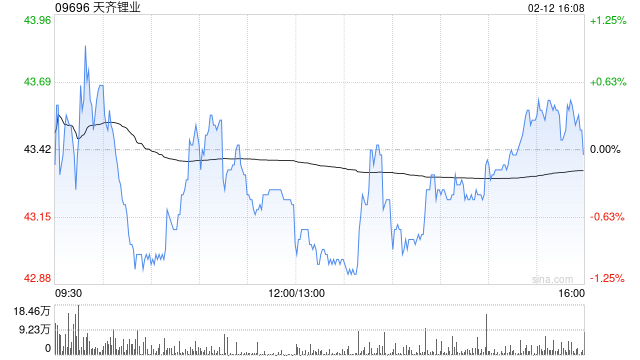
天齐锂业获摩根大通增持约86.96万股 每股作价约42.42港元
Xin Lang Cai Jing· 2026-02-13 00:08
Group 1 - Morgan Stanley increased its stake in Tianqi Lithium (09696) by 869,606 shares at a price of HKD 42.423 per share, totaling approximately HKD 36.8913 million [2][5] - After the increase, Morgan Stanley's total shareholding in Tianqi Lithium reached approximately 11.5378 million shares, representing a stake of 7.02% [2][5]


金价真的是一夜大变天,最新报价,全国金价竟然差这么多?
Sou Hu Cai Jing· 2026-02-13 00:03
Core Viewpoint - The price of gold varies significantly across different retailers, with a difference of over 400 yuan per gram between the Shanghai Gold Exchange and brand jewelry stores, highlighting the importance of price comparison for consumers [1][6][20]. Price Comparison - On February 12, 2026, the Shanghai Gold Exchange quoted AU9999 at 1123 yuan per gram, while major jewelry brands like Chow Tai Fook and Chow Sang Sang priced it at 1560 yuan per gram [3][20]. - The price difference between investment gold bars from banks and jewelry is substantial, with bank gold bars priced around 1135 yuan per gram compared to 1560 yuan for jewelry, resulting in a savings of over 420 yuan per gram when choosing bank gold bars [6][20]. Brand Pricing Discrepancies - The price variation among brand jewelry stores is notable, with a difference of 80 yuan per gram between the highest and lowest prices [4][20]. - The cost of jewelry includes design, operational, and store costs, leading to higher prices compared to investment gold bars, which have minimal premiums [6][7]. Regional and Store Variations - Prices differ based on location and store type, with flagship stores in prime urban areas charging more than those in smaller towns [7][16]. - In the same city, different shopping districts can have price variations of a few yuan per gram [7][16]. Consumer Behavior - Consumers exhibit varied purchasing behaviors, with some opting for bank gold bars for investment and others choosing brand jewelry for personal use [17][18]. - The demand for gold jewelry spikes during festive seasons, leading to increased sales for brand stores [12][20]. Market Dynamics - The gold recovery market shows that consumers often receive lower prices than expected when dealing with non-regulated buyers, emphasizing the importance of using transparent recovery channels [9][22]. - The gold market is influenced by international prices, with domestic prices fluctuating in response to global trends [26]. Sales Data - On February 12, 2026, the trading volume on the Shanghai Gold Exchange reached 50 tons, with significant sales reported by both banks and brand jewelry stores [20]. - Brand stores like Chow Tai Fook sold 500 kg of gold jewelry, while banks sold substantial amounts of gold bars, indicating strong consumer interest [20].






盘前必读丨美股收跌苹果重挫5%;网信部门严打无AI标识虚假信息
Di Yi Cai Jing· 2026-02-13 00:01
Group 1 - The technology growth style is expected to make a comeback after the Spring Festival holiday [12] - The AI industry chain, overseas expansion of enterprises, and rising resource prices are identified as three core prosperous themes [12] Group 2 - The National Bureau of Statistics released a monthly report on residential sales prices in 70 large and medium-sized cities [2] - The Ministry of Commerce proposed anti-subsidy taxes on imported dairy products from the EU due to substantial damage to the domestic industry [2] - The Ministry of Commerce confirmed the EU's approval for a Chinese SUV brand to be exempt from tariffs, highlighting the deep integration and mutual benefits of the China-EU automotive industry [3]

去风险情绪骤升,流动性挤压下贵金属遭“踩踏式”抛售
Sou Hu Cai Jing· 2026-02-13 00:00
Group 1 - The global financial market is experiencing a "de-risking" sentiment, leading to a sell-off in precious metals, particularly gold, silver, and copper, as investors seek liquidity amid falling tech stocks in the US [1][2] - Gold prices saw a maximum intraday drop of 4.1%, while silver plummeted by 11%, and copper prices fell by 2.9%, before slightly rebounding from their lows [1][2] - Market volatility is characterized by a rapid clearing of risk assets, with even traditionally safe-haven assets like gold being sold off due to urgent liquidity needs [1][2] Group 2 - The strong upward momentum in precious metals since the beginning of 2024 was abruptly halted on January 29, when gold recorded its largest single-day drop in over a decade, and silver its largest historical drop [2] - Analysts suggest that the recent sharp decline does not necessarily indicate a sustained downward trend for gold, but it does increase the likelihood of high volatility in the short term [2] - Institutional perspectives indicate that the recent sell-off is driven by algorithmic trading and systematic strategies, particularly after key price levels were breached [2] Group 3 - In the silver market, the dynamics of the options market have amplified volatility, with active trading in call options for the iShares Silver Trust contributing to selling pressure [3] - Traders are closely monitoring upcoming US economic data, especially core inflation indicators, to assess the Federal Reserve's interest rate trajectory, as lower borrowing costs typically benefit non-yielding precious metals [3] - As of the close of US markets, spot gold fell by 3.15% to $4922.3 per ounce, while silver dropped over 10% to $75.31 per ounce, alongside declines in platinum and palladium, with a slight increase in the US dollar index [3]
黄金一度跌超4%、白银暴跌11%,美股大跌引爆算法交易贵金属卖盘?
美股IPO· 2026-02-12 23:58
Core Viewpoint - The recent sharp decline in precious metal prices, including gold and silver, is attributed to algorithmic trading sell-offs and a risk-off sentiment among investors, driven by concerns over the viability of large-scale AI investments and a downturn in U.S. tech stocks [1][2][5]. Group 1: Price Movements - Spot gold experienced a significant drop of 4.1%, while silver plummeted by 11%. By the end of trading on Thursday, gold was down 3.26% at $4918.36 per ounce, and silver fell 10.89% to $75.0942 per ounce [3][4]. - Other metals also saw declines, with COMEX copper futures down 3.65% at $5.7740 per pound, and spot platinum and palladium dropping by 6.19% and 5.89%, respectively [4]. Group 2: Market Sentiment and Analysis - Analysts noted that the rapid sell-off felt like a risk-off scenario, where even traditionally safe-haven assets like gold were sold off by investors seeking liquidity [5][6]. - The recent volatility in gold and silver prices is largely driven by market sentiment and momentum, making them difficult to trade in extreme market conditions [6]. Group 3: Future Outlook - Despite the recent downturn, many analysts believe that gold will eventually recover, citing ongoing factors such as geopolitical tensions and skepticism regarding the Federal Reserve's independence as supportive of higher prices [9]. - Major financial institutions, including JPMorgan and Deutsche Bank, maintain bullish forecasts for gold, with JPMorgan predicting prices could reach $6000 to $6300 per ounce by year-end [9]. - Traders are closely monitoring upcoming U.S. economic data, particularly the CPI report, for insights into the Federal Reserve's interest rate path, which could influence precious metal prices [9].

新华财经早报:2月13日
Xin Lang Cai Jing· 2026-02-12 23:43
Group 1: Low-altitude Insurance and Automotive Industry Regulations - The National Development and Reform Commission, along with financial regulatory bodies, has issued guidelines to promote the high-quality development of low-altitude insurance, aiming to establish a mandatory liability insurance system for unmanned aerial vehicles by 2027 [3] - The State Administration for Market Regulation has released a compliance guide for pricing behavior in the automotive industry, detailing pricing norms from vehicle production to sales, and emphasizing fair pricing and the regulation of promotional activities [3] Group 2: AI Development and Market Trends - Domestic large models are being launched intensively before the Spring Festival, with companies like ByteDance and iFlytek introducing new AI models, indicating a shift from "technical racing" to "value racing" in AI competition, with 2026 identified as a critical year for commercialization [4] Group 3: Financial and Economic Data - By the end of Q4 2025, the balance of inclusive loans to small and micro enterprises in China's banking sector reached 37 trillion yuan, reflecting a year-on-year growth of 11.0% [3] - The People's Bank of China plans to conduct a 10 trillion yuan reverse repurchase operation on February 13, 2026, with a term of 182 days [3] Group 4: Corporate Announcements and Investments - China Shenhua has received approval from the China Securities Regulatory Commission for a share issuance and cash payment to acquire assets [10] - Huadian Power plans to invest 2.1 billion yuan in the construction of a 120Ah battery production project [10] - Xiamen Airport intends to acquire 100% of Zhaoxiang Technology for approximately 1.193 billion yuan [10] Group 5: Market Indices and Commodity Prices - The Shanghai Composite Index closed at 4134.02, up 0.05%, while the Shenzhen Component Index rose by 0.86% to 14283 [8] - WTI crude oil prices fell by 3.05% to $62.91, and Brent crude oil prices decreased by 2.83% to $67.66 [8]

金融活水向“智”逐“绿”
Xin Lang Cai Jing· 2026-02-12 23:43
Group 1 - The core viewpoint of the articles highlights the rapid growth of financial services in Huzhou, particularly in supporting green and technological initiatives, with a notable increase in bank loans and innovative financing solutions [1][2][3] - Huzhou's bank loan balance is projected to reach 1.3387 trillion yuan by 2025, reflecting a year-on-year growth of 10.85%, ranking second in the province [1] - Financial institutions are increasingly connecting with the real economy, with loans in key areas such as technology and green projects growing faster than the overall loan balance [1] Group 2 - The introduction of innovative financing solutions, such as the first green external debt registration for Zhejiang Kaisi Technology Development Co., which secured $1.5 million for energy-saving equipment upgrades, demonstrates the responsiveness of financial services to corporate needs [2] - The collaboration between financial institutions and industry departments has improved, allowing for timely information sharing and early intervention in project financing [2] - Huzhou has maintained the best credit asset quality in the province for 46 consecutive months, indicating a strong focus on financial risk management alongside support for the real economy [2]



2月13日你需要知道的隔夜全球重要信息
Jin Rong Jie· 2026-02-12 23:40
1、美国总统特朗普当地时间2月12日表示,美国必须与伊朗达成协议,否则局势将非常严重,称预计未 来一个月内或许能达成协议,若无法达成协议将进入第二阶段,对伊朗来说会非常艰难。 2、 人工智能 初创企业Anthropic完成300亿美元融资,投后估值达3800亿美元,年化收入现已达到140亿美元,本轮 融资包含此前宣布的来自微软和英伟达的投资部分。 3、OpenAI发布首款基于 半导体初创公司Cerebras Systems芯片的人工智能模型GPT-5.3-Codex-Spark。 4、美国参议院民主党人投票阻止一项为国土安全 部提供资金的拨款法案,令该部门在13日午夜面临几乎不可避免的停摆。 5、特朗普领导下的美国环境 保护署采取行动,推翻前总统拜登此前制定的汽车尾气排放规定,这些规定原本旨在推动电动汽车产量 提升。 6、美国上周初请失业金人数为22.7万人,预估为22.4万人,前值为23.1万人。 7、纽约联邦储备 银行发布报告称,美国消费者和企业承担了特朗普政府加征关税的大部分成本,比例约为90%。 8、据 加纳矿业协会,加纳2025年 黄金产量初步数据达600万盎司,创历史新高;预计2026年黄金产量为 ...
深夜,全线暴跌!AI,利空突袭!黄金、白银也崩了
Xin Lang Cai Jing· 2026-02-12 23:34
Market Overview - The US stock market experienced a significant sell-off, with all three major indices declining sharply. The Dow Jones Industrial Average fell by 669 points, or 1.34%, the S&P 500 dropped by 1.57%, and the Nasdaq Composite decreased by 2.03% [1][7] - The VIX volatility index surged over 18%, indicating heightened market fear [1] Impact of AI Concerns - Concerns regarding the disruptive impact of AI on various sectors have intensified, leading to widespread declines in financial, real estate, trucking, and logistics stocks [1][3] - Major technology stocks suffered heavy losses, with Apple down 5%, erasing its gains for the year, and other tech giants like Amazon, Meta, and Tesla also experiencing declines [2][8] Sector-Specific Reactions - The financial sector faced collective declines, with Morgan Stanley dropping over 6% at one point and closing down 4.88%. Other banks like Citigroup and Goldman Sachs also saw significant losses [2][8] - The real estate sector was affected by fears of rising unemployment impacting office space demand, leading to a drop of over 15% for CBRE at one point [3][9] - The trucking and logistics sector saw the Russell 3000 trucking index fall by 7%, with companies like C.H. Robinson experiencing a drop of over 20% [3][9] Precious Metals Market - Gold and silver prices plummeted, with spot gold falling over 4% and silver dropping more than 11%. The final closing prices reflected declines of 3.17% for gold and 10.73% for silver [4][10] - Analysts noted that the sell-off in precious metals was driven by a need for liquidity, as investors exited positions in commodities [4][11] Future Outlook for Gold - Despite recent declines, analysts remain optimistic about gold's recovery, citing ongoing geopolitical tensions and a shift from traditional assets to alternatives. Predictions suggest gold prices could reach between $6,000 and $6,300 per ounce by year-end [5][11]


固定收益|点评报告:信用:守住票息
Changjiang Securities· 2026-02-12 23:30
1. Report Industry Investment Rating No information provided in the content. 2. Core View of the Report - Recent bond market fluctuations have slowed, with credit bonds performing slightly better than interest rate bonds, mainly driven by institutional allocation behavior. Banks' asset allocation has shifted from "bond - loan resonance" to "bond - substitution for loan", and credit bonds have become a key focus. Insurance funds are increasing their allocation of medium - and long - term credit bonds due to the dominance of dividend - paying insurance during the "good start" period. The continuous net inflow of funds at the liability end of funds supports the market of credit bonds and Tier 2 capital bonds. It is suggested to focus on 5 - year AA - rated medium - and short - term notes, AAA - and AA + commercial bank perpetual bonds, and explore the structural opportunities of credit bonds [2]. 3. Summary by Relevant Catalog Bank Bond - Loan Allocation: From Resonance to Substitution - Since the beginning of the year, large - scale banks' bond purchases have significantly exceeded market expectations, leading to a decline in the yields of 10 - year and 30 - year Treasury bonds. By reviewing the data from 2023 - 2025, it is found that the substitution effect of bond investment for credit lending in 2025 was more significant than in previous years. The bond - loan allocation behavior of banks can be summarized into three combination models: "strong in both bonds and loans", "weak in both bonds and loans", and "one rising while the other falling". The increase in credit bond allocation by banks has become a key way to make up for the asset gap and rebalance risk and return, and has also stabilized the credit bond market [17][21]. Insurance "Good Start" Funds Drive Credit Bond Allocation - Based on the structural characteristics of insurance premium income in 2025, the incremental demand for insurance funds to allocate credit bonds may continue to increase in 2026, with the "good start" funds being the main driving force. In 2025, the insurance industry's original insurance premium income reached 6.12 trillion yuan, a year - on - year increase of 7.4%. In 2026, dividend - paying insurance products dominated the "good start" sales, which have higher requirements for investment returns and are expected to guide insurance funds to increase their allocation of credit bonds [25]. New Features of Insurance Allocation: The Development of Dividend - Paying Insurance Benefits Medium - and Long - Term Credit Bonds - At the beginning of 2026, insurance funds showed a clear maturity preference for credit bond allocation, with medium - and long - term credit bonds becoming the core of increased allocation. In the first two weeks of January, the net purchase of medium - and long - term credit bonds by insurance institutions accounted for 84% and 94% of the total net purchase of credit bonds. The planned annual increase in holdings of this type of bonds is 39%. This change is mainly driven by the transformation of the liability side. It is expected that the trend of increasing the allocation of medium - and long - term credit bonds by insurance in February 2026 will continue [30]. Tier 2 Capital Bonds: Funds and Insurance Show a Strong Allocation Pattern - Since the beginning of 2026, in the 6 - week period, the market for 3 - to 5 - year Tier 2 capital bonds has shown a pattern of "strong allocation by funds and insurance". Fund companies and products have maintained a high level of buying, with a cumulative net purchase of 759.85 billion yuan. Insurance funds have also strengthened their allocation, with a net purchase of 422.47 billion yuan. The demand for wealth - management products has been stable, with a net purchase of 40.45 billion yuan [37]. Which is Better: Urban Investment Bonds or Industrial Bonds? Based on Historical Price - Ratio Rules - The yields of urban investment bonds and industrial bonds of the same rating and maturity are not completely comparable. Referring to historical price - ratio rules, when the yield of AAA urban investment bonds is about 2bp higher than that of the same - maturity AAA industrial bonds, and when the yield of AA + urban investment bonds is about 2bp lower than that of the same - maturity AA + industrial bonds, it is a better allocation point. Industrial bonds show greater internal differentiation, while urban investment bonds have more convergent pricing. Different rating and maturity bonds have different allocation recommendations based on historical quantiles [40]. Variety Allocation Strategy: Explore Industrial Spreads and Focus on Interest Rate Defense - Considering the current spread quantiles, valuation levels, and market rotation rhythm, the recommended priority for next - week's credit bond allocation is: 5 - year AA - rated medium - and short - term notes > 5 - year AAA - commercial bank perpetual bonds > 5 - year AA + commercial bank perpetual bonds. The main reasons are that the 5 - year AA - rated medium - and short - term notes have obvious allocation value, the 5 - year China Development Bank bonds still have thick spread protection, and the 5 - year AAA - and AA + commercial bank perpetual bonds have room for performance due to the spread compression of medium - and long - term Tier 2 capital bonds [45].