餐饮服务

Search documents
小鹏汇天回应航展坠机;刘强东谈外卖竞争:不希望变成个人恩怨;爆料称淘宝将在微信内部开设小程序;特斯拉车顶维权女车主胜诉丨邦早报
创业邦· 2025-09-17 00:09
Group 1 - Alibaba is reportedly negotiating with WeChat to allow Taobao to open mini-programs within WeChat for direct transactions, with Taobao offering WeChat Pay without password as a trade-off [3] - A Beijing court ruled in favor of a car owner against Tesla, ordering the company to provide complete driving data from the 30 minutes prior to an accident, emphasizing consumer rights [4][5] - Intel's China chairman Wang Rui is set to retire, marking a planned management transition following the appointment of Wang Zhichong as vice chairman [6] Group 2 - Xiaomi is adjusting the sales structure for its SU7 Ultra model, previously exclusive to Ultra Master, now available to all Xiaomi car sales [8] - The monthly active user count for Doubao has surpassed DeepSeek, leading the AI app rankings in China [9] - JD.com's founder Liu Qiangdong expressed a desire for healthy competition in the food delivery sector, emphasizing the importance of business strategy over personal conflicts [9] Group 3 - ByteDance denied rumors of shutting down its Shanghai studio and laying off 300 employees, clarifying that the studio remains operational [9] - XPeng's eVTOL aircraft experienced an incident at an airshow, but no injuries were reported, and an investigation is underway [9] - Taier's parent company, Jiumaojiu Group, plans to complete the transformation of its fresh fish stores by the end of 2026, aiming to enhance customer experience [11] Group 4 - OpenAI has appointed Mike Liberatore, former CFO of xAI, to oversee its financial operations [11] - AI robotics company Figure completed a Series C funding round exceeding $1 billion, with a post-money valuation of $39 billion [17] - Databricks Ventures has invested in AI and data consulting firm Indicium, aiming to enhance collaboration on advanced AI features [17] Group 5 - The global semiconductor equipment market's top 10 companies generated over $64 billion in revenue in the first half of 2025, reflecting a 24% year-on-year growth [29]






西部马华:拉面承载美味连接天南地北
Xin Jing Bao· 2025-09-16 23:21
Core Viewpoint - The article highlights the journey of a company, Western Mahua, which has successfully expanded the traditional Lanzhou beef noodle brand from a small shop in Beijing to over 200 direct-operated restaurants globally, emphasizing the importance of maintaining authentic flavors and quality through strict operational standards and sourcing practices [1][4][6]. Company Development - Western Mahua started with a small shop in Beijing in 1988, founded by Mahua and her husband, using funds from selling two cows to open the business [2][3]. - The company has grown to over 200 direct-operated restaurants, serving more than 50,000 bowls of beef noodles daily [1][4]. - In 2001, the company was officially established as Beijing Western Mahua Catering Co., Ltd., with 11 stores at that time [3]. Operational Strategy - The company maintains strict operational guidelines, including a detailed manual for food preparation to ensure consistency across all locations [5]. - Ingredients are sourced from the Northwest region of China, with a central kitchen established to standardize the quality of the dishes served [5]. Cultural Impact - Western Mahua has become a symbol of authentic Lanzhou beef noodles, bridging cultural gaps and promoting Chinese culinary traditions internationally [6]. - The company has engaged in cultural exchange projects, such as the "Belt and Road: Walking New Year's Eve Dinner" initiative, showcasing Chinese cuisine in various countries [5][6]. Community Engagement - The company has established a training school to help thousands of young people learn culinary skills, with a focus on empowering women [5]. - Mahua has also invested in local agricultural projects in her hometown, collaborating with local farmers to ensure high-quality ingredients [5].
最高级的创新,是回归常识
Sou Hu Cai Jing· 2025-09-16 22:06
Core Insights - The core idea of the news is that Gaode Map is leveraging its vast navigation data to create a "Street Ranking" that reflects real user behavior, moving away from traditional review systems that rely on subjective opinions [3][4][6]. Group 1: Gaode Map's Innovations - Gaode Map's "Street Ranking" is based on navigation data from 51.32 million users, encompassing 1.3 billion navigations over 22 billion kilometers, highlighting the significance of real user behavior in determining rankings [3][5]. - The ranking system aims to transform Gaode's data into a public good, providing a trustworthy source of information that reflects actual consumer preferences rather than manipulated reviews [6][14]. - The introduction of the "Street Ranking" has resulted in a significant increase in daily active users, with 40 million users engaging with the ranking, surpassing the peak daily active users of other review platforms [3][4]. Group 2: Market Impact and User Experience - The "Street Ranking" has created a new ecosystem within Alibaba's consumer operations, enhancing the value of its services and contributing to the company's stock price recovery [4][10]. - Users have reported a more streamlined experience, combining the discovery process with navigation, thus reducing the need for multiple apps to find reliable information [7][14]. - Businesses listed in the "Street Ranking" have experienced notable increases in customer traffic and revenue, with some reporting growth in dining revenue by 17% to 29% after being featured [10][11]. Group 3: Trust and Authenticity - The ranking system emphasizes authenticity by relying solely on user behavior, eliminating the potential for fake reviews or manipulated ratings, thus establishing a trust-based mechanism [6][14][15]. - The shift from traditional review systems to behavior-based rankings addresses the issue of information asymmetry prevalent in the market, providing a more reliable gauge of consumer preferences [6][9]. - Gaode's approach reflects a broader trend towards valuing genuine consumer experiences over marketing-driven narratives, aligning with the growing demand for authenticity in the post-truth era [4][15].
西贝道歉,老罗却突然收手:我瞬间明白了他能还清8亿巨债的原因
Xin Lang Cai Jing· 2025-09-16 20:14
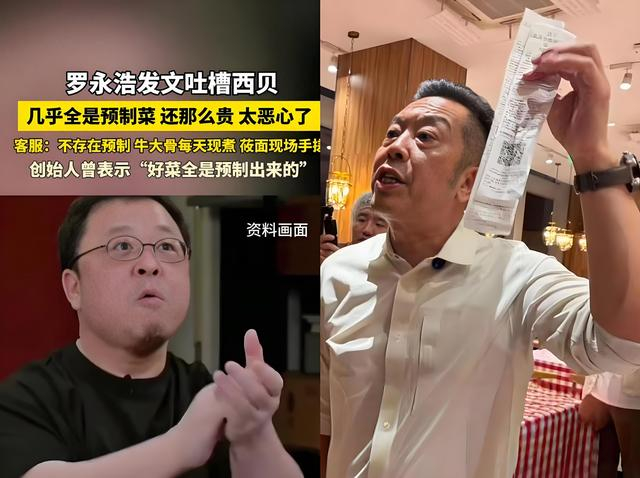
Core Viewpoint - The article discusses the character and actions of Luo Yonghao, emphasizing his decision to withdraw from a legal battle against Xibei's founder to protect the livelihoods of nearly 20,000 employees, showcasing his altruistic nature and moral integrity [2][5][38]. Group 1: Character and Actions of Luo Yonghao - Luo Yonghao is portrayed as a strong and principled individual who has previously taken bold actions against large corporations, demonstrating his willingness to fight for consumer rights [4][19]. - His decision to step back from the lawsuit against Xibei is framed as a strategic choice rooted in compassion rather than fear, highlighting his concern for the employees affected by the conflict [6][38]. - The article emphasizes that true strength lies in knowing when to hold back, which Luo Yonghao exemplifies through his actions [7][8]. Group 2: Consumer Advocacy and Trust - Luo Yonghao's advocacy is characterized by a focus on consumer interests rather than personal gain, which has garnered public support for his initiatives [10][11]. - He has committed to continuing legal support for consumers and monitoring the situation at Xibei, indicating his ongoing dedication to consumer rights [11][12]. - The article notes that Luo Yonghao's ability to repay 800 million in debt is attributed to the trust he has built with consumers through his consistent and genuine actions [23][32]. Group 3: Societal Implications - The article suggests that individuals like Luo Yonghao, who are willing to stand up against injustices, are rare and essential for societal progress [34][35]. - It highlights the importance of having outspoken individuals in society to challenge complacency and corporate negligence, which can lead to a more accountable business environment [34][36]. - The narrative concludes that true wealth is measured not in financial terms but in the trust and respect earned from others [41].
*ST云网:程阳辞去公司证券事务代表职务
Mei Ri Jing Ji Xin Wen· 2025-09-16 12:36
Group 1 - The company *ST Yunwang announced the resignation of Ms. Cheng Yang from her position as the securities affairs representative due to personal career development reasons, effective upon delivery to the board of directors [1] - As of January to June 2025, the company's revenue composition is as follows: 59.98% from the new energy photovoltaic business and 40.02% from the catering service [1] - The current market capitalization of *ST Yunwang is 1.7 billion yuan [1]

消费者:我们没想“虐”西贝千百遍,只想吃口安心饭!这个简单的要求,过分吗?
Sou Hu Cai Jing· 2025-09-16 11:39
Core Viewpoint - The core issue is not the use of pre-prepared dishes by the company, but rather the consumers' right to know about the food they are consuming and the transparency regarding ingredient sourcing [1][5][12] Group 1: Consumer Expectations - Consumers are primarily concerned with understanding whether a dish is freshly made or a pre-prepared item, and they want clarity on the cost versus ingredient quality [5][12] - The company's apology has not adequately addressed the consumers' expectations for transparency and clear communication about food preparation [19][24] Group 2: Company Response - The company has issued a second apology, but the language used has been perceived as dismissive, suggesting that consumer feedback is seen as "harassment" rather than constructive criticism [1][8][22] - The company plans to implement several changes by October 1, 2025, including using non-GMO soybean oil and preparing certain dishes on-site rather than using pre-prepared ingredients [2] Group 3: Trust and Transparency - Trust is built through transparency, and consumers are looking for visible improvements rather than just verbal commitments [19][24] - The company needs to recognize that consumer scrutiny is a reflection of changing expectations in the dining industry, where customers seek assurance about food safety and ingredient sourcing [22][24]

西贝“翻车”启示录:一场教科书级的公关危机如何炼成
Sou Hu Cai Jing· 2025-09-16 11:32
Core Viewpoint - The controversy surrounding the "pre-prepared dishes" debate highlights a significant disconnect between consumer expectations and the practices of contemporary dining establishments, particularly in the case of Xibei Restaurant Group [3][4][5] Consumer Concerns - Consumers are increasingly questioning the value they receive for their money, particularly when they perceive a lack of transparency regarding food preparation methods [4][5] - The expectation of fresh, hand-prepared meals is being challenged by the revelation of pre-prepared items, leading to feelings of deception among consumers [4][5] - The issue of price versus perceived value is central, with consumers willing to pay for high-quality dining experiences but resistant to paying for industrial processes disguised as artisanal cooking [4][5][6] Crisis Management - Xibei's initial response to the controversy was criticized as "disastrous public relations," characterized by confrontational tactics rather than de-escalation [6][8] - The company's attempts to clarify terminology regarding "central kitchen" versus "pre-prepared" dishes failed to resonate with consumer understanding, leading to further ridicule [6][7] - The involvement of the founder in the public dispute exacerbated the situation, turning a brand crisis into a personal image crisis [7][8] Shift in Strategy - Following initial backlash, Xibei appears to be transitioning from a combative stance to a more reflective approach, indicating a willingness to address consumer concerns [8] - Recommendations for effective crisis management include acknowledging mistakes, providing transparent information about food preparation, and inviting consumer participation in product development [9][10][12] - Emphasizing emotional resonance and storytelling in marketing can help bridge the gap between industrial processes and consumer expectations [11][12] Industry Implications - The incident serves as a cautionary tale for businesses about the importance of transparency and consumer trust in the digital age, where information spreads rapidly [13][17] - Companies must adapt to a new paradigm where trust is a quantifiable asset, and transparency is essential for maintaining consumer loyalty [17] - The future of competition in the industry will hinge on the ability to foster trust through open communication and accountability [17]
罗永浩再“停战”:放弃进一步追究西贝
Sou Hu Cai Jing· 2025-09-16 10:21
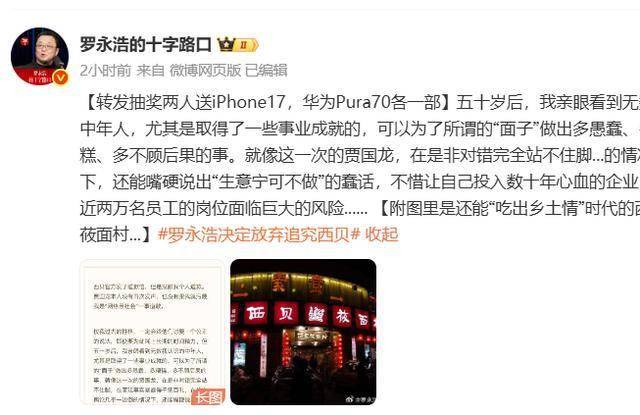
瑞财经 李兰9月15日,在西贝发布道歉信后,罗永浩发布长文,称将放弃对贾国龙的法律诉讼,放弃十 万元现金奖励西贝内幕。 长文中罗永浩做了如下三个决定: 1.我说过我要发起对贾国龙诽谤污蔑我的法律诉讼,现在决定放弃(除非他再次发出类似的言论); 2.我说过我要提取十万元现金去西贝公司奖励贾国龙为揭露西贝内幕的作出的贡献,这是对一个欺骗公 众的企业家进行讽刺和侮辱的行为,现在决定放弃(除非他再次做出荒谬的言行); 罗永浩表示,西贝官方发了道歉信,但是没跟他个人道歉。贾国龙本人没有再次发声,也没有跟污蔑自 己是"网络黑社会"一事道歉。 "按我过去的性格,一定会跟他们讨要一个公正的说法,即使要为此耗上长期的时间精力。但五十岁 后,我亲眼看到无数我认识的中年人,尤其是取得了一些事业成就的,可以为了所谓的面子做出多愚 蠢、多糟糕、多不顾后果的事。"罗永浩表示,就像这一次的贾国龙,在是非对错完全站不住脚,在客 观事实暴露得千疮百孔,在公众舆论几乎一边倒的情况下,还能嘴硬说出"生意宁可不做"的蠢话,不惜 让自己投入数十年心血的企业,和近两万名员工的岗位面临巨大的风险,这让他备感犹豫。 "我反复权衡之后,决定还是算了。接下来, ...
「点单7分钟后,三道菜全部上齐」,太二酸菜鱼客服回应「有无使用预制菜」质疑
Di Yi Cai Jing· 2025-09-16 10:08
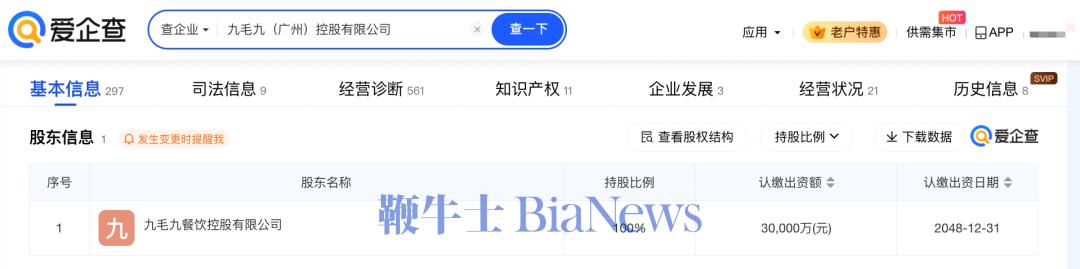
Group 1 - The topic "Why is Tai Er Sauerkraut Fish not being eaten?" has recently gained attention, sparking discussions about whether it is a pre-prepared dish [1] - A media report on September 14 revealed that at a Tai Er Sauerkraut Fish store in Hangzhou, three dishes were served within 7 minutes, indicating a potential use of pre-prepared ingredients [1] - Customer service stated that many ingredients are freshly made daily, but some are processed in a central kitchen, highlighting a mix of fresh and pre-prepared food [1] Group 2 - Tai Er Sauerkraut Fish's parent company, Jiumaojiu (Guangzhou) Holdings Co., Ltd., was established in May 2019 with a registered capital of 300 million RMB [2] - Jiumaojiu's 2025 semi-annual report indicated a revenue of 2.753 billion RMB in the first half of the year, a year-on-year decline of 10.14%, with net profit down 16.05% [4] - Revenue from Tai Er Sauerkraut Fish was 1.949 billion RMB, a decrease of 13.3%, and its contribution to total revenue fell from 73.4% to 70.8% [4]
十年拿了西贝6000万,「华与华」为何陷入争议
36氪· 2025-09-16 09:51
Core Viewpoint - The article discusses the ongoing conflict between the branding consultancy company Huayi Huayi and entrepreneur Luo Yonghao regarding the use of pre-prepared dishes in the restaurant industry, highlighting the implications for brand strategy and market positioning [4][6][8]. Group 1: Company Overview - Huayi Huayi, founded in 2002 by brothers Hua Shan and Hua Nan, specializes in brand consulting, marketing planning, and strategic design, with a unique methodology called "Super Symbol" [12][13]. - The company has served notable clients such as Haidilao, Mixue Ice City, and Xibei, and has been working with Xibei since 2013, significantly contributing to its brand development [13][14]. Group 2: Financial Aspects - Over ten years, Huayi Huayi has earned over 60 million yuan in consulting fees from Xibei, with future expectations of 100 million yuan for the next decade [14]. - The company is also linked to the publicly listed company Dook Culture, which has seen a decline in revenue and net profit in its latest financial report [15]. Group 3: Industry Dynamics - The article outlines the competitive landscape of brand consulting in China, identifying four main schools of thought, with Huayi Huayi representing the design school and others like Traut representing the positioning school [16][18]. - The ongoing debate between Huayi Huayi and the positioning school reflects a struggle for dominance in the branding consultancy market, with Huayi Huayi aiming to redefine industry standards [18][19].