汽车制造

Search documents
日产汽车:深耕中国EV市场 强化寒地性能测试 计划2026年出口中国研发车型
Zhong Guo Qi Che Bao Wang· 2026-02-27 05:55
Core Insights - Nissan is enhancing its competitiveness in the Chinese electric vehicle (EV) market by opening its cold-weather testing facility in Heilongjiang Province, focusing on developing models tailored for local demand [1][2] - The company plans to export models developed in China, including the N7, to global markets by 2026, using the Chinese market as a springboard for global EV transformation [1][3] Group 1: Cold Weather Testing and Model Development - Nissan's cold-weather testing facility in Heilongjiang is ideal for evaluating EV performance in extreme conditions, with temperatures reaching as low as -40 degrees Celsius [1] - The N7, Nissan's first EV developed specifically for China, is set to launch in April 2025 and features design elements and configurations that cater to Chinese consumer preferences [1][2] - The testing process ensures that the N7 maintains core quality standards consistent with global models, providing a competitive edge [2] Group 2: Sales Performance and Future Plans - Nissan's new car sales in China have declined from 1.56 million units in 2018 to 650,000 units in 2025, a drop of 60%, prompting the need for a robust EV strategy [2] - To counteract declining sales, Nissan is expanding its product line in China, with plans to launch the NX8 model, a pure electric SUV and extended-range electric vehicle (EREV), by 2026 [2] - The company aims to introduce 10 new energy models in China by summer 2027, leveraging local R&D and manufacturing capabilities to support global EV transition [3]
夜间高速上语音误关大灯致车祸,领克致歉
Xin Lang Cai Jing· 2026-02-27 04:58
Core Viewpoint - The incident involving the Lynk & Co Z20 vehicle highlights significant concerns regarding the safety and reliability of voice recognition technology in smart cars, prompting discussions about industry standards and safety measures [1][2]. Group 1: Incident Details - On February 26, a Lynk & Co Z20 experienced a critical failure when the vehicle's headlights were turned off due to a voice command error while driving at night on the highway [1]. - The vehicle's owner attempted to turn off the interior "reading light" but the command was misinterpreted, resulting in all vehicle lights being extinguished, leading to a collision with a highway guardrail [1]. - The company's response indicated that a voice control optimization plan was implemented immediately, restricting headlight control to manual operation while driving [1]. Group 2: Industry Context - There have been multiple incidents in recent years where smart vehicle voice recognition systems have failed, leading to dangerous situations, such as unintended window openings and trunk openings while driving [2]. - Experts, including a professor from Beijing Institute of Technology, have called for automotive companies to enhance the safety and reliability of voice recognition technologies and to establish industry standards for smart driving systems [2]. - Lynk & Co, founded in 2016 by Geely Holding Group, reported a total sales volume of 350,000 units in 2025, marking a year-on-year increase of 22.8%, with January 2023 sales reaching 28,900 units, up 12% year-on-year [2].
下一个万亿赛道“人形机器人”谁主沉浮?现代汽车携“阿特拉斯”叫板特斯拉“擎天柱”
智通财经网· 2026-02-27 04:17
Core Viewpoint - Hyundai Motor Company is positioning itself as a leader in the humanoid robotics sector, leveraging its expertise in electric vehicle technology to capitalize on a market projected to reach $5 trillion by 2050, with over 1 billion humanoid robots in use globally [1][2]. Group 1: Market Position and Technology - Hyundai's humanoid robot "Atlas" showcased impressive agility and capabilities at CES, leading to an 80% surge in the company's stock price within two weeks [1]. - The underlying technology for humanoid robots and electric vehicles is similar, involving battery power, motor control, and AI navigation, allowing Hyundai to utilize its existing manufacturing capabilities [1][2]. - The potential market for humanoid robots extends beyond assembly lines to warehousing, manufacturing, and even elder care, indicating vast growth opportunities [2]. Group 2: Competitive Landscape - Analysts view "Atlas" as a strong competitor to Tesla's "Optimus" robot, citing superior specifications such as higher load capacity and readiness for mass production [3]. - Despite the competitive edge, Chinese manufacturers currently dominate the humanoid robot market, producing cheaper models compared to Western counterparts [3]. Group 3: Cost and Economic Impact - Initial pricing for "Atlas" is estimated between $130,000 and $140,000, with potential for a 50% price reduction once production exceeds 10,000 units [4]. - If the price drops to $100,000, the operational cost of "Atlas" would be approximately $5.1 per hour, significantly lower than the average hourly wage for factory workers [5]. - The deployment of humanoid robots could potentially replace 3 to 4 million assembly line workers globally by 2028, highlighting the economic implications of this technology [5]. Group 4: Future Outlook - Analysts believe that even if Tesla achieves a production rate of 1 million humanoid robots by 2030, there will still be a significant demand gap, positioning Hyundai as a key player in the market [6]. - The latest demonstrations of "Atlas" indicate its readiness for deployment in industrial settings without the need for extensive on-site training, showcasing its adaptability to real-world scenarios [6]. - Hyundai's market capitalization is significantly lower than Tesla's, making it an attractive investment opportunity in the field of physical artificial intelligence [6].


领克致歉
Xin Jing Bao· 2026-02-27 04:01
2月26日,针对领克Z20车辆行驶中语音误操作控制关闭大灯的情况,领克汽车销售有限公司副总经理 穆军公开回应称:我们第一时间完成了语音控制优化方案,现已通过云端推送更新,后续在行驶状态下 只能通过手动控制大灯关闭,请大家放心。感谢用户的反馈与监督,对此带来的困扰深表歉意。 2月26日,据媒体报道,一名男子在驾驶领克Z20行驶时,通过语音助手说"关闭所有阅读灯",结果却触 发语音助手错误操作,导致车辆大灯被熄灭,最终发生车祸。 新京报贝壳财经记者 林子 编辑 杨娟娟 校对 陈荻雁 ...
康林松陪同德国总理访华:奔驰本土化脚步“不停歇” 称将加速全产业链本土化升级
Zhong Guo Jing Ying Bao· 2026-02-27 03:51
Core Insights - The collaboration between Mercedes-Benz and Momenta in developing intelligent driving systems is a significant step in enhancing their competitive edge in the automotive market, particularly in China [3][4][7] Group 1: Collaboration and Innovation - Mercedes-Benz and Momenta signed a memorandum of understanding to deepen their cooperation in intelligent driving technology, emphasizing the importance of automotive collaboration between Germany and China [3][4] - The intelligent driving system developed by Mercedes-Benz and Momenta can operate in various scenarios, including highways and urban environments, showcasing a "from parking space to parking space" capability [4][5] - The system incorporates a "human-machine co-driving" concept, enhancing the driving experience without requiring the driver to take control of the steering wheel [4][5] Group 2: Market Strategy and Localization - Mercedes-Benz views China as a crucial market and innovation center, aiming to accelerate local supply chain integration and enhance competitiveness through partnerships with local tech firms [7][9] - The company plans to deliver over 575,000 new vehicles to Chinese customers by 2025, maintaining its leadership in the luxury segment [10] - The collaboration with Momenta allows Mercedes-Benz to retain its core safety standards while speeding up technological iterations in the Chinese market [7][9] Group 3: Future Developments - Future upgrades to the intelligent driving system will leverage Momenta's R6 reinforcement learning model to improve traffic efficiency and response capabilities in critical situations [5] - By 2026, Mercedes-Benz aims to enhance its competitiveness in smart technology, with plans to roll out multiple over-the-air software updates for vehicles equipped with the MB.OS operating system [11]

方盒子SUV市场热度持续升温 2026年热门车型盘点
Zhong Guo Zhi Liang Xin Wen Wang· 2026-02-27 03:39
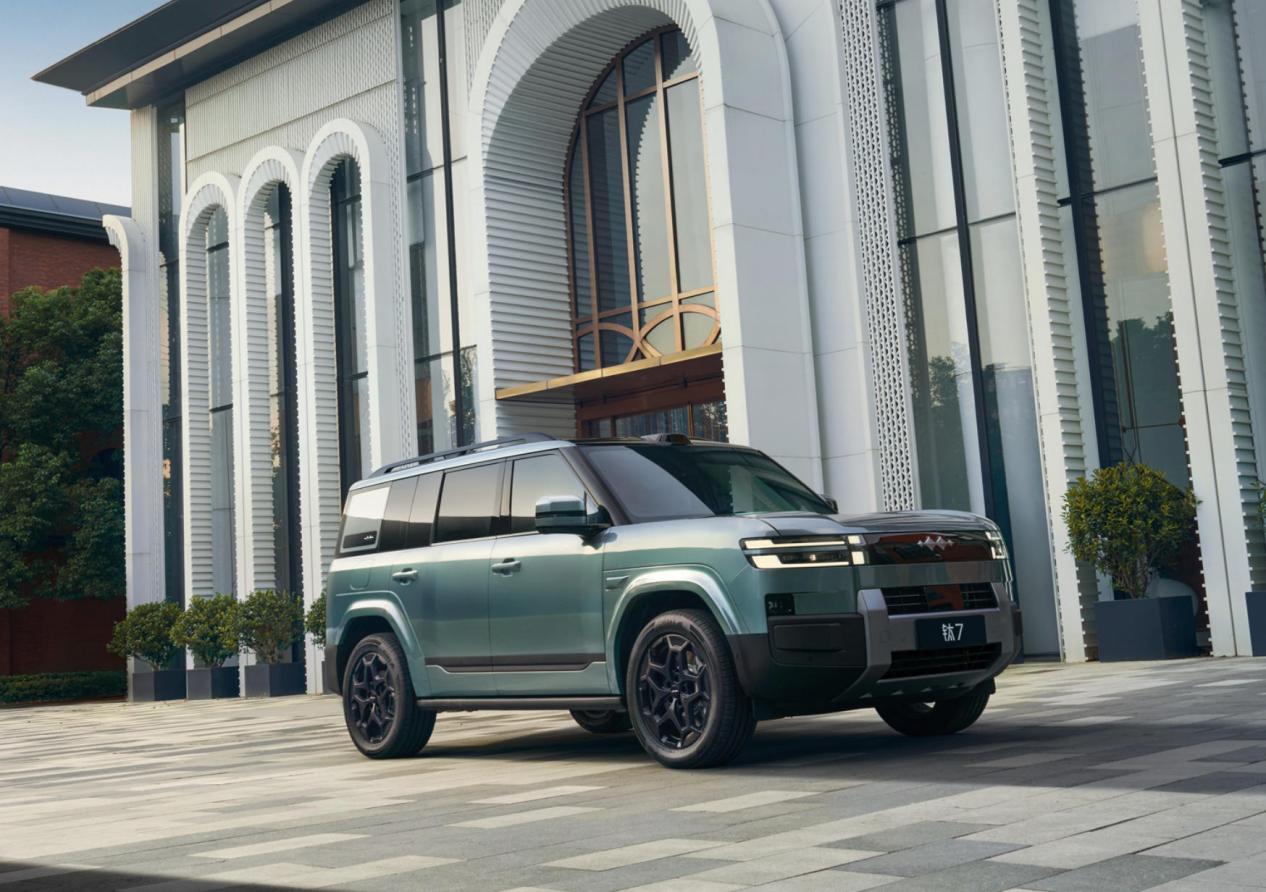
Core Insights - The boxy SUV segment has evolved from a focus on off-road capabilities to include urban commuting, family travel, and light off-road scenarios, with powertrains covering fuel, range-extended, and pure electric options, making it accessible to mainstream consumers [1] Group 1: Market Overview - The boxy SUV category is seeing continuous iteration in design, intelligence, energy consumption, and practicality, providing consumers with a wider range of personalized choices as more brands enter the market [1] Group 2: Featured Models - The Fangcheng Leopard Ti 7 starts at a price of 179,800 yuan, featuring a rugged design, hybrid powertrain, and intelligent four-wheel drive system, with a focus on both urban and outdoor driving needs [2][4] - The Haval Big Dog 2026 model starts at 123,900 yuan, incorporating a classic boxy design with upgrades, including a new front face technology that allows for quick customization [5][7] - The 2026 Jietu Traveler is priced from 139,900 yuan, emphasizing a boxy design suitable for travel and off-road use, with multiple interior upgrades for enhanced usability [8][10] - The Ford Intelligent Mustang starts at 229,800 yuan, designed for all-terrain camping, featuring a classic rugged design and multiple functional optimizations for outdoor scenarios [11][13] - The iCAR Super V23 is priced from 122,900 yuan, targeting urban commuting and light off-road use, with a modern design and advanced driving assistance features [14][16] - The 2025 Tank 300 starts at 199,800 yuan, maintaining high market interest with its retro boxy design and robust off-road capabilities [17][19] - The Beijing Off-road BJ40 Range-Extended family starts at 179,800 yuan, representing a shift towards electrification in the rugged boxy SUV segment, with a focus on comfort and advanced driving assistance [20][22]
2026款长安UNI-Z PHEV即将上市 搭载天枢智能OS系统
Zhong Guo Zhi Liang Xin Wen Wang· 2026-02-27 03:39
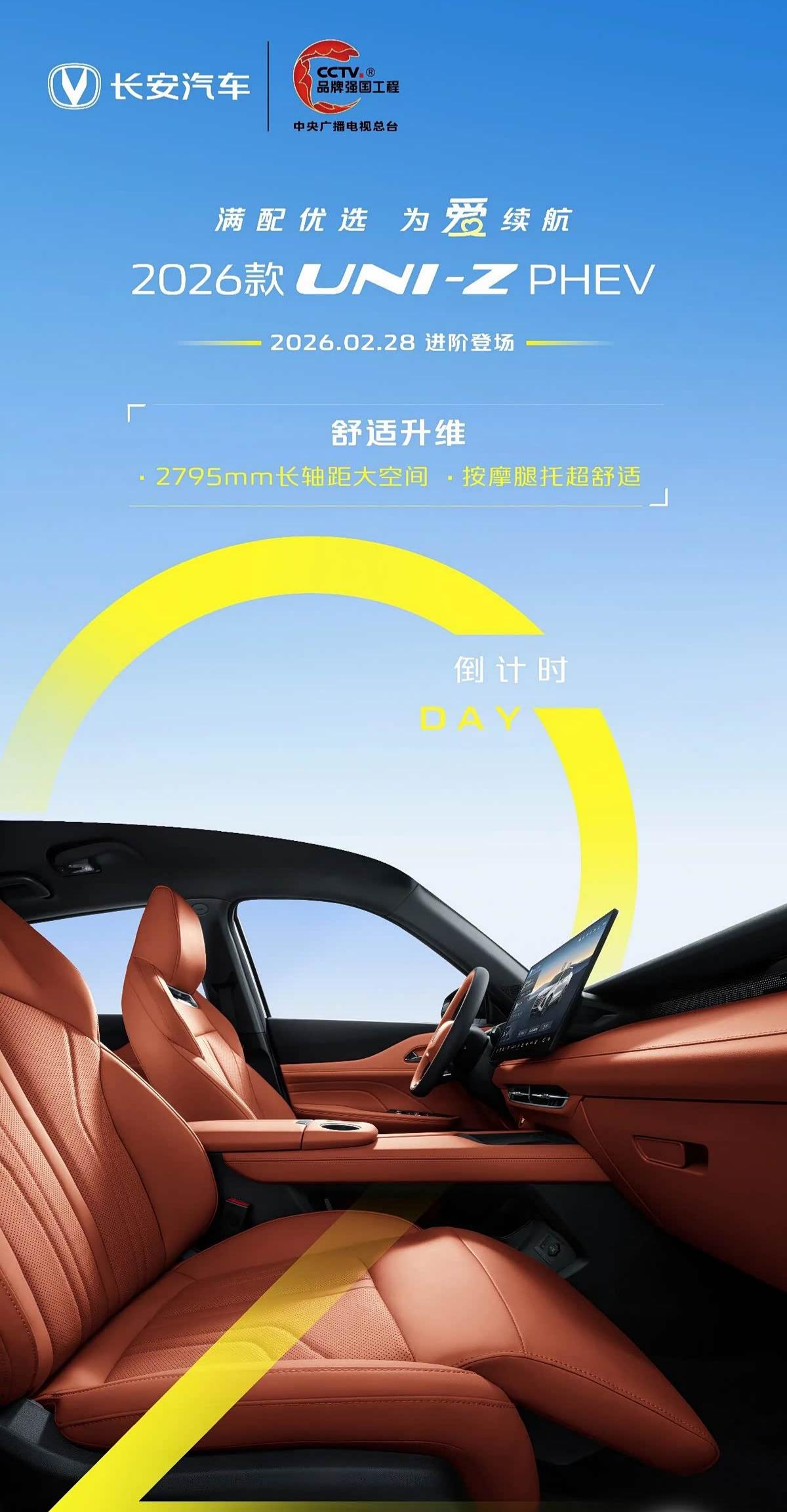
Core Viewpoint - The 2026 Changan UNI-Z maintains the design of the current model while introducing new features and specifications, focusing on advanced technology and performance enhancements [3] Design and Dimensions - The exterior design follows the "Boundless Design" concept with a borderless grille and parameterized dot matrix design integrated with the headlight assembly - The vehicle dimensions are 4730mm in length, 1890mm in width, and 1660mm in height, with a wheelbase of 2795mm, consistent with the current model - A new color option, "Moonlight Silver," has been introduced [3] Interior Features - The interior features a 14.6-inch central control screen and a two-tone steering wheel - The smart cockpit will be equipped with Tian Shu Intelligent OS and AI voice model, along with cloud-sensing zero-pressure seats, 50W wireless fast charging, and L2-level driving assistance [3] Powertrain and Performance - The powertrain consists of a 201.5-liter four-cylinder engine combined with an electric motor in a plug-in hybrid system, paired with an E-CVT transmission - The engine delivers a maximum power of 72 kW and peak torque of 125 Nm, while the electric motor provides a maximum power of 160 kW and peak torque of 251 Nm - The fuel consumption is rated at 5.09 L/100 km, with a CLTC pure electric range of 130 km and a comprehensive CLTC range of 1250 km - The battery supports a maximum charging power of 85 kW, allowing the battery to charge from 30% to 80% in just 15 minutes [3]

传统燃油车的挣扎还是回春?
3 6 Ke· 2026-02-27 03:13
Core Viewpoint - The relationship between fuel vehicles and electric vehicles is shifting from a competitive replacement to a parallel coexistence, with fuel vehicles finding a new positioning in the market [1][9]. Group 1: Industry Trends - Stellantis Group has written down €22.2 billion in assets due to overestimating the speed of electrification, leading to an expected operating loss of over €20 billion in the second half of the year [1]. - Ford has acknowledged a $19.5 billion accounting loss from terminating multiple electric vehicle projects, while General Motors has withdrawn some electrification investments and recorded a $6 billion charge [1]. - The combined asset impairment of approximately $55 billion from these three major automakers, along with slowing electric vehicle demand in the U.S., subsidy reductions in Europe, and price wars in China, has made the calibration of electrification a core industry topic [1]. Group 2: Market Dynamics - In the U.S. market, demand for fuel and hybrid vehicles is returning due to a significant drop in demand following a surge before the expiration of a $7,500 tax credit in 2025, compounded by high-interest rates and tightened credit [3]. - In Europe, the slow construction of charging infrastructure and fluctuating electricity prices have hindered consumer acceptance of electric vehicles, leading to a resurgence in demand for plug-in hybrids and hybrid models [3]. - In China, while the penetration rate of new energy vehicles approaches 50%, many brands are struggling with profitability, indicating a complex market landscape [3]. Group 3: Technological Developments - Major automakers are investing in upgrading fuel vehicle technology to bridge the gap with electric vehicles, addressing previous issues such as power supply, heat dissipation, and response delays [2]. - Companies like Mercedes-Benz and Volkswagen are reallocating investment budgets to enhance fuel vehicle platforms rather than focusing solely on electric platforms, recognizing the ongoing demand for fuel vehicles [4]. - The transition to intelligent fuel vehicles is being facilitated by advancements in technology, with companies like Bosch and Geely implementing smart driving systems in their fuel models [7][8]. Group 4: Policy Environment - The EU's new carbon emission regulations for new vehicles from 2025 to 2027 provide a transitional mechanism for automakers, allowing them to adjust their strategies [5]. - In China, the focus has shifted from accelerating electrification to stabilizing fuel vehicle consumption, reflecting a recognition of the complexity of the automotive industry [6].


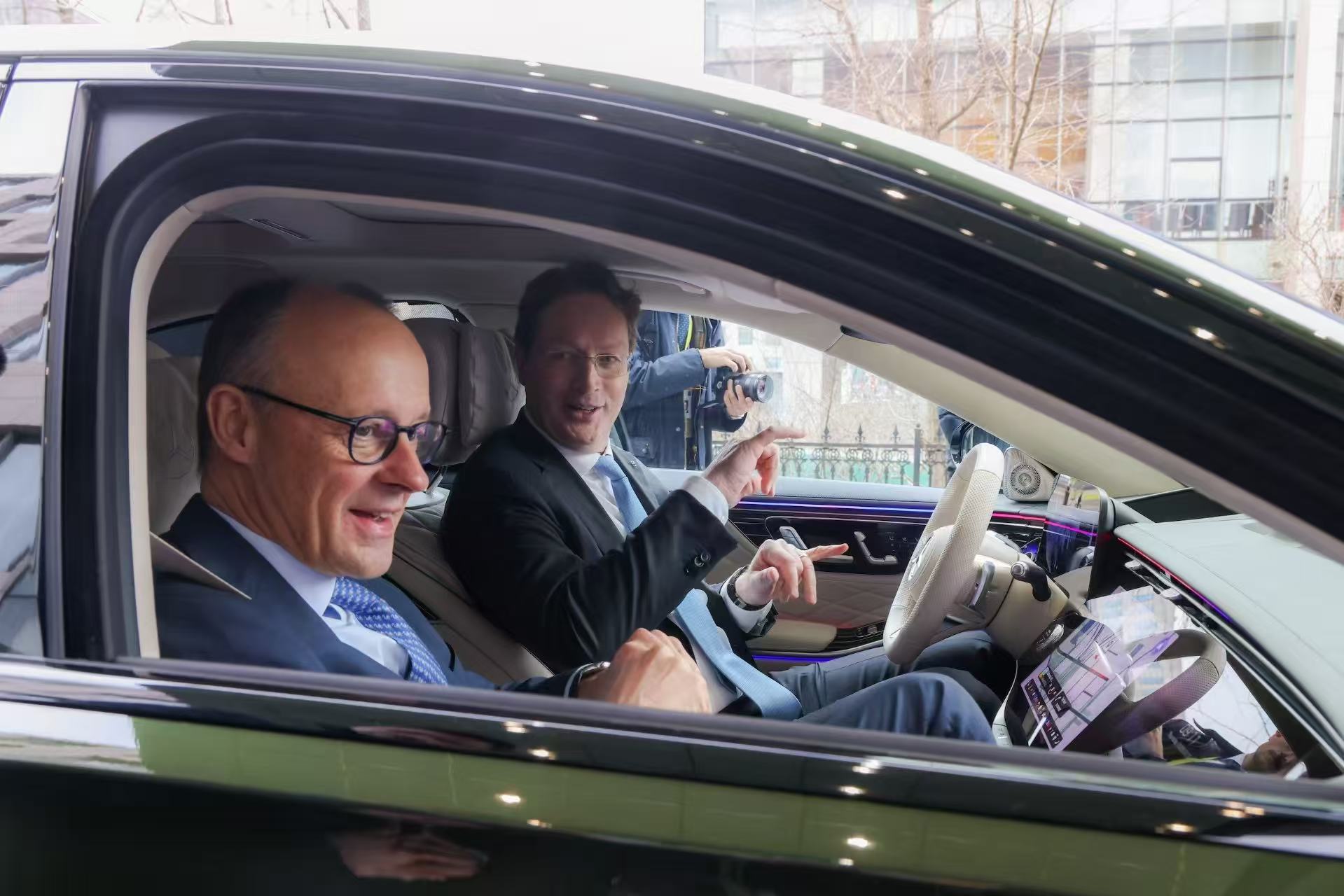
康林松陪同德国总理默茨访华 梅赛德斯-奔驰持续深化与中国科技企业合作:与Momenta签署升级合作谅解备忘录
Zhong Guo Xin Wen Wang· 2026-02-27 02:55
Core Insights - Mercedes-Benz China signed a memorandum of understanding with Momenta to deepen cooperation in the future mobility sector, showcasing a commitment to smart driving technology [1][2] - German Chancellor Friedrich Merz experienced the new generation Mercedes-Benz S-Class equipped with the jointly developed advanced driver assistance system, receiving high praise for its capabilities [2][3] Group 1: Partnership and Technology Development - Mercedes-Benz was the first international car manufacturer to invest in Momenta in 2017, establishing a long-term partnership that integrates stringent "Mercedes standards" with Momenta's AI algorithms [1][3] - The collaboration has led to the development of an intelligent driver assistance system that covers various driving scenarios, including highways and urban environments, enabling seamless driving from parking space to parking space [1][2] - The system is set to be featured in nine new Mercedes-Benz models launching this year, including the all-electric long-wheelbase GLC SUV and the new generation S-Class, addressing all market segments [1] Group 2: Future Enhancements and Safety Features - An upgraded version of the "safety-first" intelligent driver assistance system will be launched, based on Momenta's R6 reinforcement learning model, enhancing traffic efficiency and driving smoothness [2] - The system is integrated into Mercedes-Benz's proprietary digital architecture, MB.OS, which connects various vehicle functions, creating a more efficient and intelligent mobility experience [2] Group 3: Local Development and Innovation - Mercedes-Benz has established a comprehensive local development and cooperation framework in China, aiming to meet the evolving demands of customers in the era of electrification and digitalization [4] - The company has built the largest production base outside Germany and a robust R&D network in China, focusing on local innovation to drive global advancements [4][5] - The Chinese R&D team plays a crucial role in the global network, leading developments such as the high-end rear entertainment system in the new S-Class, emphasizing the importance of local expertise in digital innovation [5]
宁德时代出席中德总理座谈会,与宝马签约共推电池护照试点
Xin Lang Cai Jing· 2026-02-27 02:53
Core Viewpoint - BMW Group and CATL signed a memorandum of understanding to collaborate on battery passport cross-border data trials and supply chain carbon footprint reduction, aiming for sustainable development in the automotive industry [1] Group 1: Collaboration Details - The partnership focuses on enhancing digital management and data interaction capabilities within the global supply chain context [1] - The collaboration aims to improve compliance and responsiveness to global regulations regarding battery data [1] - Both companies will work together to promote low-carbon and sustainable development in their products [1] Group 2: Historical Context - The strategic partnership between CATL and BMW Group began in 2012, establishing a foundation of trust in battery production, joint research, and technological innovation [1] - CATL emphasizes an open cooperation philosophy, aiming to drive global green transformation through technological innovation [1]