
玻璃制造

Search documents
摩根大通增持福莱特玻璃149.5万股 每股作价约12.45港元
Zhi Tong Cai Jing· 2025-10-14 11:10
Group 1 - Morgan Stanley increased its stake in Fuyao Glass (601865) by purchasing 1.495 million shares at a price of HKD 12.4457 per share, totaling approximately HKD 18.6063 million [1] - After the purchase, Morgan Stanley's total shareholding in Fuyao Glass reached approximately 58.0899 million shares, representing a holding percentage of 13.15% [1]


摩根大通增持福莱特玻璃(06865)149.5万股 每股作价约12.45港元
智通财经网· 2025-10-14 11:09
Core Viewpoint - Morgan Stanley has increased its stake in Fuyao Glass (06865) by purchasing 1.495 million shares at a price of HKD 12.4457 per share, totaling approximately HKD 18.6063 million, raising its total holdings to about 58.0899 million shares, which represents a 13.15% ownership stake [1] Summary by Category - **Investment Activity** - Morgan Stanley acquired 1.495 million shares of Fuyao Glass on October 9 [1] - The purchase price was HKD 12.4457 per share, amounting to a total investment of approximately HKD 18.6063 million [1] - **Ownership Structure** - Following the acquisition, Morgan Stanley's total shareholding in Fuyao Glass increased to approximately 58.0899 million shares [1] - The new ownership percentage stands at 13.15% [1]
建筑材料:中美贸易波折再起,反内卷稳增长政策值得期待
Huafu Securities· 2025-10-14 10:25
Investment Rating - The industry rating is "Outperform the Market" [6] Core Insights - The report highlights that the construction materials sector is expected to benefit from supply-side reforms and a potential recovery in housing demand due to declining interest rates and supportive government policies aimed at stabilizing the real estate market [2][4][10] - The report notes that the cumulative completion of energy-saving renovations for existing buildings during the 14th Five-Year Plan period is projected to reach 800 million square meters, indicating a strong focus on quality construction standards [2][10] - The report emphasizes that the market is becoming increasingly sensitive to policy easing, with the real estate sector entering a bottoming phase after three consecutive years of decline in sales area [2][10] Summary by Sections Investment Recommendations - The report suggests focusing on three main investment lines: 1. High-quality companies benefiting from stock renovations, such as Weixing New Materials, Beixin Building Materials, and Tubao [4] 2. Undervalued stocks with long-term alpha attributes, such as Sankeshu, Dongfang Yuhong, and Jianlang Hardware [4] 3. Leading cyclical building material companies showing signs of bottoming, including Huaxin Cement, Conch Cement, China Jushi, and Qibin Group [4] Recent High-Frequency Data - As of October 10, 2025, the national average price of bulk P.O 42.5 cement is 346.8 CNY/ton, showing a month-on-month increase of 1.2% but a year-on-year decrease of 11.7% [11] - The national average price of glass (5.00mm) is 1265.7 CNY/ton, reflecting a month-on-month increase of 8.7% and a year-on-year increase of 2.1% [19][21] Sector Performance - The construction materials index increased by 2.66%, with sub-sectors such as cement manufacturing (+5.36%) and other building materials (+3.05%) showing strong performance [51]
菲利华拟定增募不超3亿元 2023年定增募3亿元
Zhong Guo Jing Ji Wang· 2025-10-14 03:25
Core Points - The company, Feilihua (300395.SZ), announced a plan to issue shares to specific investors, aiming to raise up to RMB 30 million for the construction of its smart manufacturing project for quartz electronic yarn [1][2] - The issuance will not exceed 20% of the company's net assets as of the end of the previous year, and the net proceeds will be used entirely for the designated project [1] - The share issuance will involve no more than 35 specific investors, including qualified institutional investors and individuals, all subscribing at the same price in cash [1] Summary by Sections Issuance Details - The number of shares to be issued will be determined by dividing the total amount raised by the issue price, not exceeding 30% of the company's total share capital prior to the issuance [2] - Shares issued under this simplified procedure cannot be transferred within six months from the end of the issuance [2] Previous Issuance - In 2023, Feilihua was approved to issue 5,640,157 shares at a price of RMB 53.19 per share, raising a total of approximately RMB 299.99 million [2] - After deducting various fees totaling approximately RMB 4.5 million, the net proceeds amounted to about RMB 295.5 million, which was fully transferred by February 3, 2023 [2]

《特殊商品》日报-20251014
Guang Fa Qi Huo· 2025-10-14 03:13
Report on Industrial Silicon 1. Report Industry Investment Rating No relevant content provided. 2. Report's Core View Industrial silicon supply increased in October, with a larger supply increase and a risk of inventory accumulation, putting pressure on prices. There are no effective regulatory measures to reduce supply for now, and it is expected that production will decline in November when some enterprises in Southwest China reduce production during the dry - season. However, considering the possible increase in raw material costs and the rise in electricity prices in November, the price center is expected to move up. Overall, prices are expected to fluctuate at a low level, mainly in the range of 8000 - 9500 yuan/ton. If the price of the 11 - contract falls to around 8000 yuan/ton, buying on dips can be considered [1]. 3. Summary by Related Catalogs Spot Price and Basis - The prices of East China oxygen - containing SI5530 industrial silicon, Huale SI4210 industrial silicon, and Xinjiang 99 silicon remained unchanged on October 13 compared to October 10. The basis of these types of industrial silicon decreased, with the basis of oxygen - containing SI5530 decreasing by 15.69%, SI4210 by 55.81%, and Xinjiang 99 silicon by 12.44% [1]. Inter - month Spread - The spread between 2510 - 2511 increased by 66.67%, 2511 - 2512 by 6.49%, 2512 - 2601 by 30.00%, 2602 - 2603 by 250.00%, while the spread between 2601 - 2602 decreased [1]. Fundamental Data (Monthly) - National industrial silicon production increased by 9.10% to 42.08 million tons, with Xinjiang increasing by 19.78% to 20.32 million tons, Yunnan by 2.41% to 5.95 million tons, and Sichuan decreasing by 1.49% to 5.29 million tons. The national operating rate increased by 10.86% to 61.94%. Organic silicon DMC production decreased by 5.78%, and polysilicon production decreased by 1.29%. Recycled aluminum alloy production increased by 7.48%, and industrial silicon exports increased by 3.56% [1]. Inventory Changes - Xinjiang factory - warehouse inventory increased by 2.07%, Yunnan by 7.69%, Sichuan by 2.75%. Social inventory increased by 0.37% to 54.50 million tons, warehouse - receipt inventory increased by 1.14%, and non - warehouse - receipt inventory decreased by 0.30% [1]. Report on Polysilicon 1. Report Industry Investment Rating No relevant content provided. 2. Report's Core View In October, polysilicon faces increased supply pressure, with production increasing while downstream production scheduling has not increased synchronously, so there is a pressure of inventory accumulation. Currently, the futures price is at a discount, and the pressure of warehouse receipts has decreased. However, if the inventory pressure persists, the pressure of warehouse receipts may increase in the future. The demand side has not shown significant improvement. Attention can be paid to the changes in export tax - rebate policies and the increase in fourth - quarter installations. Overall, polysilicon prices are expected to fluctuate at a high level. As supply pressure increases, prices may be under pressure, but if the spot price is firm, there will still be strong support below. Downstream enterprises can pay attention to the opportunity of purchasing on the futures market [2]. 3. Summary by Related Catalogs Spot Price and Basis - The average price of N - type re - feedstock increased by 0.38% to 52750 yuan/ton, and the basis of N - type materials increased by 11.85%. The prices of some other products remained unchanged [2]. Futures Price and Inter - month Spread - The main contract price decreased by 0.46%. The spreads between some contracts changed significantly, such as the spread between "consecutive one - consecutive two" increasing by 14.65%, and the spreads between some other contracts increasing by 400.00% [2]. Fundamental Data (Weekly and Monthly) - Weekly: Silicon wafer production decreased by 6.89% to 12.83 GM, and polysilicon production decreased by 0.32% to 3.10 million tons. - Monthly: Polysilicon production decreased by 1.29% to 13.00 million tons, imports decreased by 14.02%, exports increased by 40.12%, and net exports increased by 105.68%. Silicon wafer production increased by 5.37% to 59.05 GM, imports increased by 74.18%, exports increased by 43.95%, and net exports increased by 41.88%. Silicon wafer demand increased by 4.64% [2]. Inventory Changes - Polysilicon inventory increased by 6.19% to 24.00 million tons, silicon wafer inventory increased by 3.39% to 16.78 GM, and polysilicon warehouse receipts decreased by 2.95% to 7900 lots [2]. Report on Natural Rubber 1. Report Industry Investment Rating No relevant content provided. 2. Report's Core View On the supply side, there has been rainfall in overseas production areas, and raw material prices have been firm. However, as the rainfall is expected to improve, the supply is expected to increase, and raw material prices may weaken. On the demand side, before the "National Day" holiday, the domestic tire market was stable. The trading of semi - steel tires was dull, and the social inventory was sufficient with slow consumption. The trading of all - steel tires was average, and there was no obvious pre - holiday stocking. Affected by the US tariff policy on Friday night, commodity prices were generally weak, but the macro - sentiment recovered later, and the rubber price on Monday increased slightly compared to Friday night. Attention should be paid to the raw material output during the peak production season in the main production areas. If the raw material supply increases smoothly, the price may decline further; if not, the rubber price is expected to be around 15500 yuan/ton [4]. 3. Summary by Related Catalogs Spot Price and Basis - The price of Yunnan state - owned full - latex decreased by 2.40%, the full - latex basis decreased by 3.76%. The price of Thai standard mixed rubber decreased by 2.03%, and the non - standard price difference increased by 13.27%. The price of cup rubber increased by 1.58%, and the price of natural rubber glue in Xishuangbanna increased by 1.56% [4]. Inter - month Spread - The spread between 9 - 1 increased by 250.00%, and the spread between 1 - 5 decreased by 62.50% [4]. Fundamental Data - In August, Thailand's production decreased by 0.43%, China's production increased by 12.20%, and India's production increased by 11.11%. The operating rate of semi - steel tires decreased by 27.07%, and that of all - steel tires decreased by 21.76%. Domestic tire production in August increased by 9.10%, tire exports decreased by 5.46%, natural rubber imports increased by 9.68%, and imports of natural and synthetic rubber increased by 12.42% [4]. Inventory Changes - Bonded area inventory decreased by 1.01%, and the warehouse - receipt inventory of natural rubber in the SHFE decreased by 1.68%. The outbound rate of dry rubber in the bonded warehouse in Qingdao decreased, and the inbound and outbound rates of dry rubber in general trade increased [4]. Report on Glass and Soda Ash 1. Report Industry Investment Rating No relevant content provided. 2. Report's Core View - Soda ash: It is trending weakly, with inventory accumulating significantly during the long holiday. The mid - stream delivery inventory also increased. The market is affected by the news and macro - factors, and the fundamental oversupply problem still exists. In the medium term, the downstream demand is expected to remain at the previous rigid - demand level. The overall supply - demand pattern is bearish, and the idea of short - selling on rebounds can be continued. - Glass: The production and sales are sluggish, and the market quotation is still weak. The market is trading on the logic of a non - prosperous peak season and fundamental oversupply. The mid - stream inventory in some areas remains high. In the medium and long term, the real - estate cycle is at the bottom, and the industry needs to eliminate excess capacity. During the "Golden September and Silver October" peak season, attention should be paid to the spot purchasing rhythm, high - frequency data changes, and macro - level drivers [7]. 3. Summary by Related Catalogs Price and Spread - **Glass**: The prices in East China decreased by 1.49%, the prices of the 2505 and 2509 contracts decreased, and the 05 - contract basis increased by 20.19%. - **Soda ash**: The price in the Northwest decreased by 5.00%, the price of the 2505 contract increased by 0.30%, and the 05 - contract basis decreased by 12.50% [7]. Supply - The operating rate of soda ash increased by 3.37%, the weekly production of soda ash increased by 3.37%, the daily melting volume of float glass increased by 1.16%, and the daily melting volume of photovoltaic glass remained unchanged [7]. Inventory - Glass factory - warehouse inventory increased by 5.84%, soda ash factory - warehouse inventory increased by 3.74%, and soda ash delivery - warehouse inventory increased by 4.05% [7]. Real - estate Data - The year - on - year change of new construction area increased by 0.09%, the construction area decreased by 2.43%, the completion area decreased by 0.03%, and the sales area decreased by 6.50% [7]. Report on Logs 1. Report Industry Investment Rating No relevant content provided. 2. Report's Core View The fundamentals of logs have not changed significantly, and there is no obvious driving force in supply and demand. The near - month contracts fell sharply due to the news that the exchange was discussing the delivery - location premium and discount, while the far - month contracts were relatively strong. During the seasonal peak season, there is some support below the market. The current market price is near the import cost and lower than the delivery cost. It is recommended to allocate more on the 01 - contract below the import cost [8]. 3. Summary by Related Catalogs Futures and Spot Prices - The 2511 log - futures contract decreased by 18 yuan to 803 yuan/cubic meter. The spot prices of major benchmark delivery products remained unchanged, with the price of 3.9 - meter medium - A radiata pine in Shandong at 760 yuan/cubic meter and that in Jiangsu at 780 yuan/cubic meter [8]. Supply - The national coniferous log inventory as of October 10 was 299 million cubic meters, an increase of 130,000 cubic meters from the previous week. The expected number of New Zealand log - arriving ships this week is 13, an increase of 6 from the previous week, and the arrival volume is about 455,500 cubic meters, an increase of 200,500 cubic meters from the previous week [8]. Demand - As of October 10, the daily log outbound volume was 5.73 million cubic meters, a decrease of 830,000 cubic meters from the previous week [8].
耀皮玻璃不超3亿定增获上交所通过 国泰海通建功
Zhong Guo Jing Ji Wang· 2025-10-14 03:01
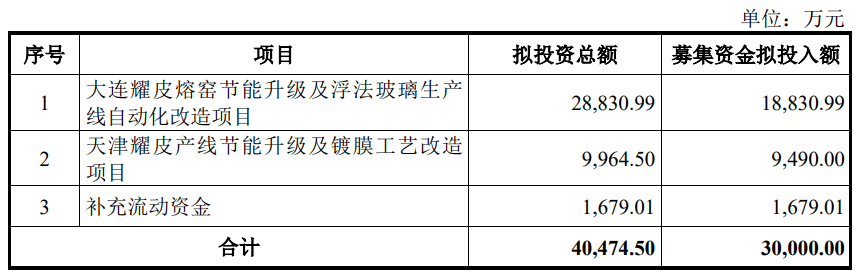
Core Viewpoint - Yao Pi Glass has received approval from the Shanghai Stock Exchange for its application to issue shares to specific investors, pending final approval from the China Securities Regulatory Commission (CSRC) [1] Group 1: Fundraising Details - The total amount to be raised through the issuance of shares is not to exceed 30 million yuan, which will be allocated to energy-saving upgrades and automation projects at its Dalian and Tianjin production lines, as well as to supplement working capital [1][2] - The specific projects include: - Dalian Yao Pi melting furnace energy-saving upgrade and float glass production line automation project with a total investment of approximately 28.83 million yuan, of which 18.83 million yuan will be raised [2] - Tianjin Yao Pi production line energy-saving upgrade and coating process modification project with a total investment of approximately 9.96 million yuan, of which 9.49 million yuan will be raised [2] - Supplementing working capital with an investment of approximately 1.68 million yuan, fully covered by the raised funds [2] Group 2: Issuance Structure - The number of shares to be issued will be determined by dividing the total amount raised by the issuance price, not exceeding 30% of the company's total share capital prior to the issuance, which is approximately 280,474,820 shares [3] - The shares will be domestic listed ordinary shares (A-shares) with a par value of 1.00 yuan per share [3] - The issuance will not change the controlling shareholder or actual controller of the company, nor will it affect the company's compliance with listing conditions [3] Group 3: Regulatory and Advisory Information - The lead underwriter for this issuance is Guotai Junan Securities Co., Ltd., with representatives Yu Hui and Cai Rui [3]


旺季成色不足 玻璃易跌难涨
Qi Huo Ri Bao· 2025-10-14 02:15
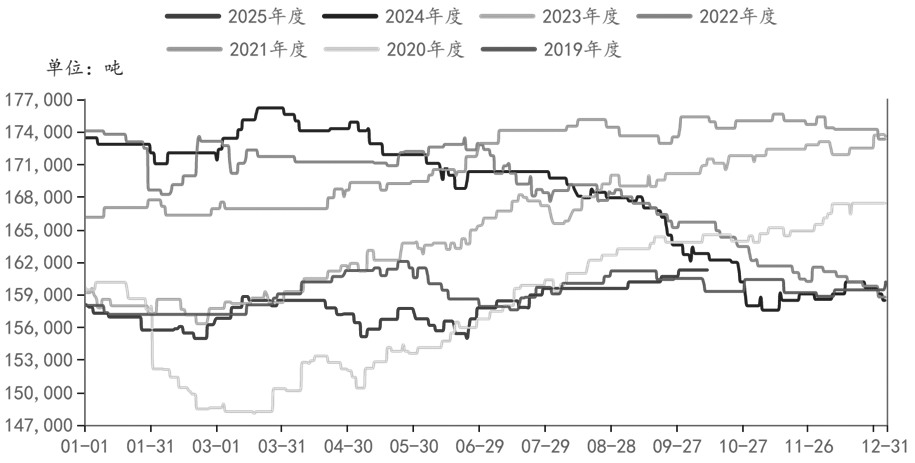
Core Viewpoint - The glass market is facing a significant contradiction where demand continues to decline while production is on the rise, leading to an oversupply situation that is expected to keep prices under pressure [8]. Supply and Demand Analysis - Glass inventory has returned to historically high levels, indicating a clear oversupply, making it difficult for prices to rise unless effective "anti-involution" policies are implemented [1][10]. - As of October 10, the production profit for float glass using coal as fuel increased to 143.93 CNY/ton, up 36.39 CNY/ton from early September, while profits for oil coke and natural gas processes also saw significant increases [2]. - The daily production of float glass reached 161,300 tons as of October 10, slightly up from 159,600 tons on September 2, nearing last year's levels, but the production and sales rate has been declining [4]. - The average production and sales rate for float glass across major regions was 84% as of October 10, remaining below 100% for 12 consecutive days, indicating weak demand [4]. Real Estate Sector Performance - The real estate sector, a key downstream industry for glass, has shown weak performance, with the transaction area of commercial housing in 30 major cities dropping by 11.78% year-on-year in September [5]. - From January to August 2025, domestic real estate investment totaled 49,589.45 billion CNY, down 13.67% year-on-year, with new construction area and completed area also showing significant declines [5]. - The inventory of unsold commercial housing reached 76.2 million square meters, the highest level since 2019, further indicating a contraction in demand for glass [5]. Processed Glass Demand - Demand for processed glass remains weak, with order days for downstream manufacturers dropping to 11 days, the lowest level for the same period in the past seven years [6]. - Although automotive production has increased by 10.5% year-on-year, accounting for only 15%-20% of flat glass demand, it is insufficient to offset the decline in demand from the real estate sector [6]. Market Outlook - The current supply-demand imbalance is expected to lead to further inventory accumulation, with float glass factory inventory reaching 62.824 million heavy boxes, a 6.76% increase year-on-year and the second-highest level for the same period in history [8][10]. - Without a significant reduction in production capacity through policy measures, glass prices are likely to remain under pressure, making it advisable for companies to consider hedging opportunities during price rebounds [10].
福莱特股价涨5.16%,大成基金旗下1只基金重仓,持有36.18万股浮盈赚取31.48万元
Xin Lang Cai Jing· 2025-10-14 02:05
资料显示,福莱特玻璃集团股份有限公司位于浙江省嘉兴市秀洲区运河路1999号,成立日期1998年6月 24日,上市日期2019年2月15日,公司主营业务涉及光伏玻璃、浮法玻璃、工程玻璃和家居玻璃的研 发、生产和销售,以及玻璃用石英矿的开采和销售和EPC光伏电站工程建设。主营业务收入构成为:光 伏玻璃89.76%,发电收入3.16%,工程玻璃3.14%,其他(补充)1.98%,家居玻璃1.58%,浮法玻璃 0.36%,采矿产品0.01%。 从基金十大重仓股角度 10月14日,福莱特涨5.16%,截至发稿,报17.74元/股,成交1.29亿元,换手率0.39%,总市值415.63亿 元。 大成盛世精选灵活配置混合A(002945)基金经理为赵蓬。 截至发稿,赵蓬累计任职时间2年73天,现任基金资产总规模12.83亿元,任职期间最佳基金回报 41.13%, 任职期间最差基金回报19%。 风险提示:市场有风险,投资需谨慎。本文为AI大模型自动发布,任何在本文出现的信息(包括但不 限于个股、评论、预测、图表、指标、理论、任何形式的表述等)均只作为参考,不构成个人投资建 议。 责任编辑:小浪快报 数据显示,大成基金旗下1只 ...
玻璃纯碱早报-20251014
Yong An Qi Huo· 2025-10-14 00:57
Report Industry Investment Rating - Not provided Core Viewpoints - Not provided Glass Section Summary Price Changes - The price of 5mm large glass plates in Shahe area decreased, with Shahe Safety's 5mm large plate dropping from 1241.0 on October 9th to 1198.0 on October 13th, a weekly decrease of 43.0 [2]. - FG05 contract price decreased from 1338.0 to 1313.0, a weekly decrease of 25.0; FG01 contract price decreased from 1218.0 to 1179.0, a weekly decrease of 39.0 [2]. Production and Sales - Shahe factory's glass production and sales were weak, but the low - price sales of Shahe traders improved slightly, with a sales rate of 63. Hubei's production and sales rate was 69, East China's was 84, and South China's was 96 [2]. Profit and Cost - North China's coal - fired glass profit decreased from 302.3 to 272.1, a weekly decrease of 30.2; North China's coal - fired cost increased from 891.7 to 900.9, a weekly increase of 9.2 [2]. - South China's natural gas glass profit remained at - 188.1, while North China's natural gas glass profit decreased from - 150.7 to - 175.9, a weekly decrease of 25.2 [2]. Soda Ash Section Summary Price Changes - The price of heavy soda ash in Shahe decreased from 1180.0 on October 9th to 1160.0 on October 13th, a weekly decrease of 20.0; SA05 contract price decreased from 1344.0 to 1336.0, a weekly decrease of 8.0 [2]. - SA01 contract price decreased from 1250.0 to 1247.0, a weekly decrease of 3.0; SA09 contract price decreased from 1409.0 to 1406.0, a weekly decrease of 3.0 [2]. Profit and Cost - North China's ammonia - soda process profit increased from - 211.4 to - 197.1, a weekly increase of 14.3; North China's combined - soda process profit increased from - 234.5 to - 219.2, a weekly increase of 15.3 [2]. Industry Situation - Soda ash factory inventories are accumulating [2].
大连市泓璃玻璃建材商店(个人独资)成立 注册资本100万人民币
Sou Hu Cai Jing· 2025-10-13 23:49
Core Viewpoint - A new company named Dalian Hongli Glass Building Materials Store has been established, focusing on various glass manufacturing and sales activities [1] Company Summary - The company is a sole proprietorship with a registered capital of 1 million RMB [1] - The legal representative of the company is Pan Hongmin [1] Business Scope - The business activities include general projects such as glass manufacturing, sales of building materials, and production of various glass products [1] - Specific areas of focus include optical glass manufacturing, glass instrument manufacturing, and the production of ordinary glass containers [1] - The company is authorized to operate independently based on its business license, except for projects that require legal approval [1]