
电子信息

Search documents
20年累计投入逾530亿元和超13万亩专项用地指标——广东推动财政资金等向产业园区倾斜
Shang Hai Zheng Quan Bao· 2025-10-10 23:11
Core Insights - Industrial parks are crucial for promoting new industrialization and accelerating high-quality economic development in China [1] - Guangdong province has significantly invested in industrial park development, with over 530 billion yuan allocated since 2005 [2] Group 1: Industrial Park Development - Guangdong has established a tiered development structure with 7 large industrial clusters, 15 main platforms for orderly industrial transfer, and 106 provincial industrial parks [2] - The number of provincial industrial parks has grown from 3 to 106, covering most counties in the province [2] - The annual industrial output value of the 106 provincial industrial parks has exceeded 2.4 trillion yuan, contributing over 70% of local tax revenue and creating more than 1.4 million jobs annually [2] Group 2: Future Plans and Initiatives - Guangdong will accelerate the standardization pilot construction of industrial parks and enhance coordination among various departments to channel financial resources and land indicators towards standardized park development [3] - Local governments are actively improving the infrastructure of industrial parks, with significant portions of special bonds and new land indicators allocated for park construction [4] Group 3: Success Stories and Economic Impact - The CNC machine tool industry in Enping has seen a remarkable growth from 30 million yuan in 2019 to 5.16 billion yuan in 2024, demonstrating the effectiveness of targeted investment strategies [4] - The Meizhou Rongwan Industrial Park has successfully attracted 60 industrial projects, including 14 expansion projects, and has seen over 60% growth in key industrial metrics in the first nine months of the year [5] - Innovative collaboration models between state-owned and private enterprises in Meizhou are expected to generate 7 billion yuan in industrial output and over 10 billion yuan in commercial sales by 2025 [6]
20年累计投入逾530亿元和超13万亩专项用地指标 广东推动财政资金等向产业园区倾斜
Shang Hai Zheng Quan Bao· 2025-10-10 18:20
Core Insights - Guangdong has made significant progress in promoting high-quality development of industrial parks, with 2,139 industrial transfer projects and over 720 billion yuan in total investment as of now [2][4] - The province has established a tiered development structure with 7 large industrial clusters, 15 main platforms for orderly industrial transfer, and 106 provincial industrial parks [3][4] Industrial Development - Since 2005, Guangdong's industrial parks have seen a 20-fold increase in industrial output value, contributing nearly 50% to the regional industrial share and about 70% to local tax revenue [2][4] - The total industrial output value of the 106 provincial industrial parks has surpassed 2.4 trillion yuan, accounting for over 70% of local tax revenue and creating over 1.4 million jobs annually [4] Investment and Infrastructure - Over the past 20 years, Guangdong has invested more than 53 billion yuan in special provincial funds and allocated over 130,000 acres of land for industrial park development [3] - Local governments are actively enhancing infrastructure, with over 70% of special bonds in Jiangmen and over 60% of new land indicators in Zhanjiang directed towards park construction [5] Innovative Strategies - The Meizhou Rongwan Industrial Park has successfully implemented innovative measures such as "free Guangmei Garden" and "reverse flyover" projects, attracting 60 industrial projects in two years [6] - The park has adopted a collaborative model between state-owned and private enterprises, significantly boosting the revenue of companies involved in the copper foil sector [6]

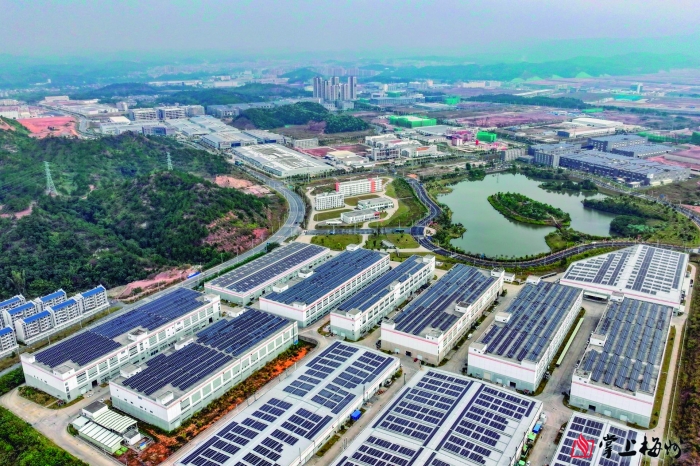
冲刺时刻,东北第一城再被“点题”
Mei Ri Jing Ji Xin Wen· 2025-10-10 15:29
Core Viewpoint - Dalian is on the verge of becoming the first trillion-yuan city in Northeast China, with a GDP target of 951.69 billion yuan for 2024, just shy of the trillion-yuan mark, which would position it as a leading city in the region's economic revitalization efforts [1][4][12] Economic Performance - Dalian's GDP growth rate for the first half of the year reached 6.0%, with significant contributions from industrial sectors, particularly in manufacturing [4][5] - The city's industrial output value increased by 12.8% from January to August, with notable growth in the petrochemical, equipment manufacturing, and pharmaceutical sectors [5][10] Strategic Initiatives - The local government has emphasized high-quality economic development and aims to integrate into the Belt and Road Initiative, enhancing Dalian's role as a key logistics hub [6][11] - Dalian's port has been recognized as a critical gateway for trade, ranking fourth globally in container port performance, which supports its economic ambitions [7][10] Industrial Structure - Dalian's economy has historically relied on heavy industries such as steel and petrochemicals, but there are concerns about the need for diversification into modern services and high-tech industries [12][14] - The city is focusing on upgrading traditional industries while fostering new strategic sectors to enhance its economic competitiveness [17][18] Challenges and Opportunities - Dalian faces challenges related to industrial structure imbalance, including a reliance on traditional heavy industries and a lack of robust emerging sectors [14][15] - The city is actively working on innovation and technology integration to strengthen its industrial base and support new economic growth [18][19]
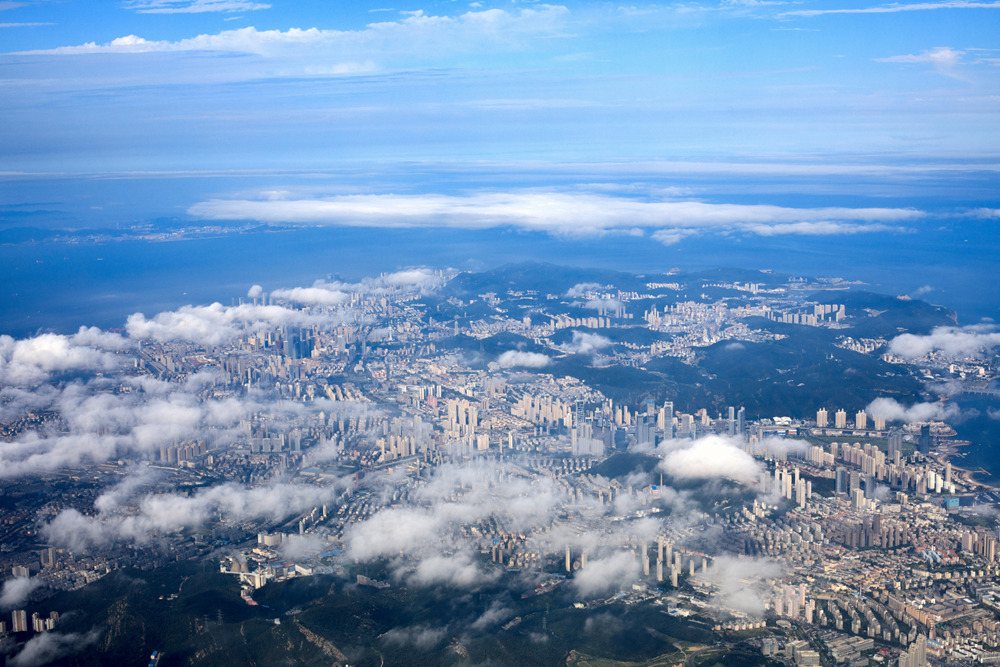
不摊大饼“提密度”,广东“二次起跑”重塑产业园区
2 1 Shi Ji Jing Ji Bao Dao· 2025-10-10 13:32
Core Viewpoint - The Ministry of Industry and Information Technology and the National Development and Reform Commission have jointly issued guidelines for the high-quality development of industrial parks, signaling a shift from quantity-driven growth to quality and efficiency enhancement in industrial park construction across the country [1][3]. Summary by Sections Industrial Park Development in Guangdong - Guangdong has emerged as a benchmark in the national industrial system, having established 109 provincial industrial parks over the past 20 years, with a total investment of 53 billion yuan and an industrial output value exceeding 2.4 trillion yuan [2]. - However, over 60% of Guangdong's parks focus on electronic information and food industries, leading to high homogeneity, with the main industries accounting for less than 40% of the output value [2][12]. Transition and Challenges - The transition from a resource-driven to a mechanism-driven model is evident, with new parks focusing on industrial investment rather than merely land sales [5]. - The challenges include insufficient differentiation in leading industries, weak investment attraction capabilities, and project construction delays, with a 28% decrease in signed project amounts in 2024 compared to the previous year [12][13]. Policy and Structural Changes - Guangdong is promoting a "zero land increase, improve efficiency" reform to optimize spatial layout and policy innovation, encouraging a shift from incremental expansion to stock activation [6][9]. - The province aims to establish a networked system of "7 large industrial clusters + 15 main platforms + 106 provincial industrial parks" to facilitate industrial gradient division and resource flow [8][9]. Collaborative Development - There is a shift from isolated development to inter-regional collaboration, with mechanisms like "flyover economy" and fund co-investment being established [9]. - The focus is on creating a differentiated development system with "one park, one main industry" and "one city, one characteristic" to avoid uniformity across parks [13][15]. Future Directions - The guidelines emphasize the importance of introducing leading enterprises to foster industrial ecosystems, with successful examples in Meizhou attracting major global companies [15]. - The ongoing pilot projects for standardized construction are expected to enhance the differentiation of industrial parks, promoting a more tailored approach to development [13][15].
麦捷科技:控股方远致富海已减持1.00%
Xin Lang Cai Jing· 2025-10-10 10:01
Group 1 - The controlling shareholder, Shenzhen Yuan Zhi Fu Hai Electronic Information Investment Enterprise (Limited Partnership), plans to reduce its stake in the company by selling 8.7909 million shares from August 1, 2025, to October 9, 2025, at an average price of 12.82 yuan per share, which represents 1.00% of the company's total share capital [1] - After the reduction, the controlling shareholder will hold 117 million shares, accounting for 13.30% of the total shares [1]

年入40万也延迟消费!北京人消费连跌背后,一线城市的危机来了?
Sou Hu Cai Jing· 2025-10-10 09:52
Core Insights - The article highlights the paradox of high income and low consumption in Beijing, where the social retail sales total has declined by 4.2% from January to July 2025, despite the city's high income levels [1][3][5] - The contrasting consumption patterns between Beijing and Shenzhen are attributed to different economic structures and consumer behaviors, with Shenzhen benefiting from cross-border shopping from Hong Kong residents [13][15] Group 1: Consumption Trends in Beijing - Beijing's consumption has been on a downward trend for a year and a half, driven by deflationary expectations and a lack of consumer confidence [3][5] - The current CPI in Beijing is in negative territory, indicating a clear downward trend in prices, which has led to a shift towards "delayed consumption" among residents [5][7] - Consumer confidence indicators, including employment and income expectations, have shown negative trends, reflecting deep-seated anxieties about the future [7][9] Group 2: Structural Changes in Consumption - The shift in consumption patterns in Beijing is moving from material satisfaction to service-oriented experiences, with education, healthcare, and cultural services gaining a larger share [9][11] - Despite the growth in service consumption, the ongoing decline in goods consumption indicates real market pressures, as basic consumption needs shrink [11][17] Group 3: Comparison with Shenzhen - Shenzhen's consumption resilience is largely due to its role as a gateway for Hong Kong residents, who contribute significantly to local retail sales, with nearly 55.7 billion yuan spent by Hong Kong consumers in 2024 [13][15] - The economic structure in Shenzhen, which is more reliant on private enterprises and younger demographics, contrasts with Beijing's more traditional and conservative consumption patterns [15][17] Group 4: Implications for Other Cities - The article warns that the consumption downturn in Beijing could serve as a precursor for second and third-tier cities, as consumption market changes often follow a pattern where first-tier cities lead [19][21] - Current consumption growth in second and third-tier cities may be misleading, as it often relies on short-term factors rather than sustainable economic strength [23][26] Group 5: Future Directions - For first-tier cities, the focus should be on rebuilding consumer confidence through stable employment and improved income distribution [31][33] - Second and third-tier cities are advised to avoid over-reliance on short-term policies and instead develop unique consumption advantages tailored to local conditions [28][33] - The overall future of China's consumption market lies in creating a diverse, stable, and sustainable ecosystem that balances resources across different cities [35][37]
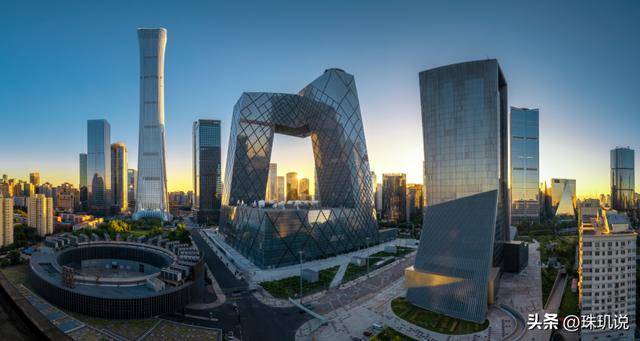
粤港澳大湾区内地9市高新技术企业超7.1万家
Zhong Guo Xin Wen Wang· 2025-10-10 06:23
Core Insights - The Guangdong-Hong Kong-Macao Greater Bay Area (GBA) is projected to have over 71,000 high-tech enterprises by the end of 2024, with 190 national manufacturing champions and 2,089 "specialized, refined, and innovative" small giants [1][2] - The GBA's economic output is approximately $1.89 trillion in 2023, ranking second among the world's four major bay areas, closely following the Tokyo Bay Area [2] - The GBA's nine inland cities have seen their GDP grow from 8.04 trillion RMB in 2018 to 11.5 trillion RMB in 2024, representing a significant economic concentration with only 0.58% of the country's land and 5.6% of its population [2][3] Economic Development - The GBA's central cities, Shenzhen and Guangzhou, are expected to rank 3rd and 5th in GDP among Chinese cities in 2024, maintaining over 5% of the national GDP share in recent years [2] - By 2025, 18 companies from the GBA's nine inland cities are projected to be listed in the Fortune Global 500, with Shenzhen contributing 9 and Guangzhou 6, accounting for 83% of Guangdong's total [2] Industry Clusters - Guangdong has established nine trillion-yuan-level industrial clusters, including new-generation electronic information, green petrochemicals, smart home appliances, automotive, and new energy sectors [3] - The GBA's nine inland cities host eight national advanced manufacturing clusters, representing 10% of the national total, and six national strategic emerging industry clusters, accounting for 9.1% of the national total [3] - Emerging industries in the GBA, such as new energy and artificial intelligence, are on par or leading compared to developed countries, with one in three industrial robots globally being produced in Guangdong [3]
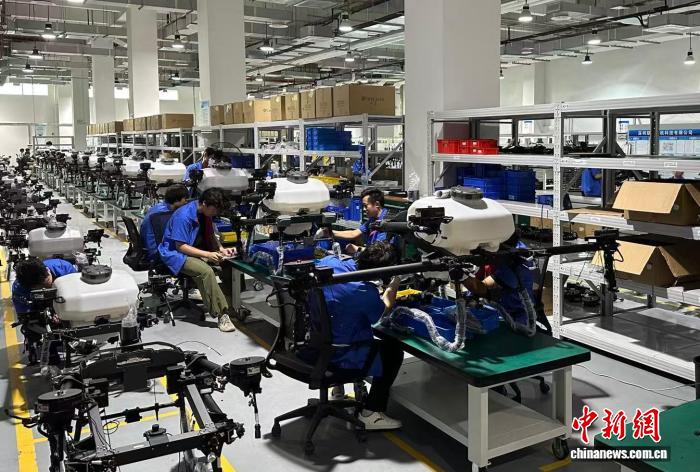
2025年河南省工业设计大赛启动报名
Zheng Zhou Ri Bao· 2025-10-10 00:57
据悉,本届大赛采用线上线下结合方式进行。参赛作品征集截止日期为2025年12月7日。初赛和决 赛将分别于12月8日和12月29日举行,设立产品设计、概念设计与工业文化设计三个组别,覆盖装备制 造、汽车制造、电子信息等十大行业领域。最终将评选出金奖、银奖、铜奖共计27个。 据介绍,大赛参赛作品须为2022年1月1日后上市或完成,并拥有完全知识产权。获奖作品将获得展 览展示、产业对接及颁奖表彰等机会,以促进优秀设计成果的转化与应用。 记者昨日获悉,2025年河南省工业设计大赛报名通道现已全面开启。大赛在省政府指导下,由省工 业和信息化厅会同省委宣传部等10部门联合主办,以"设计赋能·智造河南"为主题,旨在推动设计、科 技与产业创新深度融合,为制造业高质量发展注入新动能。 ...
从“华南虎啸星城”看长沙发展生态| 热点面对面
Chang Sha Wan Bao· 2025-10-10 00:32
Core Viewpoint - The gathering of major enterprises in Changsha, such as BYD, Huike, Huawei, Gree, and Guangqi, is a result of the city's enhanced industrial ecosystem and regional competitiveness, reflecting a new trend of "clusterization" and "ecologization" in industrial transfer [7][8]. Group 1: Industrial Ecosystem and Competitiveness - The selection of Changsha by leading companies is driven by the region's complete industrial chain, concentration of innovation resources, and favorable business environment, rather than just cost and policy considerations [7]. - Changsha has accelerated the construction of a modern industrial system, maintaining traditional advantages while advancing into new sectors like artificial intelligence and new energy [7][8]. - The presence of major enterprises has led to a "strong chain and complementary chain" strategy, enhancing the local industrial ecosystem and attracting high-end talent [9][10]. Group 2: Impact of Major Enterprises - The concentration of the "South China Tigers" in Changsha has multi-layered impacts, including the development of supporting enterprises, enhancement of the overall industrial chain, and attraction of high-end talent [9][10]. - Leading companies are establishing collaborative innovation platforms, which facilitate the efficient transformation and application of technological achievements [9][10]. Group 3: Strategic Goals for Changsha - Changsha aims to transition from a factor-driven to an innovation-driven development model, with major enterprises playing a crucial role in forming innovation consortia and enhancing the integration of industry, academia, and research [10]. - The goal of becoming a national advanced manufacturing hub requires a shift from low-end to high-end manufacturing, with leading companies driving the technological advancement of local supporting enterprises [10]. Group 4: Factors Attracting Leading Enterprises - Changsha's advantages include rich talent resources from local universities, a robust transportation network, improved business environment, and comprehensive industrial support [11][12]. - The city has created a talent magnet by offering a favorable living environment and policies that attract young professionals [12]. - Local supply chain integration and high local matching rates for key components enhance the resilience and risk management capabilities of the industrial chain [12][13]. Group 5: Future Development Focus - Future efforts in Changsha should focus on attracting high-end talent, increasing venture capital investment, and optimizing the innovation ecosystem [15]. - Establishing government-led investment funds to support strategic emerging industries like artificial intelligence and new energy is recommended [15]. - Continuous improvement of infrastructure and soft environments, such as intellectual property protection and technology transfer mechanisms, is essential for fostering innovation [15].



“决胜‘十四五’续写新篇章”系列主题新闻发布会举行第三场发布 现代化产业体系不断优化
Si Chuan Ri Bao· 2025-10-10 00:18
Group 1: Agricultural Achievements - Sichuan has maintained national leadership in the production of 15 agricultural products, including pigs and rapeseed, contributing significantly to national food security [1][2] - The total grain production in 2024 is projected to reach 726.8 billion jin, maintaining a stable output above 700 billion jin for five consecutive years, with a historical high in both total and per unit yield [2] Group 2: Industrial Growth - The annual growth rate of industrial added value in Sichuan is 6.6%, with total industrial added value increasing from 1.34 trillion yuan to 1.79 trillion yuan, elevating its national ranking to seventh [1][2] - Research and development investments in large-scale industrial enterprises have increased by 50%, with R&D intensity rising by 41%, while the profit margin for these enterprises stands at 7.3%, ranking first among the top ten economic provinces [2] Group 3: Service Sector Development - The service sector's contribution to GDP has risen from 52.4% in 2020 to 56%, with its contribution to economic growth increasing from 42.5% to 60.5% [1][3] - Sichuan's service sector has shown significant growth, achieving its "14th Five-Year Plan" goals a year ahead of schedule [3]