零售业

Search documents
8月中国零售业景气指数为50.1% 重回扩张区间
Sou Hu Cai Jing· 2025-08-06 13:17
Group 1 - The China Retail Prosperity Index (CRPI) for August is 50.1%, indicating a return to the expansion zone with a 0.5 percentage point increase from the previous month [1] - The three sub-indices of the retail sector show varied performance: the merchandise operation index is at 49.7% (up 1.0 percentage points), the rental operation index is at 52.1% (down 0.3 percentage points), and the e-commerce operation index is at 49.8% (down 0.4 percentage points) [1] - The average transaction price for both online and offline sales has increased, with offline prices at 49.1% (up 0.9 percentage points) and online prices at 51.0%, continuing a four-month upward trend [1] Group 2 - Current government policies, such as trade-in subsidies and childcare subsidies, are significant for unleashing domestic consumption potential, reflecting the resilience and long-term positive trend of the Chinese economy [2] - The rapid development of instant retail, which integrates online and offline channels, is becoming a focal point in the current retail market [2]
8月6日《新闻联播》主要内容
Xin Lang Cai Jing· 2025-08-06 11:54
今天《新闻联播》主要内容有:1.【习近平总书记今年以来治国理政纪实】把党的自我革命这根弦绷得 更紧; 2.《文化的力量——习近平文化思想在浙江的溯源与实践》今晚播出; 3.【辉煌60载 魅力新西 藏】藏北高原的生态之变; 4.【铭记历史 缅怀先烈】河南新县:英雄山河换新颜 乡村振兴谱新篇; 5.8 月份中国零售业景气指数回升向好; 6.上半年全国小微企业贷款余额同比增长12.49%; 7.上半年我国 机器人产业快速增长; 8.强降雨持续影响华南 防汛抗洪加紧进行; 9.国内联播快讯: (1)我国农业植 物新品种权授权量突破4万件; (2)《健康中国行动—健康环境促进行动实施方案(2025—2030 年)》发布; (3)我国三年将建成超200家机械卓越级智能工厂; (4)7月全国期货市场成交量同比 增长48.89%; (5)新疆阿拉山口铁路口岸今年货运量超1000万吨; (6)淮宿蚌城际铁路开始全线铺 轨; (7)2025中国西藏第六届跨喜马拉雅国际公路自行车极限赛开幕; 10.俄称打击乌军驻地 乌称抵 御俄军进攻; 11.巴称加沙地带多地遭袭 以称开会讨论加沙军事计划 联合国官员对以色列计划全面占领 加沙地带 ...
“闭店潮”席卷美国零售业,2025年或关15000家 | 「钛度号」作品月榜第129期
Tai Mei Ti A P P· 2025-08-06 07:48
Core Insights - The "Titanium Praise" list is a monthly selection of outstanding works from the Titanium Media APP, based on article popularity, quality, and editorial recommendations [1][8] Group 1: Retail Industry - The article titled "The Store Closure Wave Sweeps the U.S. Retail Industry, 15,000 Stores May Close in 2025" discusses how changing lifestyles and work habits are reshaping in-store experiences, emphasizing that adapting to these changes is crucial for maintaining market share [2][9] - The focus on profit as the primary goal for retail giants is highlighted, indicating a shift in priorities within the industry [2][9] Group 2: Hospitality Sector - The piece "New World Development Receives 88.2 Billion Rescue Funds, Will It Sell Its Hotel Business?" raises concerns about the potential sale of hotel assets by New World Development, the only loss-making member among the four major families in the industry [2][10] Group 3: Cultural Commentary - The article "Dong Yuhui Talks About 'Four Sentences of Hongqu', Sparking a Cultural Storm" explores the impact of cultural figures on public discourse, noting that cultural transmission is a complex process involving debate and reconstruction [2][19] Group 4: Financial Legislation - The "Big and Beautiful" bill is discussed in the context of its potential to reshape the U.S. economy, highlighting the complexities of government debt and the diverse interests involved [2][16][17] Group 5: Banking Sector - The analysis titled "After a Day of Shock, How to View the Current Bank Stock Market?" suggests that the A-share banking sector has undergone a valuation recovery and is entering a phase of increased volatility and divergence [2][18] Group 6: Semiconductor Industry - The article "Domestic Analog Chips, on the Eve of Rise" indicates that China's economic transformation is shifting from a "demographic dividend" to an "engineer dividend," with the analog chip sector being a key area for innovation [2][21] Group 7: Delivery Services - The piece "An 'Epic' Delivery Coupon War" describes a surge in orders leading to unprecedented pressure on the delivery industry, affecting all participants in the supply chain [2][22] Group 8: Cryptocurrency Market - The article "2025 Stablecoin Midfield Battle: Trump, Wall Street, National Team, Who's on the Table?" discusses the strategic implications of stablecoins in the cryptocurrency market, emphasizing their role as a bridge between dollars and cryptocurrencies [2][23]


大东方等投资成立汽车销售服务公司
Sou Hu Cai Jing· 2025-08-06 04:00
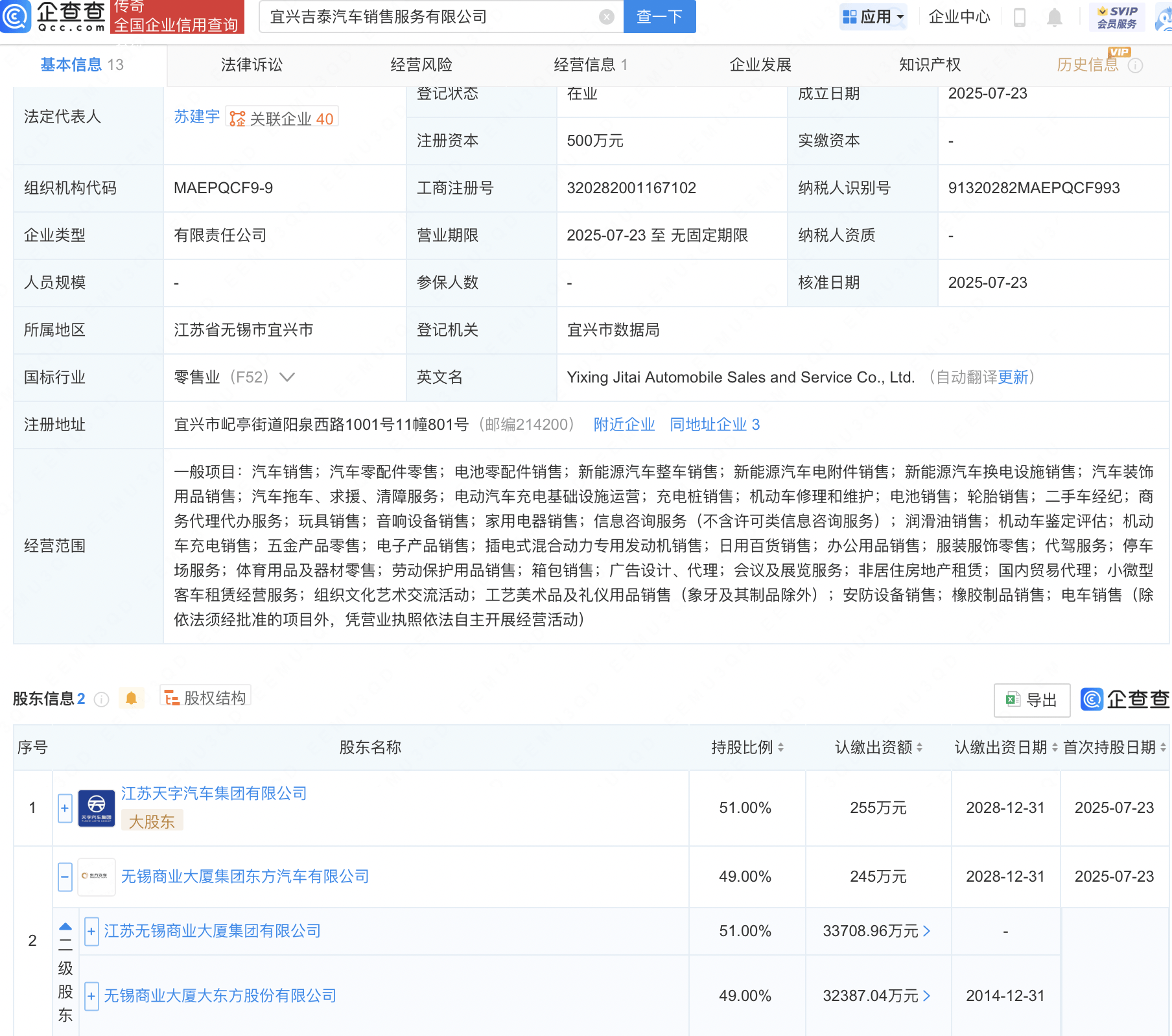
Core Viewpoint - Yixing Jitai Automobile Sales Service Co., Ltd. has been established, focusing on automobile sales, auto parts retail, battery parts sales, and new energy vehicle sales [1][2]. Company Information - The legal representative of Yixing Jitai is Su Jianyu, and the company is registered with a capital of 5 million yuan [2]. - The company is located in Yixing City, Wuxi, Jiangsu Province, and is classified under the retail industry [2]. - The business scope includes various services such as electric vehicle charging infrastructure operation and sales of automotive-related products [2]. Shareholding Structure - Yixing Jitai is jointly held by Wuxi Commercial Building Group Oriental Automobile Co., Ltd. and other entities, with the latter being owned by Jiangsu Wuxi Commercial Building Group Co., Ltd. and Dae Oriental (600327) [1][2]. - The major shareholder is Jiangsu Tianzi Automobile Group Co., Ltd. [2].

伯克希尔Q2财报:3441亿现金、11个季度减仓,巴菲特谢幕前的最后“冷静”提醒
Jin Rong Jie· 2025-08-06 00:11
8月2日上周六,伯克希尔·哈撒韦Berkshire Hathaway(BRK/A BRK/B)发布了其2025年第二季度财报。 这是巴菲特宣布将在年底卸任CEO之后的首份财报,因此格外引发市场关注。 01 核心财务数据:营收基本平稳,净利润大幅下滑 从表面上看,这是一份净利润"腰斩"、股价承压的季报,但从细节上看,这份财报揭示了伯克希尔在利 润结构、投资风格、宏观预期和管理交接等多个维度的深层变化,也释放出一份带有浓厚"巴菲特式谨 慎"的市场信号。 | | | Second Quarter | | First Six Months | | | --- | --- | --- | --- | --- | --- | | | 2025 | | 2024 | 2025 | 2024 | | Revenues: | | | | | | | Insurance and Other: | | | | | | | Insurance premiums earned | S | 22,195 S | 21,953 $ | 43.999 S | 43,427 | | Sales and service revenues | | ...

央行等七部门发文!强化金融支持新型工业化|南财早新闻
2 1 Shi Ji Jing Ji Bao Dao· 2025-08-05 23:45
Group 1: Education Policy - The State Council issued an opinion to gradually implement free preschool education, starting from the autumn semester of 2025, exempting public kindergarten tuition fees for the last year of preschool education, excluding meal, accommodation, and miscellaneous fees [2] Group 2: Financial Support for Industry - Seven departments, including the central bank, released guidelines to support the new industrialization, aiming for a mature financial system for high-end, intelligent, and green manufacturing by 2027 [2] - The State Council proposed personal consumption loan interest subsidies and service industry loan interest subsidies, with major banks expressing support for these policies [2] Group 3: Health and Environment - The Health Commission and 16 departments launched a plan to improve health through environmental actions, targeting significant environmental health issues and promoting green development by 2030 [3] Group 4: Market Performance - A-share market showed a strong performance with the Shanghai Composite Index rising 0.96% to 3617.6 points, reaching a new high for the year, and the Shenzhen Component Index increasing by 0.59% [4] - The Hong Kong Hang Seng Index rose 0.68% to 24902.53 points, with significant net buying from southbound funds [4] Group 5: Company Developments - Hema X membership stores will be completely shut down, focusing on Hema Fresh and Hema NB for future development [5] - Haiguang Information reported a revenue of 5.464 billion yuan, a year-on-year increase of 45.21%, and a net profit of 1.201 billion yuan, up 40.78% [6] - Muyuan Foods sold 6.355 million pigs in July, a year-on-year change of 13.02%, with an average selling price of 14.30 yuan/kg, down 21.86% [6] Group 6: Stock Market Reactions - After the completion of a review, the stock price of Weiye New Materials surged by 20% to 110.48 yuan/share, marking its first entry into the hundred-yuan stock category [7]


三只松鼠(300783)8月5日主力资金净流出2141.11万元
Sou Hu Cai Jing· 2025-08-05 23:24
三只松鼠最新一期业绩显示,截至2025一季报,公司营业总收入37.23亿元、同比增长2.13%,归属净利 润2.39亿元,同比减少22.46%,扣非净利润1.62亿元,同比减少38.31%,流动比率1.932、速动比率 1.503、资产负债率39.38%。 天眼查商业履历信息显示,三只松鼠股份有限公司,成立于2012年,位于芜湖市,是一家以从事零售业 为主的企业。企业注册资本40100万人民币,实缴资本40100万人民币。公司法定代表人为章燎源。 金融界消息 截至2025年8月5日收盘,三只松鼠(300783)报收于25.65元,上涨0.23%,换手率1.92%, 成交量5.39万手,成交金额1.38亿元。 通过天眼查大数据分析,三只松鼠股份有限公司共对外投资了43家企业,参与招投标项目107次,知识 产权方面有商标信息2584条,专利信息437条,此外企业还拥有行政许可36个。 资金流向方面,今日主力资金净流出2141.11万元,占比成交额15.5%。其中,超大单净流出1866.80万 元、占成交额13.52%,大单净流出274.31万元、占成交额1.99%,中单净流出流入912.56万元、占成交 额6.6 ...

关税阴影下,美国零售业之“怪现象”(环球热点)
Ren Min Ri Bao Hai Wai Ban· 2025-08-05 22:50
Core Viewpoint - The article discusses the unusual phenomena in the U.S. retail industry following the announcement of new tariffs, highlighting the impact on pricing, inventory management, and consumer behavior amid rising costs and economic uncertainty [4][12]. Group 1: Pricing Dynamics - Global prices for identical products remain stable, but U.S. consumers face potential price increases due to new tariffs, with Adidas CEO reporting losses in the hundreds of millions of euros due to tariffs affecting their supply chain [5][6]. - Procter & Gamble plans to raise prices by approximately 5% on about a quarter of its products in the U.S. market to offset an increase in costs of $1 billion due to tariffs [5]. - A study found that 29% of 230 tracked products on platforms like Amazon and Walmart saw price increases averaging nearly 6% since March 2 [6]. Group 2: Retailer Challenges - U.S. retailers are stockpiling goods to mitigate rising procurement costs, leading to increased warehousing expenses [8]. - Retailers like Best Buy and various small businesses are struggling to pass on the full cost of tariffs to consumers, resulting in reduced profit margins [8][9]. - The phenomenon of stockpiling is seen as a temporary solution, with inevitable price increases expected once inventories are depleted [9]. Group 3: Consumer and Investment Sentiment - The new tariffs, effective August 7, are causing heightened anxiety among businesses and consumers, with many small business owners reporting order cancellations and increased costs [9][10]. - Consumer spending is showing signs of decline, with the PCE price index rising 2.6% year-over-year, indicating inflationary pressures [11]. - The uncertainty surrounding tariffs is expected to suppress both consumer spending and business investment, potentially leading to slower economic growth [12].
上半年克罗地亚零售业实际销售额同比增长4.4%
Shang Wu Bu Wang Zhan· 2025-08-05 16:56
Core Insights - Croatia's retail sales experienced a significant increase, with a year-on-year real growth of 4.4% in the first half of the year, driven by rising tourism and improved labor market conditions [2] Group 1: Retail Sales Performance - In June, retail sales saw a real year-on-year increase of 7.5%, marking the highest growth rate in the past year [2] - The consumption of food, beverages, and tobacco products grew by 3.6%, while non-food retail sales (excluding fuel and lubricants) surged by 11.5% [2] - Month-on-month, retail sales in June increased by 3.5%, the largest increase since October 2020 [2] Group 2: Financial Metrics - The total amount of sales invoices issued by retail owners (excluding motor vehicles) in June reached €2.57 billion, reflecting a nominal growth of 11% year-on-year [2] - For the first half of the year, the total value of retail sales invoices increased by 7% year-on-year, amounting to €12.8 billion [2] - The continuous growth in retail consumption has now reached 27 months, with June's acceleration attributed to increased tourism demand, favorable labor market trends, and wage growth [2]
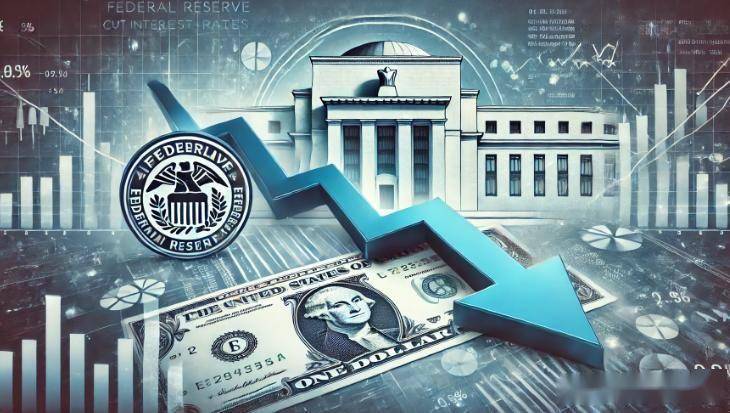
现在美国降息,其实就是怕两个方面,一个是资金流出美国,进入中国,中国股市、资产都尚在低点,如果现在降息,资本很可能就跑到中国来了
Sou Hu Cai Jing· 2025-08-05 14:18
Core Viewpoint - The relationship between U.S. interest rate changes and foreign capital flows into China has become increasingly evident, suggesting a direct correlation between the two [1][3][6]. Group 1: U.S. Interest Rate Changes - The Federal Reserve began raising interest rates in March 2022, with a significant increase from 0.25% to 4% by November 2022, which coincided with a decline in foreign capital inflows to China [3][5]. - In 2023, foreign capital inflows to China saw a year-on-year decrease for the first time in years, aligning with the Fed's rate hike to 5% in March [5][10]. - By September 2024, when the Fed indicated a potential rate cut, foreign capital inflows to China surged, demonstrating a strong market reaction to U.S. monetary policy [7][10]. Group 2: Capital Flow Dynamics - Foreign capital is primarily driven by where it can achieve better returns, rather than local conditions such as pandemic lockdowns [5][10]. - The Chinese stock market and real estate are currently perceived as attractive investment opportunities due to their low positions, especially if the Fed enters a prolonged rate-cutting phase [10][18]. - The potential for capital outflow from the U.S. to China is significant if the market believes in sustained lower interest rates from the Fed [18][20]. Group 3: Economic Indicators - U.S. retail sales growth, adjusted for inflation, is nearly stagnant, indicating a weakening domestic economy [11][13]. - The Fed faces a dilemma: lowering rates could reignite inflation, while maintaining rates could exacerbate domestic economic issues [11][13][16]. - Long-term U.S. Treasury yields are declining, suggesting market expectations of an end to the Fed's tightening cycle, which could further influence capital flows [16][18].