电芯

Search documents
宏观周周谈-当前的核心矛盾是什么
2026-01-26 02:49
Summary of Key Points from Conference Call Records Industry and Company Overview - The discussion primarily revolves around macroeconomic trends, inflation expectations, and the performance of various industries in the context of the Chinese and U.S. markets. [1][2][3] Core Insights and Arguments Market Sentiment - Market sentiment has improved, particularly in second and third-tier cities, indicating a recovery in market activity to about 50-66% of previous levels. [2] Inflation Expectations - A "pork-oil resonance" phenomenon is anticipated in 2026, signaling the end of deflation and a return to inflation, with a CPI central tendency expected to reach 0.5% and PPI likely turning positive in Q3. [1][3][4] Industry Focus - Industries that may benefit from the positive PPI include resource-related sectors and raw materials, while the technology sector's valuations are no longer seen as advantageous. [1][4] U.S. Stock Market Outlook - The U.S. stock market is expected to experience a rally from May to August 2026, potentially boosting related sectors such as computing power. However, the main focus remains on the implications of PPI turning positive. [1][6] PPI Impact on Industries - Positive PPI is expected to favor industries such as construction materials, non-ferrous metals, steel, and basic chemicals, while sectors like machinery, automotive, electronics, pharmaceuticals, and home appliances show strong alpha correlation but weak beta correlation. [1][7][8] Currency Exchange Rate - The Chinese yuan is projected to appreciate significantly, with the effective exchange rate expected to return to levels seen at the end of 2024. This appreciation will benefit yuan-denominated assets, including Hong Kong stocks. [1][9] Geopolitical Risks - Geopolitical risks are increasing due to the disintegration of the old international order, U.S. strategic adjustments, and rising global political uncertainties. Key areas of concern include the Russia-Ukraine conflict, the situation in Iran, and developments in U.S.-China relations. [1][10][11] Other Important but Potentially Overlooked Content Specific Industry Dynamics - The relationship between PPI and various industries has shifted, with some sectors like real estate losing their previous correlation with PPI, while others have become more competitive due to changes in consumer behavior and market dynamics. [1][7][8] Recent Developments in Geopolitical Situations - The situation in Greenland has shown signs of easing, with diplomatic negotiations taking precedence over military threats. However, tensions remain in the Middle East, particularly regarding Iran and the ongoing Russia-Ukraine conflict. [10][11][12][14] U.S.-China Relations - Recent developments indicate a potential stabilization in U.S.-China relations, with high-level diplomatic engagements expected to continue throughout the year. [15][16]
A股增量资金空间测算-居民存款与机构资金潜力展望
2026-01-08 16:02
Summary of Key Points from the Conference Call Industry Overview - The focus is on the A-share market in China, particularly regarding the inflow of incremental funds and the impact of various financial instruments and investor behaviors on the stock market. Core Insights and Arguments - **Incremental Funds from Resident Deposits**: It is estimated that the scale of resident deposit migration will reach between 1 trillion to 4 trillion yuan by 2026, with an annual inflow of approximately 1 trillion yuan into the stock market. This migration is expected to enhance M2 growth, providing additional funds for the stock market [1][2] - **Insurance Funds as a Stable Investment Source**: Insurance funds are projected to contribute over 1 trillion yuan annually to the stock market. By Q3 2025, the equity asset allocation of life and property insurance companies has significantly increased, indicating a strong trend towards stock and fund holdings [1][5] - **Growth of Private and Public Funds and ETFs**: The rapid development of private equity, public funds, and ETFs is noted, with ETFs attracting many investors due to their flexibility and low costs. The annual growth potential in these areas is estimated to be between 1 trillion to 2 trillion yuan [1][6][12] - **IPO Contributions to Market Liquidity**: A-share IPOs are expected to inject several hundred billion yuan into the market annually, particularly benefiting hard manufacturing and hard technology companies during favorable market conditions [3][10] - **Impact of Resident Deposit Migration on Stock Market**: The migration of resident deposits is a crucial indicator, with significant increases in non-bank financial institution deposits suggesting that funds are gradually entering the stock market. The ratio of new resident deposits to GDP is expected to decline, indicating more funds will be available for investment [4][15] - **Long-term Role of Insurance Funds**: Insurance funds are seen as a key driver for medium to long-term capital entering the market. The allocation towards technology stocks has increased, with expectations of substantial funds waiting to enter the market in the coming years [5][8] - **Market Outlook and Slow Bull Trend**: The A-share market is anticipated to enter a slow bull phase, with long-term funds gradually allocating to equity assets. The market is expected to rely on technology and new consumption sectors in 2025, shifting focus to manufacturing in 2026 [1][7] - **Contributions from Active Funds and Private Equity**: Active funds in the secondary market contribute approximately 100 billion yuan, while private equity could bring in over 1 trillion yuan annually, especially considering stock price increases [11] - **Financing Balance and Market Expansion**: The financing balance is currently high but not at peak levels seen in 2015, indicating potential for upward movement. The annual incremental space for financing balance is estimated at around 100 billion yuan [13][14] Other Important Insights - **Investment Behavior Trends**: The gradual shift of long-term funds into equity assets is a notable trend not seen in the past two decades, with policy direction favoring a slow bull market rather than a rapid rise [7] - **Sector-Specific Investment Focus**: Future allocations by insurance funds are expected to diversify beyond financial stocks to include leading companies in sectors with favorable economic conditions [8][9]
水到渠成-万舸争腾-A股2026年度投资策略
2025-12-29 01:04
Summary of Key Points from the Conference Call Industry and Company Overview - The conference call discusses the investment strategy for the A-share market in 2026, focusing on sectors such as AI applications, robotics, new consumption, and supply-side reforms [1][3][5]. Core Insights and Arguments - **Market Outlook for 2026**: The outlook is optimistic, expecting a transition from liquidity-driven growth to profit realization, with opportunities in midstream manufacturing, consumer stocks, and cyclical stocks [2][18]. - **2025 Strategy Implementation**: The strategy "source of living water, flowing in sight" has been gradually realized, with significant developments in AI, robotics, and new consumption from Q1 to Q3 of 2025 [3]. - **Global Monetary Policy**: Continued global monetary and fiscal easing is anticipated, with the U.S. possibly lowering interest rates further, benefiting stocks, commodities, and gold [4]. - **Domestic Economic Transition**: The key to domestic economic transformation lies in policy support for high-tech manufacturing and new consumption, leading to a mild recovery in profits and valuations [5][12]. - **Valuation and Growth Potential**: Current valuations of the Shanghai Composite Index and CSI 300 are high, but there remains potential for valuation expansion, with an expected overall index growth of 10-20% in 2026 [13][18]. Specific Industry Focus - **Key Sectors to Watch**: 1. **0-1 Technology Breakthroughs**: Focus on self-sufficiency in chips and materials, and resonance with global supply chains in robotics and commercial aerospace [7][21]. 2. **1-10 Accelerated Growth**: Emphasis on light modules, battery cells, and non-ferrous metals [7]. 3. **Resource Sector Acceleration**: Opportunities in resource products, particularly non-ferrous metals [8]. 4. **Supply Innovations**: Focus on battery sectors and chemicals [9]. 5. **New Consumption**: Attention to new supply creating new demand and opportunities from export recovery [10]. Additional Important Insights - **Traditional vs. Emerging Industries**: Traditional industries should be developed into globally competitive sectors, while emerging strategic industries like new energy and materials are expected to be future pillars [11]. - **AI Application Growth**: AI is showing significant cost-reduction and efficiency improvements, with a notable percentage of U.S. companies adopting AI technologies [15]. - **Low-Valuation Opportunities**: Low-valuation stocks may present opportunities, particularly in cyclical consumption and resource sectors, with a focus on supply-side constraints and policy support [17]. - **Market Dynamics**: The market is expected to experience a broadening of the bull market, with various sectors showing potential for growth [18][22]. Conclusion - The overall market outlook for 2026 is positive, with expectations of double-digit growth and a focus on high-tech industries and low-valuation stocks. Continuous monitoring of supply-side dynamics and policy support will be crucial for identifying investment opportunities [18][22].
廖市无双:“春季攻势”会提前到来吗?
2025-12-15 01:55
Summary of Conference Call Records Industry or Company Involved - The discussion primarily revolves around the Chinese stock market, focusing on various indices such as the Shanghai Composite Index, ChiNext Index, Hang Seng Technology Index, and the STAR Market (科创50). Core Points and Arguments 1. **Market Outlook and Risks** - The market may face short-term correction risks, with the period around the Chinese New Year potentially being a peak. The Shanghai Composite Index rebounded to 3,936 points, nearing resistance levels, while the ChiNext Index's sustainability is questioned due to reliance on optical module stocks [1][2][3]. 2. **Performance of Major Indices** - The Shanghai Composite Index has rebounded from a low of 3,800 points to 3,936 points, approaching expected resistance levels. The ChiNext Index has recovered 70%-80% of its previous decline, indicating potential for new highs, driven by leading optical module stocks [3][10]. 3. **Sector Performance** - The communication sector has shown strong performance, primarily led by optical module stocks. The defense and military sector has strengthened due to geopolitical factors, while hard technology sectors like electronics, machinery, and battery cells have also performed well [6][7]. 4. **Brokerage Sector Analysis** - The brokerage sector is currently in a structural adjustment phase, with limited potential for significant market movements in the short term. Regulatory allowances for increased leverage do not guarantee immediate bullish trends [5][11]. 5. **Investment Strategy Recommendations** - Investors are advised to reduce positions if the market rises directly before the Chinese New Year. If the market consolidates, opportunities may arise in the ChiNext and Hang Seng Technology Index, particularly in stocks that have seen significant declines [15][16]. 6. **Future Market Trends** - The ChiNext Index is expected to undergo a period of consolidation, with a high likelihood of downward adjustments due to concentrated capital in optical modules and lack of healthy rotation among sectors [10][12]. 7. **Focus Areas for 2025** - Key areas for investment in 2025 should include domestic demand-related sectors such as chemicals and black commodities, which align with cyclical recovery logic. Additionally, sectors like home appliances, pharmaceuticals, and AI applications are highlighted for their potential [22][17]. 8. **Market Dynamics and Style Rotation** - The market is experiencing rapid style rotation, with growth and cyclical stocks currently favored. The end of the year typically sees a preference for large-cap value stocks, but growth-oriented technology and certain consumer stocks are becoming more active [18][20]. 9. **Impact of New Regulations** - New public fund regulations are expected to have medium to long-term effects on market styles, with high-beta sectors currently in favor. Investors should consider these changes when selecting benchmarks and strategies [24]. 10. **International Market Insights** - International trends, such as liquidity from overseas rate cuts, may influence domestic investment strategies, particularly in resilient sectors like innovative pharmaceuticals and robotics [21]. Other Important but Possibly Overlooked Content - The historical performance of the home appliance sector in December shows an 80% success rate over the past decade, indicating potential for seasonal investment opportunities [17]. - The current market sentiment reflects a lack of enthusiasm for traditional industries like coal and real estate, suggesting a shift in investor focus towards more innovative sectors [8][19].
廖市无双:上证破趋势,大盘何去何从?
2025-11-24 01:46
廖市无双:上证破趋势,大盘何去何从?20251123 摘要 上证指数跌破 4 月 7 日以来的上升趋势线,确认五浪结构破位及日线 MACD 底背离,预示将进入 ABC 调整结构,需关注调整结构发展及各 指数表现。当前指数在 3,700-3,800 点区域具备较强支撑,包括 3,732 点、3,774 点和 3,702 点等关键点位。 创业板指数自 10 月 17 日以来创新高后随上证指数调整,形成 A 浪下跌。 科创 50 指数呈现 ABC 结构,C 段加速下跌。创业板风险相对较高,需 谨慎对待,而恒生科技和科创 50 指数调整较为充分,无需进一步杀跌。 本周无行业板块上涨,前期强势板块如电芯、基础化工、钢铁、医药、 有色等显著回调,锂矿链条跌幅接近 10%。银行和食品饮料等防御性板 块相对抗跌,银行因前期回调具备防御属性,食品饮料因涨幅小且风险 释放表现稳健。 美联储降息预期减弱导致全球流动性收紧,比特币价格大幅下跌,引发 以其为抵押的经营经理面临流动性紧张,负面影响传导至股票市场。英 伟达财报超预期但应收账款和存货增加引发质疑,可能影响国内科技股。 Q&A 上证指数和上证 50 的近期走势如何,未来可能会 ...
AI有多少泡沫?--蓄力新高
2025-10-19 15:58
Summary of Conference Call Records Industry Overview - The focus is on the **AI industry** and its current market dynamics, particularly in the context of the U.S. stock market and technology sector [1][5][6]. Key Points and Arguments 1. **Market Adjustment and Investment Strategy** - Short-term market adjustments lack sufficient momentum, with a clear direction towards global economic recovery and loose monetary policies. Investors are advised to avoid panic selling and patiently wait for bottom-fishing opportunities, gradually increasing their positions [1][4]. 2. **Growth and Self-Controlled Sectors** - Priority should be given to growth sectors and self-controlled areas, such as **AI software and AI chips**, which are expected to see higher performance growth next year compared to this year. Other areas of interest include emotional consumption, traditional sectors like silicon materials and coal, and large financial sectors [1][4]. 3. **AI Industry Bubble Assessment** - The AI industry currently exhibits some level of bubble, but it is comparable to the high levels seen in 2002, rather than the peak of the 2000 tech bubble. There remains significant potential for further growth in the AI market [1][5]. 4. **Performance of U.S. Tech Sector** - Leading companies in the U.S. tech sector are performing well, with no significant underperformance noted. Although there are signs of economic recession, it has not reached a trend-level decline. The valuation of U.S. stocks is not excessively high compared to global markets, reducing the likelihood of a deep correction or bubble burst [1][6]. 5. **Growth Sector Resilience** - There is a low risk of a collapse in the growth sector. Key segments, such as battery cells, show strong growth potential with no significant downward turning points. Both revenue and profit are on a continuous upward trajectory, indicating strong investment value [1][7]. 6. **Domestic Computing Power Market** - The continuous rise in expectations for the domestic computing power market suggests that the market previously underestimated the performance of the tech sector. This reflects an increasing expectation of the industry's ceiling, indicating that the tech industry is still in an upward trend [1][8]. 7. **Market Style Transition** - The current economic and policy environment does not support a switch to value style investing. Growth fundamentals are more favorable, and the government appears to be supportive of the stock market, suggesting that growth style will continue to dominate [2][9][11]. 8. **Future Market Structure Changes** - After stabilization, the growth style is expected to remain dominant, but there may be rotations within growth sectors. Current economic trends, policy stimuli, and government attitudes towards the stock market suggest that a shift to other styles is unlikely [10][11]. Additional Important Insights - The market is currently influenced by geopolitical factors, including potential meetings between U.S. and Chinese leaders, which may affect market movements leading up to the end of the month [3][4]. - The overall sentiment indicates a cautious but optimistic outlook for the tech sector, particularly in AI and related fields, with expectations of sustained growth and investment opportunities [1][6][8].
“涨价”机会再梳理:供需错配,水涨船高-20251012
Soochow Securities· 2025-10-12 05:32
Core Viewpoints - The report reiterates the focus on "price increase" opportunities due to current market conditions, including geopolitical disturbances and upcoming quarterly reports, suggesting that sectors with price increase expectations are the most certain investment opportunities [1][2][3] Supply and Demand Dynamics - The current price increase trend is similar to that of 2020-2021, driven by global monetary easing and structural supply-demand mismatches in various industries, such as the semiconductor sector affected by pandemic-induced demand shifts [2][3] - The semiconductor industry, particularly storage, is experiencing price increases due to AI demand, with potential future impacts from tightened rare earth exports affecting supply chains [2][3] Metal Sector Precious Metals - Gold and silver are seen as strategic assets, with gold benefiting from geopolitical instability and central bank purchases, while silver has both precious and industrial metal attributes, showing strong price support due to supply-demand gaps [4][6] Minor Metals - Prices for cobalt, tungsten, antimony, and rare earths are expected to rise due to export restrictions and increasing demand from downstream industries, with cobalt's price expected to rise following changes in export regulations [6][8] Chemical Sector - The PTA industry is anticipated to recover as major players seek to improve profitability through potential production cuts, while pesticide prices, particularly glyphosate, have seen significant increases [7][8] Semiconductor Sector - The storage chip market is entering a growth phase driven by recovering consumer electronics and unexpected AI server demand, leading to price hikes across various storage products [8][9] New Energy Sector Battery and Raw Materials - The demand for energy storage and power batteries is surging, with rising raw material costs pushing up battery prices, particularly for lithium iron phosphate and electrolyte [9][10] Wind Power - The wind power sector is witnessing a rebound in bidding prices due to industry self-regulation and increased global demand for wind installations [11][12] Photovoltaic Silicon - The multi-crystalline silicon industry is seeing a reduction in effective capacity due to policy-driven supply-side adjustments, moving towards a more balanced supply-demand scenario [12] Copper Clad Laminate - The demand for copper clad laminate is increasing due to rising capital expenditures from major internet companies, leading to price increases from manufacturers [13] Diesel Generators/UPS Lead-Acid Batteries - The demand for diesel generators and UPS lead-acid batteries is growing rapidly due to the expansion of data centers, with supply constraints leading to price increases [14]
廖市无双:如何应对指数“明显分化”?
2025-09-28 14:57
Summary of Key Points from Conference Call Industry or Company Involved - The discussion primarily revolves around the performance of the stock market, particularly focusing on the dual innovation indices (创业板 and 科创 50) and their impact on the overall market dynamics [1][3][4]. Core Insights and Arguments 1. **Market Performance and Divergence** - The dual innovation indices have shown strong performance, particularly the 科创 50, which indicates a strong upward momentum despite the pressure on weight indices like 上证 50 and 沪深 300 [1][3][4]. 2. **Challenges and Uncertainties** - The market faces significant challenges, including the divergence of indices, unclear direction of the 上证 index, and the upcoming long holiday which adds to market uncertainty [4][5]. 3. **Investment Strategy in Complex Market** - Investors are advised to focus on systemic market characteristics, avoiding concentrated strategies and instead monitoring overall market rotation. Attention should be given to the sustainability of the dual innovation indices to prevent larger adjustment pressures [6][7]. 4. **Future Market Predictions** - The market is expected to continue in a range-bound consolidation phase, with the 上证 index lacking momentum. The performance of the financial sector, particularly brokerages, is crucial for any potential upward movement in the broader market [11][14]. 5. **Sector Performance** - Notable sectors this week include electronics, non-ferrous metals, and battery industries, which have seen significant gains. Conversely, consumer-related sectors have underperformed, likely due to profit-taking ahead of the National Day holiday [10][11]. 6. **Asset Relationships and Impact** - There is a notable interrelationship among various asset classes, with systemic market characteristics leading to simultaneous rises and falls. A balanced allocation between cyclical and technology sectors is recommended to mitigate risks [7][24]. 7. **Investment Recommendations** - Investors should consider a diversified approach, focusing on sectors with strong fundamentals such as non-bank financials and real estate, which may have significant upside potential if profit expectations improve [29][30]. 8. **Market Sentiment and Wealth Effect** - The improvement in industrial profits and consumer spending in Shanghai is attributed to the wealth effect, which has begun to manifest after two years of market growth [2][28]. Other Important but Possibly Overlooked Content 1. **Technical Analysis of Indices** - The 上证 index's daily and weekly analysis indicates it is currently in an adjustment phase, with the need for careful monitoring of key moving averages to assess potential risks [8][12]. 2. **Brokerage Sector's Role** - The brokerage sector's performance is critical for the overall market's ability to reach higher levels, emphasizing the need for a healthy rotation within this sector [14][31]. 3. **Real Estate Sector Dynamics** - The real estate sector, while currently lacking in momentum, shows potential for significant upside if profit recovery occurs, making it a sector to watch closely [30]. 4. **Future Focus on Research and Service** - The team acknowledges the need to enhance service quality and better align research outputs with investor needs, indicating a shift towards more investor-centric approaches in the future [32].
廖市无双:“中场休息”何时到来?
2025-08-18 01:00
Summary of Key Points from Conference Call Records Industry or Company Involved - The discussion primarily revolves around the A-share market, particularly the Shanghai Composite Index and various sectors including technology, finance, and real estate. Core Points and Arguments 1. **Market Performance and Trends** - The Shanghai Composite Index is approaching a four-year high, with significant psychological resistance at 3,750-3,800 points and the upper line of the national trend [1][5][19] - Current market characteristics reflect a "systematic slow bull" trend, similar to the main upward wave of the 2020 bull market [1][6][9] - Small-cap stocks are outperforming large-cap stocks, indicating a market driven by retail investors and speculative funds [1][10][22] 2. **Investment Strategy Recommendations** - A combination strategy is recommended to outperform the market, focusing on large financials (banks, non-banks) and technology growth sectors (military, computing, media, electronics, battery cells, innovative pharmaceuticals) [1][15][21] - Investors should consider buying near the 60-day moving average during market corrections, as this is seen as a good mid-term entry point [17][20] 3. **Market Risks and Concerns** - Key concerns include the potential for significant market corrections following prolonged increases, particularly if the index fails to maintain above the 20-day moving average [3][19] - The upcoming expiration of U.S. tariffs may also impact market dynamics [4] 4. **Sector Performance Insights** - The technology and consumer sectors are highlighted as having growth potential, while the large financial sector is noted for its relatively low valuation [2][30] - Recent performance shows that 14 out of 22 sectors have risen, with technology sectors like communication, electronics, and computing leading the gains [13][32] 5. **Long-term Market Outlook** - The long-term trend suggests the market could reach between 4,000 and 4,100 points by next year, indicating continued upward potential despite existing resistance levels [7][19] - The market is expected to remain influenced by retail investors, with a focus on sectors that have shown resilience and potential for recovery [22][37] Other Important but Possibly Overlooked Content 1. **Behavior of Small-cap vs. Large-cap Stocks** - Small-cap indices like the CSI 1000 and CSI 2000 have consistently reached new highs, reflecting a preference for stocks that have previously experienced significant declines [10][11] - The current market is characterized by a strong preference for small-cap stocks, which are expected to continue outperforming large-cap stocks [10][22] 2. **Impact of Macroeconomic Factors** - The expectation of U.S. Federal Reserve interest rate cuts is seen as beneficial for A-shares and Hong Kong stocks, particularly for growth-style stocks [28][29] - The macroeconomic environment is shifting, with a focus on growth sectors due to improved credit conditions domestically [30][27] 3. **Sector-Specific Insights** - The chemical sector has seen a rise in rankings, with specific sub-sectors like rubber products and fluorochemicals showing strong performance [31][33] - Non-bank financial sectors, including insurance and securities, are highlighted for their strong momentum and investor interest [37] 4. **Real Estate Sector Outlook** - The real estate sector is anticipated to receive policy support in the coming months, as it has not fully recovered compared to other sectors [25][26] 5. **Investment Selection Criteria** - When selecting stocks, it is advised to focus on those close to their annual lines and those that have shown resilience despite market fluctuations [24]
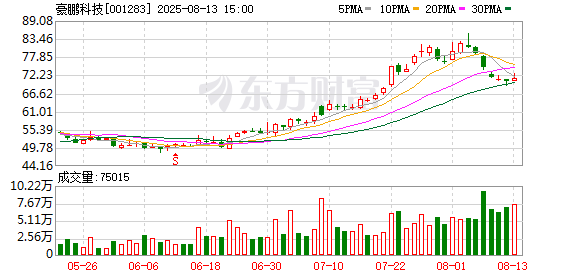
豪鹏科技:资产负债率处于电芯行业正常水平
Zheng Quan Ri Bao· 2025-08-13 13:08
(文章来源:证券日报) 证券日报网讯豪鹏科技8月13日在互动平台回答投资者提问时表示,公司资产负债率处于电芯行业正常 水平,且经营性现金流稳健,债务风险可控。未来,公司将通过经营效率提升、业务结构优化和资本结 构改善等方式,全力推动公司高质量发展。 ...