
硅化工

Search documents
双碳背景下硅化工行业的基本面梳理
2026-03-12 09:08
Summary of Key Points from the Conference Call on the Silicon Industry Industry Overview - The silicon industry is currently facing significant challenges, with industrial silicon futures prices dropping below the industry cost line, specifically at 8,800 RMB/ton, which has become a critical resistance level for leading companies [1][2]. - Total inventory is approximately 567,000 tons, close to two months of production, indicating a substantial inventory pressure that is a core issue in the market [1][4]. Core Insights and Arguments - **Weak Demand in Downstream Markets**: The downstream market for polysilicon is deteriorating, with total inventory exceeding 500,000 tons while monthly production is only 90,000 to 100,000 tons, leading to extremely weak demand [1][6]. - **Supply Side Elasticity**: The supply side shows significant elasticity due to low start-stop costs, with expectations for rapid resumption of production in the southwestern regions during the wet season in May [1][10]. - **Cost Support for Prices**: Electricity and reducing agents account for about 70% of production costs. There are concerns about potential electricity price increases in Xinjiang and fluctuations in coking coal prices, which could impact the cost structure [1][5]. - **Minimal Impact from Policy on Capacity Reduction**: Policies aimed at reducing capacity have minimal effect, as most furnaces below 12,500 kVA are classified as restricted rather than eliminated, lacking strong shutdown incentives [1][8]. Additional Important Insights - **Historical Price Trends**: Since its listing, industrial silicon futures have shown a downward trend, with a significant drop to around 6,900 RMB/ton in June 2025, indicating that prices fell below production costs for leading companies [2]. - **Current Price Dynamics**: As of early March 2026, prices have seen a slight increase, reaching 8,800 RMB/ton, where some leading companies are choosing to sell, indicating this price is viewed as a favorable selling point [2][4]. - **Production Cost Composition**: The production cost of industrial silicon is primarily driven by electricity and reducing agents, with electricity costs accounting for 30-40% of total costs. Recent reductions in electricity consumption per ton produced have been noted [5]. - **Polysilicon Industry Weakness**: The polysilicon sector is experiencing significant inventory pressures, with manufacturers holding around 360,000 tons of inventory, which negatively impacts the demand for industrial silicon [6]. - **Organic Silicon Sector Trends**: The organic silicon sector, another major downstream market, has been underperforming due to the real estate market's impact, with discussions of production cuts that may not materialize as expected [7]. - **Regulatory Environment**: The introduction of energy efficiency standards for the silicon industry may complicate the elimination of existing capacity, as compliance with these standards is challenging [8]. - **Impact of Global Events**: The ongoing Middle East conflict is not expected to have a significant direct impact on industrial silicon exports, but it may influence downstream demand dynamics [12]. This summary encapsulates the critical aspects of the silicon industry as discussed in the conference call, highlighting the current challenges, market dynamics, and potential future developments.
2025年合盛硅业公司跟踪报告:硅产业链龙头,行业景气有望扭转(附下载)
Xin Lang Cai Jing· 2025-12-23 12:14
Group 1: Company Overview - Company was established in 2005 by Ningbo Hoshine Group and listed on the Shanghai Stock Exchange in 2017, recognized as a leading integrated enterprise in the silicon-based industry chain [1][14] - The company has manufacturing bases in Xinjiang, Zhejiang, Sichuan, Yunnan, and Heilongjiang, and R&D centers in Shanghai and Hainan, covering diverse businesses including energy, industrial silicon, organic silicon, carbon materials, new materials, third-generation semiconductor silicon carbide, photovoltaic full industry chain, and energy storage [1][14] - The company holds the largest global production capacity for industrial silicon and organic silicon monomers, with 1.22 million tons/year and 1.73 million tons/year respectively, accounting for 19% and 30% of the industry [3][16] Group 2: Production and Capacity - The main products include industrial silicon, organic silicon, and polysilicon, with industrial silicon being a key raw material for photovoltaic materials and organic silicon materials [3][16] - The company has a competitive cost advantage due to its production facilities located in resource-rich Xinjiang, which includes self-owned power plants [3][16] - In 2024, the company plans to launch a photovoltaic integrated industrial park project in central Xinjiang, which includes a 200,000 tons/year high-purity polysilicon project and a 20GW photovoltaic module project [3][16] Group 3: Financial Performance - The company experienced a peak in performance in 2021 due to significant growth in downstream photovoltaic and new energy demand, but has faced profit pressure in recent years due to declining prices and increased capital expenditures [5][18] - Total sales volume of the company's products has been increasing, with industrial silicon sales expected to reach 1.23 million tons in 2024, a year-on-year increase of 20.93%, and silicone rubber sales expected to reach 835,100 tons, a year-on-year increase of 12.81% [5][18] - The revenue structure has shifted, with industrial silicon accounting for 51.9% of total revenue in 2024, up 3.2 percentage points year-on-year, while organic silicon's revenue share is expected to decrease to 46%, down 2.9 percentage points year-on-year [5][18] Group 4: Industry Trends - The metal silicon industry has seen continuous capacity growth, with production expected to reach 765.9 million tons by 2025, reflecting a compound annual growth rate of 5.25% [7][20] - The demand for metal silicon is driven by the photovoltaic industry, with polysilicon consumption projected to account for over 50% of total metal silicon consumption by 2024 [11][24] - China is a net exporter of industrial silicon, with exports expected to reach 724,700 tons in 2024, a year-on-year increase of 26.69% [12][25]


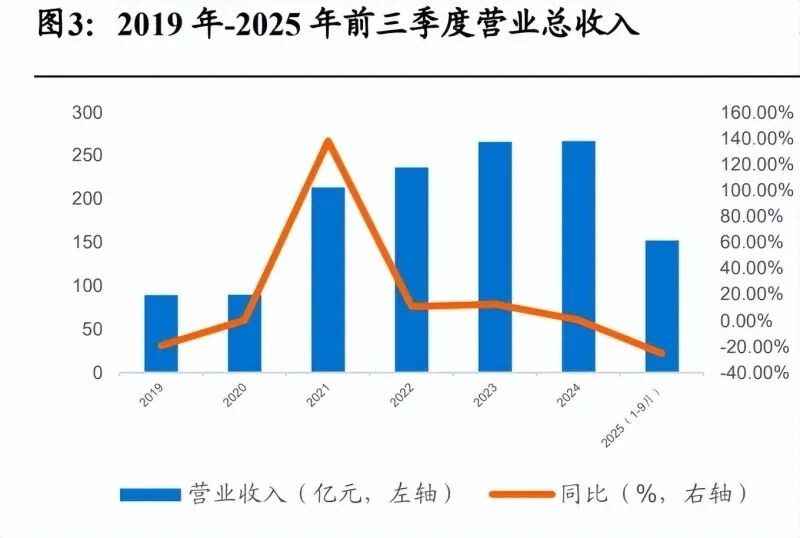
每日报告精选-20251210
GUOTAI HAITONG SECURITIES· 2025-12-10 13:14
Market Overview - Overall asset performance shows commodities outperforming equities, with the Korean stock market leading gains[4] - MSCI global index increased by 0.6%, but growth momentum has significantly slowed compared to previous weeks[5] - The yield curve for Chinese bonds is steepening, indicating a "bear steepening" trend, while U.S. bonds are experiencing a "bull steepening" trend[6] Commodity and Currency Trends - 10 out of 13 major commodities recorded price increases, with COMEX silver rising by 101.9% year-to-date[7] - The U.S. dollar index fell by 0.5%, with the euro and pound appreciating by 0.4% and 0.8% respectively; the dollar has depreciated by 8.8% since the beginning of the year[7] Consumer and Industrial Insights - Service consumption has improved year-on-year, with Shanghai Disneyland's visitor index up by 75% compared to last year[10] - Real estate transactions in major cities have seen significant declines, with new home sales down by 32.5% year-on-year[30] Financial Sector Developments - As of November 2025, the total net asset value of public funds reached 36 trillion yuan, with equity funds increasing by 1.55%[24] - The performance evaluation of the investment banking sector is shifting towards enhancing investor experience[23] Company-Specific Highlights - Traffic Bank's net profit growth is projected at 2.3% for 2025, with a target price adjustment to 8.58 yuan based on a 0.72x PB valuation[34] - Didi's EBITA is expected to be 46.0 billion yuan in 2025, with a target market value of 234.7 billion yuan[39]
海通证券晨报-20251210
GUOTAI HAITONG SECURITIES· 2025-12-10 05:20
Group 1: Investment Banking and Brokerage Industry - As of November 2025, the total net asset value of public funds in the market reached 36 trillion yuan, with a month-on-month change of -0.06%. The total share of public funds was 31.36 trillion shares, an increase of 0.37% month-on-month, with equity funds totaling 6.5 trillion shares, up 1.55% month-on-month [2][7] - In November 2025, the total new fund issuance was 94.57 billion shares, a month-on-month increase of 30.81%, accounting for 82.64% of the month's public fund share increment. Among these, equity new funds accounted for 54.67 billion shares, up 42.27% month-on-month [2][7] - The retention rate of existing funds in the market was 100.06% in November 2025, with equity funds at 100.69% and bond funds at 99.97% [2][7] Group 2: Investor Behavior and Market Trends - Personal investor risk appetite showed slight recovery, with ordinary stock, enhanced index, and mixed fund shares increasing by 0.18%, 3.62%, and 0.41% respectively month-on-month. QDII and FOF funds continued to see net inflows, with growth rates of 3.97% and 8.88% respectively [3][8] - Institutional investors are seeking to enhance returns in a fluctuating interest rate environment, with funds primarily flowing into secondary bond funds and REITs, which saw month-on-month increases of 0.50% and 1.10% respectively [3][8] Group 3: Regulatory Changes and Product Development - The industry is placing greater emphasis on investor experience, with the new performance evaluation guidelines for fund management companies already in the consultation phase. This aims to deeply bind the interests of fund managers with those of investors, focusing more on investor experience [4][9] - The issuance scale of mixed FOF products continues to grow month-on-month, driven by initiatives such as the "TREE Changying Plan" by China Merchants Bank, which aims to provide a one-stop asset allocation solution for clients [4][9] Group 4: Company-Specific Insights - Company A, a leader in the silicon-based new materials industry, has a production capacity of 1.22 million tons/year for industrial silicon, accounting for 19% of the industry, and 1.73 million tons/year for organic silicon, accounting for 30% of the industry. The company is positioned to benefit from the recovery in the silicon industry [10][12] - The organic silicon industry is expected to gradually improve its supply-demand structure, with significant pressure from the rapid expansion of production capacity from 2019 to 2024. However, limited new capacity in the coming years may lead to a better balance in the market [11]

本周Henry天然气、乙烷、辛醇价格涨幅居前:基础化工行业周报(20251201-20251207)-20251208
Huachuang Securities· 2025-12-08 07:14
Investment Rating - The report maintains a "Recommended" investment rating for the basic chemical industry [2] Core Views - The basic chemical industry is expected to see a layout period at the end of the year, with a high overall weighted operating rate and low price differentials indicating potential for a reversal [14] - The tire industry has shown signs of recovery, with leading companies expected to return to high growth by 2026 due to easing tariffs and recovering raw material costs [15] - The introduction of the "Stabilizing Growth Work Plan for the Petrochemical and Chemical Industry (2025-2026)" is anticipated to accelerate industry transformation and upgrading [16] Summary by Sections Industry Basic Data - The industry comprises 494 listed companies with a total market value of 54,965.58 billion and a circulating market value of 48,900.97 billion [2] Price and Performance - The report indicates a 2.0% absolute performance increase over one month, 28.6% over six months, and 25.6% over twelve months [3] - Key price increases this week include Henry natural gas (+18.5%), ethane (+10.4%), and octanol (+7.8%) [13] Sector Tracking - The tire sector is highlighted for its recovery, with nine out of eleven listed companies reporting profit growth in Q3 [15] - The agricultural chemical sector is noted for recent price increases in small pesticide varieties and the essential nature of fertilizers [7] - The phosphorous chemical sector is under observation for changes in industry dynamics due to favorable policies [7] Investment Strategies - Suggested investment routes include early-stage recovery stocks, scarce resource leaders, high-growth potential companies, and sectors with favorable supply-demand structures [14] - The report emphasizes the importance of focusing on the fluorine, silicon, and phosphorus sectors for their valuation elasticity and potential for new cycle star products [17][18] Policy and Regulatory Developments - The Ministry of Industry and Information Technology has initiated discussions on PTA industry development to prevent excessive competition and promote stable operations [16] - The report notes that the petrochemical sector is expected to undergo significant changes due to new policies aimed at optimizing supply and enhancing technological innovation [19]




本周叶酸、六氟磷酸锂、浓硝酸价格涨幅居前:基础化工行业周报(20251110-20251116)-20251117
Huachuang Securities· 2025-11-17 13:15
Investment Rating - The report maintains a "Buy" recommendation for the basic chemical industry, highlighting price increases in key products such as folic acid, lithium hexafluorophosphate, and concentrated nitric acid [2]. Core Insights - The basic chemical industry is expected to see a turnaround, with the overall weighted operating rate at historical highs and price differentials at the bottom, indicating potential for recovery [15][18]. - The report suggests four investment strategies: prioritize early turnaround stocks, focus on scarce resource products, invest in growth-oriented companies, and target sectors with favorable supply-demand structures [15]. - The tire industry is showing signs of recovery, with major companies expected to return to high growth by 2026 due to easing tariffs and stabilizing raw material costs [16]. - The Ministry of Industry and Information Technology has introduced a growth plan for the petrochemical industry, aiming for an average annual growth of over 5% from 2025 to 2026 [17]. - The report emphasizes the importance of the fluorine, silicon, and phosphorus sectors, which are expected to have significant valuation elasticity and potential for new cycle star products [19]. Summary by Sections Investment Strategy - The Huachuang Chemical Industry Index is at 67.92, with a week-on-week increase of 1.66% and a year-on-year decrease of 21.52% [14]. - Key products with significant price increases include folic acid (+25.8%), lithium hexafluorophosphate (+22.2%), and concentrated nitric acid (+20.1%) [14]. Price and Price Differential Changes - The report notes that the industry price percentile is at 15.54% over the past decade, indicating a relatively low price level [14]. - The industry inventory percentile is at 87.36%, suggesting a high level of inventory compared to historical data [14]. Tracking Basic Chemical Sub-sectors - The report tracks various sub-sectors, including tire, agricultural chemicals, phosphorus chemicals, coal chemicals, and chlor-alkali, providing insights into their performance and market conditions [7]. - The tire industry is highlighted for its recovery potential, with nine out of eleven listed companies reporting profit growth in Q3 [16]. - The phosphorus chemical sector is noted for favorable policy developments and potential market changes [7][19]. Trading Data - The report includes trading data and performance metrics for various chemical products, indicating trends in supply and demand dynamics [7].
从三峡库区走向世界舞台:兴发集团高质量发展的进阶之路
Xin Hua Wang· 2025-10-16 06:16
Core Viewpoint - The article highlights the transformative journey of Xingfa Group, which has evolved from a local yellow phosphorus producer to a leading enterprise with nearly 30 billion yuan in revenue, focusing on high-end new materials and semiconductor materials, driven by technological innovation and strategic capital operations [1][9]. Group 1: Company Transformation - Xingfa Group has successfully transitioned from traditional phosphorus chemicals to high-end new materials, establishing a solid foundation for high-quality development [1][3]. - The company has achieved a full industry chain upgrade in its core phosphorus chemical business, becoming a global leader in food-grade phosphates and maintaining a significant market share in glyphosate production [3][4]. - The establishment of Xingfu Electronics as a subsidiary focused on semiconductor materials marks a significant step in the company's strategic expansion [1][6]. Group 2: Technological Innovation - The company emphasizes technological innovation as the core driver for its industrial advancement, with a focus on microelectronics, organic silicon, and new energy materials [3][4]. - Xingfa Group has made breakthroughs in black phosphorus technology, which has potential applications in new energy and biomedicine, although commercialization will take time [4][5]. - Xingfu Electronics has a production capacity of 37.4 million tons per year and is advancing in high-end markets, challenging international competitors [5][6]. Group 3: Capital Strategy - Capital market strategies have been crucial for Xingfa Group's transformation, with the successful spin-off of Xingfu Electronics being a notable achievement [6][7]. - The company employs various financial instruments, including stocks and convertible bonds, to support its growth and maintain a healthy financial structure, reducing its debt ratio from 70% to approximately 52.86% [7][8]. - Strategic mergers and acquisitions are conducted based on downstream customer needs, enhancing the company's resource control and market position [8][9]. Group 4: Sustainable Development - Xingfa Group integrates sustainable development into its core operations, with a commitment to environmental, social, and governance (ESG) practices, including energy conservation and green supply chain management [5][6]. - The company has been disclosing its social responsibility reports for 16 consecutive years, reflecting its dedication to sustainable practices [5][6]. - The future vision includes achieving a revenue target of 100 billion yuan while continuing to pursue green development and technological innovation [9].


工业硅:市场情绪有所降温,多晶硅:关注消息面扰动
Guo Tai Jun An Qi Huo· 2025-08-14 01:44
1. Report Industry Investment Rating - There is no information about the industry investment rating in the provided content. 2. Core Viewpoints of the Report - The market sentiment of industrial silicon has cooled down [1]. - Attention should be paid to the disturbances in the news for polysilicon [2]. - The trend intensity of industrial silicon and polysilicon is -1, indicating a bearish outlook [4]. 3. Summary by Relevant Catalogs 3.1 Fundamental Tracking 3.1.1 Industrial Silicon and Polysilicon Futures Market - Si2511: The closing price is 8,600 yuan/ton, with a decrease of 240 yuan compared to T - 1, 100 yuan compared to T - 5, and 95 yuan compared to T - 22. The trading volume is 510,280 lots, with a decrease of 10,224 lots compared to T - 1, an increase of 45,197 lots compared to T - 5, and a decrease of 963,713 lots compared to T - 22. The open interest is 284,500 lots, with an increase of 5,640 lots compared to T - 1, an increase of 75,764 lots compared to T - 5, and a decrease of 118,390 lots compared to T - 22 [2]. - PS2511: The closing price is 51,290 yuan/ton, with a decrease of 510 yuan compared to T - 1 and 55 yuan compared to T - 5. The trading volume is 395,645 lots, with a decrease of 86,164 lots compared to T - 1 and 24,556 lots compared to T - 5. The open interest is 132,463 lots, with a decrease of 3,592 lots compared to T - 1 and 5,933 lots compared to T - 5 [2]. - Spread and Cost: The spread between the near - month contract and the first - continuous contract for industrial silicon is 5 yuan/ton, and the cost of the long - near - month and short - first - continuous inter - period arbitrage is 46.3 yuan/ton. The spread between the near - month contract and the first - continuous contract for polysilicon is 235.0 yuan/ton [2]. 3.1.2 Basis - Industrial silicon: The spot premium against East China Si5530 is +825 yuan/ton, against East China Si4210 is +375 yuan/ton, and against Xinjiang 99 silicon is +225 yuan/ton. - Polysilicon: The spot premium against N - type re - investment material is - 4290 yuan/ton [2]. 3.1.3 Price - Industrial silicon: Xinjiang 99 silicon is 8800 yuan/ton, Yunnan Si4210 is 10000 yuan/ton. - Polysilicon: N - type re - investment material is 47000 yuan/ton. - Other related products: Trichlorosilane is 3350 yuan/ton, silicon powder (99 silicon) is 10150 yuan/ton, silicon wafers (N - type - 210mm) are 1.55 yuan/piece, battery cells (TOPCon - 210mm) are 0.285 yuan/watt, components (N - type - 210mm, centralized) are 0.674 yuan/watt, photovoltaic glass (3.2mm) is 18 yuan/cubic meter, and photovoltaic - grade EVA price is 9600 yuan/ton [2]. 3.1.4 Profit - Silicon plant profit: For Xinjiang new - standard 553, it is - 2701 yuan/ton; for Yunnan new - standard 553, it is - 3439 yuan/ton. - Polysilicon enterprise profit is - 16.9 yuan/kg. - DMC enterprise profit is - 166 yuan/ton. - Regenerated aluminum enterprise profit is - 410 yuan/ton [2]. 3.1.5 Inventory - Industrial silicon: Social inventory (including warehouse receipt inventory) is 54.7 tons, enterprise inventory (sample enterprises) is 17.0 tons, industry inventory (social inventory + enterprise inventory) is 71.7 tons, and futures warehouse receipt inventory is 25.4 tons. - Polysilicon: Manufacturer inventory is 23.3 tons [2]. 3.1.6 Raw Material Cost - Silicon ore: Xinjiang is 340 yuan/ton, Yunnan is 320 yuan/ton. - Washed coking coal: Xinjiang is 1250 yuan/ton, Ningxia is 925 yuan/ton. - Petroleum coke: Maoming coke is 1400 yuan/ton, Yangzi coke is 1740 yuan/ton. - Electrodes: Graphite electrode is 12200 yuan/ton, carbon electrode is 7200 yuan/ton [2]. 3.2 Macro and Industry News - On August 12, 2025, the environmental impact report (draft for comments) of the 500 - ton silicon - based electronic special gas project of Haidong Hongshi Semiconductor Co., Ltd. was publicly announced. The project is located in the Zero - Carbon Industrial Park in Hehuang New Area, Haidong City, Qinghai Province. It relies on the 140,000 - ton polysilicon production system of the first - phase project of Haidong Hongshi Semiconductor, adding equipment for further purification of by - products in the polysilicon production process and building a new filling station [4].
工业硅:基本面弱势格局,关注市场情绪,多晶硅:消息扰动增加
Guo Tai Jun An Qi Huo· 2025-08-06 01:30
1. Report Industry Investment Rating - No specific industry investment rating is provided in the report. 2. Core Viewpoints - The industrial silicon market is in a weak fundamental pattern, and attention should be paid to market sentiment. The polysilicon market has increasing news disturbances [1]. - The trend strength of industrial silicon is 0, indicating a neutral outlook, while the trend strength of polysilicon is 1, indicating a slightly bullish outlook [3]. 3. Summary by Relevant Catalogs 3.1 Fundamental Tracking - **Futures Market**: The closing price of Si2511 was 8,450 yuan/ton, with a decrease of 90 yuan compared to the previous day, 900 yuan compared to a week ago, and an increase of 470 yuan compared to a month ago. The closing price of PS2511 was 50,330 yuan/ton, with an increase of 1,610 yuan compared to the previous day and a decrease of 475 yuan compared to a week ago [1]. - **Basis**: The industrial silicon spot premium (against East China Si5530) was +760 yuan/ton, and the polysilicon spot premium (against N-type re - investment) was - 1980 yuan/ton [1]. - **Price**: The price of East China oxygen - passed Si5530 was 9,250 yuan/ton, with a decrease of 200 yuan compared to the previous day and 550 yuan compared to a week ago. The price of polysilicon - N - type re - investment material was 47,000 yuan/ton, with no change compared to the previous day but an increase of 500 yuan compared to a week ago and 11,000 yuan compared to a month ago [1]. - **Profit**: The profit of silicon plants in Xinjiang (new standard 553) was - 2,938 yuan/ton, and that in Yunnan (new standard 553) was - 4,730 yuan/ton. The profit of polysilicon enterprises was - 16.9 yuan/kg [1]. - **Inventory**: The industrial silicon social inventory (including warehouse receipt inventory) was 540,000 tons, and the polysilicon manufacturer inventory was 229,000 tons [1]. - **Raw Material Cost**: The price of silicon ore in Xinjiang was 340 yuan/ton, and that in Yunnan was 320 yuan/ton. The price of graphite electrodes was 12,200 yuan/ton [1]. 3.2 Macro and Industry News - On August 4, the Hebei Provincial Development and Reform Commission issued a notice on organizing the application for green power direct - connection projects, giving priority to supporting three types of projects. The proportion of the project's annual self - generated and self - used new energy electricity to the total available power generation should be no less than 60%, and the proportion to the total power consumption should be no less than 30%, reaching no less than 35% by 2030 [2][3].
中信建投:关注化工上游板块景气改善预期 新材料产业升级带来长期机遇
Zhi Tong Cai Jing· 2025-06-17 07:42
Group 1 - The core viewpoint is that the chemical industry is expected to see a recovery in profitability driven by policy support, particularly in upstream sectors closely related to domestic demand [1][2] - The report highlights specific sectors such as polyurethane, coal chemical, petrochemical, and fluorochemical as key areas for potential profit recovery [1][2] - The focus on new materials as a primary development direction for China's chemical industry includes high-value products like robot materials, AI & semiconductor materials, bio-aviation fuel, OLED materials, and COC materials [1][3] Group 2 - The expectation of domestic demand recovery is supported by recent policy measures aimed at revitalizing the economy, with a focus on the chemical industry's upstream sectors [2] - Key companies to watch include Wanhua Chemical (600309), Baofeng Energy (600989), and others in the coal chemical and petrochemical sectors, which are expected to benefit from infrastructure projects in regions like Xinjiang and Tibet [2] - The emphasis on developing new materials is driven by emerging demands from humanoid robots and AI applications, as well as ongoing domestic substitution efforts in the semiconductor field [3] Group 3 - High-quality companies with strong shareholder returns are expected to undergo a revaluation, including major state-owned enterprises in the oil and gas sector and firms in the compound fertilizer and amino acid industries [4] - The report suggests that many sub-sectors within the chemical industry are at a point where they can enhance shareholder returns to reshape investment value [4]
