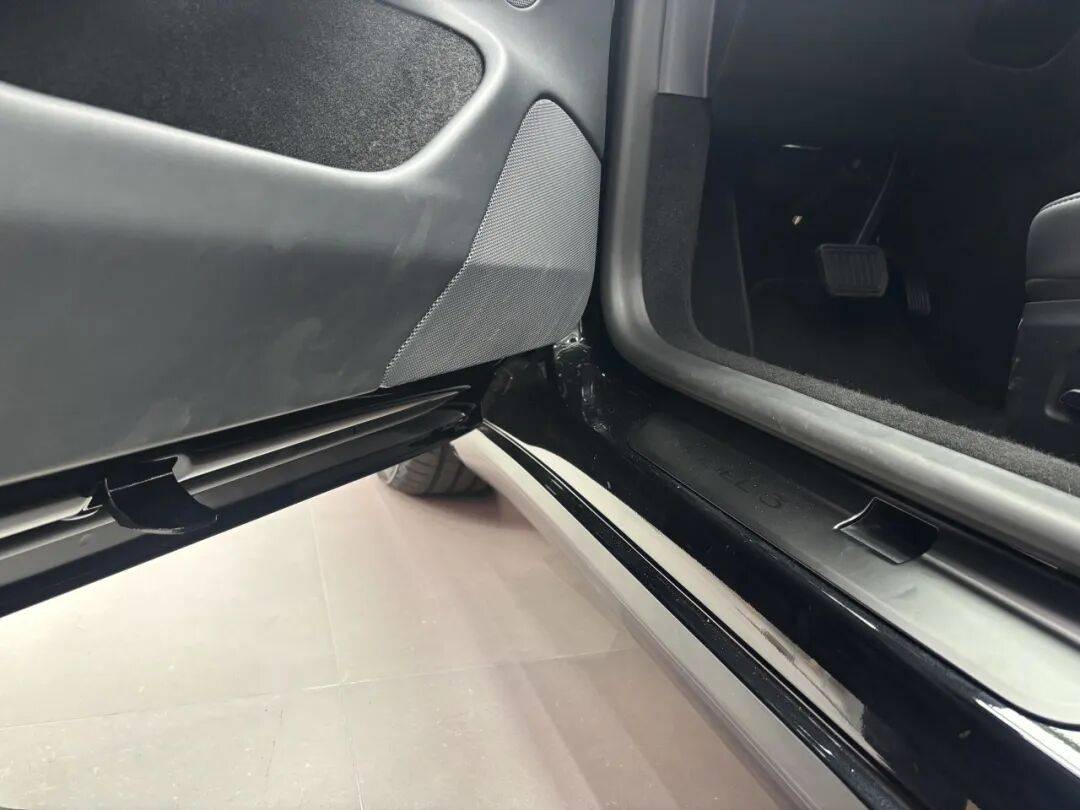
一汽丰田bZ3

Search documents
超20款车光速调价,丰田“自杀式”反击,2026价格战再升级
3 6 Ke· 2026-01-16 12:53
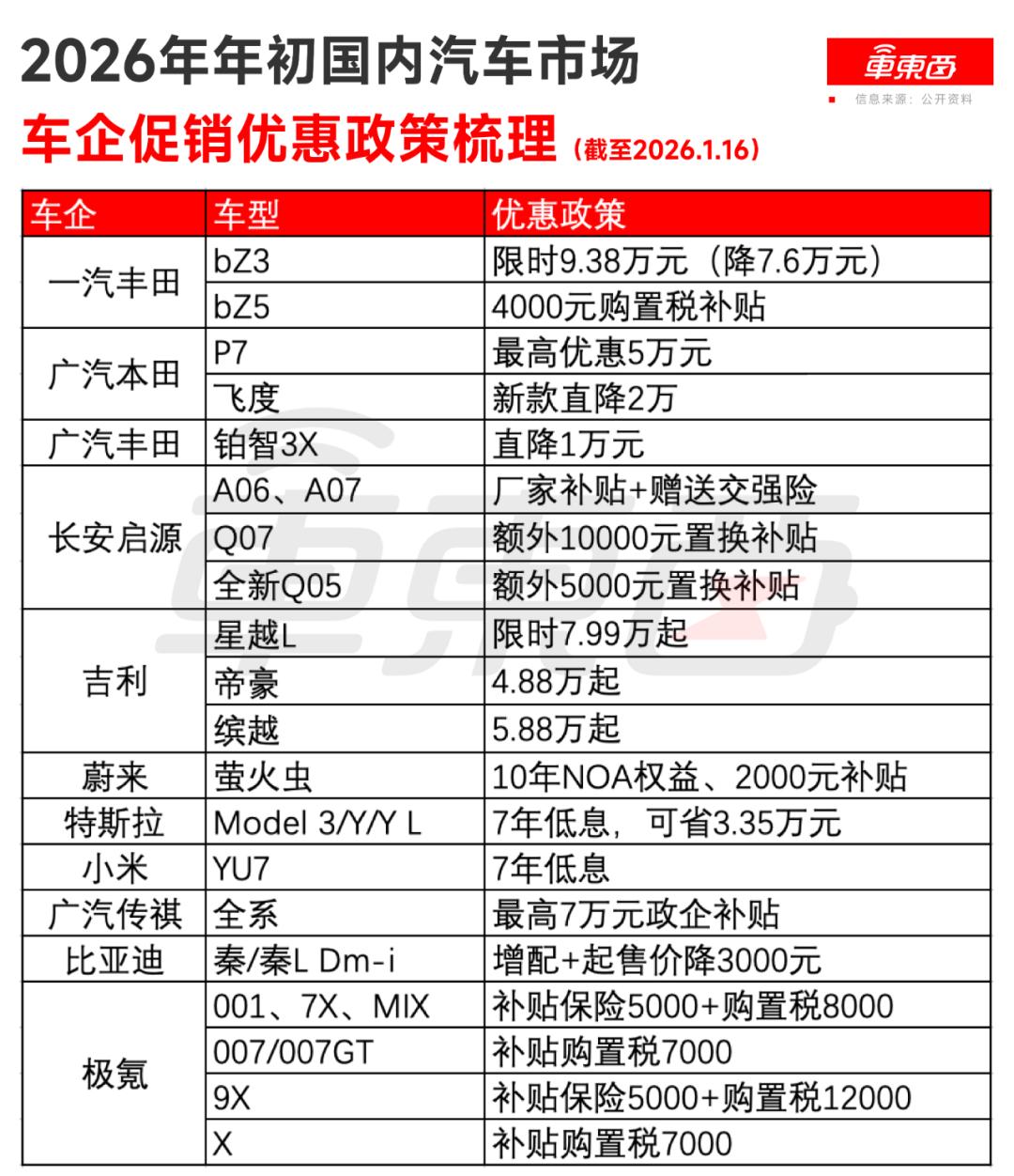
Core Viewpoint - The automotive industry is experiencing an intense price war initiated by luxury brands, leading to significant price reductions across various models from multiple manufacturers, creating a new wave of discounts in the market [1][6]. Group 1: Price Reductions and Promotions - BMW has initiated a price drop of up to 300,000 yuan, prompting over 10 automakers to follow suit with more than 20 mainstream models participating in the price reduction trend [1]. - Geely's Emgrand is now priced at 48,800 yuan, while the new Honda Fit has seen a price cut of 20,000 yuan, setting a new low at 66,800 yuan [1][13]. - Toyota's bZ3 electric sedan has been drastically reduced to 93,800 yuan, a decrease of 76,000 yuan, representing a nearly 45% drop from its previous price [9]. Group 2: Competitive Strategies - The competition has escalated with joint efforts from joint venture brands, particularly Japanese automakers, who are adopting aggressive pricing strategies to reclaim market share [7]. - Various automakers are employing a combination of subsidies, enhanced features, and financing options to attract buyers, rather than relying solely on price cuts [20][30]. - NIO's Firefly brand is offering cash subsidies along with a 10-year NOA (Navigation on Autopilot) free usage right, showcasing a strategic approach to enhance customer value [32]. Group 3: Market Dynamics and Consumer Impact - The price war has led to a significant reduction in the entry price for electric vehicles, making them more accessible to consumers [9][19]. - The automotive market is witnessing a shift where companies are not just competing on price but also on the value offered through financing and additional features, which may lead to a more sustainable competitive environment [37]. - The ongoing promotions and price adjustments are expected to drive sales ahead of the Chinese New Year, indicating a strategic push by manufacturers to maximize order volumes during this peak season [37].






宝马“官降”30万背后
第一财经· 2026-01-12 11:00
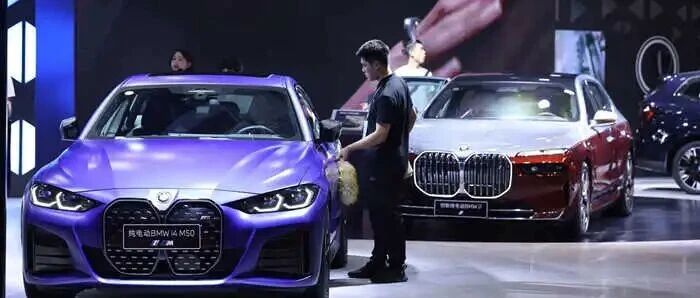
Core Viewpoint - BMW China has officially reduced the prices of 31 models, with the highest reduction reaching 301,000 yuan, aiming to attract customer traffic, although the actual transaction prices have not significantly decreased [3][4]. Pricing Strategy - The official price adjustments did not include popular models like the BMW 3 Series, X3, and 5 Series, which still have substantial discounts, such as the X3's final price around 350,000 yuan and the 3 Series offering discounts of about 100,000 yuan [5][6]. - Some models, like the BMW 5 Series and X5, have seen price increases due to strong sales and tight inventory, while high-performance M series models have increased their discount offers [6]. Dealer Dynamics - Dealers are adjusting their pricing strategies based on inventory and market dynamics, with the official price reduction helping to alleviate financial costs and inventory pressures [6]. - The profitability of luxury brand dealers has shifted from relying solely on new car sales to generating profits from after-sales services, with annual maintenance costs exceeding 20,000 yuan and gross margins reaching 60%-70% [6]. Market Competition - The luxury car market is experiencing significant discounts across brands, with competitors like Mercedes-Benz and Audi also offering substantial price reductions [7]. - The overall car prices are fluctuating, with discounts of 10,000 to 20,000 yuan annually, and promotional strategies are being employed to attract younger consumers caught between "domestic high-end" and "luxury entry-level" options [7][8]. Promotional Trends - Following BMW's price cuts, over 20 car manufacturers have announced promotional policies, including cash discounts and financing options [9]. - Notable promotions include Cadillac's new XT5 priced at 229,900 yuan, a reduction of nearly 40%, and Toyota's bZ3 with a price drop of 76,000 yuan [9]. Industry Challenges - The luxury car market is facing multiple pressures, including the rise of electric vehicles, which have surpassed a 50% penetration rate, impacting traditional luxury brands' market share [8][10]. - Sales figures for luxury brands have declined, with the average price of luxury cars dropping by 18,000 yuan year-on-year [9][10]. Consumer Behavior - Consumers are now presented with more choices due to promotional activities, but they should be cautious of potential pitfalls such as "hidden price increases" and "bundled sales" [11].

宝马“官降”30万背后:引流重于降价,部分热销车型落地价上涨
Di Yi Cai Jing· 2026-01-12 10:04
Core Viewpoint - The recent price reduction by BMW in China, which saw a decrease of up to 301,000 yuan for 31 models, is primarily aimed at attracting customer traffic rather than significantly lowering actual transaction prices in the market [1][2]. Group 1: Price Adjustments and Market Impact - BMW's official price cuts have not substantially affected the final transaction prices, especially for popular models, as dealers maintain pricing strategies based on inventory and market dynamics [1][2]. - The BMW 3 Series, X3, and 5 Series, which are key volume models, have not been included in the price adjustments, while the X3 and 5 Series have seen slight price increases due to strong sales and tight inventory [2]. - The high-performance M series models have seen increased discounts, with the M2 model's discount rising from 60,000 yuan to 80,000 yuan [2]. Group 2: Competitive Landscape and Consumer Behavior - Other luxury brands like Mercedes-Benz and Audi are also offering significant discounts, with common reductions around 100,000 yuan for popular models [3]. - The overall car price is experiencing fluctuations, with a typical annual change of 10,000 to 20,000 yuan, and promotional strategies are often used to attract customers [3][4]. - The luxury car market is under pressure from the rising penetration of electric vehicles, which has led to a decline in sales for traditional luxury brands [5]. Group 3: Dealer Strategies and Financial Considerations - Dealers are adjusting their pricing strategies to maintain profitability, as their earnings increasingly rely on after-sales services rather than new car sales [2][5]. - The average maintenance cost for luxury vehicles exceeds 20,000 yuan annually, with profit margins reaching 60-70% [2]. - The competitive environment has intensified, with many brands implementing promotional strategies to counteract the impact of new energy vehicles on market demand [6][7].
超20家车企降价促销
第一财经· 2026-01-10 02:53
Core Viewpoint - The Chinese automotive market is entering a new round of competition in 2026, characterized by aggressive promotions and new model launches, with significant price reductions initiated by major brands like BMW and BYD [3][4][5]. Group 1: Price Reductions and Promotions - BMW announced price cuts on 31 models, with reductions up to 300,000 yuan, prompting over five other joint venture brands to follow suit with discounts ranging from 10,000 to 50,000 yuan [3][5]. - BYD, the leading electric vehicle manufacturer, has also reduced the starting price of its new Qin L plug-in hybrid model from 119,800 yuan to 116,800 yuan while increasing its electric range from 120 km to 210 km [3][6]. - More than 20 automakers have launched promotional activities since January 1, with over 75 models involved, utilizing various strategies such as cash subsidies, fixed pricing, and interest-free financing [3][6]. Group 2: Market Dynamics and Expert Opinions - Industry experts, including Cui Dongshu from the China Passenger Car Association, believe the current price reductions are a rational adjustment rather than a price war, and they expect the trend to continue throughout 2026 [4][7]. - The increase in vehicle purchase tax effective January 1 has raised costs for consumers, influencing promotional strategies among automakers [6][7]. - Predictions for the first quarter of 2026 suggest a potential stabilization in the automotive market, with a year-on-year comparison expected to remain flat, despite a 25% decline from the previous quarter [7]. Group 3: New Model Launches and Competitive Strategies - The beginning of 2026 has seen a surge in new model launches, with companies like BYD and XPeng introducing multiple new vehicles, emphasizing features like enhanced configurations without price increases [9][10]. - The competition strategy has shifted towards "adding features without increasing prices," contrasting with previous years' direct price-cutting tactics [10]. - The transition from older models to new ones is accompanied by various promotional offers to clear inventory, ensuring a smooth introduction of new models into the market [10].

实探10家新能源车:多数极端情况无法开门
Hu Xiu· 2025-10-17 12:35
Core Viewpoint - The tragic incident involving a Xiaomi car has reignited the safety debate surrounding hidden door handles in electric vehicles, highlighting the critical need for safety redundancy in automotive design [1][2][3]. Group 1: Incident Overview - A Xiaomi vehicle lost control and caught fire due to the owner's drunk driving, leading to fatalities as rescuers struggled to open the doors, which were rendered inoperable due to the hidden electric door handles failing after power loss [1][2]. - Previous incidents in 2024 and 2025 involving other electric vehicles with similar hidden door handle designs have raised public awareness about the safety risks associated with these features [2][3]. Group 2: Regulatory Response - The Ministry of Industry and Information Technology (MIIT) initiated a safety technology research project in July 2024, focusing on the risks associated with hidden door handles [2][28]. - A draft of mandatory national standards for automotive door handles was released on September 24, 2025, proposing significant restrictions on hidden door handles and suggesting a transition period until January 1, 2027 [2][27]. Group 3: Industry Implications - The ongoing accidents and the impending regulations indicate a shift in the automotive industry towards prioritizing safety over aesthetic and aerodynamic considerations [3][21]. - The new regulations require all vehicle doors to have mechanical release functions, which fundamentally challenges the current trend of fully hidden door handles [27][29]. Group 4: Design and Safety Redundancy - The design of hidden door handles has been criticized for relying heavily on electronic signals, which can fail in emergencies, leading to difficulties in opening doors during critical situations [7][8]. - Some manufacturers, like Tesla, have implemented designs that combine electronic and mechanical systems to enhance safety redundancy, while others still rely on less reliable designs [12][16]. Group 5: Future Directions - The automotive industry is beginning to reassess its design philosophies, moving away from a sole focus on technological aesthetics towards incorporating safety as a fundamental design principle [31][34]. - Companies are actively preparing to comply with the new regulations, with some already adapting their designs to meet the upcoming safety standards [30][32].