宝马X3

Search documents
【联合发布】一周新车快讯(2026年2月28日-3月6日)
乘联分会· 2026-03-06 08:49
Core Viewpoint - The article provides an overview of new vehicle models set to be launched in 2026, detailing specifications, market segments, and pricing strategies for various manufacturers in the automotive industry. Group 1: New Vehicle Launches - Dongfeng Liuzhou's Fengxing Xinghai T5 is an A SUV set to launch on February 28, 2026, with a price range of 153,900 to 161,900 CNY and a pure electric range of 530 km [9]. - Xpeng Motors' X9, a C MPV, will be available from March 2, 2026, with prices ranging from 309,800 to 369,800 CNY and a maximum range of 750 km [17]. - GAC Aion's Aion i60, another A SUV, is scheduled for release on March 2, 2026, priced at 102,800 CNY, featuring a 1.5L range extender engine [25]. - SAIC Volkswagen's Volkswagen Teramont Pro, a C SUV, will launch on March 3, 2026, with a price of 344,900 CNY [33]. - Changan Automobile's Qiyuan A06, a C NB, will also be released on March 3, 2026, priced at 139,900 CNY [41]. Group 2: Specifications and Features - The Fengxing Xinghai T5 features a pure electric powertrain with a power output of 120 kW and torque of 240 N·m, with a battery capacity of 64.4 kWh [9]. - The Xpeng X9 offers multiple configurations with power outputs ranging from 235 kW to 370 kW, and a battery capacity of 94.8 kWh [17]. - The Aion i60 has a power output of 74 kW from its engine and 180 kW from its electric motor, with a battery capacity of 29.165 kWh [25]. - The Teramont Pro is equipped with a 2.0T engine producing 200 kW and 400 N·m of torque [33]. - The Qiyuan A06 features a 1.5L range extender engine with a power output of 72 kW and an electric motor output of 120 kW [41]. Group 3: Market Segmentation and Pricing - The article categorizes the new models into various segments, including A SUVs, C MPVs, and B SUVs, indicating a diverse market strategy [9][17][25][33][41]. - Pricing strategies vary significantly, with models like the Aion i60 positioned as more affordable options at 102,800 CNY, while luxury models like the BMW X5 are priced at 688,000 CNY [25][62]. - The introduction of multiple configurations for models like the Xpeng X9 allows for a broader appeal across different consumer segments [17].





奔驰、宝马、奥迪集体换帅
21世纪经济报道· 2026-03-04 15:08
Core Viewpoint - The recent leadership changes in the German luxury car brands (BBA) in China are a response to significant sales and profit declines, indicating a need for strategic restructuring in the face of intense competition and market shifts [1][2][10]. Group 1: Sales Performance - In 2025, Mercedes-Benz's global sales fell by 10% to 2.16 million units, with a 19.5% drop in China to 575,000 units, returning to 2017 levels [1][2]. - BMW's global sales slightly increased by 0.5% to 2.4637 million units, but in China, sales dropped by 12.5% to 625,500 units [1][2]. - Audi's sales in China were 617,500 units, down 5%, marking the third consecutive year of negative growth [1][2]. Group 2: Profitability Issues - Mercedes-Benz's adjusted EBIT for 2025 plummeted by 40% to €8.2 billion, with net profit nearly halving to €5.331 billion [2]. - BMW's EBIT for the first three quarters of 2025 fell by 16.2% to €8.06 billion, with net profit dropping to €5.7 billion [2]. - Audi's operating profit for the first three quarters of 2025 was only €1.6 billion, with bleak full-year profit expectations [2]. Group 3: Market Challenges - The luxury brands are facing a "double whammy" in the Chinese market, with price wars eroding profits in the fuel vehicle sector and a lack of competitive electric vehicle offerings [7][12]. - Mercedes-Benz's sales profit margin has dropped to 5.0%, down from previous double-digit figures, due to increased competition and cost pressures [6]. - BMW's product line is experiencing a structural imbalance, with significant sales declines in higher-margin SUV models [6][7]. Group 4: Strategic Shifts - The leadership changes signal a shift from a "remote control" approach to a more localized strategy that emphasizes understanding and responding to Chinese consumer needs [10][11]. - Mercedes-Benz plans to introduce over 15 new and updated models in China in 2026, focusing on local demand and collaboration with tech companies [11]. - BMW and Audi are also ramping up their electric vehicle offerings to regain market share, with new models set to launch in 2026 [12]. Group 5: Competitive Landscape - Chinese luxury brands are gaining ground, with significant sales figures and a new definition of luxury that emphasizes technology and smart features [12][13]. - The shift in consumer perception towards "technology equals luxury" poses a challenge for BBA, which historically defined luxury through materials and brand heritage [12][13]. - The urgency for BBA to adapt is underscored by the rapid rise of domestic brands and the need for a fundamental rethinking of their market strategies in China [13].

宝马欧洲首推人形机器人产线:每周工作5天,每天10小时,已在美国支撑3万辆X3生产
机器人大讲堂· 2026-02-28 04:03
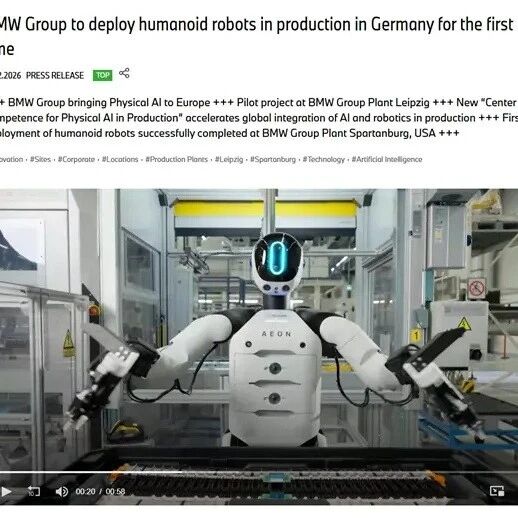
Core Viewpoint - German automakers are attempting to regain their competitive edge in the global market by introducing advanced embodied intelligence technologies, with BMW Group leading the way by deploying humanoid robots in its Leipzig factory for the first time in Europe [1][11]. Group 1: Project Overview - BMW announced a significant pilot program on February 27, deploying two humanoid robots named AEON, developed by Swedish company Hexagon, in its Leipzig factory, marking the first introduction of AI-based robotic technology in its European production system [1][4]. - The AEON robots, standing 1.65 meters tall and weighing 60 kilograms, will begin large-scale pilot testing in summer 2023 after completing theoretical evaluations and laboratory tests [4][6]. - The robots are designed to autonomously operate and transport components within a fully digitized factory environment, showcasing capabilities such as precise scanning of vehicle doors and handling parts from workers [6][8]. Group 2: Technical Specifications - The AEON robots are equipped with 22 sensors and various industrial-grade cameras, forming a micro-level precision mobile measurement system [13]. - They feature a hybrid wheel-foot design, allowing them to move at speeds of up to 2.4 meters per second while maintaining stability [13][15]. - The robots are powered by NVIDIA's "three-in-one" computing platform, enabling real-time autonomous navigation and task decision-making, significantly reducing the training time for core skills from months to weeks [15]. Group 3: Production Insights - The deployment in Europe is largely based on the successful experience from BMW's Spartanburg factory in the U.S., where humanoid robots supported the production of 30,000 BMW X3 vehicles in just 10 months [9][11]. - The U.S. pilot demonstrated that humanoid robots could safely execute repetitive tasks with millimeter-level precision, providing valuable insights for further deployment in automotive production [11]. Group 4: Employment and Collaboration - BMW emphasizes that the introduction of robots is not aimed at replacing employees but rather at enhancing safety and efficiency in high-load, high-risk positions, thereby improving working conditions [16]. - The AEON robots are designed to assist with repetitive or hazardous tasks, reducing the risk and fatigue for human workers, and will work collaboratively with employees in the Leipzig factory [16].
宝马德国工厂首次引进人形机器人打工!
Xin Lang Cai Jing· 2026-02-28 02:43
Core Viewpoint - BMW Group is introducing humanoid robots at its Leipzig plant in Germany, marking the first integration of such embodied intelligence technology into its European production system [1] Group 1: Project Overview - The project aims to integrate humanoid robot technology into existing automotive mass production and explore further applications in battery and component manufacturing [1] - The pilot project is in collaboration with Swiss company Hexagon Robotics, utilizing their AEON humanoid robot set to launch in 2025 [1] Group 2: Operational Insights - The humanoid robots will primarily handle high-voltage battery assembly and component manufacturing [1] - This initiative draws on the successful experience from BMW's Spartanburg plant in the U.S., where humanoid robots supported the production of 30,000 BMW X3 vehicles in 10 months, working 10 hours a day from Monday to Friday [1] - The robots completed 90,000 precise component transfers and operated continuously for 1,250 hours [1]

美国经销商没事找事?
汽车商业评论· 2026-02-23 23:04
Core Viewpoint - The article discusses ongoing legal disputes between BMW and Audi dealerships in New York, highlighting the growing tensions in the U.S. automotive market, particularly regarding sales performance and dealer incentives [4][5][6]. Group 1: Legal Disputes - A BMW dealership in New York has accused BMW North America of breaching contract and good faith by withholding payments due to delays in store renovations, amounting to hundreds of thousands of dollars [4]. - Another Audi dealership group has filed a lawsuit against Audi USA, claiming that the profit incentive policy linked to sales discriminates against them, as it does not provide equal rebate opportunities to all authorized dealers [5][8]. - Both BMW and Audi have denied the allegations and refrained from commenting on the lawsuits, indicating a significant strain in the dealer-manufacturer relationship [5]. Group 2: Sales Performance - Despite overall sales remaining stable year-on-year, BMW's sales in the U.S. are projected to decline by 3.4% in Q4 2025, primarily due to weakening demand for electric vehicles [5]. - Audi's situation is more severe, with a projected sales drop of 14% in 2024 and another 16% in 2025, with internal forecasts suggesting sales could fall to approximately 144,000 units in 2026, the lowest since 2012 [5][6]. Group 3: Economic Challenges - Economic affordability is becoming a critical topic in the U.S. automotive sector, with predictions of rising vehicle prices in 2026 posing challenges for the luxury car market [6][18]. - The average transaction price for new vehicles reached $47,104 in December 2025, reflecting a $715 increase from December 2024, indicating a trend of increasing vehicle costs [18]. - Analysts warn that maintaining growth in the U.S. automotive market in 2026 may be difficult due to economic uncertainties and rising costs associated with tariffs [18]. Group 4: Dealer Challenges - U.S. automotive dealers are facing a crisis in customer retention for after-sales services, with a significant decline in loyalty as consumers shift to independent repair shops [20][22]. - The average age of vehicles is increasing, but loyalty to the dealership for maintenance has dropped, with only 54% of owners of vehicles aged two years or less returning to their purchasing dealer for service, down from 72% in 2023 [20]. - Customer dissatisfaction is primarily due to unexpected charges and poor communication, with 45% of vehicle owners expressing dissatisfaction with dealership service experiences [22]. Group 5: Recommendations for Dealers - Dealers are encouraged to reassess their after-sales strategies to regain market share and improve customer retention rates [20]. - Implementing digital tools for better communication and offering modern conveniences such as flexible service appointments could enhance customer satisfaction [22]. - Dealers are missing opportunities to engage customers with significant repair needs, as many are willing to consider trade-ins, but most dealers do not proactively offer valuation services [22].
BBA,不能再小步慢行了
3 6 Ke· 2026-02-13 01:41
Core Insights - The luxury car market in China is experiencing a significant contraction, affecting major players like Porsche, BMW, Mercedes-Benz, and Audi (collectively known as BBA) [1][3] - BBA's sales in China have declined sharply, with a total drop of approximately 260,000 units, representing a 12.3% decrease year-on-year [3][5] - The market dynamics are shifting, with domestic brands increasingly challenging BBA's dominance, leading to a re-evaluation of the luxury car segment [3][12] Group 1: Market Performance - In 2025, BBA's sales in China fell significantly, with Audi selling 1.623 million units (down 2.9%), Mercedes-Benz 2.16 million units (down 10%), and BMW 2.463 million units (up 0.5%) [5][6] - The decline in the Chinese market for BBA was more pronounced than the global average, indicating a critical shift in their traditional profit center [5][6] - The share of BBA in the Chinese luxury car market has decreased from 80% to around 50%, highlighting a significant loss of market dominance [8][12] Group 2: Structural Changes - The luxury car market is undergoing structural changes, with a notable shift towards lower-priced vehicles, as evidenced by the market share of models priced above 400,000 yuan dropping from 6.3% to 5.2% [12][14] - Consumer preferences are evolving, with a growing inclination towards value-oriented and technologically advanced vehicles from domestic brands, impacting BBA's sales [12][14] - The competitive landscape is intensifying, with new entrants and established domestic brands like BYD and NIO gaining traction in the luxury segment [12][14] Group 3: Strategic Responses - BMW's recent price cuts signal a shift in strategy, moving from maintaining brand premium to aggressively pursuing market share [17][19] - BBA is planning a series of new product launches in 2026, with Mercedes-Benz set to introduce over 15 new and updated models, while BMW aims to release more than 20 new vehicles [19][21] - The year 2026 is viewed as a critical period for BBA to regain market footing and respond to the evolving competitive landscape [21][22]
最长7年,「超长期低息车贷」来了,年轻人有点慌
36氪· 2026-02-13 00:10
Core Viewpoint - The article discusses the changing landscape of car loans in China, highlighting how the increasing accessibility of car ownership for young people is accompanied by longer repayment periods, which significantly impacts personal financial decisions [3][4][6]. Group 1: Car Loan Trends - Since the beginning of 2026, companies like Tesla and domestic brands such as Xiaomi, Li Auto, and Xpeng have introduced extended car loan terms of up to seven years, making it easier for consumers to afford vehicles [5][6]. - The trend of extending repayment periods from three to five and now seven years has become a standard practice in the electric vehicle market, lowering monthly payments and attracting more buyers [6][8]. Group 2: Consumer Perspectives - Many consumers perceive long-term loans as a cost-effective solution, believing that lower monthly payments allow them to invest or save the difference, potentially outpacing inflation [6][8]. - However, there is a growing concern among consumers that long-term loans may lead to financial strain, as they commit to fixed monthly payments that could affect their quality of life and spending decisions [6][8]. Group 3: Personal Experiences with Car Loans - The article shares personal stories of individuals who have taken out car loans, illustrating the complexities and challenges they faced, such as high-interest rates and unexpected total costs [12][18]. - One individual, after a poor initial experience with a high-interest loan, became more informed and cautious in subsequent purchases, emphasizing the importance of understanding loan terms and conditions [14][29]. Group 4: Financial Implications - The article highlights the financial burden of car ownership, including not just loan repayments but also insurance, maintenance, and operational costs, which can add significant pressure on young consumers [8][24]. - The phenomenon of "high interest, high return" in car financing is discussed, where dealerships and banks collaborate to offer attractive loan terms, often leading to consumers believing that loans are cheaper than outright purchases [23][24]. Group 5: Changing Consumer Behavior - The shift towards car loans has altered consumer behavior, with many individuals feeling pressured to reduce discretionary spending to meet monthly loan obligations, impacting their lifestyle choices [20][21]. - The article concludes that while car ownership can enhance convenience, the financial implications of long-term loans require careful consideration and planning [26][31].




豪华市场变天,宝马换帅“救火”
Guo Ji Jin Rong Bao· 2026-02-03 15:51
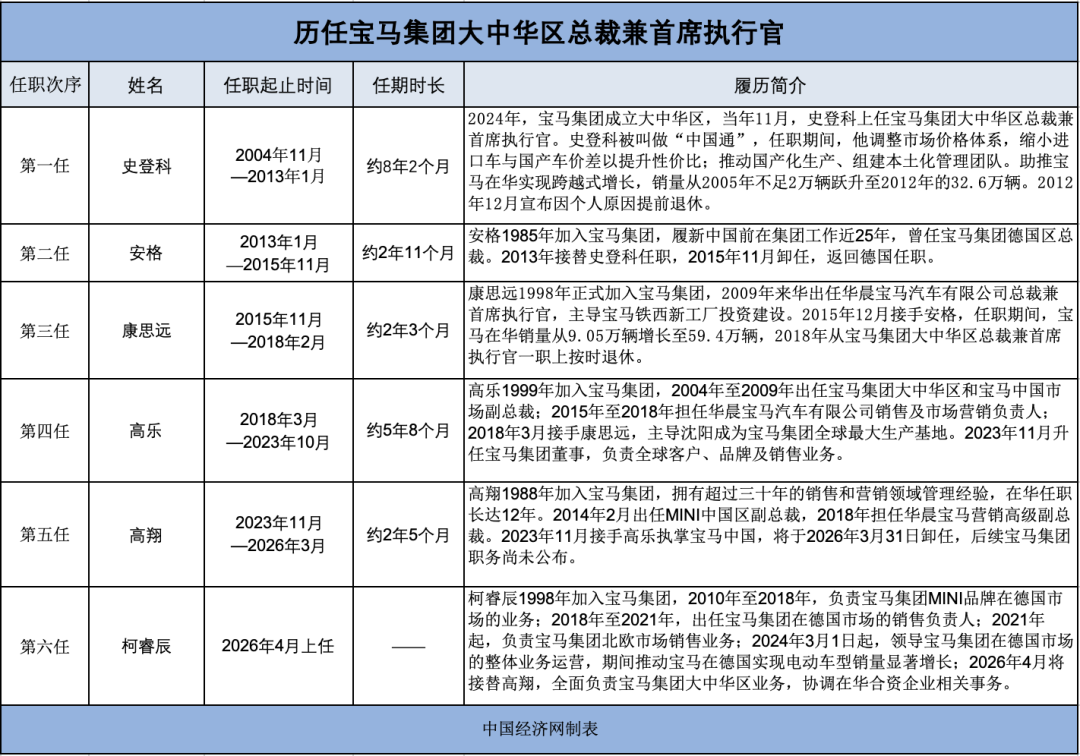
Group 1 - BMW Group announced that Christian Ach will replace Sean Green as the President and CEO of BMW Group Greater China starting April 1, 2026, amid increasing competition in the luxury car market and challenges such as declining sales and slow electrification [3][4] - Ach is a long-time BMW veteran with extensive experience in various management roles within the company, including significant contributions to the sales of electric vehicles in Germany [4][3] - The leadership change comes as BMW faces continuous pressure in the Chinese market, which is crucial for its global strategy and performance [4][5] Group 2 - BMW's sales in China have seen a decline, with deliveries dropping from 792,000 units in 2022 to 625,500 units in 2025, marking a loss of approximately 200,000 units in market share over two years [5][9] - The company has implemented aggressive pricing strategies, including significant discounts on various models, which have led to a collapse of its pricing structure and a decrease in vehicle resale values [8][9] - BMW's brand value has been affected, with a three-year resale value of 52.68%, trailing behind competitors like Mercedes-Benz, which stands at 58.50% [9] Group 3 - BMW's slow transition to electrification is a core issue, with only 26% of global sales being electric or plug-in hybrid vehicles, and pure electric models making up just 18% [13][14] - The company has struggled to keep pace with the rapid development of electric vehicles in China, missing opportunities to innovate and adapt to consumer demands [13][14] - Many of BMW's electric models are based on platforms originally designed for gasoline vehicles, leading to performance issues and reliability concerns, particularly with the iX3 model [13][14]
宝马中国换帅的三个不寻常
Zhong Guo Jing Ji Wang· 2026-02-03 00:07
Core Viewpoint - BMW Group announced that Christian Ach will replace Gao Xiang as the President and CEO of BMW Group Greater China starting April 1, 2026, following a significant decline in sales over the past two years [1][4]. Group 1: Management Changes - The decision to appoint a CEO without prior experience in the Chinese market is unusual, especially given the rapid changes in the automotive environment [2][10]. - Gao Xiang's tenure lasted just over two years, which is notably shorter compared to his predecessor, Gao Le, who served for over five years [7][11]. - The early announcement of the leadership change, two months in advance, has drawn media attention, indicating a desire for a smooth transition [4][10]. Group 2: Sales Performance - In 2025, BMW's sales in China were 625,500 units, marking a decline of 12.5% from the previous year, following a 13.4% drop in 2024 [1][7]. - The sales figures represent a significant decrease from the peak of 825,000 units in 2023, highlighting a troubling trend for the brand in the competitive Chinese market [7][8]. - The decline in sales is not isolated to BMW, as other German luxury brands like Mercedes-Benz and Audi also reported significant drops in their Chinese sales [7][8]. Group 3: Market Challenges - The German luxury brands are facing increased competition from local Chinese brands, which has led to a shift in market dynamics and consumer preferences [8][10]. - BMW's reliance on traditional dealership models has been challenged by recent instability in the market, affecting sales performance [8]. - The introduction of aggressive pricing strategies, including a significant price cut on 31 key models at the start of 2026, indicates a desperate attempt to regain market share [7][8]. Group 4: Future Outlook - Christian Ach's previous experience in European markets may not adequately prepare him for the complexities of the Chinese automotive landscape, which is undergoing rapid transformation [10][11]. - The need for innovation and adaptation to new consumer behaviors and technological advancements in electric vehicles presents a significant challenge for BMW moving forward [10][11].
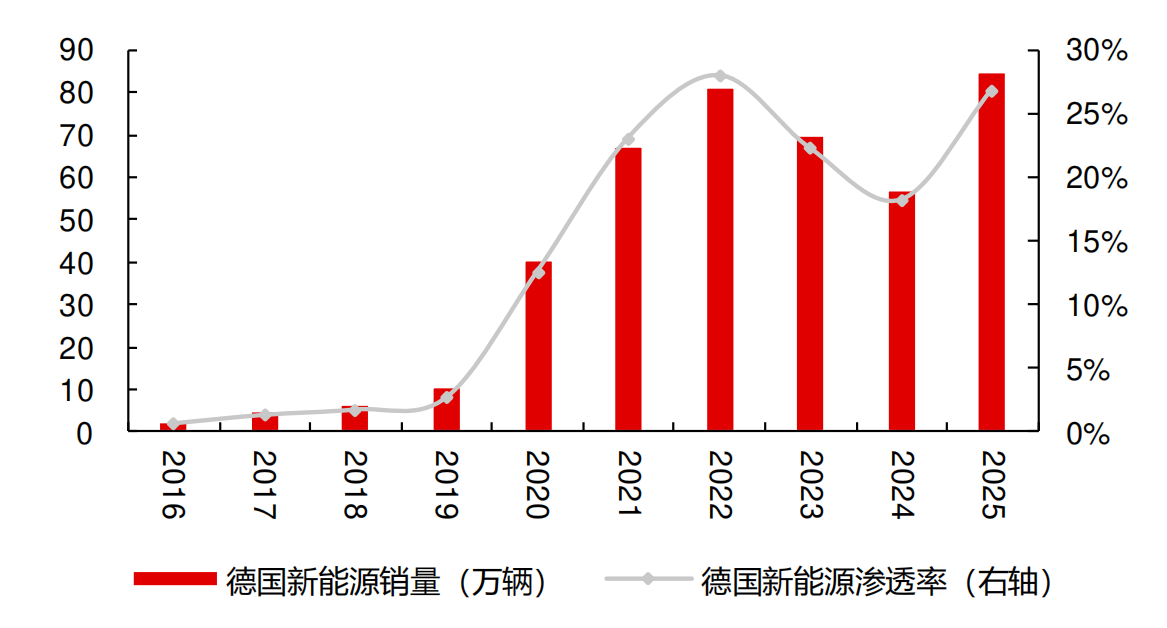
德国重启补贴 欧洲追赶电动汽车时代
Zhong Guo Qi Che Bao Wang· 2026-02-02 08:07
Group 1 - The German government announced the restart of a €3 billion electric vehicle subsidy program in early 2026, with a maximum subsidy of €6,000, aimed at revitalizing the domestic automotive industry and accelerating Europe's transition to electric vehicles [1][2] - The subsidy policy covers battery electric vehicles (BEVs), plug-in hybrid electric vehicles (PHEVs), and range-extended electric vehicles (EREVs), with a tiered subsidy structure based on household income and vehicle type [2][7] - The decision to restart the subsidy program comes after a significant decline in electric vehicle registrations in Germany, with a 27.4% drop in 2024, leading to a market share decrease from 18.7% in 2023 to 13.5% [2][5] Group 2 - The subsidy program is designed to stimulate consumption among middle and low-income households and promote a diversified technology approach in the electric vehicle market [2][5] - The absence of production restrictions in the subsidy policy is expected to benefit Chinese electric vehicle manufacturers, providing them with an opportunity to expand their market presence in Germany [6][8] - The competitive pricing of Chinese electric vehicles, enhanced by the subsidies, is likely to strengthen their market position, with brands like BYD and SAIC gaining traction in the German market [7][8] Group 3 - The overall economic conditions in Europe, including rising inflation and energy prices, may limit consumer purchasing power and affect the demand for electric vehicles despite the subsidies [10][13] - European automakers face challenges in battery technology and production costs, which may hinder their competitiveness against Chinese manufacturers [10][12] - The disparity in subsidies between traditional fuel vehicles and electric vehicles in Germany may reduce the incentive for local manufacturers to prioritize electric vehicle development [10][13]