
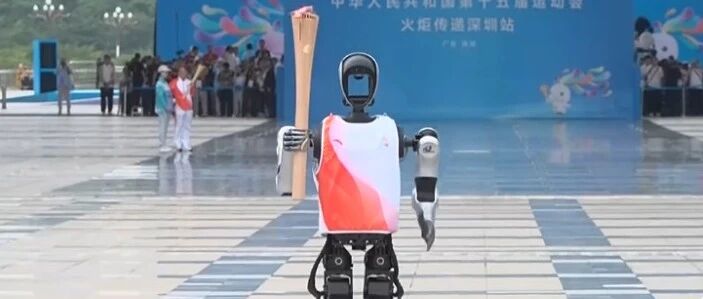
人形机器人夸父

Search documents
让产业“家底”更加殷实——推动“十五五”时期经济社会发展向新而行②
Ren Min Ri Bao· 2025-11-17 03:28
Group 1 - The robotics industry is rapidly evolving, with humanoid robots like "Kua Fu" participating in significant events, showcasing advancements in technology and skills [1] - China is expected to account for two-thirds of global robot patent applications in 2024, maintaining its position as the largest industrial robot market for 12 consecutive years [1] - The integration of technological and industrial innovation is crucial for driving the development of emerging industries and transforming traditional sectors, contributing to the construction of a modern industrial system in China [1] Group 2 - The modern industrial system is the material and technical foundation of Chinese-style modernization, aimed at deepening the integration of technological and industrial innovation [2] - The focus on building a modern industrial system is highlighted as a strategic task, emphasizing the importance of addressing weaknesses and promoting the integration of innovation and industry chains [2] - Ensuring technological independence and reliability is essential for the industrial system, with advancements in key areas like high-speed rail and 5G technology reinforcing China's competitive edge [2] Group 3 - The transformation of innovation into practical applications is critical, with "pilot testing" seen as a key step from laboratory success to industrial implementation [3] - Companies play a vital role in enhancing the efficiency of integrating innovation and industry chains, with examples of successful innovations in various sectors [3] - The forecast for the 14th Five-Year Plan period indicates that strategic emerging industries like new energy and new materials will create several trillion-yuan markets, emphasizing the need for continuous integration of technology and industry [3]
让产业“家底”更加殷实(评论员观察)
Ren Min Ri Bao· 2025-11-16 22:10
Group 1 - The core viewpoint emphasizes the importance of integrating technological and industrial innovation to build a modern industrial system in China, which is crucial for economic development and competitiveness [1][2] - The robot industry is rapidly evolving, with humanoid robots like "Kua Fu" participating in significant events, showcasing advancements in technology and skills [1] - China maintains its position as the largest industrial robot market globally, with a projected 2024 patent application volume accounting for two-thirds of the global total [1] Group 2 - The construction of a modern industrial system is identified as a strategic priority in China's economic development, as outlined in the 12 strategic tasks from the 20th Central Committee [2] - Ensuring technological self-sufficiency and security is critical to overcoming "bottleneck" issues in key sectors, which enhances the competitiveness of the industrial system [2] - The integration of innovation chains, industrial chains, and supply chains is essential for effective technology transfer and application, which is vital for enhancing new productivity [3] Group 3 - Companies are recognized as the main entities driving innovation, with examples such as the General Technology Group's breakthroughs in five-axis machine tools and Huawei's advancements in the Harmony operating system [3] - The forecast for the 14th Five-Year Plan period indicates that strategic emerging industries like new energy and new materials will create several trillion-yuan markets [3] - The focus on education, technology, and talent development is crucial for seizing opportunities in the new technological revolution and industrial transformation [3]
聚焦大湾区|湾区携手 同心筑梦——粤港澳共同承办十五运会展现“一国两制”实践新气象
Xin Hua She· 2025-11-07 10:03
Core Viewpoint - The 15th National Games, co-hosted by Guangdong, Hong Kong, and Macau, showcases the successful implementation of "One Country, Two Systems" and highlights the collaborative development of the Greater Bay Area [1][2][3]. Group 1: Event Coordination and Cross-Border Collaboration - The event features cross-border competitions, with the introduction of 16 dedicated self-service channels at Hong Kong's airport and other key locations, allowing participants to clear customs in just 7 seconds using facial recognition technology [2]. - Over 6,000 mainland participants and 3,000 from Hong Kong and Macau will participate, marking the highest number of cross-border athletes in history [3]. - The establishment of a "1+4" liaison mechanism aims to enhance regulatory recognition and information sharing among the three regions [2][3]. Group 2: Technological Integration - The event incorporates advanced technology, such as humanoid robots participating in the torch relay and over 300 autonomous vehicles in the Guangzhou area for transportation services [4][5]. - Hong Kong's police utilized drones for aerial surveillance, enhancing security measures during the event [5]. - Approximately 40% of the core technologies used in the event originated from Hong Kong, demonstrating the deep integration of innovation across the regions [6]. Group 3: Cultural Exchange and Community Engagement - The event serves as a platform for cultural exchange, with volunteers from the three regions participating in various activities, fostering a sense of community and national identity among the youth [7]. - Sports and cultural events, such as the "People's Cup" sports carnival, have attracted thousands of young participants, enhancing friendships and collaboration across the Greater Bay Area [7]. - The rise in travel bookings in major cities indicates a growing interest in sports and cultural tourism, with travel searches in Guangzhou and Shenzhen increasing by over 40% week-on-week [8].
同心之火 照亮梦想(全运会来了)
Ren Min Ri Bao· 2025-11-03 22:20
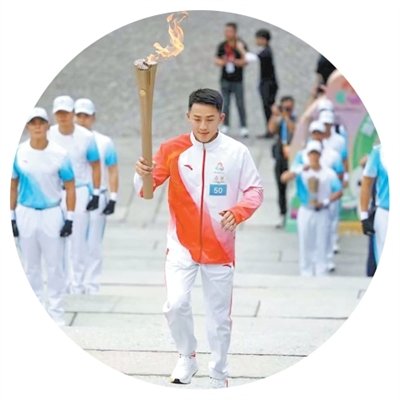
Core Viewpoint - The 15th National Games torch relay took place simultaneously in Hong Kong, Macau, Guangzhou, and Shenzhen, marking the first time the torch was passed in Hong Kong and Macau, showcasing the innovative "three regions, four cities" model and highlighting the collaborative development of the Guangdong-Hong Kong-Macau Greater Bay Area [8][9]. Group 1: Torch Relay Highlights - The torch was ignited from "source fire" collected from the deep sea, utilizing solar energy to ignite combustible ice, demonstrating advanced technology in the process [9]. - The relay featured high-tech products such as humanoid robots, unmanned vehicles, and low-altitude flying devices, showcasing the technological advancements in the Greater Bay Area [9][10]. - The relay route in Guangzhou spanned 11.6 kilometers, with 4.8 kilometers run by torchbearers and 6.8 kilometers covered by unmanned vehicles, emphasizing the integration of technology and sports [10]. Group 2: Cultural and Community Engagement - Various activities were organized in the four cities during the torch relay, highlighting local culture and enhancing community interaction, creating a festive atmosphere for the National Games [11][12]. - In Macau, traditional dragon and lion dance performances marked the beginning of the relay, while in Shenzhen, a youth choir performed to celebrate the event [12]. - The relay involved 200 torchbearers from diverse backgrounds, symbolizing a collective effort and community spirit in the Greater Bay Area [14][15]. Group 3: Inspirational Messages - The event was seen as a source of motivation for athletes and participants, with remarks from torchbearers emphasizing the spirit of perseverance and the importance of striving for excellence [14][15]. - The participation of ordinary workers as torchbearers highlighted the pride and contributions of all individuals in the development of the Greater Bay Area [15].

美一客机与直升机险些相撞;1.17亿元!马来西亚首富之子买下上海大平层;杨国福客服回应1斤豆芽卖28.8元;全红婵伤愈首秀夺冠丨每经早参
Mei Ri Jing Ji Xin Wen· 2025-11-02 21:53
Group 1 - The Ministry of Commerce of China is pushing to resume negotiations on the China-Japan-Korea Free Trade Agreement, emphasizing the importance of maintaining stable industrial and supply chains between China and Korea [2] - The Minister of Commerce urged Japan to remove Chinese entities from the export control end-user list, highlighting the need for cooperation to stabilize supply chains amid rising unilateralism and protectionism [2] Group 2 - The Shanghai Futures Exchange announced updates regarding the gold futures entry and exit processes, stating that existing rules inconsistent with the new notification will no longer be enforced [3] Group 3 - Hainan Province has announced adjustments to its automobile scrapping and renewal subsidy policy, specifying requirements for the registration locations of old and new vehicles starting from November 4, 2025 [4] Group 4 - Jiangsu Province reported that all residents were evacuated from a building in Danyang due to uneven settlement causing structural cracks, with no casualties reported [5] Group 5 - The former Party Secretary and Chairman of Guangxi Financial Investment Group, Meng Kunwei, is under investigation for serious violations of discipline and law [6] Group 6 - Malaysia's richest man's son purchased a luxury apartment in Shanghai for approximately 117 million yuan, indicating confidence in the Chinese real estate market [9] Group 7 - A Southern Airlines employee passed away during a physical fitness test, prompting the company to form a special task force to assist the family [11] Group 8 - WuXi AppTec's CAR-T cell therapy is expected to enter the commercial insurance directory, potentially reducing the financial burden on patients [13] Group 9 - The 15th National Games featured a humanoid robot named "Kua Fu" as a torchbearer, showcasing advancements in robotics technology [14] Group 10 - Suir Technology has initiated its listing guidance with CITIC Securities as the advisory institution, indicating a clear structure of actual controllers [17] Group 11 - Yang Guofu's high price for mung bean sprouts has sparked public debate, highlighting consumer sensitivity to pricing and potential impacts on brand perception [18] Group 12 - Tesla is facing controversy over a $1 trillion compensation plan for CEO Elon Musk, with institutional investors' advisory firms opposing the proposal, leading to public disputes [19] Group 13 - Various automotive companies reported significant year-on-year sales growth in October, with BYD achieving cumulative sales of 3.70 million new energy vehicles [21]




晚报 | 11月3日主题前瞻
Xuan Gu Bao· 2025-11-02 14:22
Nuclear Fuel - The Chinese Academy of Sciences confirmed the successful conversion of thorium-uranium nuclear fuel in a 2 MW liquid thorium salt experimental reactor, making it the only operational thorium fuel reactor globally [1] - The goal is to establish a 100 MW thorium-based molten salt reactor demonstration project by 2035, enhancing technology upgrades and engineering applications [1] - The safety features of thorium molten salt reactors are highlighted, as they operate at normal pressure, eliminating high-pressure explosion risks [1] Humanoid Robots - The "Kua Fu" humanoid robot independently completed a torch relay at the 15th National Games, marking the first time a humanoid robot has participated in such an event [2] - The global humanoid robot market is projected to grow from approximately 6.34 billion yuan in 2025 to 64.22 billion yuan by 2030, with a compound annual growth rate of 58.90% [2] Artificial Intelligence - NVIDIA has partnered with South Korean entities to provide over 260,000 AI chips to kickstart AI projects in Korea, aiming to accelerate digital transformation across various industries [3] - NVIDIA anticipates that the total shipment of Blackwell and Rubin GPUs will reach 20 million units by the end of 2026, generating $500 billion in sales [3] Intelligent Devices - Huawei's Mate 80 series is set to revolutionize mobile interaction by allowing users to complete tasks with voice commands, moving towards a more assistant-like role for smartphones [4] - The evolution of AI in smartphones is shifting from isolated functionalities to system-level intelligent collaboration, enhancing user experience [4] Smart Cities - The National Development and Reform Commission has issued a plan to advance smart city development, aiming for significant progress in data-driven urban economic and social development by the end of 2027 [5] - The plan includes establishing over 50 fully digital transformation cities and creating a new governance system for large cities by 2035 [5]
人形机器人夸父,担任0号火炬手!
21世纪经济报道· 2025-11-02 06:53
Core Points - The 15th National Games will be held from November 9 to 21 in Guangdong, Hong Kong, and Macau [1] - The torch relay for the event started on November 2 in Shenzhen, featuring 200 torchbearers across four cities [2][3] Group 1: Torch Relay Details - The torch relay involves 200 torchbearers, with each city running 50 torches over distances of 50 to 100 meters [2] - A unique feature of this relay is the participation of "Kua Fu," a humanoid robot, as the "0th torchbearer," marking a first in the use of a 5G-A humanoid robot for such an event [3][4] Group 2: Technological Innovations - "Kua Fu" successfully completed a 100-meter torch relay task with a load of 1.6 kg, showcasing advancements in dynamic motion control and load balancing [4] - The robot's performance was enhanced through collaboration with Harbin Institute of Technology and Beijing General Artificial Intelligence Research Institute, focusing on motion control algorithms [4][5] Group 3: Communication Infrastructure - China Mobile optimized over 20 stations along the relay route using 5G-A technology, achieving an uplink speed of 20 Mbps and a latency of 20 ms for stable communication [5] Group 4: Athlete Participation and Community Engagement - Notable athletes, including Olympic champion Yang Jinghui and diver Quan Hongchan, are participating in the games, encouraging local audiences to support them [6][8] - Liu Weiqiang, the director of the opening ceremony, expressed excitement about the event's significance in strengthening ties among Guangdong, Hong Kong, and Macau [10] Group 5: Perspectives on Innovation - He Xiaopeng, chairman of Xiaopeng Motors, emphasized the importance of technological innovation, likening it to the torch's role in illuminating the future [11]
人形机器人进厂做“工友”,还有多远
Xin Hua Ri Bao· 2025-07-07 02:03
Core Viewpoint - The article highlights the rapid development and application of embodied intelligent robots in various industrial settings in Jiangsu Province, showcasing their potential to enhance productivity and replace human labor in hazardous environments [1][2][3]. Group 1: Industry Development - Jiangsu Province has released a list of ten typical application scenarios for embodied intelligent robots, indicating a significant industrial transformation [1]. - The number of robot-related enterprises is projected to increase from 451,700 by the end of 2024 to 891,000 by May 2025, nearly doubling [4]. - The industry is characterized by a focus on specific industrial applications, with over a hundred companies competing in the humanoid robot market [4]. Group 2: Technological Advancements - Micro Yi Intelligent's "ChuangTron" robot can complete a full quality inspection of an electric drive stator in just 50 seconds, achieving six times the efficiency of human workers [2]. - Tian Chuang's "Tian Kui 1" is the world's first certified explosion-proof humanoid robot, capable of operating in hazardous environments [3]. - The development of flexible manufacturing systems is emphasized, allowing robots to adapt to various market demands and improve competitiveness [3]. Group 3: Application Scenarios - Magic Atom has initiated a "Thousand Scenes Co-Creation" plan to collaborate with 1,000 partners to implement 1,000 specific scenarios, with over 50 companies already signed up [6]. - The introduction of a second-generation humanoid robot by Tian Chuang aims to enhance obstacle-crossing capabilities in emergency rescue situations [6]. - The establishment of a training center in Suzhou for intelligent robots aims to improve the quality of data through practical scenario training [6]. Group 4: Market Trends - The humanoid robot sector is becoming a focal point for capital markets, with significant interest in the technology's potential [7]. - The industry faces challenges related to public perception and understanding of embodied intelligent robot technology, which requires extensive time and data support for development [7].




广东将实施“新一代人工智能”旗舰专项、“智能机器人”重大专项
Zhong Guo Fa Zhan Wang· 2025-04-03 07:28
Core Insights - Guangdong Province is prioritizing the innovation and development of artificial intelligence (AI) and robotics, with significant financial investments and collaborative efforts since 2018 [1][2][3] Investment and Funding - Since 2018, Guangdong has invested nearly 1.4 billion yuan in AI and robotics, attracting an additional 3 billion yuan in social funding [1] - The province's funding strategy includes major special projects in "new generation artificial intelligence" and "intelligent robotics and equipment manufacturing" [1] Achievements in AI - Key breakthroughs in AI include advancements in high-performance computing chips, foundational architecture, model algorithms, and innovative applications [2] - The Ascend 910B chip has become a mainstream product in China, and the Atlas 900 computing cluster has shown exceptional performance [2] - Notable AI models such as "Pengcheng Brain" and "Hunyuan" have emerged, with "WPS AI" being the first generative AI application in collaborative office scenarios [2] Robotics Development - In the robotics sector, Guangdong has achieved significant milestones in areas such as large models, chips, motion control, and high-end machinery [3] - The first humanoid robot equipped with the HarmonyOS has been developed, along with various intelligent robot products like multi-modal quadrupedal robots [3] - Core components such as harmonic reducers and six-dimensional force sensors have been independently developed, reducing costs by over 50% [3] Innovation Platforms - Guangdong has established a multi-tiered innovation platform system, including 13 national-level platforms and 137 provincial-level platforms [4] - The "Pengcheng Cloud Brain III" is set to provide over 16 exaflops of domestically controlled intelligent computing power [4] - Major laboratories and research institutes are being leveraged to enhance the core competitiveness of the robotics sector [3][4] Future Plans - The province aims to continue building high-level innovation platforms, focusing on major technological breakthroughs and industry incubation [5] - There is a strategic emphasis on integrating resources from the Guangdong-Hong Kong-Macao Greater Bay Area to enhance the industrial robot sector [5]