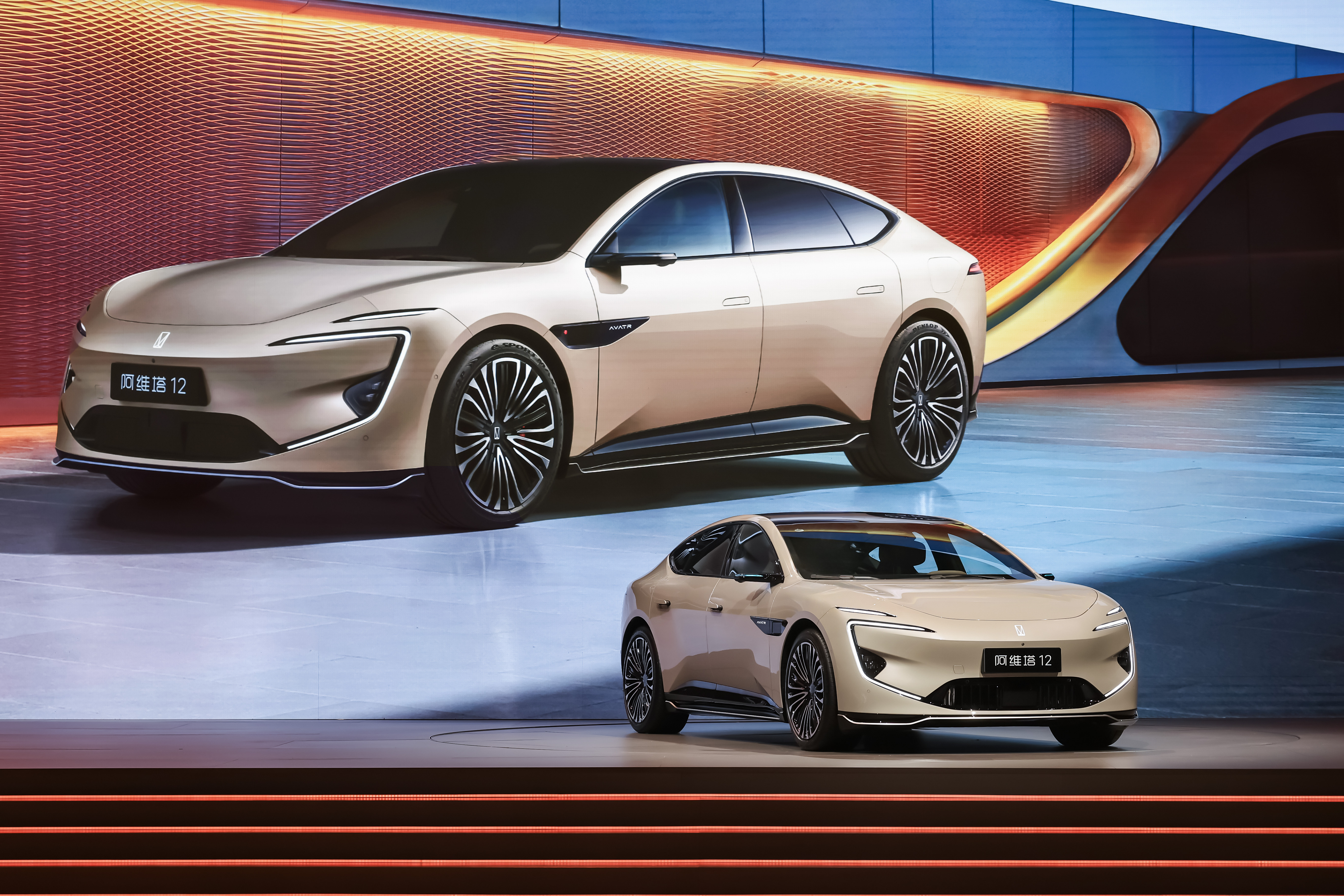
全维防碰撞系统CAS 4.0

Search documents
问界M8如何改变高端新能源的价值排序
Cai Jing Wang· 2026-02-14 09:05
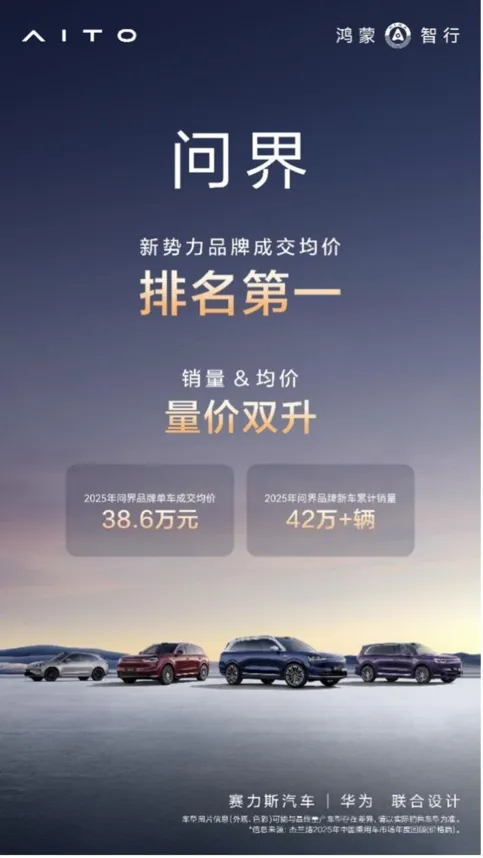
Core Insights - The article highlights the significant performance of the AITO Wenjie brand in the Chinese electric vehicle market, particularly with the Wenjie M8 model, which has achieved a high average transaction price and substantial sales growth [1][3][11]. Group 1: Market Performance - AITO Wenjie achieved an average transaction price of 386,000 yuan, ranking first among new force brands, with total sales exceeding 420,000 units in 2025, marking two consecutive years of growth in both sales and average price [1]. - The Wenjie M8 model has delivered over 150,000 units within eight months of its launch, accounting for more than 35% of the brand's total sales, thus driving the brand's overall average transaction price upward [3][4]. Group 2: Product Features and Consumer Demand - The Wenjie M8 is positioned in the market with a price range of 359,800 to 449,800 yuan, catering to the growing demand for family-oriented vehicles that serve as mobile living spaces, rather than just transportation tools [4][7]. - The vehicle's success is attributed to its comprehensive "systematic scene solution," integrating advanced driving assistance, smart cockpit features, and safety measures tailored to family travel needs [8][9]. Group 3: Quality and Brand Positioning - The Wenjie M8 ranks second in quality among mid-to-large SUV models, reflecting market recognition of its product quality and indicating that Chinese brands have reached a leading level in the high-end market [5]. - The brand's strategy emphasizes a "Five High" standard—high safety, reliability, performance, quality, and value—shifting the industry focus from product competition to value competition [11][12]. Group 4: Innovation and Collaboration - AITO Wenjie has pioneered a cross-industry collaboration model with Huawei, integrating ICT technology into automotive design, which enhances the smart experience and differentiates the brand in the high-end market [12]. - This collaboration has led to a deep synergy from technology development to product definition, establishing a competitive edge in intelligent experiences and high-end value [12]. Group 5: Market Impact and Future Trends - The success of the Wenjie M8 is reshaping the competitive landscape of the 400,000 yuan SUV market, as consumers increasingly compare it with traditional luxury brands, indicating a shift towards valuing smart features and adaptability [13]. - The article concludes that the competitive advantage in the electric vehicle sector will increasingly depend on a systematic understanding of user needs and the ability to meet those demands through innovative product development [14].

全球科技(计算机)行业周报:商业航天、6G成产业布局重点,政策技术驱动-20251229
Huaan Securities· 2025-12-29 03:07
Investment Rating - The industry investment rating is "Overweight" [1] Core Insights - The report highlights that commercial aerospace and 6G are key areas for industrial layout, driven by policy and technology [3][4] - A recent policy from Shanghai supports the construction of a world-class industrial cluster focusing on commercial aerospace and 6G, emphasizing application-based research and key technology breakthroughs [12][13] - The third Commercial Aerospace Development Conference indicated that the industry has entered a new phase of scale and commercialization, with a projected market size to achieve a leap forward [13] - The establishment of a 2 billion yuan fund for commercial aerospace and a talent training program to supply 1,000 skilled workers annually over the next 3-5 years were also announced [13][4] Summary by Sections 1. Industry Perspective - The report discusses the Shanghai policy aimed at supporting the G60 Science and Technology Corridor, focusing on commercial aerospace and 6G industries [12] - It emphasizes the need for collaboration among enterprises, academic institutions, and research organizations to drive innovation and technology development [12] 2. Market Performance Review - The computer industry index increased by 2.20% this week, outperforming the Shanghai Composite Index by 0.32 percentage points [15] - Year-to-date, the computer industry index has risen by 16.89%, ranking 14th among 31 industry indices [15][16] 3. Technology Software Industry News - The report covers various sectors including computing power, low-altitude economy, automotive intelligence, cybersecurity, data elements, and artificial intelligence, highlighting significant developments in each area [23][24][25][26][27][29][30] - For instance, the computing power sector in Yangzhou has reached a scale of 34,000 P, leading the province [23] - The automotive sector is seeing advancements in intelligent driving systems, with companies like Huawei and Audi launching new technologies [26] 4. Company Dynamics - The report mentions several companies involved in stock buybacks and incentive plans, indicating active corporate governance and management strategies [32]
岚图追光L定档12月10日上市 华系首款800V插混旗舰轿车即将登场
Jing Ji Guan Cha Wang· 2025-12-03 03:25
Core Insights - Lantu Motors officially announced the launch of its flagship sedan, Zhaiguang L, scheduled for December 10, marking it as the first 800V plug-in hybrid sedan from a Chinese brand [1][2] - The Zhaiguang L boasts an impressive CLTC pure electric range of 410 kilometers and a comprehensive range of 1400 kilometers, supported by a 63 kWh large-capacity battery [1] - The vehicle features an 800V high-voltage platform and 5C super fast charging technology, allowing it to charge from 20% to 80% in just 12 minutes [1] Technical Features - The Zhaiguang L is equipped with Huawei's Qian Kun intelligent driving ADS 4, supporting urban NCA and highway NCA, and can handle complex scenarios such as underground multi-layer parking [1] - It includes a comprehensive collision avoidance system CAS 4.0, providing all-speed, all-direction, all-target, all-weather, and all-scenario safety features [1] - The vehicle's interior features the HarmonyOS 5.0 system, offering smooth interaction and an AI voice model capable of accurately understanding colloquial commands [1] Vehicle Specifications - The Zhaiguang L is positioned as a mid-to-large sedan with dimensions of 5125mm in length, 1985mm in width, and 1522mm in height, along with a wheelbase of 3010mm [1] - It features a magic carpet chassis with CDC and adjustable air suspension, providing a refined ride quality, especially over speed bumps [1] - The vehicle's aluminum chassis includes a front double-wishbone and rear five-link setup, with a minimum turning radius of just 5.55 meters [1]
辅助驾驶,安全不能只是口号
3 6 Ke· 2025-11-28 11:24
Core Viewpoint - The automotive industry is shifting back to a development trajectory based on safety and quality, moving away from chaotic marketing practices, particularly in the autonomous driving sector [2][11]. Industry Trends - The introduction of new battery standards and regulations on autonomous driving indicates a regulatory push to ensure safety in the electric vehicle sector [2]. - The phrase "when the tide goes out, you see who is swimming naked" applies to the autonomous driving technology industry, highlighting the need for genuine technological capabilities [3]. Technological Developments - The industry is facing malicious attacks and misleading evaluations that disrupt healthy development, prompting national measures against "internet water armies" and black public relations [4]. - A joint live test by Pacific Automotive and Tongji University showcased the superior performance of vehicles equipped with Huawei's QianKun intelligent driving system, achieving full marks in all nine testing scenarios [5]. - Huawei's QianKun intelligent driving system has demonstrated significant advancements, including a 50% reduction in system latency and improved decision-making speed [6]. Safety and Standards - Safety is emphasized as a core principle, with Huawei's QianKun integrating a multi-sensor approach to enhance safety in various driving conditions [11]. - The CAS 4.0 system provides comprehensive collision avoidance capabilities, significantly enhancing safety features in vehicles [12][14]. Market Position - As of October 2025, Huawei's QianKun has partnered with 15 leading automotive companies, producing 35 models and capturing a 27.8% market share in the autonomous driving sector [9]. - In the luxury vehicle market, Huawei's market share reached 52.75%, indicating strong consumer preference for its technology [9]. Data and Ecosystem - Huawei's QianKun intelligent driving platform benefits from a "snowball effect" driven by data collection from vehicles, enhancing algorithm optimization and user experience [15][16]. - The platform's cloud computing power reached 45 EFLOPS, enabling efficient processing of vast amounts of driving data [16][17]. - By October 2025, the cumulative driving distance for Huawei's QianKun intelligent driving system reached 58.1 billion kilometers, establishing it as a leader in the industry [18]. Competitive Advantage - The combination of data and scale creates a robust competitive moat for Huawei, making it increasingly difficult for smaller competitors to keep pace [20]. - The focus on safety and quality, alongside significant investments in technology and infrastructure, positions Huawei as a leader in the autonomous driving market [20].

辅助驾驶,安全不能只是口号
36氪· 2025-11-28 11:13
Core Viewpoint - The automotive industry is returning to a development trajectory based on safety and quality, moving away from chaotic marketing practices [3][4][27]. Group 1: Industry Trends - The introduction of new battery standards and regulations on assisted driving indicates a shift towards prioritizing safety and quality in the automotive sector [3][4]. - The phrase "when the tide goes out, you see who is swimming naked" applies to the assisted driving technology industry, highlighting the need for genuine capabilities [5]. - The industry is witnessing a crackdown on malicious attacks and misleading evaluations that disrupt healthy development, supported by government actions against "internet water armies" and black public relations [7]. Group 2: Technological Advancements - The Huawei QianKun intelligent driving system has demonstrated superior performance in various tests, achieving full marks in all nine scenarios, particularly excelling in challenging situations [8][9]. - The QianKun system's architecture has improved response times by 50% and reduced braking rates by 70%, enhancing overall driving efficiency and user experience [11][12]. - The system has been upgraded to support cross-city commuting and can autonomously navigate from home to target parking spots, with an increasing number of supported parking facilities [11]. Group 3: Market Position and Performance - Huawei QianKun has established partnerships with 15 leading automotive companies, launching 35 mass-produced models and capturing a 27.8% market share in the assisted driving sector [12][20]. - The QianKun system has sold 452,000 units from January to September 2025, with a market share of 52.75% in the luxury car segment [12][20]. - The cumulative mileage for Huawei QianKun's assisted driving has reached 5.81 billion kilometers, with 35 million parking assists, leading in multiple core metrics [24][27]. Group 4: Safety and Reliability - Safety is embedded in the brand's DNA, with a commitment to prioritize safety at all levels of operation [16][17]. - The QianKun system features a comprehensive collision avoidance system capable of operating in various scenarios, enhancing overall safety [17][19]. - The system has successfully prevented over 3.18 million potential collisions, reinforcing its reputation as a reliable choice for automotive companies [19][29]. Group 5: Competitive Advantage - The QianKun platform benefits from a "snowball effect" driven by data collection from numerous vehicles, enhancing its algorithm and user experience [22][24]. - Huawei's significant investment in the assisted driving sector, exceeding billions annually, strengthens its technological development and product iteration capabilities [24][25]. - The combination of data and scale creates a robust competitive moat, making it challenging for smaller competitors to keep pace [27][29].

广汽昊铂A800内饰首发 为高速L3商用冲刺
Di Yi Cai Jing· 2025-11-24 05:19
Core Viewpoint - GAC Aotong unveiled the A800, a flagship sedan featuring global interior debut, at the Guangzhou Auto Show, marking a significant step in the development of L3 autonomous driving technology in China [1] Group 1: Product Launch - GAC Aotong showcased the "Hua Series Dual Intelligence Flagship Sedan" A800 at the Guangzhou Auto Show [1] - The A800 represents a milestone in the integration of advanced technology and automotive design [1] Group 2: Autonomous Driving Technology - GAC Aotong obtained the L3 high-speed road testing license for speeds up to 120 km/h, indicating the transition of L3 autonomous driving technology from laboratory to real-world testing [1] - The collaboration between GAC and Huawei leverages GAC's Star Spirit Safety Guardian System and Huawei's advanced driving system (ADS 4.0) to create a robust safety and intelligence foundation for vehicles [1] - The partnership aims to achieve a "1+1 = L3" effect, enhancing the certification and approval process for the commercial use of L3 autonomous driving [1]

广汽昊铂A800内饰首发,为高速L3商用冲刺
Di Yi Cai Jing· 2025-11-24 05:17
Core Insights - GAC Aotong unveiled the A800, a flagship sedan featuring global interior debut at the Guangzhou Auto Show [1] - The brand has obtained a license for L3 autonomous driving testing at speeds of 120 km/h, marking a significant step in the practical application of L3 technology on Chinese highways [1] Group 1 - GAC is collaborating closely with Huawei, leveraging GAC's Starling Safety Guardian system's eight redundancy designs alongside Huawei's Qiankun Intelligent Driving ADS 4.0 and Comprehensive Anti-Collision System CAS 4.0 [1] - This partnership aims to create a technological foundation for "safe intelligent vehicles," achieving a synergistic effect described as "1+1 = L3" [1] - The companies are advancing certification and review processes to accelerate the commercial rollout of L3 autonomous driving, propelling smart mobility into a new phase [1]
“境”品牌入场,华为乾崑手握两张“王牌”
汽车商业评论· 2025-11-20 23:07
Core Viewpoint - Huawei's QianKun is transitioning from a technology supplier to a deep empowerment partner in the automotive industry, marking a significant shift in its role and strategy [7][20][26] Group 1: Brand Development and Partnerships - The launch of the "Jing" series brands, including "QiJing" and "YiJing," signifies a strategic partnership between Huawei QianKun and traditional automakers like GAC and Dongfeng, aiming to reshape the competitive landscape of China's smart automotive industry [7][13][25] - "QiJing" symbolizes the beginning of a new chapter in smart mobility, leveraging Huawei's advanced technology and GAC's manufacturing expertise for a comprehensive collaboration [9][11] - The "YiJing" brand, similarly, aims to fulfill Dongfeng's aspirations in smart transformation, indicating a shared vision for high-end smart automotive development [13][20] Group 2: Market Trends and Consumer Expectations - The Chinese automotive market is witnessing a shift where smart features are becoming core elements of product competitiveness, with over 60% of new models expected to feature L2-level or higher driving assistance by mid-2025 [15][17] - The rapid iteration of smart technologies is raising consumer expectations, compelling automakers to accelerate their smart transformation efforts [15][20] Group 3: Strategic Advantages of the "Jing" Series - The "Jing" series offers automakers a pathway to reduce R&D risks and costs by utilizing Huawei's proven technology solutions, allowing them to focus on their strengths in vehicle platforms and brand management [20][21] - The collaboration is designed to speed up product launch timelines, enabling automakers to respond quickly to market demands and gain a competitive edge in the smart automotive sector [20][21] - Huawei's strong brand recognition in technology enhances consumer confidence in new brands like "QiJing," crucial for initial market penetration and user acquisition [20][21] Group 4: Industry Impact and Future Outlook - The "Jing" and "Jie" series together create a complementary product matrix, allowing Huawei to cater to diverse market segments and consumer needs, ultimately driving the smart automotive ecosystem forward [25][26] - The collaboration is expected to shift the competitive focus from mere technical specifications to differentiated innovation based on shared technology platforms, fostering a deeper level of competition in the industry [25][26] - Huawei QianKun aims to establish itself as a core technology provider, potentially leading to a platform effect similar to "Android," influencing industry standards and technological evolution [26][28]

四激光雷达“技术下沉” 阿维塔12背水一战
Jing Ji Guan Cha Bao· 2025-10-30 03:17
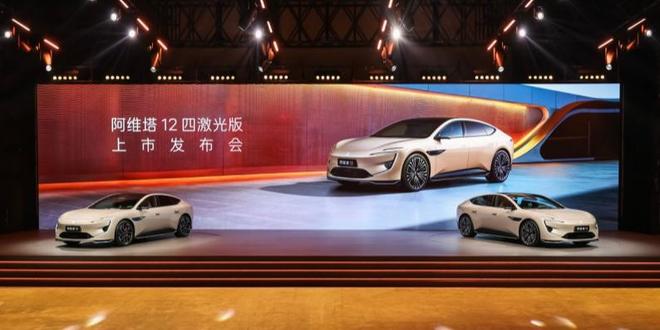
Core Insights - Avita 12's launch marks the introduction of Huawei's four-laser radar system into the 250,000 RMB market segment, with six versions priced between 269,900 RMB and 429,900 RMB, and a post-rights price range of 259,900 RMB to 419,900 RMB [2] - The vehicle faces stiff competition from models like Tesla Model Y and NIO ET5, with its market performance since November 2023 falling short of expectations due to brand recognition challenges [2] - Avita's sales strategies for 2024 include price adjustments and product lineup expansions, but these efforts have not yielded significant results, leading to a "good reputation but poor sales" scenario [2] Product Features - The Avita 12 four-laser version features a comprehensive Huawei four-laser radar system, including three long-range high-sensitivity laser radars and one rear high-precision solid-state laser radar, providing 360° perception coverage [2] - The vehicle's intelligent driving hardware configuration shows advantages over competitors, which typically have only 1 to 3 laser radars focused mainly on forward perception [3] Strategic Development - The launch of the four-laser version is a key milestone in Avita's "Strategy 2.0," which aims to deepen the integration of the CHN model (Changan, Huawei, CATL) into a strategic partnership [3] - The strategy includes a shift from technical cooperation to a HI PLUS model, expanding collaboration from technology supply to product development, marketing, and ecosystem building [3] - Avita plans to launch five upgraded models by 2026 and a total of 17 models by 2030, targeting global sales of 800,000 units [3] Market Positioning - In the 300,000 RMB new energy sedan market, hardware specifications are merely entry tickets; the real competitive edge lies in converting technical advantages into user experience benefits [4] - The market performance of the Avita 12 four-laser version will test the effectiveness of the "technology down" strategy and is crucial for Avita to break through the current market landscape [4]
阿维塔12四激光版上市 战略2.0全面提速
Yang Shi Wang· 2025-10-29 08:29
Core Insights - The launch of the Avita 12 Four Laser Edition marks a significant acceleration in Avita's "Strategy 2.0" [1][13] Product Overview - The Avita 12 Four Laser Edition offers six models with both pure electric and range-extended powertrains, priced between 269,900 to 429,900 yuan, with effective prices ranging from 259,900 to 409,900 yuan [1] - The vehicle features ten new upgrades and twelve exclusive features compared to competitors, enhancing its product strength [5] Strategic Partnerships - The launch event highlighted the strategic collaboration between Avita, Huawei, and CATL, with key figures from these companies present [5] - Avita aims to establish itself as a high-end brand that is distinct and capable of competing globally [5] Intelligent Features - The Avita 12 is equipped with Huawei's four-laser radar system, providing 360° perception coverage, which can identify complex obstacles in challenging conditions [7] - The vehicle includes the HarmonyOS 5 cockpit for improved user interaction and a comprehensive collision avoidance system [7] Performance Specifications - The pure electric version features a 94 kWh CATL battery, achieving a CLTC range of 755 km, while the range-extended version has a combined range of 1,270 km [7] - The vehicle supports rapid charging, allowing a 30% to 80% charge in just 10 minutes [7] Design and Comfort - The design follows a "future aesthetics" theme, with new color options and high-end interior features, including a 25-speaker sound system and advanced seating comfort [8] - The vehicle offers a VIP seating package with multiple comfort features, including heating, ventilation, and massage functions [8] Future Plans - Avita plans to deepen its strategic partnerships and aims to launch a total of 17 new models by 2030, covering various market segments including sedans, SUVs, MPVs, and sports cars [13]