冻干粮

Search documents
解码2026年宠物食品行业新品趋势
2026-03-03 02:52
Summary of Pet Food Industry Conference Call Industry Overview - The pet food industry is undergoing a structural shift from "ingredients and processes" to "functional and solution-oriented" products, driven by both supply-side differentiation and increasing consumer concerns about pet health [1][2][3]. - The demand for functional pet food is growing as consumers seek customized solutions for pets based on age, breed, and specific health issues, moving away from mere concept packaging [1][2]. Key Insights - **Functional Pet Food**: The core of functional pet food lies in providing tailored solutions for pets with specific health concerns, rather than just marketing concepts. Brands like Frigat are focusing on "precision nutrition" to compete with established players like Royal Canin [1][4]. - **Market Dynamics**: Domestic brands are shifting from differentiation strategies to directly competing with international giants. Long-term success will depend on addressing the real needs of pets and educating consumers about nutrition [1][5]. - **Brand Switching Windows**: Pet owners experience three key brand switching windows: breeding (first food), retail (profit-driven), and medical (health concerns). The medical switch is particularly irreversible, making functional and prescription foods critical areas for brands to focus on [1][6]. Competitive Landscape - The competition in the pet food industry has intensified, particularly in the prescription and functional food segments, with a projected market size of approximately 2 billion [2][11]. - Companies like Royal Canin are experiencing supply shortages in prescription foods, indicating strong demand driven by pet health issues [2][11]. - R&D investment and scientific validation are becoming crucial competitive factors, with companies like Weishi establishing research institutes to enhance their product offerings [2][10]. Consumer Behavior - Pet owners are increasingly concerned about their pets' health, leading to a rise in demand for functional foods that address specific health issues such as gastrointestinal, skin, and joint problems [2][7][8]. - The concept of "health-oriented" pet food is gaining traction, with consumers willing to pay more for high-quality, health-focused products [8][9]. Product Development Trends - The industry is seeing a trend towards high-end and health-oriented products, with brands like Frigat launching new lines that emphasize precision nutrition [4][10]. - The aging pet population is prompting the development of age-specific nutrition solutions, with international brands like Royal Canin leading the way in systematic approaches to senior pet food [9][10]. Challenges and Opportunities - The entry barriers for prescription food are high, but the potential for high margins makes it an attractive segment for new entrants [11][24]. - The competitive landscape is shifting, with increased marketing expenditures among leading brands to capture market share, leading to further concentration in the industry [17][18]. Conclusion - The pet food industry is at a pivotal point, with significant opportunities in functional and prescription foods driven by consumer health concerns. Brands must focus on R&D, consumer education, and addressing specific health needs to succeed in this evolving market [1][2][10].
宠物食品行业系列深度报告之八:行业景气依旧,迎接科学养宠时代
Shenwan Hongyuan Securities· 2026-02-09 09:43
Investment Rating - The report maintains a positive outlook on the pet food industry, highlighting the continued growth and resilience of leading brands in the market [3][5]. Core Insights - The pet food industry is experiencing a consumption upgrade driven by product innovation and changing consumer demands, with a notable shift towards high-end and functional pet food products [3][5]. - The market is witnessing a significant concentration of leading brands, with top players expanding their market share amidst increasing competition [5][3]. - The aging pet population in China is expected to further drive demand for specialized and high-quality pet food products [5][3]. Long-term Trends - The report indicates that the number of new pet owners is expected to grow, supported by a stable increase in the population of young adults aged 20-35, who are the primary pet owners [4][12]. - The pet population in urban areas is projected to continue increasing, with dog and cat numbers reaching 53.43 million and 72.89 million respectively by 2025, reflecting a year-on-year growth of 1.6% and 1.9% [12][4]. Mid-term Trends - Product innovation is leading to a consumption upgrade, with mid to high-end price segments (60-100 RMB/kg) showing significant growth rates compared to lower price segments [3][28]. - The report notes that the demand for specialized pet food, including functional and prescription diets, is on the rise as pet owners become more aware of their pets' nutritional needs [5][45]. Short-term Trends - The pet food industry is expected to maintain strong growth, with online sales projected to reach 30.71 billion RMB in 2025, reflecting a year-on-year increase of 10.2% [5][3]. - The concentration of market share among top brands is increasing, with the top five brands accounting for 25.3% of the market, indicating a trend towards fewer but stronger players in the industry [5][3]. Future Outlook - The report anticipates that the trend towards consumption upgrades will continue, with high-end and functional pet food products leading the market [5][3]. - The increasing recognition of brand quality and the aging pet population are expected to enhance the market share of foreign brands, particularly in the prescription food segment [5][3]. - The report highlights that product innovation will be crucial for companies to differentiate themselves in a competitive market, with functional and prescription diets likely to become the next growth drivers [5][3].
“冰”糖葫芦、“冰糖”葫芦?网友热议东北“冻货”正宗吃法
Xin Lang Cai Jing· 2026-01-30 23:52
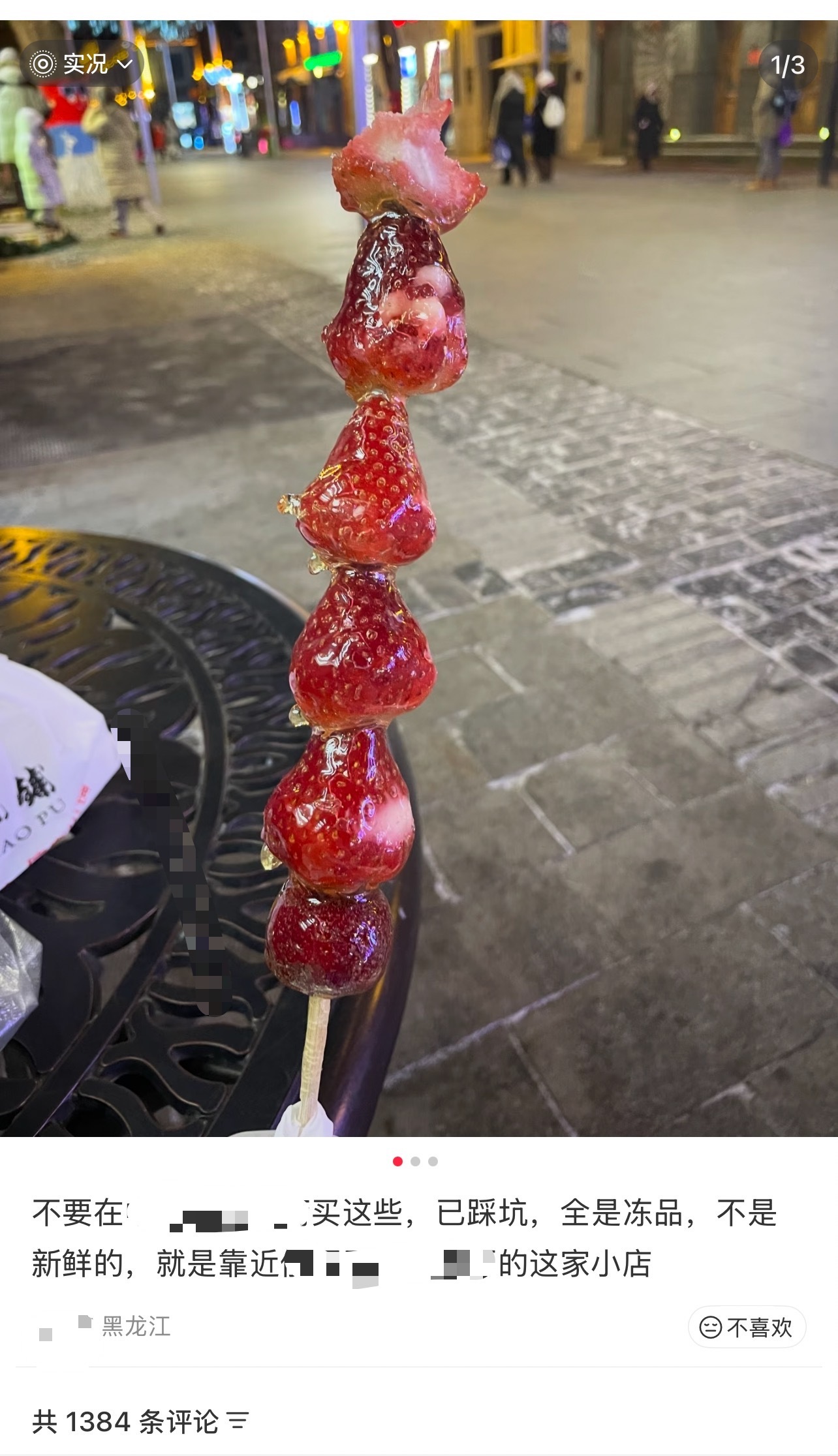
Core Viewpoint - The article discusses the unique food culture in Northeast China, particularly focusing on the winter delicacies like "frozen" snacks, which have sparked interesting discussions among netizens about regional differences in food perception and preparation [1][9]. Group 1: Northeast Food Culture - Many southern netizens shared their experiences of buying "sugar-coated hawthorn" and "frozen pears" in Harbin, expressing disappointment over their freshness, leading to a humorous discussion about regional food differences [1][6]. - In Northeast China, "frozen" sugar-coated hawthorn is considered a common snack, utilizing the natural freezing effect of the cold climate to create a unique texture that resembles ice sand [9][11]. - The traditional sugar-coated hawthorn, known as "tanghulu," varies in name and preparation across different regions, with the Northeast's version being particularly notable for its icy texture [12][14]. Group 2: Frozen Fruits and Snacks - The article highlights the "frozen fruit trio" commonly enjoyed in Northeast winters, which includes frozen pears, frozen persimmons, and frozen hawthorn fruits, enhancing sweetness and extending shelf life [18][20]. - Frozen fruits are not eaten directly; they require a thawing process, referred to as "huān" in Northeast dialect, which results in a crispy ice shell that enhances the eating experience [20]. - The article describes how frozen pears serve as a traditional New Year delicacy, providing a refreshing taste after heavy meals, and emphasizes the unique preparation methods for other frozen fruits like persimmons and hawthorn [20][21]. Group 3: Variety of Frozen Products - Besides frozen fruits, the Northeast region offers a wide array of frozen products, including frozen vegetables, dried goods, tofu, chicken, and fish, which are popular among locals and tourists alike [24][21]. - The availability of these diverse frozen goods reflects the region's adaptation to its cold climate, making it a significant aspect of local culinary culture [24][21].

乖宝宠物拟9.5亿元投建新西兰项目 优化全球供应链布局
Zheng Quan Shi Bao Wang· 2025-11-21 13:27
Group 1 - Guibao Pet (301498) plans to invest 950 million yuan in a high-end pet food project in New Zealand, with a total construction period of 5 years and an initial investment of 350 million yuan [1] - The project aims to integrate high-quality raw materials from New Zealand with advanced production technology to optimize the global supply chain and meet the demand for high-end pet food [1] - New Zealand is known for its pure natural environment and strict agricultural management, providing natural animal protein sources that align with the core demands of high-end pet food for natural and safe ingredients [1] Group 2 - The pet industry is accelerating its high-end strategy, with New Zealand becoming a popular investment destination; Zhongchong Co. (002891) has invested over 800 million yuan in New Zealand since 2018, establishing a complete industrial chain [2] - Zhongchong Co. has built three modern production bases in New Zealand and has a production capacity of 8,000 tons of wet food and 2,000 tons of snacks annually, contributing significantly to its high-end business revenue [2] - Petty Co. (300673) is set to launch a high-quality staple food production line in New Zealand in March 2024, further expanding its presence in the region [2] Group 3 - The pet food industry is transitioning towards high-end and quality-focused products, with the market size in China expected to exceed 280 billion yuan in 2024, and high-end products projected to account for over 45% by 2030 [3] - The trend of "pet humanization" and the "scientific pet care" concept led by Generation Z is driving demand for high-protein, low-allergen, and functional formulas, with high-end product categories growing at 21.3%, surpassing the industry average [3] - As the pet economy shifts from quantity-driven to quality-driven, high-end and globalization will become core competitive dimensions for leading companies, with cross-border investments expected to create differentiated advantages in functional formulas and natural ingredient applications [3]
农林牧渔行业周报:双十一宠物龙头表现亮眼,生猪超卖及寒潮降温对猪价形成支撑-20251116
KAIYUAN SECURITIES· 2025-11-16 09:46
Core Insights - The report maintains a positive investment rating for the agricultural sector, particularly highlighting the resilience and growth potential in the pet food market and the cyclical recovery in the pig farming industry [1] Group 1: Pet Industry Performance - The pet food sales during the 2025 Double Eleven shopping festival reached 9.4 billion yuan, showcasing significant growth in the pet sector [11][12] - Major brands like Mai Fudi and Frigat led sales on platforms such as JD and Tmall, indicating strong competitive advantages [11][12] - The trend towards high-end and refined pet products is evident, with new processing techniques gaining market share [11][12][16] Group 2: Pig Farming Market Dynamics - As of November 14, 2025, the average price of pigs was 11.66 yuan/kg, reflecting a week-on-week decrease of 0.22 yuan/kg and a year-on-year decline of 4.79% [4][15] - The supply side is expected to contract due to overproduction in October and a reduction in breeding stock, while demand may increase due to seasonal consumption patterns [4][15] - The report suggests that the pig farming sector may enter a favorable investment phase as losses accelerate and market conditions stabilize [5][26] Group 3: Market Performance Overview - From November 10 to November 14, the agricultural index outperformed the broader market by 2.87 percentage points, with a 2.70% increase in the agricultural index compared to a 0.18% decline in the Shanghai Composite Index [28][29] - Key stocks such as Yuegui Co. and ST Jiawo saw significant gains, indicating strong performance within the agricultural sector [28][33] Group 4: Feed Industry Insights - The domestic feed market is benefiting from the recovery in livestock numbers and strong overseas demand, with a projected increase in feed production [26] - The report highlights the growth in feed production from 162 million tons in 2010 to 315 million tons in 2024, with a compound annual growth rate (CAGR) of 4.86% [26]


宠物经济持续升温产业多元化发展趋势显著
Zheng Quan Ri Bao Zhi Sheng· 2025-11-14 16:11
Core Insights - The pet consumption market is transitioning from basic feeding to a more refined and sophisticated approach, indicating an upgrade in pet spending habits [1][2] - The emotional role of pets in families is increasingly recognized, leading to a shift in consumer attitudes towards high-quality and personalized pet products [2][3] Industry Trends - The pet industry in China is experiencing robust growth, with projections indicating that the market size will exceed 811.4 billion yuan by 2025 [3][4] - There is a notable increase in the consumption share of high-priced essential pet products, while the variety of non-essential items continues to expand [2][3] Company Strategies - Companies in the pet industry are diversifying their product offerings and enhancing R&D investments to capitalize on market opportunities [3][4] - Petty Animal Nutrition Technology Co., Ltd. is focusing on launching new products such as air-dried food and baked food to align with promotional events like "Double 11" [4] - Yantai Zhongchong Food Co., Ltd. has established over 22 modern production bases globally and is actively promoting its brands internationally [4] Market Segmentation - Experts suggest that companies should further segment the market based on pet types, life cycles, and consumption scenarios to drive product and service innovation [5] - The pet medical testing sector is emerging as a rapidly growing niche, with companies developing various diagnostic platforms to meet increasing health monitoring needs [5][6]


宠物食品竞争到底有加剧吗?
2025-10-27 00:30
Summary of Pet Food Industry Conference Call Industry Overview - The pet food market is experiencing a slowdown in overall growth in 2025, with platforms like JD and Douyin showing strong performance due to improvements in logistics and user experience, as well as user growth on emerging e-commerce platforms [1][4] - Market shares are approximately 40% for Tmall, 25% for JD, and 35% for Douyin [5] - The pet staple food market is dominated by puffed food (over 70% market share), while low-temperature baked food (about 20%) and freeze-dried food are rising in the mid-to-high-end market [1][5] Competitive Landscape - The competitive landscape is characterized by a "one strong, many strong" scenario, with Guobao Group leading and expected to achieve total revenue of 4.3 billion yuan in 2025 [1][9] - The second tier includes companies with revenues between 1.5 billion to 2 billion yuan, while the third tier consists of companies with revenues between 500 million to 1 billion yuan [9] - Head brands are expanding their market share steadily, while smaller brands face pressure to exit the market [1][10] Marketing and Sales Trends - Marketing expenses for pet food companies have significantly increased, with some brands like Blue's achieving rapid growth through high marketing investments, although marketing expense ratios exceeded 40%, impacting net profits [1][11] - In 2025, leading brands like Freigat and Xuanlang have increased their marketing expenditures to cope with fierce competition [1][11][12] - Sales growth during the Double Eleven shopping festival in 2025 showed JD's pet food sales growing by 15%-20%, Douyin by 20%-25%, while Tmall experienced a decline of -5% to -10% [2] Consumer Behavior and Pricing - The average consumer spending on pet food has increased, with Tmall's overall average price rising from 40 yuan to 45-50 yuan [3][18] - The high-end and mid-high-end pet food markets are expanding, driven by consumer demand for better quality and scientifically formulated products [17] Market Dynamics - The pet food industry is maintaining growth, with the cat food market showing significant growth rates of 15%-20%, while dog food is experiencing single-digit growth [3][16] - The market concentration is increasing, with the top 5 brands' market share rising from 15% to 20% and the top 10 from 27%-28% to 35% [3][16] Challenges for Smaller Brands - Smaller brands are facing increased competition and pressure to exit the market, with many experiencing reduced scale [10][14] - The competitive environment has intensified, particularly for non-head brands, which struggle to maintain market presence [10][22] Future Outlook - The overall growth target for companies is to achieve at least 10%-20% annual growth while maintaining a profit margin of around 8%-10% [31] - Companies are adapting to trends such as the aging of pets and the high-end market, although the demand for specialized aging pet food remains limited [32] Key Takeaways - The pet food industry is evolving with a shift towards high-end products and increased marketing investments, while competition intensifies among leading brands and smaller players face significant challenges [1][10][17]
宠物行业国货品牌的崛起之路(40页报告)
Sou Hu Cai Jing· 2025-10-01 22:36
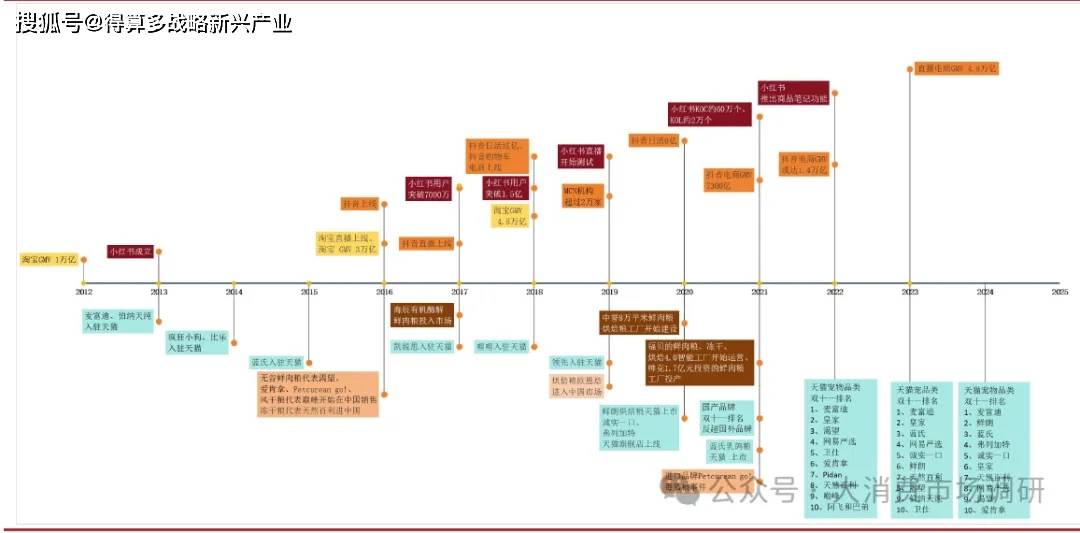
Core Insights - The Chinese pet industry has undergone a significant transformation from being dominated by foreign brands to the rise of domestic brands, which has occurred in multiple phases [1][16] - Domestic brands have successfully captured market share by leveraging e-commerce and social media, enhancing consumer trust through transparency and product safety [1][10] Group 1: E-commerce and Social Media Impact - The rapid growth of e-commerce from 2010 to 2015 provided new brands with substantial traffic support and low marketing costs, enabling quick market entry and sales growth [3] - The first wave of domestic brand emergence included companies like Maifudi and Crazy Dog, which utilized e-commerce platforms to achieve significant sales, with Maifudi reaching sales of 30 million yuan on Singles' Day in 2017 [4][12] - The rise of social media platforms post-2018 created new growth opportunities for domestic brands, allowing them to engage directly with consumers and enhance brand visibility through user-generated content [5][6] Group 2: Building Trust and Safety - Social media has enabled domestic brands to communicate directly with consumers, showcasing product safety through transparency initiatives like ingredient sourcing and quality reports [8] - In 2020, domestic brands collectively increased their focus on product safety, enhancing consumer trust and improving the industry's overall image [9] - The Petcurean go! incident in 2021, which raised concerns about imported brands, allowed domestic brands to gain consumer trust by emphasizing their safety and value [10] Group 3: Market Penetration and Pricing Strategy - Domestic brands identified and filled the price gap left by high-end imported brands, offering high-quality products at lower price points, typically between 20-50 yuan/kg [11][12] - Brands like Crazy Dog and Maifudi successfully targeted price-sensitive consumers, significantly increasing their market share through competitive pricing strategies [12][11] Group 4: Product Innovation and Competitive Advantage - Traditional imported brands primarily relied on meat meal-based products, which became less appealing as consumer expectations for quality increased [13] - The entry of high-end foreign brands introduced premium concepts, but their high prices limited market reach, creating opportunities for domestic brands to offer competitively priced alternatives [14][15] - Domestic brands capitalized on the demand for upgraded products by launching high-quality, cost-effective options, utilizing advancements in local production capabilities to enhance their offerings [15][16]
佩蒂股份(300673):加强主粮布局,毛利率提升明显
EBSCN· 2025-09-02 10:52
Investment Rating - The report maintains a rating of "Accumulate" for the company [7]. Core Views - The company has seen a significant improvement in gross margin due to enhanced focus on staple food products, despite a decline in overall revenue [2][3]. - The company is expanding its product lineup in staple foods, which is expected to become a key growth driver in the future [3][4]. - The net profit margin has improved in Q2 2025, indicating better profitability [4]. Summary by Sections Financial Performance - In H1 2025, the company achieved revenue of 728 million yuan, a year-on-year decrease of 13.94%, and a net profit of 79 million yuan, down 19.23% [2]. - Q2 2025 saw revenue of 399 million yuan, a decline of 13.56% year-on-year, but net profit increased by 1.15% to 57 million yuan [2]. Product and Market Analysis - Domestic self-owned brand performance is stable, with the "Jueyan" brand showing rapid growth [3]. - The company is increasing its focus on staple food products, launching a series of new offerings such as air-dried, baked, and freeze-dried foods [3]. Margin and Cost Analysis - The gross margin for H1 2025 was 31.98%, improving to 34.76% in Q2 2025, with a year-on-year increase of 6.75 percentage points [4]. - The net profit margin for Q2 2025 was 14.27%, reflecting a year-on-year increase of 2.08 percentage points [4]. Profit Forecast and Valuation - The profit forecasts for 2025-2027 have been adjusted to 187 million, 221 million, and 249 million yuan respectively, with corresponding EPS of 0.75, 0.89, and 1.00 yuan [5][6]. - The current stock price corresponds to a P/E ratio of 24 for 2025, 21 for 2026, and 18 for 2027 [5].
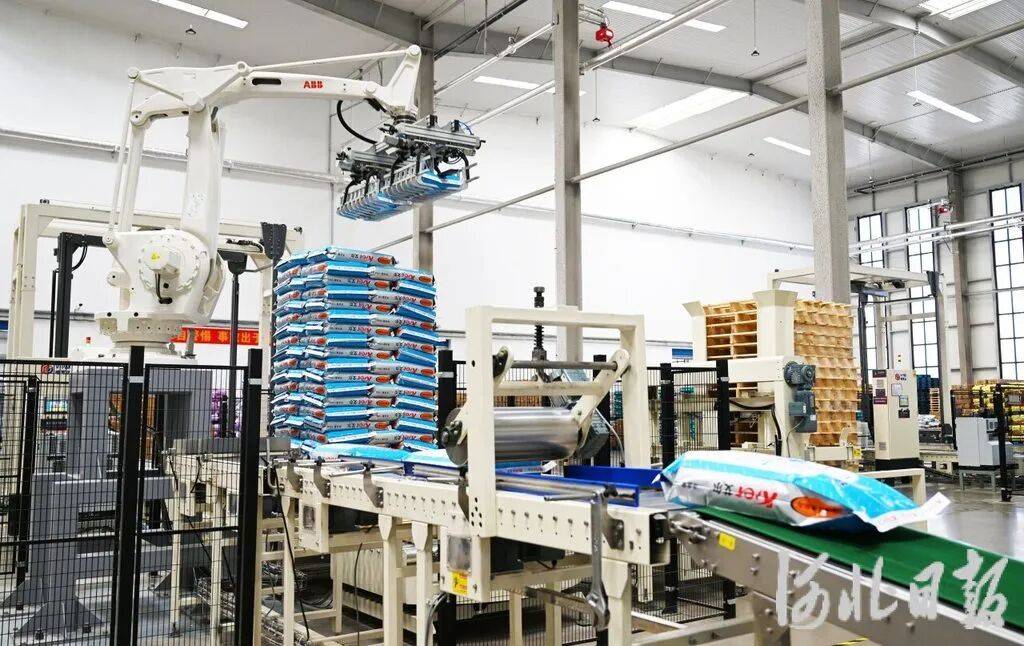
新闻纵深·县域特色产业新力量丨“电商+”发力,带火“宠物食堂”
Sou Hu Cai Jing· 2025-08-28 12:50
Core Insights - The integration of the pet industry and e-commerce in Nanghe District, Xingtai City, has led to significant growth, with online sales accounting for over 75% of total sales in the pet food sector [4][5][19] - The district has established itself as a major production base for pet food, with a total sales volume of 34.7 million tons and sales revenue of 2.43 billion yuan in the first half of the year [4][5] - Companies are leveraging advanced technology and quality control measures to enhance product quality and meet consumer demands [13][16][17] Group 1: Industry Growth and E-commerce Integration - Nanghe District has seen a rapid development of the "pet industry + e-commerce" model, with over 938 pet industry entities, including 725 retail e-commerce businesses [5][11] - The district's pet food sales reached 34.7 million tons, generating 2.43 billion yuan in revenue, with online sales contributing 26.3 million tons [4][5] - The "front store, back warehouse" model has gained popularity, allowing for efficient order fulfillment and enhanced consumer trust [8][10] Group 2: Technological Advancements and Quality Control - Companies like Huaxing and Shijue are investing in advanced production lines and quality control systems, with Shijue's freeze-drying factory set to produce 3,000 tons annually [6][16] - Huaxing has implemented a comprehensive quality inspection process with 139 testing items, ensuring product safety and compliance with health standards [13][14] - The establishment of a shared quality inspection center in collaboration with Hebei Gongheng Testing Service Co. enhances the testing capabilities of local pet food enterprises [17][18] Group 3: Market Expansion and Export Opportunities - Companies are actively expanding their market reach through e-commerce platforms, with exports to Southeast Asia and Europe accounting for approximately 30% of sales [6][10] - The integration of live streaming into sales strategies has proven effective, with significant sales achieved through live broadcasts [8][10] - The district is fostering a supportive environment for e-commerce development, including training programs and infrastructure improvements [11][19]