华为乾崑智驾ADS 4.0系统

Search documents
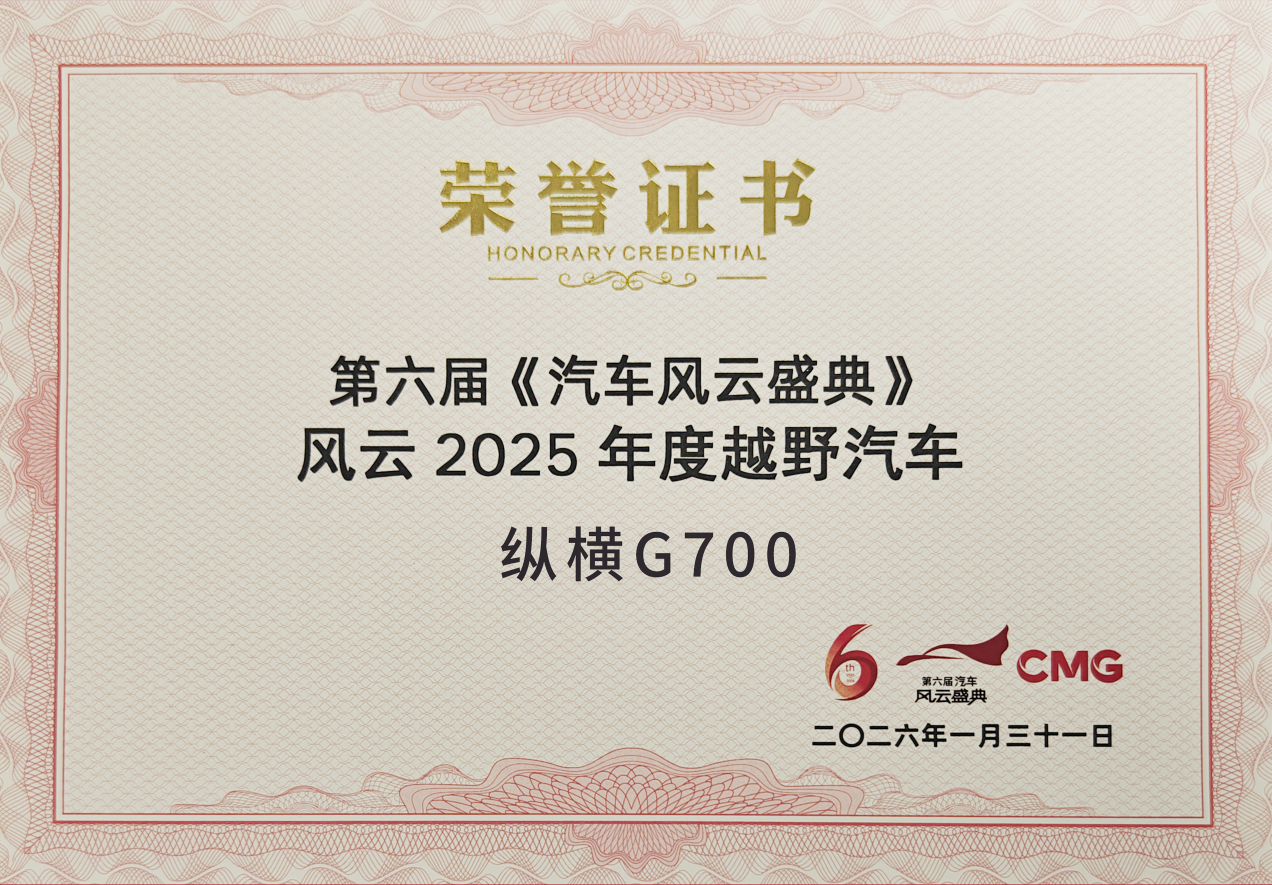
央视权威认证!纵横G700荣获风云2025越野汽车奖项
Jin Tou Wang· 2026-02-24 03:10
Core Viewpoint - The Zongheng G700 has been awarded the "Off-Road Vehicle of the Year 2025" at the 6th CCTV Auto Wind and Cloud Ceremony, marking a significant recognition of China's luxury off-road vehicle capabilities and indicating a shift from follower to leader in the industry [1][3]. Group 1: Product Recognition - The Zongheng G700 stood out among numerous products at the ceremony, which is known as the "Oscars of the automotive industry," due to its strong product capabilities and alignment with the event's theme of "Safety and Protection" [3]. - The G700's recognition is a result of rigorous evaluations, including market reputation and expert technical assessments, as well as stringent testing in various locations [3]. Group 2: Technological Innovations - The G700 features the Kunpeng Super Hybrid CDM-O system with a total power output of 665 kW, equipped with advanced technologies such as three locking differentials and the XWD² super all-terrain control system, enabling it to handle extreme conditions like sand, mud, and snow [5]. - It incorporates the world's first ARK Ark amphibious technology, successfully completing a crossing of the Yangtze River, and integrates high-orbit satellite communication technology and onboard drones for 24/7 connectivity in remote areas [5]. Group 3: Luxury Experience - The G700 redefines the perception of off-road vehicles by offering a luxurious experience, featuring the Huawei QianKun Intelligent Driving ADS 4.0 system, Lexicon theater-level sound system, and 14-layer Nappa leather seats, blending technology and comfort [8]. - The vehicle is supported by the Zongheng Off-Road Academy and Zongheng Stations, creating a comprehensive luxury off-road lifestyle ecosystem for users [8]. Group 4: Brand Mission and Global Impact - Zongheng believes that luxury off-road vehicles should not only reach distant places but also protect them, emphasizing a harmonious coexistence between humans and nature [11]. - Domestically, the G700 is part of the ecological protection team in the Kekexili region, reinforcing the mission of "Chinese cars protecting China's pure land" [11]. - Globally, Zongheng collaborates with Discovery Channel and the Cheetah Conservation Fund to support wildlife protection efforts in Africa, donating G700 vehicles to local patrol teams [11]. Group 5: Future Vision - Zongheng aims to reshape the luxury off-road value system, extending its protective spirit beyond borders and focusing on technological innovation, user collaboration, and global responsibility [13]. - The brand is committed to writing a new chapter on the world stage of luxury off-road vehicles, combining technological prowess with a sense of responsibility [13].

宝马大幅降价的阳谋
Bei Jing Shang Bao· 2026-01-05 00:45
Core Viewpoint - BMW has adjusted the official guide prices of several models, with some reductions reaching up to 300,000 yuan, but the actual transaction prices have not significantly decreased, indicating a strategic response to market dynamics rather than a price war [1][2][3]. Group 1: Price Adjustments - The flagship electric model i7 M70L has seen a price drop of 30.1%, now priced at 1.598 million yuan, while the 7 Series and other fuel models have been reduced by approximately 12%, with the lowest starting price dropping to 208,000 yuan [2]. - Despite the official price reductions, actual transaction prices have not changed significantly, with some dealers reporting only a 10,000 yuan decrease in the 7 Series and X6 models [2][3]. - The price adjustments aim to alleviate the "price inversion" issue faced by dealers, where the actual selling price is lower than the manufacturer's suggested price, thus improving dealer profitability [3]. Group 2: Market Dynamics - BMW's price adjustments reflect the increasing pressure from domestic high-end electric vehicle brands, which have captured a significant market share, with Chinese brands accounting for nearly 70% of passenger car sales and over 80% in the high-end electric vehicle segment [4]. - BMW's sales in China have declined, with a reported 11.2% drop in cumulative sales to 465,000 units, making it the only major market to experience a double-digit decline [2][4]. - The traditional luxury car market is undergoing a transformation, with BMW's historical advantages being eroded by new entrants offering advanced technology and features [5]. Group 3: Strategic Responses - BMW is focusing on technological transformation to address competitive pressures, showcasing new technologies such as the sixth-generation eDrive system and a long-wheelbase version of the BMW iX3, which is set to be produced in Shenyang in 2026 [5]. - The company is also restructuring its dealer network, with plans to complete this by mid-2026, which includes converting some sales points to service-only locations [3]. - Analysts suggest that BMW's price cuts may dilute its brand value and identity, emphasizing the need for the company to enhance its electric and intelligent branding to avoid a detrimental cycle of "price for volume" [6].

2025广州国际车展 | 智驾战事升级:高阶配置下放,L3落地提速
Bei Jing Shang Bao· 2025-11-23 13:09
Core Insights - The 2025 Guangzhou International Auto Show, held from November 21 to 30, showcases 1,085 vehicles, with 58% being new energy models and 93 global debuts, indicating a shift in the automotive market towards "experience wars" in intelligent driving technology [1] - High-level intelligent driving features are becoming standard in vehicles priced below 100,000 yuan, with models like Leapmotor A10 and Dongfeng Nissan Xuan Yi e-POWER leading the way [1] - L3-level autonomous driving technology is on the verge of widespread adoption, with companies like GAC and XPeng making significant advancements in their respective models [2] Industry Trends - The focus of consumer interest has shifted from brand prestige to technical capabilities such as intelligent driving levels and sensor configurations, making technological strength a key factor in purchasing decisions [3] - The competition in intelligent driving is entering a dual phase of "technical deep water" and "mass market penetration," necessitating companies to accelerate the implementation of L3 technology and establish a "technology-leading" brand image [3] - Future strategies for automotive companies should emphasize innovation, user experience, and cost control, ensuring that advanced features are user-friendly and economically viable [3]

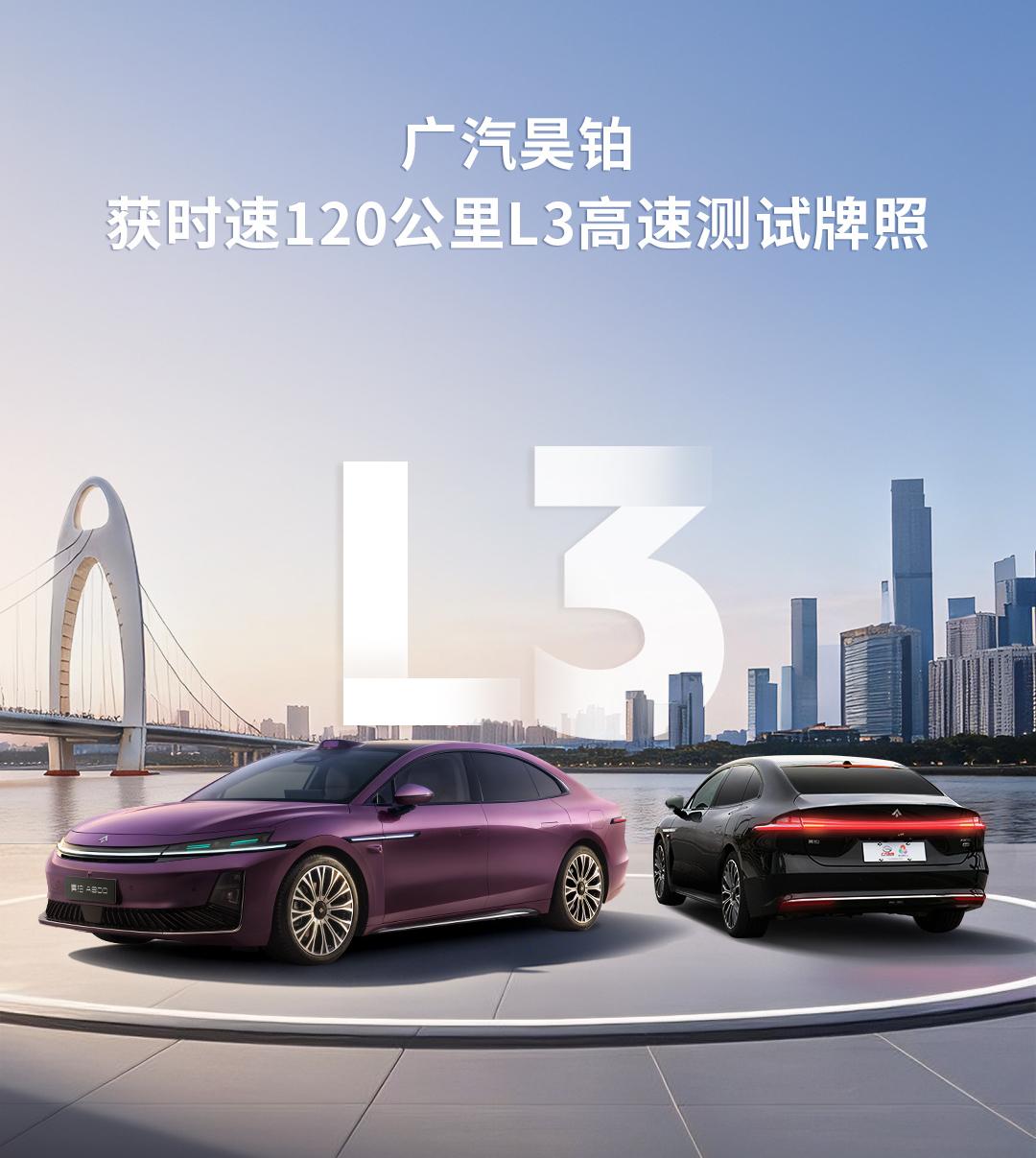
广汽昊铂获批时速120公里L3高速测试牌照
Zhong Guo Zhi Liang Xin Wen Wang· 2025-11-20 03:31
Core Insights - The Haobo A800 focuses on "safety redundancy" and "perception enhancement" as its core principles, integrating GAC's Starling safety protection system with Huawei's Qian Kun intelligent driving ADS 4.0 system [3] - The vehicle features a comprehensive safety technology architecture that includes intelligent chassis, active and passive safety, and battery safety [3] - The A800 is designed specifically for high-speed Level 3 driving scenarios and incorporates eight major system redundancy designs covering critical modules such as computing, communication, braking, and steering to ensure control is maintained despite single-point failures [3] Hardware Features - The Haobo A800 is equipped with 34 high-precision perception sensors, including 4D millimeter-wave radar, high-definition cameras, high-line laser radar, and high-precision solid-state laser radar, enhancing its ability to perceive the surrounding environment [3] - This extensive sensor suite aims to further improve the reliability and safety of the system [3] - The A800 is set to be unveiled at the Guangzhou Auto Show this week [3]

启境汽车任命刘嘉铭为CEO,广汽华为深度融合释放“高含华量”信号
21世纪经济报道· 2025-09-25 11:08
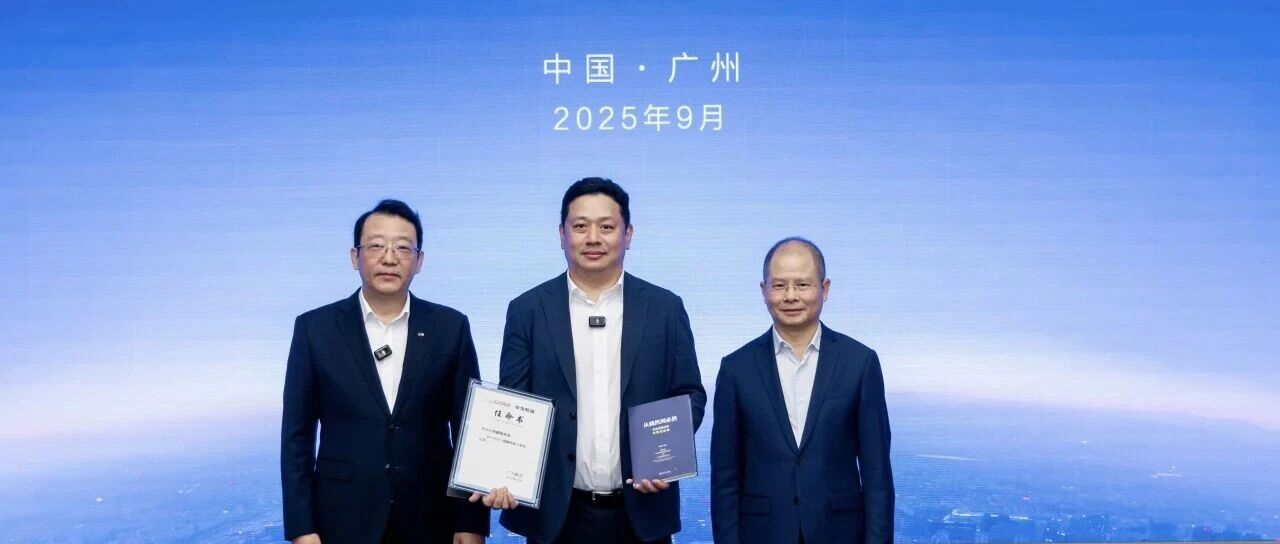
Core Viewpoint - The appointment of Liu Jiaming as CEO of Qijing Automotive marks a significant step in the operational phase of the high-end smart electric vehicle brand jointly created by GAC Group and Huawei, indicating a shift from capital and technical collaboration to integrated systems and joint governance [1][3]. Group 1: Leadership and Strategic Direction - Liu Jiaming brings over 25 years of experience in the automotive industry, having worked within the Toyota system and GAC Group, and is known for leading successful product planning and sales reforms [3]. - The joint appointment of the CEO by both GAC and Huawei signifies the highest strategic priority for the Qijing brand within both organizations [3]. Group 2: Collaborative Framework - Starting January 2025, Huawei and Qijing teams will operate in a co-located office, allowing for deep involvement in the entire product lifecycle from definition to marketing, breaking traditional segmented cooperation models [5]. - Huawei's introduction of its core Integrated Product Development (IPD) and Integrated Product Marketing System (IPMS) processes into Qijing ensures a seamless collaboration that enhances decision-making and operational efficiency [5]. Group 3: Market Positioning and Technological Integration - Qijing aims to redefine the high-end electric vehicle market by leveraging GAC's 28 years of manufacturing experience and Huawei's comprehensive capabilities in smart driving technology [11]. - The collaboration is positioned as a model for the automotive industry, transitioning Huawei from a supplier to a deep partner in smart vehicle solutions, while GAC evolves into a technology-driven mobility company [12]. Group 4: Future Outlook - The leadership change signifies the completion of Qijing's system capability construction and the beginning of an accelerated phase, aiming to transform resource advantages into competitive product strengths [13]. - Qijing represents a pivotal move for the Chinese automotive industry towards high-end and global markets, emphasizing the integration of technology and manufacturing [13].
启境汽车任命刘嘉铭为CEO,广汽华为深度融合释放“高含华量”信号
2 1 Shi Ji Jing Ji Bao Dao· 2025-09-25 10:18
Core Insights - The appointment of Liu Jiaming as CEO of Qijing Automotive marks a significant operational phase for the high-end smart electric vehicle brand jointly created by GAC Group and Huawei, indicating a shift from capital and technical collaboration to integrated operations and governance [1][6] - The collaboration between GAC and Huawei aims to redefine the standards of high-end new energy vehicles in China, leveraging GAC's manufacturing experience and Huawei's advanced smart driving technologies [4][5] Group 1: Leadership and Strategic Direction - Liu Jiaming brings over 25 years of experience in the automotive industry, having worked with Toyota and GAC, and will oversee brand strategy, product planning, market expansion, and operational management [1] - The joint appointment of the CEO by both companies signifies the high strategic priority of the Qijing brand within the GAC and Huawei frameworks [1] Group 2: Operational Integration - Starting January 2025, Huawei and Qijing teams will implement joint operations, allowing Huawei's teams to deeply engage in product definition, development, and marketing, thus achieving "zero-delay collaboration" [2] - The introduction of Huawei's core IPD and IPMS processes into Qijing signifies a comprehensive integration of Huawei's organizational methodologies, enhancing project influence and control [2] Group 3: Market Positioning and Product Development - Qijing aims to address the industry's pain points by ensuring that its products are "natively intelligent," rather than retrofitted with technology, thus enhancing the consumer experience [2][3] - Positioned in the 300,000 RMB high-end new energy market, Qijing seeks to leverage both intelligent manufacturing and driving technologies to redefine the value standards of domestic high-end electric vehicles [4] Group 4: Industry Implications - The partnership represents a model for deep collaboration in the automotive industry, transitioning Huawei from a supplier to a deep partner and aiding GAC's transformation into a technology-driven mobility company [5] - The establishment of Qijing is seen as a pivotal move for the Chinese automotive industry, marking a shift towards ecological collaboration and high-end, global positioning [6]
东风汽车与华为合作全面提速
Zhong Guo Zheng Quan Bao· 2025-09-22 20:15
Core Insights - The collaboration between Dongfeng Motor Group and Huawei is accelerating following the signing of a comprehensive strategic cooperation agreement on May 23, 2023, aimed at enhancing strategic trust and deepening cooperation [1] Group 1: Strategic Collaboration - Dongfeng and Huawei's partnership began in 2018, focusing on electric and connected vehicle technologies [1] - Significant breakthroughs in their collaboration are expected in 2024, with multiple agreements signed for deep technical cooperation, including the HI model [1] - The HI model is seen as having the greatest potential due to its non-involvement in the car company's leadership and clear channel advantages [1] Group 2: Product Development and Market Impact - The new Lantu Dreamer MPV, developed through this partnership, has received over 50,000 orders within 110 days of its launch, capturing the high-end MPV market priced above 350,000 yuan [2] - The M817 model, a luxury electric off-road vehicle, is the first to feature Huawei's advanced driving system and a centralized electronic architecture developed jointly by Dongfeng and Huawei [2] - The collaboration has also extended to Dongfeng's other brands, including a strategic agreement with Dongfeng Nissan to integrate Huawei's HarmonyOS cockpit [2] Group 3: New Joint Ventures and Future Prospects - A new joint venture was announced on September 17, 2023, focusing on the manufacturing and sales of smart off-road vehicles, with a registered capital of 8.47 billion yuan [2] - The joint venture aims to enhance the MANS brand and will operate alongside existing operations at Dongfeng Warrior Technology [2] - The successful launch of the M817 has validated the commercial value of combining Huawei's technology with Dongfeng's manufacturing capabilities, with over 3,700 pre-orders within five hours of launch [3] Group 4: Industry Transformation - The collaboration is expected to reshape the automotive industry's value logic, with Huawei's role extending beyond technology supply to deep ecosystem integration [3] - The introduction of Huawei's advanced product development and marketing systems is set to digitize the entire process from product definition to market delivery [3] - This model retains the brand's autonomy while integrating Huawei's core capabilities in smart driving and electric systems, providing a replicable paradigm for traditional automotive companies [3]