原油市场

Search documents
农产品日报(2026 年3 月12日)-20260312
Guang Da Qi Huo· 2026-03-12 05:11
1. Report Industry Investment Rating No information provided 2. Core Views of the Report - Corn: The corn market is expected to oscillate. The spot price of corn is stronger than the futures price. The supply in the market remains tight, and the price in the sales area has slightly decreased. After the profit - taking of long positions, attention should be paid to the impact of policy trends on the grain market [1]. - Soybean Meal: The price of soybean meal is expected to rise. The CBOT soybean price increased due to the impact of the US - Iran war on supply. The domestic soybean meal futures followed the foreign market, and the 5 - 9 spread has significantly narrowed. A short - term long strategy is recommended [1]. - Oils: The price of oils is expected to rise. The BMD palm oil price rebounded following the US soybean oil and crude oil prices. The export of Malaysian palm oil increased in early March, but new export orders slowed down. The domestic oils are running strongly, and long positions are recommended to be held [1]. - Eggs: The price of eggs is expected to rise. The egg futures price increased slightly, and the spot price is stable with minor adjustments in some areas. A short - term trading strategy is recommended, and attention should be paid to changes in supply data and market sentiment [1]. - Pigs: The price of pigs is expected to oscillate and strengthen. The pig futures price adjusted with a slight decline, and the spot price is weak. The supply is sufficient, and attention should be paid to market sentiment and supply - side impacts on the futures market [2]. 3. Summary According to Relevant Catalogs Research Views - **Corn**: On Wednesday, the corn main 2605 contract stabilized at the support of the 10 - day moving average. The spot price of corn in the Northeast is stable and slightly stronger, and deep - processing enterprises have raised the purchase price. The price in North China is generally stable. The supply in the market is tight, and the price in the sales area has slightly decreased. Feed enterprises mainly replenish inventory as needed, and the trading is light. After the profit - taking of long positions, attention should be paid to policy trends [1]. - **Soybean Meal**: On Wednesday, the CBOT soybean price rose due to concerns about supply disruptions caused by the US - Iran war. The 3 - month supply - demand report had little impact. The domestic soybean meal futures followed the foreign market, and the 5 - 9 spread narrowed. A short - term long strategy is recommended [1]. - **Oils**: On Wednesday, the BMD palm oil price rose following the US soybean oil and crude oil prices. The export of Malaysian palm oil increased in early March, but new export orders slowed down due to the increase in shipping and insurance costs. The domestic oils are running strongly, and long positions are recommended to be held [1]. - **Eggs**: On Wednesday, the egg futures main 2605 contract rose 0.76% to 3438 yuan/500 kg. The spot price is stable with minor adjustments in some areas. A short - term trading strategy is recommended, and attention should be paid to changes in supply data and market sentiment [1]. - **Pigs**: On Wednesday, the pig futures price adjusted with a 0.09% decline to 11170 yuan/ton. The spot price is weak, and the supply is sufficient. Attention should be paid to market sentiment and supply - side impacts on the futures market [2]. Market Information - **Geopolitical Negotiations**: The US and Iran have differences on four core issues, including the scope of negotiation, uranium enrichment, sanctions, and the premise of dialogue [3]. - **Supply Blockade**: Blocking the Strait of Hormuz has a greater impact on the crude oil market than the war itself. About 1500 - 2000 million barrels of crude oil transportation are affected daily, and 99% of Qatar's LNG export channels are basically cut off [3]. - **Passive Production Cuts**: Gulf countries are facing a "storage full" crisis. Iraq has been forced to cut production by nearly 1.5 million barrels per day, and the production cut may double in the future [4]. - **Market Trends and Forecasts**: The short - term crude oil market is strong, but there is a dispute over the duration of the strait blockade, resulting in a large discount of far - month contracts to near - month contracts. Oil prices may have three development paths depending on the situation of the conflict [4]. - **Market Views**: The current rise in oil prices is mainly due to the re - pricing of supply security in the Middle East. The short - term volatility of the crude oil market will remain high, and attention should be paid to the situation in the strait and the responses of major oil - producing countries [4]. Variety Spreads - **Contract Spreads**: Charts show the 5 - 9 spreads of corn, corn starch, soybeans, soybean meal, soybean oil, palm oil, eggs, and pigs [6][8][9][11]. - **Contract Basis**: Charts show the basis of corn, corn starch, soybeans, soybean meal, soybean oil, palm oil, eggs, and pigs [14][17][19][25].
原油日报:冲高后大幅回落-20260310
Guan Tong Qi Huo· 2026-03-10 11:07
1. Report Industry Investment Rating - No information provided 2. Core Viewpoints - OPEC+ agreed to increase oil production by 206,000 barrels per day in April, with no further production increase plan determined yet and possible future adjustments. This is mainly to cope with the expected significant decline in Iran's crude oil exports after the attack [1]. - The EIA data shows that the increase in U.S. crude oil inventories exceeded expectations, the decline in refined oil inventories was small, and the overall oil inventories continued to increase [1][3]. - The continuous conflicts among the U.S., Israel, and Iran have led to a sharp decline in Iranian oil production and exports, and the closure of some oil - related facilities in the Middle East. The Strait of Hormuz has almost stopped shipping for many days, causing production cuts in Middle Eastern oil - producing countries [1]. - Overseas crude oil prices once rose close to $120 per barrel, but then fell sharply as G7 countries discussed releasing strategic oil reserves and Trump said he would temporarily lift some oil - related sanctions [1]. - The Middle East situation has caused huge fluctuations in crude oil prices. It is recommended to watch carefully and pay attention to the progress of the Middle East situation and the export of Middle Eastern crude oil [1]. 3. Summary by Relevant Catalogs 3.1行情分析 - OPEC+ will increase production in April to deal with the decline in Iranian exports. The next meeting will be held on April 5 [1]. - The U.S., Israel, and Iran are in conflict. Iran's oil production and exports are large, and the Strait of Hormuz is a key shipping route. Many oil - related facilities in the Middle East have been attacked and shut down [1]. - Overseas crude oil prices first rose and then fell due to the discussion of releasing strategic oil reserves and the statement of lifting sanctions [1]. 3.2期现行情 - The main crude oil futures contract 2604 fell 10.76% to 666.3 yuan/ton, with a minimum price of 625.0 yuan/ton, a maximum price of 818.0 yuan/ton, and the position decreased by 4,679 to 31,422 lots [2]. 3.3基本面跟踪 - The EIA monthly report raised the 2026 WTI crude oil price by $0.79 per barrel to $52.21 per barrel, lowered the 2026 global oil demand from 105.2 million barrels per day to 104.8 million barrels per day, and raised the 2026 global oil production from 107.4 million barrels per day to 107.7 million barrels per day [3]. - The IEA raised the 2026 global oil demand growth rate by 70,000 barrels per day to 930,000 barrels per day and raised the 2026 global oil production growth rate by 100,000 barrels per day to 2.5 million barrels per day [3]. - The U.S. EIA data on March 4 showed that the U.S. crude oil inventory increased by 3.475 million barrels in the week ending February 27, exceeding expectations, and the overall oil inventories continued to increase [1][3]. 3.4 Supply - side - OPEC's latest monthly report shows that OPEC+'s average crude oil production in January was 42.448 million barrels per day, a decrease of 439,000 barrels per day compared to December, mainly due to supply disruptions in Kazakhstan, Venezuela, and Iran [4]. - U.S. crude oil production decreased by 6,000 barrels per day to 13.696 million barrels per day in the week of February 27, and it is near the historical high [4]. - The four - week average supply of U.S. crude oil products decreased to 21.02 million barrels per day, an increase of 3.55% compared to the same period last year, and the increase amplitude decreased [4]. - The weekly production of gasoline and diesel decreased, driving the weekly supply of U.S. crude oil products to continue to decrease by 7.40% [4].
原油飙涨20%突破110美元,美以首次把伊朗民用能源设施当作打击目标
21世纪经济报道· 2026-03-08 22:55
Group 1 - International oil prices surged sharply, with WTI crude futures and Brent crude futures both exceeding $110 per barrel, marking a daily increase of 20.11% and 18.43% respectively [2] - Last week, international crude oil futures saw significant gains, with WTI crude futures for April rising by 12.21% and Brent crude futures for May increasing by 8.52%, achieving the largest weekly gains recorded since 1983 and 1991 [2] - The conflict in Iran has led to military strikes on oil facilities, causing disruptions in oil exports from Gulf countries, with significant stockpiling and production cuts expected [5] Group 2 - Analysts express concerns that if military actions do not cease, the oil market could collapse within days, potentially pushing prices to $150 per barrel or higher if the Strait of Hormuz is closed for weeks [6] - The situation in Iran, particularly the targeting of oil storage facilities, is expected to have a ripple effect on the global oil market and could lead to further price increases [5][6]


光大期货能化商品日报-20260227
Guang Da Qi Huo· 2026-02-27 05:14
1. Report Industry Investment Rating - Not provided in the given content 2. Core Views of the Report - The main contradiction in the current market is anchored to the US - Iran situation. Although the negotiation progress is slow, there are differences in the market's view on the evolution of the conflict, so oil prices are fluctuating repeatedly, waiting for further guidance from market news [1]. - For fuel oil, the supply of low - sulfur fuel oil has marginally improved, and the high - sulfur supply has decreased. The short - term market still focuses on the impact of the latest developments in the US - Iran situation on the crude oil and fuel oil markets [2]. - For asphalt, the supply in the northern region remains relatively low, and refineries are mainly accumulating inventory. The short - term market still focuses on the impact of the latest developments in the US - Iran situation on the raw material market [2]. - For polyester, PX and PTA are expected to be strongly volatile under cost support, while ethylene glycol is expected to be weakly volatile under high - inventory pressure after the festival, but its supply - demand pattern may improve in March [4]. - For rubber, due to the firm raw material price in the low - production season and the increasing concern about production, the rubber price is expected to be strongly volatile [6]. - For methanol, affected by the gas restriction in Iran, the import volume is expected to gradually decline. The MTO device load in the Yangtze River Delta region is not high currently but is expected to recover after the Spring Festival. The subsequent port will enter the de - stocking stage, but the continued tension in the US - Iran situation will cause the methanol price to fluctuate significantly [6]. - For polyolefins, the post - festival demand recovery is slow, and due to the pre - festival downstream restocking, the short - term market trading activity is not high, and there is a certain pressure for further upward movement [6]. - For polyvinyl chloride, the post - festival supply maintains a slow - increasing trend, and the downstream demand support is limited. It is expected that the PVC price will maintain a bottom - level fluctuation [7]. 3. Summary According to Relevant Catalogs 3.1 Research Views | Variety | Closing Price and Change on Thursday | Key Information | View | | --- | --- | --- | --- | | Crude Oil | WTI April contract closed down $0.21 to $65.21/barrel, a decrease of 0.32%; Brent April contract closed down $0.1 to $70.75/barrel, a decrease of 0.14%; SC2604 closed at 489.8 yuan/barrel, up 3.6 yuan/barrel, an increase of 0.74% | US - Iran nuclear negotiations are ongoing, and the cost of chartering super - large oil tankers from the Middle East to China has exceeded $200,000 per day for the first time since 2020 | Volatility [1] | | Fuel Oil | FU2605 closed down 0.34% at 2943 yuan/ton; LU2605 closed down 1.18% at 3436 yuan/ton | Singapore's on - land fuel oil inventory increased by 0.5%, and Fujeirah's fuel oil inventory decreased by 6.22%. The supply of low - sulfur and high - sulfur fuel oil has changed | Volatility [2] | | Asphalt | BU2604 closed down 0.5% at 3358 yuan/ton | The supply in the north is low, and refineries are accumulating inventory. The production of main refineries in the south is intermittent | Volatility [2] | | Polyester | TA605 closed down 0.98% at 5260 yuan/ton; EG2605 closed down 1.25% at 3700 yuan/ton; PX605 closed down 0.67% at 7382 yuan/ton | An ethylene glycol device is expected to restart, and the downstream recovery time is around the Lantern Festival | Volatility [4] | | Rubber | RU2605 fell 115 yuan/ton to 17125 yuan/ton; NR fell 125 yuan/ton to 13855 yuan/ton; BR fell 345 yuan/ton to 12700 yuan/ton | Vietnam's natural rubber exports in January increased by 5% year - on - year, but exports to China decreased by 42% year - on - year. The operating load of domestic tire enterprises has increased | Volatility [4][6] | | Methanol | The spot price in Taicang is 2197 yuan/ton, and the price in Inner Mongolia is 1830 yuan/ton | Affected by the gas restriction in Iran, the import volume is expected to decline, and the MTO device load in the Yangtze River Delta region is expected to recover after the Spring Festival | Volatility [6] | | Polyolefins | The mainstream price of East China wire drawing is 6600 - 6700 yuan/ton | The post - festival demand recovery is slow, and the downstream restocked in advance | Volatility [6] | | Polyvinyl Chloride | The price in the East China market is stable, and the price in the South China market has increased | The post - festival supply is slowly increasing, and the downstream demand has been overdrawn | Volatility [7] | 3.2 Daily Data Monitoring - The report provides the basis price data of various energy - chemical varieties on February 26, 2026, including spot prices, futures prices, basis, basis rates, and their changes, as well as the quantile of the latest basis rate in historical data [8]. 3.3 Market News - The US and Iran ended the third round of nuclear negotiations in Geneva, and the mediation party Oman said that the talks had made progress. Iran refused to transfer its enriched uranium abroad and demanded that the US lift sanctions [10]. - The EU sanctions envoy said that the EU needs to coordinate its plan to impose a comprehensive maritime service ban on Russia's seaborne crude oil exports with other G7 countries [10]. 3.4 Chart Analysis - **4.1 Main Contract Prices**: The report presents the closing price charts of main contracts of various energy - chemical varieties from 2022 to 2026, including crude oil, fuel oil, low - sulfur fuel oil, asphalt, LPG, PTA, ethylene glycol, etc. [12][14][16][18][22] - **4.2 Main Contract Basis**: It shows the basis charts of main contracts of various energy - chemical varieties, such as crude oil, fuel oil, low - sulfur fuel oil, asphalt, etc. [27][28][30][32] - **4.3 Inter - period Contract Spreads**: The report provides the spread charts of inter - period contracts of various energy - chemical varieties, including fuel oil, PTA, ethylene glycol, PP, LLDPE, etc. [33][35][39][41][43][45] - **4.4 Inter - variety Spreads**: It presents the spread and ratio charts of different varieties, such as the spread between domestic and foreign crude oil, the spread between high - and low - sulfur fuel oil, the ratio of fuel oil to asphalt, etc. [48][50][51][55] - **4.5 Production Profits**: The report shows the production profit charts of LLDPE, PP, etc. [59] 3.5 Research Team Introduction - **Zhong Meiyan**: Deputy Director of Everbright Futures Research Institute, with more than ten years of experience in futures derivatives market research, has won many awards [62]. - **Du Bingqin**: Director of Energy and Chemical Research at Everbright Futures Research Institute, with in - depth research on the energy industry chain, has won many awards [63]. - **Di Yilin**: Rubber and polyester analyst at Everbright Futures Research Institute, has won many awards and is mainly engaged in the research of related futures varieties [64]. - **Peng Haibo**: Analyst of methanol, propylene, pure benzene, polyolefins, and PVC at Everbright Futures Research Institute, with rich experience in energy - chemical spot - futures trading [65].
原油日报-20260211
Yin He Qi Huo· 2026-02-11 10:29
Report Information - Report Title: Crude Oil Daily Report, February 11, 2026 [1] - Researcher: Zhao Ruochen [2] - Futures Practitioner Certificate Number: F03151390 [2] - Investment Consulting Practitioner Certificate Number: Z0023496 [2] - Email: zhaoruochen_qh@chinastock.com.cn [2] Core Viewpoint - International oil prices are trending strongly. There are continuous contradictory reports about the progress of diplomatic negotiations between the US and Iran, and the market is interpreting different signals regarding the risk of supply disruptions in the Middle East. The market is closely watching the meeting between Trump and Israeli Prime Minister Benjamin Netanyahu, with the general expectation that Netanyahu will urge the US to take a tougher stance on Tehran's ballistic missile program. It is expected that international oil prices will fluctuate strongly, with the Brent main contract focusing on the range of $67 - $69 [3] Summary by Directory Trade Logistics - The Indian Coast Guard seized three oil tankers suspected of oil smuggling, the country's first tough measure against the so - called "dark fleet" [3] Spot Transactions - Bharat Petroleum Corporation and Mangalore Refinery and Petrochemicals Limited in India have purchased Venezuelan Merey crude oil, expected to arrive in April [3] Oilfield Pipelines - Petronas of Malaysia announced on Wednesday that it will launch nine exploration blocks in the "2026 Malaysia Tender Round" [3] - Two Saudi Arabian companies and three US companies plan to form a consortium for oil and gas exploration and energy production in northeastern Syria [3] - Equinor plans to significantly increase its overseas oil and gas production by 2030, and its international oil and gas asset portfolio will resume growth in the coming years [3] - The US government issued a general license allowing oilfield service companies to operate in Venezuela, and the Trump administration is relaxing sanctions to promote the reconstruction of Venezuela's crude oil infrastructure [3] Geopolitics - Israeli Prime Minister Benjamin Netanyahu met with Donald Trump at the White House on Wednesday, as Israel's concerns about a possible diplomatic agreement between Iran and the US are increasing [3] Refinery Dynamics - The sale of the parent company of Citgo Petroleum, owned by Venezuela, to an affiliate of Elliott Investment Management is still frozen months after the US court approved the sale process, making it difficult for the US refiner to make key investment and financial decisions [3] - The management of a Russian - owned refinery in Germany has privately warned the Berlin authorities that US sanctions are harming its business and threatening the fuel supply in the German capital and surrounding areas [3]
黄金、白银大幅低开后跌幅收窄,美股期货、原油走低
Hua Er Jie Jian Wen· 2026-02-01 23:08
Market Overview - U.S. stock futures are trading lower in the Asian market, with Nasdaq 100 futures down by 0.8% and S&P 500 futures down by 0.6% [1] - Spot gold experienced significant volatility, hitting a low of $4,783.98 per ounce before rebounding to around $4,840, reflecting a daily decline of 0.5% [1] - Spot silver also showed considerable fluctuations, reaching a low of $80.53 per ounce and currently rebounding to $82.15, with a daily drop of 2.7% [1] - Brent crude oil futures opened lower in the Asian market, down by 2.4% to $67.78 per barrel [1]
专家一线-近期伊朗-委内瑞拉局势判断及对油运油影响
2026-01-16 02:53
Summary of Key Points from Conference Call Industry Overview - The conference call primarily discusses the oil transportation industry, focusing on the impacts of geopolitical tensions, particularly involving Iran and Venezuela, on oil prices and shipping rates [1][2][10]. Core Insights and Arguments 1. **Geopolitical Tensions**: Increased geopolitical tensions, particularly in Iran and Venezuela, are seen as real risks that could lead to oil tanker rerouting and rising shipping rates [1][4]. 2. **VLCC Rate Fluctuations**: Recent VLCC (Very Large Crude Carrier) rates experienced significant volatility, with the TD3C route WS index dropping from 124 in mid-December 2025 to 51 by January 6, 2026, before rebounding to 105 by January 14, 2026. This V-shaped recovery is attributed to liquidity issues, post-holiday demand, and effective capacity consumption [5][6]. 3. **Market Utilization**: The VLCC market utilization rate is projected to reach 92% in 2026, the highest since 2019, indicating a scarcity of compliant vessels and an aging fleet [8][22]. 4. **Oil Price Predictions**: EIA forecasts the average Brent crude oil price to be around $56 in 2026, down nearly 20% from 2025, while IEA predicts a hidden surplus of approximately 4 million tons per day. However, geopolitical risks could lead to spikes in oil prices [9][10]. 5. **Impact of Iranian Situation**: The Iranian situation has led to a backlog of ships waiting outside ports, increased GPS interference, and record-high offshore oil storage levels, which reduces effective capacity and forces demand to seek alternative sources [11][12]. 6. **Venezuela's Oil Flow Changes**: Venezuela's oil flow is expected to reverse post-February 2026, with over 80% directed towards the U.S., increasing U.S. efforts to seize gray market vessels. This could temporarily boost shipping rates, but the limited production capacity may exert downward pressure on oil prices in the long term [16][17]. 7. **Future Market Dynamics**: The oil transportation market is expected to face challenges and opportunities in 2026, including the delivery of new VLCCs and the potential for gray market vessels to be pushed out, leading to increased demand for compliant shipping [24][25]. Additional Important Content 1. **Military Posture and Risks**: The U.S. military's adjustments in Qatar and the potential for military actions against Iran could significantly impact shipping routes and insurance costs [3][4]. 2. **Shipping Market Signals**: Key signals to monitor for future market trends include military escalations, shipping friction coefficients, and structural shifts in cargo volumes and flows [26][28]. 3. **Long-term Trends**: The gradual exit of gray market vessels is anticipated, with a shift towards compliant shipping expected to dominate the market, potentially leading to higher transportation prices [31][32]. This summary encapsulates the critical insights and projections regarding the oil transportation industry, emphasizing the interplay between geopolitical factors and market dynamics.
市场波动,趋势变了吗?
Hu Xiu· 2026-01-13 10:45
Group 1 - The domestic A-share market experienced fluctuations today, raising concerns about whether the market has overheated and is about to reverse direction [3] - The market volatility is influenced by two main factors: the disturbance in China-US relations and the speculation surrounding tariffs, particularly following Trump's comments about imposing a 25% tariff on countries doing business with Iran [3] - Despite the concerns, it is concluded that Trump's statements will only exert temporary pressure on the market and lack sustainability, as recent actions by the US suggest a desire to maintain a cooperative atmosphere with China [3] Group 2 - Reports indicate that major oil trading companies are engaging with Chinese and Indian refineries to explore the sale of Venezuelan oil, which is perceived as a sign that the US aims to control Venezuelan oil rather than cut off China's supply [3] - This development is expected to provide reassurance to the market, reducing the likelihood of immediate tensions between China and the US [3]
华泰期货:伊朗骚乱持续升级,原油市场焦点转向中东
Xin Lang Cai Jing· 2026-01-09 01:37
Core Viewpoint - The article discusses the recent developments in the oil market, particularly focusing on the implications of U.S. sanctions on Venezuela and the geopolitical tensions in the Middle East, which are influencing oil prices and investment strategies in the energy sector [2][4]. Oil Price Movements - Light crude oil futures for February delivery rose by $1.77 to $57.76 per barrel, a 3.16% increase, while March delivery of Brent crude oil increased by $2.03 to $61.99 per barrel, a 3.39% rise [2][9]. - The SC crude oil main contract closed up by 1.58% at 425 yuan per barrel [2][9]. U.S. Sanctions and Venezuela - U.S. Treasury Secretary Mnuchin announced the lifting of certain sanctions on Venezuelan entities, aiming to stabilize the existing structure in Venezuela [2][9]. - Independent oil companies are interested in investing in Venezuela, although major oil companies may proceed with caution [2][9]. - U.S. Energy Secretary Brouillette indicated that companies like ConocoPhillips and ExxonMobil are exploring ways to revitalize Venezuela's energy sector, with Chevron expected to expand its operations there [3][10]. Geopolitical Tensions in the Middle East - Saudi Arabia is taking steps to diminish the UAE's influence in Yemen, including ordering the withdrawal of UAE troops and targeting arms shipments [2][10]. - The ongoing unrest in Iran, coupled with the situation in Venezuela, is creating a volatile environment that could significantly impact oil markets [4][11]. Refining Capacity in the U.S. - The U.S. plans to sell heavy sour crude oil from Venezuela, with Gulf Coast refineries well-equipped to process this type of oil, having a total processing capacity exceeding 7 million barrels per day [3][10]. - The Motiva refinery in Texas has the highest capacity at 640,500 barrels per day, and refiners have been upgrading facilities to handle increasing volumes of heavy sour crude [3][10]. Investment Strategy - The oil market is expected to experience short-term fluctuations, with a medium-term bearish outlook due to geopolitical uncertainties and potential supply constraints from sanctions on oil-producing countries [4][12].

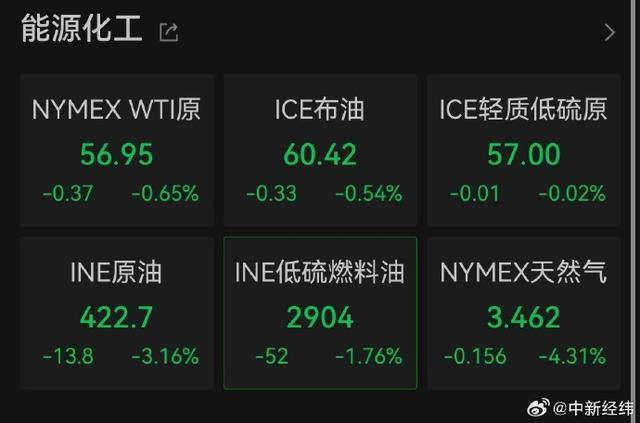
油价跳水翻绿,委内瑞拉1700万桶原油滞留海上
Sou Hu Cai Jing· 2026-01-05 07:22
Core Viewpoint - The oil market experienced a surge due to the capture of Venezuelan President Maduro, with WTI crude reaching a high of $57.73 per gallon and Brent crude hitting $61.24 per gallon before declining later in the day [1] Group 1: Market Reaction - WTI crude oil fell by 0.65% to $56.95 per gallon, while Brent crude decreased by 0.54% to $60.42 per gallon as of the report [2] - The U.S. has implemented a blockade on Venezuelan oil tanker transportation, preventing the export of crude oil [1] Group 2: Supply Situation - Over 17 million barrels of Venezuelan crude oil are currently stranded at sea and unable to leave port [1]