
圆习酒

Search documents
踩踏式抛货超10万箱!习酒沉默,经销商慌了?
Sou Hu Cai Jing· 2026-02-26 03:35
Core Viewpoint - The recent price collapse of Yuanxi liquor is a significant indicator of the failure in channel management and trust between manufacturers and distributors, leading to a crisis in the market [2][3][6] Group 1: Market Dynamics - Yuanxi liquor's wholesale price plummeted from 500 yuan per box to 339 yuan, with a single-day drop exceeding 100 yuan, indicating a severe market disruption [2] - The estimated influx of stock reached tens of thousands of boxes, potentially exceeding 100,000 boxes, overwhelming the operational capacity of ordinary distributors [2][3] - The average inventory turnover days in the liquor industry have reached 900 days, with Yuanxi's channel inventory pressure significantly surpassing the industry average [3][4] Group 2: Company Strategy and Performance - Yuanxi liquor has been relying on channel pressure to achieve scale expansion, creating an illusion of sales growth during the boom period of sauce liquor [3][5] - The company is projected to invest 300 million yuan to assist distributors in digesting 4 billion yuan of inventory, which is seen as a temporary fix rather than a fundamental solution [3][5] - The high-end product line, Junpin Yuanxi, is prioritized over mass-market products, leading to a neglect of the core product, Yuanxi liquor, which has resulted in a price collapse [4][5] Group 3: Channel Structure and Trust Issues - The channel structure of Yuanxi liquor has been compromised by the presence of opportunistic distributors who do not contribute to market building, exacerbating the price collapse during downturns [4][5] - The disconnect between the company's promises to maintain market order and the reality of price collapse highlights a significant gap in execution [5][6] - The strategy of focusing on high-end products while neglecting mass-market offerings has led to a loss of brand credibility and a breakdown in trust within the distribution network [4][6]

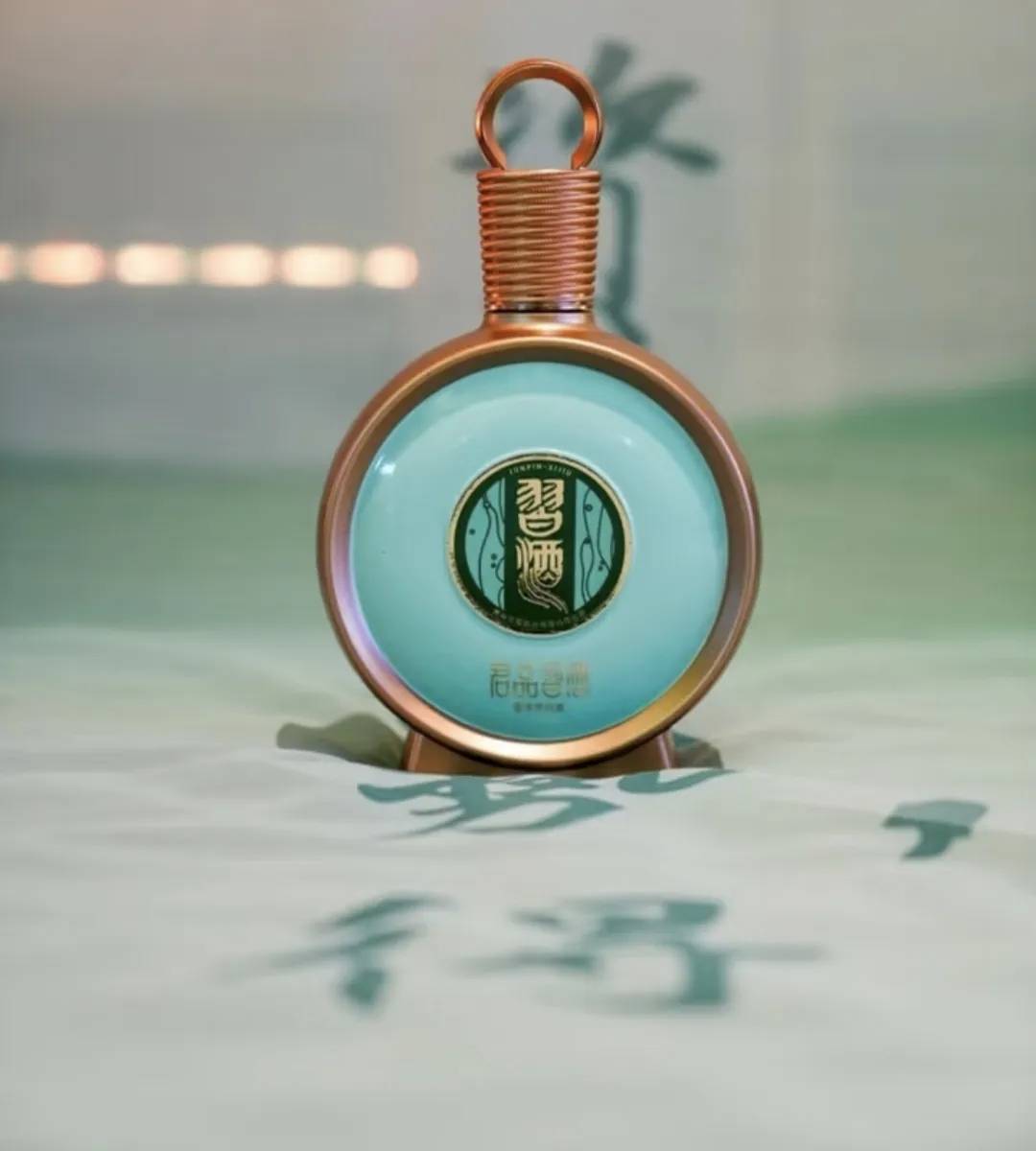
339元一箱的圆习酒,习酒需要有个说法
阿尔法工场研究院· 2026-02-25 00:03
Core Viewpoint - The article discusses the significant inventory issues facing the Chinese liquor industry, particularly focusing on the recent price drop of the "Yuanxi Liquor" and the implications for the broader market dynamics and dealer relationships [2][3][4]. Group 1: Inventory and Pricing Dynamics - The "Yuanxi Liquor" experienced a rapid price decline from approximately 500 yuan per box to around 339 yuan, reflecting a drop of nearly 100 yuan, before slightly recovering to between 420 and 450 yuan [2]. - As of early 2025, 58.1% of dealers reported an increase in inventory, with the average inventory turnover days reaching 900 days, indicating that liquor produced in 2023 remains unsold by 2025 [7]. - The total inventory of 20 listed liquor companies reached 170.686 billion yuan, marking an 11.32% year-on-year increase [7]. Group 2: Market Structure and Dealer Behavior - The article highlights a shift in the dealer landscape, where traditional dealers are transitioning to a model focused on information integration and price arbitrage, especially during market downturns [3][6]. - Many dealers are opting to sell off inventory at a loss to alleviate pressure, with some facing significant financial losses due to the rapid price decline [3][6]. - The liquidity provided by these dealers is crucial during market upswings, but their vulnerability becomes apparent during downturns, leading to a "run for the exits" mentality [6][8]. Group 3: Strategic Responses and Future Outlook - The company is implementing a "Marketing 2.0" reform to strengthen market order and protect compliant dealers, while also focusing on high-end products to maintain brand value [4][6]. - The company has invested over 3 billion yuan to help dealers manage approximately 40 billion yuan in inventory, indicating a proactive approach to inventory management [6]. - The competitive landscape is shifting towards a focus on brand strength and operational capabilities, with a clear divide emerging between strong brands and those relying on short-term arbitrage [8].
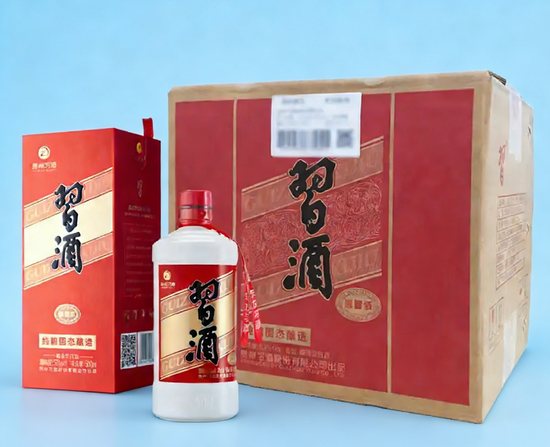
习酒大单品价格日跌百元,谁在放量抛售?
Xin Lang Cai Jing· 2026-02-09 05:40
Core Insights - The article highlights a significant price drop for the popular Chinese liquor brand, Xijiu, particularly its flagship product, Yuan Xijiu, which saw wholesale prices plummet from nearly 500 yuan per box to a low of 385 yuan within days, indicating a severe disruption in the pricing structure [3][12][14] - The sudden influx of over 100,000 boxes of Yuan Xijiu into the market has led to a chaotic pricing environment, raising questions about the company's supply chain management and control mechanisms [4][13] - Xijiu is facing dual pressure from both high-end competitors like Moutai 1935 and mid-range brands, leading to a significant decline in market share and pricing power [6][15] Market Dynamics - The price of Yuan Xijiu dropped sharply, with a reported single-day decline of nearly 100 yuan, reflecting a broader trend of excess inventory and aggressive discounting among distributors [3][4] - The high-end product, Junpin Xijiu, also experienced a decline, with its wholesale price falling from 980 yuan per bottle at the beginning of the year to 630 yuan by year-end, a drop of 35.71% [14][17] - The overall sales forecast for Xijiu is projected to decline to approximately 19 billion yuan in 2025, down from 22.447 billion yuan in 2023, indicating a significant drop in market position [17] Strategic Challenges - Xijiu's management has acknowledged the need for improved market order and pricing control, with plans to implement a dual-brand strategy and marketing reforms aimed at stabilizing prices and enhancing brand value [5][18] - The company is also facing challenges from increased competition in both high-end and mid-range markets, with competitors like Moutai and Langjiu exerting pressure on Xijiu's pricing and market share [6][15] - The article emphasizes the importance of addressing supply chain issues, optimizing pricing strategies, and reinforcing brand differentiation to navigate the current market turmoil effectively [18]
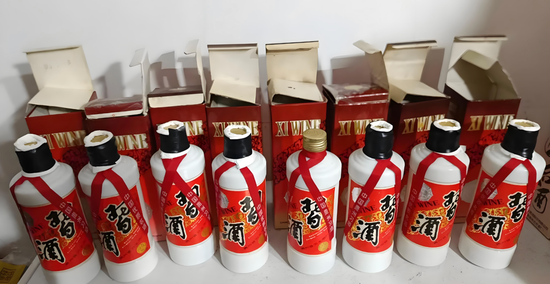
习酒大单品突遭抛售! 数万瓶涌入市场,价格日跌百元
Xin Lang Cai Jing· 2026-02-06 00:13
Core Viewpoint - The recent surge in the supply of Xijiu's main product, Yuan Xijiu, has led to a significant drop in wholesale prices, raising concerns about the company's market control and pricing strategy [2][4][8] Group 1: Market Dynamics - A large influx of Yuan Xijiu, estimated to exceed 100,000 boxes, has caused wholesale prices to plummet from nearly 500 yuan to a low of 385 yuan, with a slight recovery to around 420-450 yuan [2][4] - The timing of this price drop is particularly concerning as it occurs just before the traditional peak sales season for liquor, which typically sees stable or rising prices [3][4] - Distributors are questioning the source of this excess supply, with many speculating it may originate from the Xijiu factory itself, indicating a potential lack of control over inventory management [4][8] Group 2: Product Performance - The high-end product, Junpin Xijiu, has also faced significant price declines, with a cumulative drop of 39.82% over five years, from 955 yuan per bottle in June 2021 to an expected 683 yuan by June 2025 [6][7] - The latest transaction price for Junpin Xijiu is reported at 642 yuan, down from 660 yuan at the beginning of January, reflecting a price fluctuation of 5.6% within a month [7] - The company plans to implement a nationwide total volume control for Junpin Xijiu, limiting annual output to 4,000 tons, in an effort to stabilize pricing [7][8] Group 3: Leadership Insights - Xijiu's Chairman, Wang Diqiang, has acknowledged the need for stronger market order and alignment between brand value and market pricing, highlighting the challenges faced in maintaining a stable pricing structure [8]
习酒大单品突遭抛售! 数万瓶涌入市场,价格日跌百元,董事长刚称“加强秩序”|酒业内参
Xin Lang Cai Jing· 2026-02-05 01:32
Core Viewpoint - The article discusses the significant price drop of Xijiu's products, particularly the Yuan Xijiu and Junpin Xijiu, due to an unexpected influx of inventory in the market, raising concerns about the company's price control and market stability [2][3][20]. Group 1: Price Dynamics - A large quantity of Yuan Xijiu, estimated to exceed 100,000 boxes, flooded the market, causing wholesale prices to plummet from nearly 500 yuan to a low of 385 yuan, with a slight recovery to around 420-450 yuan [2][6][23]. - The price drop occurred just before the traditional peak sales season for liquor, which typically sees stable or rising prices due to increased demand [3][21]. - Junpin Xijiu, another high-end product, has seen a cumulative price drop of 39.82% over five years, from 955 yuan per bottle in June 2021 to 683 yuan in June 2025, making it the largest drop among T9 brands [8][25]. Group 2: Market Control and Strategy - The influx of Yuan Xijiu has raised questions about Xijiu's ability to manage its pricing and inventory effectively, with speculation that the excess supply may have originated from the company itself [6][21][34]. - Xijiu plans to implement a nationwide total control strategy for Junpin Xijiu, limiting annual production to 4,000 tons to stabilize prices, although the effectiveness of this strategy remains to be seen [31][34]. - The company acknowledges that its current value system and brand value are mismatched, indicating a need for improved market order and stability [19][34]. Group 3: Sales Performance - Junpin Xijiu's terminal transaction price has also declined, with the latest price reported at 642 yuan, down from 660 yuan at the beginning of the year, reflecting a volatility of 5.6% [11][28]. - The official price on platforms like JD.com is around 675 yuan, while on Pinduoduo, it can drop to as low as 579 yuan, indicating a significant reduction from its initial pricing above 1,000 yuan [28][29].
除了营销改革,习酒更要拿出“削藩”的勇气
阿尔法工场研究院· 2025-12-15 00:06
Core Viewpoint - The article discusses the challenges faced by Xijiu in the declining white liquor market and its efforts to regain control over pricing and distribution through a "Marketing 2.0 Reform" aimed at enhancing brand value and consumer connection [3][18]. Group 1: Market Challenges - Xijiu is undergoing internal reforms to address the downward trend in the white liquor market, focusing on a new marketing strategy that emphasizes lifestyle selling rather than just selling liquor [3][18]. - The price of Junpin Xijiu has significantly decreased from 1399 yuan to 620 yuan, indicating a 55.7% drop, which highlights the brand's vulnerability in the high-end market segment [7][8]. - The T9 brand group report indicates that Junpin Xijiu experienced the largest price decline of 39.82% from June 2021 to June 2025, reflecting a broader trend of price instability in the industry [4][8]. Group 2: Brand Positioning and Strategy - Junpin Xijiu, launched in 2019, aimed to penetrate the high-end market but lacks the historical brand strength and consumer recognition that competitors like Moutai and Wuliangye possess [8][10]. - The brand's reliance on the reputation of the Moutai Group has diminished since its separation in 2022, necessitating a shift to building its own brand equity [10][11]. - The article emphasizes the need for Xijiu to focus on core products and streamline its extensive product line to avoid internal competition and confusion in the market [16][18]. Group 3: Marketing and Organizational Changes - The "Marketing 2.0 Reform" involves restructuring the marketing system by establishing three new centers: marketing, digital operations, and brand promotion, aiming to separate sales from brand building [18]. - The new organizational structure is designed to create a stronger emotional connection with consumers and enhance brand loyalty through strategic marketing efforts [18][19]. - The success of these reforms will depend on the effective implementation of the new structure and the company's willingness to recalibrate its product offerings and pricing strategies [18][19].

少量“开盖酒”仍藏身电商、二手平台
Xin Jing Bao· 2025-12-11 11:11
Core Viewpoint - The article highlights the ongoing issue of "opened bottle" liquor sales in China, revealing that despite a reduction in such practices following media exposure, some online platforms still sell these products, posing food safety risks to consumers [1][10]. Group 1: Industry Practices - Since 2025, investigations have uncovered the covert sale of incomplete liquor packaging, including opened bottles from well-known brands [1]. - The phenomenon of "opened bottle" liquor, often sold at half the market price, has shifted from traditional e-commerce platforms to live streaming sales, where sellers use misleading tactics to attract consumers [2][3]. - Some sellers mislead consumers by claiming that the products are "original packaging" despite being opened, which compromises product integrity and traceability [2][10]. Group 2: Regulatory Responses - Regulatory bodies and consumer associations have warned about the risks associated with purchasing opened bottle liquor, emphasizing the potential for contamination and the inability to verify product authenticity [10][11]. - Major liquor companies have publicly denounced the sale of opened and repackaged products, stating they will not provide inspection services or warranties for such items [12]. - Legal experts have indicated that the sale of opened and repackaged liquor violates multiple laws, including food safety and consumer protection laws, and undermines market order [11]. Group 3: Consumer Awareness - Consumers are advised to be cautious of transactions conducted through personal social media accounts or temporary links, as these may lead to unsafe purchases [4][10]. - Despite warnings, some platforms still allow the sale of opened bottle liquor, indicating a need for stricter enforcement of regulations [12].

直播间里的开盖酒、换瓶酒能买吗?
Huan Qiu Wang· 2025-12-01 05:51
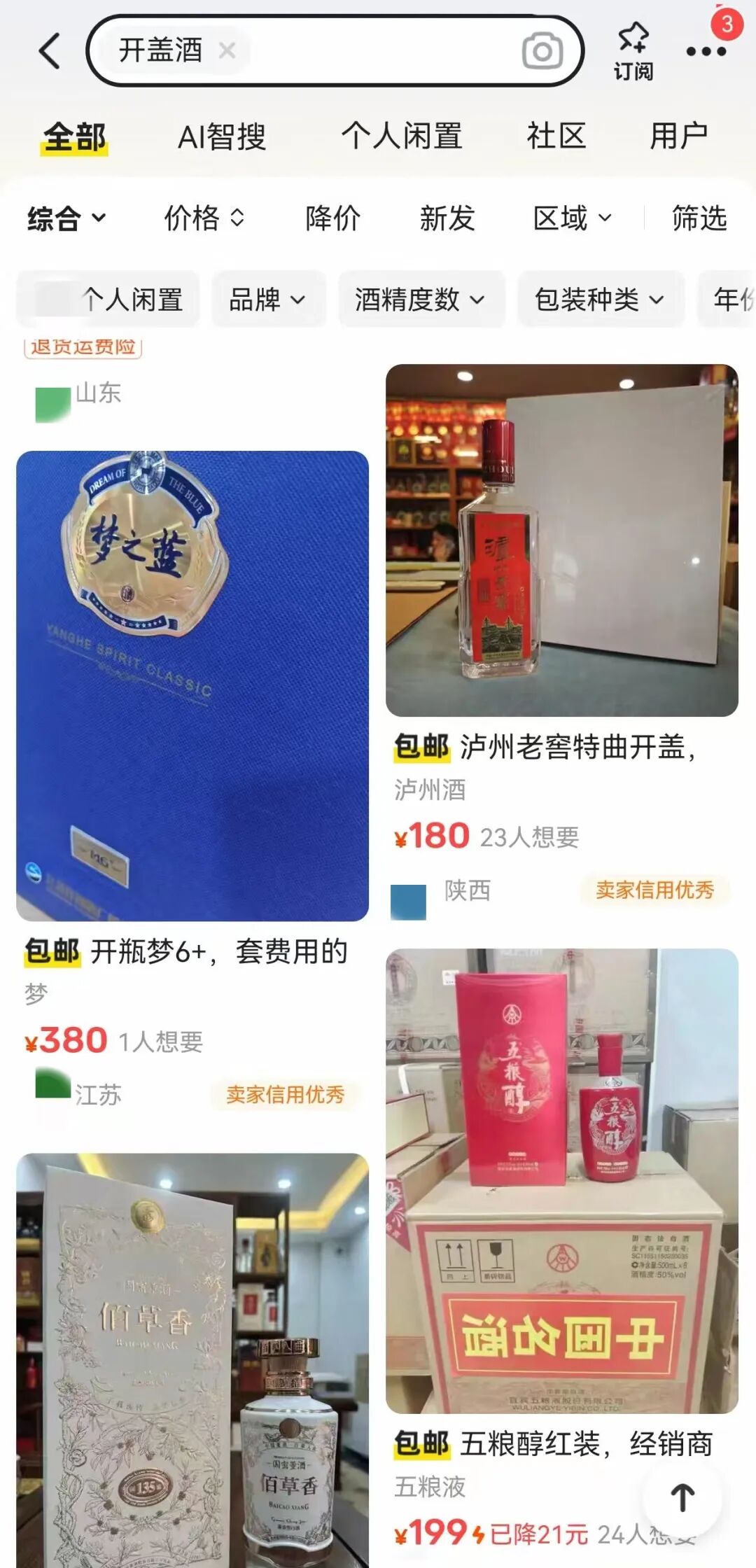
Core Viewpoint - The article highlights the rising trend of low-priced "opened" or "damaged" liquor being sold on live streaming and second-hand platforms, raising concerns about product safety and authenticity [1][2][3]. Group 1: Sales Channels and Pricing - Some liquor brands are being sold at significantly lower prices on live streaming platforms compared to official retail prices, such as a case of 53-degree 500ml Yuanxi liquor priced at 380 yuan versus 590 yuan on official platforms [1][2]. - Various brands are available on second-hand platforms, with prices for opened bottles ranging from 199 yuan for Wuliangchun to 380 yuan for Yanghe Dream Blue [1][2][3]. Group 2: Product Integrity and Safety Concerns - The practice of selling "opened" liquor raises questions about the integrity of the product, as many brands require the bottle to be opened for verification, which can compromise packaging [12][13]. - Legal experts indicate that selling opened or repackaged liquor may violate food safety and trademark laws, posing risks of counterfeit products [13][14]. Group 3: Consumer Warnings and Recommendations - Consumer organizations have repeatedly warned about the safety risks associated with opened liquor, emphasizing that compromised packaging can lead to contamination and spoilage [15][16]. - Recommendations include purchasing liquor from reputable sources such as large supermarkets or licensed online retailers to minimize risks associated with low-priced opened products [16].
“不提供任何检验和售后服务”,让酒企“发飙”的开盖酒是什么
Sou Hu Cai Jing· 2025-10-26 14:39
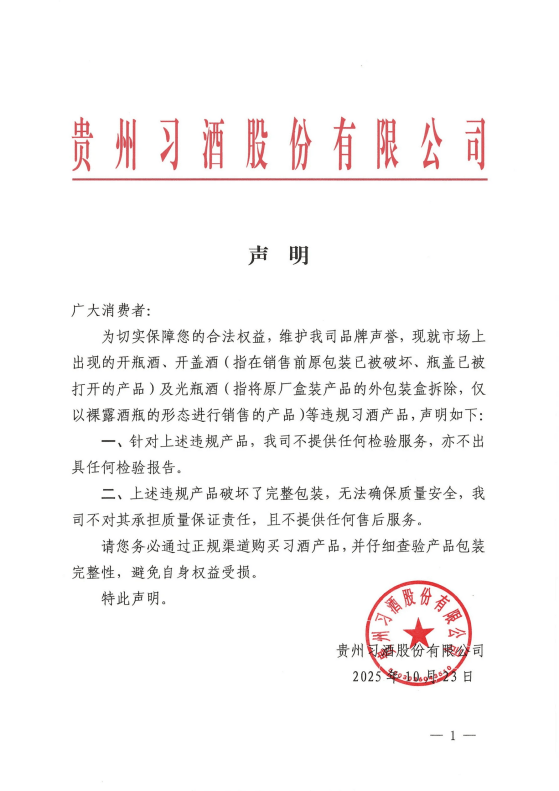
Core Viewpoint - The rise of "opened bottle" and "opened cap" liquor products is linked to aggressive promotional strategies by e-commerce platforms during the "Double 11" shopping festival, leading to consumer confusion and potential risks associated with these products [1][10]. Group 1: Market Dynamics - E-commerce platforms are experiencing a surge in consumer activity due to promotional events, with various merchants employing creative strategies to attract buyers [1]. - The price difference between opened and unopened liquor products is significant, with some merchants selling opened cap liquor at prices much lower than official retail prices, creating a competitive edge [3][9]. Group 2: Regulatory and Safety Concerns - Guizhou Xijiu has announced it will no longer provide inspection or after-sales services for opened bottle and opened cap products, indicating a shift in responsibility for product quality [3][10]. - The proliferation of opened bottle and opened cap products poses risks to both consumers and brands, including potential quality issues and the undermining of brand integrity [10][11]. Group 3: Consumer Behavior and Risks - Consumers are often drawn to the lower prices of opened bottle products, but they may unknowingly purchase inferior or counterfeit products, leading to potential health risks [10][11]. - The lack of proper labeling and traceability for opened products complicates consumer rights and increases the difficulty of seeking redress in case of issues [10][11]. Group 4: Industry Practices - The emergence of opened bottle products is partly driven by liquor companies' promotional policies that incentivize the opening of bottles for rewards, which has inadvertently led to the rise of these non-compliant products [7][9]. - Some merchants are utilizing "no damage opening" techniques to sell opened products while maintaining the appearance of new items, further blurring the lines of compliance [6][8].
“违规”“不提供任何检验和售后服务”,让酒企“发飙”的开盖酒是什么?
Sou Hu Cai Jing· 2025-10-25 17:04
Core Viewpoint - The rise of "open bottle" and "open cap" liquor products during the "Double Eleven" shopping festival has led to various consumer issues, prompting Guizhou Xijiu to issue a statement denying responsibility for the quality of these products [1][16]. Group 1: Company Actions - Guizhou Xijiu announced it will no longer provide inspection and after-sales services for open bottle, open cap, and bare bottle products, thus not assuming quality guarantee responsibilities [1][3]. - The company defined open bottle and open cap products as those with damaged original packaging or opened caps, while bare bottles refer to products sold without their original packaging [3][16]. Group 2: Market Dynamics - Despite the company's statement, many merchants continue to sell low-priced open cap Xijiu products, with significant price discrepancies observed; for instance, a six-bottle pack of 53-degree 500ml Xijiu was priced at 379 yuan, while the official store listed it at 590 yuan, a difference of over 200 yuan [3][12]. - The proliferation of open bottle and open cap products is linked to liquor companies' "open bottle scan" red envelope policies, which incentivize consumers and distributors to increase sales through cash and points rewards [13][14]. Group 3: Consumer Risks - The existence of open bottle and open cap products raises concerns for both consumers and liquor companies, as these products can disrupt pricing systems, lead to price wars, and damage brand reputation due to potential quality issues [16][17]. - Consumers may mistakenly believe they are getting a bargain, but they risk purchasing inferior or counterfeit products, as the exposure to air can lead to spoilage, and the lack of traceability complicates accountability in case of issues [16][17].