
小米YU7汽车

Search documents
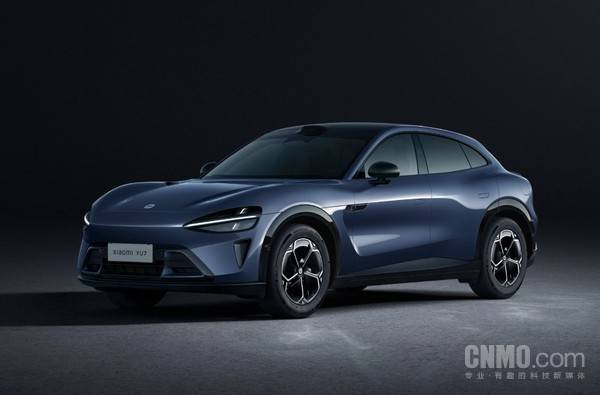
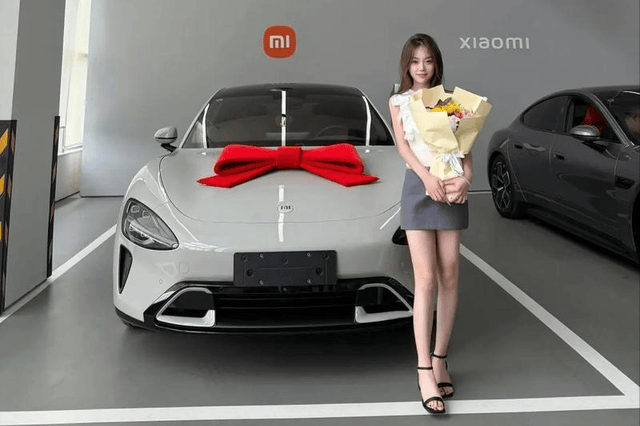
云米科技CEO给员工奖励小米YU7:期待能奖励更多台
Sou Hu Cai Jing· 2026-01-26 02:02
Core Viewpoint - The CEO of Yunmi Technology, Chen Xiaoping, announced a significant employee reward in the form of a Xiaomi YU7 car, reflecting the company's commitment to recognizing employee contributions and enhancing team morale [1][6]. Group 1: Employee Recognition - The company rewarded an employee responsible for major clients with a Xiaomi YU7 car for their diligent efforts and significant project advancements [1]. - Chen Xiaoping expressed a vision to reward more cars by 2026, indicating a long-term commitment to employee recognition [1]. Group 2: Product Details - The rewarded vehicle is a Xiaomi YU7 in "Cambrian Gray," a special color option that typically incurs an additional cost of approximately 7,000 yuan [3]. - The Xiaomi YU7 is set to be officially launched in June 2025, with three versions available: standard, Pro, and Max [3]. Group 3: Market Context - Yunmi Technology focuses on smart home solutions, particularly in the water purification sector, and is navigating a highly competitive market [6]. - The decision to offer high-value physical rewards, such as electric vehicles, is seen as a strategy to boost team morale and reinforce a performance-driven culture following key business breakthroughs [6]. - The rising appeal of smart electric vehicles as valuable rewards reflects their increasing status as "hard currency" prizes within technology companies [6].



被故意抹黑攻击!雷军直播回应多个质疑
Sou Hu Cai Jing· 2026-01-04 08:57
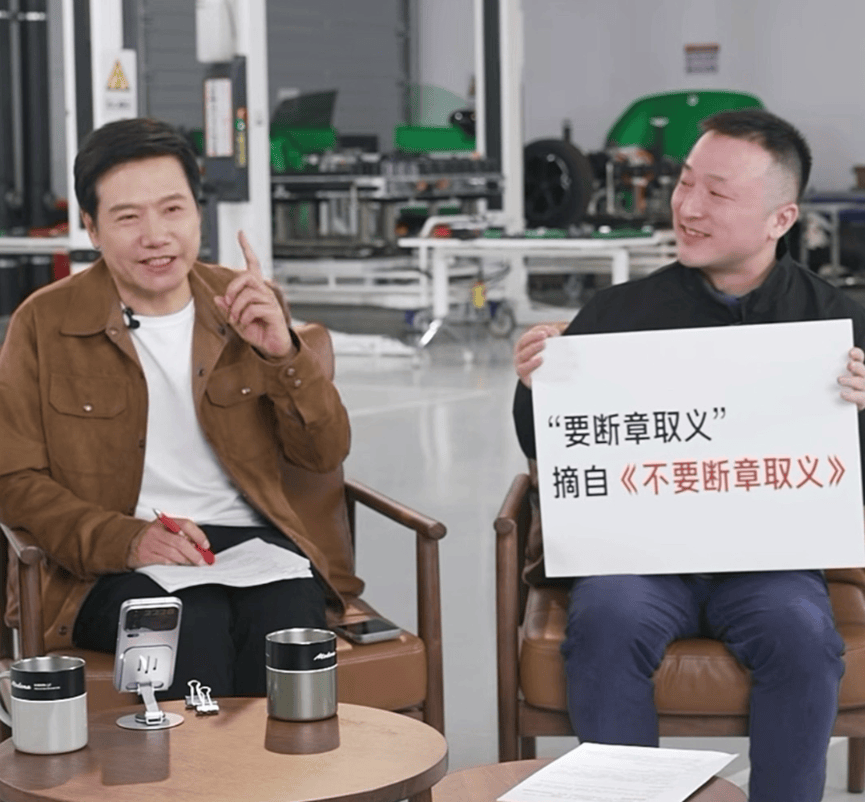
Core Viewpoint - Xiaomi's founder and CEO Lei Jun addressed various challenges faced by the company, particularly regarding negative online sentiment and misinformation about its automotive division during a live stream event, while also outlining delivery targets for the upcoming year [1][3][7]. Group 1: Delivery and Performance - Lei Jun shared the delivery status of Xiaomi's Yu7 car over the past year and set new delivery goals for 2025 [1]. - The company has faced significant online criticism, being labeled as one of the most attacked car manufacturers since the launch of its automotive line [7]. Group 2: Response to Online Criticism - Xiaomi's public relations manager, Xu Jieyun, indicated that the negative labeling of the company, such as "Green Belt War God," is a result of malicious editing and targeted attacks [3]. - The legal department has evaluated 16,465 instances of online sentiment since 2025, monitoring 231 accounts and filing civil lawsuits against 92 malicious accounts [3]. Group 3: Legal Actions and Support for Users - Xiaomi has initiated 35 lawsuits to support car owners who have faced unwarranted online attacks, demonstrating a commitment to protecting its customers [3]. - Lei Jun encouraged users to report any attacks they face, assuring them that the company will assist in their defense [7]. Group 4: Industry Practices and Marketing - Lei Jun acknowledged the issue of "small print marketing" as a common industry practice and committed to improving transparency in Xiaomi's marketing strategies [10]. - The company aims to clarify that compliance-related practices should not be misconstrued as false advertising, emphasizing the importance of user perception [10].
雷军:小米YU7汽车的空气滤网比N95口罩要强很多
Sou Hu Cai Jing· 2026-01-03 13:32
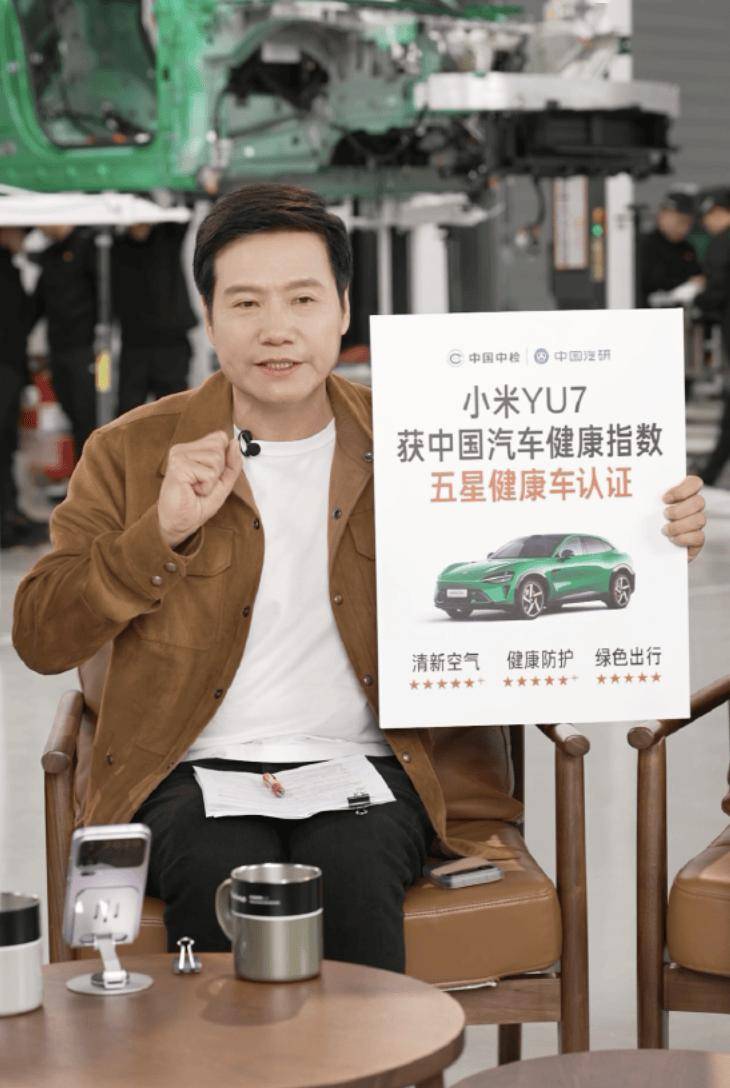
Group 1 - The core message of the news is that Xiaomi's founder and CEO Lei Jun showcased the new Xiaomi YU7 during a New Year live stream, highlighting its advanced air filtration capabilities [1] - The air filter of the Xiaomi YU7 is claimed to filter particles at 99.95%, which is significantly higher than the 95% filtration rate of N95 masks [1] - The design of the YU7 takes into account family needs, particularly focusing on the health concerns of children, which aligns with the increasing consumer demand for health-oriented products [3] Group 2 - Xiaomi has received a five-star health vehicle honor, indicating that the YU7 meets high standards in fresh air, health protection, and green travel [3]
雷军直播回应拆小米YU7汽车:希望大家能说一些公道话
Sou Hu Cai Jing· 2026-01-03 11:30
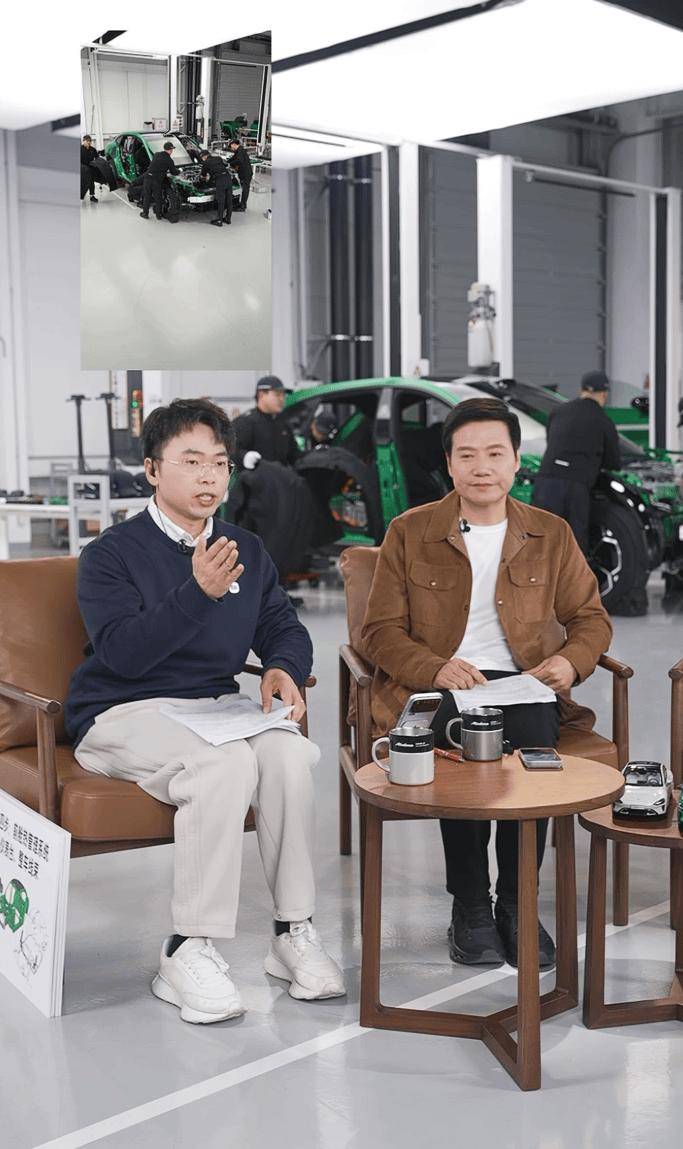
Group 1 - The core message of the news is that Xiaomi's founder and CEO Lei Jun is actively engaging with consumers by conducting a live teardown of the YU7 vehicle to address concerns and questions raised about Xiaomi's automotive products [1][4] - Lei Jun emphasized that the teardown is a response to the significant number of inquiries and criticisms regarding Xiaomi's cars, indicating a shift towards more proactive communication with consumers [1] - The YU7 model has been well-received since its launch, with Lei Jun expressing confidence in the quality and materials used in the vehicle [4] Group 2 - Lei Jun welcomed the scrutiny from car reviewers and influencers, encouraging them to provide honest feedback rather than exaggerating issues for attention [4] - The decision to conduct the teardown was influenced by feedback from Xiaomi fans, highlighting the company's commitment to transparency and customer engagement [1][4] - The live event is expected to increase interest from other reviewers, indicating a growing competitive landscape for Xiaomi in the automotive sector [4]
雷军动真格?这次找到应对方法了:直播拆小米YU7汽车
Sou Hu Cai Jing· 2025-12-31 08:25
Core Viewpoint - The article discusses the negative public sentiment surrounding Xiaomi's electric vehicles, particularly the YU7 model, and highlights the company's proactive approach to counteract this narrative through a live-streamed car disassembly event. Group 1: Negative Public Sentiment - Xiaomi has faced significant negative publicity, especially regarding its electric vehicles, with a focus on the YU7 model, leading to a perception that issues with Xiaomi cars are more prevalent than they may actually be [1][3]. - There is a systematic effort to discredit Xiaomi, with organized teams responsible for spreading negative information, as evidenced by law enforcement actions that dismantled a group involved in this smear campaign [3]. Group 2: Proactive Response - Xiaomi's CEO, Lei Jun, has decided to conduct a live-streamed disassembly of the YU7 to showcase the vehicle's quality and materials, transforming a passive response to criticism into an active demonstration of confidence [5][7]. - The live-stream aims to highlight Xiaomi's technological advancements and design philosophy, allowing consumers to better understand the YU7's features and capabilities [7]. Group 3: Brand Confidence - Lei Jun's willingness to publicly disassemble the YU7 reflects a strong confidence in the product, contrasting with other new energy vehicle manufacturers that may not allow such transparency [9]. - This approach is seen as more effective than traditional advertising, as it directly engages consumers and addresses their concerns while challenging competitors who may not be as open [9].
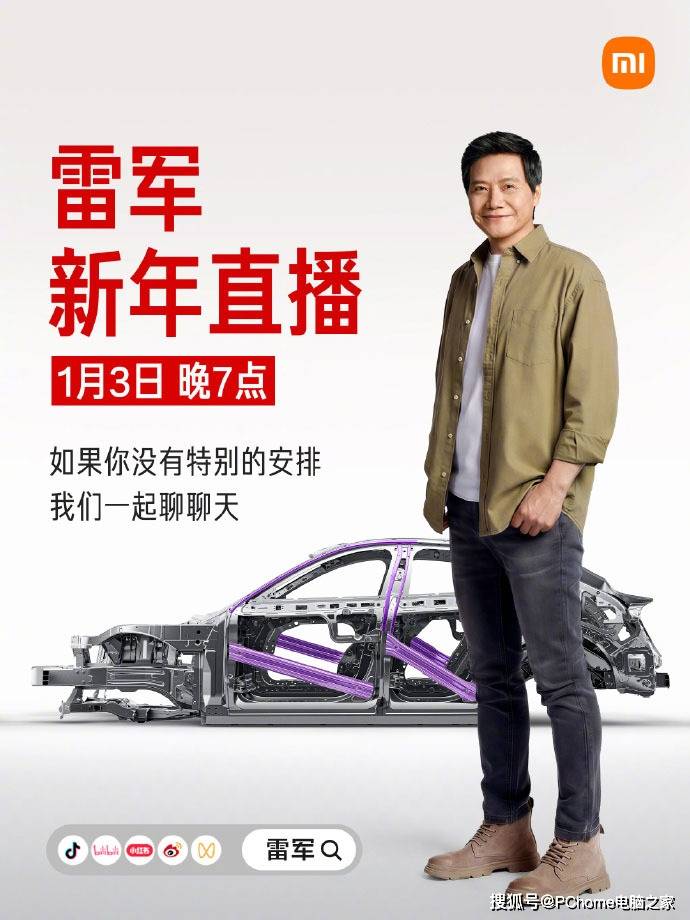
雷军:感冒严重 跨年直播推迟到1月3日晚7点
Sou Hu Cai Jing· 2025-12-31 02:32
Core Viewpoint - Xiaomi's CEO Lei Jun announced a New Year's Eve live stream originally scheduled for December 31, which has been postponed to January 3 due to his health issues [1][3] Group 1: Live Stream Details - The live stream will feature a review of 2025 and a look ahead to 2026, with a focus on Xiaomi's developments [1] - During the live stream, an engineer will disassemble the Xiaomi YU7 car while discussing its features [1] Group 2: Anticipated Topics - The live stream is expected to cover important topics such as the delivery status of Xiaomi's cars and new models [3] - Discussions may also include plans for the Xiaomi玄戒O1 chip, new actions for Xiaomi smartphones in 2026, and pricing strategies amid rising storage costs [3]
早报 | 2026年“国补”政策来了;个人销售购买2年以上住房免征增值税;特斯拉官网罕见发布悲观交付量预期;李蓓卖课遭遇连环怼
虎嗅APP· 2025-12-31 00:24
Group 1 - The Chinese government will implement a new subsidy policy for equipment updates and consumer goods replacement starting in 2026, optimizing support areas and subsidy standards [2] - The subsidy for updating old elevators will be adjusted to a tiered system based on the number of floors, while the car replacement subsidy will be based on a percentage of the car price [2] - The policy aims to support small and medium-sized enterprises and improve the application process to reduce investment thresholds [2] Group 2 - SoftBank has completed a $40 billion investment commitment to OpenAI, marking one of the largest private financings in history [3] - This investment aligns with SoftBank's strategy to focus on AI and related infrastructure, following the sale of its Nvidia shares for $5.8 billion [3] - After this round of investment, SoftBank's ownership in OpenAI exceeds 10% [3] Group 3 - Elon Musk confirmed that xAI has acquired a third building, increasing its AI training computing power to nearly 2 gigawatts [4] - The new facility is located in Southaven, Mississippi, adjacent to xAI's second data center, Colossus 2 [5] - xAI is actively seeking financing to support its expansion plans, having previously discussed raising $20 billion in debt and equity [5] Group 4 - Warner Bros. plans to reject Paramount's acquisition proposal again, as the board is concerned about the lack of increased offers [6] - Paramount's latest offer includes a commitment from billionaire Larry Ellison to guarantee $40.4 billion in equity financing [6] - The board will meet next week to discuss the proposal further [6] Group 5 - The Federal Reserve's December meeting minutes reveal significant internal divisions regarding future interest rate cuts, with some officials supporting a 50 basis point cut [7] - The Fed lowered the federal funds rate target range to 3.50% to 3.75%, with a vote of 9-3, marking the highest dissent since 2019 [7] - Some officials expressed uncertainty about the need for further cuts due to missing key economic data from a government shutdown [7] Group 6 - A new tax policy will exempt individuals from value-added tax (VAT) when selling homes purchased for over two years, effective January 1, 2026 [8][9] - Homes sold within two years will incur a 3% VAT [8] Group 7 - Tesla's website has published a pessimistic delivery forecast, predicting a 15% year-over-year decline in Q4 deliveries, totaling approximately 422,850 vehicles [10] - This decline is attributed to the expiration of U.S. tax credits and increasing global competition [10] - Tesla's total deliveries for 2025 are expected to be between 1.6 million and 1.65 million, marking an 8% year-over-year decrease [10] Group 8 - Disney has agreed to pay a $10 million civil penalty to settle allegations of violating the Children's Online Privacy Protection Act related to YouTube content [11] - The allegations state that Disney failed to properly indicate that its YouTube videos were directed at children, leading to unauthorized data collection [11] Group 9 - Ganfeng Lithium has been sent for prosecution due to alleged insider trading, with the company stating that its operations remain normal and the issue is historical [12][13] - Following the announcement, Ganfeng's stock fell by 3.78% in A-shares and 2.74% in Hong Kong shares [13] Group 10 - The first oral insulin application by Tianhui Biotech was not approved, with the company stating that the withdrawal was a strategic decision [23][24] Group 11 - The new generation of digital RMB system will officially launch on January 1, 2026, as announced by the People's Bank of China [30] Group 12 - Xiaopeng Motors' chairman, He Xiaopeng, predicts that true fully autonomous driving will arrive in 2026, skipping L3 and moving directly from L2 to L4 [32]




小米17,4499元起!雷军喊话苹果用户
Zhong Guo Zheng Quan Bao· 2025-09-25 16:25
Core Insights - Xiaomi's founder Lei Jun emphasized the company's transition from an "internet company" to a "hardcore technology company" through its chip development journey, which is a crucial step in investing in core technologies [2][3] Group 1: Chip Development Journey - Xiaomi's ambition to develop its own chips began in 2014 with the establishment of Pinecone Electronics, leading to the release of its first SoC in 2017, but faced significant challenges thereafter [3][4] - The failure of the initial SoC project prompted a reevaluation, revealing that entering the high-end market is essential for success, as no smartphone company has successfully entered the SoC market from the low-end [3][4] - The complexity of chip development has increased significantly, requiring at least ten years and an investment of 50 billion yuan, leading to the re-initiation of the chip project in 2021 with the establishment of "Xuanjie" [4][5] Group 2: Financial Challenges and Strategic Decisions - In 2022, Xiaomi experienced a 15% decline in revenue, marking its first revenue drop in 15 years, which raised concerns about continuing chip development projects that require hundreds of millions in investment [4][5] - Despite financial difficulties, Lei Jun expressed strong support for continuing the chip development efforts, emphasizing the importance of building a robust chip R&D team regardless of the outcome [4][5] Group 3: Product Launches and Innovations - The self-developed mobile chip "Xuanjie O1" is set to be produced using advanced 3nm technology, with a production cost of approximately 20 million USD, and is expected to be featured in Xiaomi's upcoming devices [4][5] - The Xiaomi 17 series was launched with prices starting at 4,499 yuan, featuring high-end specifications comparable to the iPhone 17, including a 7000mAh battery for extended battery life [7][9] - The Xiaomi 17 Pro series includes innovative features such as a "wonderful back screen" for selfies and notifications, and the new "Surging OS 3" enhances connectivity with Apple devices [9]
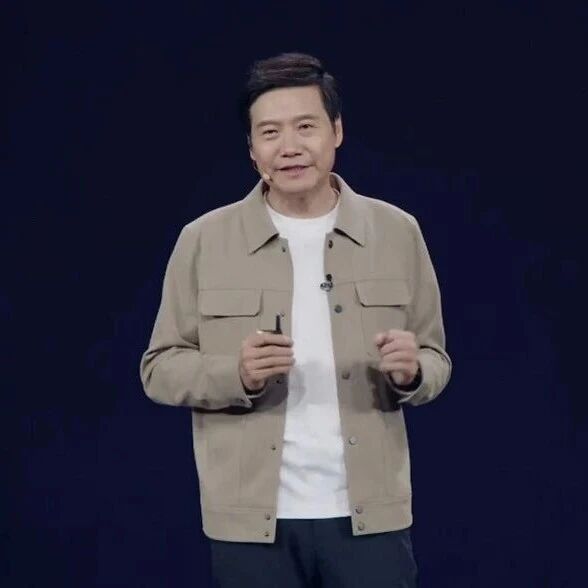
雷军,刷屏!造芯片、解密YU7大卖、发布小米17新机,信息量大
券商中国· 2025-09-25 15:20
Core Viewpoint - The annual speech by Lei Jun, founder and CEO of Xiaomi Group, emphasized the theme of "Change," highlighting the importance of self-developed chips and the company's venture into the automotive industry as essential for future success [2][4]. Group 1: Chip Development - Xiaomi's journey in chip development began in 2014 with the establishment of Pinecone Electronics, but after the release of the "Surge S1," the company halted SoC chip development due to challenges faced [4][5]. - Lei Jun stated that self-developed chips are crucial for Xiaomi's success, asserting that top global tech giants have become chip leaders, and Xiaomi must follow this path despite the complexities involved [5][6]. - In a pivotal meeting in 2022, Lei Jun emphasized the long-term value of investing in chip development, stating that even if the company does not succeed, it will cultivate a strong chip R&D team and transform the company's quality [6][7]. Group 2: Automotive Ventures - Xiaomi's automotive project, the SU7 Ultra, was initiated in December 2021, aiming to compete with luxury brands like Porsche and Tesla. However, the project faced challenges, leading to the temporary suspension of the Ultra variant [7]. - The YU7 model achieved remarkable sales, with over 200,000 units reserved within three minutes of its launch, showcasing the potential impact of Xiaomi's automotive ambitions on the industry [7][8]. Group 3: New Product Launch - The Xiaomi 17 series was launched during the autumn product release event, with the standard version starting at 4,499 yuan. The series features advanced technology, including the fifth-generation Snapdragon 8 processor and a 7,000mAh battery, which significantly outperforms competitors like the iPhone 17 [8][9]. - The Xiaomi 17 series is marketed as the "king of small-size endurance," with a battery capacity nearly double that of the iPhone 17, and it incorporates innovative materials to enhance energy storage [8][9].
小米,重磅发布!
Zheng Quan Shi Bao Wang· 2025-08-19 11:47
Core Insights - Xiaomi Group reported record high core indicators in Q2, with revenue reaching 116 billion yuan, a year-on-year increase of 30.5%, marking the third consecutive quarter of exceeding 100 billion yuan [1] - Adjusted net profit for the quarter was 10.8 billion yuan, a significant year-on-year increase of 75.4%, continuing the trend of surpassing 10 billion yuan for two consecutive quarters [1] Revenue Breakdown - Revenue from the smart electric vehicle and AI innovation business exceeded 20 billion yuan, indicating a shift towards scalable growth [2] - Xiaomi's automotive deliveries reached 81,302 units in Q2, with cumulative deliveries surpassing 300,000 units by July 10, and a monthly delivery of over 30,000 units for the first time in July [2] - The smartphone and AIoT segment generated revenue of 94.7 billion yuan, a year-on-year increase of 14.8%, with smartphone revenue at 45.5 billion yuan and IoT and consumer products revenue at 38.7 billion yuan, up 44.7% [2] Market Position - Despite a challenging global smartphone market, Xiaomi's smartphone business achieved growth, with 11.5 million new device activations in Q2, maintaining a 16.8% market share in China, ranking first domestically [3] - Internationally, Xiaomi's smartphone shipments have seen year-on-year growth for eight consecutive quarters, ranking in the top three in 60 countries and regions [3] IoT and Home Appliances - The IoT and consumer products segment continued to grow, with smart home appliance revenue increasing by 66.2% [4] - In Q2, Xiaomi's air conditioning product shipments exceeded 5.4 million units, with a growth rate of over 60%, while refrigerator and washing machine shipments also saw significant increases [4] Strategic Developments - Xiaomi's internet service revenue grew steadily, with global monthly active users reaching 731 million and IoT devices connected to the AIoT platform reaching 989 million [5] - The company is focusing on high-end market positioning, with high-end smartphone sales accounting for 27.6% of total sales in China, a year-on-year increase of 5.5 percentage points [5] - The launch of the YU7 SUV, priced from 253,500 yuan, saw significant initial demand, with over 240,000 orders within 18 hours [5] R&D and Innovation - Xiaomi's R&D investment reached 7.8 billion yuan in Q2, a year-on-year increase of 41.2%, with an expected total investment of 30 billion yuan for the year [6] - The company launched its self-developed 3nm flagship chip, becoming the first in mainland China to do so, with new high-end devices featuring this chip released in Q2 [7] - The launch of AI glasses exceeded expectations, with a high approval rating on e-commerce platforms and ongoing efforts to ramp up production [7]