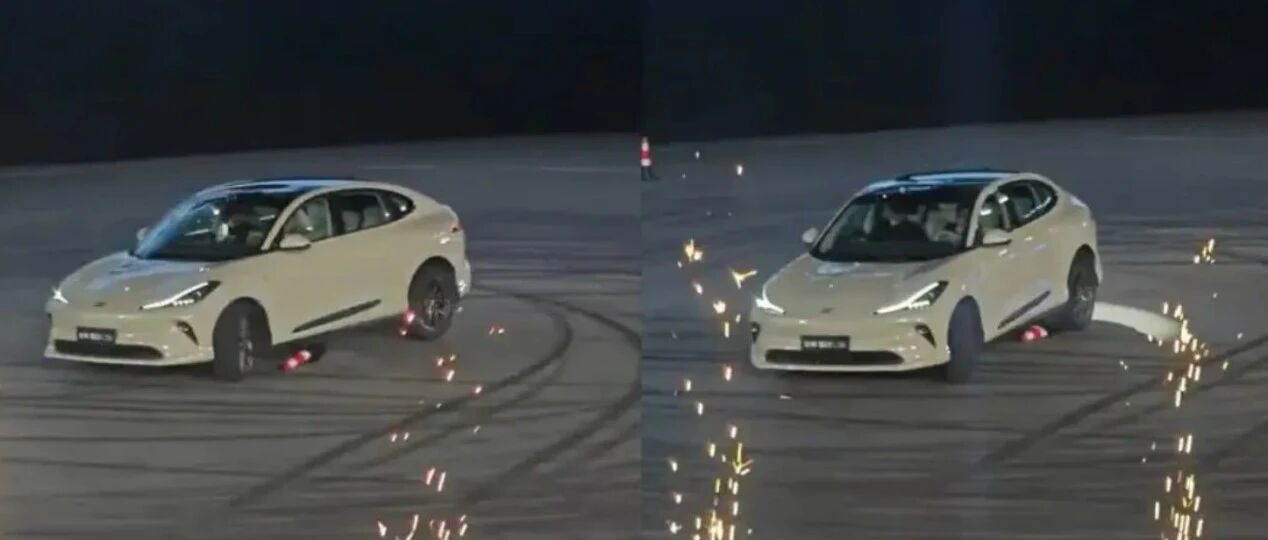
智己LS7

Search documents
“新国补+车企限时促销”点燃2026年开年车市
Mei Ri Jing Ji Xin Wen· 2026-01-06 12:40
Core Viewpoint - The introduction of the "New National Subsidy" policy for 2026 has led to a surge in consumer interest and promotional activities among various automotive brands, aiming to stimulate sales in the electric vehicle market. Group 1: Consumer Behavior and Market Response - Many consumers are waiting for the "New National Subsidy" to finalize their vehicle purchases, as evidenced by increased foot traffic in showrooms during the New Year holiday [1] - Sales personnel report a significant rise in daily customer visits, with some stores exceeding a thousand visitors [1] - Automotive brands are launching various promotional strategies, including tax subsidies and cash discounts, to attract buyers [1] Group 2: Promotional Strategies by Automotive Brands - Several brands, including Zhiji and Extreme Kr, are offering vehicle purchase tax subsidies, with amounts reaching up to 12,000 yuan [2] - Zhiji's promotional campaign requires customers to place orders by January 3 to benefit from tax subsidies, highlighting the urgency of the offer [2] - Extreme Kr is also providing tax subsidies ranging from 7,000 to 12,000 yuan for its vehicles [2] Group 3: Price Adjustments and Market Strategy - BMW has announced price reductions for several models, with the i7M70L seeing a decrease of 301,000 yuan, while the iX1eDrive25L's price dropped by 71,900 yuan, reflecting a strategic response to market demand [4][5] - BMW emphasizes that these price adjustments are not a price war but a strategic move to align with customer needs and market dynamics [5] - The adjustments in pricing are expected to enhance the competitiveness of BMW's offerings in the market [5] Group 4: Policy Changes and Implications - The 2026 policy changes include a reduction in the vehicle purchase tax from full exemption to a 5% rate, which is expected to impact consumer purchasing behavior [6][7] - The new subsidy structure shifts from fixed amounts to a percentage of the vehicle price, maintaining the upper limits for subsidies [7] - The maximum subsidy for scrapping old vehicles is set at 20,000 yuan, while the maximum for replacing vehicles is 13,000 yuan [7] Group 5: Regional Implementation of Subsidy Policies - Various regions, including Jiangxi and Hebei, have begun implementing the new subsidy policies, allowing consumers to apply for up to 20,000 yuan in subsidies [9][10] - The central government has allocated 62.5 billion yuan for the first batch of subsidies, aimed at supporting the "old for new" vehicle replacement program [10] - The "old for new" policy has significantly contributed to the growth of the domestic automotive market, with over 1.15 million vehicles replaced in 2025 alone [10] Group 6: Future Market Outlook - The automotive industry is expected to experience positive growth in the first quarter of 2026, driven by the new policies and consumer incentives [11] - The government aims to promote green consumption and support the development of the automotive industry chain, including second-hand vehicles and new consumption models [11]
多家车企补贴购置税!开年车市火爆,销售从早到晚忙到没空吃饭
Mei Ri Jing Ji Xin Wen· 2026-01-05 23:19
Core Viewpoint - The new "National Subsidy" policy for automobiles was released before the New Year holiday in 2026, prompting various car manufacturers to launch promotional policies, including vehicle purchase tax subsidies and "0% interest" financing options. The changes in the subsidy structure are expected to mitigate market shocks and stimulate car sales in 2026 [1][11]. Group 1: New Policy and Market Response - The new "National Subsidy" policy includes a reduction in the purchase tax for new energy vehicles from full exemption to 5% starting January 1, 2026 [11][12]. - Multiple car brands have introduced promotional policies in response to the new subsidy, with over ten brands offering limited-time promotions affecting more than 70 models [3][4]. - Sales personnel reported a significant increase in customer traffic, with some stores experiencing over a thousand visitors in a single day due to the holiday and new policy [3]. Group 2: Subsidy Details and Consumer Impact - The new subsidy structure shifts from fixed subsidies to percentage-based subsidies, maintaining the upper limits but reducing the effective subsidy for lower-priced models [11][13]. - Consumers can benefit from additional subsidies if they purchase vehicles during the promotional period, with some brands offering up to 12,000 yuan in tax subsidies [6][9]. - The total savings for consumers purchasing a new energy vehicle can reach nearly 52,000 yuan when combining the purchase tax reduction and the "old-for-new" subsidy [14]. Group 3: Regional Implementation and Market Growth - The new subsidy policy has already been implemented in several regions, including Jiangxi and Hebei, with local authorities actively promoting the "old-for-new" program [15][17]. - The "old-for-new" policy has been a significant driver of growth in the automotive market, with over 1.15 million vehicles exchanged under this program in 2025, contributing to over 1.6 trillion yuan in new car sales [18]. - Industry experts predict that the automotive market will experience positive growth in the first quarter of 2026, driven by the new policies [20].

有门店单日客流量破千!“新‘国补’+车企限时促销”点燃元旦车市
Mei Ri Jing Ji Xin Wen· 2026-01-05 14:33
Core Viewpoint - The introduction of the new "National Subsidy" policy and various promotional strategies by car manufacturers have significantly boosted consumer interest and foot traffic in car dealerships during the New Year holiday period, indicating a potential increase in automotive sales for 2026 [1][12][22]. Group 1: Consumer Behavior - Many consumers are waiting for the new "National Subsidy" policy to make vehicle purchases, as evidenced by increased foot traffic in dealerships during the holiday season [1][3]. - Sales personnel report that daily customer traffic has exceeded a thousand, with staff working long hours without breaks due to high demand [3]. Group 2: Promotional Strategies - Car manufacturers have launched various promotional policies, including limited-time subsidies on vehicle purchase taxes, "0% interest" financing, and cash discounts, in response to the new subsidy policy [3][4]. - Over ten automotive brands have announced January promotional policies affecting more than 70 vehicle models [3]. Group 3: Tax and Subsidy Changes - Starting January 1, 2026, the vehicle purchase tax for new energy vehicles will be set at 5%, but several brands are offering tax subsidies to offset this cost [4][6]. - The new subsidy policy will transition from fixed subsidies to proportional subsidies based on vehicle price, maintaining the upper limit for subsidies [12][14]. Group 4: Impact of New Policies - The new "National Subsidy" policy is expected to mitigate the impact of the vehicle purchase tax changes and stimulate automotive consumption in 2026 [12][15]. - The implementation of the "old-for-new" vehicle replacement policy has already shown significant results, with over 1.15 million vehicles replaced in 2025, contributing to substantial new car sales [20][22]. Group 5: Regional Implementation - Several regions, including Jiangxi and Hebei, have begun implementing the new subsidy policies, allowing consumers to apply for up to 20,000 yuan in subsidies for vehicle purchases [16][19]. - The central government has allocated 625 billion yuan for the first batch of subsidies in 2026, aimed at supporting the "old-for-new" vehicle replacement initiative [19].
一线调查丨有门店单日客流量破千!“新‘国补’+车企限时促销”点燃元旦车市 销售忙到没空吃饭
Mei Ri Jing Ji Xin Wen· 2026-01-05 13:31
Core Viewpoint - The introduction of the new "National Subsidy" policy for 2026 is expected to stimulate automobile consumption, particularly in the electric vehicle (EV) sector, as it offers various incentives and promotional activities from car manufacturers [16][20]. Group 1: Consumer Behavior and Demand - Many consumers, like Tan Rui, are waiting for the new "National Subsidy" to finalize their vehicle purchases, indicating a strong demand for new cars during the holiday season [1][2]. - Sales personnel report a significant increase in foot traffic at dealerships, with daily customer visits exceeding a thousand due to the holiday and the new subsidy announcements [2]. Group 2: Promotional Strategies by Car Manufacturers - Various car manufacturers have launched promotional strategies, including limited-time subsidies on vehicle purchase taxes, zero-interest financing, and cash discounts, in response to the new subsidy policy [2][3]. - Over ten automotive brands have introduced January promotional policies affecting more than 70 vehicle models [2]. Group 3: Tax Subsidy Details - Starting January 1, 2026, buyers of new energy vehicles will be required to pay a 5% vehicle purchase tax, but many brands are offering tax subsidies to offset this cost [3][6]. - For example, brands like Zhiji and Zeekr are providing tax subsidies ranging from 7,000 to 12,000 yuan for specific models during the promotional period [6][10]. Group 4: Price Adjustments and Market Strategy - BMW has announced price adjustments for several models, with significant reductions aimed at aligning with market demand rather than initiating a price war [11][14]. - The adjustments include substantial price cuts, such as a 301,000 yuan reduction for the i7 M70L, reflecting a strategic response to consumer preferences [11][14]. Group 5: Impact of New Subsidy Policies - The new "National Subsidy" policy includes changes to the vehicle purchase tax and the structure of subsidies, which are expected to mitigate the impact of tax adjustments on the market [16][17]. - The subsidy for scrapping old vehicles is capped at 20,000 yuan, while the replacement subsidy is limited to 13,000 yuan, with the overall subsidy structure shifting from fixed amounts to a percentage of the vehicle price [17][20]. Group 6: Regional Implementation of Subsidy Policies - Several regions, including Jiangxi and Hebei, have begun implementing the new subsidy policies, allowing consumers to apply for up to 20,000 yuan in subsidies for vehicle purchases [19]. - The central government has allocated 62.5 billion yuan for the first batch of subsidies, indicating strong support for the "old for new" vehicle replacement initiative [19][20]. Group 7: Market Outlook - The "old for new" vehicle replacement policy has been a significant driver of growth in the automotive market, with over 11.5 million vehicles replaced in 2025, generating substantial sales revenue [20]. - Industry experts predict that the new policies will lead to a positive growth trend in the automotive market in the first quarter of 2026 [20].
怎么这么多年了,国内二手车还是这副德行?
3 6 Ke· 2025-12-21 23:17
Core Viewpoint - The article discusses the disparity between new and used car sales in China compared to developed countries, highlighting cultural habits, market maturity, and consumer trust issues as key factors influencing purchasing decisions. Group 1: Sales Data Comparison - In 2024, China's new car sales are projected to be 22.608 million, while used car sales are expected to reach 15.674 million, resulting in a new to used car sales ratio of approximately 1:0.7 [3] - In contrast, in Europe, the new to used car sales ratio is around 1:2 to 1:3, with 12.964 million new cars registered and 27.01 million used cars sold in major countries [5] - The U.S. shows a similar trend, with 37.3 million used cars sold against 15.85 million new cars, leading to a ratio of 1:2.4 [5] Group 2: Consumer Behavior and Cultural Factors - Chinese consumers tend to prefer new cars, often influenced by cultural factors such as marriage customs, where new cars are seen as a status symbol or part of a dowry [14] - Concerns about being scammed when buying used cars contribute to the preference for new vehicles, with many consumers feeling more secure purchasing new cars [14][19] - The perception of used cars being unreliable is exacerbated by market irregularities, such as the prevalence of flood-damaged or accident vehicles [19][20] Group 3: Market Maturity and Infrastructure - The used car market in China is less mature compared to the U.S. and Europe, where established channels and regulations provide greater consumer confidence [22][26] - In the U.S., 32% of used cars are sold through authorized dealers, while in China, only 14% of used car sales come from 4S dealerships, with the majority from independent dealers [26] - The lack of a unified vehicle information platform in China leads to difficulties in verifying vehicle history, contributing to consumer distrust [32] Group 4: Regulatory Environment and Future Outlook - The article suggests that the Chinese used car market is evolving, with recent regulatory measures aimed at improving transparency and reducing fraud [38] - The development of a more mature used car market is expected to take several years, as both supply and demand sides need to adapt [39] - As consumer attitudes shift and the market becomes more trustworthy, used cars may become a more common choice for transportation in China [39]

销量“历史新高”的智己,还没能冲进安全区
凤凰网财经· 2025-12-06 03:03
Core Viewpoint - The article discusses the challenges faced by Zhiji Auto, a subsidiary of SAIC Group, despite achieving record monthly sales of 13,600 units. The company struggles to meet the industry's increasing sales benchmarks, which have risen from 10,000 to 20,000 units, indicating a competitive market environment [1]. Group 1: Sales Performance and Market Position - Zhiji Auto's monthly sales reached a new high of 13,600 units, but this is still below the industry's recognized safety zone of 20,000 units [1]. - In contrast, leading new energy vehicle brands like Leap Motor and Seres have shown significant growth, with Leap Motor achieving over 70,000 units sold, marking a year-on-year increase of over 75% [2]. - The article emphasizes that Zhiji cannot attribute its slower growth to consumer fatigue, suggesting that internal strategic hesitations and operational inefficiencies are to blame [2]. Group 2: Competitive Landscape and Brand Strategy - Zhiji Auto was established in 2020 with backing from SAIC Group, Zhangjiang Hi-Tech, and Alibaba, but it faces intense competition from its sibling brand, Feifan Auto, which targets a similar market segment [4]. - The initial strategy positioned Zhiji for the high-end market (above 300,000 yuan), while Feifan focused on the 200,000 yuan segment. However, price wars have blurred these distinctions, forcing Zhiji to lower its prices, which threatens its premium positioning [4]. - The introduction of the new brand "Shangjie" in collaboration with Huawei is expected to further intensify competition within SAIC Group, potentially undermining Zhiji's market position [4]. Group 3: Brand Awareness and Marketing Challenges - Despite not facing funding issues, Zhiji Auto struggles with low brand awareness and has not effectively communicated its marketing intentions to the public [5]. - CEO Liu Tao's marketing efforts have been marred by several public relations missteps, including incidents during vehicle launches that have negatively impacted the brand's image [6][7]. - The company has faced numerous consumer complaints regarding product quality, particularly with the LS6 model, which has been criticized for various technical issues shortly after its launch [11][12]. Group 4: Consumer Relations and Product Issues - Complaints about the LS6 include failures in the audio system, radar alerts, and air conditioning, leading to a significant loss of consumer confidence [11][12]. - Issues with the "prepayment" system for orders have also caused disputes, as customers were misled about the refundability of their deposits [13]. - The recent launch of the LS9, which features a controversial "in-car shower," has drawn criticism for lacking practical application, further highlighting the brand's struggle to resonate with consumers [17]. Group 5: Overall Industry Context - The article reflects the broader anxiety of traditional automakers transitioning into the electric vehicle market, emphasizing that Zhiji must establish its own identity and credibility beyond its parent company's legacy [18].
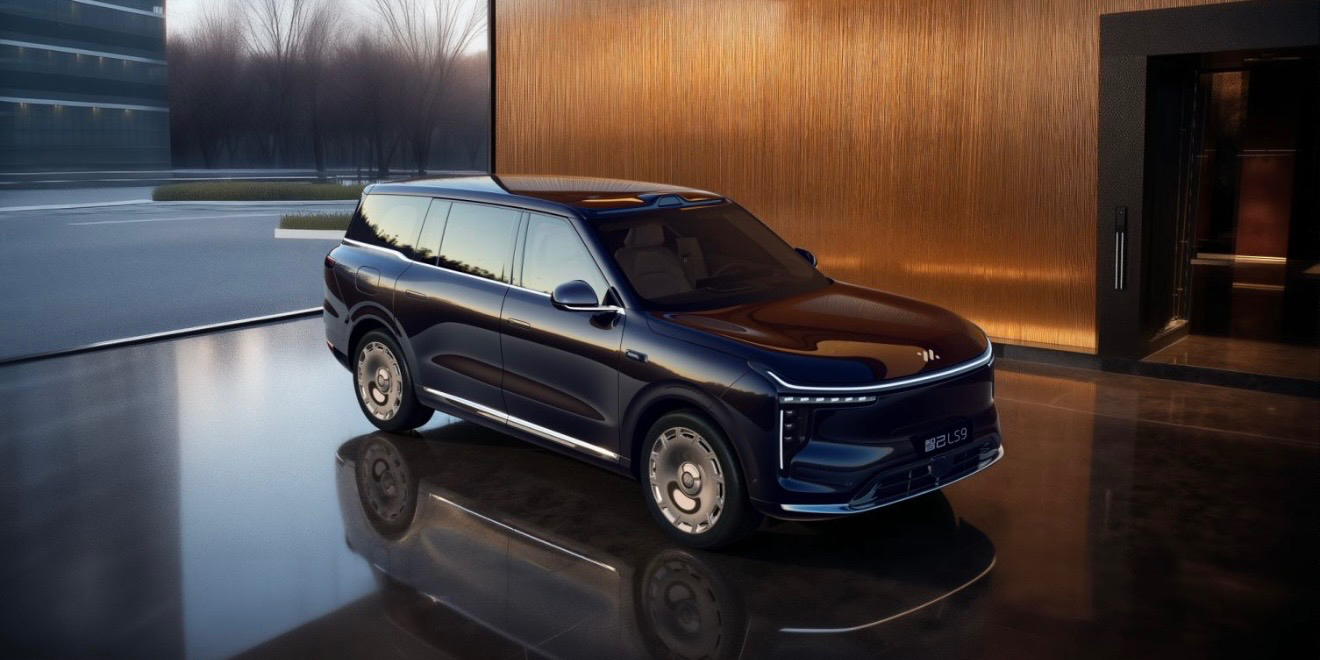
电动SUV“9系车型”大乱斗,智己借LS9再战30万级市场
Jing Ji Guan Cha Wang· 2025-11-08 08:40
Core Insights - The official pre-sale of the IM LS9, a six-seat large electric SUV, has begun with a price range of 336,900 to 366,900 yuan, and it has achieved over 8,000 pre-orders within 30 minutes of the launch [2] - The LS9 is positioned as a high-end SUV, competing in a crowded market with other flagship electric models priced above 300,000 yuan, such as Li Auto's L9 and Aito's M9 [2][3] - IM has adopted an aggressive pricing strategy for the LS9, making it relatively affordable compared to other high-end models that often exceed 400,000 to 500,000 yuan [2] Product Features - The LS9 features advanced technology including an 800V architecture, 520-line ultra-vision lidar, NVIDIA Thor chip, and Lingxi digital chassis 3.0 [3] - It offers a 0-100 km/h acceleration in 4 seconds, comparable to a fuel-powered 4.0T V8 engine, and boasts a pure electric range of 402 km and a comprehensive range of 1,508 km [3] - The vehicle includes a B&O sound system, 4D mechanical massage seats, and an industry-first outdoor luxury package with 24-hour hot water availability [3] Market Position and Sales Strategy - IM has launched the LS9 as part of its strategy to enhance brand recognition and address sales challenges, with a new logo reflecting a sharper and simpler design [3] - The company has reported a total sales volume of 55,700 units from January to October this year, marking a 17.4% year-on-year increase, but still lagging behind leading domestic electric brands [4] - To boost sales before the end of the year, IM's co-CEO announced a tax subsidy for customers who complete their orders by November 25, in case of delays in invoicing [4]
通用大涨,大众乏力,上汽三季报冰火两重天
Guo Ji Jin Rong Bao· 2025-11-04 16:01
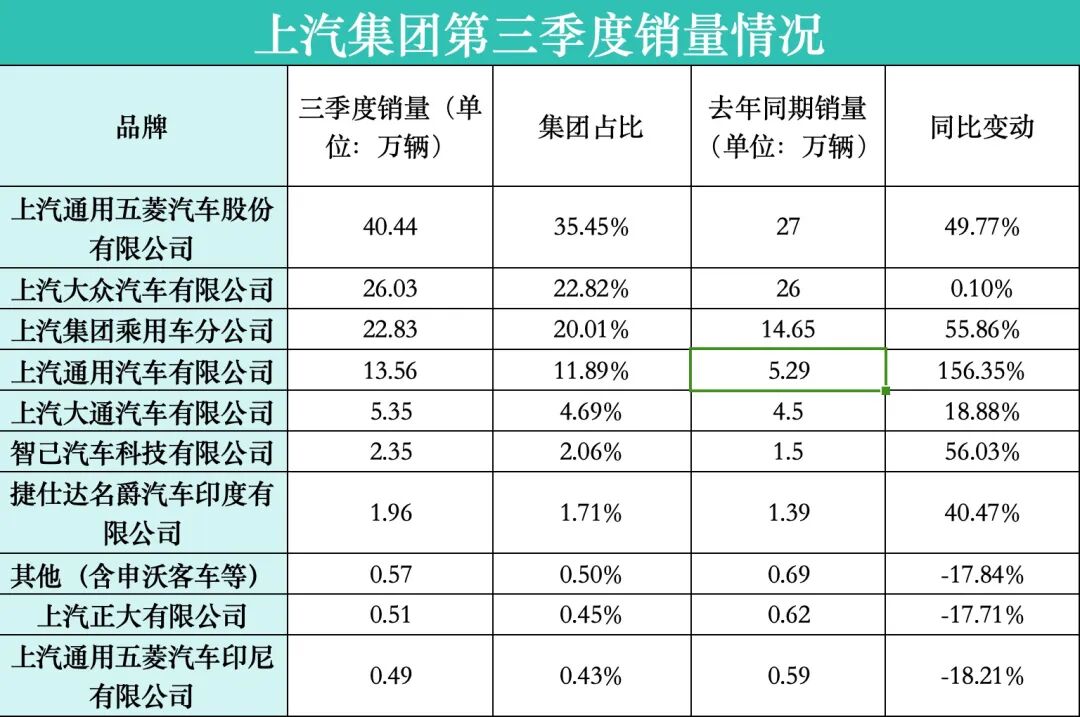
Core Viewpoint - SAIC Motor Corporation has shown a recovery in its performance due to joint ventures, but the uncertainty surrounding its transition is heightened by the underperformance of its new energy brands like IM and Hongqi [1][11]. Financial Performance - In Q3 2025, SAIC reported a revenue of 169.4 billion yuan, a year-on-year increase of 16.2%, and a net profit attributable to shareholders of 2.08 billion yuan, surging 644.9% [3]. - For the first three quarters, total revenue reached 468.99 billion yuan, with a net profit of 8.101 billion yuan and a net cash flow from operating activities of 31.94 billion yuan [3]. - The gross margin for Q3 was 8.99%, up 0.50 percentage points year-on-year, while the net margin improved to 2.21%, an increase of 1.51 percentage points compared to the previous year [4]. Sales Performance - In Q3, SAIC sold 1.141 million vehicles, a year-on-year increase of 38.7%, with SAIC-GM Wuling leading sales at 404,400 units, a 49.77% increase from the previous year [7]. - The sales performance varied significantly among different brands, with SAIC-GM achieving a remarkable growth of 156.35% [7][8]. - IM's sales were only 23,500 units in Q3, representing a mere 2.06% of total sales, indicating a struggle to establish a foothold in the market [8][9]. Strategic Developments - SAIC is expanding its partnerships to enhance its smart vehicle capabilities, collaborating with OPPO and Huawei [11]. - The launch of the Hongqi brand's H5 model saw significant pre-order interest, with 160,000 units ordered, but actual sales fell short of expectations, achieving only around 10,000 units in the first month [11]. Challenges and Outlook - Despite the recovery in sales, the performance of new energy brands like IM and Hongqi remains uncertain, contributing to the overall risk in SAIC's transition strategy [1][11].

【快讯】每日快讯(2025年6月3日)
乘联分会· 2025-06-03 12:04
Domestic News - Shenzhen has released the first national guidelines for fully open autonomous driving technology, establishing evaluation principles and requirements for testing on open roads [3] - Sichuan plans to build a regional center for the recycling and utilization of new energy vehicle power batteries, aiming to create a comprehensive and efficient recycling system by the end of 2024, with an expected peak in battery retirements in the next 2-3 years [4] - As of May 31, the number of applications for the automobile trade-in subsidy reached 4.12 million, contributing to a total sales amount of 1.1 trillion yuan across five categories of consumer goods [5] - In April, China's automobile export value reached 19.39 billion USD, with a month-on-month increase of 6.9% and a year-on-year increase of 5.3% [6] - During the Dragon Boat Festival, the charging volume for new energy vehicles surged, with predictions of a 20% increase in service and highway charging volumes compared to the previous year [8] - The IM LS7, a flagship SUV from Zhiji Auto, has officially launched in the Mexican market, marking a significant step in the brand's global strategy [9] - BYD is collaborating with Xiaojuchongdian and Xindian to build 10,000 megawatt fast charging stations across the country, promoting the widespread adoption of megawatt charging technology [10] - EVE Energy has made progress in solid-state battery production technology, aiming for a breakthrough by 2026, with a pilot line expected to be operational in 2025 [11] International News - India has announced a new electric vehicle policy allowing companies to import electric vehicles at a 15% reduced tariff, provided they invest in local manufacturing [12] - Spain's new car sales in May increased by 18.6% year-on-year, reaching 112,820 units, marking the highest sales for the month since 2019 [13] - France's new car registrations in May fell by 12.3% year-on-year, totaling 123,919 units, with a cumulative decline of 8.25% in the first five months of the year [14] - Toyota has launched the Aygo X Hybrid, its smallest hybrid model, in overseas markets, which is expected to be a popular choice for urban commuting due to its low CO2 emissions [15] Commercial Vehicles - Yutong's Tianjun has been awarded the title of "Most Trusted Light Commercial Vehicle," reflecting its strong market reputation and product quality [16] - A new national standard for side collision protection in vehicles has been released, set to take effect on July 1, 2026, enhancing safety requirements for light trucks [17] - The new generation micro truck platform, Xiangling V5, has been launched, showcasing its capabilities in various scenarios and aligning with Foton's strategic goals [18] - In April, the total freight volume in China reached 5.03 billion tons, with a year-on-year growth of 4.3%, indicating stable growth in the transportation sector [19]


智己销量同比降20.31% 全新L6能否扭转颓势
Cai Jing Wang· 2025-05-23 01:21
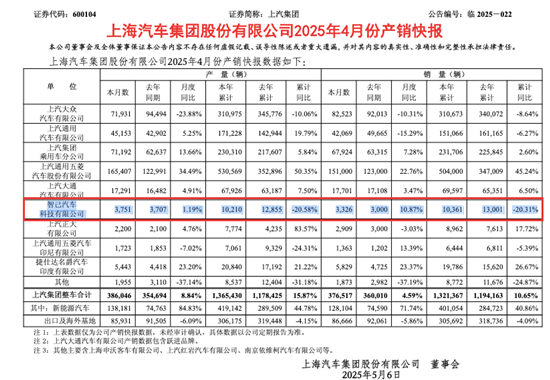
Core Viewpoint - The launch of the new IM L6 model by Zhiji Auto aims to capture the mainstream market priced between 204,900 to 264,900 yuan, but its ability to reverse the declining sales trend remains uncertain [1][5]. Sales Performance - Zhiji Auto reported a delivery of 4,366 vehicles in April, a year-on-year increase of 55%, but the actual sales figure from SAIC Group indicated only 3,326 vehicles sold [2]. - Cumulative sales from January to April 2025 reached 10,361 vehicles, down 20.31% compared to 13,001 vehicles in the same period of 2024 [2][5]. - In February 2025, Zhiji Auto's sales were only 1,135 vehicles, reflecting a significant year-on-year decline of 43.25% [4]. Strategic Goals - The company aims to achieve a target of 100,000 vehicle deliveries by the end of 2025, but current sales figures indicate a substantial gap from this goal [5]. - Zhiji Auto is positioned as SAIC Group's high-end brand and is considered a key player in the group's strategy for transitioning to new energy vehicles [5]. Financial Performance - SAIC Group's overall revenue for 2024 was reported at 627.59 billion yuan, a decrease of 15.73% year-on-year, with a net profit drop of 88% [6]. Competitive Landscape - The automotive market is becoming increasingly competitive, with new entrants like Huawei's "Shangjie" brand, which is expected to launch its first vehicle in the fall of this year [7]. - Analysts suggest that Zhiji Auto faces the risk of being eliminated from the market due to its underperformance and the increasing competition from new brands [7].