
朗逸Pro

Search documents
上汽大众2025年终端销量达106万辆,2026年将密集投放7款全新新能源产品
Ju Chao Zi Xun· 2026-01-03 07:43
Group 1 - The core viewpoint of the article highlights SAIC Volkswagen's achievement of over 1 million annual sales in 2025, with December sales reaching 96,000 units, a 10.9% increase from the previous month [2] - In 2025, SAIC Volkswagen will accelerate its "oil-electric integration" strategy, focusing on both fuel and new energy vehicles, with a steady increase in market share for fuel vehicles [2] - The company has launched the new SAIC Audi A5L Sportback and successfully introduced the Audi E5 Sportback, marking its entry into the intelligent luxury fuel vehicle market and the smart electric luxury segment [2] Group 2 - Looking ahead to 2026, SAIC Volkswagen plans to intensively launch 7 new energy products, covering pure electric, hybrid, and range-extended vehicles [3] - The second model from the AUDI brand, the Audi E7X, is set to be unveiled at the Beijing Auto Show, while the ID. ERA series will introduce its first "9 series flagship" this month [3]


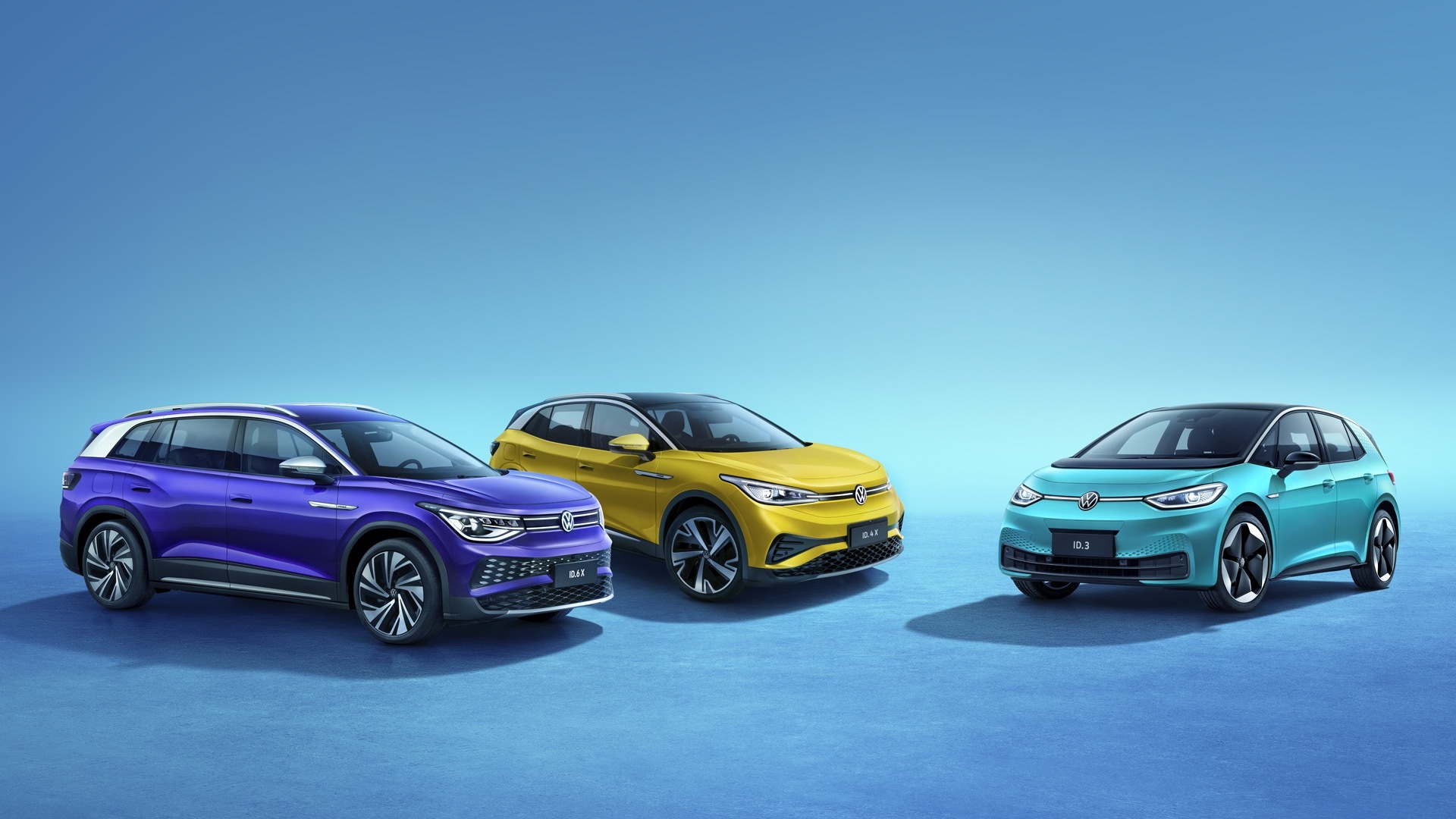
油电双线并进!上汽大众智造未来,首款9系旗舰即将发布
Chang Sha Wan Bao· 2025-12-20 09:08
Core Insights - SAIC Volkswagen held a media exchange event in Changsha, focusing on its dual strategy of fuel and electric vehicles, showcasing its achievements and future plans for the ID.ERA flagship model [1][3][5] Group 1: Intelligent Navigation and Dual Strategy - SAIC Volkswagen demonstrated its dual advantages in both fuel and new energy vehicles through an intelligent product matrix, featuring models like the 2026 Touareg Pro with a fifth-generation EA888 engine and 4MOTION intelligent four-wheel drive [3] - The 2026 Tiguan L Pro is equipped with IQ.Light HD pixel headlights and L2++ level IQ.Pilot driving assistance system, enabling hands-free driving for 30 seconds in highway scenarios [3] - The Passat Pro 2026 redefines the intelligent benchmark for mid-to-high-end sedans with its IQ.Drive system and high-speed NOA functionality [3] - The ID.3 Smart version is highlighted as the "king of cost-performance" in the joint venture pure electric market, offering a range of 451 km with a starting price of 119,888 yuan [3] Group 2: New Era with ID.ERA Flagship - The ID.ERA flagship model is built on a new pure electric platform, featuring an efficient electric drive system and intelligent cockpit technology, supporting multi-modal interaction and integrated AI functions [5] - The vehicle is designed as a six-seat extended-range SUV, balancing space and range, with plans for accelerated development of new energy channels to create an integrated user experience encompassing purchase, charging, and service [5] Group 3: Media Interaction and Industry Trends - The event included discussions on the development trends of automotive new media and the roles of SAIC Volkswagen, new media, and traditional media in this context [6] - Key topics included collaboration between new media and automotive brands to provide valuable information, the impact of rapid iterations in new energy vehicles, and media expectations for the ID.ERA [6] - The exchange highlighted the synergy between fuel and new energy vehicles under the "oil-electric intelligence" strategy, with the upcoming ID.ERA flagship marking a new era for the brand's "full energy" layout [6]

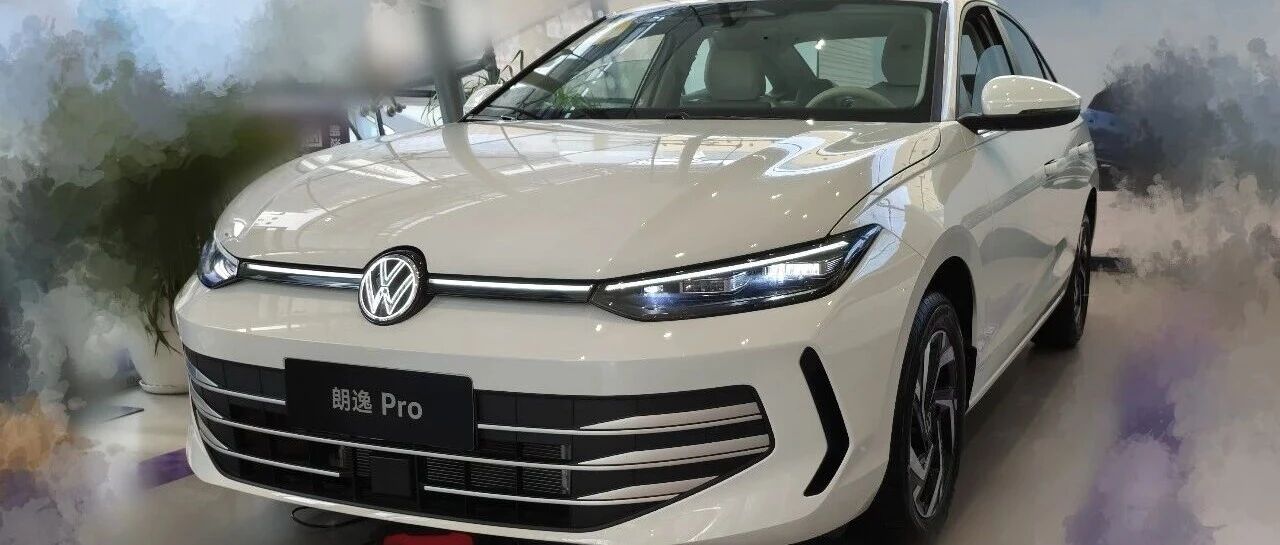
朗逸Pro:一口价到店还想要优惠,外观像帕萨特促使客户下单
车fans· 2025-12-12 00:29
Core Viewpoint - The article discusses the sales performance and customer demographics of the newly launched Volkswagen Lavida Pro, highlighting its market positioning and customer preferences since its release in 2008, which has seen over 6.5 million units sold [1]. Sales Performance - The dealership reported a daily customer flow of less than 20 groups, with only 1-2 groups specifically interested in the Lavida Pro [2]. - In November, the dealership sold a total of 103 vehicles, with only 2 units of Lavida Pro sold [2]. - The commission for selling a Lavida Pro is low, around 350 yuan for high-quality sales, and can drop to 200 yuan for non-registered sales [2]. Inventory and Configuration - There are currently 28 units of Lavida Pro in stock, with configurations including 12 units of the 1.5L version and 14 units of the 1.5T version [5]. - The most popular colors are white and black, with 17 and 11 units respectively [5]. Customer Demographics - The target customers for Lavida Pro are relatively young, valuing exterior and interior design, and showing a preference for fuel vehicles over electric ones [6]. - A notable customer case involved an older gentleman looking to replace an old Lavida, indicating brand loyalty and the desire for a modern vehicle [6][7]. Pricing and Discounts - The Lavida Pro is positioned with a one-price model, which some customers find acceptable, while others are waiting for discounts [11]. - The official pricing for various models ranges from 88,800 yuan to 145,977 yuan, with limited promotional offers available [11]. Competitor Analysis - The main competitors for Lavida Pro include Toyota Corolla, Honda Civic, and BYD Qin, with customers often coming in with a predetermined choice rather than comparing options [12]. - Customers are generally not comparing Lavida Pro with competitors, as they are drawn by the brand's reputation [12]. Customer Preferences - The most sought-after configurations are the 1.5L and 1.5T six-million versions, while lower and higher configurations are less popular due to perceived value issues [15]. - Customers prefer financing options with a five-year term, which offers a 15% interest rate with a 5% rebate [17]. Customer Feedback - Common complaints from customers include the inconvenience of hidden door handles and the small sunroof, with some expressing a preference for larger sunroofs like those in competing models [18]. - Regular maintenance costs for the 1.5L engine are approximately 655 yuan, while the 1.5T engine costs around 686 yuan [19]. Market Caution - There are warnings about scams targeting potential car buyers, with fraudulent companies offering prices significantly lower than market rates [21].
智能化产品正式铺开 上汽大众李俊:明年20%的销量为新能源车
Jing Ji Guan Cha Wang· 2025-11-28 05:08
Core Insights - SAIC Volkswagen is set to launch six new energy vehicles starting next year, marking a significant shift towards aggressive competition in the new energy market [2][3] - The ID. ERA series will include four models, with the flagship 9 series SUV being the first to debut, showcasing advanced technology and features [4][5] - The company aims to maintain a total annual sales target of 1 million vehicles, with a substantial increase in the proportion of new energy vehicles to 20% by 2024 [3][8] Product Strategy - The ID. ERA series will feature a high-end positioning, with the 9 series defined as a "German full-level flagship SUV" [4][5] - The new models will incorporate advanced intelligent features and comfort configurations, aiming to compete effectively with local brands [5][6] - The strategy includes a focus on profitability in the new energy segment, with a clear intention to enter higher-end market segments to offset development costs [4][6] Market Positioning - SAIC Volkswagen is recognized as the largest joint venture brand in China, and the introduction of the ID. ERA series is expected to disrupt the current new energy vehicle market landscape [3] - The company plans to continue investing in both fuel and electric vehicles, maintaining a dual strategy of "oil and electricity coexistence" [7][8] - Despite challenges in the fuel vehicle market, SAIC Volkswagen has seen an increase in market share, with expectations to maintain a competitive edge during the transition to new energy vehicles [8] Sales Performance - For 2024, SAIC Volkswagen aims for a total sales volume exceeding 1.14 million vehicles, with a projected decline of 5.51% year-on-year [8] - The new energy vehicle sales target for 2024 is set at 130,000 units, representing an 11% share of total sales [8] - The overall performance in the first ten months of the current year showed a decline of 4.4%, with total sales at 846,000 vehicles [8]
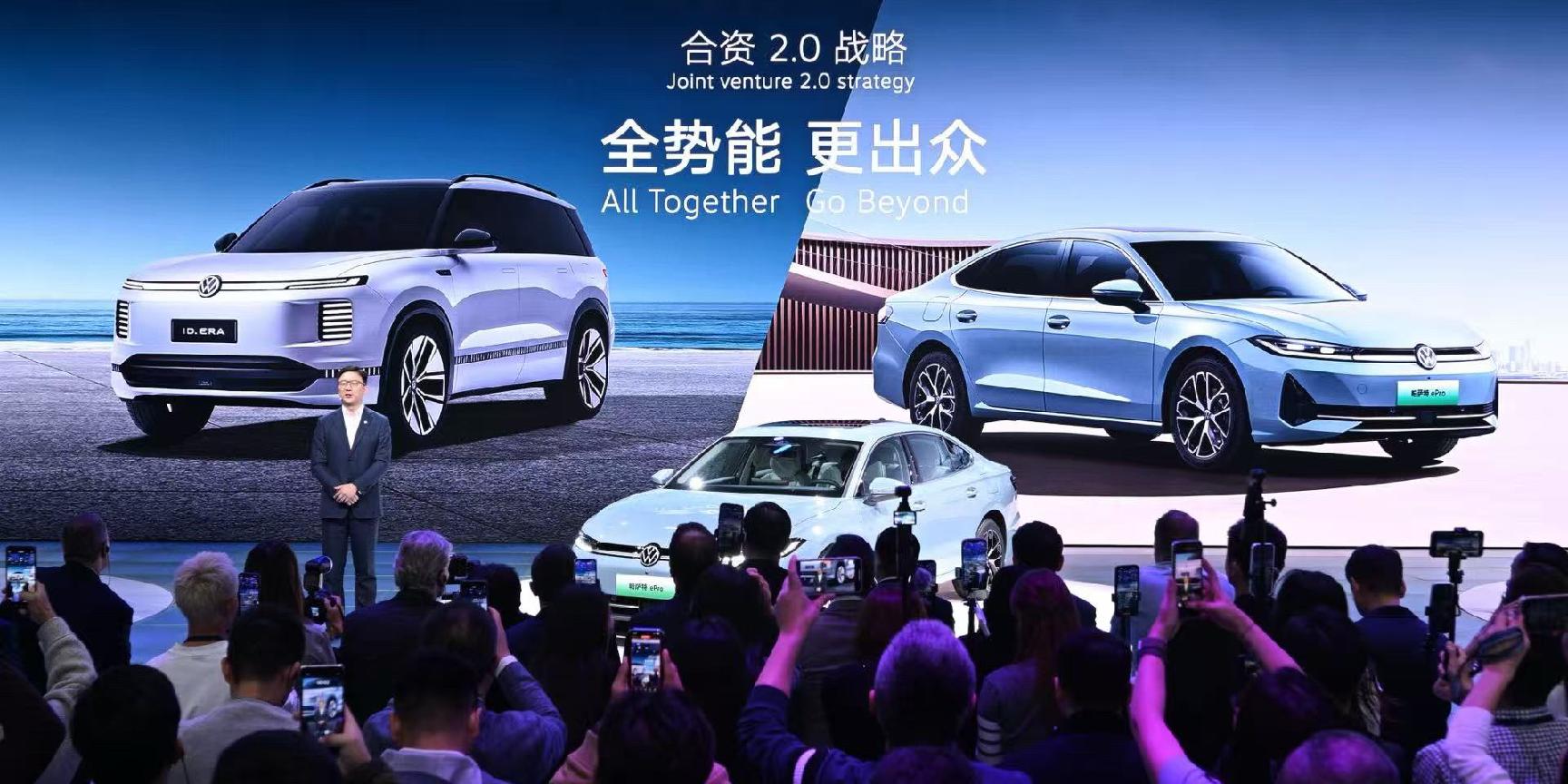
上汽大众广州车展发布ID. ERA全新产品序列
Bei Jing Ri Bao Ke Hu Duan· 2025-11-27 10:10
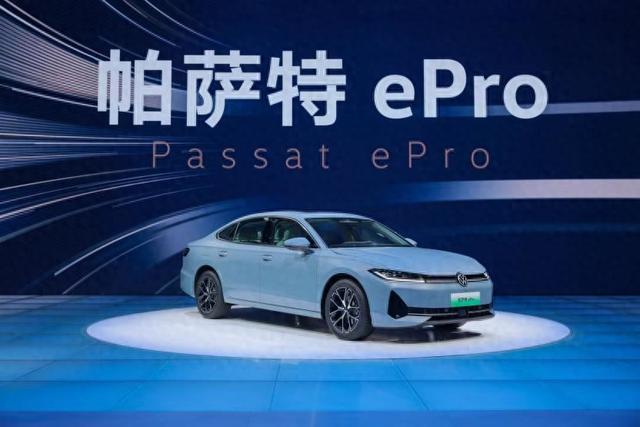
Core Insights - The 23rd Guangzhou International Auto Show has showcased SAIC Volkswagen's new energy product series under the ID. ERA name, marking a significant step in the company's strategic upgrade and brand renewal [1][2][7] - The ID. ERA series will include multiple models entering the pure electric, hybrid, and range-extended markets starting in 2026, aiming to provide a comprehensive travel experience for users [2][7] - The first product in the ID. ERA series is a flagship model that features advanced German range-extended power, intelligent cockpit experience, cutting-edge driving assistance systems, and superior safety and craftsmanship [1][4] Product Launch and Features - The ID. ERA series will be supported by six core initiatives, including a new energy ecosystem and enhanced user experience, to create a "new era" of mobility [1] - The Passat ePro, which will enter the hybrid market in 2026, is part of the new Pro family of vehicles, emphasizing electric experience, evolution in technology, and elegant design [2][4] - The Pro family now includes five models, covering various segments from family cars to SUVs, and from fuel vehicles to plug-in hybrids, catering to diverse user needs [4][5] Market Position and Future Plans - By the end of 2025, SAIC Volkswagen's cumulative sales are expected to exceed 26 million units, maintaining its position as the leading single brand in the domestic market [7] - The company plans to launch six new energy models in 2026 and over 20 new models by 2030, aligning with its "Joint Venture 2.0" strategy to meet evolving user demands [7]
汽车视点丨深化“油电同智”、发力用户共创,上汽大众加速布局谋篇未来——专访上汽大众党委书记、总经理陶海龙
Zhong Guo Jin Rong Xin Xi Wang· 2025-11-25 09:07
Core Insights - The Guangzhou Auto Show serves as a platform for automakers to showcase their new products and future plans, with SAIC Volkswagen aiming to present both past achievements and future strategies [1] - SAIC Volkswagen is focusing on a diversified energy product matrix, including electric, hybrid, and traditional fuel vehicles, with a strong emphasis on smart technology integration [1][2] Product Strategy - The ID. ERA series, featuring the first model as a "German flagship SUV," was launched, indicating a commitment to high-end electric vehicles [8] - The Pro series has introduced its first plug-in hybrid model, the Passat ePro, expanding the product range to cover various market segments from mid-range to mainstream [5][7] - The launch of the Langyi Pro further extends the smart features to the A+ class sedan market, incorporating advanced technology such as AI-driven cockpit systems [3] Market Performance - In 2024, SAIC Volkswagen's fuel vehicle market share reached nearly 9%, with cumulative sales of 850,000 units from January to October [2] - The company aims to maintain a strong presence in both fuel and electric vehicle markets, with plans to launch six new electric models in the coming year [13] Technological Integration - SAIC Volkswagen is enhancing its product offerings by collaborating with leading tech companies to integrate advanced technologies into their vehicles, aiming for a seamless user experience [10] - The company is adopting modern organizational structures to improve efficiency and innovation in product development [11] Future Outlook - By 2026, SAIC Volkswagen plans to continue its dual strategy of fuel and electric vehicles, with expectations of cumulative sales surpassing 26 million units by the end of 2025 [13][14] - The company is preparing for the potential impacts of policy changes regarding electric vehicle subsidies, maintaining a balanced approach to market challenges [13]

深化“油电同智”、发力用户共创,上汽大众加速布局谋篇未来——专访上汽大众党委书记、总经理陶海龙
Xin Hua Cai Jing· 2025-11-25 08:27
Core Insights - The Guangzhou Auto Show serves as a significant platform for automakers to showcase their new products and future plans, with SAIC Volkswagen unveiling its new ID. ERA series and the first plug-in hybrid model, the Passat ePro, indicating a shift towards a diversified energy product matrix [1][5][6] - The company emphasizes "intelligentization" as a key theme in its product strategy, aiming to integrate traditional fuel vehicles with new energy technologies to enhance user experience [2][7] Product Strategy - SAIC Volkswagen is launching a series of new energy vehicles, including the ID. ERA series, which is positioned as a "German flagship SUV" and aims to set new benchmarks in the market [5][6] - The Pro series, which includes models like the Passat ePro and the newly launched Langyi Pro, focuses on providing intelligent features and advanced driving assistance systems, thereby expanding its market reach [3][4] Market Performance - The Pro series has achieved a nearly 9% market share in the fuel vehicle segment, with cumulative sales reaching 850,000 units from January to October 2024, indicating strong market acceptance [2][3] - The company plans to introduce six new energy models within the next year, with a target of over 20 new models by 2030, reflecting its commitment to expanding its product lineup [8][9] Strategic Partnerships - SAIC Volkswagen is actively collaborating with leading technology companies such as Baidu and Huawei to enhance its product offerings and integrate advanced technologies into its vehicles [2][7] - The company is shifting from a traditional supply chain model to a joint development approach, aiming to create top-tier product experiences in smart driving and cockpit systems [7][8] Organizational Transformation - The company is undergoing internal changes to improve efficiency and responsiveness to market demands, including the adoption of modern organizational structures and management practices [8][9] - SAIC Volkswagen is focusing on user engagement through initiatives like the ID. ERA "Pioneer Experience Program," which invites users to participate in product testing and feedback [7][8] Future Outlook - The company remains optimistic about navigating the challenges posed by the gradual reduction of government subsidies for electric vehicles, leveraging its strong fuel vehicle base as a buffer [9][10] - By the end of 2025, SAIC Volkswagen expects to surpass cumulative sales of 26 million units, maintaining its position as a leading brand in the domestic market [9][10]
2025/11/17-2025/11/21 汽车周报:反弹科技先行,重视 T 链真落地企业-20251125
Shenwan Hongyuan Securities· 2025-11-25 05:42
Investment Rating - The report suggests a positive outlook for the automotive industry, particularly focusing on technology-driven companies and the robotics supply chain [5][6]. Core Insights - The automotive sector is experiencing a rebound, with significant developments in the robotics industry and related companies. The report highlights the low expectations currently priced into the stocks of these companies, despite ongoing advancements in the industry [5][6]. - The report emphasizes the importance of technology and high-end products, predicting a substantial increase in demand for new B/C class vehicles, driven by changes in consumer habits and product competitiveness [6][7]. - The report identifies key players in the market, including NIO, Xiaomi, and XPeng, and suggests that companies with strong performance and low valuations, such as KOBODA and Xingyu, should be closely monitored [5][6]. Market Updates - According to the latest data from the China Passenger Car Association, the average daily retail sales of passenger cars in the second week of November were 67,000 units, a year-on-year decrease of 9% [5][6]. - The total transaction value in the automotive industry for the week was 421.1 billion yuan, reflecting an 18.56% decrease compared to the previous week [5][11]. - The automotive industry index closed at 7308.64 points, down 4.89% for the week, which is a larger decline compared to the Shanghai Composite Index [11][14]. Key Events - The Guangzhou Auto Show showcased a significant shift in the competitive landscape of the automotive industry, with over 20 brands absent, indicating increased pressure on weaker brands [8][10]. - The report notes that the focus of competition has shifted from individual models to technological ecosystems, with companies emphasizing their comprehensive capabilities in technology and supply chain integration [10][11]. Company Performance - The report highlights that 20 stocks in the automotive sector rose while 251 fell, with the largest gainers being Tianpu Co., Luochang Technology, and Zhejiang Rongtai, which saw increases of 14.7%, 8.1%, and 7.6% respectively [17][19]. - The report also mentions that the automotive industry’s price-to-earnings ratio stands at 27.25, ranking it 19th among all sectors, indicating a moderate valuation level [14][16]. Future Outlook - The report anticipates that the globalization of Chinese electric vehicles will accelerate, with expectations of nearly 10 million units sold overseas within five years [6][7]. - The report underscores the dual transformation of the automotive industry towards electrification and AI integration, predicting that AI will play a crucial role in enhancing driving experiences and operational efficiencies [7][8].



从放权到调价,合资品牌在中国“量身”造车
Xin Jing Bao· 2025-11-24 04:52
Core Insights - The Guangzhou Auto Show showcases a significant shift in strategy among multinational automotive companies, emphasizing localization and adaptation to the Chinese market [1][2][4] Group 1: Market Dynamics - Domestic brands hold a 65% retail market share and a 46.7% penetration rate in the new energy vehicle sector, prompting joint ventures to adapt their strategies [1] - Multinational companies are moving away from a "one car sells globally" approach, recognizing the need for deep engagement in the Chinese market [2][4] Group 2: Strategic Changes - Companies like Dongfeng Nissan are adopting a "GLOCAL" model, investing over 10 billion yuan in R&D and empowering local teams with decision-making authority [2] - Toyota has implemented a "China Chief Engineer" system, allowing local teams to make decisions without extensive approval from Japan [3] Group 3: Product Development - Dongfeng Nissan introduced the N6 plug-in hybrid, showcasing the results of its localized R&D efforts [2] - GAC Toyota's new models, including the Platinum 7, are designed specifically for the Chinese market, demonstrating the effectiveness of local team-led development [3] Group 4: Technological Advancements - The auto show highlighted advancements in smart technology, with companies like SAIC Volkswagen and Dongfeng Nissan integrating localized features such as dialect recognition and smart driving systems [5][6] - The focus on user experience is evident as companies aim to enhance product offerings through localized technology [6] Group 5: Pricing and Product Strategy - Many brands are adopting a strategy of increasing product features while lowering prices to better compete with domestic brands [7][9] - Mercedes-Benz and BMW have introduced new models with enhanced features at competitive price points, indicating a shift towards more consumer-friendly pricing strategies [7][8] Group 6: Industry Transformation - The transformation in the automotive industry is driven by the rise of domestic brands and the need for multinational companies to adapt to a changing market landscape [9]
车展观察|从放权到调价 合资品牌在中国“量身”造车
Xin Jing Bao· 2025-11-24 04:52
Core Viewpoint - The Guangzhou Auto Show highlights the shift of multinational automotive companies towards localization and adaptation to the Chinese market, as they face increasing competition from domestic brands. Group 1: Market Dynamics - The Guangzhou Auto Show features 1,085 vehicles, with 629 being new energy models, indicating a strong presence of electric vehicles in the market [1] - Domestic brands hold a 65% retail market share and a 46.7% penetration rate in new energy vehicles over the first ten months [1] - Multinational brands are moving away from a "one-size-fits-all" approach and are instead focusing on localized research and development to better meet Chinese consumer demands [2][4] Group 2: Strategic Changes - Companies like Dongfeng Nissan are adopting a "GLOCAL" model, investing over 10 billion yuan in R&D and expanding their local teams to over 4,000 people [2] - Toyota has implemented a "China Chief Engineer" system, granting local teams full decision-making authority, which has led to successful product adaptations like the new RAV4 [3] - Volkswagen is launching a new product series, ID.ERA, aimed at the Chinese market, with plans to introduce multiple models from 2026 [3] Group 3: Technological Advancements - The auto show showcases advancements in smart technology, with companies like SAIC Volkswagen and Dongfeng Nissan introducing intelligent cockpit systems that cater to local user preferences [5][6] - Dongfeng Nissan's new model features a "scene-based intelligence" concept, integrating local services and real-time updates [6] Group 4: Product and Pricing Strategies - Brands are focusing on creating products tailored to the Chinese market, with competitive pricing strategies that include lowering prices and enhancing configurations [7][9] - Beijing Benz's new electric CLA model is priced competitively within the mid-range of domestic brands, reflecting a shift in luxury brand strategies [7] - BMW and Audi are also enhancing their product offerings with better configurations and competitive pricing, indicating a broader trend among luxury brands to adapt to local market demands [8][9]