
电子树脂

Search documents
化工一季报业绩前瞻-多品种月度更新
2026-03-30 05:15
Summary of Key Points from Conference Call Records Industry Overview - The chemical industry is entering a destocking phase, with the European energy crisis leading to the permanent exit of some overseas facilities. China's production capacity is expected to dominate the global market due to its scale and safety advantages, with a chemical bull market anticipated to start in 2025 [1][3] - The coal chemical sector is showing significant substitution effects, with acetic acid prices rising to 3,500 RMB/ton. Wanhua Chemical's MDI business benefits from the impact of European natural gas costs, and its new material lithium iron phosphate business is expected to reach a capacity of 800,000 tons by 2026 [1][4][6] Company Performance - Major refining companies like Hengli and Rongsheng are expected to see over 70% and 100% year-on-year earnings growth in Q1 2026, respectively, due to benefits from crude oil inventory gains and product price increases [1][12] - Satellite Chemical's single-ton ethylene profit has doubled to 400 RMB, indicating a clear trend of rising volume and price [1][12] - The polyester filament supply-demand pattern is improving, with net new capacity growth expected to be only 3% by 2026, compared to a demand growth rate of 5-6% [1][20] Market Dynamics - The chlor-alkali industry is experiencing differentiation, with calcium carbide PVC benefiting from high oil prices, and prices expected to rebound to 6,500 RMB/ton [1][15] - The refrigerant industry is affected by geopolitical conflicts, leading to a "low first, high second" demand pattern for the year [1][33] Investment Opportunities - The chemical sector is recommended for active allocation, as most mainstream sub-industries have released risks, and the fundamental landscape is improving. The current bull market is expected to exceed market expectations in terms of height and duration [3] - Companies like New Fengming and Tongkun are highlighted as potential beneficiaries in the polyester filament sector due to their expected performance in Q1 2026 [1][22] Specific Product Insights - In the pesticide sector, products like Mancozeb and Glyphosate are highlighted due to supply constraints in India, which may benefit domestic exports [2][10] - The upstream soda ash industry is expected to benefit from the global energy system restructuring, which will boost demand for photovoltaic glass and upstream soda ash [9] Financial Projections - Wanhua Chemical's MDI business is expected to see margin improvements, while its new materials business is projected to become a significant revenue contributor by 2026 [5][6] - The chlor-alkali sector's leading companies are expected to report profits near breakeven in Q1 2026, with new orders' profit release more likely in Q2 [17] Conclusion - The overall sentiment in the chemical industry is cautiously optimistic, with several companies poised for significant growth due to favorable market conditions and strategic positioning. The focus on destocking, geopolitical impacts, and evolving supply-demand dynamics will shape the investment landscape moving forward [1][3][12]






2026年第35期:晨会纪要-20260309
Guohai Securities· 2026-03-09 01:47
Group 1 - The report highlights the strong performance of the wind power hydraulic lubrication leader, Chuanrun Co., which is advancing into AIDC liquid cooling, benefiting from the rising industry demand [4] - The company has a solid global layout in high-end energy equipment manufacturing, focusing on offshore wind power and liquid cooling, with overseas revenue reaching 43.64 million yuan in the first half of 2025, a year-on-year increase of 375.7% [4] - The liquid cooling technology is expected to gain traction due to stricter energy consumption regulations for data centers, with NVIDIA's next-generation Rubin chip adopting a fully liquid cooling solution, enhancing market potential [5][6] Group 2 - The asset allocation report emphasizes the continuity of the policy framework for 2026, with a focus on expanding domestic demand and managing financial risks in real estate and local debts [8][9] - The macroeconomic environment is supported by a strong fiscal policy and moderate monetary easing, which is expected to stabilize the equity market [9] - The report outlines a shift towards more execution-oriented industrial policies, enhancing visibility for commercial applications and orders in various sectors [9] Group 3 - The AI demand is projected to exceed expectations, with Shengquan Group positioned to benefit from the high-performance resin market, which is expected to see rapid growth [11] - The company is the largest domestic supplier of electronic chemical materials, with a comprehensive product matrix for high-frequency and high-speed copper-clad laminates [12] - Shengquan Group is expanding its production capacity with new projects set to come online in 2026, including 2000 tons/year of PPO/OPE resin and 1500 tons/year of hydrocarbon resin [12] Group 4 - The automotive industry report discusses the competitive landscape of Robotaxi in the US and China, highlighting Waymo and Tesla as key players in the US market [16][17] - In China, companies like Pony.ai and WeRide are leading the Robotaxi sector, with significant advancements in operational areas and regulatory support for autonomous driving [18] - The report suggests investment opportunities in leading Robotaxi companies and related technologies, emphasizing the acceleration of commercialization in both markets [19] Group 5 - The macroeconomic commentary on the government work report for 2026 outlines a growth target of 4.5%-5%, with a focus on expanding domestic demand and optimizing supply [20][22] - The report emphasizes the importance of employment, with a target of over 12 million new urban jobs, aligning with the economic growth objectives [23] - The fiscal policy remains proactive, with a projected budget expenditure of 30 trillion yuan for 2026, reflecting a commitment to sustainable growth [25][26] Group 6 - The report indicates a strong emphasis on technology innovation as a driver for new economic momentum, with significant increases in R&D investment expected [36][37] - The focus on high-level self-reliance in technology is set to support the development of new industries and enhance the digital economy's contribution to GDP [37][38] - The report outlines plans for substantial investments in modernizing the industrial system, with a focus on high-quality development and technological advancements [38]




未知机构:国信石化化工2026核心方向供给中期约束ESG反内卷叠加全球化工-20260227
未知机构· 2026-02-27 02:30
Summary of the Conference Call Industry Overview - The chemical industry is experiencing a recovery phase driven by a resurgence in global demand for chemical products, with China's chemical sector demonstrating significant global competitiveness [1] - Key areas of focus include oil and gas, refining and petrochemicals, potash fertilizers, phosphorus chemicals, fluorochemicals, MDI, sustainable aviation fuel (SAF), and electronic resins [1] Oil and Gas Sector Insights - The global interest rate reduction cycle has commenced, leading to a moderate recovery in oil demand [1] - On the supply side, OPEC+ has paused production increases, which is influenced by the high fiscal balance oil price required by OPEC+ and the elevated new well costs in the US shale oil sector [1] - The forecast for Brent crude oil prices in 2026 is updated to a range of $65-70 per barrel [1] - Natural gas consumption is expected to increase significantly by 2026 [1]
AI的下一战:高端PCB材料,一个千亿级的国产替代新战场(附60页PPT与解读、投资逻辑)
材料汇· 2026-02-21 10:03
Group 1 - AI applications are driving the PCB industry towards a growth cycle, with expectations for both volume and price increases. The demand for HDI and 18+ layer boards is expected to grow significantly due to the rise in AI servers and 5G applications, with global market value CAGR predictions of 6.4% and 15.7% respectively from 2024 to 2029 [3][40]. - Copper-clad laminates (CCL) are identified as the core substrate for PCBs, accounting for approximately 27% of PCB cost structure. Key raw materials include copper foil, resin, and fiberglass cloth, with a shift towards high-frequency and high-speed CCLs driven by AI and 5G applications [4][9]. - The demand for electronic resins is evolving, with a focus on high-performance types such as PTFE, PPO, and hydrocarbon resins. These materials are crucial for meeting the high-frequency and high-speed requirements of modern PCBs, with domestic manufacturers making strides in replacing imported materials [4][9][149]. - The use of high-performance silicon micro-powder is rapidly increasing, driven by the performance upgrades of downstream devices and the growing application of AI servers. The demand for silicon micro-powder in China is projected to reach 473,000 tons by 2025, reflecting a year-on-year growth of 13.2% [4][156]. Group 2 - The global PCB market is projected to recover from a downturn in 2023, with a growth rate of 5.8% in 2024 and a sustained CAGR of 5.2% through 2029, indicating that new AI-driven demands are creating a new growth curve rather than merely a cyclical recovery [23][24]. - China is the largest PCB manufacturing base globally, accounting for 56% of the market value. This proximity to customers enhances supply chain security and responsiveness, positioning domestic material companies favorably for growth [24][21]. - The shift towards high-end PCBs is evident, with a decline in single/double-sided boards and an increase in HDI and packaging substrates. This trend highlights the growing demand for advanced packaging technologies, which require high-performance materials [29][30]. - The demand for high-frequency and high-speed CCLs is expected to grow significantly, with the market size projected to reach approximately $2.8 billion. This segment, while a smaller part of the overall CCL market, is characterized by faster growth and higher profit margins [87][89].

同宇新材2月12日获融资买入2532.14万元,融资余额1.65亿元
Xin Lang Cai Jing· 2026-02-13 01:38
Group 1 - The core viewpoint of the news is that Tongyu New Materials has shown a mixed performance in terms of stock trading and financial results, with a slight increase in stock price and a notable financing activity on February 12 [1] - On February 12, Tongyu New Materials' stock price increased by 0.23%, with a trading volume of 94.628 million yuan, and a net financing purchase of 12.2098 million yuan [1] - As of February 12, the total financing and securities lending balance for Tongyu New Materials was 165 million yuan, which represents 9.03% of its circulating market value [1] Group 2 - As of September 30, the number of shareholders for Tongyu New Materials was 8,851, a decrease of 55.73% compared to the previous period, while the average circulating shares per person increased by 125.86% to 1,129 shares [2] - For the period from January to September 2025, Tongyu New Materials reported a revenue of 899 million yuan, reflecting a year-on-year growth of 25.96%, while the net profit attributable to shareholders decreased by 6.62% to 103 million yuan [2] - Among the top ten circulating shareholders as of September 30, 2025, Huaxia Industry Prosperity Mixed A (003567) was the second-largest shareholder with 414,300 shares, and both Huaxia Vision Growth One-Year Holding Mixed A (016250) and Hong Kong Central Clearing Limited were new shareholders [2]
金刚石钻针、玻璃基板涨幅居前,高手看好这个大主线!
Mei Ri Jing Ji Xin Wen· 2026-01-27 10:20
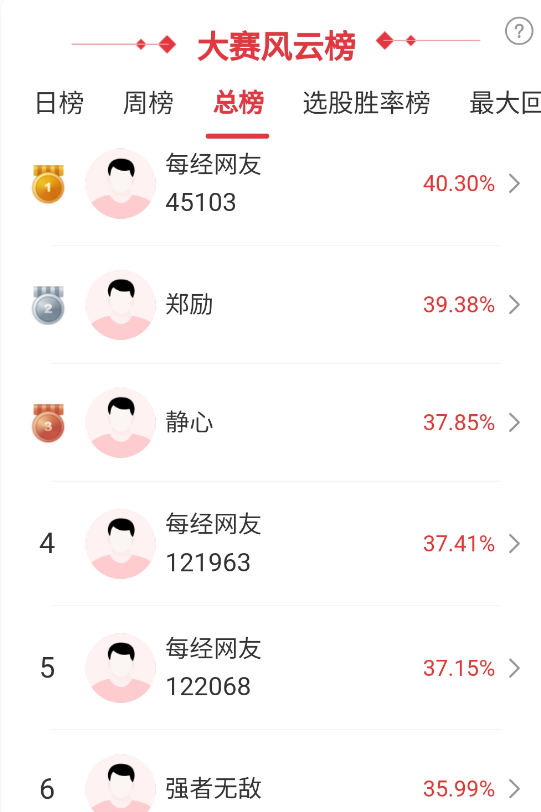
Group 1 - The Shanghai Composite Index closed up 0.18% at 4139.90 points, with a trading volume of 29,217 billion yuan, a decrease of 3,593 billion yuan compared to the previous day [1] - The discovery of the oral nucleoside drug VV116 by the Wuhan Institute of Virology shows significant antiviral activity against the Nipah virus, providing new hope for the prevention and treatment of this highly fatal emerging infectious disease [1] Group 2 - In response to the news, the stock price of Wangshan Wangshui in Hong Kong rose by 11%, with related companies such as Junshi Biosciences and Xiansheng Pharmaceutical also seeing gains [2] - The 82nd session of the "Digging Gold" competition organized by the Daily Economic News App started on January 19, with participants capitalizing on the surge in the precious metals sector [2] Group 3 - Participants in the competition believe the current market trend is a slow bull market, focusing on individual stocks rather than the overall market [5] - Some participants are optimistic about the M9 copper-clad laminate (CCL) industry chain, including PCD diamond drill bits and hydrogenated resins, as the CCL is expected to upgrade significantly by 2026 [5] Group 4 - The "Fire Line Quick Review" product, developed by the team led by Dage, provides insights into market trends, investment logic, and company analysis, available to participants in the competition [5][6] - Notable stocks in the Nvidia supply chain, electronic cloth, rare earths, tungsten mines, and silver have shown significant price increases since April 2025, with some companies doubling their stock prices [6]
高速覆铜板CCL:四大核心材料机遇与挑战(附报告)
材料汇· 2026-01-21 15:30
Core Viewpoint - The article emphasizes the AIPCB wave and highlights the investment opportunities arising from the upgrade of M9 materials, focusing on four main lines of development [1]. Group 1: Low Dielectric Electronic Fabrics - The transition from LDK to second-generation fabrics is underway, with M9 paired with Q fabrics evolving towards third-generation products [17]. - The market for low dielectric electronic fabrics is expected to grow rapidly, driven by AI server demand, with a projected compound annual growth rate of 23.8% from 2024 to 2033 [20][23]. Group 2: Electronic Resins - The use of hydrocarbon resins in M9 is expected to increase significantly, with a ratio of hydrocarbon resins to PPO rising to 2:1, enhancing the value of materials [31][34]. - New types of resins are becoming mainstream, with hydrocarbon resins being the preferred choice for next-generation high-frequency CCLs [31][39]. Group 3: Fillers - The proportion of spherical silica micro-powder in M9 is expected to increase significantly, with high-performance spherical silica micro-powder filling ratios expanding to over 40% [36][40]. - Liquid-phase preparation methods for silica are becoming the industry standard, meeting the requirements for M7 and above [40]. Group 4: Other Upstream PCB Materials - Attention is drawn to electronic-grade fluorinated copper powder and PCB-specific electronic chemicals, which are essential for the upgrade trends in high-end PCBs [3][43]. - The supply of high-end materials, including Low Dk electronic fabrics and HVLP copper foil, is facing shortages, with major manufacturers accelerating production to meet demand [7][29]. Group 5: Market Performance - The demand for high-end CCL driven by AI is accelerating the upgrade of upstream materials, with significant performance improvements observed in various AIPCB sub-sectors since mid-2025 [5][8]. - The average increase in AIPCB sub-sector indices from May to August 2025 shows substantial growth, particularly in electronic fabrics and copper foil [6]. Group 6: Investment Recommendations - Companies to watch include: 1. Low dielectric electronic fabrics: Honghe Technology, Feilihua, Zhongcai Technology [4]. 2. HVLP networks: Gangguan Copper Foil, Rongfu Technology, Longyang Electronics [4]. 3. Electronic resins: Dongcai Technology, Shengnong Group, Hongchang Electronics, Tongzi New Materials [4]. 4. Other upstream materials: Jiangnan New Materials for electronic-grade oxidized copper powder, Tiancheng Technology for PCB-specific electronic chemicals [4].




电子行业专题:AIPCB浪潮,关注M9材料升级机会
Shanghai Securities· 2026-01-21 11:56
Investment Rating - The report maintains an "Overweight" rating for the electronic industry [1] Core Insights - The AI wave is driving higher value consumption in CCL (Copper Clad Laminate) materials, with a focus on M9 material upgrades and four main lines of development [4][8] - The demand for high-performance electronic materials is expected to surge, particularly with the anticipated release of Nvidia's Rubin platform in 2026, which will require M9-level CCL using Q-glass [8][29] - The supply of high-performance electronic materials is facing constraints, particularly in Low Dk electronic cloth and HVLP copper foil, leading to a supply-demand imbalance [8][35] Summary by Sections CCL and Key Materials - CCL's cost structure shows that upstream raw materials account for approximately 90% of the total cost, with copper foil, resin, and glass fiber being the primary components [13][15] - The transition from M7 and M8 to M9 CCL is underway, with M9 expected to utilize high-performance Q-glass and HVLP4 copper foil as the next mainstream products [21][36] Electronic Cloth - The global low dielectric electronic cloth market is projected to grow significantly, with a compound annual growth rate (CAGR) of 23.8%, reaching approximately $1.94 billion by 2033 [24][26] - The industry is transitioning from first-generation to second-generation low dielectric cloth, with a notable shift towards Q-glass for M9 applications [29][30] HVLP Copper Foil - HVLP copper foil has evolved to HVLP4, which is expected to become the mainstream product for AI server applications by 2026 [41][44] - Major manufacturers like Mitsui and Jincheng are accelerating production to meet the high demand for advanced copper foil [42][44] Electronic Resins - The use of hydrocarbon resins in M9 is expected to increase significantly, with a ratio of 2:1 compared to PPO, enhancing the value of resin in M9 materials [45][48] - The market for hydrocarbon resins is currently dominated by overseas suppliers, but domestic companies are ramping up production capabilities [49][52] Fillers - The use of spherical silica powder is increasing, with a projected market size exceeding 61,685.97 tons by 2026, driven by the demand for high-speed substrates [53][56] - Liquid-phase preparation methods for silica are becoming the industry standard, meeting the requirements for M7 and above [53][54] Other Upstream Materials - Electronic-grade copper oxide powder is crucial for high-end PCB upgrades, accounting for about 6% of PCB costs [57][60] - The market for PCB-specific electronic chemicals is evolving towards higher-end products, with domestic suppliers increasingly replacing foreign ones [61][62]
未知机构:国信石化化工2026核心方向炼油炼化钾肥磷化工氟化工-20260121
未知机构· 2026-01-21 02:15
Summary of Conference Call Records Industry Overview - **Industry Focus**: The records primarily discuss the petrochemical industry, including segments such as refining, potassium fertilizers, phosphorus chemicals, fluorochemicals, MDI, sustainable aviation fuel (SAF), and electronic resins [1][2]. Key Insights and Arguments - **Oil and Gas Market**: - A global interest rate reduction cycle has begun, leading to a moderate recovery in oil demand. - OPEC+ has paused production increases, with a projected Brent oil price range of $60-65 per barrel by 2026, influenced by high fiscal balance prices and the elevated costs of new shale oil wells in the U.S. [1] - Natural gas consumption is expected to reach approximately 450 billion cubic meters by 2026, with a peak domestic consumption forecast of 650-700 billion cubic meters between 2030-2040 [1]. - **Refining and Petrochemical Sector**: - Stable crude oil prices at mid-high levels are expected to restore refining and petrochemical profits, with significant profit contributions from by-products like sulfur [2]. - The "anti-involution" policy signals are anticipated to optimize the supply side of refined oil and PX-PTA industries [2]. - **Potassium Fertilizer Market**: - The global potassium fertilizer industry is characterized by oligopoly and high concentration, with a tight balance between supply and demand, suggesting that prices may remain elevated [2]. - **Phosphorus Chemicals**: - Demand in the energy storage sector is driving significant growth in the demand for iron phosphate and phosphate rock, leading to a revaluation of phosphate rock prices, which are expected to remain high in the medium to long term [2]. - **Fluorochemicals**: - The refrigerant market is experiencing price increases due to supply constraints from quota limitations and high concentration, indicating a prolonged period of price growth [2]. - **MDI and TDI**: - The U.S. interest rate reduction cycle is expected to boost overseas MDI demand, while supply constraints and tariffs are raising global MDI trade costs, with declining raw material costs leading to continuous profit recovery [5]. - **Sustainable Aviation Fuel (SAF)**: - Under a green low-carbon framework, a mandatory 2% SAF blend in Europe by 2025 is likely to drive up bio-jet fuel prices, with potential for similar policies in other regions, suggesting sustained high-speed growth in SAF demand [5]. - **Electronic Resins**: - Electronic resins are critical materials for the production of copper-clad laminates, with increasing demand driven by AI servers and high-end electronic applications, particularly for PPO and ODV resins [6]. Additional Important Insights - **Liquid Cooling Solutions**: - Immersion and dual-phase cooling solutions are expected to drive rapid growth in the demand for upstream fluorinated liquids and refrigerants, highlighting the importance of liquid cooling applications [4]. - **Energy Storage Demand**: - Continuous optimization of the supply-demand relationship for PVDF fluoropolymers is anticipated due to energy storage needs [5]. This summary encapsulates the critical points from the conference call records, providing a comprehensive overview of the discussed industries and their future outlooks.
同宇新材1月19日获融资买入2032.57万元,融资余额1.53亿元
Xin Lang Cai Jing· 2026-01-20 02:02
Group 1 - The core viewpoint of the news is that Tongyu New Materials experienced a decline in stock price and trading volume on January 19, with a net financing outflow of 10.66 million yuan [1] - On January 19, Tongyu New Materials' financing buy amounted to 20.33 million yuan, while financing repayment was 30.98 million yuan, resulting in a total financing balance of 153 million yuan, which represents 8.10% of its market capitalization [1] - The company specializes in the research, production, and sales of electronic resins, primarily used in the production of copper-clad laminates, with 99.26% of its revenue coming from electronic resins [1] Group 2 - As of September 30, the number of shareholders for Tongyu New Materials was 8,851, a decrease of 55.73% from the previous period, while the average circulating shares per person increased by 125.86% to 1,129 shares [2] - For the period from January to September 2025, Tongyu New Materials reported a revenue of 899 million yuan, reflecting a year-on-year growth of 25.96%, while the net profit attributable to the parent company was 103 million yuan, a decrease of 6.62% year-on-year [2] - Among the top ten circulating shareholders as of September 30, 2025, Huaxia Industry Prosperity Mixed A (003567) was the second-largest shareholder with 414,300 shares, while Huaxia Vision Growth One-Year Holding Mixed A (016250) was the third-largest with 236,400 shares, both being new shareholders [2]