
竹笋

Search documents
念好新时代“山海经”——来自福建的调查
Jing Ji Ri Bao· 2026-02-09 22:38
Core Viewpoint - The article emphasizes the importance of enhancing regional development coordination and promoting urban-rural integration in Fujian through the strategy of "mountain-sea cooperation," which aims to achieve common prosperity and shared development outcomes [1]. Mechanism Innovation - The Fuzhou-Nanping New Era Mountain-Sea Cooperation Party and Government Joint Conference was held on November 12, 2025, marking a significant step in deepening cooperation between Fuzhou and Nanping [2]. - In 2023, Fujian Province issued guidelines to further deepen mountain-sea cooperation, optimizing collaboration relationships among cities and counties, and establishing a robust policy framework [2]. - A total of 6.32 billion yuan was allocated for cooperation funding in 2024, providing strong support for the development of mountainous areas [2]. Industry Coordination - Fujian is advancing industrial collaboration, infrastructure connectivity, and public resource sharing, with 101 key mountain-sea cooperation projects underway [3]. - The "flying economy" model is being promoted to address regional development imbalances by integrating coastal advantages with mountainous resources [5]. - The Xialong Mountain-Sea Cooperation Industrial Park has signed 34 projects with a total investment exceeding 1.6 billion yuan since 2025 [5]. Infrastructure Connectivity - The completion of the Minjiang Waterway Hub has significantly increased the shipping capacity from 50 tons to 500 tons, enhancing trade routes between inland and coastal areas [8]. - The South Ping Port has facilitated over 340,000 tons of goods since its reopening in December 2022, improving logistics networks and reducing costs for local enterprises [9]. - A comprehensive transportation network is being developed, including railways and highways, to strengthen the connection between mountains and seas [10]. Shared Livelihood - Since April 2023, the Longyan Traditional Chinese Medicine Hospital has integrated with Xiamen University, enhancing medical education and research capabilities [11]. - Fujian has organized 45 specialized recruitment fairs and training sessions for over 60,000 rural workers to promote employment in mountainous areas [13]. - The disposable income gap among residents is narrowing, with the urbanization rate reaching 71.8% and the urban-rural income ratio decreasing to 2.06 [13].
念好新时代“山海经”
Xin Lang Cai Jing· 2026-02-09 22:25
Core Viewpoint - The article emphasizes the importance of enhancing regional development coordination and promoting urban-rural integration in Fujian through the strategy of "mountain-sea cooperation" initiated by Xi Jinping, aiming for shared prosperity and effective resource utilization [1]. Mechanism Innovation - The Fuzhou-Nanping New Era Mountain-Sea Cooperation Party and Government Joint Conference was held, marking a significant step in deepening cooperation between Fuzhou and Nanping [2]. - In 2023, Fujian Province issued guidelines to further deepen mountain-sea cooperation, optimizing collaboration relationships and establishing three pairs of city-to-city cooperation [2]. - A total of 6.32 billion yuan was allocated for cooperation funding in 2024, providing strong support for mountainous areas [2]. Industry Coordination - 101 key mountain-sea cooperation projects are progressing, with significant achievements in the construction of six key "industrial and technological innovation zones" [3]. - The "flying economy" model is being promoted to address regional development imbalances, combining coastal advantages with mountainous resources [5]. - The Xialong Mountain-Sea Cooperation Industrial Park has signed 34 projects with a total investment exceeding 1.6 billion yuan since 2025 [5]. Infrastructure Connectivity - The completion of the Minjiang Waterway Hub has significantly increased the shipping capacity from 50 tons to 500 tons, enhancing trade routes between inland and coastal areas [8]. - The South Ping Port has facilitated over 340,000 tons of goods since its reopening, improving logistics networks and reducing costs for local enterprises [9]. - A comprehensive transportation network is being developed, including railways and highways, to strengthen connections between mountainous and coastal regions [10]. Shared Livelihood - In the healthcare sector, coastal hospitals are providing support to 25 mountainous county hospitals, with over 300 medical personnel conducting outreach [13]. - Employment initiatives have been launched, including 45 specialized recruitment fairs and vocational training for over 60,000 individuals [13]. - The income disparity among residents is gradually decreasing, with the urbanization rate reaching 71.8% and the urban-rural income ratio narrowing to 2.06 [13].
新春走基层|闽山深处的拼车出海攒局人
Zhong Guo Jing Ying Bao· 2026-02-09 02:43
Core Viewpoint - The article highlights the transformation of the bamboo industry in Fujian's Nanping region, emphasizing the role of the Nanchang Railway Bureau in improving logistics and transportation for local bamboo product companies, thereby enhancing their market access and supporting rural revitalization efforts [1][2]. Group 1: Industry Development - Fujian Nanping, known as "China's Bamboo Town," has a unique environment that supports bamboo growth, but local small and medium enterprises (SMEs) faced sales challenges due to poor transportation and high logistics costs [1]. - The introduction of 225 technology specialists in the 1990s helped address pest issues, turning bamboo into a pillar industry for poverty alleviation in the region [1]. - The Nanchang Railway Bureau has optimized transportation logistics, connecting 174 SMEs and facilitating the export of bamboo products, thus contributing to the economic development of northern Fujian [1]. Group 2: Company Challenges and Solutions - Fujian Mingliang Food Co., Ltd. has seen a surge in overseas demand for its bamboo shoots and other specialty agricultural products, but faces high logistics costs due to complex order management and traditional road transport limitations [1][2]. - To address these challenges, the Nanchang Railway Bureau introduced a "carpooling" export solution, allowing SMEs to share transportation resources, thus reducing costs and improving efficiency [2]. - The marketing team led by Lin Huaying has shifted from a passive to an active approach, visiting companies to tailor logistics solutions that combine rail and water transport, significantly reducing costs and transit times for local businesses [3].
舌尖上的立春
Xin Lang Cai Jing· 2026-02-07 01:11
Group 1 - The article highlights the arrival of spring and the cultural significance of "Yaochun" (biting into spring), which symbolizes the renewal and vitality associated with the season [1][2] - It describes various spring foods, such as radishes and bamboo shoots, emphasizing their freshness and connection to the essence of spring [2][3] - The text reflects on childhood memories and traditional practices related to spring, showcasing the joy and anticipation that comes with the season [1][2] Group 2 - The article mentions the importance of wild vegetables like shepherd's purse, which are considered more flavorful due to their natural growth in the wild [2] - It discusses the culinary delights of spring rolls, particularly those made with spring leeks, highlighting their vibrant colors and flavors that embody the spirit of spring [3] - The overall theme revolves around the celebration of new life and the sensory experiences associated with spring, encouraging a deeper appreciation for seasonal changes [3]
157个物种可供参考!云南发文推动林下经济“小品种”形成“大产业”
Xin Lang Cai Jing· 2026-01-15 20:25
Core Viewpoint - The Yunnan Provincial Forestry and Grassland Bureau has issued the "Yunnan Province Under-Forest Economy 'Small Varieties Big Industry' Species Reference Directory (2025 Edition)" to promote the development of local特色产业 by transforming "small varieties" into "big industries" [1][2]. Group 1: Species Reference Directory - The directory includes a total of 157 species, with 48 designated as key species and 109 as general species [2]. - Key species are recommended for expanded artificial breeding of genetic resources, large-scale cultivation, and application to enhance industry scale and efficiency [2]. - General species should focus on the collection and preservation of genetic resources, research and development of breeding techniques, and promotion of cultivation technologies to develop regional特色产业 [2]. Group 2: Economic Concepts - Under-forest economy refers to an eco-friendly economy that relies on forests and their ecological environment, characterized by sustainable management and composite operations, including under-forest planting, breeding, and related product processing [4]. - The "small varieties big industry" concept aims to develop unique regional species with ecological value into significant industries through technological innovation, industry chain construction, brand cultivation, and market expansion [4].


山东省临沂市市场监督管理局关于34批次食品不合格情况的通告2025年第12期
Zhong Guo Zhi Liang Xin Wen Wang· 2026-01-07 08:44
Summary of Key Points Core Viewpoint - The Linyi Market Supervision Administration conducted a food safety inspection on 1,532 samples across 22 categories, revealing that 34 batches from 10 categories of food products failed to meet safety standards due to pesticide residues, veterinary drug residues, and excessive food additives [2]. Group 1: Inspection Results - A total of 1,532 food samples were tested, including edible agricultural products, grain processing products, and condiments [2]. - Out of these, 34 batches were found to be non-compliant with safety standards [2]. - The non-compliance was attributed to issues such as pesticide residues, veterinary drug residues, and excessive food additives [2]. Group 2: Specific Non-Compliant Products - Specific examples of non-compliant products include: - A batch of edible white peony (白芷) with a sulfur dioxide residue of 1.16 g/kg, exceeding the permissible limit [4]. - A batch of chili pepper (辣椒) containing 0.11 mg/kg of pesticide residue (噻虫胺), above the standard limit of 0.05 mg/kg [4]. - A batch of ginger (生姜) with a pesticide residue of 0.12 mg/kg, exceeding the allowable limit of 0.01 mg/kg [4]. Group 3: Regulatory Compliance - The inspections were conducted in accordance with the Food Safety Law of the People's Republic of China and related regulations [2]. - The results are part of a broader effort to ensure food safety and protect public health in Linyi City [2].
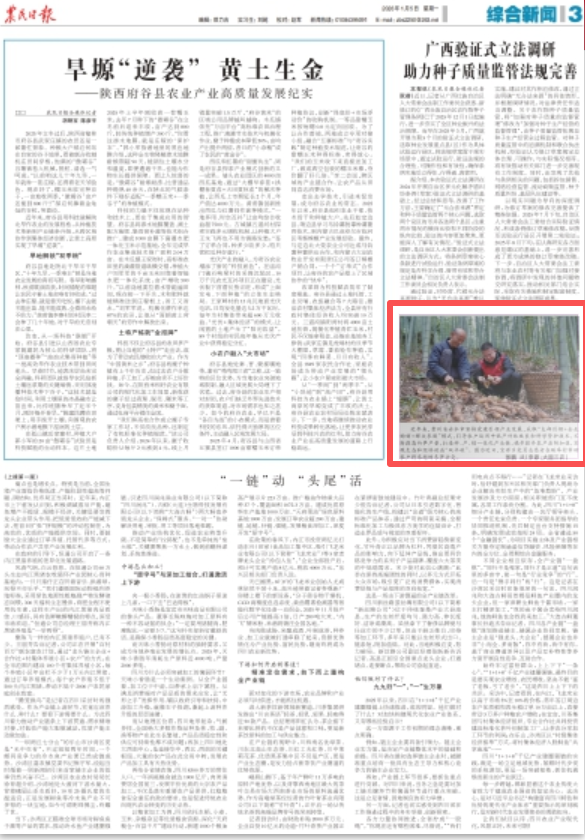
央媒看贵州丨农民日报:赤水竹山变“金山”:党建引领产业兴,生态经济双丰收
Xin Lang Cai Jing· 2026-01-05 06:22
Group 1 - The article highlights the high-quality development of agricultural industries in Fugu County, Shaanxi Province, emphasizing the transformation of the region's agricultural practices [1] - It discusses the integration of various agricultural activities, including production, sales, and community participation, to enhance the value of agricultural products [7] - The article illustrates the successful implementation of a model that combines party leadership, enterprise purchasing, and community investment to improve bamboo shoot production in Chishui City, Guizhou Province [7] Group 2 - The article mentions the role of volunteer efforts in assisting farmers with the harvesting and processing of winter bamboo shoots, showcasing community involvement in agricultural practices [8]
白居易笔下的河洛之宴
Xin Lang Cai Jing· 2025-12-20 07:48
Core Viewpoint - The article explores the culinary artistry of the Tang Dynasty, particularly through the lens of poet Bai Juyi, highlighting the rich variety of food and the cultural significance of gastronomy in his poetry [1][3][10]. Group 1: Bai Juyi's Culinary Appreciation - Bai Juyi, a prominent poet from the Tang Dynasty, expressed his love for food through his poetry, reflecting on the flavors and experiences associated with various dishes [1][3]. - His poem "饱食闲坐" illustrates a warm scene of enjoying local delicacies, such as red rice porridge and fish from the Yi River, emphasizing the joy of simple yet exquisite meals [3][4]. - Bai Juyi's writings reveal a deep connection between food and life, showcasing how culinary experiences can evoke nostalgia and happiness [1][10]. Group 2: Traditional Dishes and Ingredients - The Yi River fish, known for its unique flavor and historical significance, is highlighted as a traditional dish in Henan cuisine, with a cooking history dating back over a thousand years [4][6]. - Bai Juyi's poetry details various cooking methods for fish, including the preparation of fish slices (鲙) and the use of local ingredients like watercress, showcasing the culinary techniques of the time [5][6]. - The article mentions the popularity of bamboo shoots in Tang cuisine, with historical references to their medicinal value and culinary versatility [7][8]. Group 3: Cultural Significance of Food - The article discusses the cultural exchange brought by foods like the sesame flatbread (胡饼), which became a symbol of friendship and connection between regions during the Tang Dynasty [9]. - Bai Juyi's poetry not only reflects his personal culinary preferences but also serves as a historical document that illustrates the social and cultural dynamics of food in Tang society [10]. - The emphasis on seasonal ingredients and traditional cooking methods in Bai Juyi's works highlights the importance of food in fostering community and cultural identity [7][8].

双塔食品:下属公司福建建宁双塔臻味食品科技公司的主营业务为竹笋的生产与销售
Zheng Quan Ri Bao Wang· 2025-12-05 15:17
Group 1 - The core business of the subsidiary Fujian Jianing Shuangta Zhenwei Food Technology Company is the production and sales of bamboo shoots [1]

践行大食物观的福建实践和经验启示(深学笃行阐释习近平经济思想)
Ren Min Ri Bao· 2025-11-30 22:20
Core Viewpoint - The article emphasizes the importance of food security in China, highlighting the "big food concept" proposed by Xi Jinping, which integrates various agricultural resources to ensure a stable food supply for the large population of over 1.4 billion people [1][3][10]. Background - Fujian province is characterized by limited arable land, with per capita farmland only one-fourth of the national average. In the 1980s, the region faced food shortages and a lack of diverse agricultural products, relying heavily on imports from other provinces [2]. Development of the Big Food Concept - Xi Jinping introduced the "big food concept" in 1988, advocating for comprehensive agricultural development. This concept has evolved under the leadership of the central government, emphasizing the need to utilize various resources, including land, sea, and forests, to enhance food production [3][4][10]. Achievements in Fujian - Over 30 years, Fujian has successfully implemented the big food concept, leading to significant increases in food production and diversity. For instance, meat production reached 3.14 million tons in 2024, a 2.5-fold increase since the early 1990s, with poultry meat production increasing 13 times [4][5]. - The province has also become a leading producer of aquatic products, with a per capita consumption of over 220 kg, the highest in the country. The cultivation of edible fungi has expanded significantly, with over 50 species cultivated commercially [4][5]. Key Practices and Results - Fujian has developed a diversified food supply system by integrating marine, forest, and facility agriculture. This includes the establishment of "marine granaries" to enhance seafood supply and "forest granaries" to tap into forest resources for food production [5][7][8]. - The province has also focused on facility agriculture, with over 2.4 million acres dedicated to modern agricultural practices, significantly boosting the supply of key agricultural products [8]. Quality and Safety Assurance - The province has implemented stringent measures to ensure food safety, including a comprehensive traceability system for agricultural products. The overall compliance rate for major agricultural product inspections has remained above 99% [9]. Lessons Learned - The experience in Fujian highlights the importance of a systematic approach to agricultural development, leveraging local resources to enhance food security. It underscores the need for technological innovation, market orientation, and sustainable practices to achieve a balance between ecological and economic benefits [10][11][12].