
网络直播

Search documents
今日视点:春晚“科技秀”呈现三大变革
Xin Lang Cai Jing· 2026-02-23 23:04
Core Viewpoint - The 2026 CCTV Spring Festival Gala showcased humanoid robots, marking a significant evolution in China's technological advancements and highlighting the integration of technology into cultural events [1][7]. Group 1: Technological Evolution - The Spring Festival Gala has historically served as a platform for showcasing cutting-edge technology, evolving from static props like color TVs and mobile phones to dynamic participants like humanoid robots [1][7]. - The transition from technology as mere props to becoming central performers reflects China's strong capability in technological expression and artistic integration [1][7]. Group 2: Industrial Upgrade - Humanoid robots symbolize a shift in Chinese manufacturing from automation to intelligence, indicating a move towards higher-end positions in the global industrial value chain [3][9]. - Each technological product featured in the gala represents a historical marker of China's industrial upgrades, with humanoid robots exemplifying a qualitative change in productivity [3][9]. Group 3: Capital Market Dynamics - The gala has established a feedback loop where technological showcases generate market interest, which in turn drives capital investment and accelerates industrial innovation [4][10]. - The debut of humanoid robots at the 2025 Spring Festival Gala ignited significant capital enthusiasm, leading to notable gains in related sectors and a reshaping of valuation systems [4][10]. - This deep connection between the gala and the capital market illustrates how cultural events can facilitate technological innovation and financial empowerment, creating a mutually beneficial relationship [4][10].
学习规划建议每日问答|如何理解推进文化和科技融合
Xin Hua She· 2026-01-11 12:25
Core Viewpoint - The integration of culture and technology is essential for promoting high-quality cultural development and building a strong socialist cultural nation, as outlined in the 15th Five-Year Plan proposal [1] Group 1: Importance of Culture and Technology Integration - The fusion of culture and technology is crucial for transforming cultural production processes and upgrading traditional cultural formats, while also fostering the development of new cultural business models [2] - Recent advancements in technologies such as 4K/8K ultra-high definition, immersive interaction, digital twins, and virtual reality have significantly stimulated cultural innovation and creativity [2] - The rapid development and widespread application of generative artificial intelligence have opened vast opportunities for cultivating new productive forces in culture [2] Group 2: Meeting Public Expectations - Technological innovation supports the digital transformation of public cultural services, promoting the sharing and utilization of public cultural resources [2] - The integration enhances the efficiency of cultural production and increases the expressiveness and communicative power of cultural products, creating new cultural consumption scenarios like cloud performances and digital tourism [2] Group 3: International Cultural Competition - The development of technological innovation is reshaping the global cultural competition landscape, with many countries seeking to enhance their cultural soft power through high-tech means [3] - China's international communication capabilities have improved, with global popularity in areas such as online literature, games, and short dramas benefiting from the integration of culture and technology [3] Group 4: Key Focus Areas for Implementation - Promote core technology research in the cultural sector, improving the innovation system and increasing the localization rate of specialized chips and software [4] - Develop new cultural business models and enhance public cultural services through technology, while transforming traditional cultural industries [4] - Cultivate high-level cultural technology enterprises and support the growth of "little giant" companies and unicorns in the cultural technology field [4] - Strengthen talent cultivation in cultural and technological integration, fostering interdisciplinary education to meet industry needs [4] - Improve the policy support system for cultural technology innovation, including financial mechanisms and legal protections [4]
传媒蓝皮书:传媒产业正进入全面数字化转型的新阶段
Bei Jing Ri Bao Ke Hu Duan· 2025-11-20 06:22
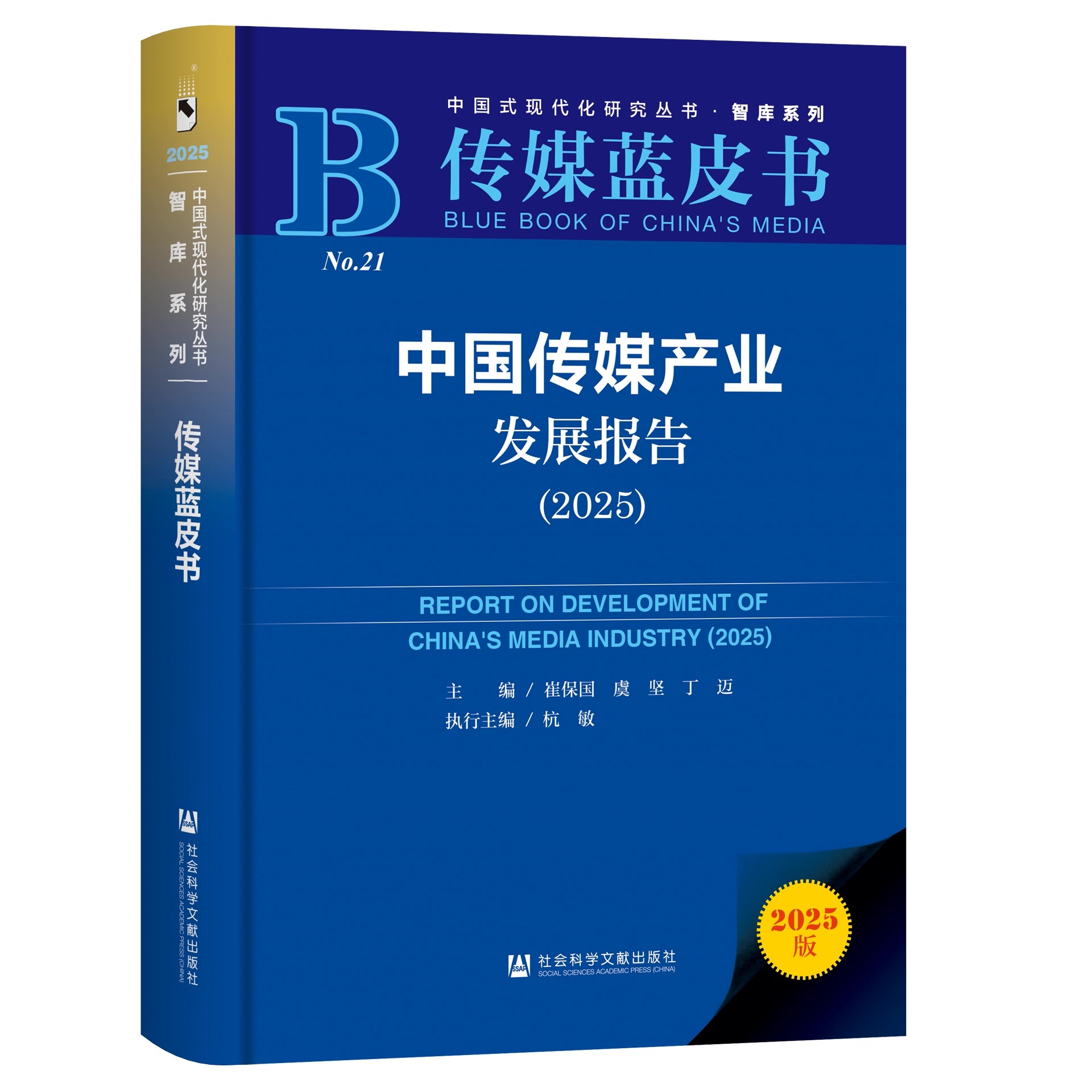
Core Insights - The "Blue Book on Media: China Media Industry Development Report (2025)" indicates that the Chinese media industry is expected to maintain a growth trend in 2024, with a total output value reaching 34,344.36 billion yuan, representing an 8.97% year-on-year increase, reflecting a steady and progressive development approach [1][4] Group 1: Industry Growth and Trends - The Chinese media industry is deeply integrated into the development of the digital economy, undergoing significant structural changes in its landscape and communication order [4] - The emergence and convergence of new business formats such as artificial intelligence, micro-short dramas, short videos, and live streaming are driving the collaborative development of various sub-sectors like internet marketing and advertising [4] - The new media forms and industry patterns are continuously expanding the boundaries of the media industry, becoming a major engine for industrial development [4] Group 2: Technological Impact and Recommendations - The widespread application of breakthrough technologies such as generative artificial intelligence, virtual reality, and augmented reality marks 2024 as a "watershed" year for the global entertainment and media industry, pushing it into a phase of comprehensive digital transformation [5] - While empowering industrial development, artificial intelligence also introduces uncertainties regarding intellectual property, security, data privacy, environmental hazards, and ethical issues, posing challenges to business models and the job market [5] - The report suggests that the Chinese media industry should adopt an ecological mindset, constructing new production relationships to adapt to the new productive forces driven by artificial intelligence, while remaining vigilant against excessive digitalization [5] - A balance must be sought between technological innovation and regulatory norms, focusing on key issues such as human-machine collaboration and the protection of human subjectivity [5] - The industry is entering a critical phase of systemic transformation and overall optimization, driven by policy optimization, institutional adjustments, technological breakthroughs, and diverse stakeholders [5]

传媒蓝皮书:中国传媒产业保持“小步快走”趋势
Xin Jing Bao· 2025-11-19 12:07
Core Insights - The report indicates that the Chinese media industry is expected to maintain a growth trend in 2024, with a total output value reaching 34,344.36 billion yuan, representing a year-on-year increase of 8.97% [1] - The development of the media industry is significantly influenced by multiple factors, including policy guidance, technological iteration, market competition, and shifts in audience habits, embedding it deeply within the trajectory of the digital economy [1] - New media forms such as AIGC, generative content, short videos, micro-dramas, MCNs, and live streaming are driving the collaborative development of media marketing and online advertising, becoming the main engines for the growth of the media industry [1][2] Industry Overview - The report highlights that internet marketing revenue will remain at the top in 2024, indicating its dominance in the media industry landscape [1] - Generative artificial intelligence is reshaping the rules across all segments of the entertainment and media industry, promising to enhance production efficiency and productivity while also posing challenges related to intellectual property, security, data privacy, environmental impact, and ethical considerations [2]
报告:中国传媒产业持续增长,整体保持“小步快走”趋势
Zhong Guo Xin Wen Wang· 2025-11-19 09:18
Group 1 - The core viewpoint of the report indicates that the Chinese media industry will continue to grow in 2024, with a total output value reaching 34,344.36 billion RMB, representing a year-on-year increase of 8.97%, maintaining a trend of steady progress and "small steps" [1] - The report systematically reviews the development status of various segments of the Chinese media industry from 2024 to 2025, focusing on content production, operational innovation, technological application, capital operation, and ecological transformation [1] - The Chinese media industry is increasingly embedded in the trajectory of digital economy development, with a rich industry ecosystem and expanding boundaries, driven by the development and cross-integration of AI, micro-short dramas, short videos, and live streaming [1] Group 2 - The report highlights that 2024 to 2025 will be a transformative year for the global entertainment and media industry, with all segments accelerating their digital transformation processes empowered by technology [2] - Generative artificial intelligence is expected to enhance production efficiency and productivity while providing momentum for new cross-industry businesses, although it also introduces uncertainties regarding intellectual property, security, data privacy, environmental hazards, and ethical issues [2] - The report is a collaborative publication by Tsinghua University School of Journalism and Communication, CTR, CSM, Social Sciences Academic Press, and the Media Economics and Management Professional Committee of the Chinese Society for Journalism [2]
清华大学教授:人工智能是中国传媒生态变革的核心变量
Zhong Guo Xin Wen Wang· 2025-10-13 09:44
Group 1 - Artificial intelligence (AI) is identified as a core variable in the transformation of China's media ecosystem, significantly enhancing production efficiency and multimodal expression capabilities in the media industry [1] - The diverse and widespread application of AI technology is driving innovation across traditional sectors such as media, finance, healthcare, education, and manufacturing, while also expanding into new areas like augmented reality, smart city development, and sustainable energy management [1] - AI is pushing the emergence of a new media format, with content production, recommendation, advertising, and audiovisual services around AI becoming increasingly mature, posing challenges to traditional media [1] Group 2 - The Chinese media industry is deeply integrated into the trajectory of digital economy development, with an expanding array of business models and the transformation of traditional mainstream media into new mainstream media [2] - The development of AI, micro-short dramas, short videos, gaming, and live streaming is driving the collaborative growth of media marketing and advertising, serving as a major engine for media development [2] - The global media landscape and order are being restructured, with China's media innovation paving a new path for development [3]
学习笔记|大力发展数字消费,持续提振消费
2 1 Shi Ji Jing Ji Bao Dao· 2025-09-26 13:21
Group 1 - The core viewpoint of the articles emphasizes the rapid development of China's digital economy and the importance of digital consumption as a key driver for economic growth and transformation [1][2][5] - The digital economy in China reached a scale of 53.9 trillion yuan in 2023, with a year-on-year increase of 3.7 trillion yuan, indicating a stable growth trajectory [1] - The core industries of the digital economy are projected to account for about 10% of GDP by 2024, with significant advancements in integrated circuits, artificial intelligence, and industrial software [1][3] Group 2 - The recent guidelines propose 14 measures across four areas to enhance digital consumption, including expanding supply, nurturing business entities, optimizing support systems, and creating a favorable environment [2][3] - Digital consumption encompasses various sectors such as online shopping, live streaming, digital culture, and online healthcare, which are continuously evolving due to advancements in big data and AI technologies [2][4] - The development of digital consumption is expected to create more job opportunities and enhance consumer experiences, particularly in sectors like cultural tourism and online healthcare [4][5]
推动“百业+文旅”深度融合发展
Xin Hua Ri Bao· 2025-09-24 23:26
Core Insights - The Jiangsu Provincial Government has launched a three-year action plan (2025-2027) to promote high-quality development in the cultural tourism industry, focusing on integrated development and enhancing the product system of cultural tourism [1] Group 1: Integration and Collaboration - The establishment of a "Big Cultural Tourism" working mechanism is essential, requiring cross-departmental coordination and a permanent collaborative platform to address major issues in the integration of various industries with cultural tourism [2] - A resource integration mechanism will be created, involving government leadership and third-party participation to conduct a comprehensive resource survey and establish a database for "integrated resources" [2] Group 2: Regulatory and Service Mechanisms - A comprehensive service and regulatory mechanism will be implemented to enhance cultural tourism consumption services, including the establishment of financial support policies and market regulation measures [3] - The government will focus on improving the quality of tourism services and ensuring a healthy market environment through enhanced regulatory measures [3] Group 3: Innovative Consumption Scenarios - Differentiated integration models will be designed for various industries, creating unique consumption scenarios such as "Performance + Cultural Tourism" and "Agriculture + Cultural Tourism" [4][5] - The integration of agriculture and cultural tourism aims to create new consumption scenes centered around rural areas, enhancing agricultural value and promoting rural tourism [5] Group 4: Sports and Cultural Tourism - The integration of sports and cultural tourism will be promoted through events, enhancing the tourism experience by incorporating local culture and cuisine into sports events [6] - The Jiangsu Provincial Football League has demonstrated significant tourism growth, with a 24.67% increase in visitor numbers during a specific period, showcasing the multiplier effect of sports events on local tourism [6] Group 5: Product Supply and Development - The cultivation of high-quality cultural tourism enterprises is emphasized, encouraging collaboration among key players in the industry to form competitive clusters [7] - Support will be provided for traditional tourism businesses to upgrade and for new enterprises in digital and innovative tourism sectors to thrive [7] Group 6: Technological Empowerment - The integration of technology into cultural tourism is highlighted, utilizing advanced technologies like big data and AI to innovate and enhance the cultural tourism product offerings [8] - Local historical and cultural resources will be leveraged to promote the integration of various industries with cultural tourism through targeted project development [8]
广东发布文化产业高质量发展六大“政策包”
Zheng Quan Shi Bao· 2025-05-22 18:02
Group 1 - The Guangdong government has launched a "policy package" consisting of 6 documents and 87 policy measures aimed at promoting high-quality development in the cultural industry [1] - The six policy packages cover various sectors including film, performing arts, animation, online gaming, esports, and online audio-visual industries [1][2] - The policies include significant financial support and incentives, with specific measures tailored to enhance industry ecosystems and foster innovation [1][2] Group 2 - The "Measures for Promoting High-Quality Development of Guangdong Film Industry" includes 15 policy initiatives focusing on building a film industry belt and improving the support mechanisms [1] - The "Measures for Promoting High-Quality Development of Guangdong Performing Arts Market" outlines 17 initiatives aimed at cultivating the market and expanding the performance industry chain [1][2] - The "Measures for Promoting High-Quality Development of Guangdong Animation and Film Industry" propose 15 initiatives to create a favorable ecosystem and support talent development [2] - The "Measures for Promoting High-Quality Development of Guangdong Online Gaming Industry" include 13 initiatives focused on supporting original content and optimizing the business environment [2] - The "Measures for Promoting High-Quality Development of Guangdong Esports Industry" present 18 initiatives to enhance industry layout and talent cultivation [2] - The "Measures for Promoting High-Quality Development of Guangdong Online Audio-Visual Industry" propose 9 initiatives to strengthen Guangdong's competitive advantage nationally [2][3] Group 3 - Guangdong is recognized as the largest cultural industry province in China, maintaining the top position in cultural industry scale for 22 consecutive years, with strong competitive advantages in digital creativity, animation, gaming, and online audio-visual sectors [3]