
货币掉期

Search documents
支持地方高水平对外开放 银行深耕跨境金融稳外贸
Zhong Guo Jing Ying Bao· 2026-02-27 18:51
Group 1: Core Insights - The Chinese government emphasizes the need for high-level opening-up to promote high-quality development and create a new development pattern, as highlighted in the 20th Central Committee's Fourth Plenary Session [1] - Local government work reports consistently prioritize "expanding high-level opening-up" as a key task for economic and social development [1][2][3] Group 2: Regional Initiatives - Shenzhen's 2026 government work report focuses on enhancing internationalization and open capabilities, promoting high-quality international economic cooperation, and deepening bilateral investment [2] - Heilongjiang's report identifies high-level opening-up as a critical task for the 14th Five-Year Plan, aiming to create a new high ground for northern opening and enhance international economic cooperation [3] - Shandong's report emphasizes trade innovation and the development of new markets, aiming to stabilize traditional markets while expanding into emerging ones [3] Group 3: Financial Sector Support - Financial institutions like Industrial and Commercial Bank of China and Bank of China are enhancing their service capabilities for export and multinational enterprises to improve domestic companies' competitiveness in international markets [1][6] - Banks are focusing on providing comprehensive financial solutions for cross-border operations, including international trade financing and cross-border loans [6][7] - The demand for cross-border financial services is increasing, prompting banks to innovate and adapt their service models to meet the diverse needs of enterprises [7][8]



东北制药拟开展不超3亿元金融衍生品交易以对冲汇率风险
Xin Lang Cai Jing· 2026-02-13 17:28
Core Viewpoint - Northeast Pharmaceutical Group Co., Ltd. has announced plans to engage in financial derivatives trading to manage foreign exchange and interest rate risks arising from its foreign currency settlements in response to market fluctuations [1] Group 1: Financial Derivatives Trading - The primary objective of this trading initiative is hedging, aimed at locking in costs and avoiding risks rather than engaging in speculation or arbitrage [1] - The maximum trading amount is set at 300 million RMB, which can be rolled over within its validity period [1] - The trading instruments will mainly include forward foreign exchange settlements, currency swaps, options, interest rate swaps, and currency swaps, with trading periods generally not exceeding one year [1] Group 2: Financial Stability and Risk Management - The company emphasizes that all trading funds will come from its own capital and will collaborate with legally qualified domestic and foreign large commercial banks [1] - This initiative is viewed as a significant risk control measure to enhance financial stability and mitigate the potential adverse impacts of exchange rate and interest rate fluctuations on operational performance [1] - The company has established corresponding internal operational processes and risk control measures to prevent market, liquidity, and operational risks [1]

安徽海螺水泥股份有限公司关于2026年度委托理财计划的公告
Xin Lang Cai Jing· 2026-01-26 20:02
Group 1: Investment Management Plan - The company plans to utilize temporarily idle funds for entrusted wealth management to improve fund efficiency and increase investment returns [3][4] - The maximum daily balance for structured deposits is set at 30 billion yuan, while for bank wealth management products, income certificates, and asset management plans, it is capped at 20 billion yuan [2][4] - The board of directors approved the entrusted wealth management plan on January 26, 2026, and it falls within the decision-making authority of the board, thus not requiring shareholder approval [6] Group 2: Risk Analysis and Control Measures - The company will select wealth management products with a risk rating of R2 or below, but acknowledges that actual returns may be affected by market, policy, liquidity, and other risks [7] - A dedicated wealth management team will monitor the performance of purchased products and adjust investment strategies as necessary to mitigate risks [9][10] - The audit department has the authority to supervise and inspect the use of investment funds, and may hire professional institutions for auditing if necessary [10] Group 3: Impact on Company Operations - The entrusted wealth management will not affect the company's normal cash flow or the development of its main business, and is expected to enhance fund efficiency and increase company profits [11] - The company will account for the entrusted wealth management in accordance with relevant accounting standards, reflecting it in the balance sheet and income statement [11] Group 4: Foreign Exchange Derivative Trading - The company intends to engage in foreign exchange derivative trading for hedging purposes to manage risks associated with currency and interest rate fluctuations [15] - The maximum contract value held on any trading day is set at 600 million yuan, with the ability to roll over this limit [14][16] - All funds for the foreign exchange derivative trading will come from the company's own resources, without involving raised funds [17] Group 5: Risk Management in Foreign Exchange Trading - The company will adhere to a principle of legal, prudent, safe, and effective trading, avoiding speculative operations [20] - A management framework for foreign exchange derivative trading has been established to control risks and ensure compliance with internal procedures [22] - Transactions will only be conducted with qualified financial institutions, and strict internal approval processes will be followed for all trading operations [22][23]
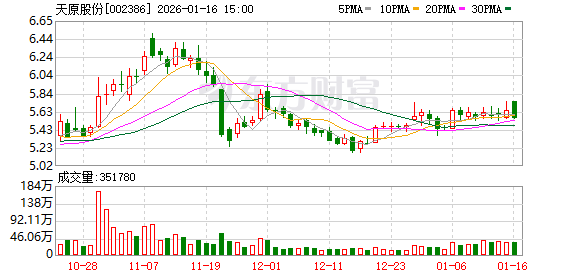
天原股份:关于公司及子公司开展外汇衍生品交易的公告
Zheng Quan Ri Bao· 2026-01-16 15:20
Core Viewpoint - Tianyuan Co., Ltd. announced the approval of a proposal to engage in foreign exchange derivative trading with a limit of up to 50 million USD for a duration of 12 months [2] Group 1: Company Announcement - The company will hold the 23rd meeting of the 9th Board of Directors on January 16, 2026, to review the proposal [2] - The types of foreign exchange derivative transactions include forward foreign exchange contracts, foreign exchange trading, foreign exchange options, currency swaps, and foreign exchange interest rate swaps, as well as combinations of these products [2]


股市必读:佳禾智能(300793)12月24日主力资金净流入1797.9万元
Sou Hu Cai Jing· 2025-12-24 17:42
Core Viewpoint - Jiahe Intelligent Technology Co., Ltd. is actively engaging in financial management and strategic acquisitions to enhance its operational efficiency and mitigate risks associated with currency fluctuations and receivables management [1][2][3][4][5] Trading Information Summary - On December 24, 2025, Jiahe Intelligent's stock closed at 16.15 yuan, up 3.26%, with a turnover rate of 2.61%, trading volume of 97,100 shares, and a transaction amount of 155 million yuan [1] - The net inflow of main funds was 17.979 million yuan, while retail investors experienced a net outflow of 6.4101 million yuan [1][4] Company Announcements Summary - The board approved the use of up to 800 million yuan for foreign exchange hedging to mitigate currency risk, with the hedging period set from January 1, 2026, to December 31, 2026 [3][4] - The company plans to engage in a non-recourse accounts receivable factoring business with a total amount not exceeding 800 million yuan, also valid from January 1, 2026, to December 31, 2026 [2][4] - Jiahe Intelligent's wholly-owned subsidiary intends to acquire all limited partnership interests and related shares of beyerdynamic GmbH & Co. KG, with a waiver agreement signed to extend the review period until April 30, 2026 [2][4] - The company will utilize up to 700 million yuan of its own funds and idle raised funds for cash management, with a focus on high-security, liquid, and principal-protected investment products [5]

外汇交易中心继续免除中小微企业 外汇衍生品交易相关银行间外汇市场交易手续费
Jin Rong Shi Bao· 2025-12-24 02:37
Core Viewpoint - The China Foreign Exchange Trading Center will implement a full exemption of transaction fees for financial institutions providing foreign exchange derivative trading services to small and micro enterprises starting from January 1, 2026, for a period of two years [1] Summary by Categories Policy Implementation - The exemption applies to transaction fees in the interbank foreign exchange market for financial institutions serving small and micro enterprises through the foreign exchange trading center's corporate platform [1] - For transactions conducted through other channels, financial institutions must verify the standards of small and micro enterprises and report the enterprise list to the foreign exchange trading center, which will then provide a full exemption based on 50% of the total transaction volume [1] Transaction Types - The fee exemption covers various types of transactions, including forwards, swaps, currency swaps, and options related to RMB foreign exchange derivatives [1] Reporting Requirements - Financial institutions are required to submit transaction information related to small and micro enterprises to the foreign exchange trading center by the 15th of each quarter's last month, including details such as client name, transaction type, currency pair, transaction volume, price, and duration [1]
戴维医疗:关于开展外汇衍生品交易业务的公告
Zheng Quan Ri Bao Zhi Sheng· 2025-10-17 13:08
Core Viewpoint - David Medical announced plans to engage in foreign exchange derivative trading to mitigate foreign exchange market risks and enhance financial stability [1] Group 1: Foreign Exchange Derivative Trading - The company and its subsidiaries intend to use no more than RMB 40,000 million (or equivalent foreign currency) of their own funds for foreign exchange derivative trading [1] - The primary currencies involved in the foreign exchange derivative business are those used in the company's overseas operations, mainly the US dollar [1] - The specific methods or products for the foreign exchange derivatives may include, but are not limited to, forward foreign exchange settlements, foreign exchange swaps, currency swaps, and foreign exchange options [1]

加强银行间外汇市场监管 新规正在征求意见
Sou Hu Cai Jing· 2025-08-26 02:26
Core Viewpoint - The People's Bank of China and the State Administration of Foreign Exchange are revising the interim regulations on the interbank foreign exchange market to enhance regulation and support the real economy, with a draft open for public consultation until September 21, 2025 [1][3]. Summary by Sections Regulation Enhancement - The new regulations aim to strengthen oversight of the interbank foreign exchange market, with comprehensive management requirements and penalties for various market participants [4][5]. Comprehensive Market Supervision - A full-chain market supervision system will be established, covering operational management, trader management, legal agreements, market maker management, information exchange, disclosure, data services, and self-regulation [4][5]. Infrastructure Management - The regulations will clarify the responsibilities and cooperation mechanisms of the foreign exchange market infrastructure, including transaction and clearing qualifications and supervision duties [4]. Business Boundaries for Participants - The regulations will define the market entry scope, basic conditions, and business principles for financial institutions, allowing them to independently decide on risk mitigation services [4][6]. Forward-looking Management - The regulations reflect a proactive approach to market trends, aiming to enhance the management of the foreign exchange market by utilizing modern technologies for data analysis and risk detection [6].
每周股票复盘:珠免集团(600185)开展外汇套期保值业务,总额不超过3亿元
Sou Hu Cai Jing· 2025-08-16 20:03
Core Viewpoint - Zhuhai Zhimian Group (600185) has approved a foreign exchange hedging business with a total amount not exceeding 300 million RMB or equivalent foreign currency to mitigate foreign exchange market risks and enhance financial stability [1][2][4] Company Announcement Summary - The company's board of directors held a meeting on August 14, 2025, where they approved the proposal to conduct foreign exchange hedging business, with a total amount not exceeding 300 million RMB or equivalent foreign currency, valid for 12 months from the date of approval [1][4] - The company has established the "Foreign Exchange Hedging Business Management Measures" to standardize operations and effectively manage exchange rate fluctuation risks [1][4] Feasibility Analysis of Foreign Exchange Hedging Business - The company plans to engage with financial institutions qualified for foreign exchange trading to conduct hedging activities, including forward foreign exchange transactions, currency swaps, foreign exchange options, and interest rate swaps [2] - The hedging business will cover currencies relevant to the company's operations, such as JPY and USD, with funding sourced from the company's own funds or bank credit lines [2] - The company has implemented various risk control measures, including enhanced exchange rate research, selection of appropriate foreign exchange tools, and collaboration with large banks to ensure the business operates within a structured framework [2]

珠免集团: 关于开展外汇套期保值业务的公告
Zheng Quan Zhi Xing· 2025-08-14 11:11
Summary of Key Points Core Viewpoint - The company plans to conduct foreign exchange hedging activities with a total limit not exceeding 300 million RMB or equivalent foreign currency to mitigate risks associated with foreign exchange market volatility and enhance financial stability [2][4]. Group 1: Overview of Hedging Activities - The purpose of the hedging activities is to effectively avoid risks from foreign exchange market fluctuations, improve the efficiency of foreign currency usage, and reduce financial costs [2][3]. - The total amount for the hedging activities is capped at 300 million RMB or equivalent foreign currency, applicable to the company and its subsidiaries combined [2][3]. - The types of transactions include forward foreign exchange settlement, currency swaps, foreign exchange options, and interest rate swaps, focusing solely on hedging actual foreign exchange risks [2][3]. Group 2: Transaction Details - The hedging activities will be limited to currencies relevant to the company's operations, such as Japanese Yen and US Dollar [3]. - The validity period for the hedging limit is 12 months from the date of board approval, with the limit being reusable within this timeframe [3]. - Transactions will be conducted with qualified financial institutions, including large state-owned banks and foreign banks, to ensure safety and reduce transaction risks [3]. Group 3: Approval Process - The proposal for the hedging activities was approved by the company's board of directors with unanimous support during the 37th meeting of the 8th board [4]. - The board has authorized the management team to handle specific operations related to the hedging activities, including margin payments and signing relevant legal documents [4]. Group 4: Risk Management and Impact - The core of the hedging strategy is to counteract exchange rate fluctuations, with potential risks including liquidity risk and counterparty default [5]. - The company has established a management framework for the hedging activities, detailing operational principles, approval authority, and risk management processes to control transaction risks [5]. - The anticipated hedging activities are expected to stabilize operations and enhance financial robustness without significantly adverse effects on the company's business [5][6].